Samsung

Search documents
DRAM,SK海力士越战越强
半导体芯闻· 2025-09-02 10:39
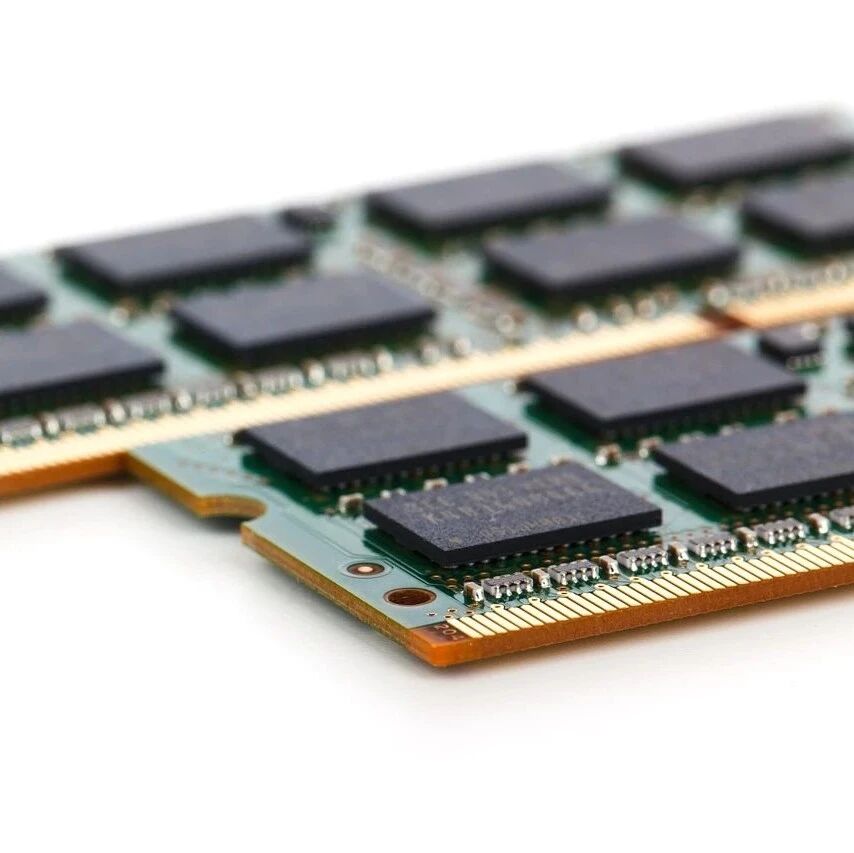
Core Viewpoint - The DRAM industry is experiencing significant growth in revenue and pricing due to increased demand and supply constraints, particularly for conventional DRAM and HBM products, with projections indicating a revenue of $31.63 billion in Q2 2025, representing a 17.1% quarter-over-quarter growth [2][5]. Group 1: Major Suppliers Performance - SK Hynix reported a revenue of approximately $12.23 billion in Q2, a 25.8% increase, maintaining a market share of 38.7% [2]. - Samsung's revenue grew by 13.7% to $10.35 billion, with a slight decline in market share to 32.7% [2]. - Micron's revenue reached $6.95 billion, a 5.7% increase, with a market share decrease to 22% [2]. Group 2: Taiwanese Manufacturers - Nanya's revenue surged by 56% to around $340 million due to strong replenishment from PC OEMs and consumer clients [3]. - Winbond's revenue increased by 24.9% to $180 million, with a notable rise in shipment volume [3]. - PSMC's revenue grew by 86.4% to $20 million, driven by active replenishment from clients [3]. Group 3: Pricing Trends - The wholesale price of DDR4 8Gb reached approximately $4.28, marking a 4% increase, while the 4Gb product price rose to $3.26, also up by 4% [5]. - DDR4 prices have stabilized after significant increases, but contract prices continue to rise due to ongoing supply tightness [8]. - DDR4 16GB components saw a price increase of nearly 7% to $9.17, while DDR5 16GB components decreased by 3% to $5.99, widening the price gap [8]. Group 4: Supply Chain Dynamics - Major suppliers like Samsung, SK Hynix, and Micron are shifting production focus from DDR4 to next-generation DDR5 and HBM, leading to a deliberate reduction in DDR4 supply [6][9]. - The supply constraints have resulted in some DRAM manufacturers having orders that exceed their production capacity by eight times [6]. - The transition to HBM is prioritized due to its higher profit margins, impacting the availability of DDR4 [9]. Group 5: Future Outlook - Analysts expect contract prices to continue rising through the end of the year, with DDR4 demand anticipated to rebound in September as inventory levels normalize [10]. - Limited wafer capacity suggests that DDR4 buyers should not expect price relief, indicating a potential strategic advantage for those upgrading to DDR4 now [10].

US to Pull SK Hynix, Samsung China Waivers
Bloomberg Technology· 2025-08-29 18:47
Basically this is revoking waivers that they previously had. What, to bring in chip equipment to the country. Break down exactly what this means.Yeah, that's right. How the companies have received waivers from the Biden administration back in 2023, allowing them under these agreements to bring in equipment to China for their massive chip making facilities. And most of what was produced there, Carol, were memory chips.And that's critical, of course, for SK Hynix and for Samsung in particular. In this case. N ...
Photo Comparison: Google Pixel 10 Pro XL vs. Galaxy S25 Ultra
CNET· 2025-08-29 14:30
Given the provided content "No content yet!", it's impossible to summarize any main points or logic, or to extract any data for analysis The document is empty Therefore, a meaningful output cannot be generated based on the current input

每周观察 | 英伟达机器人“新大脑”推升芯片市场规模有望达4,800万美元以上;2Q25 NAND Flash营收季增逾20%
TrendForce集邦· 2025-08-29 03:44
Group 1 - NVIDIA's newly launched Jetson Thor is considered the physical intelligence core for robots, featuring Blackwell GPU and 128 GB memory, achieving 2070 FP4 TFLOPS AI computing power, which is 7.5 times that of the previous Jetson Orin [2] - The introduction of Jetson Thor enables advanced humanoid robots to process large sensory data and large language models (LLM) in real-time, enhancing their ability to see, think, and act [2] - The humanoid robot chip market is expected to exceed $4.8 billion by 2028, driven by the adoption of this technology by companies like Agility Robotics, Boston Dynamics, and Amazon [2] Group 2 - In Q2 2025, the NAND Flash industry is projected to see a quarter-over-quarter revenue increase of over 20%, despite a slight decline in average selling prices (ASP) [4] - Major manufacturers have implemented production reduction strategies to alleviate supply-demand imbalances, resulting in significant growth in overall output [4] - The combined revenue of the top five NAND Flash manufacturers reached $14.67 billion in Q2 2025, reflecting a 22% quarter-over-quarter increase [5]



Applied Materials (AMAT) 2025 Conference Transcript
2025-08-28 19:02
Summary of the Conference Call Company and Industry Overview - The conference featured Bryce Hill, CFO of Applied Materials, discussing the semiconductor equipment industry, particularly focusing on DRAM and leading logic markets [1][2]. Key Points and Arguments Earnings and Market Outlook - Applied Materials reported record revenues and earnings per share in Q3, driven by strong demand in DRAM and leading logic, despite facing headwinds in the ICAPs segment, particularly in China [4][5]. - The company expected DRAM and leading logic to be the fastest-growing equipment markets over the next five years, with a projected growth rate of 26% [10][18]. - The leading edge market showed unexpected non-linear demand, primarily influenced by a significant customer and their factory timing [6][8]. China Market Dynamics - China’s market is experiencing slower growth, with a decrease of over 24% expected in the ICAP space, which is attributed to previous over-investments in 2023 and 2024 [5][18]. - The company has lost approximately $400 million in business due to restrictions on serving entity-listed customers in China, but anticipates potential recovery depending on future regulatory changes [25][28]. Technology and Innovation - The transition to advanced nodes, such as gate-all-around transistors, is expected to enhance power efficiency by 20% to 30%, making it a favorable choice for AI applications [6][14]. - Applied Materials is focusing on new applications and architectures as customers reevaluate their equipment needs during technology transitions [11][12]. DRAM and HBM Market Trends - High Bandwidth Memory (HBM) is projected to grow at a CAGR of 30% to 40%, with 15% of DRAM capacity currently allocated for HBM production [55]. - The overall DRAM market is expected to be one of the fastest-growing equipment markets, driven by multinationals compensating for lost business in China [56]. Services and Gross Margins - The services segment, particularly subscription-based revenues, is expected to grow at low double digits, supported by an increasing installed base and demand for expert technicians [61][64]. - Gross margins are projected at 48.1%, with improvements attributed to a better product mix and pricing strategies, despite challenges from tariffs [66][68]. Other Important Insights - The semiconductor industry is experiencing a shift in customer order patterns, with increased volatility and late commitments due to uncertainties in the market [22][23]. - The competitive landscape is evolving, with potential impacts from government incentives for foundries, but Applied Materials does not foresee significant changes in overall demand forecasts [30][35]. - The company is optimistic about the long-term growth potential in both DRAM and leading logic, despite short-term challenges in the China market and ICAPs segment [19][20].

X @The Block
The Block· 2025-08-28 14:23
Visa-powered, stablecoin firm Rain raises $58 million from Samsung and Sapphire https://t.co/xzRTSBUj6Q ...
iPhone曾经的心脏,现在更以Pixel形态出击
3 6 Ke· 2025-08-28 07:02
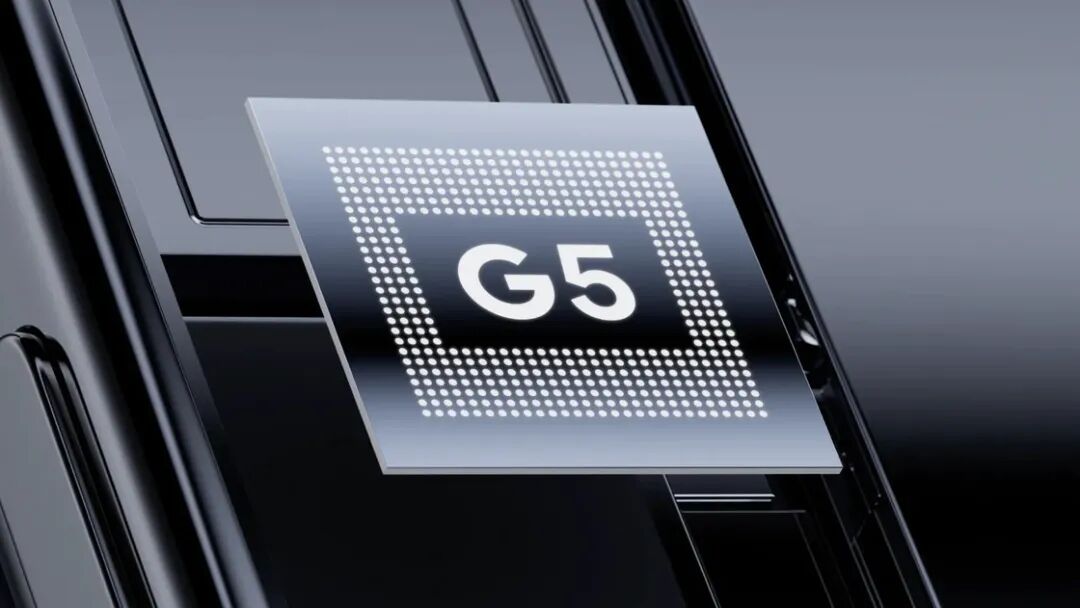
Group 1 - Google recently launched the Pixel 10 series, featuring the new Tensor G5 chip manufactured by TSMC [1] - The Tensor G5 chip marks a significant advancement as it moves away from the Exynos architecture, enhancing Google's in-house development capabilities [3] - The GPU of the Tensor G5 utilizes Imagination's PowerVR architecture, which has a storied history in the graphics technology sector [5] Group 2 - Imagination Technologies, originally founded as VideoLogic, transitioned to focus on 3D graphics acceleration in the early 1990s, leading to the development of the PowerVR architecture [6][7] - The PowerVR architecture introduced Tile-Based Deferred Rendering (TBDR), which significantly improved rendering efficiency and reduced power consumption [9][13] - Imagination's business model evolved from hardware sales to IP licensing, allowing it to partner with semiconductor manufacturers like NEC and STMicroelectronics [14][19] Group 3 - The collaboration with Sega for the Dreamcast console solidified PowerVR's reputation in the gaming industry, leading to substantial sales and market presence [18] - However, the decline of the Dreamcast due to competition from Sony's PlayStation 2 exposed Imagination's vulnerability due to over-reliance on a single client [20][22] - Imagination shifted its focus to the mobile sector, recognizing the growing importance of 3D acceleration in mobile devices, which aligned well with PowerVR's low-power design [23][25] Group 4 - The partnership with Apple began with the first iPhone, where PowerVR GPUs were integrated into Apple's A-series chips, leading to significant revenue growth for Imagination [26][28] - This relationship, however, created a dependency that became problematic when Apple announced plans to develop its own GPU architecture, leading to a dramatic drop in Imagination's stock price [31][33] - Following the loss of Apple as a major client, Imagination was acquired by Canyon Bridge, prompting a strategic shift towards diversification and new market opportunities [34][37] Group 5 - Imagination has since focused on four strategic pillars: automotive electronics, data centers, mobile device GPUs, and edge AI computing [37] - The recent partnership with Google for the Tensor G5 indicates a potential resurgence for PowerVR in the mobile GPU market, although challenges remain regarding compatibility and performance [50][54] - The future of PowerVR remains uncertain, but the renewed collaboration with Google could provide a pathway for revitalization within the Android ecosystem [56]

全球半导体:《芯片法案 3》,中国资本支出持续增长,尽管面临挑战,迁移仍在推进Global Semis_ CHIPS Act 3_ China capex continues to grow; migration ongoing despite challenges
2025-08-28 02:12
Summary of Semiconductor Industry Conference Call Industry Overview - The conference call focuses on the **semiconductor industry in China**, particularly in the context of the **CHIPS Act** and its implications for capital expenditures (capex) and technology development [1][4][5]. Key Points Capital Expenditures (Capex) - China's semiconductor capex is projected to increase to **US$43 billion to US$46 billion** for the period **2025-2030**, up from previous estimates of **US$40 billion to US$44 billion** [4][16]. - A strong investment of **US$41 billion** was recorded in **2024**, representing a **19% year-over-year increase** [4][16]. - The investment focus is expected to shift towards **memory** and **advanced node technologies**, with local suppliers anticipated to contribute **26%** of wafer fabrication equipment procurement in **2025**, increasing to **36%** by **2030** [4][16]. Demand and Supply Chain Migration - The semiconductor supply chain in China is undergoing significant migration, with expansions in **CIS**, **automotive chips**, and **AI chips** [5]. - Local foundries and OSATs are enhancing their manufacturing technologies, driven by structural technology innovations and better services [5]. Lithography Demand - An estimated **2,261 additional lithography systems** will be required by **2035** to meet the projected chip demand in China, necessitating an investment of approximately **US$110 billion** [6][39]. - The breakdown of required lithography systems includes **212 EUVs**, **843 immersion DUVs**, and **2,564 dry DUV/UV systems** [39]. Market Dynamics - The semiconductor market in China is expected to see a **5% to 1%** growth in capex from **2025 to 2030**, driven primarily by foundries and memory players, which will account for about **80%** of the capex [16][22]. - Chinese semiconductor manufacturers are projected to capture **17%** of the semiconductor demand value in **2024**, increasing to **37%** by **2030** [33]. Equipment Market - The Wafer Fabrication Equipment (WFE) market in China is expected to reach **US$41 billion** by **2026**, with local suppliers increasing their market share from **17%** in **2024** to **36%** by **2027** [28][32]. - The growth in WFE revenues is attributed to the increasing semiconductor spending, with China expected to account for **37% to 38%** of global WFE spending in **2025-2027** [28]. Implications for Global Suppliers - US suppliers are expected to maintain a strong market share in China's WFE spending, despite facing challenges from local manufacturers and export controls [45]. - Japanese SPE manufacturers may see a gradual decline in their market share in China, although they will still benefit from the high capex environment [49]. Additional Insights - The semiconductor industry in China is characterized by a robust local ecosystem supported by ongoing technology development and a large home market [1][4]. - The demand for lithography systems is critical for meeting future chip production needs, highlighting the importance of investment in R&D and local manufacturing capabilities [6][39]. This summary encapsulates the key insights and projections regarding the semiconductor industry in China, emphasizing the growth in capital expenditures, the demand for advanced technologies, and the evolving dynamics of the supply chain.