复旦大学

Search documents
挂科,也能保研了
Hu Xiu· 2025-08-23 09:05
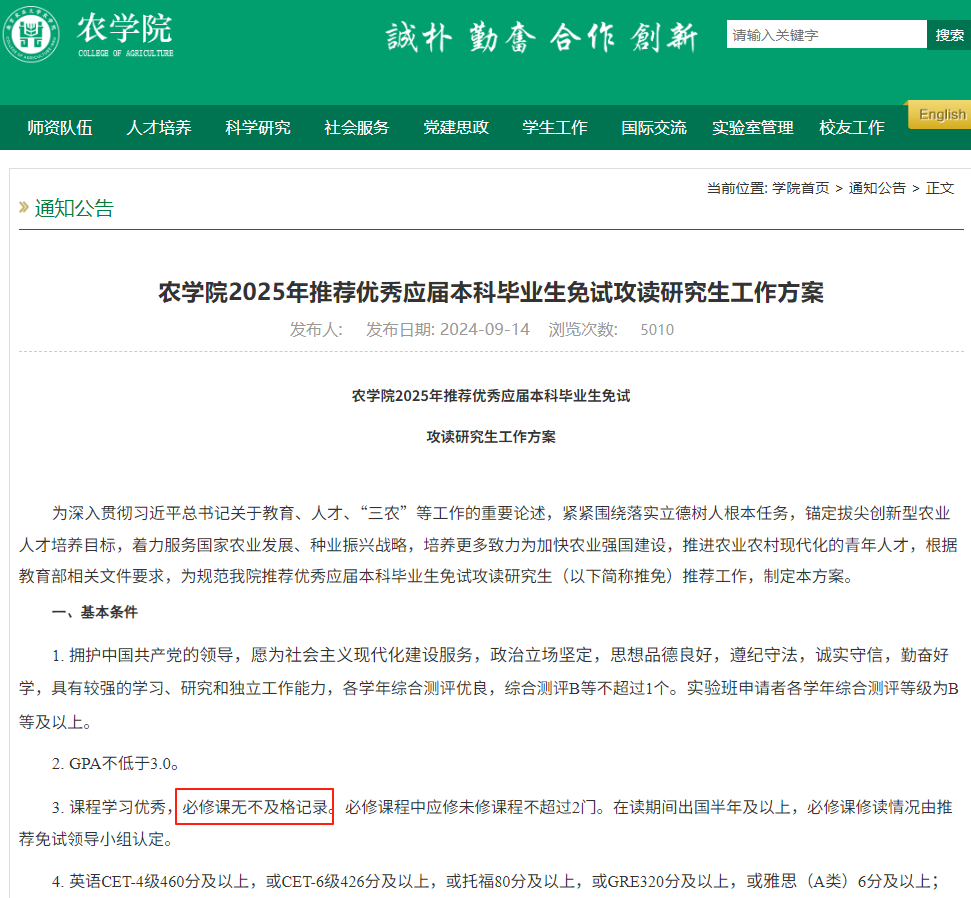
挂科,也能保研了! 南京农业大学今年放宽了保研的成绩要求,在《2026年推荐优秀应届本科毕业生免试攻读研究生工作方案》中允许必修课不及格记录不超过一门,且参加 推免时经补考或重修已通过课程考核。 而在去年推免要求中,南京农业大学还明确提出"必修课无不及格记录",今年便取消了这一限制,意味着学生挂科后仍有机会获得保研资格! 对保研学生来说,每门课程的第一次成绩至关重要,这是因为多数高校均以首次成绩作为合格的判定标准。比如南通大学交通与土木工程学院要求课程冲 抵前成绩没有补考或不及格课程;山东理工大学更是直言"课程首次成绩有不及格的不予推荐"。 "一次挂科成千古恨",想必是大多数冲刺保研学生的真实写照。 即便是补考重修,也会导致绩点下降,间接影响排名竞争力。如南昌大学的本科生学业成绩评定管理办法中规定:补考或重修及格的,成绩单成绩等级记 为D-(绩点为1.0),意味着学生需要在其他课程中获得极高的绩点,才能挽救这一损失。 "允许挂科一次" 图源:南京农业大学2025年、2026年推免工作方案 挂科=保研无缘? 通常情况下,在保研资格评选工作中,诸多高校有严格的成绩要求,甚至直接关闭了挂科学生的保研通道。 西北大学 ...

北大排名第4:工信部、中科院直属高校决算经费出炉
仪器信息网· 2025-08-23 06:00
特别提示 微信机制调整,点击顶部"仪器信息网" → 右上方"…" → 设为 ★ 星标,否则很可能无法看到我们的推送。 日前,工业和信息化部直属高校及中国科学院直属高校公布了2024年度经费决算情况。至此,84所部属高校经费决算 已出炉(国际关系学院尚未查询到)。 这些高校中,25所高校总经费突破百亿。 清华大学 以387.93亿元领跑全国。工业和信息化部直属高校中, 哈尔 滨 工业大学 总经费200.30亿元,居部属高校第5位。 中国科学技术大学 总经费144.94亿元,居部属高校第15位。 导读: 2024年84所部属高校经费决算公布,清华以387.93亿居首,25所超百亿。 教育部、工业和信息化部、中国科学院直属高校2024年度决算经费汇总如下: | 学校名称 | 主管 总经费 本年收入 | 本年支出 | 年末结转和 | | --- | --- | --- | --- | | | 部门 (亿元) (亿元) | (亿元) | 结余(亿元) | | 清华大学 | 教育部 387.93 259.82 258.38 | | 103.2 | | 浙江大学 | 教育部 331.21 194.73 182.14 | | ...

院士增选有效候选人TOP10高校,多人来自新型研究型大学
Di Yi Cai Jing· 2025-08-21 07:39
Group 1 - The 2025 academician election has a total of 639 candidates for the Chinese Academy of Sciences and 660 candidates for the Chinese Academy of Engineering, with each academy allowing for no more than 100 new academicians to be elected [1][4] - The top 10 universities with the most candidates include Tsinghua University, Peking University, Zhejiang University, Shanghai Jiao Tong University, Fudan University, Nanjing University, University of Science and Technology of China, Beihang University, Huazhong University of Science and Technology, and Harbin Institute of Technology [1][2] - Tsinghua University leads with 58 candidates, followed by Peking University with 55 candidates, and Zhejiang University with 39 candidates [2] Group 2 - New research-oriented universities like Westlake University and Ningbo Oriental Institute of Technology are emerging, with candidates from these institutions included in the election [2][3] - These new universities have substantial funding and a clear understanding of their operational mechanisms, allowing them to start at a high level of academic performance [3] - The election guidelines emphasize the importance of significant contributions, academic standards, and moral integrity, focusing on candidates who have made substantial contributions to national development and security [3][4]
别再瞎折腾了,中产家庭留学的时代已经结束
Hu Xiu· 2025-08-20 05:40
Group 1 - The number of Chinese students studying abroad has been declining over the past five years, with significant reductions in various prestigious universities [3][4][5] - The rising costs of studying abroad, particularly in the United States, have become unbearable for many families, with average annual expenses exceeding $100,000 [5][6] - The job market for returning Chinese students has become increasingly competitive, with many facing challenges in recouping their educational investments [9][10][11] Group 2 - The previous advantages of studying abroad, such as the "sea turtle" phenomenon, have diminished due to changing societal and economic conditions [20][24] - The tightening of U.S. visa policies has further complicated the prospects for Chinese students, with rejection rates for student visas reaching 36% in 2023 [25][32] - The global landscape for talent mobility is shifting, with increased restrictions on immigration and work opportunities in developed countries [28][30][31] Group 3 - Despite the challenges, there remains a recognition that studying abroad can still provide significant advantages in terms of personal development and specialized knowledge, particularly in STEM fields [39][40] - The need for exceptional talent persists, and individuals must align their skills with market demands to succeed in a more competitive environment [41][42]
高等教育从“宽出”到“严出”的转型突围
Zhong Guo Qing Nian Bao· 2025-08-18 00:16
高等教育从"宽出"到"严出"的转型突围 中国高等教育用24年时间完成了发达国家近百年的发展历程。1999年启动的扩招政策,使高等教育毛入 学率从2000年的12.5%跃升至2002年的15%,正式进入大众化阶段;至2023年,这一指标突破60%,标 志着我国全面迈入高等教育普及化新常态。 专家视野 当高等教育从"精英化"走向"大众化"再至"普及化",其核心功能已从选拔少数精英转向培养多样化人 才,教育理念、管理模式与评价体系也要"与时俱进",特别是"严进宽出"较快地从总体上变为"宽进宽 出"之后,高等教育人才培养质量面临全新的"严出"挑战。 英国高等教育质量保障体系以学位分级制度为核心,构建了精细化评价体系:本科成绩按课程权重计 算,这种设计使学习成效具象化,形成持续激励效应;市场层面,学位等级直接决定深造与就业机会; 社会层面,学位等级与职业起点强关联。其他国家如澳大利亚、俄罗斯等也有类似的制度设计。 该体系通过制度设计将外部需求转化为内在动力,实现"优胜劣汰"的良性循环。中国高校可借鉴其"过 程性激励+结果性应用"模式,结合国情探索创新试行"学位+荣誉等级"制度,让真正努力的学生拿到荣 誉证书,获得社会认 ...
清北等名校录取通知书都有错误?这是大学语境的外溢
Hu Xiu· 2025-08-09 12:45
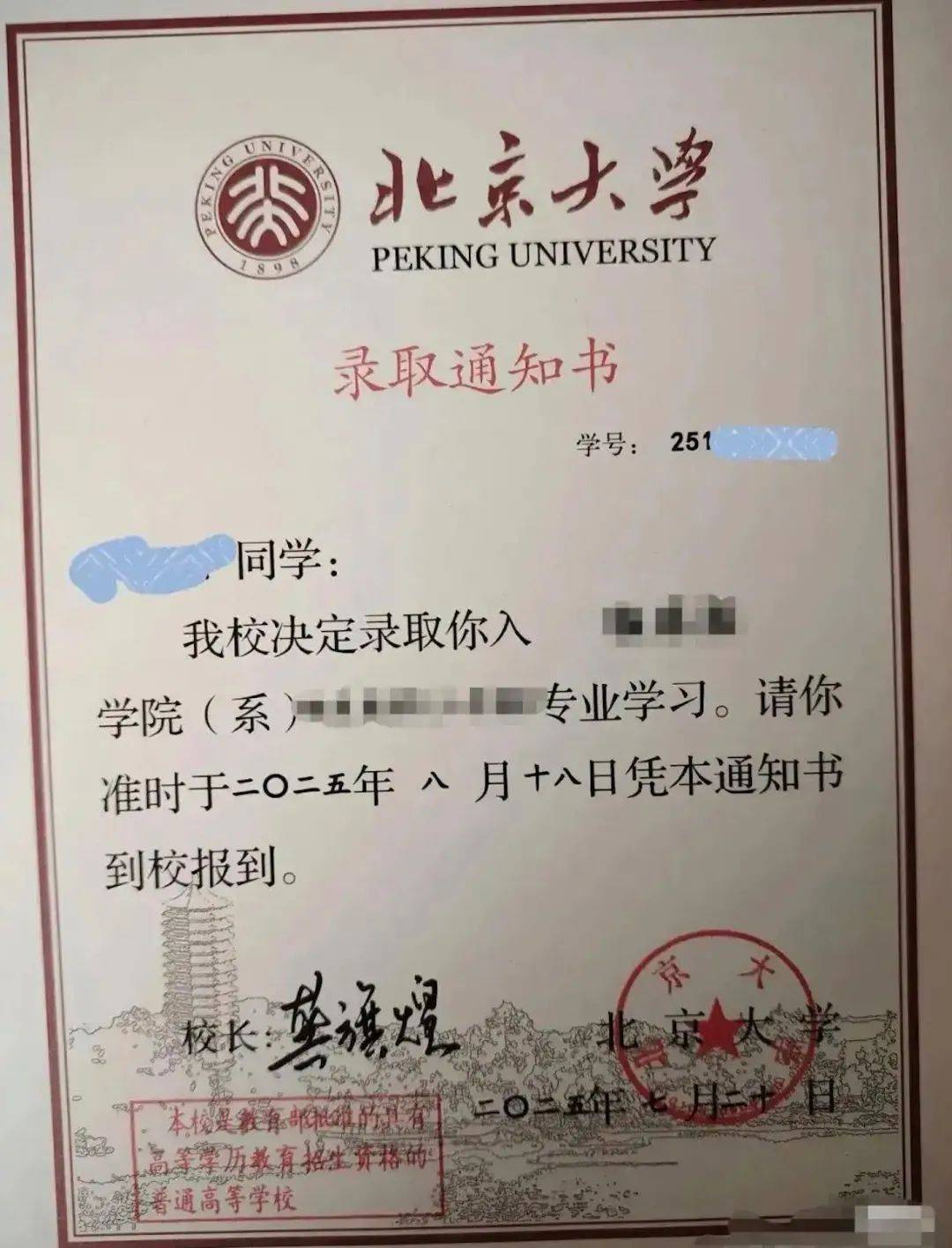
近日,国内名校"大学录取通知书"的遣词造句问题成为网络热点,先是网友曝出北京大学的录取通知书疑似有文法错误,随后清华大学的录取通知书也被 网友们拿过来斟酌,发现也有问题。中国的Top2高校,连"大学录取通知书"上的两句话都理不顺,这难免让全国人民"莫名惊诧"! 全网炒得最热的是北大录取通知书的问题,其实清华大学的录取通知书问题更多,清华是本科、硕士、博士三个版本的录取通知书文本都有问题,而且硕 博录取通知书的问题更大。 除北大清华外,我还整理了中国排名前10位左右的其他大学的录取通知书,发现基本上都有问题。我将其问题指出来,希望相关高校能够修正文本。这些 大学是:浙江大学、上海交大、复旦大学、南京大学、中国科学技术大学、华中科技大学、哈尔滨工业大学、武汉大学、中山大学、中国科学院大学等。 我们先说说北大录取通知书的问题,因为北大录取通知书的问题已经形成定论,确实是文本有问题,北大也承诺改正。其他大学录取通知书所犯的错误大 多和北大录取通知书的错误大同小异,不提北大录取通知书已成定论的问题,我个人指出其他大学录取通知书的问题,容易被网友们认为是鸡蛋里挑骨 头。毕竟这个时代,绝大部分人都不太注重文字的规范和准确, ...
大学生不考试啦,那未来怎么评价
3 6 Ke· 2025-08-07 12:09
Group 1 - Several top universities in China are reforming their GPA systems, with Fudan University introducing a P/NP grading system and Peking University planning to abolish GPA for undergraduates starting from 2025 [1][22] - The shift away from a strict GPA system reflects a broader critique of the "score-centric" approach in education, indicating a move towards more qualitative assessments [1][22] - The historical reliance on grading systems has created a culture of anxiety among students, leading to unhealthy competition and a focus on grades over genuine learning [10][19] Group 2 - The grading system, which has been a staple in education since the late 18th century, is now being questioned for its effectiveness and relevance in modern education [3][4] - Critics argue that the current grading practices do not accurately reflect students' understanding or capabilities, often reducing their educational experience to mere numbers [10][15] - The push for reform is not just about changing grading policies but also about redefining the values of education and what constitutes success [22]
大学生不考试啦!那未来怎么评价
经济观察报· 2025-08-07 11:56
Core Viewpoint - The article emphasizes the need to rethink and redesign the grading system in education to better reflect the actual needs of contemporary society and individual development, rather than simply abolishing it [1][25]. Group 1: Recent Changes in Grading Systems - Several "Double First-Class" universities in China, including Fudan University, have initiated reforms to the GPA system, allowing some courses to be graded as Pass/No Pass (P/NP) and reducing the weight of GPA rankings [3]. - Peking University announced the cancellation of the GPA system for undergraduate students starting from the 2025 cohort, marking a significant reform in recent years [3]. - These changes indicate a shift in higher education's reflection on the "score-centric" approach, moving from a marginal to a mainstream perspective [3][10]. Group 2: Historical Context of Grading Systems - The grading system has deep historical roots, dating back to 1785, and has evolved to become a primary basis for student-related decisions in American education [5][6]. - The grading system transitioned from a teaching tool to an organizational management tool, especially after the establishment of the College Board in 1899, which aimed to standardize grading across institutions [7][8]. Group 3: Critique of the Grading System - The grading system is criticized for distorting student motivation and failing to accurately assess true understanding, leading to a focus on tasks that yield quick scores rather than meaningful learning [10][11]. - The competitive nature fostered by grades often results in unhealthy comparisons among students, contributing to academic dishonesty and anxiety [11][22]. - The reliance on grades simplifies students to a single number, neglecting their unique qualities and learning styles, which undermines the essence of education [11][23]. Group 4: Proposed New Evaluation Systems - A new evaluation system should incorporate multiple dimensions such as learning logs, classroom participation, and teamwork, emphasizing process-oriented assessment rather than results [24]. - The article suggests moving towards a grading system that combines qualitative feedback with a narrative approach, reducing the emphasis on numerical rankings [24]. - Educational reforms should focus on fostering intrinsic motivation for learning, rather than relying on external rewards like grades [22][24].

大学生不考试啦,那未来怎么评价?
Jing Ji Guan Cha Wang· 2025-08-06 11:30
Group 1 - Several top universities in China are reforming their GPA systems, with Fudan University introducing a "P/NP" grading mechanism and Peking University announcing the cancellation of the GPA system for undergraduates starting in 2025 [2][3] - The shift away from traditional grading systems reflects a broader critique of the reliance on scores in education, moving towards a more qualitative assessment of student learning [2][4] - The historical context of grading systems reveals their evolution from local, personalized assessments to standardized measures that serve bureaucratic and organizational purposes in education [6][8] Group 2 - The grading system has been criticized for distorting educational practices, leading to a focus on grades rather than genuine learning, and fostering unhealthy competition among students [9][10] - The current GPA system is seen as inadequate in capturing individual student capabilities and learning styles, often reducing students to a single numerical value [10][18] - There is a growing recognition that the emphasis on grades can negatively impact student motivation and mental health, prompting calls for a reevaluation of assessment methods [13][19] Group 3 - The need for a new assessment system is highlighted, one that emphasizes process-oriented evaluation rather than purely outcome-based grading, incorporating elements like participation and collaboration [20][21] - Some educational institutions are experimenting with alternative grading methods, such as personalized feedback and mastery-based assessments, to better align with contemporary educational needs [20][21] - The reforms at Peking University symbolize a significant shift in educational philosophy, challenging traditional notions of success and the value of learning [21]

2025年国家杰青、优青名单,最新公布!
仪器信息网· 2025-08-04 03:58
Core Insights - The National Natural Science Foundation has announced the funding results for the 2025 Youth Science Fund projects, including Category A (including continuation funding, formerly known as National Outstanding Youth Fund) and Category B projects [2][3]. Funding Results Summary - The number of approved projects by various universities is as follows: - Peking University: 24 (A) - Tsinghua University: 22 (A), 9 (B) - Shanghai Jiao Tong University: 21 (A), 41 (B) - Zhejiang University: 21 (A), 25 (B) - Nanjing University: 16 (A), 15 (B) - Huazhong University of Science and Technology: 16 (A), 14 (B) - Fudan University: 12 (A) - University of Science and Technology of China: 11 (A) - Beihang University: 10 (A), 14 (B) - Sichuan University: 5 (A), 12 (B) - Tianjin University: 5 (A) - Sun Yat-sen University: 4 (A), 20 (B) - Nankai University: 6 (A), 9 (B) - Harbin University of Science and Technology: 4 (A), 8 (B) - Beijing Institute of Technology: 4 (A), 9 (B) - Shenzhen University: 3 (A), 9 (B) - Southwest University of Science and Technology: 3 (A), 5 (B) [3]. Project Funding Details - Category A projects receive funding of 4 million yuan (approximately 400 million) for a duration of 5 years, while Category B projects receive 2 million yuan (approximately 200 million) for a duration of 3 years [4]. Notable Projects - Professor Song Yongfeng from Shandong First Medical University received funding for his project on "Mechanisms and Intervention Strategies of Lipid Metabolism Disorders," with a grant of 4 million yuan [6]. - Professor Wang Hanxiao from Shenzhen University successfully obtained funding for the project "Stochastic Optimal Control Theory" under Category B [10]. - Professor Chen Miaomiao from Hubei University received funding for the project "Food Safety Sensing Detection," with a grant of 2 million yuan [11]. - Professor Chen Jing from Anhui Agricultural University received funding for the project "Molecular Mechanism of Natural Disease Resistance Protein L3 in Chili Peppers" under Category B [14].