扬杰科技

Search documents
基金大事件|百亿基金经理大扩容!重要指数调整结果出炉
中国基金报· 2025-11-08 09:11
Group 1 - The investment summit held by Huatai Securities emphasized a strong outlook for the revaluation of Chinese assets, particularly favoring the "old economy" sectors [2] - The China Securities Index Company announced the launch of two new indices focused on innovative drugs and medical devices, enhancing investment options in these sectors [3] - The National Healthcare Security Administration is set to release the first version of the commercial insurance innovative drug directory, aiming to support the development of innovative pharmaceuticals [3] Group 2 - Hong Kong ranked fourth globally in the 2025 World Digital Competitiveness Ranking, showing significant improvements in technology and knowledge factors [4][5] - The China Securities Regulatory Commission announced the initiation of reforms for the ChiNext board to better serve the "14th Five-Year Plan" for technological innovation [4] Group 3 - The A-share market has shown strong performance, leading to a significant increase in the number of active equity fund managers, surpassing 100 for the first time [10] - The issuance of new funds has surged, with notable demand for equity funds, as evidenced by the rapid fundraising of two "daylight funds" [8][9] Group 4 - Berkshire Hathaway reported a 34% year-on-year increase in operating profit for Q3, driven by a substantial rise in insurance underwriting profits [11] - The alternative investment management sector is increasingly recognizing the importance of the Chinese market, highlighting its vast scale and innovative potential [13] Group 5 - The MSCI announced adjustments to its important indices, with changes set to take effect on November 24, 2025 [14] - The financial regulatory authority has delegated certain administrative licensing and reporting matters to local financial regulatory branches to enhance efficiency [16] Group 6 - A notable shift in private equity fund allocations was observed, with significant adjustments in holdings among well-known private equity firms following the release of Q3 financial reports [21][22] - The market is currently experiencing a "slow bull" phase, with a focus on sectors like AI, robotics, and high-end manufacturing, despite volatility in the broader market [22]


汽车芯片概念震荡反弹,格尔软件涨停
Xin Lang Cai Jing· 2025-11-06 03:05
Core Viewpoint - The automotive chip sector is experiencing a significant rebound, with several companies seeing substantial stock price increases, indicating renewed investor interest and market optimism in this industry [1] Company Summaries - Geer Software has reached its daily limit increase in stock price, reflecting strong market performance and investor confidence [1] - Yuanjie Technology, Dongxin Co., Chip Original Co., Zhaoyi Innovation, Yangjie Technology, and Longxin Zhongke have also seen their stock prices rise, suggesting a broader positive trend within the automotive chip sector [1]



国联民生两保荐代表人再遭深交所追责,贝特电子创业板IPO失败之谜渐浮水面?
Sou Hu Cai Jing· 2025-11-05 16:18
Core Viewpoint - The challenges faced by Better Electronics in its IPO process are attributed to regulatory concerns over "fabricated listing" and recent penalties imposed on its sponsoring representatives, indicating potential issues with information disclosure and compliance [2][4][9]. Group 1: IPO Process and Regulatory Issues - Better Electronics terminated its IPO review in August 2024 after failing to address regulatory concerns regarding "fabricated listing" [2][5]. - The company had initially submitted its IPO application in June 2023 and completed the first round of inquiries by January 2024, but faced delays and ultimately withdrew its application [5][6]. - The company reported revenue growth from 449 million to 627 million from 2021 to 2023, with a compound annual growth rate (CAGR) of 18.19%, and a net profit CAGR of 64.80% during the same period [5][6]. Group 2: Financial Performance and Compliance - Better Electronics' financial data indicated it met the previous IPO requirements, but the introduction of stricter regulations in April 2024 raised the bar for net profit thresholds, complicating its IPO prospects [6][10]. - The company faced scrutiny over a significant increase in net profit in 2022, which was linked to an acquisition of Dongguan Boyue Electronics, raising questions about the legitimacy of its financial performance [7][9]. - The acquisition contributed significantly to Better Electronics' revenue and profit, with Dongguan Boyue accounting for approximately 30% of its revenue and nearly 48% of its net profit in 2022 [7][11]. Group 3: Consequences of Regulatory Actions - The penalties imposed on sponsoring representatives Zhang Tengfu and Wang Jianwei are seen as a reflection of Better Electronics' compliance issues during its IPO process [4][9][15]. - Following the termination of its IPO, Better Electronics attracted interest from Yangjie Technology, which proposed a cash acquisition valued at 2.218 billion, exceeding the valuation from its halted IPO [12][13]. - Despite the attractive acquisition offer, Better Electronics ultimately declined the proposal due to significant differences in business operations and management philosophy [13][14].


扬杰科技跌2.01%,成交额2.21亿元,主力资金净流出346.90万元
Xin Lang Cai Jing· 2025-11-05 02:31
Core Viewpoint - Yangjie Technology's stock has experienced fluctuations, with a year-to-date increase of 56.13% but a recent decline of 9.59% over the last five trading days [1] Financial Performance - For the period from January to September 2025, Yangjie Technology achieved a revenue of 5.348 billion yuan, representing a year-on-year growth of 20.89%, and a net profit attributable to shareholders of 974 million yuan, reflecting a growth of 45.51% [2] Stock and Market Activity - As of November 5, 2023, Yangjie Technology's stock price was 66.67 yuan per share, with a market capitalization of 36.225 billion yuan. The trading volume was 2.21 billion yuan, with a turnover rate of 0.61% [1] - The stock has seen a net outflow of 3.469 million yuan in principal funds, with significant buying and selling activity from large orders [1] Shareholder Information - As of October 20, 2023, the number of shareholders for Yangjie Technology was 59,000, a decrease of 3.28% from the previous period, with an average of 9,188 circulating shares per shareholder, an increase of 3.39% [2] - The company has distributed a total of 1.717 billion yuan in dividends since its A-share listing, with 1.18 billion yuan distributed over the last three years [3] Institutional Holdings - As of September 30, 2025, Hong Kong Central Clearing Limited was the third-largest circulating shareholder, holding 8.312 million shares, an increase of 390,600 shares from the previous period. Other notable changes include a decrease in holdings by E Fund's ChiNext ETF and Southern CSI 500 ETF [3]
安世半导体承认:不知道何时中方放行
Guan Cha Zhe Wang· 2025-11-05 00:44
Core Viewpoint - The Chinese government has announced a potential exemption for exports to semiconductor companies affected by the Dutch government's seizure of a Chinese semiconductor firm, signaling a possible easing of export controls and alleviating supply concerns for global automakers [1][7]. Group 1: Impact on Semiconductor Supply Chain - The Dutch seizure of the semiconductor company has led to significant supply chain disruptions, with reports indicating that the affected company, Nexperia, is unable to guarantee chip supply from its Dongguan factory [1][4]. - Approximately 70% of Nexperia's products are packaged in China, raising concerns about a potential shortage in the European market unless a diplomatic resolution is reached [2]. - Nexperia (China) has stated that it is actively working on multiple contingency plans to ensure long-term supply stability and is confident in meeting customer demands starting next year [5]. Group 2: Responses from Industry and Government - The Chinese semiconductor industry association has pledged support for member companies like Nexperia to defend their legal rights and maintain a stable business environment [6]. - German automotive suppliers are seeking exemptions from Chinese export restrictions, with companies like ZF and Aumovio applying for waivers to mitigate the trade dispute [6]. - The Chinese Ministry of Commerce emphasized the need for the Dutch government to adopt a constructive approach to resolve the issue and maintain global supply chain stability [7].
扬杰科技终止22亿高溢价收购:战略协同遇阻,财务影响可控
Xin Lang Cai Jing· 2025-11-04 08:57
Core Insights - Yangjie Technology announced the termination of its cash acquisition of 100% equity in Dongguan Better Electronics Technology Co., Ltd. due to differences in business philosophy between the two parties, raising questions about the logic of mergers and acquisitions in the semiconductor industry [1][3] Group 1: Transaction Background - Better Electronics is a leading company in the domestic power electronic protection device sector, with core products including power fuses and self-resetting fuses, widely used in high-growth sectors such as new energy vehicles, photovoltaics, and energy storage [2] - In 2024, Better Electronics achieved a revenue of 837 million yuan and a net profit of 148 million yuan, continuing its growth trend into Q1 2025 with a revenue of 218 million yuan and a net profit of 41.13 million yuan [2] - The acquisition was based on the expected strategic synergy between Yangjie Technology's power semiconductor business and Better Electronics' protective components, aiming to cover a complete range of electrical scenarios from device protection to power control [2] Group 2: Reasons for Termination - The direct reason for the termination was the proactive halt by Better Electronics' actual controller and major shareholders, stemming from significant differences in business types, management styles, and corporate cultures [3] - The high premium risk associated with the acquisition was also a critical consideration, with Better Electronics' valuation showing an increase of 282.89%, translating to an increase of 1.64 billion yuan over its book net assets [3] - Yangjie Technology had designed strict performance-based clauses, requiring compensation if actual net profits did not meet 90% of the promised value by the end of 2027, along with a requirement for the sellers to invest 716 million yuan in Yangjie Technology's stock as a performance guarantee [3] Group 3: Industry Implications - The termination of this acquisition serves as a warning for the semiconductor industry, highlighting the risks associated with high premiums and long-term performance guarantees in M&A transactions [4] - The case of Better Electronics illustrates that even with solid performance growth, significant differences in governance structure and cultural integration can lead to failed transactions [4] - Investors should focus on the feasibility of achieving synergies from acquisitions rather than relying solely on financial data and performance guarantees [4]
扬杰科技跌2.00%,成交额6.47亿元,主力资金净流入5747.07万元
Xin Lang Cai Jing· 2025-11-04 06:44
Core Viewpoint - Yangjie Technology's stock has experienced fluctuations, with a year-to-date increase of 58.26% but a recent decline of 8.77% over the past five trading days [1] Financial Performance - For the period from January to September 2025, Yangjie Technology achieved a revenue of 5.348 billion yuan, representing a year-on-year growth of 20.89%, and a net profit attributable to shareholders of 974 million yuan, up 45.51% year-on-year [2] Stock and Market Activity - As of November 4, Yangjie Technology's stock price was 67.58 yuan per share, with a market capitalization of 36.719 billion yuan. The trading volume was 6.47 billion yuan, with a turnover rate of 1.74% [1] - The net inflow of main funds was 57.4707 million yuan, with significant buying and selling activities recorded [1] Shareholder Information - As of October 20, the number of shareholders for Yangjie Technology was 59,000, a decrease of 3.28% from the previous period, while the average circulating shares per person increased by 3.39% to 9,188 shares [2] - The company has distributed a total of 1.717 billion yuan in dividends since its A-share listing, with 1.180 billion yuan distributed in the last three years [3] Institutional Holdings - As of September 30, 2025, Hong Kong Central Clearing Limited was the third-largest circulating shareholder, holding 8.312 million shares, an increase of 390,600 shares from the previous period [3] - Other notable institutional shareholders include E Fund's ChiNext ETF and Southern CSI 500 ETF, with changes in their holdings compared to the previous period [3]
为确保晶圆供应,安世中国已有应对之策
Guan Cha Zhe Wang· 2025-11-04 06:34
Core Viewpoint - The Chinese Ministry of Commerce has criticized Nexperia (Netherlands) for halting wafer supply to Nexperia (China), causing disruptions in the global semiconductor supply chain, and has called for responsible actions from the Dutch side to stabilize the situation [1][6]. Group 1: Supply Chain Impact - Nexperia (Netherlands) announced on October 26 that it would stop supplying wafers to Nexperia (China), leading to production disruptions [1]. - The Chinese government has stated that it will exempt eligible exports to facilitate the recovery of Nexperia (China) and stabilize the global semiconductor supply chain [1][6]. - Despite potential disruptions from European wafer supply, Nexperia (China) is expected to continue delivering products to domestic semiconductor clients [2]. Group 2: Alternative Suppliers - Several Chinese wafer manufacturers, including Wuxi Xin Jie Neng and Hangzhou Silan Microelectronics, are capable of supplying wafers to Nexperia (China) [2]. - Shanghai Ding Tai Jiang Xin Technology, part of Wingtech Technology, is also likely to provide wafers to Nexperia (China), with a significant investment of 12 billion yuan in a 12-inch wafer production facility [4]. Group 3: Production and Certification Challenges - Nexperia (China) may require 6 to 12 months to certify new wafer suppliers due to strict safety requirements, complicating the production scheduling process [4]. - Most Chinese wafer manufacturers primarily produce medium and low-voltage products, while foreign companies like Infineon and STMicroelectronics can produce high-voltage products, potentially limiting Nexperia (China)'s options [5]. Group 4: Market Reactions - Following positive news regarding the potential resumption of chip shipments from Nexperia (China), stock prices of European automakers such as Volkswagen, Mercedes-Benz, and Volvo rose by at least 3% [6]. - Nexperia (Netherlands) welcomed recent statements from China and the U.S. that removed obstacles to chip shipments but refrained from commenting on Nexperia (China)'s plans to accelerate its independence [6]. Group 5: Company Statements and Legal Issues - Nexperia (China) has assured customers of sufficient inventory to meet demand until the end of the year and is actively validating new wafer production capacities [7]. - Nexperia (China) refuted claims of contract violations, stating that Nexperia (Netherlands) owes 1 billion yuan to its packaging and testing factory in Dongguan [7].
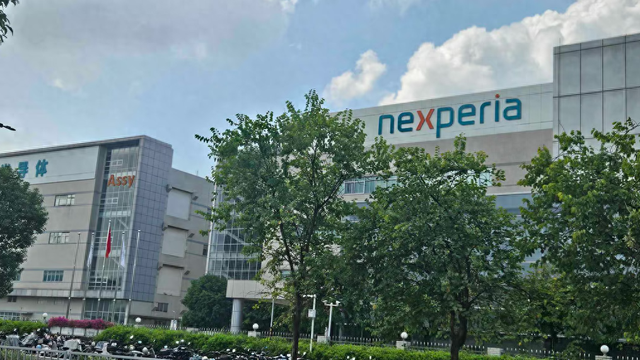
How Nexperia's China unit can meet chip orders amid European fabs' suspended wafer supply
Yahoo Finance· 2025-11-03 09:30
Core Viewpoint - Nexperia's China unit is expected to secure domestic wafer supply despite current challenges, with a focus on maintaining production for the global automotive industry [1][6]. Group 1: Domestic Supply Chain - Nexperia China is anticipated to receive wafer supplies from several Chinese fabs, including Wuxi NCE Power, Hangzhou Silan Microelectronics, and Yangjie Technology [2]. - An alternative domestic wafer supplier could be Shanghai Dingtai Jiangxin Technology, a sister company of Wingtech Technology [3]. Group 2: Investment and Production Capacity - WingSkySemi, part of Wingtech, has invested 12 billion yuan (approximately US$1.7 billion) in a Shanghai fab for 12-inch wafers, which is seen as a strategic pivot for the Chinese market [5]. - Nexperia China is accelerating the qualification of new wafer supply sources and is confident in meeting customer demands starting next year [8]. Group 3: Customer Assurance and Contingency Plans - Nexperia China has multiple contingency plans and sufficient inventory to ensure a secure chip supply [7]. - The company is focused on reassuring customers about uninterrupted production, especially in light of recent export ban considerations by China's Ministry of Commerce [6].
2026年中国可控硅整流器行业政策、产业链图谱、运行现状、竞争格局及未来发展趋势研判:特高压需求持续释放,细分市场结构优化升级[图]
Chan Ye Xin Xi Wang· 2025-11-03 01:08
Core Insights - The article highlights the significance of Silicon Controlled Rectifiers (SCR) in the power electronics sector, emphasizing their efficiency in energy control and their role in industrial automation and renewable energy applications [1][6][9]. Industry Overview - SCRs are based on a four-layer, three-terminal semiconductor structure, allowing precise control of high current with minimal input [2][3]. - The Chinese government is promoting the development of the energy electronics industry through various policies aimed at technological innovation and industry collaboration [6][9]. Market Structure - The SCR industry is characterized by a supply chain where the upstream includes high-purity silicon wafers, with an increase in self-sufficiency for 8-inch wafers but continued reliance on imports for 12-inch wafers [6][7]. - The downstream market is dominated by applications in power and industrial control, accounting for nearly two-thirds of the market, with renewable energy as a key growth driver [7][8]. Market Size and Growth - The SCR market in China is projected to reach 5.6 billion yuan in 2024, driven by the demand for ultra-high voltage power grids and photovoltaic energy storage [9][10]. - The high-voltage direct current (HVDC) market is expected to grow significantly, reaching 89.2 billion yuan in 2024, with a compound annual growth rate of 42.3% [8][9]. Competitive Landscape - The industry is marked by a clear division where domestic companies dominate the mid-to-low-end market, while international giants control the high-end segment [10][11]. - Local firms are increasingly focusing on high-end applications, leveraging cost advantages and integrated device manufacturing (IDM) models [10][11]. Development Trends - The SCR industry is undergoing a transformation driven by the adoption of third-generation semiconductor materials like silicon carbide (SiC) and gallium nitride (GaN), enhancing product performance [11][12]. - There is a shift towards smart integrated systems, with products evolving to include real-time monitoring and predictive maintenance capabilities [12][13]. - The trend towards domestic production and supply chain integration is strengthening the competitive position of local companies in the global market [13].