Figure AI

Search documents
全球首个家务机器人开卖,月租3600,拿瓶水要1分钟,还得真人遥控
3 6 Ke· 2025-10-29 11:12
Core Insights - The world's first consumer-oriented humanoid robot, Neo, is now available for pre-order, designed to assist with household chores and daily tasks [1][5][10]. Group 1: Product Features - Neo stands 1.68 meters tall, weighs approximately 30 kilograms, and is designed with a soft polymer exterior, making it appear less like a traditional robot [8][10]. - The robot has 22 joints in its arms, allowing it to lift objects weighing up to 20 kilograms [8]. - Equipped with 3D visual cameras, a microphone array, and the NVIDIA Jetson platform, Neo can recognize voice commands, understand objects, and even engage in conversation [10][12]. - Core functionalities include household tasks like folding clothes, organizing shelves, and providing daily assistance such as fetching items and greeting guests [12][14]. Group 2: Pricing and Availability - Neo is priced at $20,000 for a one-time purchase or $499 per month for a subscription service [5][7]. - The initial batch of robots will be delivered to U.S. customers starting in 2026, with plans to expand globally by 2027 [7][10]. Group 3: Operational Mechanism - Neo is not fully autonomous; it requires remote human operators for complex tasks, which raises privacy concerns [16][19]. - Users can summon a "1X Expert" to remotely control Neo when it encounters tasks it cannot handle independently [16][19]. - The robot learns from these interactions, allowing it to improve its capabilities over time [16][23]. Group 4: Market Context - The humanoid robot market is rapidly growing, with significant investments and interest from major companies like OpenAI and NVIDIA [26]. - Competitors in the field include Tesla's Optimus robot and Figure AI, which recently raised $1 billion at a valuation of $39 billion [26][30].


估值高达2700亿!一公司引全球侧目!千亿估值背后,与深圳这里有关
Nan Fang Du Shi Bao· 2025-10-27 06:51
Core Insights - The article highlights the emergence of Bao'an District in Shenzhen as a significant player in the global robotics industry, particularly in the development of humanoid robots and advanced robotic components [1][2][3] - Bao'an contributes nearly 35% of Shenzhen's robot output, showcasing its importance in the robotics manufacturing landscape [2] - The district is home to key companies that supply critical components for leading humanoid robot manufacturers, indicating a robust supply chain and technological prowess [9][10] Industry Overview - Bao'an is evolving from a manufacturing hub to a center for intelligent robotics, focusing on integrating algorithms, software, hardware, and application scenarios [2][12] - The district has established itself as a "testing ground" for the fusion of various technologies, aiming to simplify the industrialization process of robotics [2][14] - The local ecosystem supports rapid innovation and collaboration among companies, enabling quick responses to market demands and technological challenges [17][21] Key Companies and Innovations - Figure AI, a humanoid robot company, recently achieved a valuation of 270 billion RMB after a funding round, highlighting the financial interest in robotics [1] - Companies like Zhaowei Electromechanical and Muscular Technology are at the forefront of developing advanced robotic components, such as dexterous hands with multiple degrees of freedom [6][7][8] - The emergence of local firms like Luming Robotics, which has developed a robot capable of rapid movement and high torque, exemplifies the innovative capabilities within Bao'an [11][19] Talent and Ecosystem - Bao'an's success is attributed to a unique industrial ecosystem that fosters collaboration between top talent, innovative companies, and supportive government policies [16][18] - The region has attracted numerous skilled professionals and entrepreneurs, contributing to a vibrant environment for technological advancement [19] - The local government plays a crucial role in facilitating business operations and providing resources, enhancing the overall efficiency of the robotics industry [21][22] Future Prospects - The article suggests that Bao'an is well-positioned to lead in the next phase of AI and robotics, focusing on practical applications and integration of advanced technologies [22] - The district's commitment to building a comprehensive innovation ecosystem, including partnerships across various sectors, is expected to drive future growth [22]

马斯克的机器人计划,藏不住了
3 6 Ke· 2025-10-26 23:24
Core Insights - The focus of Tesla's third-quarter earnings call shifted from automobiles to the humanoid robot Optimus, with plans to launch Optimus V3 in Q1 2026 and a production target of 1 million units annually by the end of next year [1][6] - The global competition in embodied intelligence is intensifying, with significant investment activity in the Chinese market, indicating a growing interest and demand for humanoid robots [1][2] Industry Trends - The humanoid robot sector is experiencing a critical transition from technical concepts to commercial viability, with the past three years marked by distinct phases of technological breakthroughs and player positioning [3][4] - The first phase (2022-2023) focused on motion control, while the second phase (2023-2024) is characterized by multi-modal perception capabilities, leading to increased player participation and funding [3][4] - The upcoming phase (2024-2025) is expected to emphasize cognitive capabilities, driven by advancements in large-scale AI models, resulting in explosive growth in funding and a shift towards commercialization [4][5] Competitive Landscape - International players like Tesla and Figure AI are focusing on full-stack self-research and deep integration into industrial applications, while domestic players are pursuing targeted breakthroughs and customized solutions [5][9] - Tesla's strategy emphasizes scaling and generalization, leveraging its manufacturing capabilities to penetrate both industrial and consumer markets, akin to the success of the Model 3 in the electric vehicle sector [8][9] Market Potential - Morgan Stanley predicts that the global humanoid robot market could reach $5 trillion by 2050, with Tesla potentially generating $500 billion in revenue from Optimus if it captures 10% of the market [8] - The demand for humanoid robots is driven by the need for cost-effective and adaptable solutions in both industrial and consumer applications, yet current supply faces challenges related to high costs and limited adaptability [12] Challenges and Risks - The industry is witnessing a disparity between technological advancements and commercial readiness, with many companies still in early funding stages and lacking scalable revenue [10][11] - The reliance on imported components and the absence of unified standards in key technology metrics pose significant challenges for the industry, potentially leading to resource wastage and increased costs [12]

机械设备行业专题研究:机器人大脑是商业化焦点,Sim2real或成主流训练方案
GOLDEN SUN SECURITIES· 2025-10-26 09:06
Investment Rating - The report maintains an "Accumulate" rating for the mechanical equipment industry [4]. Core Insights - The focus of commercialization is on robotic brains, with Sim2Real potentially becoming the mainstream training method [2]. - The development of humanoid robot models is rapidly advancing, with Tesla's Optimus model demonstrating a high degree of human-like capabilities [3][29]. - The report suggests paying attention to listed companies involved in related hardware and software businesses, such as Pinming Technology [3]. Summary by Sections Section 1: Robotic Brain Development - The evolution from LLM to VLM and then to VLA models is enhancing the generalization and precision of robotic actions [1]. - VLA models are increasingly incorporating tactile inputs to improve robustness [1]. Section 2: Sim2Real Technology - Sim2Real utilizes synthetic data generation to help robots accumulate experience through diverse scenarios, linking virtual and real-world data for training [2]. - The technology involves a tri-computer setup: an AI supercomputer, a simulation computer, and a physical AI computer [2]. Section 3: Tesla's Optimus Model - Tesla's Optimus integrates AI systems from FSD and xAI's Grok model, achieving high levels of human-like interaction and physical self-awareness [3][29]. - The model's architecture allows it to process various sensory data to generate action commands directly from raw sensor inputs [33]. Section 4: Emerging Technologies and Models - The report discusses several innovative models, including RT-1, RT-2, Magma, and ViLLA, each contributing to bridging the gap between visual/textual inputs and robotic actions [14][17][22]. - The introduction of the "force-position hybrid control algorithm" by the Beijing General Artificial Intelligence Research Institute shows significant improvements in task success rates [58]. Section 5: Market Trends - The mechanical equipment industry is projected to experience varying growth rates, with a notable increase expected in the coming years [5].
大脑:具身智能落地的关键
Soochow Securities· 2025-10-24 06:02
Investment Rating - The report maintains an "Overweight" rating for the computer industry, indicating a positive outlook for the sector in the next 6 months [1]. Core Insights - The brain is identified as the key to achieving embodied intelligence, with humanoid robots consisting of a brain, cerebellum, and body, where the brain utilizes AI large models for optimal decision-making based on environmental inputs [3][8]. - The technology path for embodied intelligence is still in the exploratory phase, with three main technical routes: end-to-end VLA, brain+cerebellum layered approach, and world model technology [3][13]. - The development of the robot brain is seen as a critical bottleneck for the advancement of embodied intelligence, with current challenges primarily related to model issues rather than data [3][18]. - The global landscape features a diverse array of robot brain manufacturers, with several companies achieving valuations exceeding $1 billion, such as Galaxy General at 11.5 billion yuan and Physical Intelligence at $2.4 billion [3][17][46]. - Investment suggestions highlight the rapid growth of the embodied intelligence market, emphasizing the importance of the brain in this development, and recommend focusing on related companies [3][56]. Summary by Sections 1. Definition and Capabilities of Robot Brain - The humanoid robot's brain is based on AI large models, enabling autonomous navigation, task execution, and human-robot interaction [8][9]. 2. Parallel Exploration of Humanoid Robot Large Model Technologies - The report outlines three main technical routes for humanoid robot brain development: end-to-end VLA, brain+cerebellum layered approach, and world model technology, with ongoing research in each area [13][14]. 3. Industry Participants in Humanoid Robot Brain - Participants are categorized into three types: companies specializing in robot brains, general large model companies, and companies developing their own solutions [17]. 4. Key Bottleneck in Embodied Intelligence Development - The report emphasizes that the robot large model is the most significant challenge facing intelligent agents, limiting the large-scale application of humanoid robots [18][19]. 5. Challenges in Developing Embodied Intelligence Large Models - The report discusses the difficulties in obtaining training data for embodied intelligence, highlighting the scarcity of interaction data with the physical world [20][21]. 6. Diverse Global Robot Brain Manufacturers - The report details various companies in the sector, including Tesla, Figure AI, Physical Intelligence, and others, each with unique approaches and technological advancements [22][31][36].
54岁的马斯克,卷不过39岁的机器人新贵?
Sou Hu Cai Jing· 2025-10-23 13:42
Core Insights - The competition between Elon Musk's Tesla and Brett Adcock's Figure in the humanoid robot sector highlights two distinct approaches to realizing the future of robotics [4][28] - Figure's recent product launch, Figure 03, has gained significant public attention, contrasting with Tesla's more reserved approach to showcasing its Optimus robot [2][28] Company Overview - Tesla and Figure entered the humanoid robot market around the same time, with Musk announcing the Tesla Bot (later named Optimus) in August 2021 and Adcock founding Figure AI shortly thereafter [5][6] - Both companies have made significant strides in humanoid robot development, with Tesla focusing on engineering and system building, while Figure emphasizes public engagement and practical demonstrations [4][24] Product Development Timeline - Tesla's Optimus has seen several iterations, including the Bumble C prototype in 2022 and the Gen1 and Gen2 models in 2023, with a focus on refining its capabilities [6][7] - Figure has rapidly progressed with its robots, launching Figure 01 in March 2023 and Figure 02 in August 2024, showcasing practical applications in everyday settings [6][9] Public Perception and Marketing - Figure's marketing strategy involves demonstrating robots in relatable home environments, creating a tangible sense of how robots can integrate into daily life, while Tesla's focus remains on technical specifications and engineering challenges [3][4] - The contrasting narratives have led to Figure capturing more public attention, while Tesla's Optimus is perceived as a more internal project lacking public visibility [3][14] Future Projections - Musk envisions a future where humanoid robots could outnumber humans significantly, with production targets suggesting Tesla could manufacture up to 100 million units annually [15][28] - However, challenges in production, supply chain issues, and team instability have led to delays in Tesla's robot rollout, raising questions about its ability to meet these ambitious goals [19][26] Strategic Focus - Figure's singular focus on humanoid robots allows it to allocate all resources towards this goal, while Tesla's broader responsibilities as an automotive and energy company may hinder its agility in the robotics space [20][25] - The competition reflects a generational shift, with Adcock embodying a more agile, startup mentality compared to Musk's established corporate approach [27][28]

人形机器人_优必选订单斩获与特斯拉供应链逐步扩大推动人形机器人动能-Humanoid Robots_ UBTech‘s contract wins and Tesla‘s supply chain ramp-up drive momentum in humanoid robots
2025-10-23 13:28
Summary of Conference Call Notes Industry Overview: Humanoid Robots - The humanoid robot sector is experiencing rapid commercialization and order momentum, transitioning from hype to scalable business models, as noted in the report "CIIF 2025 Takeaways Part 1" published on September 30, 2025 [2][3] - Chinese OEMs, particularly UBTech and Agibot, are demonstrating strong order momentum and expanding into various scenarios, with contracts primarily focused on manufacturing, commercial services, and government-led data collection [2][8] - US companies like Tesla and Figure AI are pushing technological advancements, especially in AI and scalable manufacturing, although they are still ramping up delivery scales [2][11] Key Companies and Their Performance UBTech - UBTech has secured cumulative orders of approximately Rmb630 million year-to-date, translating to around 950 units, exceeding its 2025 delivery guidance [9] - Recent significant contracts include: - Rmb250 million from a leading domestic enterprise for commercial use - Rmb30 million from Miracle Logistics Automation - Rmb32 million from a domestic auto parts company - Rmb126 million for a data collection project in Guangxi [9][14] - The Walker S2 model features autonomous battery swapping and collaborative intelligence, enhancing its appeal in industrial applications [9] - Management targets annual shipments to exceed 2,000 units by FY26, with breakeven and operational cash flow turnaround expected by FY27 [9] Agibot (Zhiyuan Robotics) - Agibot is expanding its industrial presence with significant contracts in automotive and consumer electronics, including a multi-hundred million RMB order from Longqi Technology [9] - The newly launched Jingling G2 robot is designed for factory production and logistics, emphasizing supply chain resilience [9] - Agibot's product portfolio targets various application scenarios, with the Genie model expected to contribute significantly to revenue [9] Tesla - Tesla's Optimus program aims for a long-term target of 1 million humanoid robot units per year, but technical challenges have led to a reduction in output forecasts for 2025 from 5,000 to 2,000 units [12] - The supply chain ramp-up continues, with Chinese suppliers playing a crucial role in supporting future scale [12] Figure AI - Figure AI raised over $1 billion in a Series C funding round, enhancing its capabilities in scaling humanoid robots and AI platforms [12] - The launch of Figure 03, featuring advanced AI and mass-manufacturing readiness, positions it for future commercial deployment [13] Market Sentiment and Competitive Landscape - Competitive tensions are rising, with frequent accusations among OEMs regarding the authenticity of order announcements and technology claims [10] - The environment is characterized by skepticism fueled by unverified headlines and market speculation, necessitating greater transparency and due diligence [10] Investment Outlook - The outlook for sector leaders remains constructive despite market volatility, with strong fundamentals supporting growth [3] - Companies like UBTech, Leader Drive, and Sanhua Intelligent are well-positioned to capture significant market share in the next growth phase, backed by robust order books and established customer relationships [3] - Other companies such as Hengli Hydraulic, Shenzhen Inovance, and AirTAC are also expected to benefit from rising automation intensity [3]
机器人产业商业化正不断加速,机器人概念股盘中反弹,机器人ETF基金(562360)早盘探底回升快速翻红
Mei Ri Jing Ji Xin Wen· 2025-10-22 02:35
Core Viewpoint - The robotics industry is experiencing accelerated commercialization, with significant developments in humanoid robots and substantial orders being secured by key players in the market [2]. Group 1: Market Performance - The A-share market opened lower, but robotics concept stocks rebounded during the session, with notable gains from companies like China National Heavy Machinery (涨停) and Huazhong CNC [1]. - The robotics ETF (562360) showed resilience by recovering from an early dip and turning positive during the trading session [2]. Group 2: Industry Developments - Recent product launches include the new generation humanoid robot Unitree H2 by Yushu Technology, Figure 03 by Figure AI, and the G2 by Zhiyuan Robotics [2]. - UBTECH won a project for the procurement and installation of intelligent data collection and testing center equipment in Guangxi, with an order amounting to 126 million yuan, including the latest autonomous battery-swapping humanoid robot Walker S2 [2]. - UBTECH's Walker series humanoid robots have collectively secured over 630 million yuan in orders for the year [2]. Group 3: Market Outlook - Analysts suggest that with the acceleration of domestic and international enterprise layouts and breakthroughs in AI technology, humanoid robots are expected to reach a mass production phase [2]. - There is a strong demand for domestic production of core components for humanoid robots driven by cost reduction needs, indicating a broad market potential for companies that achieve breakthroughs [2].
Why Risk and Safe Assets Are EXPLODING At The Same Time
From The Desk Of Anthony Pompliano· 2025-10-21 21:00
Market Trends & Macroeconomics - The market is witnessing a simultaneous rise in both risk assets and safe haven assets, deviating from traditional investment principles [6][7] - Investors are pouring capital into various asset classes due to expectations that the government will continue printing money, national debt will keep rising, central banks will cut interest rates, and artificial intelligence will boost company profitability [11][12][13] - The macro environment has shifted from being negligible to potentially the most crucial factor in today's financial markets [17] Investment Strategy - Converting fiat dollars into investment assets is a key decision to avoid currency debasement and high inflation [14] - While some investors prefer offensive strategies and others defensive, there is enough capital for both types of assets to appreciate [15][16] - Corrections are expected along the way, but maintaining a long-term perspective is crucial [16] Government Shutdown & Prediction Markets - Prediction markets indicate a 41% chance that the government shutdown will end between October 23rd and 26th [18][19][20] - Prediction markets are economically incentivized, making them a potentially accurate source of information [19] Technology & Robotics - Advancements in humanoid robots are rapidly progressing, with robots demonstrating capabilities such as greeting guests and operating vacuum cleaners [21][22][23][25] - Companies are in a race to innovate and attract capital, releasing videos to showcase their technology and convince the market of their potential [26][27] - Consumers are expected to benefit from the proliferation of robots in homes, offices, and throughout society [28]

黄仁勋“撒钱”创纪录,英伟达超级AI帝国崛起,但没带中国玩
3 6 Ke· 2025-10-21 11:39
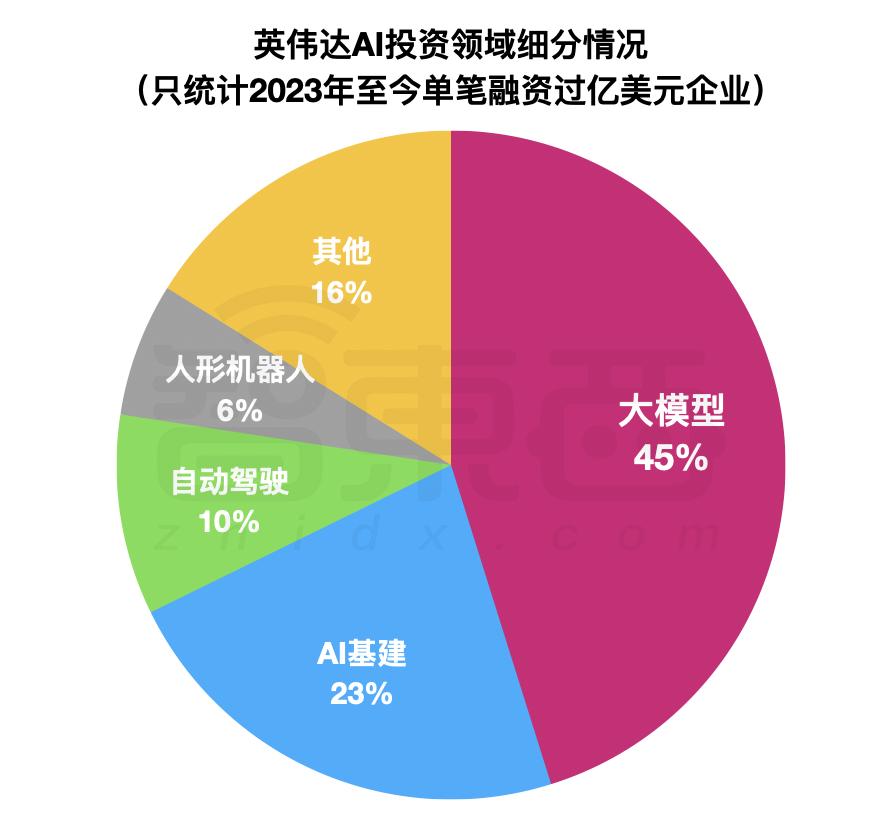
2023年英伟达参与的融资为34笔,2023年之前的四年其共计参与了38笔。需要注意的是,这些投资还不包括其旗下企业风险投资基金NVentures的投资, NVentures今年目前已参与了21笔交易,去年全年24笔,2022年仅参与2笔。 具体来看,2023年以来,英伟达参与的融资中单笔融资过亿美元的企业共31家。2025年投资的企业中,单笔融资超过10亿美元(折合人民币约71亿元)的 企业共7家、获得数亿美元的共8家、融资刚超过1亿美元的有5家。其中,获英伟达投资的OpenAI、xAI、Mistral AI、Figure AI的估值均已超过百亿美 元。 据智东西统计,这些企业所属的领域中,大模型相关最多共14家,其次为AI基础设施相关共7家,自动驾驶和人形机器人相关分别为3家和2家,其余量子 计算、核聚变等相关企业共5家。 10月13日,全球知名投资追踪机构PitchBook发布的报告显示,截至10月9日,英伟达今年参与的AI相关融资已经达到50笔,超过2024年全年48笔总和。 英伟达AI投资领域细分情况(2023年至今单笔融资过亿美元企业) 从地域来看,英伟达投资的绝大多数都为美国企业,有少数几家英国 ...