L'Oreal

Search documents
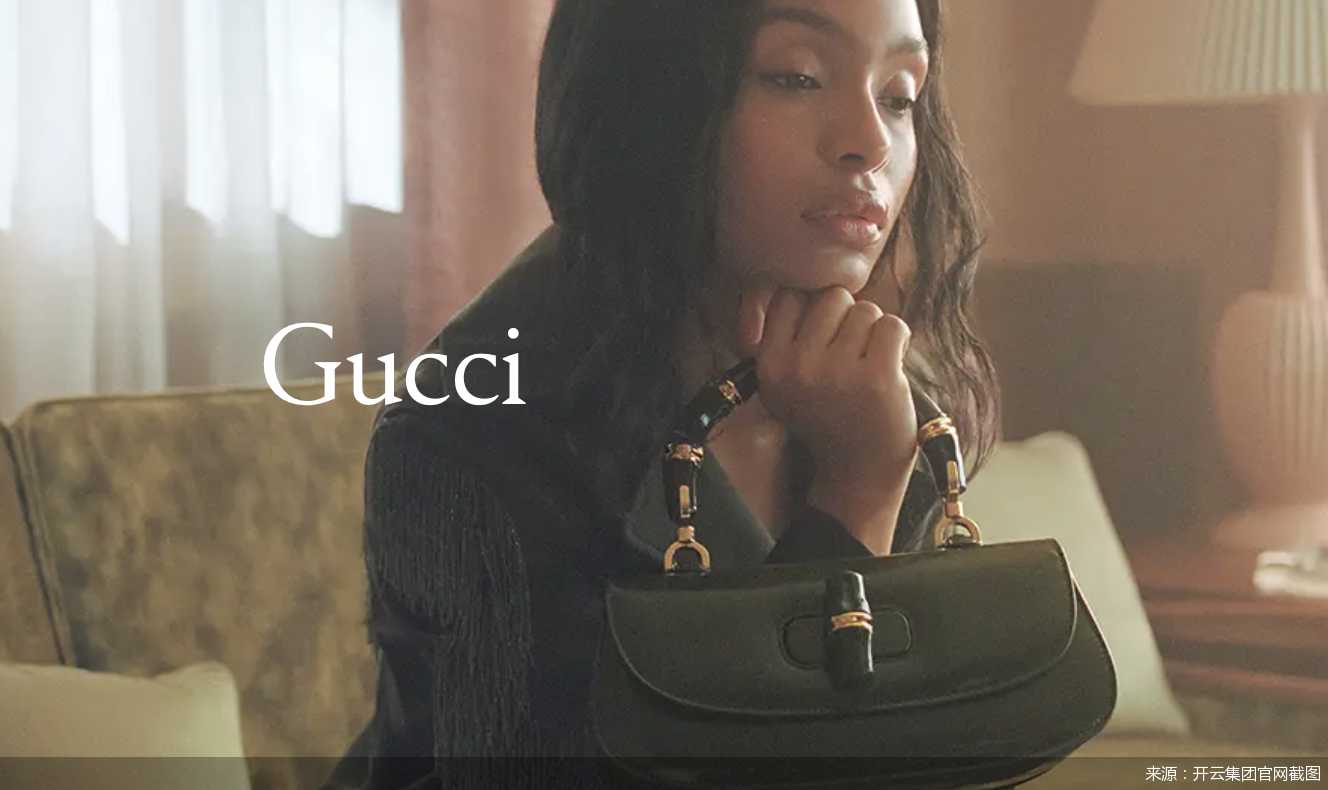
Gucci母公司官宣:拟以40亿欧元将美容业务出售给欧莱雅
Mei Ri Jing Ji Xin Wen· 2025-10-20 03:57
Core Viewpoint - Kering Group announced an agreement with L'Oréal Group for the sale of its beauty division for €4 billion, marking a significant strategic shift for Kering [1] Group 1: Transaction Details - L'Oréal will acquire Kering's beauty business, which includes the Creed brand and a 50-year license for several luxury brands such as Bottega Veneta and Balenciaga [1] - Gucci will join the agreement after the expiration of its licensing period with Coty Group [1] - The transaction will be a cash payment and is expected to be completed in the first half of 2026 [1] Group 2: Financial Performance - Kering's beauty division reported annual revenue of €323 million for 2024, primarily driven by the Creed brand [1]

开云集团(PPRUY.US)作价40亿欧元向欧莱雅出售美妆业务 旨在削减债务重振时尚主业
智通财经网· 2025-10-20 01:49
Core Viewpoint - Kering Group has agreed to sell its beauty business to L'Oréal for €4 billion (approximately $4.66 billion) as part of a strategic move by new CEO Luca de Meo to address high debt levels and refocus on core fashion operations [1][2] Group 1: Transaction Details - The agreement allows L'Oréal to acquire Kering's perfume brand Creed and grants a 50-year exclusive license to develop beauty products based on Kering's fashion brands, including Gucci, Balenciaga, and Saint Laurent [1] - The sale is a significant step for Kering to reduce its net debt, which stood at €9.5 billion as of June 30, alongside €6 billion in long-term lease liabilities [1] Group 2: Business Performance - Kering's beauty business, established in 2023, recorded an operating loss of €60 million in the first half of the year, highlighting the challenges faced in diversifying away from Gucci [2] - Gucci's revenue fell by 25% year-on-year in the last fiscal quarter, increasing Kering's pressure to deleverage and avoid further credit rating downgrades [2] Group 3: Strategic Implications - The transaction marks a shift in strategy under CEO de Meo, who took over in September and has committed to rationalizing the business and restructuring if necessary to lower debt levels [2] - L'Oréal's acquisition is its largest to date, surpassing the $2.5 billion purchase of Australian brand Aesop in 2023, indicating L'Oréal's aggressive expansion strategy [2]
Kering to sell beauty unit to L'Oreal for $4.66 billion.
New York Post· 2025-10-20 00:22
Gucci owner Kering has agreed to sell its beauty business to L’Oreal for $4.66 billion, the company said on Sunday, as new CEO Luca de Meo moves to tackle the luxury group’s high debt and refocus on its core fashion business.Under the deal, French beauty giant L’Oreal will acquire Kering’s fragrance line Creed, as well as rights to develop products under Kering’s fashion labels Bottega Veneta and Balenciaga under a 50-year exclusive license.L’Oreal is acquiring Kering’s fragrance line Creed, and rights to d ...

开云美妆或40亿美元易手欧莱雅
Bei Jing Shang Bao· 2025-10-19 15:40
Core Insights - Kering Group plans to sell its beauty division to L'Oréal for approximately $4 billion, which includes the development rights for several luxury beauty brands [1][9] - The sale is seen as a strategic move for Kering to alleviate its debt crisis and refocus on its core brands, while L'Oréal aims to strengthen its position in the luxury beauty market [1][9] Kering Group's Strategy - Kering's beauty division includes brands like Creed, Bottega Veneta, Balenciaga, and McQueen, and the sale allows Kering to retain its core brand assets while monetizing the beauty segment [3][9] - The new CEO, Luca de Meo, known for his turnaround strategies in the automotive industry, is implementing significant changes within Kering, including leadership changes in its core brand Gucci [4][5] Financial Performance - Kering's beauty division has been a highlight in its financial reports, with beauty revenue reaching €323 million in 2024 and a 9% growth rate in the first half of 2025 [6][7] - Despite the beauty segment's growth, Kering's overall performance has been declining, with a 16% drop in revenue to €7.587 billion and a 46% decrease in net profit to €474 million in the first half of 2025 [7][8] L'Oréal's Acquisition Strategy - The acquisition of Kering's beauty brands aligns with L'Oréal's strategy to enhance its luxury beauty portfolio, as it has been actively acquiring high-end brands to solidify its market position [9][10] - L'Oréal's recent acquisitions include stakes in luxury brands like Amouage and Jacquemus, indicating a focused effort to expand its luxury fragrance offerings [9][10] Market Context - The beauty industry is facing challenges such as reduced social engagement and the rise of home culture, leading to a contraction in the market, particularly affecting traditional beauty brands [10] - Analysts suggest that while the acquisition may provide short-term growth for L'Oréal, it does not address the underlying issues facing the beauty industry, including increased competition from luxury brands and emerging Chinese beauty companies [10]
一笔40亿美元的美妆交易,开云集团和欧莱雅“各取所需”
Bei Jing Shang Bao· 2025-10-19 13:41
Core Viewpoint - Kering Group is reportedly planning to sell its beauty division to L'Oréal for approximately $4 billion, indicating a strategic shift amidst financial challenges and a focus on core brand development [1][9]. Group 1: Transaction Details - The sale includes the development rights for several luxury beauty brands such as Creed, Bottega Veneta, Balenciaga, and Alexander McQueen [3][10]. - The transaction is expected to be officially announced soon, with Kering retaining its core brand assets while monetizing the beauty segment [3][4]. Group 2: Leadership and Strategy - Luca de Meo, appointed as CEO of Kering in September, is recognized for his transformative leadership in the automotive industry and is expected to implement significant changes at Kering [4][5]. - De Meo's immediate actions included a leadership change at Gucci and the elimination of the deputy CEO position, signaling a focus on streamlining operations [5]. Group 3: Financial Context - Kering's beauty division has been a bright spot in its financial reports, with beauty revenue reaching €323 million in 2024 and a 9% growth rate in the first half of 2025 [8]. - Despite the beauty segment's growth, Kering's overall revenue declined by 16% to €7.587 billion in the first half of 2025, with a 46% drop in net profit [8]. Group 4: Implications for L'Oréal - The acquisition will enhance L'Oréal's positioning in the luxury beauty market, aligning with its strategy to build a portfolio of high-end brands [11][12]. - L'Oréal's recent acquisitions and partnerships indicate a strong intent to expand its luxury fragrance offerings, which will be bolstered by the addition of Kering's brands [11][12]. Group 5: Market Challenges - Analysts suggest that while the acquisition may provide short-term growth for L'Oréal, it does not address broader industry challenges such as market contraction and increased competition from emerging beauty brands [13].
Kering nears $4 billion sale of beauty unit to L'Oreal, WSJ reports
Reuters· 2025-10-18 13:48
Kering is in advanced talks to sell its beauty division to L'Oreal for about $4 billion, the Wall Street Journal reported on Saturday, citing people familiar with the matter. ...
Luxury Stocks—Hermès, Prada, More—Boom As LVMH Earnings Fuel Rally
Forbes· 2025-10-15 16:35
Core Insights - LVMH's sales growth in the latest quarter has positively impacted the broader luxury sector, leading to significant stock price increases for various luxury brands and boosting Bernard Arnault's net worth by over $18 billion [1][4]. Company Performance - LVMH reported third-quarter revenue of €18.3 billion (approximately $21.3 billion), marking a 1% increase in sales, which is the first quarterly growth this year [2][5]. - The company's selective retailing unit, particularly Sephora, showed the strongest growth with a 7% increase, indicating solid demand in the U.S. and Europe, and an improvement in Asia (excluding Japan) [5][6]. Market Reaction - Following LVMH's earnings report, shares of Hermès rose by 7.3%, Kering by 4.7%, and L'Oreal by 3.1%, among others, reflecting a rally in the luxury sector [3][6]. - The CAC 40 index, which includes major luxury brands, closed nearly 2% higher, marking the largest single-day increase for the index this year [1][3]. Industry Context - LVMH is viewed as a bellwether for the global luxury goods market, with a market capitalization of around €305 billion, making it one of Europe's most valuable companies [6]. - The recent earnings report signifies a recovery for LVMH after two consecutive quarters of sales declines, highlighting a return to "powerful innovative momentum" in the luxury sector [6].
“你本来就很美”的自然堂启动港股IPO,引入欧莱雅能否助其向科技美妆转型?
Mei Ri Jing Ji Xin Wen· 2025-10-15 09:59
Core Viewpoint - Chando Group has submitted its IPO application to the Hong Kong Stock Exchange, marking a significant transformation opportunity for the company as it aims to evolve into a technology-driven beauty enterprise with the support of capital markets [1][8]. Company Overview - Founded by Zheng Chunying in 2001, Chando Group has established itself as a prominent domestic cosmetics brand in China, initially focusing on high-end anti-aging products and later expanding its brand portfolio [3][4]. - The company has historically capitalized on various market trends, successfully navigating through different retail channels, including specialty stores and e-commerce [4]. Financial Performance - Chando Group's revenue has shown steady but slow growth, with figures of 4.292 billion, 4.442 billion, and 4.601 billion for the years 2022, 2023, and 2024 respectively, reflecting a compound annual growth rate of only 3.5% [6]. - The company's net profit has exhibited volatility, with figures of 139 million, 302 million, and 190 million for the years 2022, 2023, and 2024 respectively, resulting in a net profit margin of 7.8% in the first half of 2025, which is significantly lower than its competitors [7]. Brand Dependency - Chando Group relies heavily on its single brand, which accounted for approximately 94.6% to 95.9% of total revenue from 2022 to 2025, indicating a failure in its multi-brand strategy [6][2]. - The rebranding from "Jialan Group" to "Chando Group" in January 2024 highlights the company's struggle to diversify its brand portfolio [6]. Investment and Strategic Moves - The recent investments from L'Oréal and Himalaya International, amounting to 442 million and 300 million respectively, have provided the company with both capital and technological backing [1][2]. - The company plans to utilize the funds raised from the IPO to enhance its direct-to-consumer capabilities, expand its brand matrix, increase product development investment, and explore international markets [8]. Market Position - Chando Group is recognized as one of the top domestic cosmetics brands in China, having ranked among the top two in retail sales for 12 consecutive years from 2013 to 2024 [4].
欧莱雅、加华资本押注7亿!61岁的辽宁人去港股IPO
Sou Hu Cai Jing· 2025-10-14 16:06
Core Viewpoint - The news highlights the IPO application of CHANDO, a well-established Chinese beauty brand, aiming to enter the Hong Kong stock market with a valuation exceeding 7.1 billion RMB, backed by significant investments from L'Oréal and other capital firms [3][5][6]. Company Overview - CHANDO has been in operation for 25 years and is now the third-largest domestic cosmetics group in China, with annual revenues exceeding 4.5 billion RMB [4][7]. - The company has a diverse brand portfolio, including CHANDO, Biorrier, MAYSU, SPRING SUNMER, and others, covering various product categories such as skincare, makeup, and personal care [7][8]. - The flagship brand, CHANDO, has consistently contributed over 94% of the company's total revenue from 2022 to 2025 [7][11]. Financial Performance - Revenue figures for CHANDO from 2022 to 2025 are projected to be 42.92 billion RMB, 44.42 billion RMB, and 46.01 billion RMB, with a significant increase in gross margin from 66.5% in 2022 to 70.1% in the first half of 2025 [7][11]. - The company has a registered membership of 37.7 million, with a repurchase rate of 32.4%, indicating a stable customer base [8]. Investment Backing - L'Oréal invested 442 million RMB and Cahua Capital invested 300 million RMB in CHANDO, holding 6.67% and 4.20% of shares, respectively, leading to a pre-IPO valuation exceeding 7.1 billion RMB [6][10]. Market Position and Challenges - The beauty industry in China is highly fragmented, with the top five domestic cosmetics groups holding only about 10.1% market share, indicating a low concentration [11]. - CHANDO's revenue growth rate of 3.6% for 2024 is significantly lower than competitors like Mao Geping and Lin Qingxuan, which have higher growth rates [11]. - The brand's international recognition and market share are limited, with a need to leverage L'Oréal's backing to expand overseas [11][12]. Industry Trends - The domestic beauty market is evolving, with Chinese brands capturing approximately 55.2% market share by 2024, reflecting a growing preference for local products among consumers [12]. - The competition is intensifying, with brands focusing on research and development, emphasizing patent acquisition and scientific investment [12].
欧莱雅董事长建议上海打造科创与消费“双核驱动飞轮”|第37次上海市咨会
Xin Lang Cai Jing· 2025-10-12 09:53
Group 1 - The Shanghai International Entrepreneur Consultation Conference gathered 40 global business leaders to provide insights for Shanghai's high-quality development [1] - The conference is the 37th of its kind, with 24 member companies listed in the 2025 Fortune Global 500 and 7 in the Forbes 2000, collectively valued over $3.5 trillion and contributing over 35 billion RMB in annual taxes [1] - L'Oréal's chairman proposed a "dual-core driving flywheel" model for Shanghai, emphasizing the synergy between technological innovation and consumer demand [1][3] Group 2 - L'Oréal's sales in China saw a year-on-year increase of approximately 3% in Q2, indicating a significant recovery in the market [3] - Schneider Electric's chairman suggested optimizing industrial policies to attract high-end manufacturing headquarters and promote digital and green transformations [4] - Schneider Electric's EcoFit low-voltage distribution innovation center was established in Shanghai, providing end-to-end services for low-voltage component adaptation [5] Group 3 - Intuitive Surgical's chairman highlighted the need for Shanghai to balance innovation, product quality, and patient safety in the biomedicine sector [5] - Intuitive Surgical has been involved in over 800,000 surgeries in China since 2006 and has established seven regional training centers, training over 15,000 doctors [5] - The company aims to continue its growth in China, aligning with the "Healthy China 2030" vision and contributing to the local medical technology ecosystem [6]