Neuralink

Search documents
再迎支持政策,手术机器人价格立项落地!医疗设备ETF大成(516610)早盘涨近2%,助力把握“人工智能+”医疗向上行情
Xin Lang Cai Jing· 2026-01-21 04:52
Core Viewpoint - The recent release of the "Guidelines for the Pricing of Surgical and Treatment Auxiliary Medical Services" by the National Healthcare Security Administration is expected to drive the clinical adoption of surgical robots and other innovative technologies, enhancing the demand for terminal equipment and surgical assistance [1][2]. Group 1: Market Performance - The medical device ETF, Dachen (516610), saw a nearly 2% increase, with a trading volume expanding significantly, tracking the CSI All-Share Healthcare Equipment and Services Index (H30178), which rose by 1.11% [1]. - Key component stocks such as Tianzhihang, Dian Diagnostics, and Shuoshi Bio experienced substantial gains, with increases of 11.76%, 9.54%, and 8.64% respectively [1]. Group 2: Policy Impact - The new guidelines categorize surgical robot assistance into three levels: navigation, participation, and precise execution, and introduce a separate fee for "remote surgical assistance," aimed at enhancing the distribution of quality clinical resources to grassroots levels [1]. - The implementation of these guidelines is expected to standardize the establishment and pricing of surgical robots across provinces, promoting the clinical popularization of innovative technologies [2]. Group 3: Industry Trends - The "AI+" initiative is driving revolutionary developments in the medical industry, with applications in brain-computer interfaces and surgical robots gaining traction [1][2]. - The collaboration between NVIDIA and Eli Lilly to invest up to $1 billion in an AI joint innovation lab signifies a shift towards data and algorithm-driven drug development, enhancing efficiency and reducing risks in the pharmaceutical industry [2]. Group 4: ETF Composition - The Dachen medical device ETF focuses on leading companies in the medical device sector, with approximately 82% weight in medical devices and nearly 40% in "AI+" medical applications [3]. - The ETF has a significant allocation to brain-computer interface (BMI) stocks, covering a complete industry chain from neural regulation to surgical instruments and genetic testing, positioning it favorably in the market [3].

北京国际商业航天展览会即将开幕,287家核心采购商携万亿订单捧场;Neuralink首例受试者脑机接口已能实现OTA升级——《投资早参》
Mei Ri Jing Ji Xin Wen· 2026-01-21 00:24
Market News - The US stock market experienced a significant decline, with the Dow Jones falling by 1.76%, the S&P 500 dropping by 2.06%, marking the largest single-day drop since October of the previous year, and the Nasdaq Composite decreasing by 2.39% [1] - The 10-year US Treasury yield rose by 6.76 basis points to 4.2906%, while the 30-year yield increased by 7.92 basis points to 4.9158%, reaching a new high since September of the previous year [1] - The Danish pension fund "AkademikerPension" plans to sell all its US Treasury holdings by the end of January due to perceived credit risks associated with Trump's policies [1] Industry Insights - The Beijing International Commercial Space Exhibition will take place from January 23 to 25, 2026, featuring over 300 exhibitors and covering key areas such as rocket systems, satellite manufacturing, and space applications, with an expected procurement and investment total exceeding 1.2 trillion yuan [3] - The satellite communication industry is projected to reach between 200 billion to 400 billion yuan by 2030, with an annual growth rate of 10%-28%, driven by technological advancements and cost reductions [4] - The global brain-computer interface market is expected to reach $40 billion by 2030 and $145 billion by 2040, with significant potential in treating neurological disorders [6] - The National Healthcare Security Administration has issued guidelines for pricing medical services related to robotic and remote surgeries, aiming to enhance the accessibility of quality medical resources [7] Investment Opportunities - Key stocks in the satellite communication sector include Yinbang Co., Chunhui Zhikong, and Tianyin Electromechanical [4] - In the brain-computer interface space, potential investment targets include Zhongke Information, Guanhao Biological, and Aipeng Medical [6] - Companies involved in robotic surgery and remote surgical assistance include Chutian Technology, Dafu Technology, and Tianzhihang [7] Stock Alerts - A shareholder of Aolian Electronics plans to reduce their stake by up to 3% through various trading methods [8] - Desheng Technology's controlling shareholder intends to sell up to 1% of the company's shares due to personal financial needs [8] - Other companies such as Lanfeng Biochemical and Zhixin Precision are also planning to reduce their shareholdings by up to 3% [8]
俞敏洪聘请陈行甲为新东方总顾问,年薪150万元;马斯克称推动特斯拉转型为机器人公司,估值25万亿美元;SK海力士发放巨额年终奖丨邦早报
创业邦· 2026-01-21 00:08
Group 1 - New Oriental Education Technology Group has appointed Chen Xingjia as a senior consultant with an annual salary of 1.5 million RMB, following public scrutiny over his previous salary exceeding 700,000 RMB [2][3] - New Oriental commits to donating no less than 1 million RMB annually to the Henghui Foundation, which focuses on the health and growth of Chinese youth [2][3] Group 2 - SK Hynix announced a record performance bonus of over 1.36 million KRW (approximately 640,000 RMB) per employee, marking the highest in the company's history, with a stock option plan for employees [4] - The stock option plan allows employees to receive up to 50% of their bonuses in company stock, with additional cash rewards for holding the stock for a year [4] Group 3 - Gree Electric Appliances is set to mass-produce silicon carbide chips for various applications, including photovoltaic storage and logistics vehicles, with plans to supply half of the chips for GAC Group's vehicles [7] - The company aims to enhance its semiconductor capabilities in the growing electric vehicle market [7] Group 4 - iQIYI announced the resignation of CFO Wang Jun for personal reasons, with senior vice president Zeng Ying taking over as acting CFO [11] - iQIYI is in the process of selecting a suitable candidate for the CFO position [11] Group 5 - The AI companionship company Nature Select has raised over 30 million USD in a recent funding round, with investments from Alibaba and Ant Group among others [13] - The funding will support the development of AI companionship products [13] Group 6 - Tesla's CEO Elon Musk is pushing for the company to transition into a robotics firm, with the Optimus humanoid robot as a key focus, despite production challenges [9] - The company aims for a valuation of 25 trillion USD based on its robotics division, which is expected to surpass its current automotive business [9]



影响市场重大事件:嫦娥六号月球样品中首次发现天然单壁碳纳米管与石墨碳;财政部支持国家创业投资引导基金投早、投小、投长期、投硬科技
Mei Ri Jing Ji Xin Wen· 2026-01-20 22:30
Group 1 - The discovery of naturally occurring single-walled carbon nanotubes and graphite carbon in lunar soil samples by a research team from Jilin University provides key data for understanding the Moon's geological history and highlights the Moon's active geological processes [1] - The average profit growth rate of China's technology sector is expected to rise from -3% in previous years to +25%, which is seen as a critical factor supporting the sustained improvement of the A-share market [2] - The Shanghai International Energy Exchange has announced adjustments to the margin ratios and price fluctuation limits for international copper futures contracts, effective January 22, 2026 [3] Group 2 - Shanghai has released an action plan with 18 measures aimed at enhancing the resource allocation capabilities and global pricing influence of non-ferrous metal commodities [4] - The social media platform X has officially open-sourced its recommendation algorithm, which now relies heavily on AI to filter, score, and rank content based on user interaction history [5] - The first subject implanted with Neuralink's brain-machine interface has reported that the device can now receive over-the-air (OTA) updates, similar to Tesla vehicles [6] Group 3 - According to TrendForce, the shipment share of ASIC AI servers is projected to increase to 27.8% by 2026, marking the highest level since 2023, driven by the expansion of self-developed ASIC solutions by North American companies [7] - The Ministry of Finance has announced financial support for technology innovation loans, including interest subsidies and central bank refinancing, to promote the transformation of manufacturing and digitalization of small and medium-sized enterprises [8] - Morgan Stanley's report indicates that the high bandwidth memory (HBM) market has entered its fourth year of growth, with structural shortages expected to continue until 2028, driven by increasing demand from AI and high-performance computing [9] - The Ministry of Finance is committed to supporting the National Venture Capital Guidance Fund to invest early, small, long-term, and in hard technology sectors, focusing on original and disruptive technological advancements [10]

科技巨头竞争:从AI迈向脑机接口
Xin Lang Cai Jing· 2026-01-20 05:30
Core Insights - OpenAI's investment in Merge Labs signals a competitive shift in the brain-computer interface (BCI) sector, indicating it may become a focal point in the next wave of technological competition [1][5] - The BCI market is projected to grow significantly, with estimates suggesting it could exceed $10 billion by 2030 [8] Group 1: Company Developments - Merge Labs has raised $252 million in funding, led by Bain Capital, with OpenAI as the largest investor, bringing the company's valuation to $850 million [2][3] - Unlike Neuralink, Merge Labs aims to develop non-invasive BCI technologies that connect neurons using molecules rather than electrodes, avoiding the need for surgical implantation [3] - OpenAI plans to collaborate with Merge Labs to develop foundational models and advanced tools, enhancing the technological progress in the BCI field [4] Group 2: Competitive Landscape - The competition between OpenAI and Neuralink is intensifying, as both companies are vying for dominance in the BCI market, which is characterized by significant financial stakes and long-term public rivalry [5][6] - Other startups like Paradromics, Precision Neuroscience, and Synchron are also actively developing BCI technologies, indicating that the competition extends beyond just OpenAI and Neuralink [6] Group 3: Market Potential - The global BCI market is expected to reach approximately $1.27 billion by 2025, with a potential to surpass $10 billion by 2030, highlighting the substantial growth opportunities in this sector [8] - China's BCI sector is rapidly advancing, with significant investments and government support aimed at achieving key technological breakthroughs by 2027 [9][10] Group 4: Industry Trends - The integration of AI in BCI technology is anticipated to enhance user interaction and operational reliability, positioning BCI as a critical interface for future human-computer interactions [4][7] - The BCI field is evolving into a strategic battleground for major tech companies, with the potential to redefine human capabilities and interactions with technology [7][10]
脑机接口第一股来了,“DeepSeek时刻”还没来
创业邦· 2026-01-20 03:29
Core Viewpoint - The brain-computer interface (BCI) sector is gaining significant attention and investment, with major developments from companies like Neuralink and Qiangnao Technology, indicating a potential shift towards commercialization and broader application in various fields [6][12]. Group 1: Industry Developments - Neuralink plans to begin large-scale production by 2026, showcasing the growing momentum in the BCI field [6]. - Qiangnao Technology has completed a financing round of 2 billion yuan and has submitted an IPO application to the Hong Kong Stock Exchange [6]. - The BCI market is projected to reach a size of $400 billion in the U.S. medical market by 2045, with the overall market potentially exceeding $1 trillion [13]. Group 2: Technological Advancements - BCI technology has evolved from a theoretical concept to practical applications, with significant breakthroughs in invasive techniques, such as reducing the time to implant a single electrode from 17 seconds to 1.5 seconds [9][11]. - Non-invasive BCI technologies are emerging, allowing for applications in cognitive enhancement and entertainment, expanding the commercial potential beyond medical uses [11]. Group 3: Challenges to Commercialization - The BCI sector faces several challenges, including the need for technological maturity in signal acquisition and decoding algorithms, as current methods are limited in their ability to capture complex neural signals [16][17]. - High costs associated with BCI devices and procedures, ranging from 150,000 to 350,000 yuan for implantation, hinder widespread adoption [18]. - Privacy concerns regarding the data collected from BCIs necessitate the establishment of legal and ethical frameworks to protect sensitive information [19][20].

Neuralink首例受试者爆料:无需手术即可升级脑机接口,医疗设备ETF(159873)上周“吸金”超1亿元,年初至今规模翻倍
2 1 Shi Ji Jing Ji Bao Dao· 2026-01-20 01:15
Group 1 - The three major indices showed mixed performance, with the Shanghai Composite Index rising by 0.29% and the ChiNext Index falling by 0.7% [1] - The Medical Equipment ETF (159873) had a trading volume exceeding 22 million yuan and a turnover rate of 9.62%, leading among its peers [1] - As of January 16, the Medical Equipment ETF experienced a net inflow of over 10 million yuan, with a total scale of 232 million yuan, reflecting a year-to-date growth of 109% [1] Group 2 - Neuralink's brain-machine interface can undergo OTA upgrades, similar to Tesla's remote updates, enhancing its speed, precision, and reliability without the need for surgery [2] - The medical device sector is expected to see long-term investment opportunities driven by innovation, international expansion, and mergers and acquisitions, with a focus on brain-machine interfaces and AI medical technologies [2] - The commercialization of brain-machine interfaces is progressing steadily, supported by favorable policies and the anticipated mass production of Neuralink, leading to significant market growth [3]
这家脑机公司比马斯克先盈利了,何时登陆资本市场?
阿尔法工场研究院· 2026-01-20 00:08
Core Viewpoint - Strong Brain Technology is set to achieve its first profitable year in 2025, with significant revenue contributions from products aimed at the mass consumer market [4][17]. Group 1: Company Overview - Strong Brain Technology, founded by Han Bicheng in 2015, operates offices in Hangzhou, Shenzhen, and the US (Boston and Austin), with a peak employee count of around 300-400 [9]. - The company has recently gained attention due to favorable market conditions, including the influence of Musk and supportive domestic policies, positioning it prominently among the "Hangzhou Six Dragons" [9][31]. - In January 2026, Strong Brain completed a record-breaking financing round of 2 billion yuan, the largest single financing in the "Six Dragons" group, and has secretly applied for an IPO in Hong Kong [10][20]. Group 2: Product Lines and Market Strategy - Strong Brain has three main product lines: intelligent bionic series (prosthetics), intelligent health series (sleep aids, attention training), and intelligent education [20]. - The company’s bionic hands can be priced at tens of thousands of dollars in overseas markets, contributing nearly half of its total revenue, while domestic products are offered at significantly lower prices to accommodate local purchasing power [23]. - The company’s consumer products include a wearable brainwave device and a smart sleep aid, which have gained popularity despite some controversy regarding their effectiveness and privacy concerns [24][26]. Group 3: Industry Context and Competition - The brain-computer interface (BCI) sector is experiencing rapid growth, with 16 financing events in 2025 totaling 983 million yuan, a nearly fourfold increase from 2024 [16]. - Strong Brain's approach focuses on non-invasive technology, which is seen as a more practical and commercially viable path compared to invasive methods [20]. - The global competition in the BCI field is intensifying, with significant developments from companies like Neuralink, which is expected to start large-scale production of BCI devices in 2026 [34][35]. Group 4: Future Aspirations and Challenges - Strong Brain aims to help 1 million disabled individuals regain mobility and reintegrate into society within the next five to ten years, supported by its recent funding for core technology development and product scaling [31]. - Despite the promising outlook, the BCI industry faces challenges such as technological breakthroughs, ethical reviews, and the construction of commercial closed loops, which could hinder progress [36].

财经观察:科技巨头竞争从AI迈向脑机接口
Huan Qiu Shi Bao· 2026-01-19 22:40
Core Insights - OpenAI's investment in Merge Labs signals a competitive shift towards brain-computer interface (BCI) technology, indicating it may become a central focus in the next tech race [1][6] - The BCI market is projected to grow significantly, with estimates suggesting it could exceed $10 billion by 2030 [10] Investment and Company Developments - Merge Labs has raised $252 million in funding, led by Bain Capital, with OpenAI as the largest investor, bringing its valuation to $850 million [3][4] - The company aims to develop non-invasive BCI technologies that connect humans and AI without the need for surgical implants [4][9] Competitive Landscape - The competition between OpenAI and Neuralink, founded by Elon Musk, highlights a personal rivalry that may elevate public interest in the BCI sector [4][7] - Other startups like Paradromics, Precision Neuroscience, and Synchron are also actively developing BCI technologies, indicating a broader competitive environment beyond just two companies [7] Technological Implications - AI is expected to enhance BCI development by enabling systems that can understand user intent and operate reliably, potentially making Merge Labs a key player in integrating AI with BCI [5][9] - Current BCI technologies allow paralyzed patients to control devices, but future advancements could enable more complex tasks, marking a significant technological paradigm shift [8] Market Trends and Future Outlook - The global BCI market is anticipated to reach approximately $1.27 billion by 2025, with significant investments already made in both invasive and non-invasive technologies [10][14] - China's rapid development in the BCI field, supported by government initiatives, positions it as a strong competitor to the U.S., particularly in non-invasive applications [12][13]
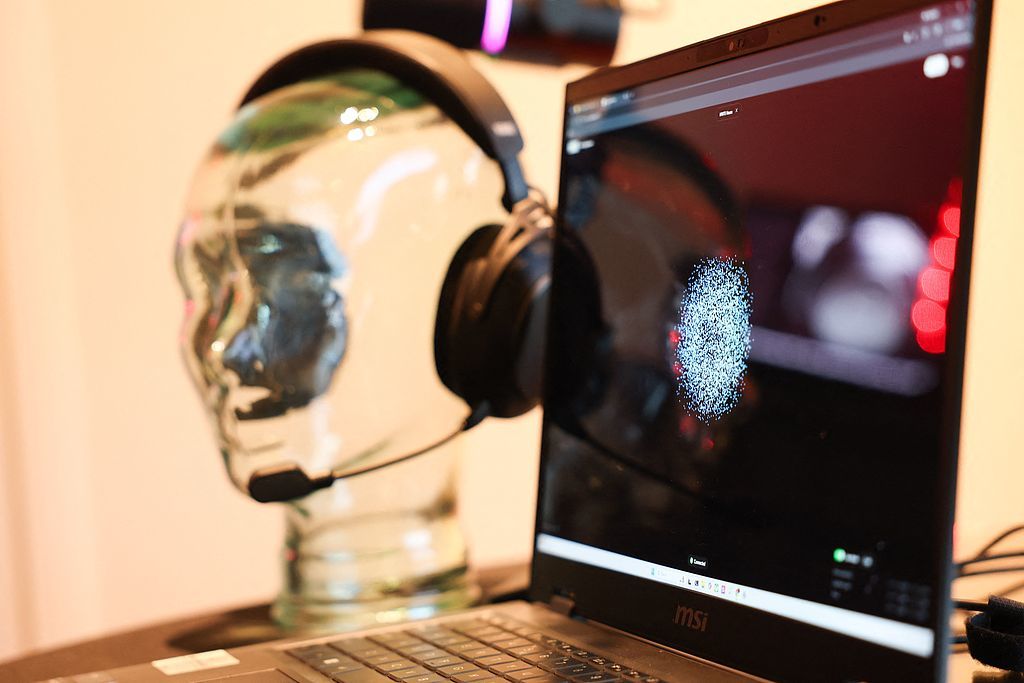
脑机接口第一股来了,「DeepSeek时刻」还没来
Xin Lang Cai Jing· 2026-01-19 13:16
Group 1 - The core idea of the article is that the brain-computer interface (BCI) sector is gaining significant attention and investment, with major developments from companies like Neuralink and Qiangnao Technology, indicating a potential commercial breakthrough in the near future [1][30][11] - Neuralink plans to begin large-scale production by 2026, while Qiangnao Technology has completed a financing round of 2 billion yuan and submitted an IPO application to the Hong Kong Stock Exchange [1][30][11] - The BCI technology is not new, having been conceptualized as early as 1973, but recent advancements have made it more viable for applications such as movement reconstruction and cognitive enhancement [1][31][36] Group 2 - Neuralink has made significant progress in invasive BCI technology, reducing the time to implant a single electrode from 17 seconds to 1.5 seconds and conducting 12 clinical studies with over 10,000 patients waiting for treatment [5][36] - Qiangnao Technology is pursuing a non-invasive approach, which allows for brain signal collection without surgery, potentially expanding its applications to entertainment and gaming [7][39][41] - The market for BCIs is projected to reach $400 billion in the U.S. medical sector by 2045, with the overall market expected to exceed $1 trillion [12][43] Group 3 - Both Neuralink and Qiangnao Technology face significant challenges, including the immaturity of the technology, high costs, and privacy concerns [15][47][56] - The technology is still developing, with current methods only able to record signals from a limited number of neurons, and invasive methods face risks of infection and device failure [49][50] - The costs associated with BCI technology, including device and surgical expenses, are currently high, which could limit accessibility and market growth [21][53][55] Group 4 - Companies are seeking capital to expand production and reduce costs, with Neuralink raising $650 million in its Series E funding and Qiangnao Technology securing 2 billion yuan in its Pre-IPO round [24][56] - Qiangnao Technology aims to assist 1 million individuals with mobility impairments and 10 million patients with cognitive disorders over the next 5 to 10 years [26][58] - Privacy issues surrounding data collection from BCIs need to be addressed, as the data could involve sensitive personal information [26][60]