
DeepSeek

Search documents
DeepSeek-R1论文登上Nature封面,通讯作者梁文锋
3 6 Ke· 2025-09-18 00:45
太令人意外! 却又实至名归! 最新一期的 Nature 封面,竟然是 DeepSeek-R1 的研究。 也就是今年 1 月份 DeepSeek 在 arxiv 公布的论文《DeepSeek-R1: Incentivizing Reasoning Capability in LLMs via Reinforcement Learning》。这篇Nature论文 通讯作者正是梁文锋。 论文链接: https://www.nature.com/articles/s41586-025-09422-z 在封面的推荐介绍中,Nature 写到: 如果训练出的大模型能够规划解决问题所需的步骤,那么它们往往能够更好地解决问题。这种『推理』与人类处理更复杂问题的方式类似,但 这对人工智能有极大挑战,需要人工干预来添加标签和注释。在本周的期刊中,DeepSeek 的研究人员揭示了他们如何能够在极少的人工输入 下训练一个模型,并使其进行推理。 DeepSeek-R1 模型采用强化学习进行训练。在这种学习中,模型正确解答数学问题时会获得高分奖励,答错则会受到惩罚。结果,它学会了推 理——逐步解决问题并揭示这些步骤——更有可能得出正确 ...



梁文锋论文登上《自然》封面
Mei Ri Jing Ji Xin Wen· 2025-09-18 00:42
(文章来源:每日经济新闻) 与今年1月发布的DeepSeek-R1的初版论文相比,本次论文披露了更多模型训练的细节,并正面回应了 模型发布之初的蒸馏质疑。DeepSeek-R1也是全球首个经过同行评审的主流大语言模型。Nature评价 道:目前几乎所有主流的大模型都还没有经过独立同行评审,这一空白"终于被DeepSeek打破"。 由DeepSeek团队共同完成、梁文锋担任通讯作者的DeepSeek-R1推理模型研究论文,登上了国际权威期 刊《自然(Nature)》第645期的封面。 ...
8点1氪:西贝回应“公筷喂狗”事件;美联储宣布降息25个基点;DeepSeek梁文锋论文登上《自然》封面
36氪· 2025-09-18 00:19
Group 1 - The incident at Xibei restaurant involved customers using restaurant utensils to feed a pet dog, raising concerns about dining safety [4] - The restaurant confirmed that all utensils used by the customers were discarded and a thorough disinfection of the premises was conducted [4] - Local authorities stated there are currently no legal grounds to penalize the restaurant for allowing pets, as the customer's actions were deemed personal behavior [4] Group 2 - The Federal Reserve announced a 25 basis point cut in the federal funds rate, marking its first rate decrease since December 2024 [4] Group 3 - NIO Group successfully completed a financing round of $1.16 billion, aimed at enhancing its technological capabilities and expanding charging infrastructure [20] - AI chip startup Groq raised $750 million in a new funding round, achieving a post-money valuation of $6.9 billion [20] - "Qingyun New Materials" announced the completion of a multi-hundred million C round financing to support the development of advanced materials [20] Group 4 - The month of September saw a significant increase in lemon prices, doubling from 7.83 yuan per kilogram to 15 yuan per kilogram over the past year, leading to supply shortages at some stores [15] - The mooncake industry in China is transitioning from seasonal demand to year-round consumption, with over 20,000 related enterprises currently registered [24]

刚刚,梁文锋发Nature了
3 6 Ke· 2025-09-17 23:43
昨晚,DeepSeek再度开创历史! 智东西9月18日报道,9月17日,由DeepSeek团队共同完成、梁文锋担任通讯作者的DeepSeek-R1推理模型研究论文,登上了国际权威期刊《自 然(Nature)》的封面。 DeepSeek-R1论文首次公开了仅靠强化学习,就能激发大模型推理能力的重要研究成果,启发全球AI研究者;这一模型还成为全球最受欢迎的 开源推理模型,Hugging Face下载量超1090万次。此番获得《自然》的认证,可谓是实至名归。 与此同时,DeepSeek-R1也是全球首个经过同行评审的主流大语言模型。《自然》在社论中高度评价道:几乎所有主流的大模型都还没有经过 独立同行评审,这一空白"终于被DeepSeek打破"。 《自然》认为,在AI行业中,未经证实的说法和炒作已经"司空见惯",而DeepSeek所做的一切,都是"迈向透明度和可重复性的可喜一步"。 《自然》杂志封面标题:自助——强化学习教会大模型自我改进 发表在《自然》杂志的新版DeepSeek-R1论文,与今年1月未经同行评审的初版有较大差异,披露了更多模型训练的细节,并正面回应了模型 发布之初的蒸馏质疑。 | https:// ...

刚刚!DeepSeek梁文锋论文登上《Nature》封面了!
是说芯语· 2025-09-17 23:35
Core Viewpoint - The DeepSeek-R1 inference model research paper, led by Liang Wenfeng, has been published in the prestigious journal Nature, marking a significant milestone in the field of AI and large language models [1][3]. Group 1: Model Development and Validation - The latest paper provides more detailed insights into the training of the DeepSeek-R1 model compared to its initial version released in January [3]. - DeepSeek-R1 is recognized as the first mainstream large language model to undergo peer review, addressing previous concerns regarding its distillation process [3]. - The peer review process is seen as a necessary step to mitigate the risks associated with unverified claims in the AI industry, as highlighted by Nature [5]. Group 2: Data and Safety Assessment - DeepSeek-V3 Base, the foundational model for DeepSeek-R1, utilized data sourced entirely from the internet, which may include outputs generated by GPT-4, though this was not intentional [5]. - The company has provided a detailed process in supplementary materials to demonstrate how data contamination was minimized during training, ensuring that benchmark tests were not deliberately included to enhance model performance [5]. - A comprehensive safety assessment of DeepSeek-R1 has been conducted, showing that its safety features are superior to those of contemporaneous models [5].

DeepSeek梁文锋论文登上《自然》封面
第一财经· 2025-09-17 23:23
2025.09. 18 本文字数:307,阅读时长大约1分钟 作者 | 一财科技 由DeepSeek团队共同完成、梁文锋担任通讯作者的DeepSeek-R1推理模型研究论文,登上了国际权威期刊《自然(Nature)》的封面。 推荐阅读 "嘎子谢孟伟"公开道歉!警方已介入 47.7 与今年1月发布的DeepSeek-R1的初版论文相比,本次论文披露了更多模型训练的细节,并正面回应了模型发布之初的蒸馏质疑。 DeepSeek-R1也是全球首个经过同行评审的主流大语言模型。Nature评价道:目前几乎所有主流的大模型都还没有经过独立同行评审,这一空白"终 于被DeepSeek打破"。 微信编辑 | 七三 第一财经持续追踪财经热点。若您掌握公司动态、行业趋势、金融事件等有价值的线索,欢迎提供。 专用邮箱: bianjibu@yicai.com (注:我们会对线索进行核实。您的隐私将严格保密。) ...
DeepSeek-R1开创历史,梁文锋论文登上《自然》封面
Di Yi Cai Jing· 2025-09-17 23:09
与今年1月发布的DeepSeek-R1的初版论文相比,本次论文披露了更多模型训练的细节,并正面回应了 模型发布之初的蒸馏质疑。 DeepSeek-R1也是全球首个经过同行评审的主流大语言模型。Nature评价道:目前几乎所有主流的大模 型都还没有经过独立同行评审,这一空白"终于被DeepSeek打破"。 本次论文正面回应了模型发布之初的蒸馏质疑。 由DeepSeek团队共同完成、梁文锋担任通讯作者的DeepSeek-R1推理模型研究论文,登上了国际权威期 刊《自然(Nature)》的封面。 ...
刚刚,DeepSeek-R1论文登上Nature封面,通讯作者梁文锋
机器之心· 2025-09-17 17:00
Core Viewpoint - The article highlights the significance of DeepSeek-R1, which is recognized as the first large language model (LLM) to pass peer review in a prestigious academic journal, Nature. This achievement marks a pivotal shift in the AI industry towards more rigorous scientific validation of AI models, moving from mere technical competition to a focus on scientific discipline and public trust [5][11][12]. Summary by Sections DeepSeek-R1 Overview - DeepSeek-R1 is trained using reinforcement learning, where the model receives rewards for correct answers and penalties for incorrect ones, enabling it to develop reasoning capabilities similar to human problem-solving [7][8]. - The model's ability to self-validate and reflect on its performance enhances its effectiveness in programming and advanced scientific inquiries [7]. Peer Review Significance - The peer review process serves as a critical gatekeeper, requiring AI companies to substantiate their claims with solid evidence rather than self-promotion [10]. - The rigorous evaluation of DeepSeek-R1's methodology and limitations by external experts helps to mitigate inflated claims in the AI industry [9][10]. Training Methodology - DeepSeek-R1 employs a novel multi-stage pipeline that enhances reasoning capabilities without relying heavily on supervised data [15]. - The model utilizes Group Relative Policy Optimization (GRPO) to reduce training costs and incorporates a dual reward mechanism based on accuracy and format [16][17]. - A structured training template guides the model to articulate its reasoning process before providing final answers, allowing for clear observation of its learning progress [18]. Performance and Limitations - DeepSeek-R1 demonstrates advanced self-evolution capabilities, developing higher-order reasoning skills autonomously during training [20]. - Despite its advancements, the model still faces challenges such as poor readability and language mixing in its outputs [21][26]. Cold Start and Reinforcement Learning - The development team collected a small amount of long Chain of Thought (CoT) data to stabilize the model during the early stages of reinforcement learning [22]. - The integration of language consistency rewards during training aims to improve the model's readability, although it may slightly affect performance [23]. Distillation and Model Efficiency - The team successfully distilled the reasoning capabilities of DeepSeek-R1 into smaller models, significantly enhancing their performance [29]. - Benchmark tests indicate that DeepSeek-R1 competes effectively with state-of-the-art models in reasoning tasks, showcasing its robust capabilities [30][31].

财经观察:中国东盟携手共创“数字未来”
Huan Qiu Shi Bao· 2025-09-16 22:42
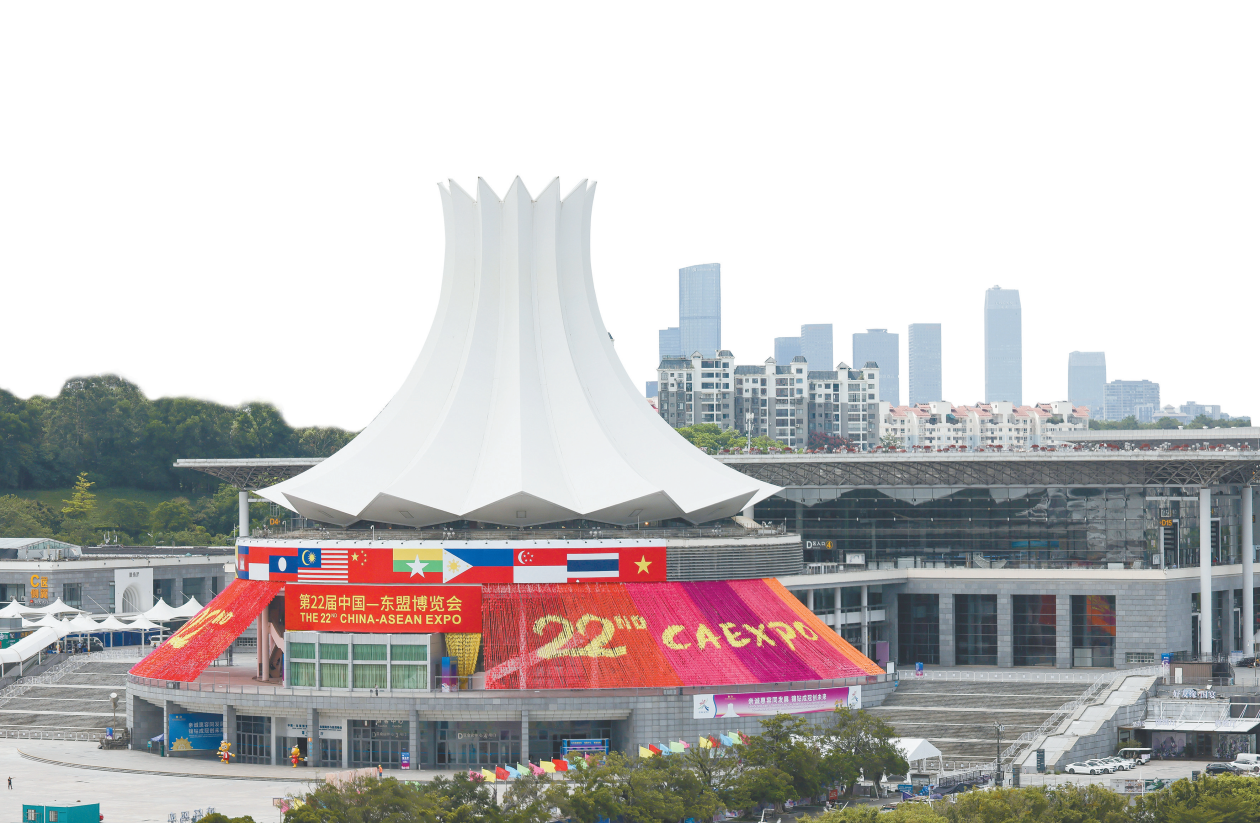
Group 1: Core Insights - The 22nd China-ASEAN Expo focuses on digital economy and AI collaboration, showcasing achievements in these fields [1][3] - The China-ASEAN Free Trade Area 3.0 negotiations have been completed, emphasizing digital economy as a key area for cooperation [1][5] - China and ASEAN aim to enhance digital infrastructure, e-commerce, and AI collaboration to foster new growth points like blue and green economies [1][3] Group 2: Digital Economy and AI Cooperation - China-ASEAN cross-border e-commerce has grown at an annual rate exceeding 20%, becoming a significant driver of trade [3] - ASEAN countries are increasing investments in digital technology, with Indonesia and Vietnam setting ambitious digital economy targets [3][4] - The establishment of the AI Innovation Cooperation Center aims to connect Chinese enterprises with ASEAN's AI needs across various sectors [5][6] Group 3: Market Opportunities and Challenges - Chinese high-tech companies are increasingly looking to enter the ASEAN market, with significant interest in AI and robotics [7][8] - The ASEAN market presents both opportunities and challenges for automation, with varying levels of technological advancement across countries [7][8] - The automotive sector is a focal point for collaboration, with Chinese companies introducing AI solutions to enhance competitiveness in ASEAN [9][10] Group 4: Regional Development and Integration - Guangxi is positioned as a "bridgehead" for China-ASEAN cooperation in the digital economy and AI [5][12] - The region is actively promoting AI applications in various industries, including agriculture and smart cities, through initiatives like the "AI Empowerment Super League" [11][12] - The collaboration between Chinese and ASEAN entities is expected to yield mutual benefits, leveraging each other's strengths in technology and market access [10][11]
X @外汇交易员
外汇交易员· 2025-09-16 06:33
Industry Development & Technology - Tencent has fully adapted to mainstream domestic chips, aiming to provide cost-effective AI computing power through full-stack optimization of software and hardware [1] - The industry is addressing the challenge of computing power supply by integrating different types of chips [1] - DeepSeek-V3.1 uses UE8M0 FP8 Scale parameter precision and has made significant adjustments to the tokenizer and chat template [1] - UE8M0 FP8 is designed for the next generation of domestic chips [1] Company Strategy - Tencent is adopting a strategy of software and hardware collaboration for full-stack optimization [1] - Tencent aims to provide high cost performance AI computing power [1]
