复旦大学

Search documents
分子考古移动实验室将赴新疆田野考察 揭示丝绸之路文明交融史
Jie Fang Ri Bao· 2025-08-01 01:49
近年来,文少卿带领复旦大学分子考古实验室先后破译北周武帝突厥皇后阿史那古基因组,揭开北 周武帝宇文邕血统之谜,并成功重建两千年河西走廊人群、六千年山东人群历史等。去年8月,复旦大 学与克拉玛依市人民政府共同设立民办非企业机构——克拉玛依市丝路数字经济与产业融合创新研究中 心,并以数字文旅方向为先行领域,旨在对新疆地区人类历史演变过程进行科学研究,开发特色文化旅 游项目。 "如果把新疆样本带回复旦,距离太遥远,所以就想到了移动考古车,可就地做实验。"文少卿说。 此前,分子考古依赖于远离田野的实验室,而移动考古车有望改变这一科研范式。 记者 黄海华 昨天,复旦大学-克拉玛依"古丝绸之路"科技考古与文化传播项目在复旦大学启动。今年8月至10 月,由复旦大学科技考古研究院副教授文少卿领衔的全球首个分子考古移动实验室,将赴新疆进行田野 考察,"样本一出土,我们将第一时间在车上进行检测。" 未来三个月,车队将沿阿勒泰—天山北路一线行驶,选取沿线的三道海子石构遗址群、木垒平顶山 墓群、吐鲁番古墓群、古墓沟墓群、小河墓地、沙湾大鹿角湾等遗址,复原三个遗址的墓主特征,揭 示"古丝绸之路"多元文明交融的历史。该项目预计用3到5年 ...
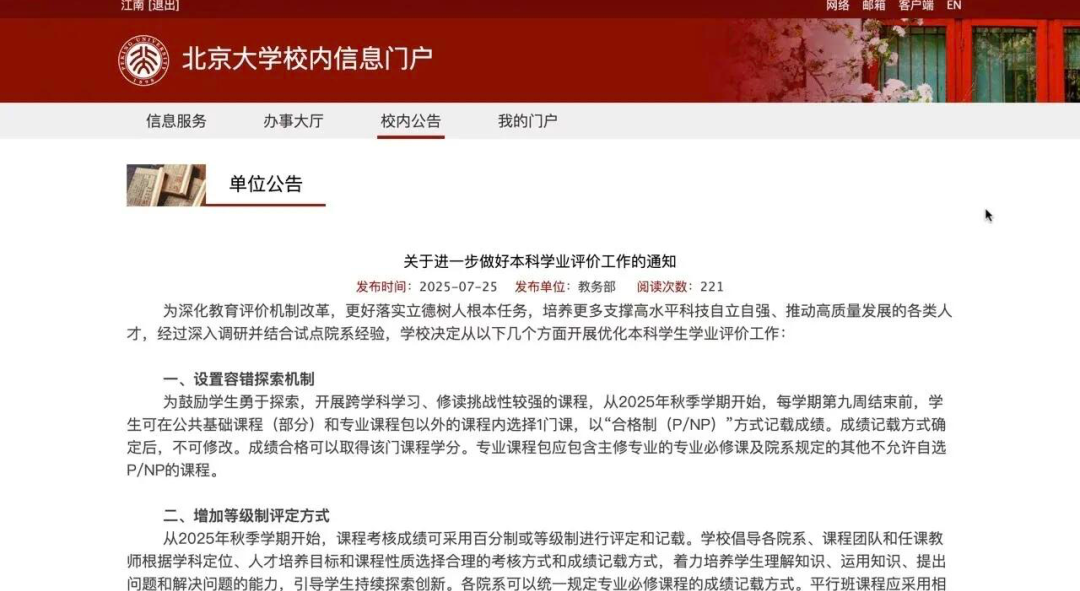
北大取消绩点:一场解放,还是新一轮内卷的开始?
Hu Xiu· 2025-07-31 02:55
本文来自微信公众号:BeBeyond (ID:BeBeyondG),题图来自:AI生成 去年清华绩点改革(大一成绩不计入GPA)让众多北大学子羡慕不已,今年这股改革的春风终于吹到了北大。 北大教务处正式出了通知: 图片来源官网 随后冲上了热搜第一: 图片来源微博 都改了些啥? 用人话总结一下: 1. 取消优秀率,之前单门课成绩优秀率不超过40%; 2. 可自选一门课P/NP,给予同学们选择一些难度较大但又感兴趣的课程的机会,但必修课与专业核心课无法记P/NP; 3. 百分制和等级制是院系/老师自主决定,今后院系对成绩制度有更大话语权; 4. 等级制不换算成绩点; 5. 25级开始各种学业评价不再采用绩点,用完整成绩单; 相比之前北大生命科学学院的试点改革,这次绩点改革更为全面也更为细致。也收获了不少好评: 图片来源小红书 但除此之外也有一些不同的声音: 图片来源小红书 所以一个新的问题出现了,这次改革,能终结内卷吗? 这次改革会终结内卷吗? 北大并非首个改革的高校,这场改革的逻辑和之前清华、复旦、上财几轮绩点制度调整如出一辙。 清华早在2015年推行12档等级制替代GPA,试图弱化"分数至上"导向;复旦从"3 ...

复旦微电:与复旦大学订立技术服务合同 合同金额350万元
news flash· 2025-07-28 11:02
Core Viewpoint - Fudan Microelectronics has signed a technical service contract with Fudan University for the development of ultra-large-scale FPGA layout and routing technology, with a contract value of 3.5 million RMB [1] Group 1: Company Information - The contract amount is 3.5 million RMB, indicating a significant investment in research and development [1] - The transaction is classified as a related party transaction, as it involves services from an affiliated entity [1] Group 2: Industry Context - The focus on ultra-large-scale FPGA technology suggests a strategic move to enhance capabilities in advanced semiconductor applications [1]

道通科技与上智院合作 推动AI走向实体世界
Zheng Quan Shi Bao Wang· 2025-07-27 10:45
Core Insights - The World Artificial Intelligence Conference 2025 has seen Daotong Technology (688208) and Shanghai Institute of Science Intelligence launch the "World Science Intelligence Competition: Physical AI Track" [1] - NVIDIA CEO Jensen Huang highlighted that the next wave of AI is Physical AI, which involves the integration of perception, reasoning, and execution into physical systems [1] Group 1 - Daotong Technology will provide industrial-grade scenario validation conditions for participating teams, accelerating the engineering transformation of scientific research results [1] - The company is one of the first signatories to participate in the "Star River Enlightenment Science Intelligence Open Platform" ecosystem, which aims to create a comprehensive infrastructure for global scientists [1] - The platform is developed in collaboration with Infinite Light Years and Fudan University, focusing on high-value scientific data and open-source scientific intelligence models [1] Group 2 - Through collaboration with the "Star River Enlightenment Science Intelligence Open Platform," Daotong Technology aims to leverage its engineering transformation advantages in vertical industries [2] - The company and its subsidiary, Shenzhen Daohua Tongtai Robot Company, participated in multiple segments of the World Artificial Intelligence Conference, showcasing their "Air-Ground Integrated Embodied Intelligent Solution" [2] - The showcased solution has formed a commercial closed loop, featuring an "AI brain" that drives a fleet of drones and ground robots for collaborative and autonomous operations [2]

早期中华文明多模态大模型等多项创新成果亮相WAIC2025
Huan Qiu Wang Zi Xun· 2025-07-27 03:57
Core Insights - The WAIC2025 Star River Intelligent Open Cooperation Forum was held, focusing on building an open and collaborative scientific intelligence ecosystem [1] - Multiple innovative achievements were announced, including the Early Chinese Civilization Multimodal Large Model and the Global Academic Cooperation Initiative [1][3] Group 1: Early Chinese Civilization Multimodal Large Model - The Early Chinese Civilization Multimodal Large Model was officially released, developed by Fudan University, Shanghai Intelligent Research Institute, and Shanghai Chuangzhi Academy [3] - The model encompasses 100TB of specialized corpus, SFT data, and evaluation sets, pioneering cross-modal intelligent alignment of civilization spatiotemporal data [3] - It supports the Chinese Civilization AI Agent platform, enabling multi-step reasoning and complex task planning, benefiting education, research, and cultural industries [3] Group 2: Global Academic Cooperation Initiative - A global initiative was launched by top international scientists, including Nobel Prize winners, aiming to break the "data divide" and ensure AI benefits reach every corner of the globe [3] - The initiative outlines four core objectives: building open-source scientific infrastructure, initiating multinational interdisciplinary scientific programs, cultivating international scientific talent, and establishing a fair value-sharing mechanism [3][4] Group 3: Star River Intelligent Open Platform - The Star River Intelligent Open Platform was launched, designed to accelerate scientific discovery and provide comprehensive infrastructure for scientists and AI engineers [6] - It aims to enhance cross-disciplinary collaboration and address key scientific challenges, significantly speeding up scientific discoveries [6] - The platform includes the "Guanxin" large model, which formalizes complex clinical diagnosis processes into a multi-agent collaborative system for cardiovascular specialties [6] Group 4: Ethical Review AI Agent "Yijian" - The ethical review AI agent "Yijian" was introduced, capable of automatic rule review and risk labeling, enhancing review efficiency and compliance [7] - It has been trialed at Fudan University and its affiliated Zhongshan Hospital, ensuring data security and supporting the generation of review reports [7]

AI算力助复旦科研再突破:阿尔茨海默病早筛早诊检测试剂年内或上线
Huan Qiu Wang Zi Xun· 2025-07-19 12:33
Core Viewpoint - Fudan University has made significant breakthroughs in the medical field, including the discovery of a new treatment target for Parkinson's disease and the upcoming launch of early screening and diagnostic testing for Alzheimer's disease, supported by AI computing power from the CFFF platform in collaboration with Alibaba Cloud [1][3]. Group 1: Breakthroughs in Alzheimer's and Parkinson's Disease - The research team led by Professor Yu Kintai has achieved a 15-year early prediction of Alzheimer's disease risk with over 98.7% accuracy, published in the journal Nature [3][5]. - The team has identified a new treatment target for Parkinson's disease and utilized AI to screen potential drugs, with findings published in top international journals such as Cell and Nature [3][5]. Group 2: CFFF Platform and AI Integration - The CFFF platform, launched in 2023, integrates advanced computing clusters and AI technologies, enabling researchers to process large datasets more efficiently than traditional methods [3][4]. - The platform supports over 1,000 parallel intelligent computations and facilitates the training of large models with billions of parameters, significantly enhancing research capabilities [3][4]. Group 3: Efficiency Improvements in Research - The use of AI and innovative data-driven methods has allowed the research team to analyze over 6,361 cerebrospinal fluid proteins, identifying five key proteins that improve diagnostic accuracy to 98.7% [4][5]. - AI technology has accelerated the identification of potential therapeutic targets in Parkinson's disease, completing in five years what would traditionally take decades [5].
医学生的“浪漫”,普通人也能懂
Zhong Guo Qing Nian Bao· 2025-07-18 02:10
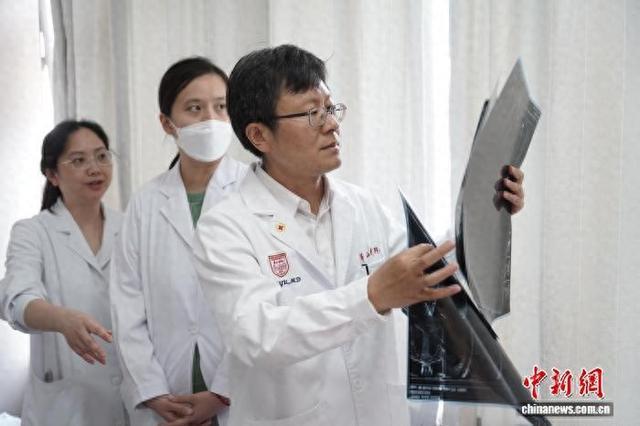
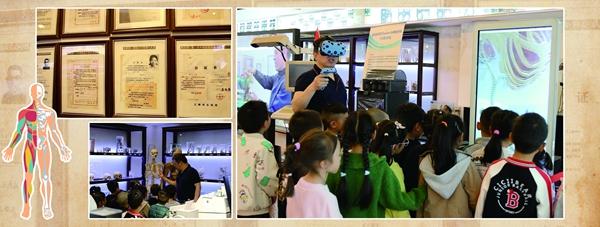
Core Insights - The Fudan University Human Body Science Museum has become a significant educational space, attracting visitors with its unique collection of human specimens and stories related to life and death [2][3][4] - The museum emphasizes the importance of body donation and the respect for "body teachers," showcasing the contributions of individuals who have donated their bodies for medical education [6][12] - The museum's approach combines science and art, creating an engaging environment that encourages public interaction and understanding of human anatomy [10][11] Group 1 - The museum has been open to the public since 2014 and has attracted numerous visitors, with many returning multiple times due to the emotional impact of the exhibits [2][3][4] - The museum's collection includes over 1,000 specimens, each representing a significant contribution to medical education and research [3][4] - The museum's director, Zhou Guomin, actively engages with visitors, providing personalized tours and emphasizing the stories behind the exhibits [10][12] Group 2 - The museum has a rich history, originating from the 1930s as a specimen display room at the National Shanghai Medical College [4] - Notable donations include specimens from the late Fudan University president Yan Fuqing, whose twin granddaughters were among the first to be donated [4][5] - The museum has a dedicated wall displaying body donation application forms, highlighting the personal stories and motivations behind these donations [7][8] Group 3 - The museum's interactive approach includes art exhibitions that blend medical science with artistic expression, making the subject more accessible and engaging for the public [11][12] - The museum has established a volunteer program with over 80 student volunteers who help share the stories of the specimens and the importance of body donation [12] - The museum's efforts to document and share these stories contribute to a deeper understanding of the human body and the ethical considerations surrounding medical education [6][10]
录取通知书设计“出新”更“走心”(文化只眼)
Ren Min Ri Bao Hai Wai Ban· 2025-07-17 01:02
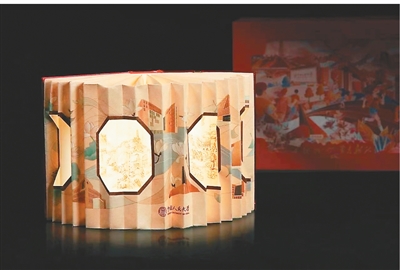
Core Viewpoint - The innovative design of admission letters from various universities reflects their educational philosophy and cultural heritage, serving as a unique introduction to new students and enhancing emotional connections between students and institutions [1][2]. Group 1: Design and Innovation - Admission letters have evolved in design, incorporating unique materials and concepts that convey the universities' values and spirit [1]. - For instance, the China Renmin University admission letter is designed as a "book lamp," symbolizing historical nourishment and guidance for new students [1]. - Harbin Institute of Technology's letter features materials used in space exploration, allowing students to send wishes that will accompany future satellite launches [1]. Group 2: Cultural and Social Significance - The design of admission letters also reflects a deep connection to the universities' history and a commitment to social responsibility [2]. - Fudan University's special edition letter includes tea bricks sourced from a poverty alleviation project, symbolizing a broader vision of societal contribution [2]. - These thoughtfully designed admission letters serve as cherished mementos, embodying warmth and encouragement for students embarking on their academic journeys [2].
超45亿,37所高校科研院所仪器采购意向汇总(2025年6月)
仪器信息网· 2025-07-14 03:33
Core Viewpoint - In June 2025, major universities and research institutions in China announced their intention to procure scientific instruments, with a total budget exceeding 4.5 billion yuan [1][2]. Summary by Sections Procurement Intentions - A total of 37 universities and research institutions have released procurement plans, reflecting a significant push for equipment updates initiated since 2024 [2]. - The procurement budget from these institutions collectively amounts to over 4.5 billion yuan [2]. Detailed Procurement Plans - The following are some of the notable procurement amounts from various institutions: - Shenyang Institute of Automation, Chinese Academy of Sciences: 161 million yuan - Chinese Academy of Medical Sciences: 221 million yuan - Wuhan University of Technology: 156 million yuan - Southeast University: 121 million yuan - Tsinghua University: 100 million yuan - Wuhan University: 199 million yuan - Chongqing Medical University: 215 million yuan [3][4]. Historical Context - Previous months have seen varying procurement intentions, with amounts ranging from 235 million yuan in February to 460 million yuan in March, indicating a growing trend in investment in scientific instruments [5].

复旦×上海交大合作最新Science论文:首次进行小胶质细胞替换临床治疗,成功阻断致命脑疾病进展
生物世界· 2025-07-12 01:26
Core Viewpoint - The study presents a novel microglia replacement therapy that effectively halts the progression of the lethal brain disease ALSP in both mice and humans, demonstrating clinical feasibility and long-term efficacy [3][9]. Group 1: Disease Background - Microglia are crucial immune cells in the central nervous system, and their dysfunction can lead to various CNS diseases. CSF1R mutations are linked to congenital microglial deficiency and ALSP, a severe condition with an average survival of only 3 years post-onset in China [2][5]. Group 2: Research Development - The research team developed a microglia replacement strategy, termed MISTER, which replaces pathogenic microglia with wild-type cells to potentially treat ALSP. This strategy was inspired by earlier findings and aimed to address the limitations of previous mouse models [6][7]. Group 3: Experimental Findings - The study utilized two newly generated mouse models that accurately replicate key features of human ALSP, including reduced microglial numbers and cognitive decline. The replacement of mutant microglia with wild-type cells significantly improved neurological function and halted disease progression [7][9]. Group 4: Clinical Application - In a clinical trial involving 8 ALSP patients, the microglia replacement therapy showed promising results, with increased brain glucose metabolism and stable cognitive function over a 24-month follow-up period. This marks the first systematic validation of microglia replacement in human patients [8][9]. Group 5: Implications for Future Research - The findings support the potential of microglia replacement strategies not only for ALSP but also for other CNS diseases associated with microglial dysfunction, indicating a broader therapeutic application [9].