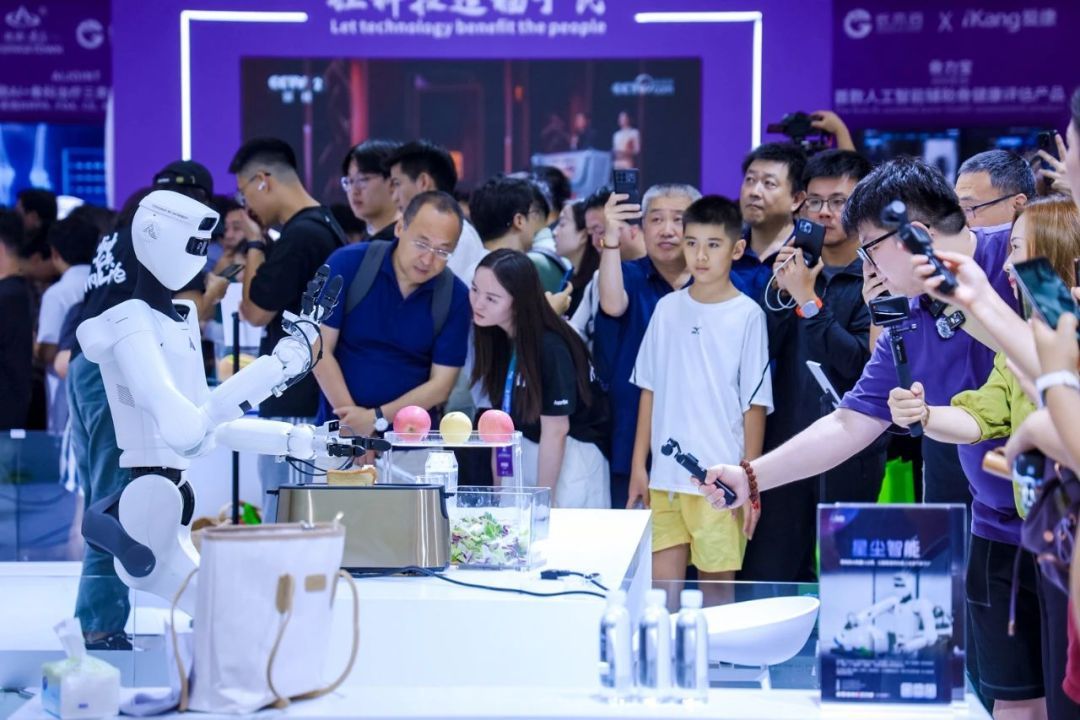
星尘智能

Search documents
“南山智造”机器人走进千行百业
Shen Zhen Shang Bao· 2025-08-16 23:48
Core Insights - The 2025 World Robot Conference showcased a strong presence of robotics companies from Nanshan District, highlighting their technological advancements and innovative applications in various sectors [1][4][7] Company Highlights - Digital Huaxia's humanoid robot "Xialan" demonstrated advanced interaction capabilities with a 29-degree facial control system, showcasing emotional expressions and tactile feedback [2][3] - The "Star Walker" robot from Zhiyuan Technology is the first commercial robot combining bipedal and wheeled movement, with over 100 orders received for its educational applications [2][3] - "Aibao" from Zhiyuan Technology showcased its versatility by autonomously performing tasks in different environments, including beverage service and logistics, completing operations in under 60 seconds [2][3] Technological Innovations - The "fast-slow dual system" model in "Aibao" allows for seamless task understanding and real-time response, enhancing its operational efficiency [3] - LimX Oli, a full-sized humanoid robot, demonstrated dynamic balance and agility, performing live dance routines outdoors, marking a significant achievement in robotics [3] Industry Ecosystem - Nanshan District has developed a comprehensive ecosystem for robotics, covering everything from core components to complete machines, enabling rapid response to industry needs [4][5] - The collaborative nature of the industry in Nanshan has led to a 30% reduction in R&D cycles, enhancing the overall competitiveness of the robotics sector [5] Regulatory Framework - Nanshan District introduced the first national standard for the protection of commercial secrets in humanoid robots, providing a robust framework for safeguarding core technologies [6][7] - This standard includes a modular protection system covering various aspects of technology, ensuring better confidentiality and security for innovations [6] Economic Impact - The robotics industry in Nanshan is projected to exceed 100 billion yuan in output value by 2024, becoming a new growth driver for the regional economy [4][7] - The district has attracted over 500 robotics-related companies, establishing itself as a global hub for innovation in the field of humanoid robotics [7]

迟迟入不了具身的门?别人在这里已经弯道超车了......
具身智能之心· 2025-08-16 16:03
Core Viewpoint - The article emphasizes the value of a community that provides solutions to problems in the field of embodied intelligence, facilitating knowledge sharing and job opportunities for its members [3][17]. Group 1: Community and Support - The Embodied Intelligence Knowledge Planet has created a closed-loop system covering various fields such as industry, academia, job seeking, and Q&A exchanges [3][17]. - The community offers a platform for members to share solutions to problems encountered in their work, such as data collection and model deployment [3][4]. - Members can access a wealth of resources, including over 30 technical routes, open-source projects, and job postings from leading companies in the field [4][11][31]. Group 2: Educational Resources - The community has compiled numerous learning paths and technical stacks for beginners, as well as valuable industry frameworks and project plans for those already engaged in research [12][14]. - A variety of topics are covered, including robot simulation, data collection platforms, and the challenges of implementing VLA (Visual-Language-Action) models [4][9]. - The community provides access to a range of academic papers, industry reports, and books related to robotics and embodied intelligence [24][27][29]. Group 3: Networking and Job Opportunities - The community has established a job referral mechanism with multiple companies in the embodied intelligence sector, facilitating connections between job seekers and employers [11][18]. - Members are encouraged to engage with industry leaders through forums and live discussions, enhancing their professional network [18][77]. - The community aims to create a supportive environment for members to discuss career choices and research directions, ensuring they receive timely advice and insights [79].

10后如何用AI玩转黑科技?“了不起的南山少年”本季收官
Nan Fang Du Shi Bao· 2025-08-16 03:23
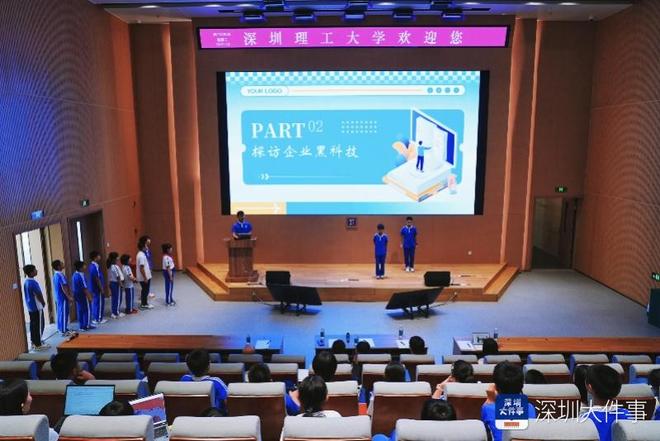
Group 1 - The event "Remarkable Nanshan Youth" showcased the integration of hard technology and human warmth through immersive experiences presented by students [2][4] - Students explored various tech landmarks in Shenzhen, demonstrating their findings on new productive forces and AI applications [2][4] - The concept of "new productive forces" emphasizes the importance of human elements in technology, as highlighted by students' innovative ideas for AI applications [5][10] Group 2 - Students proposed creative concepts such as emotional support robots and smart campus assistants, which received positive feedback from experts [5][10] - The event emphasized the need for students to transition from consumers to creators in the AI era, advocating for interdisciplinary learning and continuous education [8][10] - The integration of technology with humanistic values was a central theme, with students expressing the belief that technology should enhance human experiences rather than replace them [10][11] Group 3 - The event's structure aimed to foster a collaborative growth model between youth and urban development, aligning with local policies and the spirit of innovation [15] - Students' presentations reflected a deep understanding of the technological advancements in Shenzhen and their implications for future industries [15] - The initiative has been running for three seasons, focusing on themes that resonate with the region's development strategies and entrepreneurial spirit [15]
机器人,还当不了打工人
创业邦· 2025-08-16 03:15
Core Viewpoint - The article discusses the rapid evolution and increasing popularity of humanoid robots, highlighting their capabilities and the challenges they face in terms of intelligence and cost [6][7][25]. Group 1: Humanoid Robot Capabilities - Humanoid robots have advanced significantly, showcasing skills such as dancing, performing in competitions, and assisting in household tasks [6][7]. - They can interact with humans, understand speech, and perform simple conversations, moving beyond the label of "artificial intelligence" [6][7]. - Despite their advancements, they still exhibit limitations such as single-action performance, slow efficiency in tasks, and high costs, with top models priced comparably to luxury cars [6][7]. Group 2: Technical Aspects - Humanoid robots typically feature a human-like structure, with variations in hand and foot designs, affecting their functionality and cost [9][10]. - The cost of high-end dexterous hands can reach 100,000 to 200,000 yuan, making them a significant portion of the robot's total cost [9][10]. - Control methods for humanoid robots include remote operation, isomorphic arms, and voice control, but true AI autonomy remains a challenge [12][13]. Group 3: Application Scenarios - Humanoid robots are categorized into B2B (business) and B2C (consumer) applications, with B2B focusing on entertainment, industrial manufacturing, tourism services, and healthcare [14][15]. - The entertainment sector is currently the most developed application area, while other sectors are still in basic application stages [14][15]. Group 4: Industry Challenges - The main challenges for humanoid robots are their intelligence and cost, with current software capabilities being limited and requiring significant data for improvement [16][18]. - The industry consensus indicates that while physical capabilities are maturing, the software intelligence is lagging, restricting the robots' operational scope [18][19]. Group 5: Market Outlook - Despite the challenges, the humanoid robot industry is experiencing rapid growth, with a reported 27.8% increase in revenue in the first half of the year [25]. - Over 15,280 new robot-related companies were registered in the first seven months of the year, marking a 43.81% increase compared to the previous year [25]. - More than 20 humanoid robot companies are pursuing IPOs, with 16 based in China, indicating strong market interest and investment potential [25][26]. Group 6: Company Strategies - Companies like Yushutech focus on core technology and commercialization, while others like Zhiyuan Robotics emphasize a full-chain layout from hardware to software [25][26]. - The industry is characterized by diverse strategies and focuses, with some companies prioritizing intelligence and others emphasizing hardware capabilities [27].
驾驭机器人、探秘脑科学,30余名深圳10后解码未来产业
Nan Fang Du Shi Bao· 2025-08-14 12:41
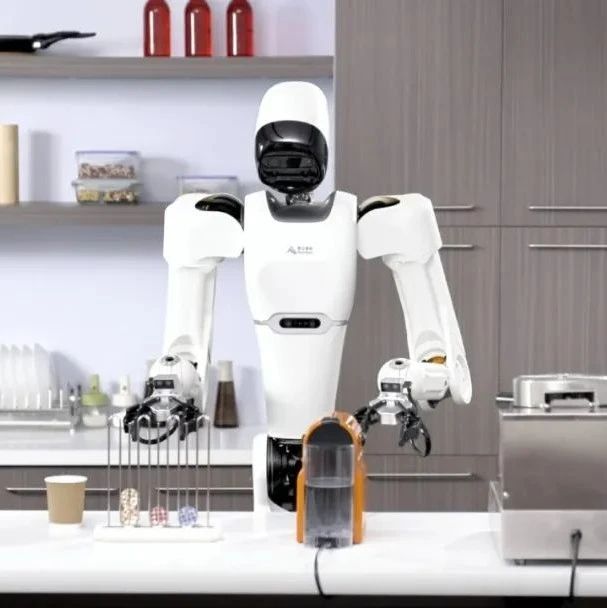
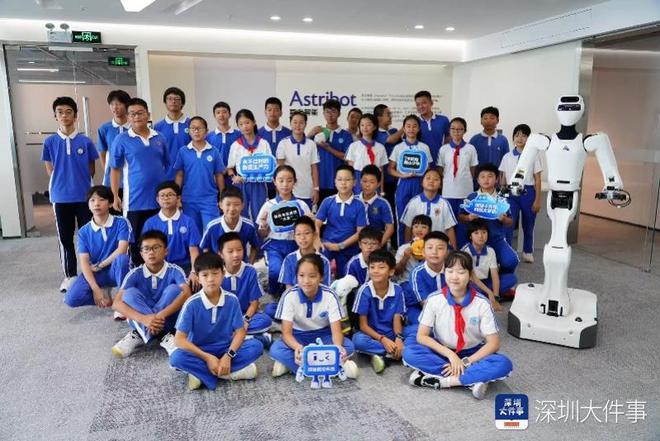
Group 1 - The "Remarkable Nanshan Youth" research team visited various innovative institutions in Shenzhen, including Stardust Intelligence and the Shenzhen Institute of Advanced Technology, to explore the city's role as a frontier for new productivity [1][8] - At Stardust Intelligence, students experienced the Astribot S1 robot, which utilizes advanced "cable-driven transmission technology" for more human-like movements, showcasing its ability to perform tasks such as flipping a cap and avoiding obstacles [5][7] - The visit to the Shenzhen Institute of Advanced Technology highlighted the importance of brain science, where students learned about neural connections and the innovative research being conducted in the field [10][12] Group 2 - The Shenzhen Engineering Biology Industry Innovation Center was introduced as a unique "upstairs and downstairs" innovation and entrepreneurship complex, fostering collaboration between researchers and startups [12][15] - The newly established Shenzhen University aims to cultivate innovative talents through a research-oriented approach, emphasizing interdisciplinary studies and practical training [15][17] - The event aimed to strengthen the connection between youth and new productivity, encouraging young people to engage with technology and innovation, which is essential for the future development of industries [17][18]
机器人,还当不了打工人
3 6 Ke· 2025-08-14 07:54
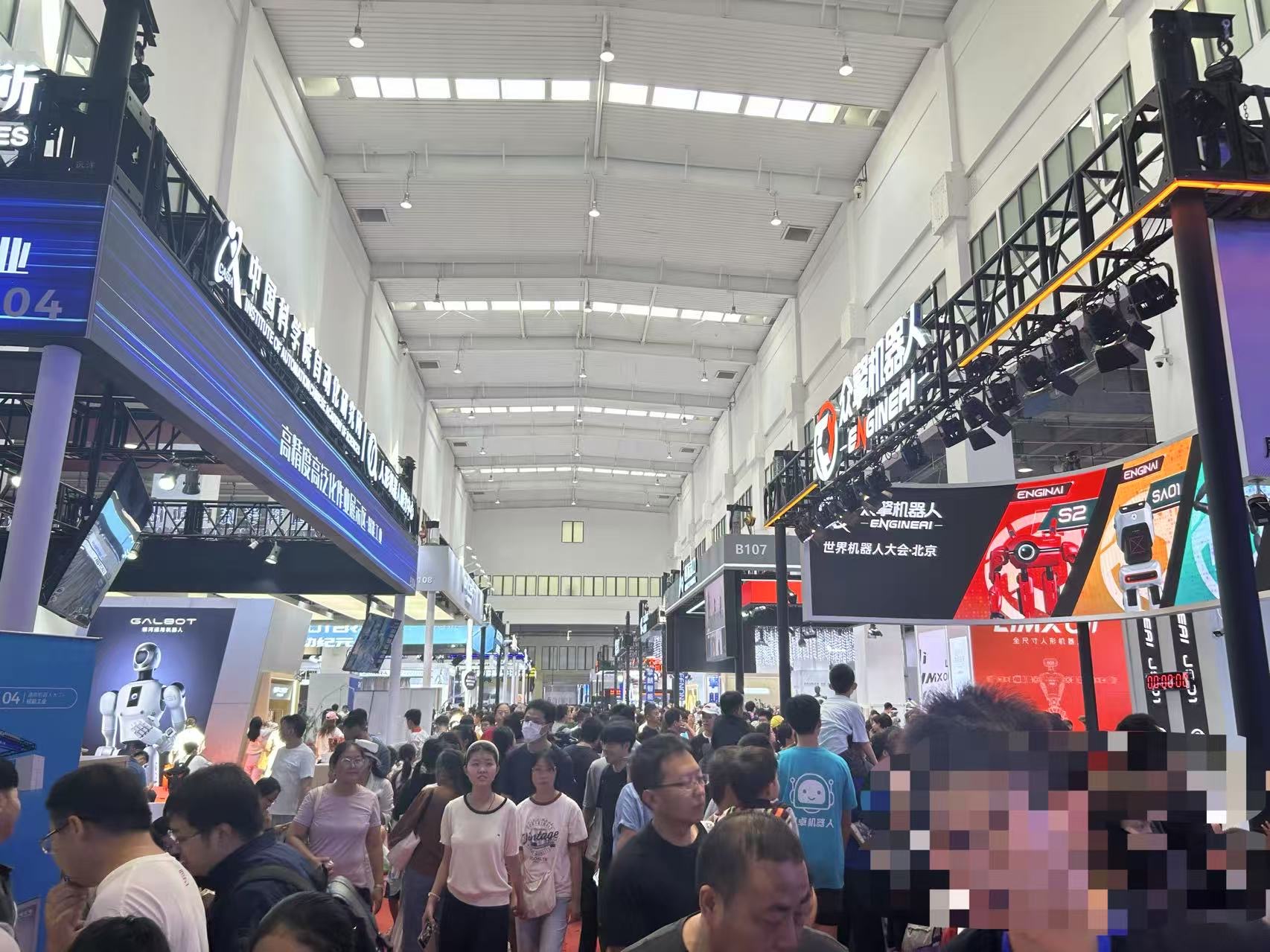
Group 1 - The core viewpoint of the article highlights the rapid evolution and increasing popularity of humanoid robots, showcased at the 2025 World Robot Conference (WRC), where they attracted significant attention and engagement from the public [2][3] - Humanoid robots are evolving in terms of appearance, interaction methods, and application scenarios, moving beyond basic functionalities to more complex tasks [4][5] - Despite advancements, challenges remain in terms of intelligence and cost, which are seen as barriers to large-scale application [3][11] Group 2 - Current humanoid robots exhibit various designs, with differences primarily in hand and foot configurations, impacting functionality and cost [5][6] - The operational capabilities of humanoid robots are primarily focused on upper body functions, utilizing innovative designs to mimic human muscle movements [6][7] - Interaction methods include remote control, joint mapping, and voice commands, but true AI autonomy is still lacking [7][8] Group 3 - Application scenarios for humanoid robots are categorized into B2B (business) and B2C (consumer), with entertainment, industrial manufacturing, and service sectors being the primary focus for B2B [8][10] - The current market for humanoid robots is growing rapidly, with significant increases in revenue and the number of registered companies in the robotics sector [17][19] - Many humanoid robot companies are pursuing IPOs, indicating strong market interest and potential for growth [17][20] Group 4 - The industry faces challenges related to the intelligence ("brain") and cost ("body") of humanoid robots, with current software capabilities still at a demo level [11][16] - Companies like Galaxy General are pushing the boundaries of humanoid robot intelligence through innovative models and data-driven approaches [13][15] - The pricing of humanoid robots varies significantly, with most being expensive, which limits widespread adoption [16][22] Group 5 - The humanoid robot industry is characterized by diverse approaches, with companies focusing on either hardware capabilities or software intelligence [20][22] - Different evaluation criteria exist for assessing the strength of humanoid robot companies, including intelligence, application scenarios, and valuation [20][22] - The market for humanoid robots is still in its early stages, with various companies exploring different niches and applications, indicating a dynamic and evolving landscape [22]
当宇树王兴兴、数美万物任利锋他们来到锦秋小饭桌……
锦秋集· 2025-08-12 14:09
Core Insights - The article discusses the ongoing series of closed-door social events called "Jinqiu Xiaofanzhuo," organized by Jinqiu Capital, focusing on AI entrepreneurs and technology discussions [3][4][11] - Recent discussions have centered around multi-modal technology, AI computing architecture, embodied intelligence, and AI hardware innovation, highlighting the practical challenges and opportunities in these areas [1][12][18] Group 1: Event Overview - "Jinqiu Xiaofanzhuo" is a weekly event held in cities like Beijing, Shenzhen, Shanghai, and Hangzhou, aimed at fostering genuine conversations among top entrepreneurs and tech experts without the usual corporate presentations [3][4] - The series has successfully hosted 25 events since its inception in late February, with summaries available for earlier sessions [3][11] Group 2: Recent Discussions - The latest discussions included topics such as the future of embodied intelligence, focusing on five key perspectives: ontology, cognition, interaction, data, and computing power [14][12] - The challenges of data and model architecture decisions were emphasized, particularly the need for high-quality data and the exploration of generative world models [16][35] Group 3: AI Hardware Insights - The event on AI hardware featured discussions on differentiation strategies, with a focus on product details and user experience [23][24] - Key technical variables for AI hardware entrepreneurs include edge computing power and memory solutions, which are crucial for enhancing user experience and privacy [24][25][26] Group 4: AI Computing Architecture - The demand for AI computing power is expected to grow significantly, driven by the need for concurrent AI agents in daily life, leading to potentially unlimited power consumption [35][36] - The article highlights the current shortage of high-end AI computing resources and the competitive landscape among leading companies [36][37] Group 5: Future Directions - The future of AI models is anticipated to move beyond reliance on human data, with a focus on self-exploration and overcoming human knowledge limitations [38][39] - The next generation of AI computing architecture is expected to integrate advanced technologies like liquid cooling and memory processing units, addressing challenges in reliability and efficiency [41][43]

透过2025年 WRC,看见具身智能的真实进度
3 6 Ke· 2025-08-12 10:44
Core Insights - The focus of humanoid robots has shifted from mere mobility to practical applications and deployment capabilities, with an emphasis on multi-robot collaboration and system integration [2][5][8] - The 2025 World Robot Conference showcases a significant change in the presentation logic, highlighting the ability of robots to be deployed in real-world scenarios rather than just demonstrating their capabilities [8][9] Group 1: Technological Advancements - The integration of multi-modal large models and embodied intelligence has significantly improved the stability of robots in perception, understanding, and execution [6] - The decline in hardware costs and the increased penetration of domestic components have made it possible for more products to be defined as SKUs and deployed in bulk [6][21] - Robots are now capable of receiving vague semantic instructions and autonomously completing tasks such as grasping and transporting, indicating progress from laboratory testing to pilot operations [20][22] Group 2: Market Trends - The number of participating companies and the focus on usable and replicable products have increased compared to 2024, with manufacturing, medical, and service industries becoming key areas for deployment [5][6] - The shift from showcasing technology to discussing pricing, delivery cycles, and maintenance mechanisms reflects the industry's movement towards commercialization and practical application [18][19] - The emergence of a clear mechanism for "scene + policy + enterprise linkage" has facilitated the testing and implementation of robots in various local settings [24][26] Group 3: Industry Applications - Humanoid robots are now being demonstrated in near-real work scenarios, performing tasks such as material handling and collaborative operations, moving away from being mere prototypes [9][11] - Service robots have become more focused on high-frequency, stable, and sustainable scenarios, such as retail and indoor delivery, indicating a shift towards practical applications [14][15] - The medical and rehabilitation robot sector is showing trends towards systematization and platformization, with robots being deployed in real healthcare settings [17] Group 4: Future Challenges - The next phase of robot deployment will focus on deepening scene penetration and maturing business models and operational systems [27][28] - Reliability issues remain a concern, as robots may face challenges in real-world environments due to factors like lighting and temperature [30] - The integration costs associated with seamlessly connecting robots to existing systems like WMS and MES can hinder deployment speed and scalability [31]

世界机器人大会洞察:机器人智能化进阶,应用场景持续拓展
Bei Ke Cai Jing· 2025-08-12 06:25
Core Insights - The 2025 World Robot Conference (WRC) held in Beijing focuses on enhancing robot intelligence and physical capabilities, highlighting the growing importance of humanoid robots in various sectors such as manufacturing, logistics, security, and healthcare [1][4][12] - The conference showcases advancements in embodied intelligence and the commercialization of humanoid robots, with companies emphasizing the need for suitable application scenarios to integrate technology and products effectively [4][11] Industry Trends - The application scenarios for humanoid robots are expanding, with companies like Zhiyuan and Qingbao Robotics demonstrating various robots capable of performing tasks in simulated environments, indicating a shift towards practical applications [4][5][10] - The market demand is evolving from experimental research to practical implementation, with a focus on robots solving specific industry pain points and adapting to complex environments [11][12] Technological Developments - Significant advancements in humanoid robot capabilities were showcased, including improved interaction features such as facial expressions and tactile sensing, which enhance user engagement [10][11] - Companies are addressing challenges such as battery life and operational stability, with innovations like automatic battery swapping and enhanced durability being introduced to improve robot reliability [10][11] Investment and Financing - Investment activity in the robotics sector is robust, with companies like Zhongqing Robotics securing nearly 1 billion yuan in funding, indicating strong investor confidence in the industry's growth potential [4][5] Future Outlook - The future of humanoid robots is expected to evolve into a platform-level ecosystem, similar to the development of smartphone ecosystems, emphasizing the importance of supply chain capabilities and customer willingness to pay [12]
做早餐、整理包包,机器人化身为触手可及的日常伙伴|2025世界机器人大会
Guang Zhou Ri Bao· 2025-08-11 15:21
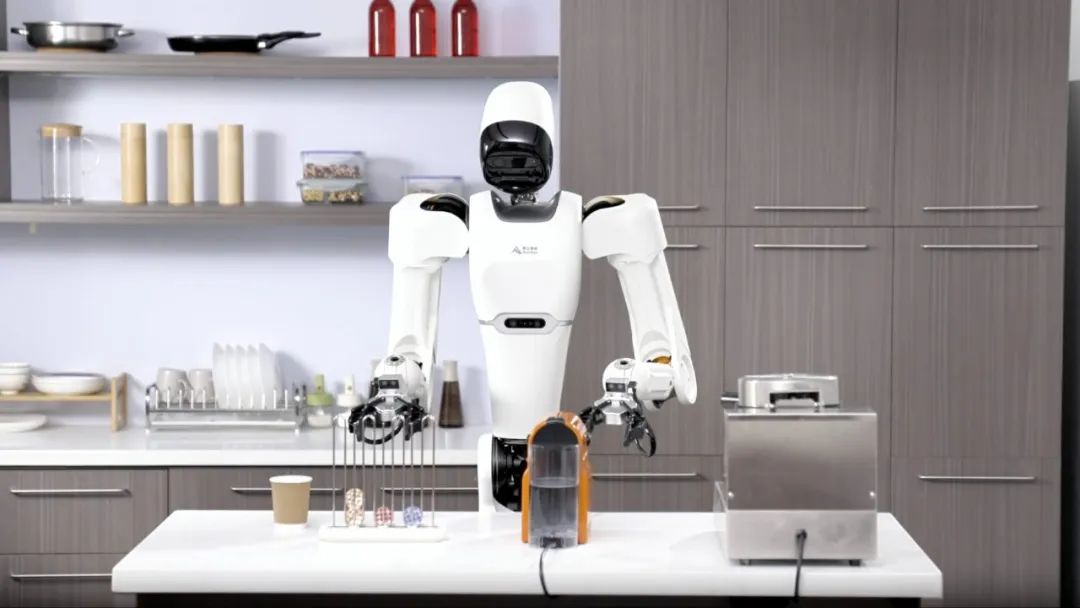
Core Insights - The 2025 World Robot Conference is showcasing advancements in robotics, with Guangdong-based company Stardust Intelligence presenting the Astribot S1 and emphasizing the transition from professional to consumer-friendly robotic platforms [1][3] Group 1: Product Features - Stardust Intelligence has introduced three immersive experience and demonstration areas, highlighting the capabilities of their robots in daily tasks such as preparing nutritious breakfasts and efficiently organizing travel essentials [1] - The robots can seamlessly switch to commercial service modes, exemplified by their ability to perform precise coffee-making processes in a simulated café environment [1] Group 2: Accessibility and Engagement - The company has launched a "Real Machine Remote Control Zone," promoting an inclusive experience that allows individuals of all ages and backgrounds to engage with robotics, breaking down traditional barriers to entry [3] - Participants can easily use simple devices to interact with robots, positioning themselves as "AI training partners" in the technological transformation [3] Group 3: Research and Industry Applications - Stardust Intelligence aims to support scientific breakthroughs by providing high-performance and user-friendly research platforms for advanced robotics [3] - The company is focused on building efficient data collection systems that enhance AI model iteration and application in real-world scenarios [3] - Stardust Intelligence is also dedicated to facilitating intelligent transformation across various sectors, including lifestyle, commerce, and culture, by offering flexible and secure smart solutions [3]