
香港交易所

Search documents
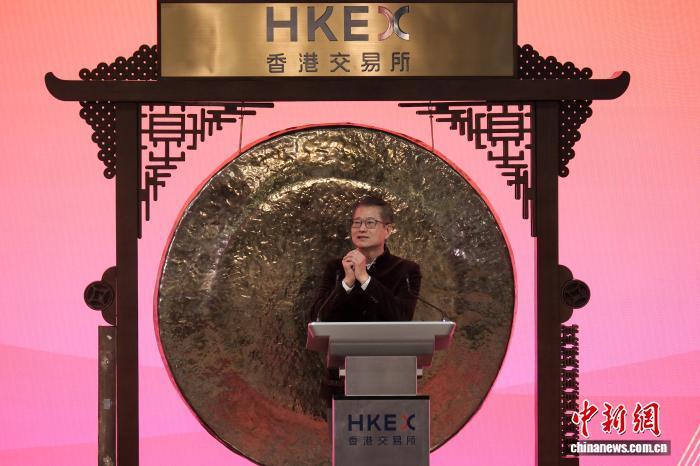
香港财政司司长:香港将建全球固定收益及货币产品枢纽
Zhong Guo Xin Wen Wang· 2025-09-28 11:41
Core Viewpoint - Hong Kong aims to establish itself as a global hub for fixed income and currency products, with a focus on enhancing market depth and breadth through a comprehensive development roadmap [1][3]. Group 1: Development Initiatives - The Hong Kong government, through the Securities and Futures Commission and the Monetary Authority, has released a roadmap outlining 10 specific measures to enhance the fixed income and currency markets [3]. - The roadmap focuses on four key areas: primary market issuance, secondary market liquidity, offshore RMB business, and next-generation financial infrastructure [3]. Group 2: Market Growth and Position - Over the past 15 years, the average annual growth rate of international bond issuance in Asia has been 16%, significantly higher than the global average [3]. - Hong Kong has established itself as a leading international bond issuance hub in Asia, accounting for nearly 30% of the region's international bond issuance, with green and sustainable bonds making up about 45% of this total [3]. Group 3: Offshore RMB Market - The issuance of RMB "dim sum bonds" in Hong Kong reached 1 trillion RMB last year, nearly doubling from 2021, indicating a growing demand for RMB-denominated products in the international market [4]. - Future plans include enhancing the connectivity mechanisms and expanding RMB product offerings, with the aim of introducing offshore government bond futures and other risk management tools [4]. Group 4: Financial Infrastructure Upgrades - The Hong Kong Monetary Authority is collaborating with the Hong Kong Exchanges and Clearing Limited to centralize the management and collateralization of various assets on a single platform [4]. - The Securities and Futures Commission is exploring the feasibility of an electronic bond trading platform and promoting the establishment of a commercial repurchase market and central counterparty system to improve market liquidity and efficiency [4].

非银行金融行业周报:三季报业绩预计表现较好,关注三季报行情-20250928
SINOLINK SECURITIES· 2025-09-28 09:14
Investment Rating - The report suggests a focus on three main lines of investment opportunities in the securities sector, highlighting the potential for significant returns in the coming months [3][4]. Core Insights - The report emphasizes the transition of the capital market from "quantitative expansion" to "qualitative improvement" during the "14th Five-Year Plan" period, with expectations for increased support for technology innovation and a focus on investor returns [2][37]. - The insurance sector is experiencing high growth in life insurance premiums, with a notable increase in health insurance, while non-auto insurance faces challenges [4][36]. - The report identifies a significant improvement in the performance of brokerage firms, with a mismatch between high profitability and low valuations, suggesting a favorable investment opportunity [3][4]. Summary by Sections Securities Sector - The report indicates that the average daily trading volume of A-shares is 23,132 billion, reflecting a decrease of 8.1% week-on-week, while the year-to-date average daily trading volume for equity funds has increased by 98.1% year-on-year [15]. - It highlights the strong performance of brokerage firms in the first half of the year, with a recommendation to focus on those with high investment ratios and significant merger and acquisition potential [3][4]. Insurance Sector - The report notes that life insurance premiums increased by 11.4% year-on-year to 35,797 billion in the first eight months of 2025, with life insurance and health insurance growing by 14.0% and 0.5%, respectively [4][36]. - It also mentions that property insurance premiums grew by 4.7% year-on-year, with auto insurance maintaining steady growth while non-auto insurance faced pressure [4][36]. Market Dynamics - The report discusses the increasing interest of insurance companies in real estate investments, with a notable rise in investment scale compared to the previous year [36]. - It also highlights the significant increase in direct financing in the capital market, with a total of 57.5 trillion raised in the past five years, indicating a shift towards a more robust financing structure [37].



【锋行链盟】港交所分拆子公司上市核心要点
Sou Hu Cai Jing· 2025-09-27 16:19
Regulatory Framework - Hong Kong Exchanges and Clearing Limited (HKEX) must comply with the Hong Kong Stock Exchange (HKSE) regulations for the spin-off of subsidiaries, primarily guided by the Listing Rules, specifically GL15 [2] - Key regulatory points include the requirement for the parent company to retain sufficient business operations and assets post-spin-off to maintain its listing status, typically requiring a market value of at least 10% of the pre-spin-off total market value [2] Strategic Intent - The core strategic intent behind the spin-off of subsidiaries includes value release and a focus on core business operations [2] - Spin-offs allow the parent company to concentrate on its primary functions, enhancing operational efficiency [2] Structural Design - The structural design of the spin-off must address three main issues: business independence, asset and liability separation, and shareholder rights protection [2] - Business independence requires clear delineation between the parent and subsidiary's operations, ensuring no direct competition and independent management [2] - Shareholder rights are protected through fair treatment, typically via the distribution of subsidiary shares or cash alternatives, ensuring minority shareholders can participate in the subsidiary's listing benefits [2] Financial and Market Impact - The spin-off directly influences the financial and market expectations for both HKEX and its subsidiaries [3] - The parent company's financials may be impacted by the removal of the subsidiary's assets and liabilities from consolidated statements, potentially reducing reported income and profits [5] - Post-spin-off, the subsidiary can be valued independently based on its industry-specific metrics, which may enhance its market perception and financing capabilities [5] - Market reactions may vary, with initial stock price increases for the parent company due to value reassessment, but potential concerns about reduced operational synergies may arise [5] Challenges and Risks - The spin-off process must manage several risks, including regulatory approval challenges, potential loss of operational synergies, and market acceptance of the subsidiary's business model [4][5] - Shareholder disputes may occur if some investors believe that the synergy between the parent and subsidiary is more valuable than independent operations [5]


【锋行链盟】港交所SPAC上市核心要点
Sou Hu Cai Jing· 2025-09-27 16:19
Core Viewpoint - The Hong Kong Stock Exchange (HKEX) has officially implemented the SPAC (Special Purpose Acquisition Company) listing regime starting January 1, 2022, aiming to balance innovation with investor protection through a stringent regulatory framework [2]. Group 1: Sponsor Qualifications and Responsibilities - At least one sponsor must hold a license from the Hong Kong Securities and Futures Commission for either Type 6 (advising on corporate finance) or Type 9 (asset management), or be a qualified "senior person" with substantial capital market experience and a good compliance record [6]. - Sponsors are required to disclose their background, professional experience, and past performance to ensure they have the capability to drive acquisitions [6]. - Sponsors must subscribe to at least 10% of the SPAC shares with their own funds, aligning their interests with those of investors [6]. Group 2: SPAC Listing Conditions - The market capitalization of the SPAC at the time of listing must be at least HKD 1 billion, which is higher than some markets like the U.S. that do not have a clear minimum [6]. - The issue price must not be lower than HKD 10 per share to prevent dilution of investor rights [6]. - Public shareholding must be at least 25%, with a minimum of 30 public shareholders to avoid excessive concentration of ownership [6]. Group 3: Fundraising and Fund Custody - Funds raised through the IPO (after deducting issuance costs) must be fully deposited into an independent trust account and can only be used for specific purposes such as acquiring target companies, paying acquisition-related fees, or repurchasing shares if shareholders exercise their redemption rights [4]. - The trust account will be managed by an independent trustee to ensure funds are used exclusively for their intended purposes, reducing the risk of misappropriation [4]. Group 4: Acquisition Transaction (De-SPAC) Requirements - The target company must meet the main board listing requirements of HKEX, ensuring it has sustainable operational capabilities [4]. - An independent financial advisor must be hired to value the target company, and the valuation methods and key assumptions must be disclosed [7]. - The acquisition transaction must be approved by a special resolution of at least 75% of SPAC shareholders, with related sponsors required to abstain from voting [7]. Group 5: Shareholder Rights Protection - Shareholders who disagree with the acquisition can request to redeem their shares at a price not lower than the issue price, ensuring they are not forced into an acquisition they do not support [8]. - There are limits on dilution, with sponsor shares and warrants subject to a maximum dilution cap post-acquisition to protect public shareholders' interests [8]. Group 6: Time Limits and Failure Handling - SPACs must complete their acquisition within 24 months of listing, with a one-time extension of up to 6 months allowed, totaling a maximum of 30 months [8]. - If the acquisition is not completed within the time frame, the SPAC must initiate liquidation and return the principal to investors, along with interest [8]. Group 7: Information Disclosure and Regulation - SPACs are required to regularly disclose the use of funds, acquisition progress, and potential risks [10]. - HKEX will conduct comprehensive oversight of SPACs throughout their lifecycle, focusing on sponsor qualifications, fund safety, and fairness of acquisitions to prevent shell companies and market manipulation [10].
纳斯达克拟出台新规——小企业赴美上市难度加大 港交所或成选择
Zheng Quan Shi Bao· 2025-09-27 09:25
Core Viewpoint - Nasdaq is proposing new regulations that will significantly increase the listing requirements for companies, particularly affecting small enterprises from China seeking to go public in the U.S. market [1][2][3]. Group 1: Proposed Listing Requirements - The new regulations will raise the minimum public float market value for IPOs to at least $8 million for the global market and $5 million for the capital market, with a unified increase to $15 million if companies list based on net profit [2]. - Chinese companies will be required to raise at least $25 million through public offerings during their IPOs, with similar requirements for companies using SPACs or transferring from other exchanges [2][3]. Group 2: Impact on Chinese Companies - In the current year, 59 companies have gone public on Nasdaq, raising a total of $1.02 billion, with an average fundraising of $17.3 million; only three companies raised over $25 million [3]. - The proposed regulations are expected to have a significant impact on the ability of Chinese companies to list on Nasdaq, particularly smaller firms that may struggle to meet the new thresholds [3][4]. Group 3: Increased Delisting Pressure - The new rules will introduce additional conditions that could lead to immediate delisting or trading suspension if companies fail to meet ongoing listing requirements, such as maintaining a market value of at least $5 million for ten consecutive trading days [4]. - Previously, companies were often given a grace period to comply with listing standards, but the new regulations may eliminate this buffer, making it more challenging for companies to maintain their listings [4][5]. Group 4: Strategic Considerations for Companies - Companies planning to go public in the U.S. should prepare in advance, assessing their current stage and considering alternative markets such as the New York Stock Exchange or Hong Kong, which may have less stringent requirements [5][6]. - Firms are advised to engage with cornerstone investors and develop financing plans to meet the new minimum fundraising requirements, while existing listed companies should focus on core operations and maintain compliance with listing standards [6][5].

“打风不停市”满一年 留宿配套没跟上?
Nan Fang Du Shi Bao· 2025-09-27 03:04
香港特区政府财政司司长陈茂波说,"打风不停市"自去年9月23日实施至今刚满一周年,在恶劣天气下 维持巿场交易的安排经过多次实践,实行以来运作大致畅顺,市场也累积了一定经验。他在社交媒体表 示,港交所在台风下会继续维持正常交易,并且已经请金融机构尽早调配人力及营运资源,启动恶劣天 气下的交易运作安排,以维持市场平稳运作。港交所也继续密切监察情况,在有需要时发出公告,让市 场参与者及时获得最新消息。 开放50个临时庇护中心 比以往多 中环金钟核心区,集中了多家投行及高端酒店。 超强台风"桦加沙"来袭,9月24日,香港资本市场首次在"十号风球"下维持交易,创造了香港金融的新 历史。这个时间点恰好也是香港实施"打风不停市"政策的一周年。在过去12个月,香港资本市场迎接一 个又一个台风,仍然维持稳定交易,在风暴期间衔接全球市场,使香港的竞争力进一步增强。 券商总行资讯科技部等回公司上班 超强台风"桦加沙"靠近香港期间,香港特区政府财经事务及库务局管理的协调中心,确保在各种极端情 况下,香港金融市场的各个环节都能畅顺运作。 特区政府的财经部门,与各金融监管机构和持份者保持紧密联系,密切监察市场情况,并就天气情况对 金融市 ...

纳斯达克拟出台新规提高上市门槛
Zheng Quan Shi Bao· 2025-09-27 01:37
Core Viewpoint - The proposed new regulations by NASDAQ significantly increase the listing requirements for companies, particularly affecting Chinese enterprises planning to go public in the U.S. market [1][2][3] Group 1: Listing Requirements - NASDAQ's proposed regulations raise the minimum public float market value for IPOs to $8 million for the global market and $5 million for the capital market, with a unified increase to $15 million for companies listing based on net profit [2] - Chinese companies are required to raise at least $25 million through public offerings in their IPOs, which is a substantial increase compared to previous standards [2][3] - The new rules aim to enhance market integrity and investor protection, addressing concerns over small IPOs that may not generate sufficient compliance revenue for NASDAQ [2][3] Group 2: Impact on Chinese Companies - In the current year, 59 companies have gone public on NASDAQ, raising a total of $1.02 billion, with an average fundraising of $17.3 million, indicating that only three companies exceeded the new $25 million threshold [3] - The increase in listing standards is expected to significantly impact the ability of small Chinese enterprises to list on NASDAQ, as many currently do not meet the new requirements [3][4] Group 3: Delisting Pressures - The proposed regulations introduce new conditions that could lead to immediate delisting or trading suspension for companies failing to meet ongoing listing requirements, such as maintaining a market value of at least $5 million for ten consecutive trading days [4] - Previously, companies were given a grace period to comply with listing standards, but the new rules would eliminate this buffer, increasing the risk of delisting [4] Group 4: Preparation for IPO - Companies intending to go public in the U.S. should prepare in advance, assessing their current stage and considering alternative markets such as the New York Stock Exchange or Hong Kong Stock Exchange, which have less stringent requirements [5][6] - It is recommended that companies actively engage with cornerstone investors to meet the new minimum fundraising requirement of $25 million and focus on their core business to enhance their market position [6]
智通ADR统计|9月27日




智通财经网· 2025-09-27 00:06
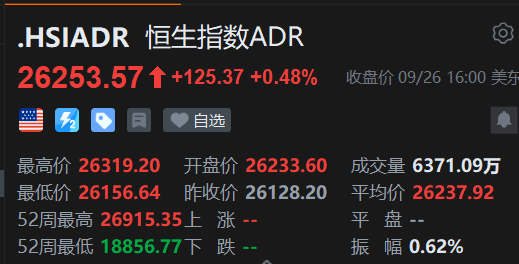
Market Overview - The Hang Seng Index (HSI) closed at 26,253.57, up by 125.37 points or 0.48% as of September 26, 16:00 [1] - The index reached a high of 26,319.20 and a low of 26,156.64 during the trading session, with a trading volume of 63.71 million [1] Major Blue-Chip Stocks Performance - HSBC Holdings closed at HKD 108.633, an increase of 1.081% from the previous close [2] - Tencent Holdings closed at HKD 648.733, up by 0.73% compared to the last trading session [2] ADR Performance Summary - Tencent Holdings (ADR: TCEHY) increased by HKD 4.733, or 0.73% [3] - Alibaba Group (ADR: BABA) rose by HKD 0.672, or 0.40% [3] - HSBC Holdings (ADR: HSBC) saw an increase of HKD 1.933, or 1.81% [3] - Xiaomi Group (ADR: XIACY) gained HKD 0.584, or 1.07% [3] - AIA Group (ADR: AAGIY) increased by HKD 0.222, or 0.31% [3] - Meituan (ADR: MPNGY) rose by HKD 0.534, or 0.53% [3] - Ctrip Group (ADR: TCOM) increased by HKD 8.120, or 1.39% [3] - JD.com (ADR: ID) rose by HKD 1.696, or 1.28% [3]
纳斯达克拟出台新规提高上市门槛—— 小企业赴美上市难度加大 港交所或成选择
Zheng Quan Shi Bao· 2025-09-26 17:30
Core Viewpoint - The proposed new regulations by NASDAQ significantly increase the listing requirements for companies, particularly affecting Chinese firms planning to go public in the U.S. market [1][2][3] Group 1: Listing Requirements - NASDAQ's proposed regulations raise the minimum public float market value for IPOs to $8 million for the global market and $5 million for the capital market, with a unified increase to $15 million if companies list based on net profit [1] - Chinese companies are required to raise at least $25 million through public offerings, which applies similarly to SPACs and other listing methods [2] - The average amount raised by Chinese companies in NASDAQ IPOs this year is $17.3 million, with only three companies exceeding the new $25 million threshold [3] Group 2: Delisting Pressure - The new regulations introduce immediate delisting conditions for companies failing to meet ongoing listing requirements, such as maintaining a market value of at least $5 million for ten consecutive trading days [4] - Previously, companies were given a grace period to comply with listing standards, but the new rules would eliminate this buffer, making it more challenging for companies to maintain their listings [4] Group 3: Strategic Recommendations - Companies planning to list in the U.S. should prepare in advance by assessing their current stage and possibly accelerating their listing processes or considering alternative exchanges like the New York Stock Exchange or Hong Kong Stock Exchange [5][6] - Firms are advised to focus on their core business, optimize asset structures through mergers and acquisitions, and maintain regular communication with investors to ensure compliance with listing standards [6]
“互换通”运行机制持续优化 进一步提升互换通市场活力
Zheng Quan Ri Bao· 2025-09-26 15:37
Core Viewpoint - The optimization of the "Swap Connect" mechanism aims to enhance market vitality and better meet the demand of foreign investors for managing RMB interest rate risks [1][2]. Group 1: Mechanism Optimization - The establishment of a dynamic adjustment mechanism for quote providers and the expansion of the quote provider team will lead to more diversified financial institutions offering competitive quotes, improving pricing efficiency and fairness [1]. - The daily net limit will be raised to 45 billion RMB starting from October 13, 2025, directly addressing the growing demand from foreign investors for RMB interest rate risk hedging [1][2]. Group 2: Market Impact - The increase in the daily net limit not only expands the participation space for foreign investors in the RMB interest rate swap market but also enhances market liquidity and promotes the internationalization of China's domestic financial market [2]. - Since its launch on May 15, 2023, the "Swap Connect" has become an important channel for foreign institutional investors to manage RMB interest rate risks, with over 15 countries and regions participating and completing more than 15,000 transactions totaling a notional principal of 8.15 trillion RMB by the end of August 2025 [2]. Group 3: Future Outlook - There is significant potential for further expansion in product range, continuous optimization of mechanisms and processes, and strengthening of risk prevention and regulatory cooperation within the "Swap Connect" framework [3].