
众擎机器人

Search documents
VC开始重新审视机器人泡沫了
3 6 Ke· 2025-12-23 02:34
Core Insights - The robotics sector is experiencing a significant influx of financing, with companies like Yunshenchu, Zhongqing, Yuliqi, and Luming announcing successful funding rounds [1][2][3] - The trend of adding "+" to funding rounds is becoming common, indicating a shift in how early-stage financing is structured, with many companies opting for multiple smaller rounds rather than single large ones [1][4] Financing Trends - Yuliqi Robotics completed two rounds of financing totaling 300 million RMB in angel funding, with participation from various investment firms and existing shareholders [2] - Luming Robotics secured several million RMB in Pre-A1 and Pre-A2 rounds, with investments from notable firms, aimed at enhancing their capabilities in embodied intelligence [2][3] - Zhongqing Robotics exemplifies the trend of "+" in A rounds, having recently completed A1+ and A2 rounds, building on previous funding of 1 billion RMB [3] Company Profiles - Yuliqi Robotics, founded less than a year ago by a young entrepreneur, has rapidly engaged in multiple funding rounds, indicating strong investor confidence [2] - Luming Robotics, also established in 2024, is led by a founder with extensive experience in robotics, highlighting the trend of experienced teams entering the market [2][3] - Zhongqing Robotics is led by a serial entrepreneur with a background in IoT, showcasing a diverse range of leadership experiences in the robotics field [3] Market Dynamics - The increasing complexity of projects in the robotics sector is leading to a need for more substantial funding at earlier stages, reflecting a tightening market for capital [4] - The industry is facing challenges in defining clear application scenarios for robots, raising questions about the sustainability of current funding practices [6][7] - The cycle of financing and scaling is critical for companies to reduce costs and secure orders, with a failure in this cycle potentially leading to rapid decline [7]

18万买台机器人划算吗?众擎机器人赵同阳:这个账很好算
2 1 Shi Ji Jing Ji Bao Dao· 2025-12-22 12:28
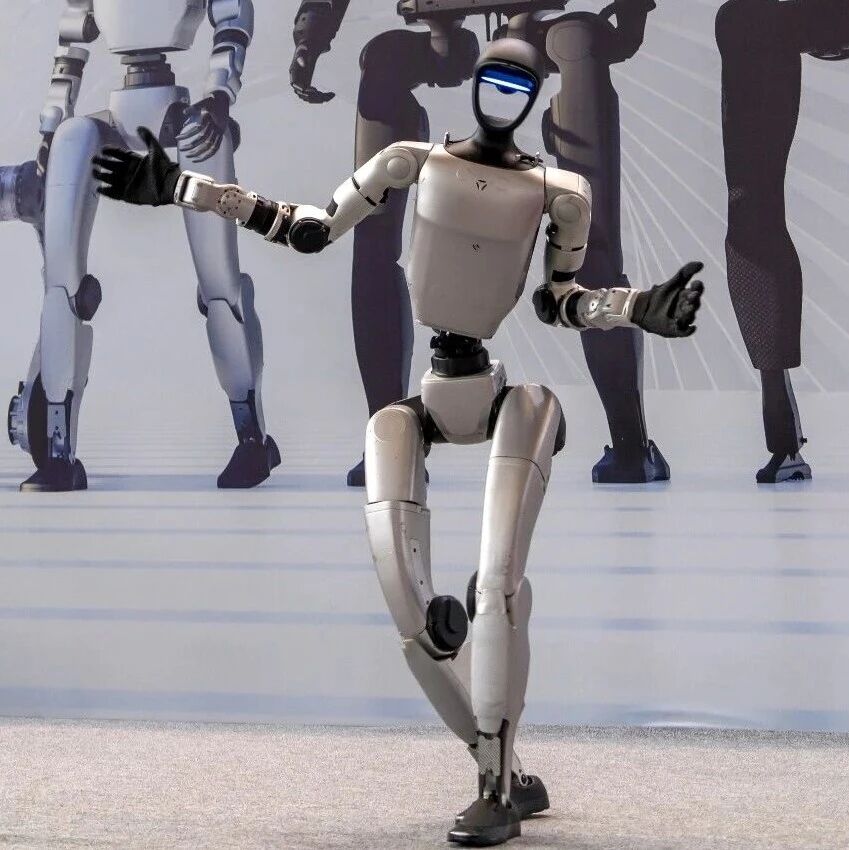
21世纪经济报道记者 雷若馨 深圳报道 近日,众擎机器人创始人兼 CEO 赵同阳在接受 21 世纪经济报道记者专访时表示,众擎机器人不想做完 全低价,而是要体现产品的价值。 他认为,目前机器人的价格在十七八万元,未来可能会降至七八万元。与此同时,人们在乎的并不是它 价格是多少,而是带来的价值,"如果能给你养老送终,18万绝对花得值"。 赵同阳透露,近段时间已经接到就关于巡逻巡检等场景的意向订单,订单量约3000~4000台。他表示, 2026年会有更多订单。 ...
众擎机器人赵同阳:机器人意向订单3000+
2 1 Shi Ji Jing Ji Bao Dao· 2025-12-22 12:09
"我们现在解法就是,在一些垂直落地的行业中先用。"他表示,比如医院导诊、户外巡逻、消防、救援 等场景都非常有可能爆发。赵同阳透露,近段时间已经接到就关于巡逻巡检等场景的意向订单,订单量 约3000~4000台。他表示,2026年会有更多订单。 21世纪经济报道记者雷若馨深圳报道 近日,众擎机器人创始人兼CEO赵同阳在接受21世纪经济报道记者专访时表示,人们对于通用人型机器 人的要求极高,现有技术能力还无法全部满足。需求和技术能力的不匹配,是整个行业所面临的问题, 但可以一步步被解决。 ...
从“表演”到“实用” 具身智能向万亿赛道进阶
Xin Lang Cai Jing· 2025-12-21 20:41
(来源:经济参考报) 近日,在上海张江举办的国际具身智能技能大赛中,9支队伍分别在工业装配、应急救援、医疗康养等 场景中取得冠军。据悉,这是国内首场具身智能技能比赛。业内人士表示,具身智能有望发展为万亿级 行业,其供应链存在众多创业机会。此外,具身智能的场景落地和安全规范应同步跟进,以防患于未 然。 在赛场上,机器人既要"上得厅堂"跳街舞,也要"下得厨房"端茶送水做咖啡;既要举重物,还要插花 枝;要翻山越岭运货物,还要轻手轻脚叠衣服。 基于海量数据,机器人能从花海中挑选出红色玫瑰,也能识别出使用过的纸巾和餐盘。借助传感器,机 器人能手捏薯片而不碎、手握水杯而不洒,还能手持钢针碰到气球而不破。 对机器人来说,叠衣服比搬箱子更困难。"因为衣服是柔软的,每一次拿放后的堆叠形态是随机的。机 器人要理解这种无序状态,就需要更多的数据量。"卓益得参赛队员李宗道告诉记者。 "大赛是对人形机器人的一次'高压测试',这要求参赛产品不能是'表演艺术家',而必须是能经受真实验 证的'生产力工具'。"工业搬运场景赛事指导朱彬彬表示。 "过去一年中,VLA(视觉语言行动)模型的应用,让机器人的大脑、小脑与本体之间的协同度大幅提 升。" ...
【数智周报】MiniMax和智谱通过港交所聆讯;OpenAI据悉计划以8300亿美元估值筹资至多1000亿美元;寒武纪:拟使用27.78亿元资本公积金弥补亏损
Tai Mei Ti A P P· 2025-12-21 04:23
Group 1 - Elon Musk publicly criticized nuclear fusion power, stating that building small fusion reactors on Earth is economically foolish, as the sun itself is a massive, free fusion reactor capable of meeting all energy needs in the solar system [2] - Musk plans to deploy 100GW of solar-powered AI satellites annually, which is equivalent to about a quarter of the total electricity consumption of the United States [2] Group 2 - Zhongke Shuguang unveiled the scaleX Wanka supercluster at the HAIC2025 conference, marking the first appearance of a domestic 10,000-card AI cluster system in physical form [3] - Unisoc announced the establishment of a Central Research Institute to focus on new architectures and models for edge AI chips, particularly for applications in autonomous driving and robotics [3] Group 3 - Cambricon announced plans to use 2.778 billion yuan of its capital reserve to cover cumulative losses, with the aim of bringing its negative retained earnings to zero by the end of 2024 [4] Group 4 - MiniMax has passed the Hong Kong Stock Exchange hearing and plans to go public in January 2026, potentially becoming the fastest AI company to IPO globally within four years of its establishment [6] - Zhiyuan Technology has officially passed the Hong Kong Stock Exchange IPO hearing, with CICC as the sole sponsor [6] Group 5 - Tencent has established an AI Infra department to enhance its large model research framework, with Vincesyao appointed as the chief AI scientist [6][7] - The AI Infra department will focus on building technical capabilities for large model training and inference platforms [7] Group 6 - ByteDance is advancing a collaboration with Lenovo to develop AI smartphones, aiming to pre-install AIGC plugins to gain user access [8] - Doubao released version 1.8 of its large model, enhancing its capabilities for multi-modal agent scenarios [9] Group 7 - Qianwen APP has integrated with Alibaba's ecosystem, enabling it to access underlying services like Gaode Map for enhanced geographical understanding [10] - Alibaba launched the new generation of the Wanxiang 2.6 model, which supports role-playing functions for video production [11] Group 8 - Baidu launched the Wenxin Health Manager, positioning it as a 24/7 "all-in-one family doctor" service [14] - The application offers a comprehensive AI health service system covering light symptom consultations and complex disease planning [14] Group 9 - Aishi Technology signed a comprehensive cooperation agreement with Alibaba Cloud to enhance global deployment and compliance capabilities for its video generation model [15] - Xiaomi open-sourced its MiMo-V2-Flash model, which boasts competitive capabilities at a significantly lower inference cost compared to closed-source models [16] Group 10 - Muxi Technology officially listed on the Shanghai Stock Exchange's Sci-Tech Innovation Board, aiming to raise 4.197 billion yuan to accelerate the development of "Chinese chips" [17] - The company focuses on high-performance general-purpose GPU products for AI training and inference [17] Group 11 - Meituan released and open-sourced the LongCat-Video-Avatar model, which supports multiple video generation tasks [18] - The model has achieved significant breakthroughs in action realism and video stability [18] Group 12 - Chinese scientists achieved a breakthrough in optical computing chips, enabling large-scale semantic media generation [19][20] - The LightGen chip demonstrates significant improvements in performance and energy efficiency compared to traditional digital chips [20] Group 13 - Baidu's Kunlun chip business is reportedly nearing completion of its restructuring, aiming for a potential listing in Hong Kong [20] - SenseTime's Seko series models have successfully adapted to the domestic AI chip Cambricon [20] Group 14 - Nvidia's CEO revealed that the company has not yet made any payments to OpenAI as part of a planned $100 billion investment [22] - Nvidia launched the Nemotron 3 open-source model series, significantly improving throughput compared to its predecessor [23] Group 15 - OpenAI plans to raise up to $100 billion, potentially valuing the company at $830 billion [24] - The new image model GPT-image-1.5 was launched, enhancing image generation capabilities significantly [25] Group 16 - Intel is in talks to acquire AI chip startup SambaNova for approximately $1.6 billion [30] - Multiple AI companies have recently completed significant funding rounds to support their growth and technology development [31][32][33][34][35][36][37]



中国人形机器人登陆日本
36氪· 2025-12-19 13:19
Core Viewpoint - The Japanese robotics industry, once a leader, is experiencing significant shifts as Chinese and American companies take the lead in humanoid robot development, with a new focus on integrating AI into robotics [4][5][13]. Group 1: Market Dynamics - The humanoid robot market is projected to reach $5 trillion by 2050, with over 1 billion humanoid robots expected to be in operation globally [9]. - Chinese companies are advancing rapidly in humanoid robot development, supported by national strategies and a focus on domestic component production [13]. - The presence of Japanese companies in the humanoid robot sector is currently weak, with few products showcased at recent exhibitions compared to industrial robots [14]. Group 2: Technological Advancements - AI is driving the redefinition of robots as the "body" of AI, enhancing their compatibility with existing social infrastructures and making them valuable as labor force supplements [9]. - The G1 humanoid robot developed by Chinese company Yushu Technology showcases advanced capabilities, such as serving food and performing dance moves, indicating the high performance of Chinese robotics [7][10]. Group 3: Competitive Landscape - Major players in the humanoid robot market include Chinese companies like Yushu Technology, UBTECH, and Zhongqing Robotics, as well as American firms like Agility Robotics and Tesla [14]. - Japanese companies, such as Kawasaki Heavy Industries, are noted for their industrial robots but lack a strong presence in humanoid robotics, highlighting a need for strategic focus on domestic challenges like elder care [14][15]. Group 4: Future Applications - The application potential for humanoid robots extends beyond manufacturing and logistics to include hazardous disaster sites and service scenarios requiring human interaction [15]. - To regain prominence in the global robotics landscape, Japan must leverage its unique strengths and integrate them into a coherent strategy [15].
超3亿美元!具身智能企业亿元融资不断
Zhong Guo Zheng Quan Bao· 2025-12-19 12:47
银河通用创始人兼CTO王鹤曾公开表示,具身智能当下的核心目标是坚定不移地实现产业化突破。目前 银河通用工业级使用标准的人形机器人,已在工业制造、即时零售仓、智慧城市服务、医疗康养等领域 落地。 在工业制造领域,银河通用与宁德时代、博世集团、丰田汽车、北汽集团等企业达成合作,累计订单规 模达数千台。在智慧城市服务领域,银河通用在北京颐和园、王府井(600859)、成都春熙路等数十个 城市地标或街区落地"银河太空舱",以人形机器人Galbot提供智慧零售服务。在即时零售仓储领域,银 河通用推出智慧医疗门店,引入银河通用人形机器人,实现自主拣货、打包,解决夜间即时零售仓人手 不足问题。 12月19日,银河通用机器人(简称"银河通用")宣布已于近期完成一轮超3亿美元融资。该轮融资由中国 移动(600941)链长基金领投,中金资本、中科院基金、苏创投、央视融媒体基金、天奇股份 (002009)等投资平台及产业巨头联合注资,并获得来自新加坡、中东的国际投资机构及老股东的加 注。今年6月,银河通用完成11亿元人民币融资,由宁德时代(300750)上市公司战投及溥泉资本领 投。 近期曾有消息称银河通用正在筹备赴港上市。公司回 ...
人形机器人的尴尬生意:订单超35亿,交付不足千台
凤凰网财经· 2025-12-18 14:38
Core Viewpoint - The humanoid robotics industry has experienced a rapid rise and subsequent decline, transitioning from a peak of excitement to a cooling phase, indicating a need for deeper market engagement and practical applications [3][5]. Group 1: Market Dynamics - In the first three quarters of 2025, the domestic robotics sector saw financing reach 38.624 billion yuan, 1.8 times the total financing of 21.254 billion yuan for all of 2024 [3]. - The influx of capital attracted various players, including automotive, smartphone, internet giants, and home appliance companies, creating a bustling market environment [4]. - However, the industry soon faced a downturn, with companies like OneStar disbanding and others like TLA Technology struggling with funding issues [6]. Group 2: Order and Delivery Challenges - The current phase of the humanoid robotics industry emphasizes real orders as a key metric for company strength, moving away from mere technical presentations [7]. - Significant orders have been reported, with companies like Zhiyuan and Yuzhu Technology securing contracts worth 124 million yuan and nearly 500 million yuan, respectively, while UBTECH's total order value exceeded 1.3 billion yuan [8]. - Despite the surge in orders, the industry faces a bottleneck in delivery capabilities, with many companies struggling to meet the increasing demand [9][10]. Group 3: Consumer Market and Pricing Issues - The consumer market for humanoid robots is facing challenges, with limited practical applications leading to low sales despite high-profile endorsements [13][18]. - The price range for humanoid robots varies significantly, from tens of thousands to millions of yuan, prompting companies to engage in price wars to attract consumers [15][21]. - Many consumers perceive humanoid robots as lacking practical value, viewing them as mere toys rather than useful household assistants [18][19]. Group 4: Technological and Practical Limitations - The industry is currently characterized by impressive demonstrations but lacks practical applications that meet user needs [22][23]. - Even basic tasks, such as box handling, show that humanoid robots are significantly less efficient than humans, achieving only 30% of human efficiency [23]. - The pursuit of visibility and market exposure has led to a focus on flashy demonstrations rather than addressing core practical issues [24]. Group 5: Future Outlook - The challenges of production capacity, practical application, and high costs are not insurmountable, with potential solutions emerging through technological advancements and expanded applications [24][25]. - The future of the industry will depend on the ability of robots to create stable value in both production and everyday life, necessitating improvements in technology, reliability, and cost management [24].

具身智能产业动态:希迪智驾启动全球招股,众擎机器人完成10亿元A1加及A2轮融资
GUOTAI HAITONG SECURITIES· 2025-12-18 13:06
Investment Rating - The report does not explicitly state an investment rating for the industry Core Insights - The embodied intelligence industry is primarily represented by embodied robots and smart vehicles, which are mutually reinforcing in development. The core concept of embodied intelligence emphasizes real-time interaction with the environment, integrating perception, decision-making, and action [8][9] - Recent trends in the embodied robot sector include significant orders and partnerships, such as the 1,000-unit order for the Bumi humanoid robot and collaborations between major companies like Mercado Libre and Agility Robotics [12][13][14] - In the smart vehicle sector, notable developments include the delivery rankings of new energy vehicles, with Hongmeng Zhixing leading with 81,864 units delivered in November [21][27] Summary by Sections 1. Embodied Robot Industry Dynamics - Songyan Power secured an order for 1,000 Bumi humanoid robots, which are lightweight and under 1 meter tall, with a pre-sale price of 9,998 yuan [12] - Mercado Libre partnered with Agility Robotics to deploy the Digit robot in its logistics system, marking a significant step towards automation in Latin America [13] - EQT plans to facilitate the deployment of up to 10,000 humanoid robots from 1X across its portfolio companies from 2026 to 2030 [14] - Stardust Intelligence launched the Lumo-1 model, enhancing the reasoning-action loop for robots [15] - Lingchu Intelligent introduced the Psi-SynEngine, a data collection engine for real-world applications [16] - Zhiyuan announced the production of its 5,000th general-purpose humanoid robot [18] - Horizon released two foundational models, HoloMotion and HoloBrain, aimed at advancing embodied intelligence [19] - Lichong Group signed a procurement agreement worth 75 million yuan for humanoid robot components [20] 2. Smart Vehicle Industry Dynamics - The delivery rankings for November show Hongmeng Zhixing leading with 81,864 units, followed by Leap Motor and Xiaomi [21] - Jiusi Intelligent signed a strategic cooperation agreement with Jiangling to accelerate the deployment of RoboVan ecological unmanned vehicles [22] - Collaborations with major public transport groups aim to integrate autonomous driving technology into urban logistics [23][24] - New Stone and Linglong Tire's partnership marks a significant step in the application of unmanned delivery in the automotive service market [26] 3. Investment and Financing Events - From December 8 to December 14, 2025, there were 16 financing events in the embodied intelligence sector, including significant rounds for companies like Shaping Technology and Cloud Deep Technology [29][30][32][36] - Notable financing events include a 10 billion yuan round for Zhongqing Robotics, which also launched the T800 humanoid robot [36] - Other companies like Ling Sheng Technology and Lumos Robotics also secured substantial funding to enhance their product offerings and market presence [39][40]
人形机器人的尴尬生意:订单超35亿,交付不足千台
3 6 Ke· 2025-12-18 02:23
Group 1 - The core viewpoint of the articles highlights the rapid rise and subsequent decline of the embodied robotics industry, transitioning from a hype phase to a cooling period as the market adjusts and seeks to eliminate excess [1][2][3] - In 2025, the domestic robotics sector saw significant investment, with a total financing amount of 386.24 billion yuan in the first three quarters, which is 1.8 times the total financing of 212.54 billion yuan for the entire year of 2024 [1] - Major companies in the industry, such as OneStar and 闼科技, faced severe challenges, including dissolution and funding issues, indicating a shift from initial excitement to a more cautious market environment [1][4] Group 2 - The industry is now focusing on actual order volumes as a key metric for success, moving away from mere technological presentations to tangible business outcomes [2][3] - Notable contracts have been secured, with companies like 智元 and 宇树科技 winning significant orders, including a 1.24 billion yuan deal and a nearly 5 billion yuan collaboration [2] - Despite the increase in orders, the industry faces a bottleneck in delivery capabilities, with many companies struggling to meet the growing demand [3][4] Group 3 - The consumer market for home robots is still facing challenges, with limited practical applications leading to low sales despite high-profile endorsements [5][6] - The rental market for robots has also cooled down, with many offerings lacking unique features and relying on repetitive performances [6][7] - Price remains a significant barrier for consumers, with mainstream products ranging from tens of thousands to hundreds of thousands of yuan, prompting companies to engage in price wars to attract buyers [6][8] Group 4 - The industry is characterized by a disconnect between technological capabilities and practical applications, with many robots failing to deliver real value to consumers [9][10] - Despite advancements, the efficiency of robots in performing basic tasks remains low compared to human capabilities, highlighting the need for further development [10] - The future of the industry will depend on the ability of companies to create stable value through improved technology, product reliability, and cost control [11][12]