中信银行

Search documents
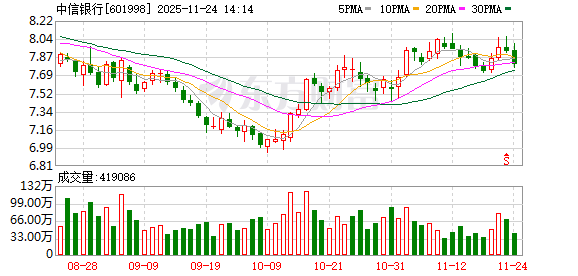
股份制银行板块11月24日跌1.05%,中信银行领跌,主力资金净流出4.07亿元
Zheng Xing Xing Ye Ri Bao· 2025-11-24 09:12
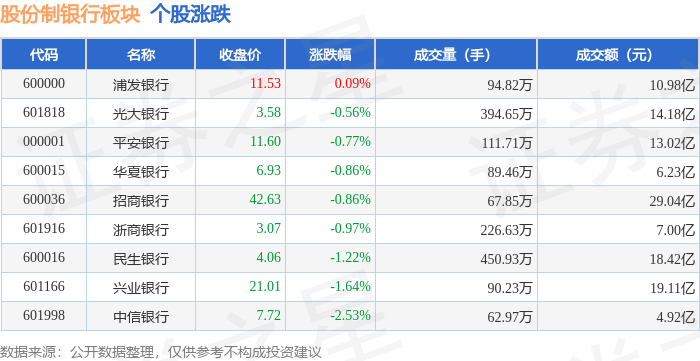
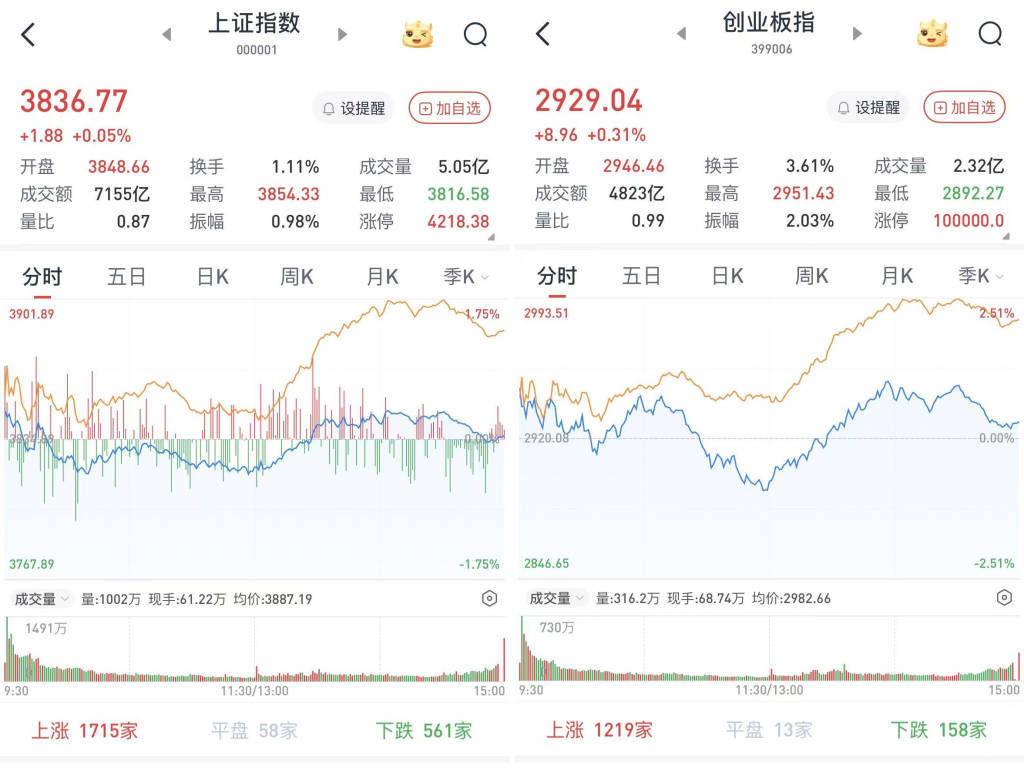
证券之星消息,11月24日股份制银行板块较上一交易日下跌1.05%,中信银行领跌。当日上证指数报收 于3836.77,上涨0.05%。深证成指报收于12585.08,上涨0.37%。股份制银行板块个股涨跌见下表: | 代码 | 名称 | 收盘价 | 涨跌幅 | 成交量(手) | 成交额(元) | | --- | --- | --- | --- | --- | --- | | 600000 | 浦发银行 | 11.53 | 0.09% | 94.82万 | 10.98亿 | | 601818 | 光大银行 | 3.58 | -0.56% | 394.65万 | 14.18 Z | | 000001 | 平安银行 | 11.60 | -0.77% | 111.71万 | 13.02亿 | | 600015 | 华夏银行 | 6.93 | -0.86% | 1 89.46万 | 6.23亿 | | 600036 | 招商银行 | 42.63 | -0.86% | 67.85万 | 29.04亿 | | 601916 | 浙商银行 | 3.07 | -0.97% | 226.63万 | 7.00亿 | | 60001 ...






重磅发布!中信银行推出《中国居民养老财富管理发展报告》
Zheng Quan Ri Bao Zhi Sheng· 2025-11-24 08:43
Core Insights - The report emphasizes the increasing awareness and proactive planning among Chinese residents regarding retirement wealth management, with a notable shift in attitudes among younger demographics [2][3][4] Group 1: Report Overview - The "China Resident Pension Wealth Management Development Report (2025)" was released by CITIC Bank, marking the fourth consecutive year of this series, aiming to provide insights and practical experiences for the development of pension finance in China [1] - The report highlights the "CITIC Solution" as a valuable practical experience for the industry, contributing to the exploration of a unique approach to address population aging in China [1] Group 2: Changing Attitudes Towards Retirement Planning - Recent surveys indicate that the average age for initiating retirement planning is stabilizing around 37 years, reflecting a younger demographic's increasing engagement in retirement planning [2] - The percentage of younger individuals (ages 18-34) who feel "not in a hurry" to plan for retirement has decreased from 78% in 2023 to 47% in 2025, indicating a significant shift in mindset [2] Group 3: Evolving Financial Product Offerings - The demand for diverse asset allocation in retirement investments is rising, moving away from a focus solely on safe savings due to low interest rates and increased longevity [3] - New financial products, including personal pension accounts and innovative commercial pension products, are being introduced to meet the evolving needs of retirees [3][4] Group 4: Comprehensive Financial Services - The report suggests that pension financial services are transitioning from single product offerings to a comprehensive service system, balancing returns, safety, and quality of life [4] - Financial institutions are innovating in product supply, leading to a more refined product structure that integrates closely with pension services and leverages digital technology [4] Group 5: CITIC Bank's Strategic Initiatives - Since 2009, CITIC Bank has been developing a unique "Happiness+" pension financial service system, focusing on the entire lifecycle of customer needs [5] - The bank is actively building a comprehensive ecosystem for pension wealth management, health care, and home living by leveraging its full financial capabilities and collaborating with external partners [5] Group 6: Educational Efforts in Pension Finance - CITIC Bank is committed to educating the elderly about pension finance, launching a knowledge book aimed at addressing core needs such as safety, quality of life, and intergenerational wealth transfer [6] - This initiative is part of a broader strategy to enhance the financial literacy of the aging population, ensuring they have access to practical tools and guidance for effective retirement planning [6]
“银行大佬”盯上股权投资!接棒国有大行,招商银行、中信银行AIC获批开业
Sou Hu Cai Jing· 2025-11-24 08:40
Core Viewpoint - The recent approval of Asset Investment Companies (AIC) by several joint-stock banks marks a significant expansion in the sector, breaking the previous dominance of state-owned banks in this area [1][6][10] Group 1: AIC Expansion - Three joint-stock banks, CITIC Bank, China Merchants Bank, and Industrial Bank, have recently received approval to establish AICs, increasing the total number of bank-affiliated AICs in China to nine [1][6] - The registered capital of the nine AICs has reached a total of 148.5 billion yuan, with the newly established AICs contributing 35 billion yuan [1][4][6] Group 2: Business Focus and Strategy - The newly established AICs will primarily focus on market-oriented debt-to-equity swaps and equity investments, which are expected to enhance the banks' investment banking capabilities and improve profitability [1][2][5] - The AICs aim to provide comprehensive financing support to enterprises, particularly in technology and emerging industries, thereby promoting high-quality development [2][5] Group 3: Competitive Advantages - Joint-stock banks' AICs possess several competitive advantages over state-owned banks, including greater flexibility, faster decision-making, and a focus on niche markets such as technology finance and green industries [8][10] - The AICs are expected to fill the financing gap for small and medium-sized technology enterprises by providing "patient capital" with investment cycles of over five years [8][10] Group 4: Future Outlook - The industry is anticipated to see further expansion of AICs, with more joint-stock banks and potentially city commercial banks being approved to establish their own AICs [9][10] - The regulatory environment is becoming more favorable for the establishment of AICs, which is expected to enhance the overall diversity and competitiveness of the sector [6][10]



风控系统精准拦截!中信银行长沙分行成功阻断一起境外NFC盗刷
Chang Sha Wan Bao· 2025-11-24 08:28
Core Viewpoint - The incident highlights the effectiveness of CITIC Bank's risk control system in preventing a potential financial loss for a customer through timely intervention against a fraudulent transaction utilizing NFC technology [1][2]. Group 1: Incident Overview - On November 7, CITIC Bank's risk control system detected a suspicious transaction involving a large amount of yen being charged to a customer's card in Japan, which triggered an alert due to its unusual characteristics [2]. - The transaction was flagged as high-risk due to its combination of being "overseas," "remote," "NFC payment," and "large amount," which did not align with the customer's typical transaction behavior [2]. Group 2: Fraud Mechanism - The customer, Mr. Qin, had previously fallen victim to a scam where fraudsters impersonated loan officers and convinced him to install a malicious app with NFC capabilities, allowing them to access his card information [3]. - The fraudsters used the stolen information to replicate the card details and attempted to make unauthorized transactions abroad, showcasing a sophisticated and concealed method of fraud [3]. Group 3: Response and Follow-Up - Following the interception of the fraudulent transaction, CITIC Bank's staff took proactive measures over two days to ensure the customer's ongoing safety, including educating him about the scam and enhancing his awareness [4]. - The bank guided the customer to report the incident to the police and advised him to freeze all his bank cards to prevent further losses, demonstrating a commitment to customer security [5][6]. - This incident serves as a reminder for both financial institutions and consumers to remain vigilant against scams that exploit digital payment technologies [6].
A股午后拉升尾盘跳水,三大股指收涨:军工领涨,4228股收红
Sou Hu Cai Jing· 2025-11-24 07:29
A股三大股指11月24日集体高开。盘初快速下挫后,三大股指早盘震荡下行转跌。午后反转,三大股指直线拉升转涨,但尾盘出现了跳水。 社会服务涨幅居前,君亭酒店(301073)、实朴检测(301228)、中国高科(600730)、国脉科技(002093)等涨停或涨超10%,创业黑马 (300688)、豆神教育(300010)、安车检测(300572)等涨超4%。 石油石化高开低走领跌两市,和顺石油(603353)跌超5%,中国海油(600938)、中国石油(601857)、荣盛石化(002493)、中国石化 (600028)等跌超2%。 煤炭股跌幅靠前,安泰集团(600408)、美锦能源(000723)、晋控煤业(601001)等跌超2%,大有能源(600403)、中国神华(601088)等跌 超1%。 从盘面上看,军工、卫星导航、低空经济、AI应用、云计算、6G、电商概念股表现活跃;锂电池产业链再度回调,锂矿方向领跌;海南本地股走 弱。 至收盘,上证综指涨0.05%,报3836.77点;科创50指数涨0.84%,报1296.6点;深证成指涨0.37%,报12585.08点;创业板指涨0.31%,报2929.04 ...
AIC相继开业,如何成金融赋能“新王牌”?这些关卡需注意
Nan Fang Du Shi Bao· 2025-11-24 07:18
Core Insights - The core viewpoint of the article emphasizes the evolution and current state of inclusive finance in China, highlighting the transition from rapid credit growth to a focus on quality and sustainability in financial services [5][9]. Group 1: Development Stages of Inclusive Finance - The evolution of inclusive finance in China can be divided into three key stages: the "Infrastructure Foundation Period," the "Policy-Driven Period," and the current "Value Restructuring Period" [5]. - The current period is characterized by a shift from merely increasing credit volume to achieving stable growth in both quantity and quality, integrating technology, policy, and commercial sustainability [5]. Group 2: Challenges and Responses - Key challenges facing inclusive finance include the "digital divide," high operational costs in underserved markets, and a lack of differentiated products among financial institutions [6]. - Regulatory responses should include differentiated policies, expanded information sharing, and incentives for institutions effectively using AI to serve long-tail customers [6]. Group 3: Technological Integration - The integration of AI and digital currency is seen as crucial for overcoming the "last mile" challenge in inclusive finance, enabling better credit assessment and risk management [7]. - Specific paths include using AI to create dynamic credit profiles and leveraging digital currency for traceable transactions, which can enhance financial inclusion [7]. Group 4: Regional Financial Development - The article discusses the issue of product homogeneity in county-level financial services, attributing it to risk management shortcomings and a lack of tailored financial solutions [8]. - Solutions proposed include developing specialized financial products based on local industries and enhancing the capabilities of financial institutions to better serve these markets [8]. Group 5: Role of AIC in Inclusive Finance - The recent approval of Asset Investment Companies (AIC) is expected to reshape the landscape of inclusive finance by providing new solutions for small and innovative enterprises [9][11]. - AICs are seen as a means to bridge the gap in capital supply and risk-sharing mechanisms, although they face challenges in aligning their investment strategies with the high-risk nature of their target clientele [11].

港股通央企红利ETF天弘(159281)跌0.10%,成交额4260.78万元
Xin Lang Cai Jing· 2025-11-24 07:14
Core Viewpoint - The Tianhong CSI Hong Kong Stock Connect Central State-Owned Enterprises Dividend ETF (159281) experienced a slight decline of 0.10% in its closing price on November 24, with a trading volume of 42.6078 million yuan [1]. Group 1: Fund Overview - The Tianhong CSI Hong Kong Stock Connect Central State-Owned Enterprises Dividend ETF was established on August 20, 2025, with an annual management fee of 0.50% and a custody fee of 0.10% [1]. - As of November 21, the fund had a total of 267 million shares and a total size of 272 million yuan [1]. - The fund's performance benchmark is the adjusted return of the CSI Hong Kong Stock Connect Central State-Owned Enterprises Dividend Index [1]. Group 2: Liquidity and Performance - Over the last 20 trading days, the ETF recorded a cumulative trading amount of 1.006 billion yuan, with an average daily trading amount of 50.3229 million yuan [1]. - The current fund manager, He Yuxuan, has managed the fund since its inception, achieving a return of 1.74% during the management period [1]. Group 3: Top Holdings - The ETF's top holdings include: - COSCO Shipping Holdings (0.85% holding, 218,000 shares, market value of 2.9175 million yuan) - Orient Overseas International (0.40% holding, 10,500 shares, market value of 1.3717 million yuan) - China Foreign Transport (0.33% holding, 270,000 shares, market value of 1.1396 million yuan) - China National Petroleum (0.32% holding, 162,000 shares, market value of 1.0973 million yuan) - CITIC Bank (0.32% holding, 175,000 shares, market value of 1.1136 million yuan) - CNOOC (0.29% holding, 58,000 shares, market value of 1.0041 million yuan) - China Shenhua Energy (0.29% holding, 30,500 shares, market value of 982,600 yuan) - China Pacific Insurance (0.29% holding, 164,000 shares, market value of 1.0107 million yuan) - China Unicom (0.28% holding, 104,000 shares, market value of 952,800 yuan) - Agricultural Bank of China (0.27% holding, 189,000 shares, market value of 933,900 yuan) [2].


报告:37岁成养老规划较好起点
21世纪经济报道· 2025-11-24 06:31
Group 1 - The core viewpoint of the article highlights the shift in China's resident pension investment from traditional savings to diversified asset allocation due to the slowing appreciation of financial assets in a low-interest environment and the increasing demand for retirement funds driven by longer life expectancy [1][2] - The report from CITIC Bank indicates that the awareness of pension planning among residents has significantly increased, with a consensus forming around the age of 37 as an optimal starting point for retirement planning, which has remained stable for three consecutive years [1] - There is a notable change in the mindset of the younger demographic, with a decrease from 78% in 2023 to 47% in 2025 of those aged 18-34 believing that they are "still young and not in a hurry" to plan for retirement, indicating a proactive approach to retirement planning among the younger generation [1] Group 2 - The core demands of respondents regarding pension finance are evolving from "capital preservation and appreciation" to a comprehensive service model that includes "finance + health, care, and cultural leisure," with 70% of respondents wanting financial institutions to provide quality health management and medical services [2] - The supply of pension financial products in China is expanding and upgrading, with personal pension accounts now including government bonds, specific pension savings, and index funds, thereby enriching investment options [2] - Recent policy support for the silver finance market includes the expansion of pension financial product pilot programs nationwide and an increase in the fundraising limit for individual financial companies, which is expected to enhance the development of the pension financial product system and inject strong growth momentum into the silver finance market [2]

中信AIC落地广州:金投“耐心资本”改写股权投融资格局
2 1 Shi Ji Jing Ji Bao Dao· 2025-11-24 06:13
Core Viewpoint - The establishment of Xinyin Financial Asset Investment Co., Ltd. (信银金投) by CITIC Bank marks a significant step in the expansion of the banking sector's asset investment companies (AIC), highlighting the growing role of AICs in connecting financial capital with industrial development [2][10]. Group 1: AIC Development and Advantages - AICs have evolved since their inception in 2016, initially aimed at market-oriented debt-to-equity swaps, and have expanded their business scope to include equity investments, becoming a crucial bridge between indirect and direct financing [4][10]. - The regulatory environment has been increasingly favorable, with pilot programs for AICs expanding to 18 key cities, allowing for greater investment flexibility and encouraging banks to establish AICs [4][10]. - AICs offer significant capital efficiency advantages compared to traditional bank equity investments, requiring only 400% capital weight for equity investments versus 1250% for banks, thus enabling more sustainable long-term investments [5][6]. Group 2: Strategic Importance of Xinyin Financial Investment - The establishment of Xinyin Financial Investment in Guangzhou is strategically significant, as the city is a financial hub with a robust ecosystem, having attracted numerous financial institutions and AIC funds [8][9]. - Xinyin Financial Investment aims to focus on strategic emerging industries and align with Guangzhou's modernization goals, particularly in sectors like new information technology and artificial intelligence [9][11]. - The opening of Xinyin Financial Investment is timely, coinciding with the accelerated development of AICs, which are becoming essential for banks to enhance their core competitiveness and support high-quality economic development [10][12]. Group 3: Future Outlook for AICs - The number of AICs in China is expected to increase, with potential new entrants like Postal Savings Bank, indicating a trend towards specialization and regional focus within the industry [12]. - AICs are anticipated to play a more prominent role in providing "patient capital," facilitating the integration of financial and industrial sectors, and offering comprehensive financial solutions to enterprises [11][12].
信银金投获批开业 首批三家股份制银行AIC正式落地
Xin Lang Cai Jing· 2025-11-24 06:05
Core Insights - The approval of three national joint-stock banks to establish Asset Investment Companies (AICs) marks an expansion in China's banking sector after an eight-year hiatus [2][3]. Group 1: Company Developments - CITIC Bank announced the approval for its financial asset investment company, with a registered capital of 10 billion RMB, located in Guangzhou [2]. - China Merchants Bank also received approval for its AIC, with a registered capital of 15 billion RMB, based in Shenzhen [2]. - Xinyin Financial Asset Investment Company was officially established in Fuzhou, becoming the first AIC initiated by a joint-stock bank, with a registered capital of 10 billion RMB [2]. Group 2: Policy Background - The expansion of AICs is driven by ongoing policy support, including a notification from the National Financial Regulatory Administration in September 2024 to enhance equity investment trials [3]. - In March 2025, the regulatory body expanded the investment scope of AICs to include trial cities and their provinces, aiming to bolster support for technology innovation and private enterprises [3]. - A joint document from seven departments in May 2025 emphasized the need for a financial system that supports technological innovation, expanding the AIC equity investment trial to 18 provinces [3]. Group 3: Industry Landscape - Currently, five major state-owned banks have established AICs, including ICBC Investment, ABC Investment, Bank of China Asset, CCB Investment, and Bank of Communications Investment [4]. - Postal Savings Bank has received approval to establish its AIC, indicating ongoing growth in this sector [4].