京东方

Search documents
群智咨询:Mini LED与OLED在车载显示领域的“竞合关系”将成为未来发展主线
Zhi Tong Cai Jing· 2025-10-17 12:55
Core Insights - The competitive relationship between Mini LED and OLED in the automotive display sector will be a key focus for future development, with both technologies evolving to better suit automotive applications [1][8] - Mini LED is expected to penetrate the market for vehicles priced above 200,000 yuan, with a significant increase in adoption projected for 2026 compared to 2025 [1][8] Product Technology Upgrades - The automotive display panel market is shifting towards a "differentiated breakthrough" in technology, characterized by a multi-faceted landscape of "Mini LED explosion, stable OLED, and traditional LCD maintaining the base" [2] - Mini LED technology is anticipated to experience explosive growth in 2025, with a projected increase in shipments from 800,000 units in 2023 to 3 million units in 2025, representing a year-on-year growth of 150% [3][4] Mini LED Growth Dynamics - The growth of Mini LED is driven by both technological advancements and market demand, with improved yield rates and cost reductions enabling its adoption in mainstream vehicle segments priced between 200,000 to 300,000 yuan [4] - Mini LED's technical features, such as high brightness and wide temperature tolerance, make it well-suited for automotive environments, creating a positive feedback loop of demand and supply [4] OLED Market Position - OLED technology has established a foothold in the high-end market, with applications in luxury vehicles, but its growth remains steady rather than explosive, focusing on high-end models priced above 500,000 yuan [5][6] - The shipment volume of OLED panels is expected to grow from 600,000 units in 2022 to 3.1 million units in 2025, reflecting a 25% year-on-year increase, although this growth rate is slower than that of Mini LED [5][6] Traditional LCD's Role - Despite the rise of Mini LED and OLED, traditional LCD technology continues to dominate the automotive display market, accounting for over 95% of shipments, primarily in vehicles priced below 200,000 yuan [7] - The strategy for traditional LCD in 2025 focuses on optimizing user experience and controlling costs through improved brightness and color optimization [7] Future Outlook - The competitive dynamics between Mini LED and OLED will drive rapid technological iterations, with both technologies expected to adapt to automotive needs [8][9] - Companies will need to balance current display performance and costs while anticipating future technological advancements, ensuring a diversified approach to production capacity for both Mini LED and OLED [9]
联想宣布升级智联质量生态模式 聚焦 以AI赋能质量管理
Zhi Tong Cai Jing· 2025-10-17 10:51
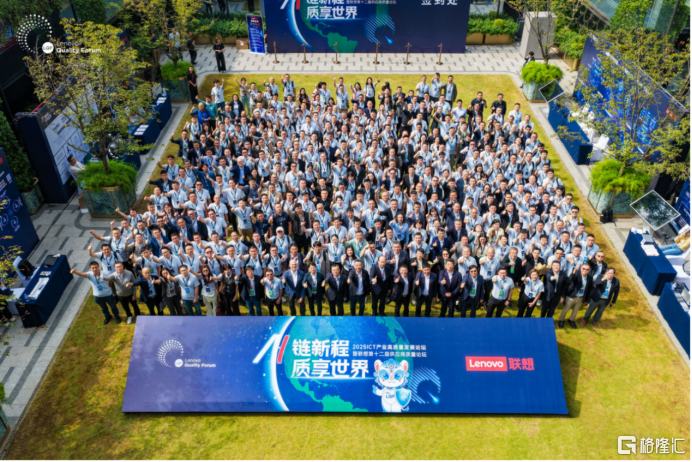
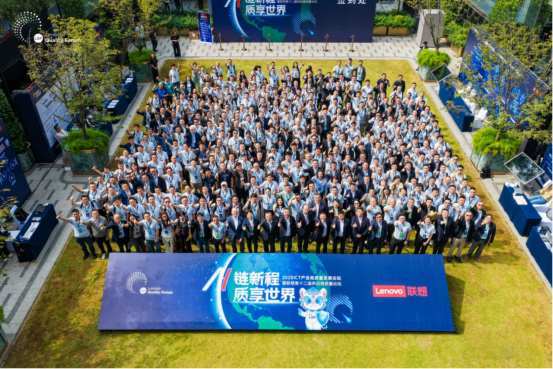
Core Insights - The forum held in Chongqing focused on the theme "AI Chain New Journey, Quality Enjoying the World," emphasizing the importance of quality in the context of new globalization and rapid AI development [1] - Lenovo has been hosting the Supplier Quality Forum annually since 2014, highlighting its commitment to quality as a cornerstone of its business and competitive advantage [1] Group 1: Quality Management Achievements - Lenovo's Vice President announced significant improvements in quality metrics over the past five years, including a 45% reduction in initial failure rates and a 21% reduction in warranty failure rates, along with a 31% increase in user satisfaction [2] - The "Extreme Left Shift" quality management philosophy aims to identify and mitigate quality risks from the earliest stages of product development, rather than at manufacturing or post-sale [2][3] Group 2: Collaborative Innovations - Lenovo's collaboration with Wistron in Chongqing has led to a modern manufacturing base that emphasizes quality control from the research and development stage, marking a shift from reactive to proactive quality management [3] - Joint efforts with BOE have resulted in innovative solutions to critical issues in product design and manufacturing, showcasing the importance of collaborative innovation in the consumer electronics industry [3] Group 3: Digital Transformation and AI Integration - Lenovo is entering the 2.0 phase of its digital transformation, driven by AI, which is seen as a new engine for quality competitiveness [5][6] - The company is enhancing its quality ecosystem by integrating AI capabilities across the entire supply chain, aiming for self-sensing, self-executing, self-decision-making, and self-adaptive quality management [6] Group 4: Global Operations and Market Growth - Lenovo's mobile business has seen significant growth, with a 45% year-on-year increase in the global foldable smartphone market, and Motorola's market share doubling to 28% [8] - The establishment of "lighthouse factories" and the implementation of AI-driven quality management have led to substantial reductions in quality losses and improved decision-making accuracy in production [7][8] Group 5: Future Directions - Lenovo aims to continue driving digital transformation in global industries, collaborating with suppliers to build a high-quality, resilient, and sustainable supply chain ecosystem [10] - The company emphasizes the importance of quality in the context of new globalization, advocating for a shift from GDP to GNP thinking among Chinese enterprises to enhance global competitiveness [9][10]

联想举办第十二届供应商质量论坛:以“极限左移 + AI”重构ICT产业质量生态
Ge Long Hui· 2025-10-17 10:02
Core Insights - The forum themed "AI Chain New Journey, Quality Enjoying the World" was held in Chongqing, where Lenovo Group gathered over 500 suppliers and industry experts to discuss building a resilient, sustainable, and win-win industrial ecosystem in the context of new globalization and rapid AI development [1][5]. Group 1: Quality Management Achievements - Lenovo Group has significantly improved its quality metrics over the past five years, with initial failure rates and in-warranty failure rates improving by 45% and 21% respectively, and user satisfaction (Net Promoter Score/Product Satisfaction Index) improving by 31% [4]. - The "Extreme Left Shift" quality management philosophy has been pivotal in these improvements, emphasizing early intervention in the product lifecycle to identify and mitigate quality risks [6][4]. Group 2: Collaboration and Innovation - Lenovo has collaborated with Wistron for over 24 years, establishing a modern manufacturing base in Chongqing, which has led to a shift from reactive to proactive quality management [8]. - The partnership with BOE has also resulted in innovative solutions to address critical quality issues, showcasing the importance of collaborative innovation in the consumer electronics industry [8]. Group 3: Digital Transformation and AI Integration - Lenovo's global supply chain has entered a new phase of digital transformation driven by AI, focusing on enhancing quality management through intelligent systems [10][12]. - The company is implementing AI across its quality ecosystem, connecting data from over 600 suppliers to enable proactive quality management and decision-making [12][13]. Group 4: Market Performance and Global Strategy - Lenovo's mobile device segment, particularly the Moto foldable phones, has seen significant growth, with a 45% year-on-year increase in global shipments and a market share increase from 14% to 28% [16]. - The company emphasizes the importance of reliability and user experience in competing with top international brands, advocating for a shift in focus from GDP to GNP in global operations [18]. Group 5: Future Outlook - Lenovo aims to continue driving digital transformation in the global supply chain, collaborating with partners to build a high-quality, resilient, and sustainable ecosystem [21].

联想宣布升级智联质量生态模式 以AI赋能质量管理
Zhi Tong Cai Jing· 2025-10-17 09:57
Core Viewpoint - Lenovo Group is focusing on quality management and innovation in the context of new globalization and rapid AI development, aiming to build a resilient, sustainable, and win-win industrial ecosystem through collaboration with over 500 suppliers and industry experts at the 2025 ICT Industry High-Quality Development Forum [1][2]. Group 1: Quality Management Achievements - Lenovo has improved its initial failure rate and in-warranty failure rate by 45% and 21% respectively over the past five years, with user satisfaction (Net Promoter Score/Product Satisfaction Index) improving by 31% [3]. - The "Extreme Left Shift" quality management philosophy has been pivotal in these improvements, emphasizing early intervention in the product lifecycle to identify and mitigate quality risks [6]. Group 2: Collaboration and Innovation - Lenovo has established a modern manufacturing base in Chongqing in collaboration with Wistron, focusing on quality control from the R&D stage and achieving significant advancements in quality management through joint innovation [8]. - The company is also working closely with BOE in Chongqing to address critical quality issues, implementing improvements in product design and manufacturing processes [9]. Group 3: Digital Transformation and AI Integration - Lenovo's global supply chain is entering a new phase of digital transformation driven by AI, with a focus on enhancing quality management capabilities across the entire ecosystem [10]. - The company is developing an intelligent quality management system that integrates AI to improve decision-making and risk identification, achieving a 70% reduction in quality losses since 2018 [11]. Group 4: Market Performance and Global Strategy - Lenovo's Moto foldable phones have seen a 45% year-on-year increase in global market shipments, with the brand's market share doubling from 14% to 28% in the same period [14]. - The company emphasizes the importance of high reliability and user experience to compete with top international brands, advocating for a shift from GDP to GNP thinking in global operations [18]. Group 5: Future Outlook - Lenovo aims to continue driving digital transformation in global industries, collaborating with suppliers to build a high-quality, resilient, and sustainable supply chain ecosystem [20].
京东方精电:受托人就股份奖励计划购买合共30万股

Zhi Tong Cai Jing· 2025-10-17 09:11
Group 1 - The company BOE Technology Group (京东方精电) announced that on October 17, 2025, a trustee will purchase a total of 300,000 shares from the market as part of its share incentive plan and trust agreement [1]
京东方精电(00710):受托人就股份奖励计划购买合共30万股
智通财经网· 2025-10-17 09:07
Core Viewpoint - BOE Technology Group (京东方精电) announced that on October 17, 2025, a trustee will purchase a total of 300,000 shares from the market to meet the requirements of the current and future share incentive plans as per the terms of the share incentive plan and trust agreement [1] Summary by Category - **Company Actions** - The company is set to buy back 300,000 shares to support its share incentive plans [1]
京东方精电(00710.HK):根据股份奖励计划购买30万股
Ge Long Hui· 2025-10-17 09:02
Group 1 - The core point of the article is that BOE Technology Group (京东方精电) announced the purchase of a total of 300,000 shares from the market to fulfill its current and future share incentive plans, as per the terms of the trust agreement [1] Group 2 - The shares will be acquired by the trustee on October 17, 2025, indicating a planned approach to managing share incentives [1] - This action reflects the company's commitment to its employee incentive programs, which may enhance employee motivation and retention [1] - The purchase is part of a broader strategy to align employee interests with shareholder value [1]
建设银行发布支持新型工业化“善建智造”服务方案 推出六大专项行动
Zhong Guo Xin Wen Wang· 2025-10-17 06:31
Core Insights - China Construction Bank (CCB) launched the "Support New Industrialization 'Smart Construction' Service Plan" to enhance financial support for the manufacturing sector, focusing on six key actions and product systems [1][2][5]. Group 1: Financial Support for New Industrialization - CCB aims to be a leader in financial support for new industrialization, with a commitment to provide over 5 trillion yuan in financing to various manufacturing entities over the next three years [2][3]. - The bank's manufacturing loan balance has exceeded 3.5 trillion yuan, with long-term loans making up over 50% of this amount [2]. Group 2: Six Key Actions - The six key actions include: 1. "Stable Financing" to provide long-term, stable funding for manufacturing enterprises [5]. 2. "Catalyzing Innovation" to support technological advancements through integrated financial services [5]. 3. "Upgrading Transformation" to assist in the transition to high-end, intelligent manufacturing [5]. 4. "Supply Chain Financing" to address funding mismatches across the industrial chain [5]. 5. "Cluster Development" to offer tailored services for industrial clusters [5]. 6. "Cross-Border Financing" to support enterprises in their international expansion [5]. Group 3: Collaboration and Strategic Partnerships - CCB signed strategic cooperation agreements with eight manufacturing companies, including Huawei and CATL, to enhance collaboration and support for the new industrialization process [7][8]. - The bank emphasizes the importance of aligning financial services with industry needs, as highlighted by feedback from enterprise representatives [6][7].

DTS2025最新议程!破解LED显示屏未来机遇与挑战
TrendForce集邦· 2025-10-17 04:11
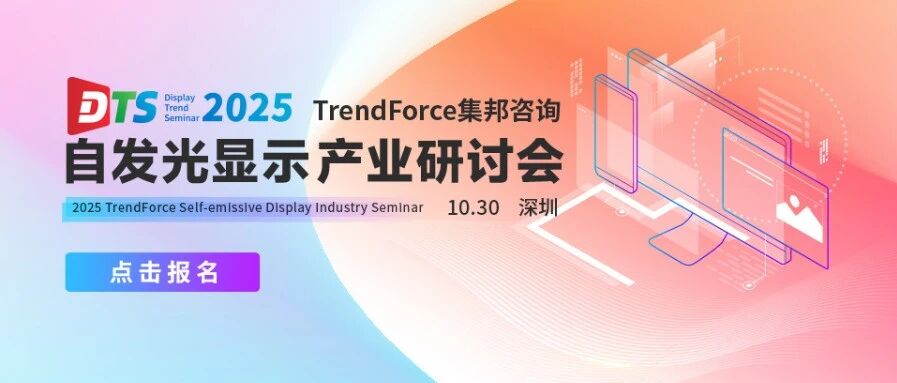
Core Viewpoint - The global LED display industry is entering a complex and dynamic development phase, presenting unprecedented opportunities and challenges for companies [2][3]. Group 1: Technological Opportunities and Challenges - The primary opportunity and challenge stem from the choice and breakthrough of technological routes, particularly in response to the explosion of ultra-high-definition display demand. Companies must face the core issue of achieving continuous pixel pitch reduction at lower costs and higher yields [2]. - COB (Chip on Board) and MIP (Micro LED Integrated Package) packaging technologies are gaining attention. COB technology is recognized for its advantages in protection and integrated black screen effects, while MIP aims to find a new balance between display quality, cost control, and production efficiency [2][3]. - The evolution of these technologies and their performance in different application scenarios directly impacts companies' product strategies and market competitiveness [2]. Group 2: Market Expansion and Compliance Development - Advances in LED display technology have broadened application boundaries, extending from traditional fields like outdoor advertising and sports venues to emerging markets such as corporate meetings, security monitoring, smart education, virtual shooting, and AR/VR [2]. - However, rapid market growth is accompanied by issues such as product homogenization, price wars, and lack of standards. Companies face the challenge of meeting diverse and customized demands while ensuring product reliability and safety, achieving high-quality development under compliance [2][3]. Group 3: Global Macro Market Opportunities and Challenges - Global economic fluctuations, regional supply chain restructuring, and changes in the international trade environment add uncertainty to the overseas expansion of LED display companies [3]. - Companies must navigate demand differences, cultural backgrounds, and entry standards across different regional markets, which raises the bar for their global operational capabilities [3]. - Identifying growth points and avoiding potential risks in a complex international environment requires a more macro and comprehensive industry insight [3]. Group 4: Upcoming Industry Event - On October 30, TrendForce will host the 2025 Self-Luminous Display Industry Seminar in Shenzhen, featuring a keynote report on global LED display market opportunities and challenges by TrendForce's research director [4]. - The event will gather industry leaders from companies like TCL Huaxing, BOE, and others to discuss the future of display technology [4].
我国智能穿戴产品品类突破18.1万种,消费电子ETF(561600)今日回调蓄势
Xin Lang Cai Jing· 2025-10-17 02:36
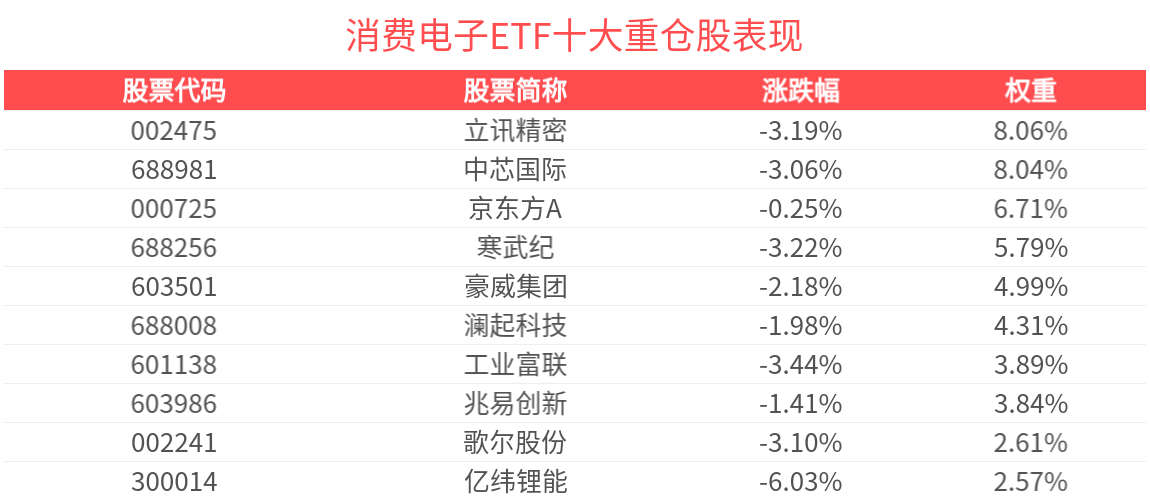
Core Insights - By September 2025, the number of registered smart wearable products in China reached 181,000, a 91.4% increase from September 2020, with smart headphones having the largest share and significant growth in smartwatches and smart glasses [1] - The low price point of consumer electronics is expected to facilitate rapid adoption, making it one of the first scenarios for digital consumption [1] - The domestic consumer electronics supply chain is well-established, making it the preferred partner for developing new consumer electronics products, with several AI glasses expected to be launched within the year [1] - The Consumer Electronics ETF (561600) is worth attention [1] Market Performance - As of October 17, 2025, the CSI Consumer Electronics Theme Index (931494) declined by 2.67%, with major stocks like Shengyi Technology (600183) down 7.54% and Tongfu Microelectronics (002156) down 6.63% [1] - The Consumer Electronics ETF (561600) also fell by 2.53%, with the latest price at 1.19 yuan, although it has seen a cumulative increase of 2.25% since the beginning of October [1] Index Composition - The CSI Consumer Electronics Theme Index (931494) includes 50 listed companies involved in component production and consumer electronics brand design, with the top ten weighted stocks accounting for 55.93% of the index [2] - The top ten stocks by weight include Luxshare Precision (002475), SMIC (688981), and Cambrian (688256), among others, with Luxshare Precision holding an 8.06% weight [4]