上海交通大学

Search documents
复旦×上海交大合作最新Science论文:首次进行小胶质细胞替换临床治疗,成功阻断致命脑疾病进展
生物世界· 2025-07-12 01:26
Core Viewpoint - The study presents a novel microglia replacement therapy that effectively halts the progression of the lethal brain disease ALSP in both mice and humans, demonstrating clinical feasibility and long-term efficacy [3][9]. Group 1: Disease Background - Microglia are crucial immune cells in the central nervous system, and their dysfunction can lead to various CNS diseases. CSF1R mutations are linked to congenital microglial deficiency and ALSP, a severe condition with an average survival of only 3 years post-onset in China [2][5]. Group 2: Research Development - The research team developed a microglia replacement strategy, termed MISTER, which replaces pathogenic microglia with wild-type cells to potentially treat ALSP. This strategy was inspired by earlier findings and aimed to address the limitations of previous mouse models [6][7]. Group 3: Experimental Findings - The study utilized two newly generated mouse models that accurately replicate key features of human ALSP, including reduced microglial numbers and cognitive decline. The replacement of mutant microglia with wild-type cells significantly improved neurological function and halted disease progression [7][9]. Group 4: Clinical Application - In a clinical trial involving 8 ALSP patients, the microglia replacement therapy showed promising results, with increased brain glucose metabolism and stable cognitive function over a 24-month follow-up period. This marks the first systematic validation of microglia replacement in human patients [8][9]. Group 5: Implications for Future Research - The findings support the potential of microglia replacement strategies not only for ALSP but also for other CNS diseases associated with microglial dysfunction, indicating a broader therapeutic application [9].


教育早餐荟 | 暑期清北采取“抽签+即时”预约;上海交大回应“校园冲突事件”
Bei Jing Shang Bao· 2025-07-04 02:25
【1】教育部推出系列举措促进高校毕业生就业 为全力促进高校毕业生就业,教育部推出了系列政策举措。近期,就业工作再加力,教育部会同相关部 门聚焦稳岗扩岗推出了系列增量政策举措,聚力攻坚,全力促进还未落实就业去向的毕业生就业。7月 上旬,各省级教育部门计划开展省级招聘会超50场,预计提供岗位超3万个;各高校计划举办线上线下 招聘会超700场,预计提供岗位超100万个。 【2】暑期清北采取"抽签+即时"预约 暑期已至,走进高等学府参观,感受人文历史底蕴,将成为不少学生、家长的选择。今年暑假,北京大 学、清华大学均采取"抽签+即时"预约的参观机制;北京航空航天大学、北京理工大学等高校也公布了 文化场馆的暑期开放信息。其中,北京大学表示,今年暑期校园开放时间为7月7日至8月16日,公众可 通过"参观北大"微信小程序采取即时预约与抽签预约两种方式进行预约。清华大学除周一为校园休整日 外,周二到周日均开放校园。自去年暑假起,清华假期每个开放日开放6000个名额,游客可通过即时预 约或抽签预约两种形式入校参观。 【3】北京发布民办高等教育学校秋季招生政策 近日,北京市教委发布民办高等学校、民办非学历高等教育机构2025年秋季 ...

热辐射超材料用上“AI设计师”
Ke Ji Ri Bao· 2025-07-03 23:32
Core Viewpoint - The development of a reverse design AI model for thermal radiation metamaterials by a research team at Shanghai Jiao Tong University significantly enhances the efficiency of material design, enabling rapid generation of numerous candidate designs for various applications [1][2]. Group 1: AI Model Development - The AI model can filter through over 50,000 design combinations in just three months, a process that would take an astronomical amount of time using conventional methods [1]. - The model is inspired by the three-dimensional topology of biological structures and utilizes a novel "three-plane modeling method" to accurately describe three-dimensional structural units [1]. - A comprehensive database containing 57,110 sets of data has been established, linking materials, superstructures, and spectral performance [1]. Group 2: Practical Applications - The team validated the model's effectiveness by designing and experimentally verifying four types of thermal radiation metamaterials for specific applications, including flexible films, coatings, and patches [2]. - In outdoor tests, these metamaterials demonstrated excellent self-cooling effects, with single-band selective metamaterials showing surface temperatures 2.5°C and 5.3°C lower than broadband metamaterials and commercial white paint, respectively [2]. - The experimental results indicate the model's potential applications in building energy efficiency and mitigating urban heat island effects [2].
上海交大连夜声明:已成立工作专班,积极配合警方调查处置
中国基金报· 2025-07-02 01:42
关于我校学生6月30日晚在闵行校区南区体育场训练期间与校外人员发生冲突事件,学校高度 重视, 已成立工作专班,与公安部门协同联动,积极配合依法调查处置。 学校坚决保护学生 人身安全,坚决维护学生合法权益。 同时,将进一步加强校园安全管理,强化校外来访人员校园文明行为管理和引导,切实维护 学校正常教学秩序和安全稳定。 据媒体报道,7月1日,有网友发文称,6月30日晚,一上海交通大学学生在校内体育场跑步时被足球砸 中头部,发现踢球者为校外两名小孩。该学生与踢球小孩的家长发生言语冲突后因身体不适倒地,小孩 家长持续脚踹学生。最后该学生被救护车送往医院治疗。 来源:平安交大、政事儿 7月2日凌晨,上海交通大学保卫处账号平安交大发布声明: ...

中国高校第一省,又变了
36氪· 2025-07-02 00:10
Core Viewpoint - The article discusses the evolving landscape of higher education in China, highlighting the rapid establishment of new universities and the shifting distribution of institutions across provinces, particularly focusing on the implications for regional development and educational quality [5][6][10]. Group 1: Overview of Higher Education Landscape - As of 2025, there are 2,919 higher education institutions in China, including 1,365 universities and 1,554 vocational colleges [6]. - Over the past year, more than 100 new universities have been established or renamed, including 36 vocational universities transitioning to "specialized undergraduate" institutions [7]. Group 2: Provincial Distribution of Universities - Twelve provinces have over 100 universities, predominantly in the eastern and central regions [10]. - Henan leads with 178 universities, surpassing traditional educational powerhouses like Jiangsu, Shandong, and Guangdong [11][12]. - The increase in Henan's universities from 140 to over 170 in recent years reflects a significant push for higher education [12]. Group 3: Quality vs. Quantity in Higher Education - While Henan has a high number of institutions, the majority are vocational colleges, raising concerns about the quality of education [14]. - In contrast, Jiangsu has 82 undergraduate institutions, maintaining its position as the top province for quality higher education [16]. - Beijing has a unique profile with nearly 75% of its universities being undergraduate institutions, indicating a focus on educational quality [20]. Group 4: Challenges and Strategic Responses - Henan's strategy of building vocational colleges aims to address immediate educational needs and align with regional industrial demands, particularly in skill-based sectors [34][36]. - The province's gross enrollment rate in higher education is still below the national average, necessitating a focus on expanding access [33]. - The article emphasizes the need for a balance between quantity and quality in higher education, advocating for improvements in educational standards rather than mere expansion [48][57]. Group 5: Future Directions and Policy Implications - The Ministry of Education plans to direct new higher education resources towards central and western provinces, which may benefit regions like Henan [62]. - There is a push for local universities to establish branches and for collaboration with institutions from Hong Kong and Macau, enhancing educational opportunities in economically vibrant areas [66][70]. - The article concludes that while the expansion of universities is crucial, the focus should shift towards building high-quality institutions to meet future educational demands [57][74].

多所“双一流”高校 扩大在豫招生规模
Zheng Zhou Ri Bao· 2025-06-30 00:56
Group 1 - Several top-tier universities in China are expanding their enrollment in Henan province to cultivate high-quality talent for national technological innovation and economic development [1][2][3][4][5][6] - Peking University plans to enroll 143 students in Henan, an increase of 13 from last year, focusing on national strategic needs and emerging fields [1] - Tsinghua University aims to enroll 101 students, with an emphasis on cultivating interdisciplinary talents in artificial intelligence [1][2] Group 2 - Harbin Institute of Technology plans to enroll 131 students at its main campus and 211 at its Weihai campus, focusing on innovative talent in automation and artificial intelligence [2] - Fudan University is set to enroll 151 students in Henan, including 26 spots for new engineering programs in integrated circuits and artificial intelligence [2] - Shanghai Jiao Tong University plans to enroll 141 students, emphasizing the development of artificial intelligence and electronic information disciplines [3] Group 3 - Nanjing University maintains a stable enrollment of 98 students in Henan, introducing new dual-degree programs and focusing on critical talent in key fields [3] - Zhejiang University is increasing its enrollment to 188 students, with new programs in artificial intelligence and smart manufacturing [4] - The University of Science and Technology of China plans to enroll 135 students, focusing on foundational disciplines and new engineering fields [4] Group 4 - Xi'an Jiaotong University plans to enroll 349 students, with a focus on emerging technologies such as artificial intelligence and energy storage [5] - Wuhan University aims to enroll 655 students, with a focus on AI and new professional programs to meet national strategic needs [5] - Nankai University plans to enroll 203 students, emphasizing personalized education and new engineering programs [5] Group 5 - Beijing Jiaotong University plans to enroll 254 students, introducing specialized programs in transportation and system science [6]
@所有考生,今年高校招录有这些新变化
Zhong Guo Xin Wen Wang· 2025-06-28 13:23
Group 1: Admission Policies - Several universities have implemented "zero adjustment" policies, ensuring that students will be admitted to one of their chosen majors without being transferred to other programs if they meet the requirements [1] - Xiamen University and Sun Yat-sen University have specific policies that guarantee admission to the selected major if students fill out their choices without repetition and pass health checks [1] - Beijing University of Posts and Telecommunications has introduced a "6保1" policy, allowing students to choose six majors without repetition, ensuring admission to one of their selected majors [1] Group 2: Major Transfer Policies - Many universities have relaxed their major transfer policies, allowing students greater flexibility in changing their fields of study [2] - Xiamen University will fully open its undergraduate major transfer policy, removing restrictions on the number of transfers and the year of study [2] - West China University of Transportation allows students to transfer to various specialized programs without any prerequisites, with applications accepted at the end of each academic year [2] Group 3: Subject Requirements for Traditional Chinese Medicine Programs - Several traditional Chinese medicine universities have adjusted their subject requirements for certain programs, with some no longer specifying subject prerequisites [3][4] - For example, Anhui University of Chinese Medicine has removed subject requirements for programs like Traditional Chinese Medicine and Acupuncture [3] - Beijing University of Chinese Medicine has also made adjustments, allowing for more flexibility in subject selection for certain programs [4] Group 4: Enrollment Expansion in "Double First-Class" Universities - The Ministry of Education has announced an expansion in undergraduate enrollment for "Double First-Class" universities, with several institutions increasing their admission quotas [6] - Tsinghua University and Peking University are each adding 150 undergraduate spots, while other universities like Shanghai Jiao Tong University and Shandong University are also expanding their enrollment [6] - New enrollment plans focus on emerging fields such as artificial intelligence, integrated circuits, and biomedical sciences, with some universities introducing unique programs like a "pet" undergraduate major [6]
上海交大最新Science子刊论文:CAR-T治疗实体瘤新思路
生物世界· 2025-06-24 03:56
Core Viewpoint - CAR-T cell therapy has shown remarkable efficacy in treating B-cell malignancies, but its effectiveness in solid tumors remains limited due to poor infiltration capabilities [2][3]. Group 1: Research Findings - The study published by Professor Yang Xuanming's team reveals that co-stimulation via OX40 significantly enhances CAR-T cell anti-tumor activity against solid tumors, including pancreatic, breast, and lung cancers [3][5]. - Heparan sulfate (HS) is identified as a ligand for OX40, promoting CAR-T cell infiltration and persistence in solid tumors [3][7]. - The interaction between OX40 and heparan sulfate activates key signaling pathways (AKT, MAPK, and NF-κB), enhancing cell adhesion and the functional affinity of CAR-T cells to tumor cells [7][10]. Group 2: Implications for CAR-T Therapy - CAR-T cells expressing OX40 demonstrate improved infiltration and persistence in solid tumors, relying on the interaction with heparan sulfate [8][10]. - The findings suggest that the OX40-heparan sulfate interaction can be leveraged to enhance CAR-T cell therapies for a broader range of solid tumors, opening new avenues for treatment strategies [10].

上海交大最新!DyNaVLM:零样本、端到端导航框架
具身智能之心· 2025-06-22 10:56
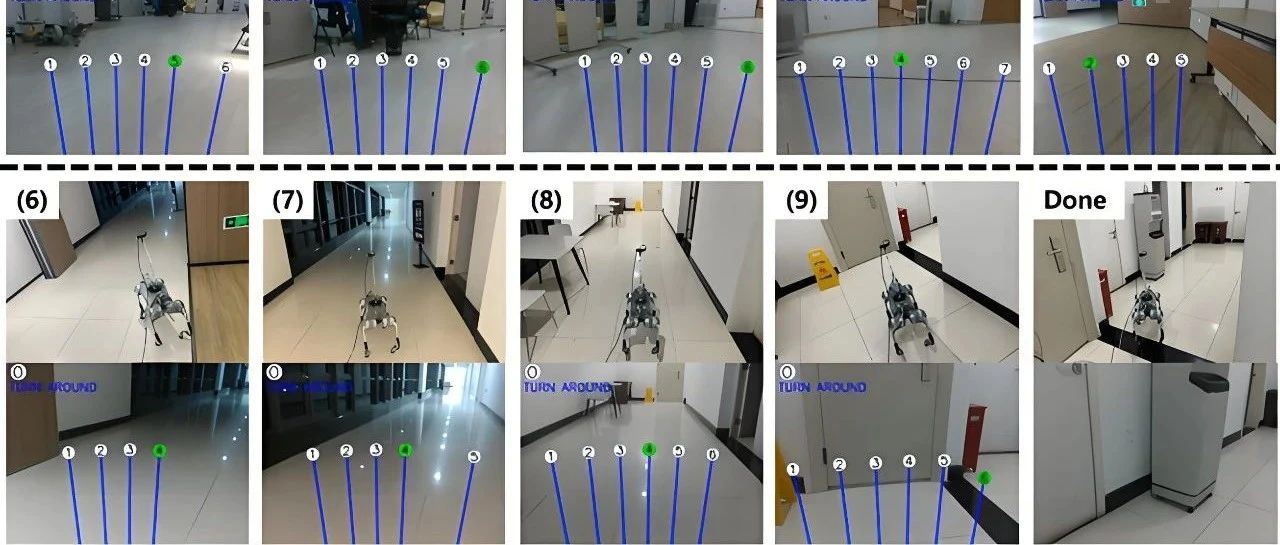
Core Viewpoint - The article discusses the development of DyNaVLM, a zero-shot, end-to-end navigation framework that integrates vision-language models (VLM) to enhance navigation capabilities in dynamic environments, overcoming limitations of traditional methods [4][5]. Group 1: Introduction and Optimization Goals - Navigation is a fundamental capability in autonomous agents, requiring spatial reasoning, real-time decision-making, and adaptability to dynamic environments. Traditional methods face challenges in generalization and scalability due to their modular design [4]. - The advancement of VLMs offers new possibilities for navigation by integrating perception and reasoning within a single framework, although their application in embodied navigation is limited by spatial granularity and contextual reasoning capabilities [4]. Group 2: Core Innovations of DyNaVLM - **Dynamic Action Space Construction**: DyNaVLM introduces a dynamic action space that allows robots to determine navigation goals based on visual information and language instructions, enhancing movement flexibility in complex environments [6]. - **Collaborative Graph Memory Mechanism**: Inspired by retrieval-augmented generation (RAG), this mechanism enhances memory management for better navigation performance [8]. - **No-Training Deployment Mode**: DyNaVLM can be deployed without task-specific fine-tuning, reducing deployment costs and improving generalization across different environments and tasks [8]. Group 3: System Architecture and Methodology - **Problem Formalization**: The system takes inputs such as target descriptions and RGB-D observations to determine appropriate actions, maintaining a memory function to extract spatial features [11]. - **Memory Manager**: This component connects VLM and graph-structured memory, capturing spatial relationships and semantic object information [12]. - **Action Proposer and Selector**: The action proposer simplifies continuous search space into discrete candidates, while the selector generates final navigation actions based on geometric candidates and contextual memory [14][15]. Group 4: Experimental Evaluation - **Simulation Environment Evaluation**: DyNaVLM achieved a success rate (SR) of 45.0% and a path length weighted success rate (SPL) of 0.232 in ObjectNav benchmarks, outperforming previous VLM frameworks [19][22]. - **Real-World Evaluation**: DyNaVLM demonstrated superior performance in real-world settings, particularly in tasks requiring the identification of multiple targets, showcasing its robustness and efficiency in dynamic environments [27].
单应计算加速数十倍、计算量减少95%!基于几何的SKS和ACA矩阵分解被提出
机器之心· 2025-06-19 03:50
Group 1 - The research team from Donghua University, Shanghai Jiao Tong University, and the Chinese Academy of Sciences has proposed two geometry-based homography decomposition methods that significantly reduce the computational load of solving homographies from four points by over 95% compared to conventional sparse linear equation methods [3][4]. - The paper titled "Fast and Interpretable 2D Homography Decomposition: Similarity-Kernel-Similarity and Affine-Core-Affine Transformations" has been accepted by the IEEE T-PAMI journal [5][4]. - The proposed methods are expected to be applicable in various visual applications, including QR code scanning, projective geometry, computer vision, and graphics problems [3]. Group 2 - The traditional Direct Linear Transformation (DLT) method constructs a sparse linear equation system for homography solving, which typically requires around 2000 floating-point operations [7]. - Improved methods have been developed, reducing the computational load to approximately 1800 operations for SVD decomposition and 220 operations for a customized Gaussian elimination method [7]. - The new methods, SKS and ACA, achieve a significant reduction in floating-point operations, with ACA requiring only 29 operations for specific cases like square templates [18][22]. Group 3 - The SKS transformation decomposes the homography matrix into multiple sub-transformations, leveraging the hierarchical nature of geometric transformations [9][10]. - The ACA transformation similarly computes affine transformations from three corresponding points, resulting in an efficient homography matrix decomposition [15]. - The average time for a single four-point homography calculation using the ACA method is reported to be only 17 nanoseconds, achieving acceleration factors of 29 times and 43 times compared to previous methods [22]. Group 4 - The methods can be integrated into various visual processing applications, replacing traditional homography algorithms, particularly in QR code scanning, which is estimated to reach billions of scans daily in China [24]. - The research team is also exploring further applications in deep learning for estimating geometric parameters, P3P pose estimation based on planar homography, and N-dimensional homography matrix decomposition [25].