携程集团

Search documents
暑期住宿热潮:从“满房难订”到“个性旅居” 酒店与民宿行业走向分化转型
Zhong Guo Jing Ying Bao· 2025-08-01 13:11
Core Insights - The summer of 2025 has seen an unprecedented surge in the hotel and homestay industry, driven by diverse consumer demands ranging from short-term "cooling trips" to in-depth "residential experiences" [1][2] Group 1: Consumer Trends - Family travel has become a dominant segment, with parent-child visa orders increasing by 16% year-on-year, accounting for 22% of total visa orders [2] - The "cooling + family + study" tourism model is rapidly emerging, particularly in western and high-altitude regions, with cooling orders growing over 10% [2] - Hotel occupancy rates have significantly increased, with Huazhu Group reporting over 23 million guests from July 1 to 21, a 24% year-on-year growth [2] Group 2: Homestay Market - The homestay sector has also experienced a breakthrough, with "residential" orders for stays longer than five days increasing by 40% year-on-year [3] - The shift from traditional accommodation to experiential living is becoming a new choice for families and young travelers [3] Group 3: Market Dynamics - There is a noticeable structural differentiation within the accommodation industry, with traditional star-rated hotels and personalized lodging products diverging in their operational models [3][4] - The student graduation travel trend has led to a spike in short-term demand, with a reported 88% increase in bookings during the graduation season [4] Group 4: Industry Challenges - Despite the booming market, issues such as service quality, safety, and hygiene in non-branded homestays remain prevalent [4][5] - The hotel industry faces pressure from rising room rates and mismatched operating costs, particularly in lower-tier cities [4][5] - The overall hotel management level in China is considered low, with a need for improved industry regulations and standards [4][5] Group 5: Future Outlook - The industry must address supply-demand mismatches, as core cities face accommodation shortages while lower-tier cities experience oversupply [6] - There is a significant concern regarding product homogeneity and the lack of deep experiential offerings [6] - Consumer demands for price transparency and rights protection are increasing, with brands like Huazhu exploring mechanisms to address these issues [7] - The long-term sustainable development of the accommodation industry hinges on quality and trust, necessitating continuous optimization in management, product structure, and service quality [7][8]
智通ADR统计 | 8月1日
智通财经网· 2025-07-31 22:46
| 序号 | 名称 | 港股代码 | ADR换算价(HKD) | 较港股升跌 | 较港股升跌% | AD ADR最新价(美元) | | --- | --- | --- | --- | --- | --- | --- | | 1 | 腾讯控股 | 0 00700 | 550.011 | +0.011 | 0.00% | 70.070 | | 2 | 阿里巴巴-W | 09988 | 118.360 | +2.660 | 2.30% | 120.630 | | 3 | 建设银行 | 00939 | 8.003 | -0.047 | -0.59% | 20.390 | | 4 | 汇丰控股 | 00005 | 96.234 | +0.084 | 0.09% | 61.300 | | 5 | 小米集团-W | 01810 | 52.874 | -0.276 | -0.52% | 33.680 | | 6 | 友邦保险 | 01299 | 73.059 | -0.341 | -0.46% | 37.230 | | 7 | 美团-W | 03690 | 120.489 | -1.111 | -0.91% | 30.700 ...






选对支付工具,出境游轻松薅羊毛
Guang Zhou Ri Bao· 2025-07-31 15:59
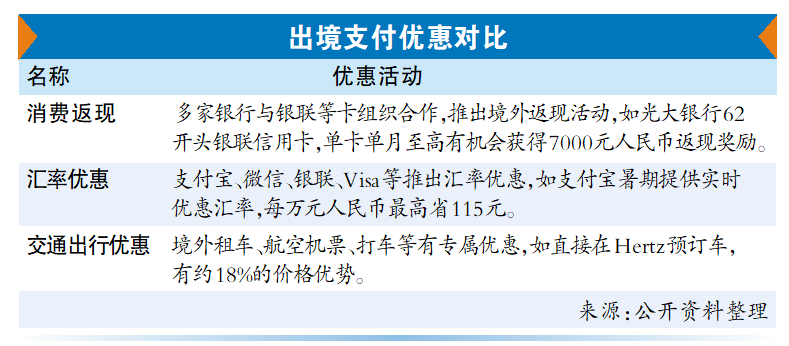
Core Insights - Domestic financial institutions and payment platforms are increasingly offering various overseas consumption incentives during the peak travel season, allowing consumers to save money through cashback and favorable exchange rates [1][2][3] Group 1: Cashback Offers - Multiple banks are collaborating with card organizations like UnionPay to launch exclusive overseas cashback activities, with some credit cards offering up to 7,000 RMB in cashback rewards per month [4] - Consumers can participate in these cashback promotions by registering in advance through bank apps, particularly for credit cards from institutions like China Merchants Bank and Minsheng Bank [2] Group 2: Rental and Travel Discounts - Domestic rental platforms provide significant discounts compared to direct bookings with overseas car rental companies, with savings of approximately 18% noted in a comparison of rental prices in California [2] - Exclusive offers for transportation, including car rentals and airline tickets, are becoming more prevalent, encouraging consumers to check for these deals before traveling [2] Group 3: Exchange Rate Discounts - Payment tools like Alipay and WeChat are offering real-time favorable exchange rates, with potential savings of up to 115 RMB for every 10,000 RMB spent [3] - UnionPay cardholders can enjoy enhanced exchange rates in over 30 popular destinations, with significant savings reported for transactions in Europe and other regions [3] - Consumers are advised to inquire about the best payment methods to maximize cashback and exchange rate discounts when making purchases abroad [3]
携程集团-S(09961.HK)获The Capital Group增持70.26万股
Ge Long Hui· 2025-07-30 23:20
Group 1 - The Capital Group Companies, Inc. increased its stake in Trip.com Group Limited (09961.HK) by acquiring 702,611 shares at an average price of HKD 501.7308 per share, totaling approximately HKD 353 million [1] - Following this acquisition, The Capital Group's total shareholding in Trip.com reached 75,445,987 shares, raising its ownership percentage from 10.93% to 11.04% [1]

美国资本集团增持携程集团-S约70.26万股 每股作价约501.73港元
Zhi Tong Cai Jing· 2025-07-30 13:00
香港联交所最新资料显示,7月28日,美国资本集团增持携程集团-S(09961)70.2611万股,每股作价 501.7308港元,总金额约为3.53亿港元。增持后最新持股数目约为7544.6万股,最新持股比例为 11.04%。 ...
美国资本集团增持携程集团-S(09961)约70.26万股 每股作价约501.73港元
智通财经网· 2025-07-30 11:12
智通财经APP获悉,香港联交所最新资料显示,7月28日,美国资本集团增持携程集团-S(09961)70.2611 万股,每股作价501.7308港元,总金额约为3.53亿港元。增持后最新持股数目约为7544.6万股,最新持 股比例为11.04%。 ...
美国资本集团在携程集团-S的持股比例于07月28日从10.93%升至11.04%。
Mei Ri Jing Ji Xin Wen· 2025-07-30 09:24
每经AI快讯,7月30日,香港交易所信息显示,美国资本集团在携程集团-S的持股比例于07月28日从 10.93%升至11.04%。 ...
美国资本集团在携程集团-S的持股比例于07月28日从10.93%升至11.04%
Mei Ri Jing Ji Xin Wen· 2025-07-30 09:16
每经AI快讯,7月30日,香港交易所信息显示,美国资本集团在携程集团-S的持股比例于07月28日从 10.93%升至11.04%。 ...
剑指平台经济“内卷式”竞争 网经社启动第47次专项调查行动
Sou Hu Cai Jing· 2025-07-30 07:45
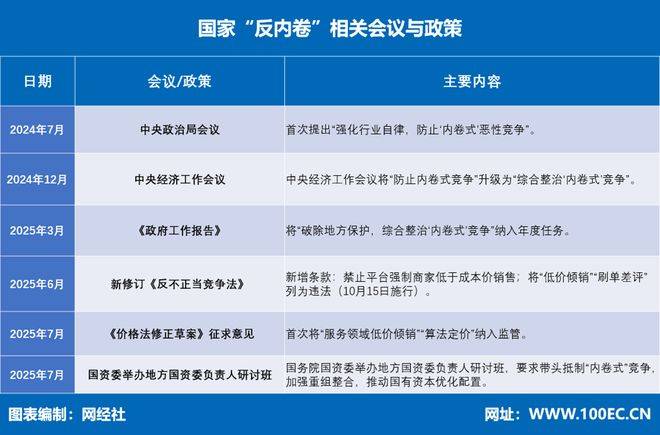
Core Viewpoint - The Chinese government is intensifying its "anti-involution" policies to combat low-efficiency competition in the platform economy, aiming to shift from chaotic "traffic involution" to a new phase of healthy competition focused on efficiency and service [2][9]. Group 1: Policy Background - "Anti-involution" has become a key term in China's economic governance, with significant policy developments from July 2024 to March 2025, including the introduction of the revised Anti-Unfair Competition Law, which prohibits platforms from forcing merchants to sell below cost [2][3]. - The series of policies aims to curb malicious competition, protect stakeholders' rights, and drive the industry towards high-quality development [2][3]. Group 2: Industry Challenges - Various sectors, including live e-commerce, retail e-commerce, food delivery, ride-hailing, and online travel, are deeply entrenched in "involution" and face severe challenges due to ongoing low-price wars and subsidy battles [2][4]. - The food delivery industry exemplifies this issue, where platforms transfer costs to merchants through irrational subsidies and rising commissions, creating a vicious cycle [4][6]. Group 3: Investigation Actions - The "Breaking 'Involution' and Reshaping Ecology" investigation initiated by the China E-Commerce Research Center focuses on major platforms across retail e-commerce, local life services, cross-border e-commerce, ride-hailing, and online travel [9][20]. - The investigation will include real-time monitoring of "involution" issues, extensive research on platforms' responses to policies, expert analyses of industry pain points, and multi-channel dissemination of findings [20][22]. Group 4: Future Directions - The investigation aims to establish a new competitive dimension centered on "efficiency" and "service," moving beyond mere traffic and price competition to enhance supply chain optimization and technological empowerment [22]. - Regulatory measures and legal deterrents are necessary to address the current challenges, but a sustainable evaluation system focused on creating real social value is essential for long-term success [22].
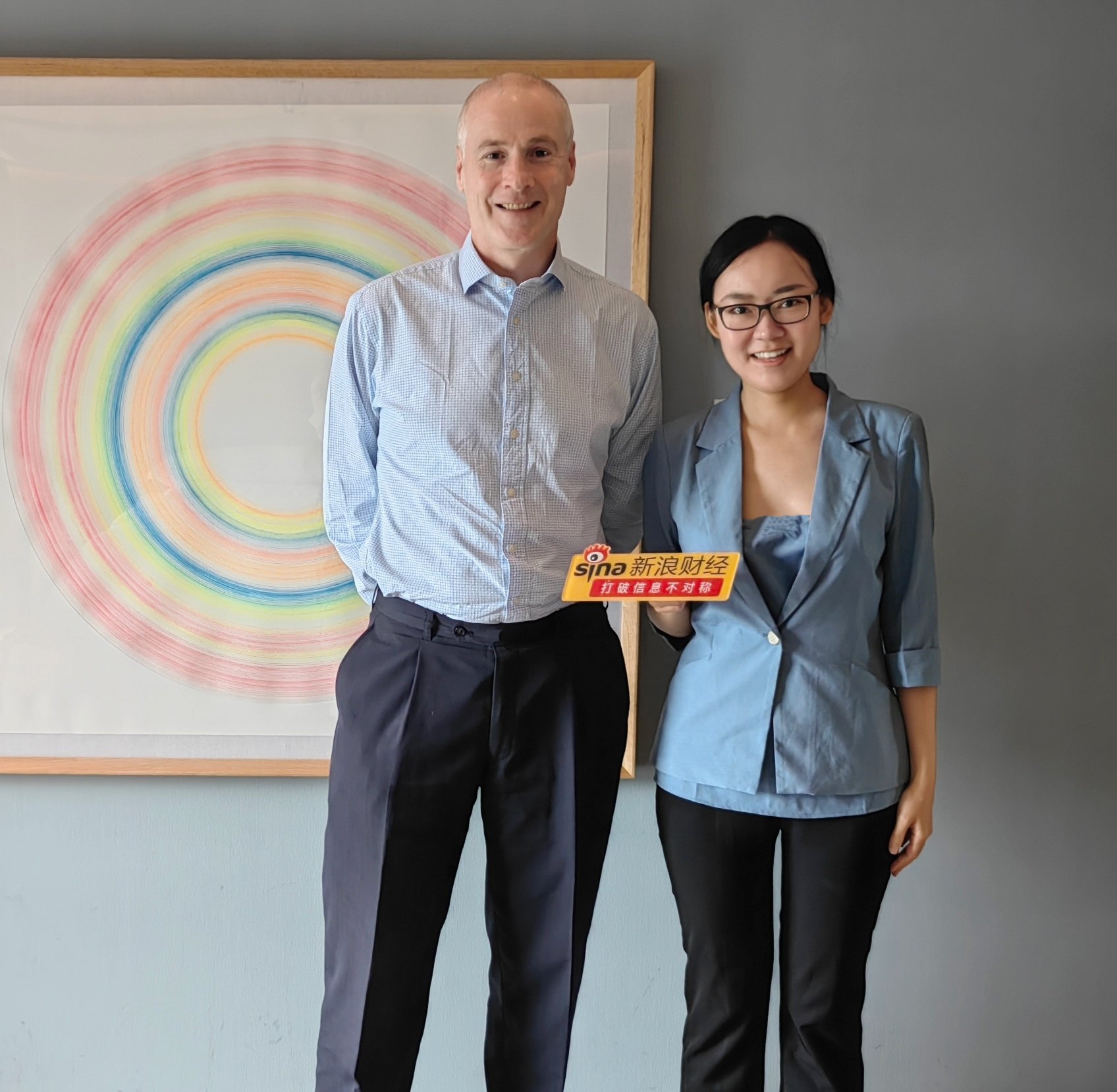
对话柏基投资全球CEO:在华三十载,看好中国速度、创新活力与经济韧性
Xin Lang Cai Jing· 2025-07-30 02:49
Group 1: Core Insights - China has become a significant force in the global economic landscape, influencing business and investment decisions amid complex market conditions [1][2] - Tim Campbell, CEO of Baillie Gifford, emphasizes the importance of long-term investment strategies and the need to focus on long-term trends rather than short-term noise [1][2][9] Group 2: ESG Investment Perspective - ESG factors are critical in the investment process, especially for long-term holdings, as companies with poor ESG practices struggle to succeed over time [2][12] - Baillie Gifford engages with portfolio companies to ensure adherence to the highest industry standards for sustainable development [2][12] Group 3: Emerging Market Opportunities - Tim Campbell expresses optimism about the investment potential in emerging markets, particularly China, highlighting rapid developments in electric vehicles, e-commerce, and solar energy [2][15] - The resilience of China's consumer market and technological innovation capabilities position it well to navigate tariff policies and geopolitical uncertainties [2][11] Group 4: Investment Decision Factors - Successful investment relies on a well-structured investment team culture and incentive mechanisms, with a focus on long-term performance [6][9] - Unique and valuable research inputs are essential for making differentiated investment decisions, as demonstrated by Baillie Gifford's early investments in companies like Tesla [7][9] Group 5: China's Competitive Edge - Chinese companies exhibit remarkable efficiency and competitiveness, which are crucial for their success in the global market [18][19] - The intense competition in sectors like electric vehicles and solar energy drives Chinese firms to excel and innovate [19][20] Group 6: Future Economic Trends - Despite current economic challenges, the long-term growth trajectory of the Chinese economy remains positive, with significant achievements in poverty alleviation and GDP growth [20][21] - Key sectors for future growth in China include healthcare, e-commerce, and renewable energy, with a focus on identifying valuable investment opportunities [21][22]