Palantir Technologies Inc.

Search documents
Is Palantir or Nvidia the Best AI Stock for 2026?
The Motley Fool· 2025-12-10 10:30
Core Insights - Both Palantir and Nvidia are experiencing significant revenue growth, exceeding 60% year-over-year, with Palantir outperforming Nvidia substantially since 2023 [1][11] - As of 2026, both companies face challenges, but Palantir's business model appears to be more resilient compared to Nvidia's [2][4] Company Performance - Palantir's revenue grew 63% year-over-year to $1.12 billion in Q3, with its AIP platform gaining traction among commercial and government clients [5][11] - Nvidia's revenue also increased by 62% year-over-year in Q3 fiscal year 2026, indicating strong performance despite rising competition [11] Competitive Landscape - Palantir is nearly unchallenged in its industry, capturing significant market share and big-name clients [5][4] - Nvidia, once dominating the data center computing unit market with an estimated 90% share, is now facing competition from AMD and Alphabet, which are developing alternative AI computing solutions [7][8] Valuation Analysis - Palantir's stock is trading at 243 times forward earnings, significantly higher than Nvidia's 38 times forward earnings, suggesting that Palantir's growth is already priced into its stock [13][15] - Despite Nvidia's higher competition, its valuation appears more reasonable given its growth rate, making it a potentially better investment option moving forward [16]


颠覆认知!AI席卷全球之际 华尔街反而掀起招聘热潮
智通财经网· 2025-12-10 09:43
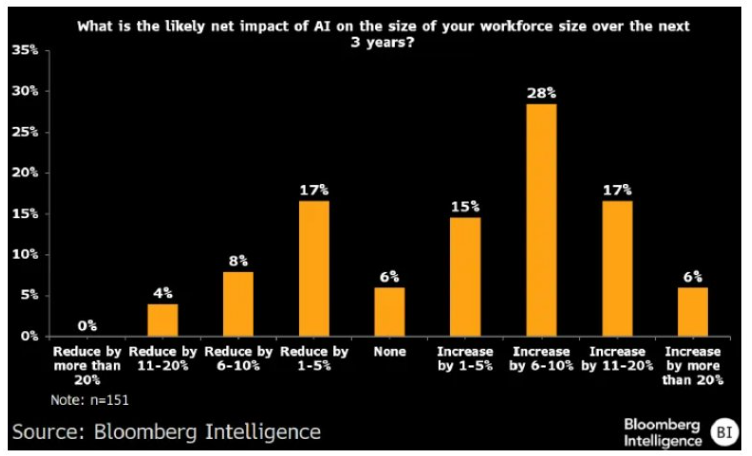
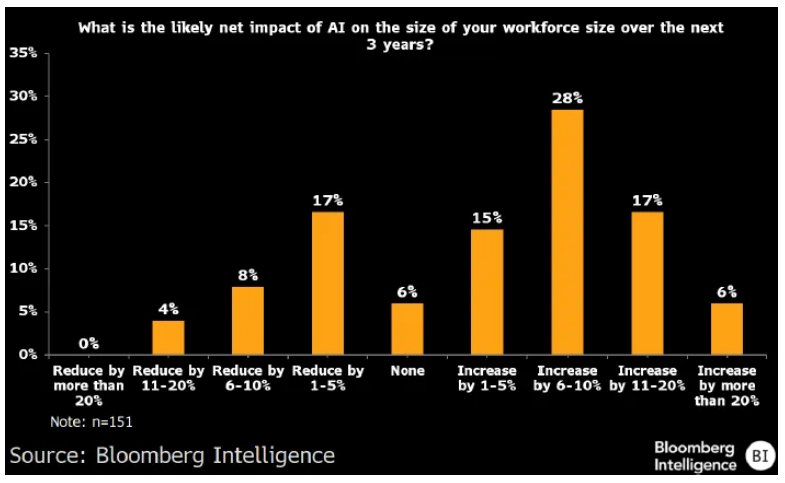
Group 1 - Approximately two-thirds of Wall Street financial services firms expect significant increases in employee numbers after adopting AI applications, raising questions about the technology's potential for cost savings [1] - Over 70% of surveyed Wall Street respondents anticipate that AI-driven applications will lead to higher operating costs in the next three years, although productivity is expected to improve more rapidly [1] - The early stage of AI in financial services is seen as more about capability building rather than significant cost reduction, with cost ratios expected to normalize around 2027-2028, potentially driving profit expansion [1] Group 2 - Major financial institutions like ING, Allianz, and Goldman Sachs are seeking to leverage AI for enhanced customer service and reduced operating costs, although AI adoption in finance is slower compared to retail and tech sectors due to risk and compliance issues [3] - Long-term impacts of AI on the financial industry are expected to be significant, with UBS analysts predicting that major commercial banks could become key beneficiaries of rapid technological advancements by 2026 [3] - Executives across various industries are increasingly integrating AI into core business operations, indicating that AI is no longer a marginal project [4] Group 3 - Goldman Sachs has launched an internal AI assistant aimed at improving productivity and operational efficiency, assisting employees with complex tasks such as document summarization and data analysis [4] - The narrative around AI applications is being reinforced by strong performance from companies like Google and Palantir, indicating robust demand for AI software that enhances business efficiency [5] - The development trajectory of AI applications is focusing on generative AI and autonomous AI agents, which are expected to transform AI from an information tool to a highly intelligent productivity tool by 2030 [6]
联想创投宋春雨的“Agent”投资全复盘:8大平台级机会、4个创业者特征、和给Agent 创业者的3个建议
Sou Hu Cai Jing· 2025-12-10 09:31
Core Insights - The core focus of Lenovo Ventures is on investing in "Agents" as a key investment direction, marking a shift from previous investments in large models and computing power to intelligent agents that can deliver real commercial value [2][3] Investment Opportunities - The company identifies eight platform-level opportunities in the AI landscape, emphasizing the potential for disruptive innovation in various sectors [4][5][6][7][8] - **Content Generation**: AIGC's capabilities are seen as transformative for content creation, with investments in companies like Liblib AI that aim to democratize content generation [4] - **AI Operating Systems (AIOS)**: The belief is that a universal AIOS will emerge, moving away from traditional operating systems [5] - **Coding Platforms**: The potential for coding to evolve beyond mere tools into a foundational platform for the digital world is recognized [6] - **Model-as-Application**: Companies that can deliver foundational models directly to enterprise clients are viewed favorably, with examples like Palantir [6] - **Reconstruction of Relationships**: AI's ability to enhance productivity and reshape production relationships is highlighted, with Aha Lab as a case study [7] - **AI and Hardware Integration**: The emergence of new hardware as a platform for AIOS is anticipated [7] - **Native AI Applications**: The potential for intelligent agents to redefine social interactions is acknowledged [7] - **Infrastructure for Agents**: A new infrastructure tailored for intelligent agents is expected to develop [8] Characteristics of Successful Founders - Lenovo Ventures emphasizes four key traits in successful Agent entrepreneurs: - **Youthfulness**: A youthful mindset is seen as crucial for innovation [9] - **Experience**: Founders with deep industry knowledge are favored [9] - **Originality**: The ability to innovate from scratch is essential [10] - **Resilience**: The capacity to pivot and adapt is important for success [10] Advice for AI Entrepreneurs - Entrepreneurs are advised to develop their agents to exceed existing model capabilities by at least six months to lead in the market [11][12] - The importance of defining new paradigms in the industry is stressed, with examples of companies like Cursor demonstrating the potential for agents to lead foundational model development [12][13] Market Strategy - The trend of targeting global markets from day one is noted, with a focus on the vast opportunities presented by AI innovations [15][16] - The competitive landscape is characterized by the need for startups to engage directly with large companies, leveraging their unique innovations to capture market attention [13][14]


US stock futures today: Dow, S&P 500, Nasdaq climb ahead of pivotal Fed meeting — with a rate cut on the line; silver breaking records above $61
The Economic Times· 2025-12-10 09:25
Market Overview - US stock futures showed slight gains ahead of the Federal Reserve's policy decision, with Dow futures hovering around 47,635, S&P 500 futures at 6,856, and Nasdaq 100 futures at 25,724.25 [1][2] - The market is pricing in a 90% probability of a quarter-point rate cut by the Fed, indicating strong expectations for monetary easing [1][2] Federal Reserve Insights - The Federal Open Market Committee (FOMC) is experiencing internal divisions, with some officials advocating for easier policy to support a cooling labor market, while others caution that further cuts could risk inflation as price pressures stabilize [2][5] - The cautious tone in equities reflects traders' reluctance to take large positions until the Fed provides clarity on its 2026 policy path [5][6] Stock Market Movements - Tuesday's trading session lacked clear direction, with the Dow Jones Industrial Average declining due to weakness in JPMorgan, while the Nasdaq Composite saw slight gains driven by Tesla and Alphabet [6] - Upcoming earnings reports from Oracle, Broadcom, Costco, and Lululemon are anticipated as key indicators for market performance, particularly in AI-driven cloud spending [6] Silver Market Dynamics - Silver prices reached a historic high of $61.47 per ounce, reflecting a significant rally driven by severe supply tightness, elevated borrowing rates, and speculative bets on a Fed rate cut [10][11] - Silver has more than doubled in 2025, outperforming gold's 60% increase, with a major supply crunch in October contributing to the price surge [12] - Despite some inventory returning to London vaults, high borrowing costs indicate ongoing supply tightness, compounded by decade-low Chinese inventories affecting global supply chains [12]


2 Popular Artificial Intelligence (AI) Stocks to Sell Before They Fall 50% and 72% in 2026, According to Wall Street Analysts
The Motley Fool· 2025-12-10 09:10
Core Viewpoint - Wall Street analysts predict significant declines in the stock prices of Palantir Technologies and Intel over the next year, citing overvaluation despite recent strong performance [1][9]. Palantir Technologies - Palantir's stock has increased by 140% year-to-date, with a current price of $181.84 and a market cap of $433 billion [1][10]. - The company specializes in data analytics and AI platforms, recognized as a leader in AI/ML by Forrester Research, surpassing major competitors like Google and AWS [5][6]. - Palantir's revenue grew by 63% to $1.1 billion in the third quarter, with non-GAAP earnings more than doubling to $0.21 per diluted share [6]. - Analysts highlight that Palantir's shares are trading at 160 times sales, making it the most expensive stock in the S&P 500, with a potential downside of 72% to a target price of $50 per share [7][9]. - The AI platform market is expected to grow at 38% annually through 2033, but concerns about Palantir's unsustainable valuation persist [8]. Intel - Intel's stock has risen by 101% year-to-date, currently priced at $40.50, with a target price set at $20 per share, indicating a potential downside of 50% [1][9]. - The company remains a leader in CPU sales but has lost market share to competitors like AMD and Arm, with recent sales growth of only 3% compared to AMD's 36% and Arm's 34% [10][13]. - Intel's external chip manufacturing business, Intel Foundry, recently secured its first major customer, Microsoft, but faces challenges in achieving its goal of becoming the second-largest foundry [11]. - The company may need to discontinue its next-generation chip development if it cannot secure significant external customers, raising concerns about its future in chip manufacturing [12].


Should You Buy the Invesco QQQ ETF With the Nasdaq Near an All-Time High? History Offers a Clear Answer.
The Motley Fool· 2025-12-10 09:06
Core Viewpoint - November was challenging for technology stocks, but the Nasdaq-100 is showing signs of recovery, with a potential new all-time high on the horizon [3][12]. Group 1: Nasdaq-100 Performance - The Nasdaq-100 index experienced a decline of up to 7% in November but has nearly recovered, needing less than a 2% gain to reach a new all-time high [3]. - The Invesco QQQ Trust, an ETF that tracks the Nasdaq-100, has historically provided a compound annual return of 10.5% since its inception in 1999, despite various market downturns [11][12]. Group 2: Major Holdings in Invesco QQQ - The top 10 holdings in the Invesco QQQ ETF account for 55.3% of its total portfolio value, indicating a high concentration in a few key companies [5]. - Nvidia, Apple, Microsoft, and Alphabet are among the top holdings, with Nvidia alone representing 9.36% of the portfolio [6]. Group 3: Industry Trends and Innovations - Companies like Nvidia and Broadcom are pivotal in supplying chips for data centers, essential for AI development, while Nvidia is also advancing in autonomous vehicle technology [7]. - Microsoft, Alphabet, and Amazon are leading in AI and cloud computing, providing services that facilitate AI software development [8]. - Tesla is focusing on futuristic products like the Cybercab and Optimus robot, which could significantly enhance its value beyond its current electric vehicle business [9]. Group 4: Broader Portfolio Composition - The Invesco QQQ ETF includes a diverse range of companies beyond technology, such as Costco Wholesale, PepsiCo, and Starbucks, highlighting its varied investment strategy [10]. Group 5: Future Outlook - The technology sector is expected to continue evolving, with emerging technologies like autonomous vehicles and robotics likely to drive future growth [15]. - Investors are encouraged to maintain a long-term perspective when investing in the Invesco QQQ ETF, as the Nasdaq-100 has a historical tendency to trend upward over time [12].

颠覆认知! AI席卷全球之际 华尔街反而掀起招聘热潮
Zhi Tong Cai Jing· 2025-12-10 08:33
Group 1 - Approximately two-thirds of Wall Street financial services firms expect significant increases in employee numbers after adopting AI applications, raising questions about the technology's potential for large-scale cost savings [1] - Over 70% of Wall Street respondents anticipate that AI-driven applications will lead to higher operating costs in the next three years, although productivity is expected to improve more rapidly [1] - The early stage of AI in financial services is seen as more about capability building rather than significant cost reductions, with cost ratios expected to normalize post-2027-2028, driving profit expansion [1] Group 2 - Major financial institutions like ING, Allianz, and Goldman Sachs are seeking to leverage AI for enhanced customer service and cost reduction, but the adoption rate in the financial sector is slower compared to retail and tech-driven industries due to risk and compliance issues [3] - Long-term impacts of AI on the financial industry are expected to be significant, with UBS analysts predicting that major commercial banks will be among the biggest beneficiaries of rapid technological advancements by 2026 [3] - Executives across various industries view AI as having a "high" or "very high" disruptive potential, with significant cost savings anticipated in drug development and content creation [3] Group 3 - Goldman Sachs has launched an AI-driven internal application called "AI Assistant" to enhance productivity and operational efficiency, assisting employees with complex tasks [4] - The narrative around AI applications is being strengthened by strong performance reports from companies like Google, Applovin, and Palantir, indicating robust demand for AI software applications that enhance business efficiency [5] - The development trajectory of AI applications is focusing on generative AI and autonomous AI agents, with a strong push for efficiency and cost reduction driving widespread adoption [6]
比尔·盖茨警告AI估值泡沫:当前许多AI公司的估值远超平均水平,高竞争将淘汰部分公司! 但技术将深刻造福社会
Ge Long Hui· 2025-12-10 03:16
盖茨指出,当前许多AI公司的估值远超平均水平。他以Palantir和特斯拉为例,指出其市盈率远超200 倍,而标普500公司的平均市盈率仅为25倍左右。他表示,"这些公司中相当一部分将不再值那么多 钱",但这是市场在淘汰泡沫,并非否定AI技术本身。他坚信AI将带来包括健康、教育和农业在内的深 刻社会效益。 盖茨也展望了AI在全球健康领域的应用前景。在盖茨基金会等承诺投入19亿美元抗击脊髓灰质炎的背 景下,他预测明年将是全球健康的关键一年。盖茨透露,将试点包括虚拟医生、支持非洲方言的农场顾 问在内的多种AI工具,旨在帮助非洲等地区的小农户显著提升生产力,并认为这一目标完全可以实 现。 格隆汇12月10日|据市场消息,比尔·盖茨在阿布扎比金融周期间警告称,尽管人工智能是"当下最重要 的事情",但在当前资本支出飙升、市场存在循环交易的背景下,一些估值高昂的AI公司将在"高度竞 争"的行业中落败,部分公司的估值将会下跌。他同时强调,AI作为一项深刻改变世界的基础性技术, 其深远价值毋庸置疑。 ...

央国企的传媒标的,为何值得被重视?
2025-12-10 01:57
Summary of Key Points from the Conference Call Industry Overview - The media industry has undergone 8 years of clearing and 6 years of bottoming out, with some central state-owned enterprises (SOEs) nearing their license value, indicating potential for revaluation [1] - Since 2023, transaction volumes have increased, yet the allocation ratio of active equity funds remains at historical lows, suggesting investment opportunities [1] Core Insights and Arguments - Central SOEs in the media sector are expected to lead in the application of new technologies due to policy support and resource advantages [1][5] - Historical data shows that these enterprises have stable dividends, with 38 companies maintaining a dividend payout ratio exceeding 30% over the past six years [3] - The commercialization paths for AI differ significantly between domestic and international markets, with the former needing to explore copyright protection and tax audits to find suitable development paths [1][6] - The AR/VR technology is anticipated to undergo a process from mass entrepreneurship to resource integration and asset securitization, with central SOEs playing a crucial role in resource allocation and policy guidance [1][7] - The value of print media and cable networks may return in the AI era, with leading companies like Mango TV and China Film already having plans for resource assetization and securitization [1][8] - New content forms are expected to emerge post-2027, potentially merging film and gaming into large-scale interactive content [1][9] Investment Recommendations - Recommended central SOE media stocks include Xinhua News Agency, China Central Television, Gehua Cable, Cultural Investment Holdings, Guigang Network, Guomai Culture, Zhejiang Digital Culture, and China Film, suggesting a diversified investment approach [2][19] Additional Important Insights - The increasing attention on central SOEs in the media sector is attributed to their significant presence in the industry, with 56 central SOEs accounting for 43% of all listed media companies [3] - The unique development environment and market positioning of these enterprises make them suitable for investment, especially in the context of emerging business models driven by government-backed entities [5] - The differences in commercialization paths for AI highlight the need for domestic companies to adapt to local market demands and regulatory environments [6] - The future of AR/VR technology is expected to enhance the position of professional creators and integrate key resources from major tech companies [7] - The potential for value recovery in traditional media sectors is supported by the current market conditions and the ability of central SOEs to mobilize resources effectively [8][10] - The evolution of content forms will likely focus on the integration of film, music, and gaming, enhancing user engagement and retention [18]


Big Bubbles Are Not Deterring Bullish Investors
Investopedia· 2025-12-09 23:45
Group 1 - Individual investors remain optimistic despite concerns about tariffs, inflation, and potential stock market bubbles, with over 60% describing themselves as optimistic or cautiously optimistic [2][9] - The late November selloff in major stocks like Nvidia, Amazon, and Palantir did not deter investor optimism; instead, many took the opportunity to buy the dip at a rapid pace [3][9] - A significant portion of investors believe AI-related stocks and cryptocurrencies are overvalued, with more than half considering Bitcoin frothy despite its 25% decline in the past month [4][9] Group 2 - Throughout 2025, investors faced various headline risks, including tariff policies and geopolitical instability, yet they have largely maintained their investment strategies [5][6] - Trust in the current administration is waning among investors, who are increasingly concerned that government policies may negatively impact their investments [7] - Despite lower expectations for annual returns of at least 5% over the next three years compared to the S&P 500's average of 14% over the past five years, investors remain optimistic about the stock market's long-term growth [8] Group 3 - Most individual investors would choose to invest an extra $10,000 in individual stocks, reflecting their confidence in the performance of major stocks over the next decade [9][10] - Portfolios of individual investors closely align with the top 25 stocks in the S&P 500 and popular ETFs, demonstrating loyalty to well-known companies like JPMorgan Chase and Berkshire Hathaway [11] - Many investors express a strong desire to hold the same group of stocks for the next decade, indicating a long-term commitment to their investments [12]