
联影医疗

Search documents
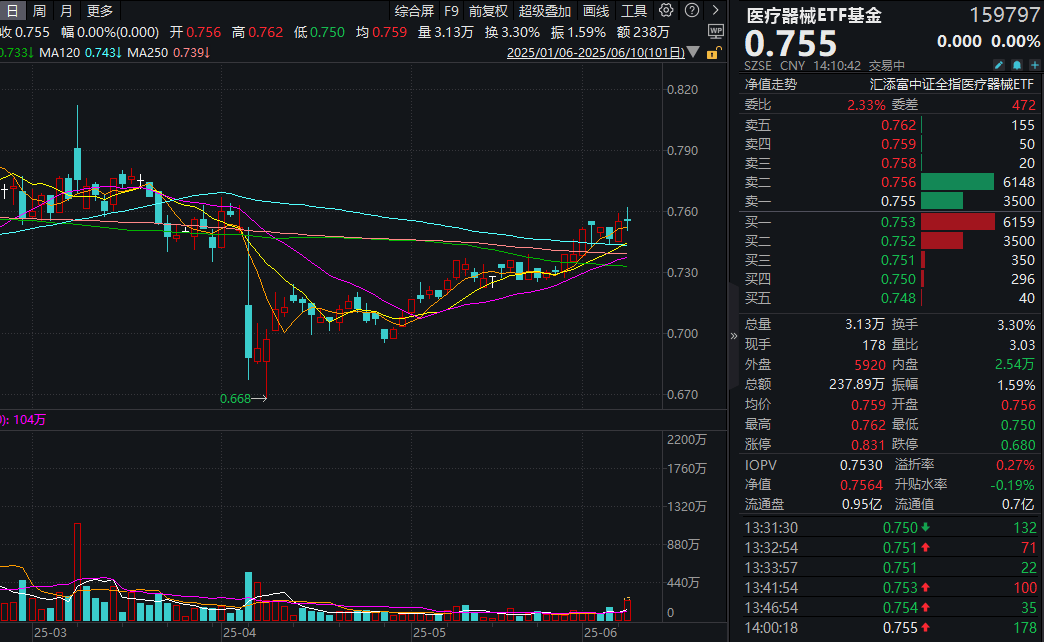
医疗器械再迎政策机遇!费率更低的医疗器械ETF基金(159797)震荡“吸金”!机构:业绩增速前低后高,下半年改善趋势明显!
Sou Hu Cai Jing· 2025-06-10 06:41
Group 1 - Medical device sector shows strong performance with ETF fund (159797) experiencing significant trading volume and net inflow of funds [1] - Recent policy document issued on June 9 aims to improve healthcare resources and insurance mechanisms, which is seen as a major driver for pharmaceutical companies [3] - Citic Securities predicts a trend of low-to-high earnings growth in the medical device sector, with significant improvements expected in the second half of the year [4] Group 2 - Structural investment opportunities exist within the medical device sector, with certain companies expected to achieve high growth in Q2 and Q3 [5] - The easing of US-China tariffs is beneficial for medical device companies, potentially lowering production costs and expanding overseas market share [6] - The medical device ETF fund (159797) covers core areas such as medical equipment and in vitro diagnostics, with top ten weighted stocks accounting for 46.78% [6][7]






6月9日工银医疗保健股票净值增长1.79%,今年来累计上涨19.66%
Sou Hu Cai Jing· 2025-06-09 12:32
Group 1 - The core viewpoint of the news is the performance and holdings of the Industrial and Commercial Bank of China Medical Healthcare Stock Fund, which has shown positive returns in various time frames [1] - The latest net value of the fund is 2.7270 yuan, with a growth of 1.79% [1] - The fund's performance over the past month has yielded a return of 8.91%, ranking 96 out of 1025 in its category [1] - Over the last six months, the fund has achieved a return of 13.01%, ranking 146 out of 989 [1] - Year-to-date, the fund has returned 19.66%, ranking 96 out of 999 [1] Group 2 - The top ten holdings of the fund account for a total of 39.79%, with significant positions in companies such as Heng Rui Pharmaceutical (8.90%) and WuXi AppTec (5.12%) [1] - The fund was established on November 18, 2014, and as of March 31, 2025, it has a total scale of 2.724 billion yuan [1] - The fund is managed by Zhao Bei and Ding Yang, both of whom have extensive experience in the healthcare sector [2]




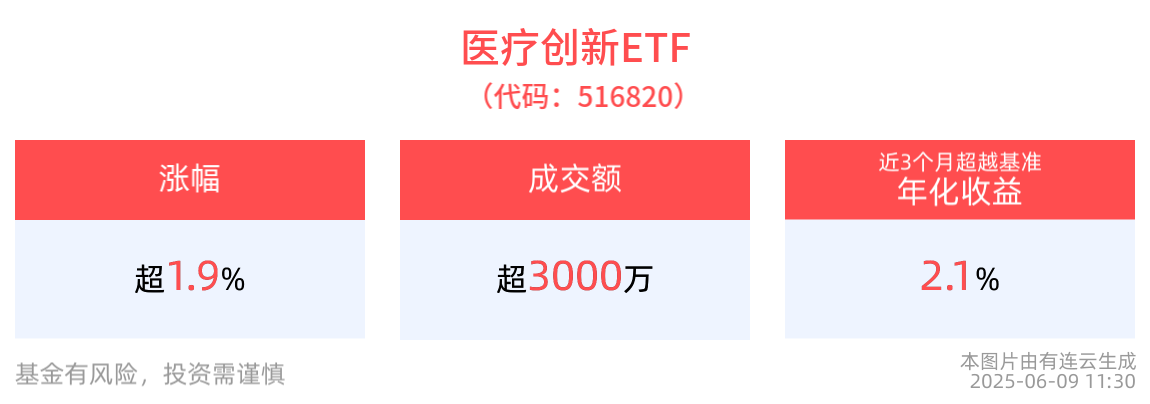
A股创新药板块持续走强,医疗创新ETF(516820)早盘涨超2.5%,“创新+国际化”创新药产业趋势不变
Xin Lang Cai Jing· 2025-06-09 05:37
Core Viewpoint - The innovation in the pharmaceutical and medical device sector is experiencing a strong upward trend, with significant gains in related stocks and ETFs, indicating a positive outlook for the industry [1][4]. Market Performance - As of June 9, 2025, the CSI Pharmaceutical and Medical Device Innovation Index rose by 2.27%, with notable stock performances including Baili Tianheng up by 9.48% and Huahai Pharmaceutical up by 4.79% [1]. - The Medical Innovation ETF saw a peak increase of 2.54% during the trading session, closing with a 1.97% rise, and has accumulated a 1.43% increase over the past two weeks [1]. - The ETF recorded a turnover rate of 2.42% and a transaction volume of 36.51 million yuan, with an average daily transaction volume of 48.97 million yuan over the past year [1][2]. Investment Trends - Leverage funds are increasingly investing in the sector, with a net financing amount of 1.37 million yuan on the previous trading day and a total financing balance of 48.86 million yuan [2]. - The innovation drug sector is witnessing a surge, with several stocks hitting the daily limit up, indicating strong market sentiment [4]. Industry Outlook - The innovation drug sector is expected to maintain its growth momentum, driven by "innovation + internationalization" trends, supported by policies and enhanced global competitiveness [4]. - The demand in the domestic market is anticipated to recover by 2025, particularly in the consumer healthcare segment, which includes medical services and OTC traditional Chinese medicine [4]. - The medical device sector is also projected to improve by 2025, with AI in healthcare expected to bring significant changes to the pharmaceutical industry [4]. Key Stocks - The top ten weighted stocks in the CSI Pharmaceutical and Medical Device Innovation Index account for 66.57% of the index, with notable companies including Heng Rui Pharmaceutical, WuXi AppTec, and Mindray Medical [5]. - Specific stock performances include WuXi AppTec up by 2.09% and Heng Rui Pharmaceutical up by 2.90%, reflecting the overall positive trend in the sector [7].
2025年易凯资本中国健康产业白皮书_健康产业并购篇
Sou Hu Cai Jing· 2025-06-09 03:04
Group 1 - The core viewpoint of the report is that the Chinese healthcare M&A market experienced a significant rebound in 2024, driven by policy support, valuation adjustments, and changes in capital structure, with a total transaction scale of 75 billion yuan, representing an 82% year-on-year increase [1][10][11] - The number of M&A transactions in the domestic healthcare sector reached 148, a 17% increase compared to 2023, indicating a recovery to a relatively high level [1][11] - Large transactions (over 500 million yuan) accounted for 701 billion yuan, with a notable 117% increase year-on-year, primarily driven by landmark cases such as Haier's acquisition of Shanghai Laishi (12.5 billion yuan) and Genmab's acquisition of Pufang Bio (1.8 billion USD) [1][11][13] Group 2 - Key driving factors include the release of policy dividends, changes in exit paths, and valuation reconstruction, with the "M&A Six Articles" policy significantly enhancing market activity [2][34] - The number of A-share listed companies participating as buyers and targets increased by 58% and 82% respectively after the introduction of supportive policies [2][39] - The tightening of IPO reviews has made M&A the primary exit option for investors, with a 64% year-on-year increase in terminated or withdrawn IPOs in 2024 [2][40] Group 3 - Key M&A themes include accelerated industry consolidation, valuation arbitrage, and innovative models, with leading companies employing strategies to break growth bottlenecks [3][44] - The NewCo model, where core pipelines are spun off into overseas joint ventures, has become mainstream, exemplified by Heng Rui Pharmaceutical's injection of GLP-1 product rights into Hercules, resulting in an upfront payment of 110 million USD and potential milestone revenues of up to 6 billion USD [3][4] - The rise of consumer healthcare is evident, with active M&A in non-insurance-dependent sectors like medical aesthetics and ophthalmology [3][5] Group 4 - In the biopharmaceutical sector, cross-border capital participation is deepening, with AI-driven R&D M&A gaining momentum, and traditional Chinese medicine accelerating integration under policy support [4] - The medical device sector is witnessing rapid domestic substitution, with companies like Xinmai Medical acquiring European Optimum Medical for technology and channels [4] - The medical services sector is expanding through specialty chain growth and digital integration, as seen in ByteDance's acquisition of Meizhong Yihe [5] Group 5 - The future outlook suggests a shift from capital-driven to value creation, with a focus on synergy effects and flexible transaction structures to resolve valuation discrepancies [6] - The M&A market is expected to transition from "quantity increase" to "quality improvement," driven by policy support, technological innovation, and globalization [6]

2025年中国XR设备行业整体发展形势研判:中国正逐渐成为全球XR设备主要市场之一,普及率逐步上升,市场规模持续攀升[图]
Chan Ye Xin Xi Wang· 2025-06-09 02:02
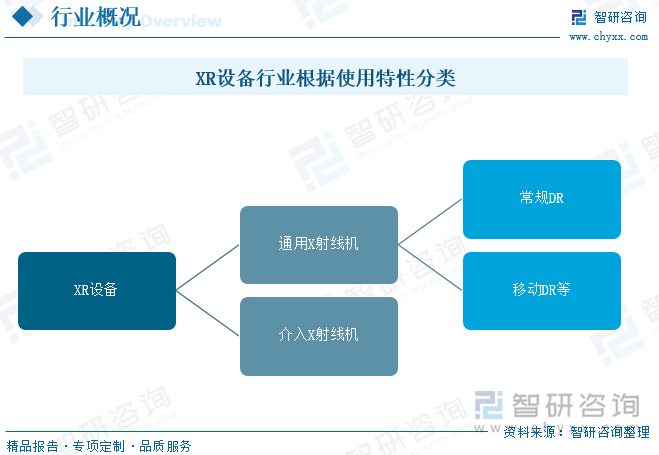
Core Insights - The XR device market is expanding steadily, with a projected global market size of $15.23 billion in 2024 and $16.01 billion in 2025, with the Asia-Pacific region leading at $5.88 billion and $6.16 billion respectively [1][4][6] - China is becoming a major market for medical devices due to its large population, economic growth, and increasing demand for high-quality medical services, with the XR device market expected to reach ¥14.52 billion in 2024 and ¥15.41 billion in 2025 [6][4] - The development of XR devices in China is expected to trend towards intelligence, mobility, and multifunctionality due to rising clinical demands for precision and efficiency [6][16] Industry Definition and Classification - XR devices in healthcare refer to intelligent hardware and software systems based on extended reality (XR) technology, used for medical diagnosis, surgical assistance, medical training, rehabilitation, and patient management [2][8] - XR devices can be categorized into general X-ray machines and interventional X-ray machines, with general X-ray machines including conventional DR and mobile DR [2] Current Industry Development - The XR device market is experiencing steady growth globally, with the Asia-Pacific region maintaining its position as the largest market [4][6] - The market size for XR devices in China is expected to continue rising due to the implementation of tiered diagnosis and treatment policies [6][4] Industry Value Chain - The upstream of the XR device industry includes core hardware components like display modules, sensors, and chips, as well as software algorithms for 3D medical imaging and AI-assisted diagnosis [8] - The midstream involves the production and manufacturing of XR devices, while the downstream applications are primarily in hospitals, clinical institutions, and medical training facilities [8] Industry Development Environment - Relevant Policies - The XR device sector is supported by national policies aimed at promoting domestic high-end medical equipment and key components, enhancing innovation and development in the medical device industry [10][12] - Recent policy changes have reduced the licensing requirements for large medical devices, facilitating market entry and expansion [12] Industry Competitive Landscape - Historically, China's XR device industry has been characterized by low concentration and small-scale enterprises, but recent advancements in technology have improved the quality and reputation of domestic products [13][15] - Leading companies such as Mindray, United Imaging, and Neusoft Medical are changing the competitive landscape by overcoming the previous dominance of imported products [13][15] Industry Development Trends - XR technology is expected to support surgical simulation and rehabilitation training, with a notable increase in demand for diagnostic and interventional products [16] - The market for XR devices is projected to grow steadily, driven by the aging population and increasing prevalence of minimally invasive surgeries [16]
中国医疗保健_媒体报道关于限制中国医疗科技企业参与欧盟公共合同的提案;买入迈瑞医疗、联影医疗
2025-06-09 01:42
Summary of Conference Call Notes on China Healthcare Sector Industry Overview - The European Union (EU) is considering a proposal to limit Chinese medical device suppliers from participating in EU public procurement contracts, which could impact the medtech industry significantly [1][2]. Key Points on Regulatory Changes - The EU established the International Procurement Instrument (IPI) regulation in 2022, which led to an investigation into Chinese medical devices in 2024. The EU believes that certain practices by the Chinese government are hindering EU access to China's public procurement market for medical devices [2]. - Under the IPI regulation, Chinese-made medical device bidders could face penalties when competing for contracts exceeding EUR5 million, including score deductions or exclusion from the procurement process. This regulation is valid for five years, with a possible five-year extension [2]. Company-Specific Impacts Mindray - Mindray derives approximately 9% of its total revenue from exports to Europe, with no single contracts exceeding EUR5 million as of 2024. Therefore, the proposed regulation is expected to have a limited impact on the company [4]. - Mindray plans to focus on localized manufacturing to adapt to the global trade environment [4]. - The company is rated as a "Buy" due to strong domestic market growth and potential for increased overseas revenue, supported by a cost-effective product portfolio [14]. United Imaging - United Imaging's revenue from Europe accounts for about 4% of its total revenue, which includes income from non-EU regions. The company has high-end products priced above EUR5 million, which could be affected by the proposed restrictions [9]. - In the event of restrictions, the company anticipates a manageable impact of approximately 1% on total revenue [9]. - United Imaging is exploring several strategies to mitigate potential impacts, including establishing production lines within the EU and focusing on the private hospital market [11]. - The company is also rated as a "Buy," with expectations of revenue growth and improved gross profit margins due to increased service-related revenue [15]. Financial Projections and Risks Mindray - The 12-month target price for Mindray is set at RMB 300, based on a two-stage DCF valuation. Key risks include potential impacts from value-based pricing (VBP) policies, challenges in entering North American and European markets, and patent-related lawsuits [17]. United Imaging - The 12-month target price for United Imaging is RMB 173, with risks including supply chain issues, raw material costs, and macroeconomic downturns in China [18]. Conclusion - The proposed EU regulations could significantly affect Chinese medtech companies, particularly Mindray and United Imaging. However, both companies have strategies in place to mitigate risks and continue to show potential for growth in their respective markets [3][15].
湖北大健康产业迈上万亿级台阶 生物医药制造业年营收1235亿元
Chang Jiang Shang Bao· 2025-06-08 23:09
Core Insights - In 2024, Hubei's health industry has historically surpassed the trillion yuan scale, becoming a significant part of the national biopharmaceutical landscape [1] - Hubei is reshaping its industrial chain through innovation, setting a benchmark for the central region and demonstrating local wisdom in the Healthy China strategy [1] Industry Overview - The biopharmaceutical industry is a strategic emerging industry crucial for national security and public welfare [2] - Hubei's biopharmaceutical manufacturing revenue reached 123.5 billion yuan in 2024, a 3.5% increase year-on-year, ranking 8th nationally [2] - The province aims to double its biopharmaceutical revenue to 250 billion yuan by 2027, with plans to develop 150 flagship products and establish 2-3 CXO platforms with over 2 billion yuan in revenue [2] Growth Drivers - Hubei's health industry revenue grew from 881 billion yuan in 2023 to over 1 trillion yuan in 2024, driven by the rapid development of key enterprises [3] - The province has 644 regulated biopharmaceutical companies, generating a total profit of 14.84 billion yuan, with 24 listed companies, ranking 7th nationally [3] - Hubei has established 6 national manufacturing champions and 34 national specialized "little giant" enterprises, contributing to stable growth in the pharmaceutical industry [3] Technological Advancements - Hubei is focusing on breakthrough technologies and developing innovative drugs, particularly in AI healthcare and life sciences [4] - The province's chemical raw materials profit margin increased by 33.2% in 2024, with a strong emphasis on high-end raw material drug chains [4] - R&D investment in Hubei's pharmaceutical industry reached 5.4% of total industrial output, double the provincial average, with 114 new drug registrations, a 56.1% increase [5] Future Development Plans - Hubei aims to build a trillion-yuan health industry cluster in Wuhan, enhancing its competitiveness in high-end medical equipment and biopharmaceuticals [6] - The life and health industry in Wuhan is projected to reach 554.6 billion yuan in 2024, growing by 15.3% [7] - Hubei's strategic plans include fostering a national biopharmaceutical cluster and enhancing original innovation capabilities by 2027 [8]
明日,重要数据公布!
Zheng Quan Shi Bao· 2025-06-08 10:38
宏观·要闻 何立峰将访问英国并举行中美经贸磋商机制首次会议 外交部发言人宣布:应英国政府邀请,中共中央政治局委员、国务院副总理何立峰将于6月8日至13日访 问英国。其间,将与美方举行中美经贸磋商机制首次会议。 央行连续7个月增持黄金 6月7日,国家外汇管理局公布2025年5月末外汇储备规模数据。 国家外汇管理局统计数据显示,截至2025年5月末,我国外汇储备规模为32853亿美元,较4月末上升36 亿美元,升幅为0.11%。 此外,当天更新的官方储备资产数据显示,2025年5月末,中国官方黄金储备为7383万盎司,较上月末 增加6万盎司。自去年11月重启增持以来,中国央行已连续7个月增持黄金。 俄罗斯央行降息100个基点 6月6日,俄罗斯央行宣布大幅降息100个基点,基准利率从21%下调到20%。这是自2022年9月19日以来 的首次降息。 根据俄罗斯央行发布的货币政策公告,降息主要的原因是通胀压力(包括潜在的通胀压力)继续下降。 虽然内需增长仍超过商品和服务供应的能力,但俄罗斯经济正逐渐回归平衡增长轨道。 上交所相关负责人表示,未来,上交所将推动上市公司进一步加大分红力度,增加分红频次,用好回 购、并购重组 ...
医药行业周报(6.3-6.6):持续关注AI医疗和创新药
Southwest Securities· 2025-06-08 07:25
Investment Rating - The report maintains a positive outlook on the pharmaceutical industry, highlighting investment opportunities in AI healthcare and innovative drugs [1]. Core Insights - The pharmaceutical sector index increased by 1.13% this week, outperforming the CSI 300 index by 0.25 percentage points, ranking 17th in industry performance [14]. - Year-to-date, the pharmaceutical industry has risen by 7.81%, surpassing the CSI 300 index by 9.36 percentage points, ranking 5th [14]. - The current valuation level (PE-TTM) for the pharmaceutical industry is 28.24 times, with a premium of 86.84% relative to the entire A-share market [19]. - The best-performing sub-sector this week was vaccines, which rose by 2.9%, while the top three sub-sectors year-to-date are chemical preparations, raw materials, and other biological products, with increases of +21.3%, +20.4%, and +16.1% respectively [28]. Summary by Sections Investment Strategy - The report emphasizes the acceleration of AI healthcare development and investment opportunities, with over 830 hospitals in China completing the localization of DeepSeek-R1, marking a new phase in medical intelligence [15]. - Continuous attention is recommended for innovative drugs, especially following the ASCO 2025 conference, where over 70 research abstracts led by Chinese scholars were presented [16]. Market Performance - The pharmaceutical industry has shown strong performance, with a notable increase in the number of stocks with positive returns, totaling 330, while 150 stocks experienced declines this week [29]. - The report lists the top gainers and losers in the pharmaceutical sector, with 易明医药 (Yiming Pharmaceutical) leading with a gain of +33.1% and *ST龙津 (ST Longjin) facing a decline of -36.3% [29]. Recent News and Policies - The report highlights the ongoing trend of AI integration in healthcare, with significant advancements in clinical decision support systems and AI-assisted diagnostics [15]. - It also notes the importance of focusing on drug development that is patient-centered and clinically valuable, aligning with the broader themes of innovation and internationalization in the pharmaceutical industry [16].
中证医疗指数下跌0.94%,前十大权重包含泰格医药等
Sou Hu Cai Jing· 2025-06-07 23:09
Core Points - The A-share market showed mixed results with the CSI Medical Index declining by 0.94% to 6591.32 points, with a trading volume of 11.33 billion yuan [1] - Over the past month, the CSI Medical Index has increased by 4.50%, but it has decreased by 4.01% over the last three months, and it has risen by 1.46% year-to-date [1] - The CSI Medical Index includes companies involved in medical devices, medical services, and medical information technology, reflecting the overall performance of the medical sector [1] Index Composition - The top ten weighted companies in the CSI Medical Index are: WuXi AppTec (11.63%), Mindray Medical (9.59%), Aier Eye Hospital (7.62%), United Imaging (7.21%), Aimeike (3.41%), Tigermed (3.39%), CR Medical (3.23%), New Industry (3.23%), Huatai Medical (3.0%), and Yuyue Medical (2.91%) [1] - The market composition of the CSI Medical Index shows that 58.60% of the holdings are from the Shenzhen Stock Exchange, while 41.40% are from the Shanghai Stock Exchange [1] - In terms of industry composition, 97.55% of the holdings are in the medical and health sector, 2.18% in information technology, and 0.27% in consumer goods [1] Index Adjustment - The index samples are adjusted biannually, with adjustments occurring on the next trading day after the second Friday of June and December [2] - Weight factors are generally fixed until the next scheduled adjustment, with temporary adjustments made under special circumstances [2] - Companies that are delisted or undergo mergers, acquisitions, or splits are handled according to the calculation and maintenance guidelines [2]
