实丰文化

Search documents
实丰文化跌2.01%,成交额1.56亿元,主力资金净流出272.03万元
Xin Lang Cai Jing· 2025-11-27 06:10
Core Viewpoint - Shifeng Culture's stock price has shown fluctuations, with a recent decline of 2.01%, and the company has experienced a mixed performance in terms of trading volume and net capital flow [1][2]. Group 1: Stock Performance - As of November 27, Shifeng Culture's stock price is 21.50 CNY per share, with a market capitalization of 3.612 billion CNY [1]. - Year-to-date, the stock price has increased by 3.19%, with a 1.13% rise over the last five trading days, a 22.79% increase over the last 20 days, and a 6.54% increase over the last 60 days [1]. - The company has appeared on the "Dragon and Tiger List" twice this year, with the most recent instance on February 5, where it recorded a net buy of -72.1672 million CNY [1]. Group 2: Financial Performance - For the period from January to September 2025, Shifeng Culture reported a revenue of 328 million CNY, reflecting a year-on-year growth of 5.81%, while the net profit attributable to shareholders was -58.7881 million CNY, a decrease of 1399.85% compared to the previous year [2]. - The company's main business revenue composition includes toys (59.57%), games (35.58%), photovoltaic products (4.69%), and others (0.15%) [1]. Group 3: Shareholder Information - As of September 30, 2025, the number of shareholders for Shifeng Culture is 25,500, a decrease of 21.97% from the previous period, with an average of 4,954 circulating shares per shareholder, an increase of 28.16% [2]. - The company has distributed a total of 18 million CNY in dividends since its A-share listing, with 3.6 million CNY distributed over the last three years [3].
AI玩具撬动百亿市场,多方玩家分食“蛋糕”
Cai Jing Wang· 2025-11-26 10:40
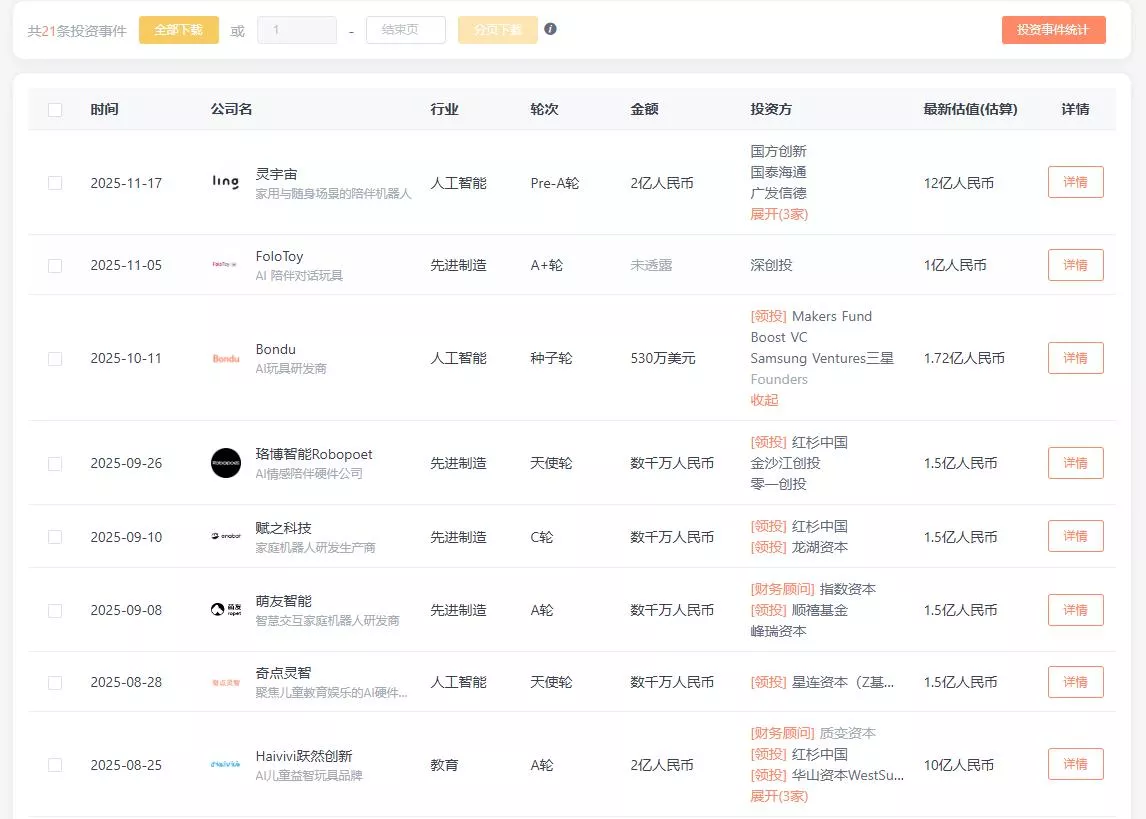
Core Insights - The rise of AI toys is transforming the traditional toy industry, creating a new market worth billions and attracting various players to invest and innovate [2][10] Industry Overview - The AI toy market in China is projected to grow from approximately 246 billion yuan in 2024 to 290 billion yuan in 2025, indicating a significant growth trajectory [2] - AI toys are defined as toys that integrate artificial intelligence technologies, enabling interactive and personalized experiences through voice recognition, natural language processing, and emotional analysis [2][3] - The market is characterized by three main forms of AI toys: plush toys, smart accessories, and robots/dogs, with companies like ByteDance leading innovations in this space [2][3] Investment Trends - The investment landscape for AI toys has seen a surge, with 21 financing events reported in 2025, compared to 14 in 2024 and only 3 in 2023, indicating increasing interest from major investment firms [4] - Notable investments include a 200 million yuan Pre-A round for Ling Universe, a companionship robot company, and a 2 billion yuan A round for Haivivi, a brand focused on AI interactive toys [5][6] Company Developments - Companies like Shifeng Culture and Tom Cat are actively developing AI toys, integrating AI technology with popular IPs to enhance product offerings [7][8] - Haivivi's BubblePal toy has achieved sales of over 250,000 units since its launch, showcasing strong market demand for AI interactive products [6] Policy Support - The growth of the AI toy industry is supported by government initiatives, including the inclusion of "artificial intelligence+" in the government work report and local policies aimed at promoting AI integration in consumer products [10][11] - The Ministry of Industry and Information Technology plans to enhance collaboration with relevant departments to ensure high-quality development of the AI toy industry, focusing on product innovation and consumer safety [11]

文娱用品板块11月26日涨0.01%,群兴玩具领涨,主力资金净流出6490.95万元



Zheng Xing Xing Ye Ri Bao· 2025-11-26 09:05
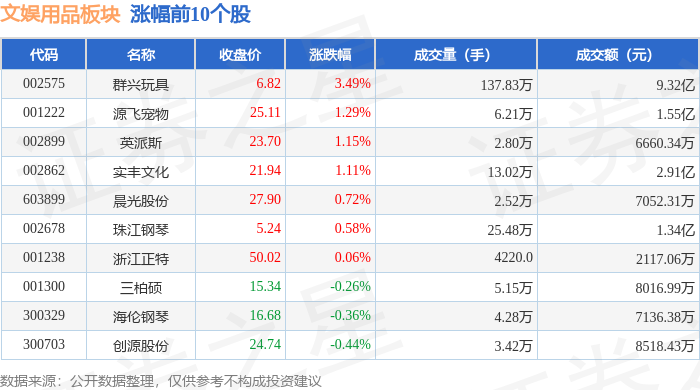
Group 1 - The entertainment products sector saw a slight increase of 0.01% on November 26, with Qunxing Toys leading the gains [1] - The Shanghai Composite Index closed at 3864.18, down 0.15%, while the Shenzhen Component Index closed at 12907.83, up 1.02% [1] - Qunxing Toys (002575) closed at 6.82, up 3.49%, with a trading volume of 1.3783 million shares and a transaction value of 932 million yuan [1] Group 2 - The entertainment products sector experienced a net outflow of 64.91 million yuan from institutional investors, while retail investors saw a net inflow of 45.46 million yuan [2] - The individual stock performance showed that Source Pet (001222) had a net inflow of 16.35 million yuan from institutional investors, but a net outflow of 10.64 million yuan from speculative funds [3] - The trading volume for Source Pet was 62,100 shares, with a closing price of 25.11, reflecting a 1.29% increase [1][3]
2025潮玩、谷子、AI玩具,拥抱年轻人爱玩之心-中国银河
Sou Hu Cai Jing· 2025-11-23 10:15
Group 1: Trend of Trendy Toys - The younger generation's "love for play" is reshaping market dynamics, with trendy toys, "Guzi," and AI toys becoming popular among Generation Z due to their emotional value and interactive experiences [1][2] - The trendy toy market has shown strong growth, with a compound annual growth rate (CAGR) of 34% from 2015 to 2022, and is expected to exceed 76 billion yuan in 2024 [1][10] - Generation Z, with a disposable income exceeding 3,500 yuan per month, is a significant consumer group, seeking artistic and unique products while enhancing their sense of belonging through second-hand community trading [1][17] Group 2: Guzi Market Growth - "Guzi," referring to merchandise derived from anime and games, is gaining popularity among young consumers, with the market expected to grow by 41% year-on-year to reach 168.9 billion yuan in 2024 [2][23] - The low price range of Guzi products (10 to 30 yuan) makes them accessible, turning them into "social currency" among teenagers [2][23] - The rapid increase in offline Guzi stores has significantly boosted foot traffic in shopping malls, exemplified by a tenfold increase in a Wuhan mall after introducing Guzi stores [2][31] Group 3: AI Toys Integration - The integration of AI technology into toys is becoming more prevalent, with AI-driven toys expected to account for over 15% of the global toy market by 2025 [6][35] - AI toys, such as Sony's AIBO and Robosen's transforming robots, are gaining popularity, with some products experiencing resale prices exceeding their original prices [6][41] - Chinese companies are actively entering the AI toy market, with products featuring built-in large models for interactive experiences, expanding market boundaries [2][6] Group 4: Cultural Export and Global Appeal - The new wave of toys not only meets the emotional needs of domestic youth but also serves as a significant vehicle for Chinese culture to go global, with brands like Pop Mart achieving explosive growth in overseas markets [3][6] - In 2024, revenue from Pop Mart's Hong Kong, Macau, and overseas businesses is expected to grow by 375% year-on-year, highlighting the global appeal of Chinese trendy toy culture [3][6] Group 5: Investment Opportunities - The trendy toy, Guzi, and AI toy sectors are benefiting from multiple driving forces, maintaining high growth rates and promising future development prospects [6][8] - Recommended companies for investment include Pop Mart, Blok, and Guangbo Co., with a focus on AI toy companies like Shifeng Culture and TCL Electronics [6][8]


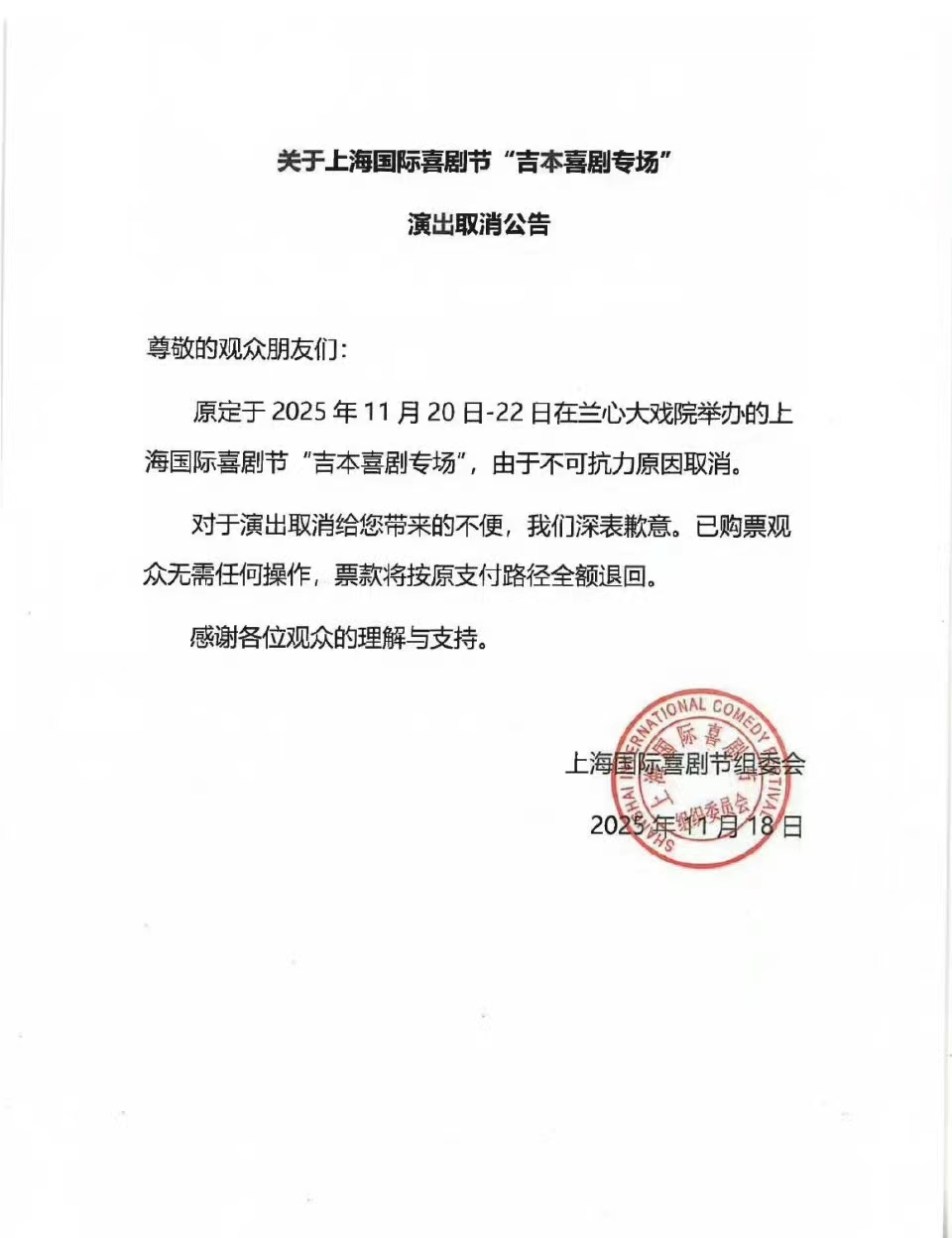
日本知名喜剧吉本取消上海演出
Di Yi Cai Jing· 2025-11-20 07:02
Group 1 - Several Japanese films, including "Crayon Shin-chan: The Hot Spring Dancer" and "Cells at Work," have announced delays in their release, raising concerns about the impact on cultural exchange projects between China and Japan [3] - The film "Demon Slayer: Infinity Castle Chapter" had a strong initial box office performance, earning 87.5 million RMB in its opening weekend, but is now facing potential delays in its release [3] - The Shanghai International Comedy Festival's "Yoshimoto Comedy Special" has been canceled due to force majeure, highlighting the broader impact on Japanese entertainment events [3] Group 2 - The Japanese IP market is experiencing significant volatility, with companies relying heavily on Japanese IP for revenue facing potential risks, as seen in the case of brands like Blokus, where over 53.1% of revenue comes from Japanese IP [7] - Experts suggest that companies should reduce short-term reliance on Japanese IP and shift towards domestic or original IP to mitigate risks, with examples of companies like Shifeng Culture pivoting to local IPs [7] - Some derivative product companies report limited immediate impact, as their main IPs are not primarily Japanese, indicating a potential buffer against the current disruptions [8] Group 3 - The gaming industry and concert economy may also be affected, as some games rely on Japanese IP licenses, and events featuring Japanese virtual idols could face challenges [8]

日本知名喜剧吉本取消上海演出
第一财经· 2025-11-20 06:48
Core Viewpoint - Recent delays in the release of Japanese films and cancellations of performances have raised concerns about the impact on cultural exchange projects between China and Japan, affecting various sectors of the entertainment industry [3][4]. Film and Performance Impact - Several Japanese films, including "Crayon Shin-chan: The Hot Spring Dancer" and "Cells at Work," have announced delays in their release. Some cinemas have confirmed these reports [6]. - The anticipated film "Demon Slayer: Infinity Castle Chapter" may also face a delay in its release, although some cinemas have not received official confirmation [6]. - The Shanghai International Comedy Festival's "Yoshimoto Comedy Special" has been canceled due to force majeure, highlighting the impact on live performances [7]. Broader Industry Effects - The entertainment industry, including Japanese films, performances, and related IP products, is experiencing noticeable fluctuations [4]. - Companies relying heavily on Japanese IPs, such as Budding Blocks, report that over 53.1% of their revenue comes from Japanese IP products. The withdrawal of Japanese films may significantly impact these companies [11]. - Experts suggest that companies should reduce short-term reliance on Japanese IPs and pivot towards domestic or original IPs to mitigate risks. For instance, companies like Shifeng Culture are shifting focus to domestic IPs [11]. IP Cooperation and Risk Management - The article emphasizes the need for companies to expand their IP cooperation to mitigate risks associated with reliance on Japanese IPs. This includes exploring collaborations with IPs from other regions such as Europe and the US [12]. - The gaming industry and concert economy may also face challenges due to the reliance on Japanese IPs, with potential impacts on revenue streams from games featuring Japanese characters and virtual idol concerts [12].

日系文娱项目在华“急刹车”,衍生品市场会有“断炊”风险吗
Di Yi Cai Jing· 2025-11-20 05:38
Core Viewpoint - Companies need to reduce short-term reliance on Japanese IP and accelerate the transition to domestic or original IP due to recent disruptions in the Japanese entertainment industry [1][6]. Group 1: Impact on Japanese Movies and Performances - Several Japanese films, including "Crayon Shin-chan: Hot Spring Dance," have announced delays in release, raising concerns about the ripple effects on cultural exchange projects between China and Japan [2]. - The film "Demon Slayer: Infinity Castle Chapter" is rumored to pause its release after the 20th, despite initial strong box office performance, earning 875 million RMB in its opening weekend [2]. - The Shanghai International Comedy Festival's "Yoshimoto Comedy Special" has been canceled due to force majeure, highlighting the impact on live performances as well [2]. Group 2: Broader Industry Implications - The entertainment industry, including IP licensing and derivative products, is experiencing significant volatility due to the reliance on Japanese IP [5]. - Companies like Blokku, which derive over 53% of their revenue from Japanese IP, are expected to face substantial challenges as the popularity of these IPs declines [6]. - Experts suggest that companies should pivot towards domestic or original IPs to mitigate risks, with examples of companies like Shifeng Culture shifting focus to local IPs [6]. Group 3: Current Industry Sentiment - Some derivative product companies report limited immediate impact, as their main IPs are not primarily Japanese, allowing for continued sales and activities [7]. - Industry analysts warn that reliance on Japanese IP poses significant risks, especially if licensing agreements expire without renewal, potentially crippling product lines [7]. - The gaming and concert sectors may also face repercussions, as many games and events incorporate Japanese IP, indicating a broader risk across the entertainment landscape [7].
工业和信息化部:引导玩具企业应用AI技术创造更多新需求
Shang Hai Zheng Quan Bao· 2025-11-20 03:45
Core Insights - The Ministry of Industry and Information Technology (MIIT) plans to release an implementation plan to promote the adaptability of supply and demand in consumer goods, specifically encouraging toy companies to leverage AI technology to create new demands [1][6] Group 1: AI Toys as a Growth Engine - AI toys are becoming a new engine for high-quality development in the toy industry, characterized by stronger product integration, redefined functional roles, and comprehensive user demographics [2] - The AI toy market in China is projected to reach approximately 24.6 billion yuan in 2024, with an expected increase to 29 billion yuan in 2025 [2] Group 2: Industry Chain Activation - The explosive growth of the AI toy market is activating the vitality of the entire industry chain, leading to a diverse competitive landscape where toy companies and tech firms are accelerating their positioning [3] - Companies like Shifeng Culture and Aofei Entertainment are actively pursuing AI transformation strategies, collaborating with tech firms and establishing dedicated AI toy divisions [3] Group 3: Advantages of Domestic AI Toys - Domestic AI toy manufacturers possess significant advantages in manufacturing costs, R&D cycles, iteration speed, and supply chain integrity, which could lead to the creation of globally influential products [4] Group 4: Comprehensive Support System - A complete support system is essential for the sustainable development of the industry, encompassing policy guidance, innovation incentives, and safety regulations [5] - The MIIT will work with relevant departments to enhance safety standards and data privacy for AI toys, addressing consumer concerns [6] Group 5: Market Dynamics and Future Outlook - Changes in population structure are putting long-term growth pressure on traditional toys, making AI transformation a key path for industry breakthroughs [7] - With a complete industrial chain and continuous innovation capabilities, China's AI toy industry is expected to enhance its influence in the global smart consumer market [7]
促进消费品供需适配性实施方案将出台 引导玩具企业应用AI技术创造更多新需求
Zhong Guo Jin Rong Xin Xi Wang· 2025-11-19 23:19
Core Insights - The application of artificial intelligence (AI) and large models in the toy industry is significantly enhancing product interactivity and creating a new competitive landscape [1][2] - AI toys are becoming a new engine for high-quality development in the toy industry, characterized by stronger product integration, redefined functional roles, and comprehensive user coverage [1][2][3] Industry Characteristics - **Stronger Product Integration**: AI toys are integrating various technologies, allowing them to interact with users through understanding language and visual inputs, while also incorporating cultural elements to enhance product value [1][2] - **Redefined Functional Roles**: AI toys are evolving from mere entertainment to becoming "smart companions" that provide educational, emotional, and creative support [1][2] - **Comprehensive User Coverage**: AI toys are breaking age barriers, catering to a diverse consumer base across all age groups, thus meeting varied consumption needs [2] Market Growth and Dynamics - The AI toy market in China is projected to grow from approximately 24.6 billion yuan in 2024 to 29 billion yuan in 2025, indicating strong market demand and growth potential [2] - The rapid growth of the AI toy market is activating the entire industry chain, with companies accelerating their AI transformation strategies and forming a diverse competitive landscape [3] Company Strategies - Companies are actively pursuing AI transformation, with notable collaborations and innovations, such as partnerships between toy companies and tech firms to develop AI-powered products [3] - Specific examples include partnerships for voice-interactive products, establishment of dedicated AI toy divisions, and the integration of AR technology into new product lines [3] Policy and Support Framework - The Ministry of Industry and Information Technology is set to implement policies to guide toy companies in leveraging AI technology to create new consumer demands [5][6] - A comprehensive support system is being established, focusing on policy direction, innovation encouragement, and safety regulation to ensure the sustainable development of the AI toy industry [5][6] Future Outlook - The combination of favorable policies, corporate innovation, and market dynamics is expected to facilitate the transition of the AI toy industry from growth in scale to improvement in quality, enhancing China's influence in the global smart consumer market [6]
促进消费品供需适配性实施方案将出台 工业和信息化部相关负责人表示:引导玩具企业应用AI技术创造更多新需求
Shang Hai Zheng Quan Bao· 2025-11-19 18:24
Core Insights - The application of artificial intelligence (AI) and large models in the toy industry is significantly enhancing product interactivity and creating a new competitive landscape [1][4] - The AI toy market in China is projected to grow from approximately 24.6 billion yuan in 2024 to 29 billion yuan in 2025, indicating strong market potential [2] Industry Development - AI toys are becoming a new engine for high-quality development in the toy industry, characterized by stronger product integration, redefined functional roles, and comprehensive user demographics [1] - The integration of AI technology allows toys to interact intelligently, combining educational, emotional, and creative functions, thus evolving from mere entertainment to "smart companions" [1][4] Market Dynamics - The explosive growth of the AI toy market is activating the entire industry chain, with toy companies and tech firms accelerating their competitive positioning [4] - Companies like Shifeng Culture and Aofei Entertainment are actively pursuing AI transformation strategies, collaborating with tech firms to develop AI interactive products [4] Competitive Landscape - Domestic AI toy manufacturers possess significant advantages in manufacturing costs, R&D cycles, and supply chain integrity, positioning them to create globally influential products [5] - The cross-industry penetration of smart manufacturing companies is enriching the industry ecosystem, showcasing China's global competitiveness in AI education robots [4] Policy and Support - The Ministry of Industry and Information Technology is set to implement policies to guide toy companies in leveraging AI technology to create new consumer demands [6] - A comprehensive support system is being established to ensure the sustainable development of the AI toy industry, focusing on direction guidance, innovation promotion, and safety regulation [6] Future Outlook - The AI toy industry in China is expected to transition from scale growth to quality enhancement, driven by a combination of policy support, corporate efforts, and market dynamics [7] - With a complete industrial chain and continuous innovation capabilities, the Chinese AI toy industry is poised to strengthen its influence in the global smart consumer market [7]