
潮玩

Search documents
26年1-2月社零数据如何?
China Post Securities· 2026-03-17 04:13
Investment Rating - The industry investment rating is "Outperform the Market" and is maintained [1] Core Views - The report highlights a significant recovery in market sales, with a 2.8% year-on-year growth in social retail sales for January-February 2026, an increase of 1.9 percentage points from the previous month. Excluding automobiles, the retail sales growth was 3.7%, indicating a notable improvement in consumption [5][11] - The rural market is outperforming urban areas, with rural sales growing by 3.2% compared to 2.7% in urban areas, reflecting the ongoing revitalization of rural areas and the impact of the late Spring Festival on consumption [5][11] - Online consumption remains active, with a 9.2% year-on-year growth in online retail sales, the highest since June 2024. Online goods sales increased by 10.3%, accounting for 24.2% of total social retail sales, up 1.9 percentage points from the previous year [6][11] Summary by Sections Industry Overview - The closing index is at 2241.04, with a 52-week high of 2584.65 and a low of 1877.67 [1] Sales Performance - The report indicates a clear recovery in sales, with January-February social retail sales totaling 86,079 billion yuan, marking a 2.8% year-on-year increase. The actual growth, after adjusting for price factors, is 2.0% [5][11] - The report notes that the share of county and rural retail sales in total social retail sales is 38.5%, a slight increase from the previous year [5] Online vs Offline Consumption - Online retail sales for goods grew by 10.3%, with online services increasing by 7.3%. The report emphasizes the role of digital technology in enhancing service industries [6][11] Consumer Trends - Essential goods saw significant growth, with food and beverage sales increasing by 10.2% and 10.1%, respectively. In contrast, discretionary spending showed mixed results, with categories like home appliances experiencing a slowdown [8][9][11] - The report identifies a notable increase in gold and jewelry sales, driven by gift-giving demand during the Spring Festival, with a year-on-year growth of 13% [10][11] Future Outlook - The report anticipates a gradual recovery in consumer spending, supported by upcoming consumption policies and a focus on stabilizing income. It suggests that the worst of the consumption downturn is over, with a cautious optimism for future growth [14]
2026年新消费行业年度策略:新消费三大引擎,AI+消费、情绪经济、新质零售
Shanghai Securities· 2026-03-12 12:17
Core Insights - The report identifies three main engines driving the transformation of the new consumption sector: AI + consumption, emotional economy, and new quality retail [2][3][4] AI + Consumption - AI technology is seen as a catalyst for consumption, with the potential to become a market hotspot. By the first half of 2025, the user base for generative AI products in China is expected to reach 515 million, a growth of 266 million from December 2024, with a penetration rate of 36.5% [2] - AI technologies such as large models, chips, embodied intelligence, and digital innovations are expected to comprehensively upgrade consumer goods across production, supply chain, and operational selection [2] Emotional Economy - Changes in economic demographics are giving rise to an emotional consumption market projected to reach 4.5 trillion yuan. The emotional consumption market in China is expected to grow from 1.63 trillion yuan in 2022 to 2.72 trillion yuan in 2025 and exceed 4.5 trillion yuan by 2029 [3] - Emotional consumption scenarios are rapidly expanding, with trends in collectibles, shopping, cultural tourism, pets, technology, and dining gaining traction among younger consumers [3] New Quality Retail - The shift from traditional retail to new quality retail focuses on enhancing consumer experience and value reconstruction. New quality retail includes aspects like quality-price ratio consumption and instant retail, optimizing supply-side offerings [4] - For instance, Sam's Club in China is projected to achieve sales of over 140 billion yuan by 2025, with online business accounting for about 50% of its sales [4] Investment Opportunities - Key companies to watch in the AI + consumption sector include Luxshare Precision, Goertek, DJI, and Xiaomi in various AI product categories [5] - In the emotional consumption space, companies like Laopuhuangjin and Chaohongji are highlighted, along with brands in outdoor sports and beauty sectors [5] Market Overview - The overall consumption industry in 2025 is expected to show structural changes, with a focus on upgrading consumption quality and enhancing consumer experiences [19][29] - The report emphasizes the importance of policies aimed at boosting domestic demand and consumption, which are expected to continue into 2026 [28][29] Economic Context - The contribution of final consumption expenditure to GDP growth in China is projected to remain significant, with a contribution rate of 53.5% in the first three quarters of 2025, reflecting a 9 percentage point increase from the previous year [18][36] - The report notes that the consumer market in China still has substantial growth potential, with the final consumption expenditure expected to rise from approximately 57% to 60% of GDP by the end of the 14th Five-Year Plan [28][36] Demographic Trends - The report highlights the aging population and declining birth rates in China, with the Z generation gradually becoming the main consumer force. This demographic shift is expected to drive new consumption patterns focused on emotional value and sustainability [40][41] Future Outlook - The report anticipates that 2026 will be a pivotal year for the integration of AI technology into the consumption sector, creating new market opportunities and innovative products [45][46] - The AI + consumption landscape is expected to evolve with advancements in AI-powered products, including smart home devices and wearables, which are projected to reshape consumer lifestyles [62][63]



——零食量贩业态专题报告:穿越周期,拥抱成长
EBSCN· 2026-03-11 08:33
Investment Rating - The report maintains a "Buy" rating for the snack discount retail industry, specifically recommending the leading systems "Mingming Hen Mang" and "Wancheng Group" [4]. Core Insights - The discount retail industry possesses cyclical resilience, but not all companies within it can withstand economic cycles. Historical analysis of markets in Germany, the US, and Japan shows that discount retail typically emerges during economic downturns and maintains a stable presence in mature markets, achieving significant market share. However, many brands established in the mid-20th century in the US ceased operations by the 1990s due to various factors, indicating that operational effectiveness is more critical than mere scale [1][18]. - The Chinese snack discount retail market is currently facing three key questions: the remaining growth potential after rapid expansion, the effectiveness of new product categories in enhancing supply chain efficiency, and the role of supply chains in achieving balance with upstream partners. The report addresses these questions from supply and demand perspectives, using supply chain constraints as a framework [1][50]. Summary by Sections Market Capacity Estimation - The target market capacity for snack discounts is estimated at approximately 350 billion yuan, based on annualized purchase frequency and spending data from "Mingming Hen Mang" [2][54]. - The total number of stores that can be accommodated in this market is projected to be around 67,000, considering the optimal scale of the current logistics system [2][54]. Industry Upgrade Pathways - The report identifies two primary pathways for industry upgrades: expanding product categories to increase revenue and developing private labels to enhance profitability. Expanding into high-margin categories such as daily necessities and stationery is seen as a viable strategy [2][3]. - Establishing private labels is expected to stabilize and improve overall gross margin levels, contingent upon maturity in scale, supply chain capabilities, and customer trust [2][3]. Pricing Logic - The report discusses how market share influences revenue ceilings and how product expansion affects net profit margins. It anticipates that leading brands in the snack discount sector will achieve market shares between 10% and 40%, with GMV revenue projected to be between 75 billion and 105 billion yuan over the next 3-5 years [3][11]. - The expected increase in the share of higher-margin customized and private label products will be crucial for enhancing overall gross margins [3][11]. Investment Recommendations - The report highlights the emergence of a dual-strong pattern in the snack discount industry, with "Mingming Hen Mang" and "Wancheng Group" as key players. These companies exhibit significant scale advantages, strong bargaining power in upstream procurement, and mature store models in the franchise sector, supporting growth in both revenue and profit [3][11].
两会前瞻与消费地产动向
2026-03-03 02:52
Summary of Key Points from Conference Call Records Industry and Company Overview - The records primarily discuss the impact of geopolitical tensions on the oil market, particularly focusing on the situation in the Strait of Hormuz and its implications for oil prices and the broader market dynamics in Hong Kong and mainland China real estate sectors. Core Insights and Arguments Geopolitical Impact on Oil Prices - Geopolitical conflicts typically have a short-term impact on markets, while medium-term trends are determined by macroeconomic fundamentals [1] - The Strait of Hormuz is experiencing a "semi-blocked" state with ship congestion, leading to a market premium of approximately $10-15 per barrel due to OPEC+'s confirmed production increase of 206,000 barrels per day in April [4] - If the Strait were to be completely blocked, oil prices could exceed $100 per barrel, with emerging markets likely to experience larger declines compared to developed markets [1][4] Hong Kong and Mainland China Real Estate - The de-stocking cycle for second-hand homes in Beijing and Shanghai is nearing historical levels that support price stabilization, with policies acting more as catalysts rather than sole drivers [2][28] - The current inventory levels in these cities provide a foundation for price stabilization, with Beijing's de-stocking cycle at approximately 6.1 months and Shanghai at 3.5 months [28] Market Dynamics and Investment Sentiment - The Hang Seng Technology Index has underperformed due to sentiment and trend drag, despite a decline in U.S. Treasury yields providing some support [6] - The overall funding environment for Hong Kong stocks is expected to remain tight in 2026, with foreign capital inflows dependent on fundamental improvements [8][10] Structural Changes in Consumer Behavior - The consumer market is witnessing a shift towards emotional and experiential spending, particularly among the younger generation, with significant growth in sectors like beauty and lifestyle products [34][35] - Supply-side innovations are crucial, with new product categories and functionalities driving demand, particularly in the context of AI and technology integration [37][40] Other Important but Potentially Overlooked Content - The records highlight the importance of monitoring the de-stocking cycle and its implications for real estate prices, emphasizing that current market conditions may lead to a more sustainable stabilization of prices in major cities [30][31] - The potential for a shift in investor sentiment towards real estate stocks as the market begins to stabilize, moving from a policy-driven narrative to a more fundamental-driven approach [31] - The need for careful management of new land supply to avoid disrupting the improving supply-demand balance in the real estate market [32] This summary encapsulates the key insights and arguments presented in the conference call records, focusing on the implications for the oil market, real estate dynamics, and evolving consumer behavior.
高端消费春节数据解读
2026-02-25 04:13
Summary of Conference Call on High-End Shopping Centers Industry Overview - The discussion revolves around the high-end shopping center industry, particularly focusing on the performance during the Chinese New Year holiday period in 2026 compared to 2025 [1][2]. Key Performance Metrics - **Sales Performance**: - Total sales during the 7-day Chinese New Year period in 2026 reached approximately 4.43 billion RMB, representing a 25.3% increase compared to 2025 [3]. - Same-store sales growth was about 13.2% [3]. - **Customer Traffic**: - Total customer traffic was approximately 52.93 million visits, marking a 27.7% increase year-over-year [3]. - Same-store traffic growth was around 12.9% [3]. - **Average Transaction Value**: - The average transaction value during the holiday was 193 RMB per person, reflecting an 8.9% increase from 2025 [4]. Holiday Performance Breakdown - **Sales Distribution**: - The first half of the holiday (from New Year's Eve to the third day) accounted for 60%-65% of total sales, while customer traffic during this period was 62%-67% [7][8]. - The average transaction value in the first half was 10%-15% higher than in the second half [8]. - **Promotional Activities**: - The first half of the holiday featured more aggressive promotional activities, contributing to higher sales and customer traffic [9][10]. Category-Specific Performance - **Luxury Goods**: - Sales from six major luxury brands (including LV, Gucci, Prada, Hermès, Chanel, and Dior) totaled approximately 4.43 billion RMB, with a 10.4% increase year-over-year [13]. - **Apparel**: - The apparel category (including both luxury and affordable brands) generated around 3.78 billion RMB, with a 29.1% increase compared to 2025 [14]. - **Dining**: - The dining sector saw sales of approximately 3.07 billion RMB, reflecting a 24.7% increase [15]. - **Jewelry**: - The jewelry category generated about 415 million RMB, with a 6.4% increase [16]. - **Cosmetics**: - The cosmetics sector achieved sales of approximately 377 million RMB, with a notable 29.6% increase [16]. - **Supermarkets**: - Supermarkets within the shopping centers reported sales of around 213 million RMB, marking a 27.7% increase [17]. - **Cinemas**: - Cinema sales reached approximately 86 million RMB, with a 27.8% increase [17]. Competitive Landscape - High-end shopping centers are performing well compared to other retail formats, with many lower-tier shopping projects struggling [6]. - The luxury market is experiencing a mixed performance, with some brands like Hermès and Prada showing strong growth, while others like Gucci are seeing a decline [19][20]. Future Outlook - The expert anticipates that the strong performance of luxury brands will continue into 2026, with expectations of sustained growth for brands like 老铺 (Lao Pu) and potential growth for competitors like 君佩 (Jun Pei) [36][39]. - The overall sentiment is cautiously optimistic, with a focus on maintaining strong sales performance while navigating market challenges [36][39]. Additional Insights - The expert noted that the performance of various brands can vary significantly based on location and market conditions, with first-tier cities generally outperforming second-tier cities [22]. - The discussion highlighted the importance of promotional strategies and customer engagement during peak shopping periods, which are critical for driving sales in high-end shopping centers [10][11].

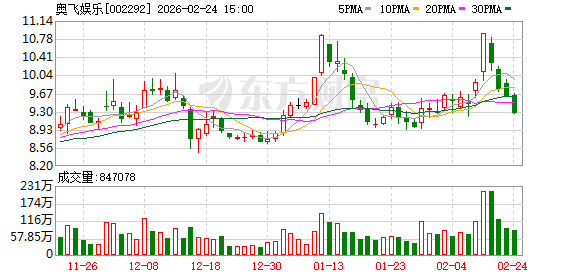
奥飞娱乐:推出潮玩和快闪店,打造覆盖全年龄段的喜羊羊IP作品
2 1 Shi Ji Jing Ji Bao Dao· 2026-02-24 09:54
Group 1 - The core idea of the article is that Aofei Entertainment is launching trendy toys and pop-up stores to create a year-round presence for its "Pleasant Goat and Big Big Wolf" IP, targeting all age groups [2] Group 2 - Aofei Entertainment aims to expand its product offerings by introducing trendy toys that appeal to a younger audience while also maintaining its existing IP [2] - The company plans to establish pop-up stores to enhance customer engagement and brand visibility, allowing fans to interact with the "Pleasant Goat" franchise in a physical space [2] - The strategy reflects a broader trend in the entertainment industry where companies are diversifying their product lines and exploring new retail formats to capture consumer interest [2]


【兴证策略张启尧团队】2026年出海链有哪些投资机会?
Xin Lang Cai Jing· 2026-02-21 01:42
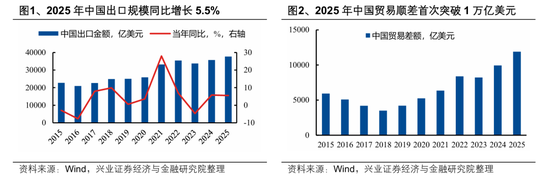
Group 1 - In 2025, China's foreign trade showed strong resilience, with total exports reaching a historical high, growing by 5.5% year-on-year, despite a complex external environment [1][57] - China's trade surplus exceeded $1 trillion for the first time, marking a significant increase of 19.8% year-on-year [1][57] - The net export of goods and services contributed 1.64 percentage points to GDP growth, the second-highest level since 2007, only behind 2021 [3] Group 2 - The diversification of external demand has strengthened, with emerging markets compensating for the decline in exports to the US, which fell by 19.79% year-on-year [6] - Exports to ASEAN, Africa, and the Middle East saw significant growth rates of 25.9%, 13.64%, and 9.7% respectively, contributing positively to the overall export scale [6] - The share of US exports in China's total exports decreased by 3.53 percentage points to 11.15% [6] Group 3 - The product structure of China's foreign trade is shifting towards higher value chains, with high-end products like electrical machinery, machinery, automobiles, and ships being the main export drivers [8] - Traditional light industrial products such as furniture and toys have seen a decline in export scale due to tariff friction and industrial chain relocation [8] Group 4 - The restructuring of global supply chains is creating significant opportunities for Chinese companies, with a notable increase in the number of Chinese enterprises establishing production capacities abroad, reaching 229 in 2025, nearly doubling from 2024 [18] - ASEAN, Mexico, and India are the primary destinations for Chinese production capacity outflows, with ASEAN covering a wide range of industries [18] Group 5 - The AI expansion cycle is a core focus in the Chinese capital market, with significant growth expected in AI computing hardware, supported by macro investment scales and healthy balance sheets of major tech companies [29][30] - The capital expenditure of major cloud service providers is projected to increase significantly, reflecting strong demand for AI computing [35] Group 6 - Cultural and technological value output is becoming a major trend for Chinese enterprises going abroad, with significant growth in IP exports and innovative products in sectors like gaming and new dining [39][41] - The Chinese innovative pharmaceutical sector is increasingly integrated into the global supply chain, with more products commercialized in the US and Europe [41] Group 7 - Key sectors with strong overseas expansion opportunities in 2026 include new energy (batteries, grid equipment), machinery, TMT (technology, media, telecommunications), and innovative pharmaceuticals [46] - The gaming industry is also highlighted for its potential, with significant overseas revenue growth expected [49]




春晚的广告牌 印刻着中国经济的一次次跃迁
Nan Fang Du Shi Bao· 2026-02-17 15:27
Core Insights - The sponsorship history of the CCTV Spring Festival Gala reflects China's economic development and industrial upgrades over the past four decades, showcasing three major transitions: from basic needs to consumer electronics and automobiles, from virtual economy to hard technology, and from demographic dividend to engineer dividend [1][2]. Group 1: Historical Sponsorship Trends - In the 1980s, the main sponsors represented basic household needs, with brands like 康巴丝 leading the way, highlighting the public's desire for precision and the prosperity of light industry [1]. - The 1990s saw a shift towards quality consumption, with liquor brands and home appliance giants like 美的集团 becoming prominent sponsors, marking a transition from survival to quality-focused consumption [1]. Group 2: The Rise of Internet and Technology - The year 2015 marked a turning point with the emergence of internet giants like WeChat and Alipay, initiating a "red envelope war" that transformed user engagement and payment methods [2]. - As the internet traffic peaked, the focus shifted to hard technology, with a notable increase in sponsorship from the electric vehicle sector, indicating a fundamental shift in China's competitive edge from demographic to engineer dividends [2]. Group 3: Future Trends and Cultural Consumption - The upcoming 2026 Spring Festival Gala will feature new partnerships with brands like 名创优品 and 卡游, suggesting a potential shift towards "emotional value" and "cultural consumption" as new wealth drivers in a mature market [3]. - The evolution of sponsors serves as a "value anchor" migration, reflecting China's economic transitions from production capabilities to creative intelligence, providing a lens to observe the pulse of the times [3].
主权与韧性的时代:五十图“马”说2025
Minsheng Securities· 2026-02-13 05:50
Macro Trends - China's economy is transitioning from a real estate cycle bottoming out to a strategic shift towards high-end manufacturing, with real estate prices stabilizing around 4.53% of GDP, approaching the lower end of the 4%-6% range seen in the US and Japan[12][14]. - The manufacturing sector is accelerating domestic substitution in key areas like automotive and machinery, moving from scale dividends to high-value global value chain competition[2]. Global Expansion - Chinese companies are evolving from merely exporting products to building ecosystems, leveraging channels, capital, and products for comprehensive value and cultural output[3]. - The gaming industry has seen significant success, with 12 Chinese games ranking in the global top 30 revenue list, led by Tencent's "Honor of Kings"[50]. Consumer Behavior - The consumption cycle is shifting from a "total volume era" to a "structural era," focusing on precise segmentation and supply reconstruction, driven by a younger high-net-worth demographic[4]. - Retail and commercial real estate are transitioning from simple sales to a focus on professionalism and experiential offerings, reflecting a K-shaped differentiation in consumer preferences[4]. Asset Management - The global asset management landscape is undergoing a profound transformation, with gold and other assets moving independently from traditional stock-bond frameworks, challenging conventional asset allocation strategies[5]. - The rise of quantitative products and the diversity of ETF funds are significantly impacting active management models, reshaping the funding ecosystem both domestically and internationally[5].
CPI专题报告:服务消费CPI能否重启上行?
Zhong Guo Yin He Zheng Quan· 2026-02-13 00:45
Investment Rating - The report maintains a positive investment rating for the service CPI sector [2] Core Insights - The service consumption CPI is expected to restart its upward trend, driven by stronger performance compared to overall consumption [7] - The demand for service consumption is resilient, particularly in sectors like tourism and entertainment, which are currently in a phase where prices are more likely to rise than fall [15] - The report highlights the importance of government policies aimed at boosting consumption, including various initiatives to enhance service quality and expand domestic demand [12] Summary by Sections 1. Overview of Service CPI - Service consumption CPI is performing better than overall consumption CPI, indicating a potential for price increases in the service sector [7] 2. Price Increases in Service Sectors - Hotel prices are expected to show elasticity due to supply-demand convergence and anti-monopoly measures [7] - The restaurant sector's ability to pass on costs to consumers is under observation, with Western fast food and tea drinks showing relative advantages [7] 3. Investment Recommendations - The report suggests focusing on sectors with strong demand resilience and potential for price increases, particularly in tourism and hospitality [7] 4. Policy Support - Various government policies are outlined, including actions to stimulate consumption and improve service quality, which are expected to support the service sector's growth [12]