
AI教育机器人

Search documents
工业和信息化部:引导玩具企业应用AI技术创造更多新需求
Shang Hai Zheng Quan Bao· 2025-11-20 03:45
Core Insights - The Ministry of Industry and Information Technology (MIIT) plans to release an implementation plan to promote the adaptability of supply and demand in consumer goods, specifically encouraging toy companies to leverage AI technology to create new demands [1][6] Group 1: AI Toys as a Growth Engine - AI toys are becoming a new engine for high-quality development in the toy industry, characterized by stronger product integration, redefined functional roles, and comprehensive user demographics [2] - The AI toy market in China is projected to reach approximately 24.6 billion yuan in 2024, with an expected increase to 29 billion yuan in 2025 [2] Group 2: Industry Chain Activation - The explosive growth of the AI toy market is activating the vitality of the entire industry chain, leading to a diverse competitive landscape where toy companies and tech firms are accelerating their positioning [3] - Companies like Shifeng Culture and Aofei Entertainment are actively pursuing AI transformation strategies, collaborating with tech firms and establishing dedicated AI toy divisions [3] Group 3: Advantages of Domestic AI Toys - Domestic AI toy manufacturers possess significant advantages in manufacturing costs, R&D cycles, iteration speed, and supply chain integrity, which could lead to the creation of globally influential products [4] Group 4: Comprehensive Support System - A complete support system is essential for the sustainable development of the industry, encompassing policy guidance, innovation incentives, and safety regulations [5] - The MIIT will work with relevant departments to enhance safety standards and data privacy for AI toys, addressing consumer concerns [6] Group 5: Market Dynamics and Future Outlook - Changes in population structure are putting long-term growth pressure on traditional toys, making AI transformation a key path for industry breakthroughs [7] - With a complete industrial chain and continuous innovation capabilities, China's AI toy industry is expected to enhance its influence in the global smart consumer market [7]
促进消费品供需适配性实施方案将出台 引导玩具企业应用AI技术创造更多新需求
Zhong Guo Jin Rong Xin Xi Wang· 2025-11-19 23:19
Core Insights - The application of artificial intelligence (AI) and large models in the toy industry is significantly enhancing product interactivity and creating a new competitive landscape [1][2] - AI toys are becoming a new engine for high-quality development in the toy industry, characterized by stronger product integration, redefined functional roles, and comprehensive user coverage [1][2][3] Industry Characteristics - **Stronger Product Integration**: AI toys are integrating various technologies, allowing them to interact with users through understanding language and visual inputs, while also incorporating cultural elements to enhance product value [1][2] - **Redefined Functional Roles**: AI toys are evolving from mere entertainment to becoming "smart companions" that provide educational, emotional, and creative support [1][2] - **Comprehensive User Coverage**: AI toys are breaking age barriers, catering to a diverse consumer base across all age groups, thus meeting varied consumption needs [2] Market Growth and Dynamics - The AI toy market in China is projected to grow from approximately 24.6 billion yuan in 2024 to 29 billion yuan in 2025, indicating strong market demand and growth potential [2] - The rapid growth of the AI toy market is activating the entire industry chain, with companies accelerating their AI transformation strategies and forming a diverse competitive landscape [3] Company Strategies - Companies are actively pursuing AI transformation, with notable collaborations and innovations, such as partnerships between toy companies and tech firms to develop AI-powered products [3] - Specific examples include partnerships for voice-interactive products, establishment of dedicated AI toy divisions, and the integration of AR technology into new product lines [3] Policy and Support Framework - The Ministry of Industry and Information Technology is set to implement policies to guide toy companies in leveraging AI technology to create new consumer demands [5][6] - A comprehensive support system is being established, focusing on policy direction, innovation encouragement, and safety regulation to ensure the sustainable development of the AI toy industry [5][6] Future Outlook - The combination of favorable policies, corporate innovation, and market dynamics is expected to facilitate the transition of the AI toy industry from growth in scale to improvement in quality, enhancing China's influence in the global smart consumer market [6]
创新汇南粤:科技人才为何东南飞
21世纪经济报道· 2025-11-06 02:09
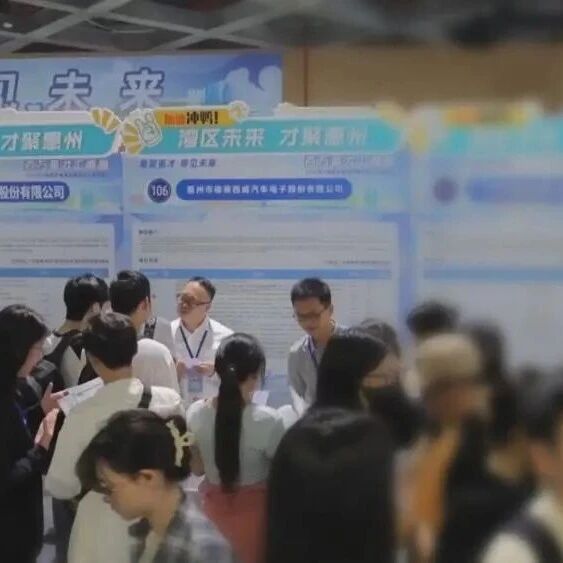
Core Insights - Guangdong province is becoming a hub for technology talent, with over 1.7 million postdoctoral researchers and 135 million R&D personnel, accounting for about 1/7 of the national total [1][6] - The province's diverse industries and robust research investment create a favorable environment for young talent, as evidenced by the "Million Talents Gather in South Guangdong" initiative, which aims to attract over 1 million graduates for employment and entrepreneurship [2][8] Group 1: Talent Attraction and Development - Guangdong has seen an increase in the number of academicians working in the region, rising from 135 in 2022 to over 150 in 2023, with 194 working full-time [2] - The province's talent policies are designed to support young professionals, offering competitive relocation subsidies, such as 300,000 yuan for postdoctoral researchers and an additional 400,000 yuan from local districts [5][10] - The "Million Talents Gather in South Guangdong" initiative focuses on key industries like AI, robotics, new energy, and biomedicine, with thousands of recruitment events held nationwide [8][11] Group 2: Industry Growth and Opportunities - The biomedicine and health industry in Guangdong is experiencing rapid growth, with projected revenues of approximately 448.66 billion yuan by 2024, and over 6,500 companies in the sector concentrated in Guangzhou [5][11] - Guangdong's biomedicine sector has seen a significant increase in the number of enterprises, from 1,000 in 2017 to 4,800 currently, with nearly 100 new drug clinical approvals each year [11] - The province's manufacturing landscape includes all 31 major categories, with nine industry clusters reaching trillion-yuan scale, contributing to its status as a leading economic region [10][11] Group 3: Future Prospects and Innovations - The collaboration between economic growth and technology talent is fostering a new model of value co-creation in Guangdong, enhancing the region's attractiveness to young professionals [3][6] - The ongoing development of AI and other advanced technologies is expected to further increase the demand for skilled talent in the province [6][12] - Companies like Yunzhou Biotech are at the forefront of innovation, focusing on antibody discovery technologies that address industry challenges such as long screening cycles and low efficiency [5][11]

“AI+国风”推动新型玩具出口订单大幅增长
Zheng Quan Ri Bao· 2025-11-03 16:08
Core Insights - The Chinese toy industry is experiencing a significant transformation driven by AI technology and cultural innovation, leading to a strong wave of exports [1][5][6] - AI toys, particularly those integrating programming education, are seeing a substantial increase in export orders, with some companies reporting over 200% growth in export volume [1][2] - The market demand for AI toys is expected to continue growing, with projections indicating a sales revenue of over 300 billion yuan in the first half of 2025, representing a 65% year-on-year increase [2][6] Industry Trends - The demand for AI toys has led companies to increase R&D investments and expand production capacity, with some firms doubling their production lines and workforce dedicated to AI development [3][4] - The integration of Chinese cultural elements into AI toys is becoming a notable trend, enhancing their appeal in international markets [5][6] - Policy support and technological advancements are crucial for the rapid development of AI toys, with specific goals set for the industry in Guangdong province by 2027 [6][7] Company Developments - Companies like Guangdong Qimeng Toy Industry Co., Ltd. and Shenzhen Lanlang Innovation Technology Co., Ltd. are reporting significant increases in export orders and production capacity due to the popularity of AI toys [1][2][3] - Listed companies are strategically positioning themselves in the AI toy market, with firms like Aofei Entertainment establishing dedicated AI toy divisions and collaborating with educational institutions [3][4] - Guangdong Gaole Co., Ltd. is accelerating its AI toy layout through acquisitions and integrating technology with traditional toy manufacturing [4][6]
参股公司已有人形机器人订单落地 宏润建设多点布局机器人赛道
Quan Jing Wang· 2025-09-12 07:59
Core Viewpoint - Hongrun Construction is strategically investing in humanoid robotics through a partnership with Matrix Superintelligence, aiming to capitalize on the emerging opportunities in the robotics market and enhance its multi-dimensional industrial chain involving construction, new energy, and technology [1][2][5]. Group 1: Strategic Investment and Partnerships - Hongrun Construction has engaged in a strategic investment in Matrix Superintelligence, a leading humanoid robotics company, and plans to establish a joint venture focused on the research, production, and commercialization of humanoid robots [1][2]. - The collaboration with Matrix Superintelligence is part of Hongrun Construction's broader strategy to explore the robotics sector, having previously invested in other robotics firms such as Jingzhi Technology and Hongsi Future [2][5]. Group 2: Market Potential and Industry Trends - The global robotics market is projected to grow from $47.8 billion in 2024 to $211.1 billion by 2034, with a compound annual growth rate (CAGR) of 16.6% [3]. - The robotics industry is undergoing significant transformation, evolving from simple execution devices to intelligent agents capable of environmental perception, autonomous decision-making, and collaborative operations [3]. Group 3: Product Development and Technological Advancements - Matrix Superintelligence has developed the Matrix-1 humanoid robot, which has already received orders and is positioned to compete with North American counterparts in terms of design and functionality [1][3]. - Jingzhi Technology has achieved a breakthrough with its "Black Panther II" quadruped robot, which runs at a speed of 10.4 meters per second, surpassing the previous world record [4]. - Hongsi Future focuses on AI education robots, integrating AI technology into educational practices to enhance technology literacy among youth [4]. Group 4: Systematic Layout and Future Directions - Hongrun Construction is establishing a systematic layout in the robotics sector, leveraging its resources in infrastructure and industrial experience to solidify its foundation for industry implementation [5][6]. - The company aims to continue exploring diverse applications of robotics technology, reinforcing its commitment to a multi-dimensional industrial chain that includes construction, new energy, and technology [5][6].

京东,一日连投三家机器人企业
财联社· 2025-07-21 05:18
Group 1 - JD.com announced the completion of investments in three leading companies in the field of embodied intelligence: Qianxun Smart, Zhujidongli, and Zhongqing Robot [1] - JD.com emphasizes the importance of technology hotspots, including embodied intelligence and large models, focusing on supply chain scenarios to drive innovative applications [1] - It is reported that JD.com will announce collaborations with various robot companies at the World Artificial Intelligence Conference in late July, including popular AI toys and AI education robots, covering mainstream consumer robot brands [1]

港仔机器人(00370)2025财年实现收益约1.16亿港元 战略转型成效显著 机器人业务开启增长新周期
智通财经网· 2025-06-27 15:00
Group 1 - The company reported a revenue of approximately HKD 116 million for the fiscal year ending March 31, 2025, with a loss attributable to shareholders of about HKD 138 million [1] - As of March 31, 2025, the company's net equity and current assets were approximately HKD 617 million and HKD 60.7 million, respectively, with bank balances and cash of around HKD 46.1 million [1] - The company completed the restructuring of two joint ventures in 2025, focusing on humanoid robot intelligent technology and AI educational robots [1] Group 2 - The company plans to gradually deploy humanoid robot applications in Hong Kong in the second half of 2025, collaborating with signed partners to commercialize humanoid robot products [1] - In mainland China, the company aims to launch educational robot products in selected provinces in the second half of 2025, forming a full industry chain model in line with national AI education policies [1] - The company expects to formally establish the "Hong Kong Robot Health Demonstration Park Project" and successfully sign operational service agreements, including the sale of health robots [1] Group 3 - Due to the ongoing decline in the domestic real estate market, the company will adopt a more prudent strategy in selecting related projects and seek future development opportunities [2] - One potential direction for development is to explore "themed real estate" projects that provide services for robot health real estate, in addition to the existing demonstration park project [2] - The company intends to negotiate similar projects with governments in the Greater Bay Area, Tianjin, and Zhejiang [2]
