招商银行

Search documents
解开“资金选择题”: 定存到期潮下的储户众生相
Zhong Guo Zheng Quan Bao· 2026-01-05 21:51
Core Viewpoint - The current banking environment shows no large-scale deposit outflows, but banks are not lacking deposits, as customer preferences dictate their choices between renewing deposits or seeking higher returns through other financial products [1][2][3]. Group 1: Customer Behavior and Preferences - Many conservative customers prefer to renew their fixed deposits despite declining interest rates, valuing the safety and stability of deposits over potential higher returns from riskier investments [2][3]. - A significant portion of customers, particularly those with investment experience, may consider reallocating their funds into wealth management products, funds, or the stock market upon deposit maturity, depending on their risk appetite [6][7]. - The trend indicates that while some customers are exploring alternative investment options, a majority are likely to continue renewing their deposits or switching to higher-yielding banks [5][6]. Group 2: Market Dynamics and Predictions - By 2026, approximately 50 trillion yuan of medium to long-term fixed deposits will mature, with a significant portion expected to remain within the banking system through renewals or conversion to demand deposits [5]. - The competition among banks is shifting from a "price war" to a "value war," focusing on product innovation and customer-centric services to retain deposits and attract new customers [7]. - The structural differentiation in deposit outflows is evident, with state-owned banks facing more liquidity issues rather than outright deposit losses, while smaller banks may experience higher outflow rates [6][7]. Group 3: Financial Products and Strategies - Banks are actively promoting structured deposits to meet customer needs for capital preservation while offering some yield flexibility [3]. - There is a growing interest in low-risk wealth management products as customers seek alternatives to traditional deposits, indicating a shift in investment strategies among consumers [4][5]. - Analysts predict that the stock market may benefit from the reallocation of deposit funds into wealth management and insurance products, although these alternatives may not provide substantial returns [5][6].

解开“资金选择题”:定存到期潮下的储户众生相
Zhong Guo Zheng Quan Bao· 2026-01-05 20:05
Core Viewpoint - The current banking environment shows no large-scale deposit outflows, but banks are not lacking deposits, as customer preferences dictate their choices between renewing deposits or investing in higher-yield products [1][2][3] Group 1: Customer Behavior - Conservative customers prefer to renew their deposits despite declining interest rates, valuing the safety and stability of fixed deposits over higher-risk investments [2][3] - A significant portion of customers, including those with investment experience, are considering reallocating their funds into wealth management products, funds, or stocks as deposit rates decline [6][7] - The upcoming maturity of approximately 50 trillion yuan in medium to long-term fixed deposits by 2026 raises questions about where these funds will be directed [1][4] Group 2: Banking Strategies - Banks are actively promoting structured deposits to meet customer needs for capital preservation while offering potential for higher returns [3][5] - The competition among banks is shifting from a "price war" to a "value war," focusing on product innovation and customer-centric services to retain deposits [6][7] - Different types of banks face varying levels of deposit outflow risk, with state-owned banks experiencing more liquidity issues rather than outright loss of deposits, while smaller banks may see higher outflow rates [6][7] Group 3: Market Predictions - Analysts predict that a large majority of maturing fixed deposits will either be renewed or converted to demand deposits, with only a small fraction expected to flow into wealth management products [4][5] - The expected maturity of fixed deposits in 2026 includes 39.2 trillion yuan for one-year deposits, 20.7 trillion yuan for two-year deposits, 9.6 trillion yuan for three-year deposits, and 1.3 trillion yuan for five-year deposits [4]
中欧盈欣稳健6个月持有期混合型基金中基金(FOF)基金份额发售公告
Xin Lang Cai Jing· 2026-01-05 18:44
Fund Overview - The fund is named "China Europe Yingxin Stable 6-Month Holding Period Mixed Fund of Funds (FOF)" and is managed by China Europe Fund Management Co., Ltd. [14][1] - The fund's A-class share code is 025218, and the C-class share code is 025219 [3][14]. Fund Structure - This fund operates as a contract-based open-end fund with a lock-up period of 6 months for each share, after which it enters an open holding period [14][15]. - During the lock-up period, no redemption or conversion transactions are allowed [15][10]. Fund Offering Details - The fund will be available for subscription from January 9, 2026, to April 8, 2026 [27][6]. - The minimum total subscription amount for the fund is set at 200 million shares, with a total fundraising target of at least 200 million RMB [21][6]. Subscription Requirements - Individual investors can subscribe with a minimum initial amount of 1 RMB through other sales institutions, while the minimum for direct sales is 10,000 RMB [5][18]. - There is no upper limit on the total subscription amount for a single investor, except as specified in the fund's prospectus [5][18]. Investment Strategy - The fund aims to invest primarily in other publicly offered securities investment funds, with at least 80% of its assets allocated to such funds [20]. - The fund may also invest in various financial instruments, including stocks, bonds, and publicly offered infrastructure securities investment funds (REITs) [19][20]. Risk Management - The fund is classified as a mixed fund of funds, which implies a risk and expected return profile higher than bond funds but lower than equity funds [10][11]. - The fund may invest in Hong Kong stocks, which introduces specific risks related to market volatility and currency fluctuations [11][12]. Fund Management - The fund is managed by China Europe Fund Management Co., Ltd., with the custodian being China Merchants Bank Co., Ltd. [1][54]. - The fund's management is committed to prudent and diligent asset management, although it does not guarantee profits or protect against losses [12][54].

公募基金费率改革驱动 头部银行积极布局定制化FOF
Zheng Quan Ri Bao· 2026-01-05 16:49
Core Viewpoint - The recent completion of public fund fee reform has prompted commercial banks to actively adapt by launching customized products, particularly in the field of customized Fund of Funds (FOF) [1][2]. Group 1: Customized FOF Launches - China Construction Bank has launched a customized FOF brand "Longying FOF," following the introduction of "TREE Changying Plan" by China Merchants Bank, indicating intensified competition among leading banks in the fund distribution sector [1]. - "Longying FOF" aims to provide a one-stop asset allocation service for investors, addressing the challenge of selecting funds by offering diversified asset allocation strategies while controlling investment risks [1]. Group 2: Drivers Behind Customized FOF - Three core drivers for banks' engagement in customized FOFs include: 1. The pressure on yields of fixed-income wealth management products, necessitating product innovation to enhance competitiveness [2]. 2. The public fund fee reform has reduced traditional profit margins from subscription fees and trailing commissions, pushing banks to enhance service value through customized products [2]. 3. Upgraded investor demand for wealth management, which can be precisely matched by customized FOFs [2]. Group 3: Impact on Banking Business Model - The shift towards customized FOFs is expected to reshape the banking business landscape by transitioning revenue sources from front-end sales fees to ongoing management fee sharing linked to asset management scale, thereby improving the quality and stability of intermediary business income [2]. - The product holding period mechanism is anticipated to reduce frequent subscriptions and redemptions, enhancing customer asset stability [2]. - This strategic shift will compel banks to enhance their professional capabilities, moving from a "product introduction" model to a "buy-side advisory" model, thereby strengthening customer service [2]. Group 4: Future Outlook - The customized FOF market is likely to see significant growth, especially among large banks with strong customer bases, leading to a market structure where leading institutions drive the industry while smaller banks follow based on their resource endowments [2]. - Banks are positioned to become key players in the FOF market due to their extensive customer reach and inherent trust advantages, with the potential for substantial market share if they successfully leverage their channels [3].

Beijing taps WeBank, Alipay’s MYBank, and eight banks to pay interest on digital yuan holdings
Yahoo Finance· 2026-01-05 15:50
Core Insights - China is intensifying efforts to promote the use of its digital currency, with major banks offering interest to digital yuan holders [1][4] - The initial annual interest rate for the digital yuan is set at 0.05%, aimed at increasing user engagement [2] - A stricter identity verification process is required for holders to claim interest payments, ensuring compliance with anti-money laundering regulations [3] Banking Participation - Ten of China's largest banks, including WeBank and Mybank, are participating in this initiative, alongside prominent traditional banks like the Industrial and Commercial Bank of China and the Agricultural Bank of China [1][4] - The interest payments will be issued by the banks themselves rather than the central bank, marking a shift in liability from the central bank to commercial banks [5] Regulatory Context - The move to allow banks to pay interest on the digital yuan contrasts with stablecoin regulations in the US, which prohibit interest payments on stablecoins [5][6] - Globally, 135 countries are at various stages of developing their own central bank digital currencies, indicating a broader trend in the financial landscape [6] Investment Opportunities - Financial experts suggest that pilots are being developed to enable the use of the digital yuan for purchasing traditional financial assets like securities and bonds [7]
工龄超25年!两行长获晋升,招商银行重用“元老”有何深意
Nan Fang Du Shi Bao· 2026-01-05 15:19
Core Viewpoint - The approval of two executives, Cui Jiakun and Wang Xinghai, marks the gradual formation of the executive matrix for China Merchants Bank (CMB) as it prepares for its future leadership structure by 2026 [2][4] Group 1: Executive Appointments - Cui Jiakun and Wang Xinghai have been approved as assistant general managers, continuing to serve as branch heads for Beijing and Shenzhen respectively [2][4] - The current executive lineup consists of one president and four vice presidents, along with two assistant general managers, indicating a structured leadership hierarchy [6] Group 2: Internal Promotion and Stability - The management team is characterized by a strong internal promotion system, with many executives having over 25 years of experience at CMB, ensuring stability and continuity in leadership [7] - The high loyalty and continuity among executives, many of whom have worked at CMB for nearly 30 years, contribute to the stability of the bank's strategy and culture [7] Group 3: Talent Development and Succession - CMB has established a robust internal talent development mechanism, promoting key branch leaders to senior management positions, which helps maintain a stable talent pipeline [7][8] - The bank's key branches, such as Beijing and Shenzhen, serve as important bases for talent cultivation, with significant asset scales of 584.77 billion yuan for Beijing branch, the largest among them [8] Group 4: Financial Synergy within the Group - Recent appointments of CMB executives to other financial institutions within the China Merchants Group reflect a strategic intent to enhance business collaboration and resource sharing across the financial sector [9]


工龄超25年!两行长获晋升 招商银行重用“元老”有何深意
Nan Fang Du Shi Bao· 2026-01-05 15:18
Core Viewpoint - The approval of two executives, Cui Jiakun and Wang Xinghai, marks the gradual formation of the executive matrix for China Merchants Bank (CMB) as it prepares for 2026, emphasizing internal talent cultivation and stability in management [2][4][7]. Group 1: Executive Appointments - Cui Jiakun and Wang Xinghai have been approved as assistant general managers, continuing to serve as branch heads for Beijing and Shenzhen respectively, reflecting their long tenure of over 25 years at CMB [2][4]. - The current executive lineup consists of one president and four vice presidents, with two assistant general managers, indicating a structured hierarchy within the bank [6]. Group 2: Management Structure - The management team is characterized by a high degree of loyalty and continuity, with many executives having worked at CMB for nearly or over 30 years, ensuring strategic stability and cultural transmission [7]. - The internal promotion mechanism is evident, as key positions are filled by individuals with extensive experience across various core business departments, creating a robust talent pipeline [7][8]. Group 3: Talent Development and Strategy - The selection of executives from key branches like Beijing and Shenzhen aligns with CMB's tradition of nurturing senior management talent from its most important operational bases, enhancing the connection between these branches and headquarters [8]. - The movement of executives within the broader China Merchants Group indicates a strategic intent to strengthen financial collaboration and resource sharing across its financial institutions [9].
博雅生物(300294)披露参与设立华润医药产业投资基金二期进展暨完成基金备案,1月5日股价上涨1.64%
Sou Hu Cai Jing· 2026-01-05 15:10
Core Viewpoint - Boya Bio (300294) has announced its participation in the establishment of the second phase of the China Resources Pharmaceutical Industry Investment Fund, contributing 60 million RMB to a total fund size of 1 billion RMB [1] Group 1: Stock Performance - As of January 5, 2026, Boya Bio's stock closed at 22.97 RMB, up 1.64% from the previous trading day [1] - The stock opened at 22.59 RMB, reached a high of 23.01 RMB, and a low of 22.59 RMB, with a trading volume of 97.67 million RMB and a turnover rate of 0.85% [1] Group 2: Fund Establishment - The board of directors and supervisory board of China Resources Boya Bio Pharmaceutical Group approved the investment in the second phase of the fund on July 17, 2025 [1] - The fund has been registered with the Asset Management Association of China, with a registration code of SBLL28, managed by Shenzhen China Resources Capital Equity Investment Co., Ltd., and custodied by China Merchants Bank [1] - The registration was completed on December 30, 2025, and the first phase of capital contribution has been fulfilled [1]

2025年险资举牌图谱:39次“落子”创十年新高,银行压仓、偏爱公用事业
Xin Lang Cai Jing· 2026-01-05 13:14
Core Insights - In 2025, insurance capital became increasingly active in the equity market, with the number of stake acquisitions rising to 39, the highest since 2016, driven by policy relaxation and yield demands [2][12] - Bank stocks emerged as a key focus for insurance capital due to their low valuations and high dividend characteristics, aligning with the conservative preferences of insurance funds [2][7] - The ongoing regulatory encouragement for "long-term capital" to enter the market is expected to enhance the stability of insurance capital in the capital market [2][19] Stake Acquisition Trends - The number of stake acquisitions by insurance companies increased from 20 in 2024 to 39 in 2025, nearly doubling [2][12] - Ping An Life was the most active insurer, making 12 acquisitions in 2025, including three in August alone [2][12] - Other insurers like Great Wall Life and Hongkang Life also showed significant activity, with each making four acquisitions [3][13] Investment Preferences - In 2025, 39 stake acquisitions targeted 29 stocks, with over 70% being H-shares, reflecting a preference for low-valuation, high-dividend Hong Kong stocks [7][17] - Bank stocks accounted for nearly 40% of all stake acquisitions, with notable targets including Postal Savings Bank, China Merchants Bank, and Agricultural Bank [7][17] - The high dividend yields of bank stocks, such as 6.31% for China Merchants Bank and 6.73% for Zhejiang Merchants Bank, align with the stable investment preferences of insurance funds [7][17] Strategic Investment Approaches - Insurers are also engaging in strategic placements and cornerstone investments, as seen with Taikang Life's participation in the IPO of Fengzhao Technology [5][15] - Regulatory measures since 2023 have facilitated insurance capital's entry into the market by optimizing solvency and risk factors, thus enhancing investment flexibility [5][15] Future Outlook - The insurance sector is expected to further increase its allocation to equity markets, with projections indicating potential incremental allocations of approximately 968.1 billion to 1,175.4 billion yuan in 2026 under various scenarios [19] - The first trading day of 2026 saw a positive market response, indicating a significant potential for future investments by insurance capital [19]

19家上市银行加码财富管理赛道,2026年战略布局将提速
Di Yi Cai Jing· 2026-01-05 12:50
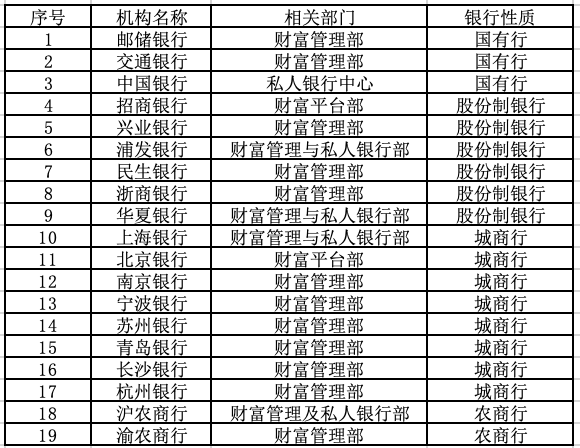
Core Insights - The rapid expansion of high-net-worth client groups is prompting domestic listed banks to accelerate the establishment of dedicated wealth management departments, shifting their retail banking strategy from "product sales" to "full lifecycle asset allocation" [1][2] - By the end of 2025, 19 listed banks are expected to have established or adjusted their wealth management-related departments, including 3 state-owned banks, 6 joint-stock banks, 8 city commercial banks, and 2 rural commercial banks [2][3] Group 1: Wealth Management Department Establishment - State-owned banks like Postal Savings Bank, Bank of China, and Bank of Communications are completing wealth management business integration at the head office level by 2025 [1][4] - Joint-stock banks and city commercial banks are adopting a model that integrates wealth management with private banking, with several banks like Shanghai Bank and Hangzhou Bank establishing new wealth management departments [5][6] Group 2: Strategic Shifts and Market Positioning - The establishment of wealth management departments reflects a strategic shift towards enhancing professional capabilities and resource integration, aiming to upgrade wealth management as a core strategy for banks [7][8] - Compared to state-owned banks, joint-stock banks and city commercial banks focus on precise market positioning, with banks like China Merchants Bank prioritizing wealth management as a core capability [7][8] Group 3: Growth and Performance Metrics - As of Q3 2025, the wealth management AUM of listed banks continues to expand, with Postal Savings Bank reaching 17.89 trillion yuan and significant growth rates reported by other banks [9] - The future of wealth management business is expected to accelerate due to the continuous accumulation of resident wealth and the diversification of high-net-worth client needs, with strategic investments and organizational adjustments being crucial for competitive positioning [9]