OPPO

Search documents
大厂疯抢AI人才!字节跳动、小红书、阿里巴巴岗位最多
Mei Ri Jing Ji Xin Wen· 2025-09-17 13:29
Core Insights - The competition for AI talent has intensified, evolving into a strategic arms race for major companies, crucial for future survival and development [1][7] - The demand for AI talent surged significantly, with new job postings in the AI sector increasing over tenfold year-on-year, and resume submissions rising by 11 times [1][3] Talent Demand and Supply - The report indicates a severe shortage of algorithm-related talent, particularly in "search algorithms," where the talent supply-demand ratio is 0.39, meaning 5 positions compete for 2 candidates [5] - Non-technical roles in AI have also seen a substantial increase, with new non-technical job postings growing 7.74 times compared to the previous year [6] Salary Trends - The average monthly salary for new AI positions reached 61,475 yuan in the first seven months of 2025, marking a 4.33% increase from 58,921 yuan in the same period of 2024 [3] - Microsoft leads in average monthly salary for new AI positions at 90,345 yuan, followed by Alibaba's subsidiary Pingtouge at 89,760 yuan [3] Company Rankings - ByteDance topped the recruitment index for new AI positions at 29.83, followed by Xiaohongshu at 18.32 and Alibaba at 12.25 [1][3] - The top three companies in the "most desirable AI employers" ranking are ByteDance, Tencent, and JD.com, indicating a strong employer brand among major tech firms [6] Industry Trends - The AI penetration rate in new job postings exceeded 10% in the new economy sector, reflecting a significant increase in AI integration across various industries [4] - The shift from "tool replacement" to "intelligent reconstruction" in digital transformation highlights the growing importance of AI talent as a core resource for future competitiveness [7]

苹果iPhone在华销量大幅下滑,17系列能否扭转颓势?
美股IPO· 2025-09-17 12:45
Core Insights - Apple's smartphone sales in China declined by 6% year-on-year in the first eight weeks of Q3, indicating ongoing challenges in regaining market leadership despite a recovery in Q2 [1][4][5] - Currently, Apple holds a 12% market share in China, ranking sixth, while competitors like Xiaomi, OPPO, and Huawei each hold 16%, and Vivo leads with 19% [4][5] - The upcoming iPhone 17, seen as a significant upgrade, is set to launch globally, prompting competitors to adjust their strategies, such as Xiaomi moving up the release of its flagship phone [4][5] Market Performance - Apple's sales recovery in Q2 was partially attributed to government subsidies, but the latest data shows that the company still needs to catch up with competitors [4][5] - Tim Cook noted that the customer base for iPhones in Greater China reached a record in Q2, which has positively impacted sales of other Apple products [5] Competitive Landscape - The competition in the Chinese smartphone market remains intense, with rivals adjusting their strategies in response to Apple's new product launches [5] - Xiaomi's CEO announced an earlier release of their flagship phone to compete directly with Apple's offerings, highlighting the competitive dynamics in the market [5] Consumer Preferences - AI features have not yet become a significant sales driver for Apple in China, with consumers primarily focusing on practical factors like battery life and cost-effectiveness when making purchasing decisions [6]



苹果iPhone在华销量大幅下滑,17系列能否扭转颓势?
Hua Er Jie Jian Wen· 2025-09-17 12:04
Core Insights - Apple's smartphone sales in China have declined by 6% year-on-year in the weeks leading up to the iPhone 17 launch, indicating intense competition in the world's largest smartphone market [1][2] - Despite a recovery in sales during the second quarter, Apple holds only a 12% market share, ranking sixth, while competitors like Xiaomi, OPPO, and Huawei each hold 16%, and Vivo leads with 19% [2] - The upcoming iPhone 17 is considered a significant upgrade, featuring a new design and enhanced camera system, prompting competitors to adjust their strategies, such as Xiaomi moving up the launch date of its flagship phone [1][2] Market Performance - In the first eight weeks of Q3, Apple's sales in China fell by 6%, contrasting with the typical performance before a new product launch [1] - Tim Cook noted that the customer base for iPhones in the Greater China region reached a record in Q2, which helped boost sales of other Apple products [2] Competitive Landscape - Xiaomi's CEO announced an earlier launch for their next flagship phone to compete directly with Apple's new offerings, highlighting the fierce competition in the Chinese smartphone market [2] - AI features have not yet become a significant sales driver for Apple, with consumers primarily focusing on practical factors like battery life and cost-effectiveness when making purchasing decisions [3]
天马将供屏OPPO Find X9
WitsView睿智显示· 2025-09-17 10:09
Core Viewpoint - OPPO is set to launch the Find X9 series smartphone featuring the world's first "1nit" eye-care display, developed in collaboration with Tianma, showcasing advanced screen technology and manufacturing capabilities [2][3]. Group 1: Product Features - The Find X9 series will utilize a custom screen from Tianma, built on OPPO's exclusive high-spec screen production line, alongside self-developed scientific production lines [2]. - The "明眸护眼屏" (Eye-Care Display) incorporates low-brightness high-precision circuits, new eye-care materials, and a new Display P3 chip, achieving full-scene true 1nit brightness, high-frequency PWM dimming, and a peak brightness of 3600nit [3]. - The development of this display took three years and involved significant costs, marking it as the most sincere eye-care screen in the Find X series [4]. Group 2: Comparison with Previous Models - The previous generation, Find X8/X8s, also featured screens supplied by Tianma, while the Find X8 Pro/X8 Ultra utilized BOE screens. The Find X8s had a 6.3-inch 1.5K flat display with 460 PPI, peak brightness of 1600nit, and support for 1.7 billion colors and adaptive refresh rates [6].

iPhone17发布前夕,苹果掉到中国第六
Guan Cha Zhe Wang· 2025-09-17 09:53
Group 1 - Apple's smartphone sales in China declined by 6% year-on-year before the iPhone 17 launch, a drop significantly larger than typical pre-launch declines [1] - Other brands like Xiaomi, Vivo, and Honor also experienced sales declines during the same period, with the overall Chinese smartphone market shrinking by 2% [1] - Apple CEO Tim Cook noted that the company reversed a two-year sales decline in China during the June quarter, driven by subsidies and a record high user base for iPhones in the Greater China region [1] Group 2 - According to Counterpoint Research, Apple's market share in China is currently 12%, ranking sixth, while competitors like Honor, Xiaomi, OPPO, and Huawei hold shares of 15% and 16%, with Vivo at 19% [1] - Counterpoint analysts predict a slight decline in overall smartphone sales in China for Q3, with the market size remaining stable for the year [2] - The iPhone 17 is considered a significant upgrade for Apple, featuring a new design and enhanced camera system, set to launch globally on September 19 [2] Group 3 - Xiaomi has moved up the launch date of its next flagship phone to compete with Apple's top products [2] - There is currently no data indicating that AI features or related upgrades are driving smartphone consumer purchases [2] - Consumer purchasing decisions remain primarily based on practical factors such as battery life and cost-effectiveness, despite Apple's lack of an intelligent accessory suite in China [2]

华为三款旗舰手机降价,最高2000元
Guan Cha Zhe Wang· 2025-09-17 07:24
Core Insights - Huawei has announced price reductions for several of its smartphone models, including the Mate X6, Pura 80 series, and Mate 70 series, with discounts reaching up to 2000 yuan for the Mate X6 [1] Smartphone Market Overview - According to IDC, the smartphone shipment volume in the Chinese market is projected to decline by 4.1% in Q2 2025, totaling 68.86 million units [3][4] - Huawei regained the top position in the market with a shipment of 12.5 million units, capturing an 18.1% market share, despite a year-on-year decline of 3.4% [4] - Other major competitors include vivo with 11.9 million units (17.3% market share, -10.1% YoY), OPPO with 10.7 million units (15.5% market share, -5.0% YoY), Xiaomi with 10.4 million units (15.2% market share, +3.4% YoY), and Apple with 9.6 million units (13.9% market share, -1.3% YoY) [4]
探索创新治理联合体,生成式AI迎来新型实验室
2 1 Shi Ji Jing Ji Bao Dao· 2025-09-16 03:51
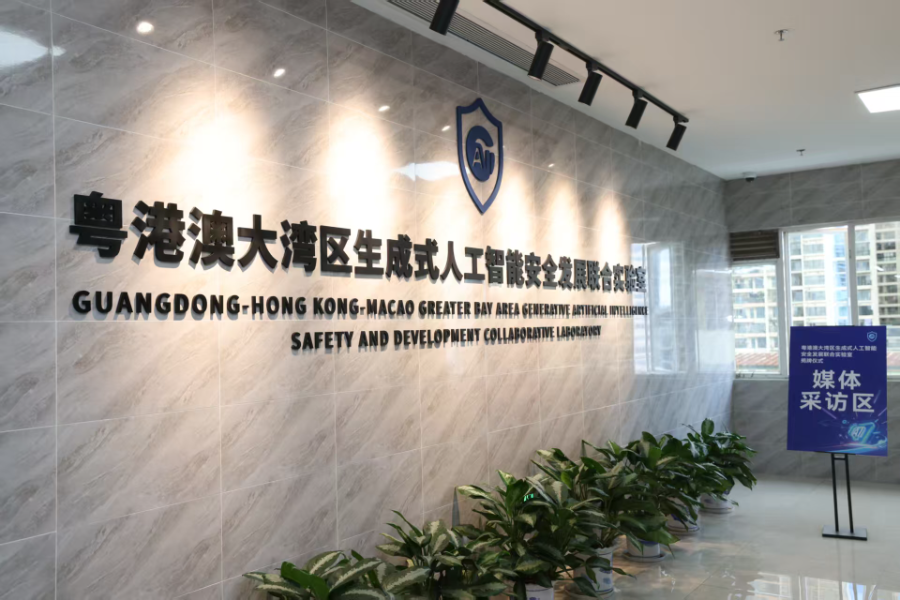
Core Points - The establishment of the Generative AI Safety Development Joint Laboratory in the Guangdong-Hong Kong-Macao Greater Bay Area aims to create a dynamic and collaborative innovation governance body to address the safety challenges posed by generative AI [1][3][12] - The laboratory will focus on three key areas: serving enterprise development, promoting industry implementation, and enhancing safety regulation [3][4][5] Group 1: Laboratory Objectives - The laboratory will provide comprehensive safety assessment services for enterprises, helping them establish effective risk management mechanisms [4] - It aims to create a consulting platform that connects generative AI companies with various industries, facilitating market positioning and product matching for intelligent transformation [4] - The laboratory will develop a generative AI safety evaluation system to enhance monitoring and response capabilities, ensuring compliance and transparency in AI applications [5] Group 2: Regional Significance - The laboratory's location in the Greater Bay Area is strategic, as it navigates complex legal frameworks and compliance requirements for cross-border data flow [3][8] - The Guangdong province has been actively promoting AI development, with significant policy support and a growing number of registered generative AI services, accounting for approximately 17% of the national total [8][9] - Shenzhen is highlighted as a key engine for AI industry growth, with a projected industry scale exceeding 360 billion yuan and a robust investment ecosystem [11][12] Group 3: Industry Applications - Companies like Xiaopeng Motors are investing heavily in AI, with over 4 billion yuan allocated for AI research and development this year [9] - The laboratory's initiatives are expected to enhance AI applications across various sectors, including education, transportation, and cultural tourism, showcasing the potential of AI to drive economic and social development [10][11]
QuestMobile 2025年8月AI应用行业月度报告:移动端应用用户规模达到6.45亿,5大类应用、23个赛道厮杀激烈
QuestMobile· 2025-09-16 02:02
Core Insights - The article discusses the "AI Application Industry Monthly Report" for August 2025, highlighting the growth and challenges within the AI application landscape, driven by government initiatives and user engagement metrics [3][4][7]. Group 1: Industry Overview - The "Opinions on Deepening the Implementation of 'Artificial Intelligence +'" was released by the State Council, outlining milestones for 2027, 2030, and 2035, focusing on enhancing foundational model capabilities and data supply innovation [4][7]. - As of August 2025, the user base for native apps in the internet and AI technology sector reached 277 million, while In-App AI users totaled 622 million, indicating a combined AI application user base of 645 million [4][22]. Group 2: User Engagement and Growth Metrics - The top 50 AI applications by monthly active users show that In-App AI applications dominate with 29 entries, followed by PC web applications (9), mobile AI assistants (6), native apps (5), and PC client applications (1) [4][28]. - The leading AI search engine and comprehensive assistant applications have user bases of 672 million and 651 million, respectively, with AI information retrieval emerging as a significant growth area, showing a 39% month-over-month increase [4][26][38]. Group 3: Competitive Landscape - The competitive landscape reveals that while major applications continue to grow, long-tail applications (under 100,000 users) are struggling, with an average month-over-month decline of 6.7% [5][37]. - Mobile AI assistants from manufacturers like OPPO, Xiaomi, and Huawei hold significant market shares, with user engagement rates varying, where Xiaomi's assistant shows a 37.7% active user rate due to its integration with smart home devices [5][58]. Group 4: Application Categories and Challenges - The report categorizes AI applications into five main types, each facing unique challenges: native apps are stable but long-tail applications struggle; In-App AI applications show a clear divide between top and bottom performers; and PC applications are experiencing traffic declines [5][35][46]. - The AI search sector is characterized by a "function easy to popularize, habit hard to cultivate" dilemma, with only three of the top ten search applications achieving over 10% usage [67][69]. Group 5: Future Directions - The future focus for mobile AI assistants is shifting towards enhancing user experience and retention, with a growing emphasis on intelligent data management and personalized services [57][60]. - The integration of AI search with service offerings is becoming a consensus, with the need to stimulate user search behavior being critical for commercial success [73][75].

广东两个大动作,透露AI发展新风向
2 1 Shi Ji Jing Ji Bao Dao· 2025-09-16 01:48
Core Insights - Guangdong is taking significant steps to develop the artificial intelligence (AI) industry while ensuring safety, as evidenced by the establishment of a joint laboratory for generative AI safety in Shenzhen [2][4]. Group 1: Joint Laboratory and Collaboration - The newly established joint laboratory has prominent participants, including leading AI companies like Tencent, Xiaopeng, and OPPO, as well as academic institutions such as Sun Yat-sen University and Guangzhou University [3]. - The collaboration involves multiple stakeholders from Guangdong, Hong Kong, and Macau, indicating a high-level, cross-regional effort to create a strategic alliance in AI [4]. Group 2: National and Regional AI Development Strategy - The initiative aligns with national goals to enhance AI development and safety, as outlined in recent government documents emphasizing the need for improved management mechanisms and regulatory frameworks for generative AI [5]. - Guangdong aims to achieve the lowest compliance costs for local enterprises, leading safety capabilities nationwide, and positioning the Greater Bay Area as the optimal region for generative AI safety development [5]. Group 3: Current Challenges in AI Industry - The AI industry in China faces three main challenges: weak enterprise safety capabilities, difficulties in technology implementation, and regulatory lag behind technological advancements [6][7][8]. - The joint laboratory's mission extends beyond research to building a sustainable and trustworthy AI ecosystem [9]. Group 4: Broader AI Industry Initiatives - Guangdong is actively promoting AI and robotics through various policies aimed at fostering core technology breakthroughs, nurturing quality enterprises, and developing application scenarios [11]. - The shift in focus from "single-point technology" to "system capabilities" reflects a broader trend in the AI competition landscape, with Guangdong positioning itself to enhance China's AI ecosystem [12].
从魅族、华为到苹果,为什么手机厂商都在做“AI键”?
3 6 Ke· 2025-09-16 01:16
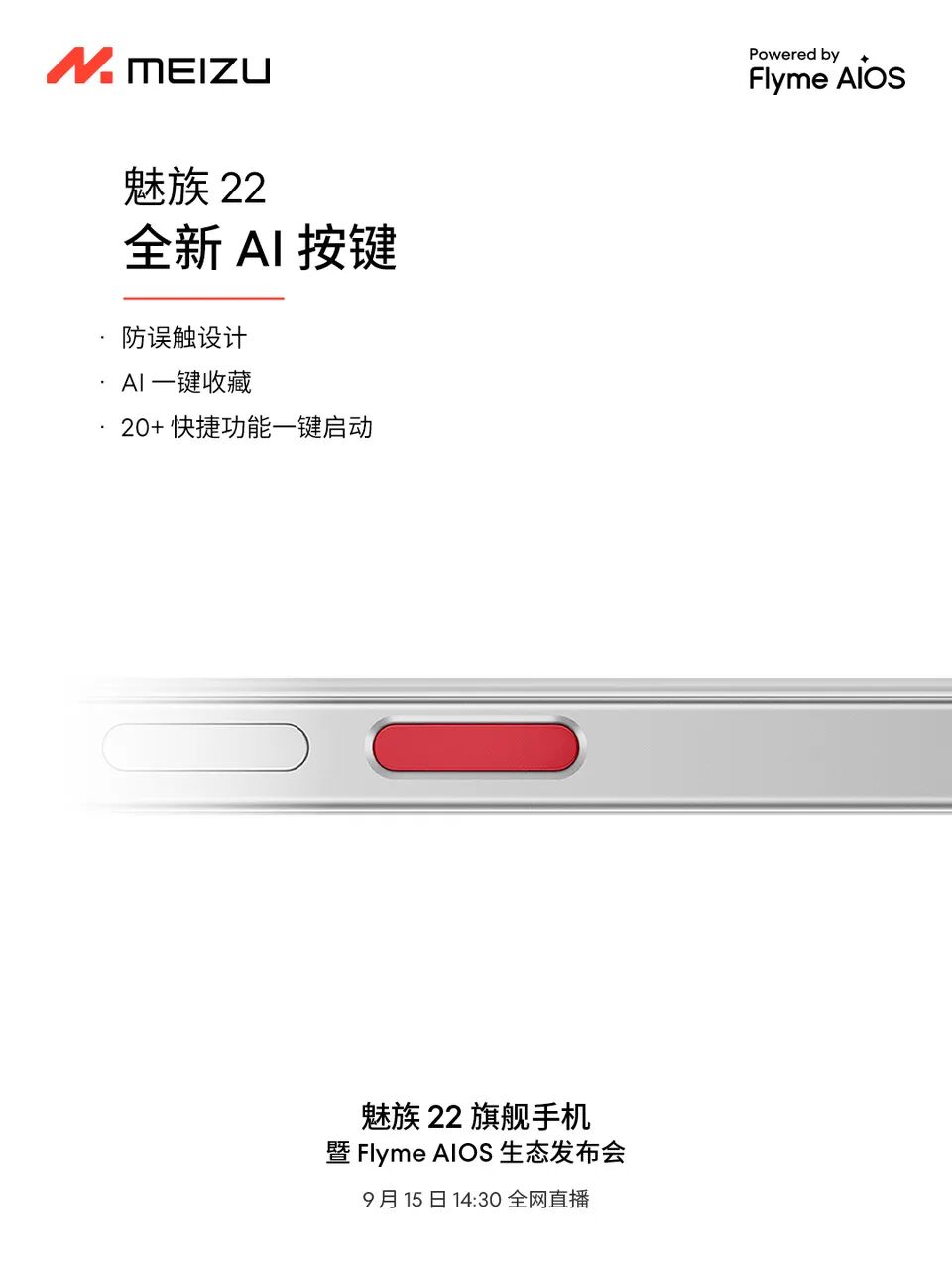
Core Viewpoint - Meizu has launched its flagship smartphone, Meizu 22, featuring the upgraded Flyme AIOS and a new physical "AI key" on the side of the device, aligning with trends seen in other flagship models from brands like Apple and OPPO [1][4][8]. Group 1: AI Key Development - The introduction of the "AI key" is part of a broader trend among smartphone manufacturers to incorporate dedicated buttons for AI functionalities, moving beyond simple voice assistant activation to more complex tasks [8][9]. - Previous attempts at integrating AI keys were largely unsuccessful due to limited AI capabilities, leading to their eventual removal from devices [11][20]. - The current iteration of the "AI key" aims to provide a multi-functional shortcut that allows users to directly engage AI for context understanding and task execution, enhancing usability and efficiency [14][16]. Group 2: Competitive Landscape - Other brands, including vivo and Nothing, are also adopting similar AI key designs, indicating a shift in the industry towards integrating AI more deeply into user interactions [8][19]. - The effectiveness of the AI key will depend on the maturity of the AI capabilities and the depth of system integration by the manufacturers [22][24]. - The AI key serves a dual purpose, functioning as a traditional shortcut for common tasks while also providing access to advanced AI features, thus appealing to a broader user base [19][22]. Group 3: User Experience and Future Implications - The current AI functionalities are not yet a core habit for most users, raising questions about the necessity of a dedicated physical key for AI tasks [17][20]. - The physical AI key could enhance the accessibility of low-frequency AI functions, potentially increasing user engagement with these features [20][22]. - The strategic placement of the AI key may position it as a central hub for AI interactions in the future, depending on the development of AI capabilities by the manufacturers [22][23].