欧莱雅集团

Search documents
韩束最赚钱的日子过去了
Jie Mian Xin Wen· 2025-03-26 04:06
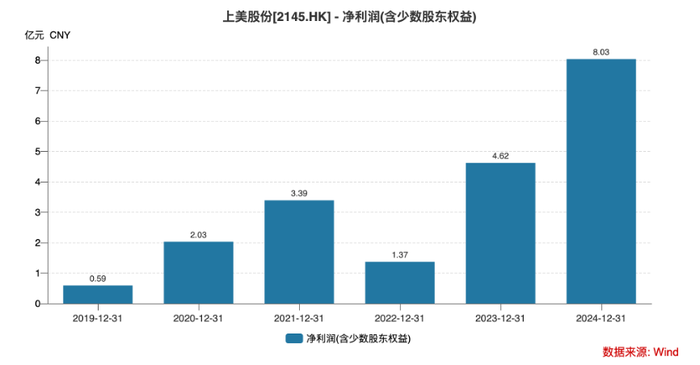
Core Insights - The peak profitability period for Han Shu has likely passed, with a notable decline in revenue growth in the second half of 2024 compared to the first half [3][4][22] - Han Shu's revenue surged by 80.9% year-on-year in 2024, reaching 5.591 billion RMB, contributing significantly to the overall revenue growth of the company [1][8] - The competitive landscape in the beauty industry is shifting, with increased participation in short drama marketing leading to higher costs and reduced effectiveness for Han Shu [5][19][26] Group 1: Company Performance - In 2024, the total revenue of Shangmei Co. increased by 62.1% to 6.793 billion RMB, with a profit of 803 million RMB, marking a 74% year-on-year growth [1][3] - The main brand Han Shu accounted for a significant portion of this growth, with a total revenue of 5.591 billion RMB [1][8] - The company's marketing expenses rose sharply, with sales and distribution costs reaching 3.95 billion RMB, a 76% increase, and marketing expenses alone growing by 90% to 3.317 billion RMB [27][28] Group 2: Market Dynamics - The beauty market is experiencing a transformation, with domestic brands like Han Shu and Pechoin gaining market share as international brands face declining sales [29][30] - The domestic beauty market saw a 7.46% increase in sales in 2024, with domestic brands capturing over 60% of the skincare market [30][33] - The influx of brands into short drama marketing has diluted Han Shu's competitive advantage, as other brands like Pechoin and international players also engage in similar marketing strategies [5][26] Group 3: Marketing Strategy - Han Shu's previous success was largely attributed to its early investment in short drama marketing, which generated significant sales and brand exposure [12][14] - However, the effectiveness of short drama marketing has diminished, with reports indicating a 40-fold decrease in marketing effectiveness despite increased costs [21][22] - The company is now shifting focus towards offline channels, emphasizing the importance of a balanced marketing strategy that includes both online and offline efforts [23][24]

财信证券晨会纪要-2025-03-17
Caixin Securities· 2025-03-16 23:52
Investment Rating - The report indicates a positive investment outlook for the market, particularly focusing on cyclical and consumer sectors [4][10][17]. Core Insights - The report emphasizes that large-cap blue-chip stocks are beginning to rebound, with a focus on cyclical and consumer sectors as key areas for investment [4][10]. - It highlights the importance of upcoming government policies aimed at boosting consumption, which are expected to drive market performance [11][17]. - The report suggests that the market is transitioning from a liquidity-driven phase to one driven by economic fundamentals, indicating a need for cautious investment strategies [9][17]. Market Overview - The A-share market shows a total market capitalization of 651,122 million yuan for the Shanghai Composite Index, with a PE ratio of 12.23 and a PB ratio of 1.30 [3]. - The report notes that the Shanghai Composite Index closed at 3,419.56, reflecting a weekly increase of 1.81% [2]. Economic Indicators - The report mentions that the average interest rate for new corporate loans in February was approximately 3.3%, which is 40 basis points lower than the same period last year, indicating a supportive monetary policy environment [42]. - It also highlights that the total social financing scale increased by 22,375 million yuan in February, showing a year-on-year increase of 7,416 million yuan [14]. Industry Dynamics - The railway sector experienced a record high in passenger flow, with 7.38 million passengers transported in the first two months of 2025, marking a 6.4% year-on-year increase [41]. - The report discusses the implementation of a new childcare subsidy policy in Hohhot, which provides financial incentives for families, potentially boosting consumer spending [44]. Company Tracking - The report tracks the performance of Oriental Fortune, which reported a 17.3% year-on-year increase in net profit for 2024, driven by active trading [51]. - It also notes that Jinbo Biological has expanded its applications of recombinant collagen in various fields, including skincare and medical aesthetics, enhancing its market competitiveness [49][50].
或致癌!紧急召回!知名品牌回应
21世纪经济报道· 2025-03-12 12:06
Core Viewpoint - L'Oréal is facing significant challenges due to contamination issues with its products, specifically related to the presence of benzene, a recognized carcinogen, leading to product recalls and legal actions [2][3][5]. Group 1: Product Recall and Contamination - L'Oréal has recalled all batches of its Effaclar Duo acne treatment product in the U.S. after detecting trace amounts of benzene [2][3]. - The recall is limited to the U.S. and Canadian markets, with no impact on the Chinese market [3]. - Benzoyl peroxide, a key ingredient in the product, is known to be unstable and can lead to the formation of benzene [3]. Group 2: Legal Issues and Brand Impact - In January, L'Oréal faced multiple class-action lawsuits related to benzene contamination in its CeraVe brand products, with claims that benzene levels exceeded federal safety standards [5]. - The company is currently dealing with six class-action lawsuits targeting the CeraVe brand and L'Oréal itself [5]. - The beauty industry is facing scrutiny, with several L'Oréal brands appearing on a blacklist for consumer complaints [5]. Group 3: Financial Performance - L'Oréal reported a total sales revenue of €43.487 billion (approximately ¥329.429 billion) for the year 2024, reflecting a year-on-year growth of 5.6% [6]. - The operating profit reached €8.688 billion (approximately ¥65.821 billion), marking a historical high for the company [6].


那些年,出海越南踩过的「坑」
雷峰网· 2025-03-10 10:31
Core Viewpoint - Vietnam presents unique opportunities for investment due to its rapidly growing economy, young population, and increasingly open business environment, but it also poses significant risks that require careful navigation [2][6]. Group 1: Market Characteristics - Vietnam's industrial upgrade is lagging behind consumer upgrade, providing opportunities for Chinese brands to establish a foothold, as seen with Anta becoming the third-largest sports brand after Nike and Adidas [3]. - The population distribution in Vietnam is characterized by fewer large cities and more towns, contrasting with Indonesia and Thailand, which affects retail dynamics [5]. - Offline retail dominates the market with a 90% share compared to 10% for online, with Shopee and TikTok e-commerce holding significant market shares of 50% and 30% respectively [5]. Group 2: Challenges for Entering the Market - High failure rates for companies entering Vietnam are often due to compliance issues, market misjudgment, and a lack of long-term commitment [8][9]. - Many businesses mistakenly apply domestic success strategies to Vietnam, underestimating local market conditions and consumer expectations, particularly in sectors like maternal and infant care and skincare [9][10]. - The perception of Vietnam as a dumping ground for low-quality products is outdated, as the market is evolving with higher consumer standards [9]. Group 3: Strategic Recommendations - Companies should prioritize compliance and long-term investment strategies rather than seeking quick profits through short-term partnerships [10][11]. - Avoiding price wars among Chinese brands is crucial, as this internal competition can hinder overall market growth and brand development [12]. - A thorough understanding of local market dynamics, consumer behavior, and retail structures is essential for successful market entry and sustainability in Vietnam [6][10].