
邮储银行

Search documents
六大国有银行全面停售5年期大额存单
Mei Ri Shang Bao· 2025-12-03 22:55
Core Insights - The long-term large-denomination certificates of deposit (CDs) are gradually disappearing, with major state-owned banks ceasing to offer 5-year CDs, reflecting a shift in banks' liability management strategies in a low-interest-rate environment [1][2][4] Group 1: Changes in Product Offerings - Six major state-owned banks, including ICBC, ABC, BOC, CCB, BOCOM, and PSBC, have completely removed 5-year large-denomination CDs from their offerings [2][3] - The remaining products from these banks have shifted towards shorter terms, with ICBC offering rates of 1.55% for 3-year CDs and 1.20% for 1-year and 2-year CDs [2][3] - The absence of 5-year CDs has been noted across other banks, with Agricultural Bank of China also not listing any 5-year products in its catalog from 2018 to 2025 [3] Group 2: Impact on Interest Margins - The reduction of long-term high-cost CDs is seen as a direct method for banks to optimize their liability structure and stabilize net interest margins [4] - As of Q3 2025, the net interest margin for commercial banks in China was reported at 1.42%, remaining at a historical low [4] - Since the establishment of the market-oriented deposit rate adjustment mechanism in April 2022, major banks have reduced deposit rates in seven rounds, with the latest cuts occurring in May 2025 [4] Group 3: Shifts in Investment Behavior - With declining interest rates, there is a growing need for depositors to adopt rational expectations and consider diversified asset allocations, such as government bonds and low-risk investment products [5] - A survey indicated that 62.3% of urban residents preferred "more savings," a decrease of 1.5 percentage points from the previous quarter, while 18.5% favored "more investments," an increase of 5.6 percentage points [5] - The scale of the banking wealth management market reached 32.13 trillion yuan by the end of Q3 2025, reflecting a year-on-year increase of 9.42% [5]






促进我国投融资体系多元发展
Jing Ji Ri Bao· 2025-12-03 22:18
Core Insights - The recent approval of three financial asset investment companies (AICs) marks the establishment of the first batch of national joint-stock bank AICs in China, with a total of nine AICs now operational [1][2] Group 1: AIC Establishment and Capitalization - The newly approved AICs include Xinyin Financial Asset Investment Co., Xinyin Financial Asset Investment Co., and Zhaoyin Financial Asset Investment Co., with registered capital of 150 billion yuan for Zhaoyin and 100 billion yuan for the other two [1] - The establishment of these AICs follows a policy shift initiated in March 2023, which encouraged qualified commercial banks to set up AICs, leading to the approval of several banks including Industrial Bank, CITIC Bank, and Postal Savings Bank [1] Group 2: Functions and Characteristics of AICs - Initially, AICs served as a "risk isolation wall" and "asset restructuring experts," focusing on converting bank or enterprise debt into equity to reduce leverage and mitigate financial risks [1] - Over time, the role of AICs has expanded to become key players in equity investment, particularly following recent policy changes that have increased their investment scope and intensity [1] Group 3: Comparison Between Joint-Stock and State-Owned AICs - Joint-stock bank AICs share common features with state-owned AICs, including core functions, regulatory frameworks, policy guidance, and operational models [2] - However, differences exist in shareholder backgrounds, resource endowments, capital scales, and regional layouts, with state-owned AICs benefiting from larger asset scales and nationwide networks [2] Group 4: Impact on the Economy - The concentration of AICs is expected to positively influence the development of the real economy and the stability of financial markets, facilitating corporate transformation and high-quality development [3] - AICs can alleviate corporate debt burdens through debt-to-equity swaps, promoting technological research and product innovation, particularly for specialized and innovative small and medium-sized enterprises [3]
首批3家全国性股份制银行AIC获准开业—— 促进我国投融资体系多元发展
Jing Ji Ri Bao· 2025-12-03 21:51
Core Insights - The recent approval of three financial asset investment companies (AICs) marks the establishment of the first batch of national joint-stock bank AICs in China, expanding the total number of bank-affiliated AICs to nine [1][2] Group 1: AIC Establishment and Function - The newly approved AICs include Xinyin Financial Asset Investment Co., Xinyin Financial Asset Investment Co., and Zhaoyin Financial Asset Investment Co., with registered capitals of 150 billion yuan and 100 billion yuan respectively [1] - AICs were initially designed for market-oriented debt-to-equity swaps, serving as a "risk isolation wall" and "asset restructuring expert" within the banking system, aimed at reducing corporate leverage and mitigating financial risks [1][3] - The role of AICs has evolved to become a major player in equity investment, particularly following recent policy expansions that have increased their investment scope and intensity [1] Group 2: Comparison Between AICs - The newly established AICs share common features with state-owned bank AICs, including core functions, regulatory frameworks, policy guidance, and operational models [2] - Differences exist in shareholder backgrounds, resource endowments, capital scales, and regional layouts, with state-owned AICs benefiting from larger asset scales and nationwide networks, focusing on large state-owned enterprises [2] - In contrast, joint-stock bank AICs have a slightly lower capital scale and are more concentrated in their initial focus, primarily serving private and innovative small and medium-sized enterprises [2] Group 3: Impact on the Economy - The entry of AICs is expected to significantly promote enterprise transformation and high-quality development by alleviating corporate debt burdens through debt-to-equity swaps, thereby facilitating technological research and product innovation [3] - AICs are positioned to support specialized and innovative enterprises, as well as technology-driven small and medium-sized enterprises, while also restructuring and revitalizing companies in debt distress through market-oriented and legal means [3]


大额存单概念正在淡化 稀缺额度锚定高端客户
Zhong Guo Zheng Quan Bao· 2025-12-03 20:28
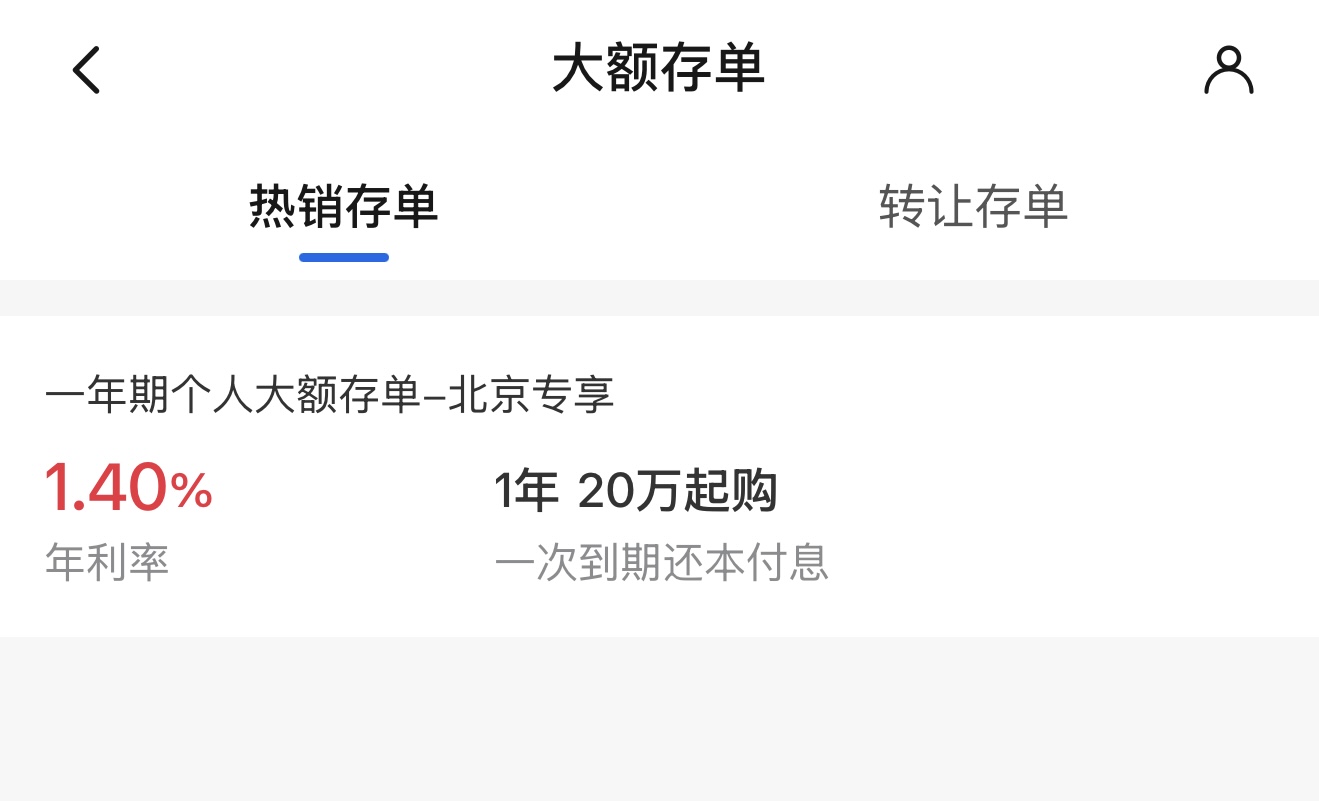
Group 1 - The core viewpoint of the articles highlights the trend of major banks in China discontinuing five-year large denomination certificates of deposit (CDs), with many banks only offering shorter-term options or none at all [1][2] - Major banks have raised the minimum investment threshold for large denomination CDs, with some banks now requiring a minimum of 1 million yuan, indicating a shift in strategy to maintain high-end customer relationships [2][3] - The discontinuation of long-term large denomination CDs is seen as a method for banks to reduce high-cost liabilities and stabilize net interest margins amid declining market interest rates [3] Group 2 - The current offerings of large denomination CDs are limited, with banks like China Postal Savings Bank indicating that they have no CDs available for sale and may resume sales in January next year [2] - The interest rates for available large denomination CDs are relatively low, with rates around 1.40% to 1.55%, which may not attract high-end customers who prioritize security and exclusive services over interest rates [3] - Banks are expected to continue differentiating their deposit rates based on their liability structures and market conditions, as they face pressure to lower funding costs and maintain profitability [3]
百万门槛!六大行五年期大额存单消失,三年期也高不可攀?
Sou Hu Cai Jing· 2025-12-03 17:13
Core Viewpoint - The disappearance of long-term deposit products, particularly five-year large certificates of deposit (CDs), reflects the ongoing pressure on banks' net interest margins, leading to a reevaluation of their liability structures and product offerings [1][3][9] Group 1: Changes in Deposit Products - Major state-owned banks, including Industrial and Commercial Bank of China, Agricultural Bank of China, and others, have completely discontinued five-year large CDs, with some also reducing the availability of three-year products [3][5] - The current interest rate for a three-year large CD at Industrial and Commercial Bank is only 1.55%, with a minimum deposit requirement of 1 million yuan, contrasting sharply with the 50 yuan minimum for regular fixed deposits [5][17] - The trend of reducing long-term deposit products is not limited to large banks; some joint-stock banks and city commercial banks are also following suit, indicating a broader industry shift [3][7] Group 2: Impact on Customers - The increasing minimum deposit requirements for three-year products mean that large CDs are becoming exclusive to high-net-worth clients, moving away from their original target demographic of middle-class savers [5][11] - Ordinary depositors are facing challenges in asset allocation due to the scarcity of long-term deposit options, leading to a shift in savings behavior, with a notable decrease in the percentage of savers preferring to save more [13][17] - The current environment has prompted some depositors to seek higher returns or more diversified investment channels, reflecting a change in asset allocation strategies [13][15] Group 3: Industry Response - Banks are adjusting their product offerings in response to the pressure on net interest margins, with state-owned banks discontinuing five-year large CDs while smaller banks focus on shorter-term products [7][9] - The ongoing decline in loan rates and intense competition for deposits are squeezing banks' profit margins, necessitating a reevaluation of high-interest long-term deposit products [9][11] - Banks are increasingly using large CDs to attract high-quality new clients and as a stable asset for private banking clients, indicating a strategic shift in how these products are utilized [11][15]

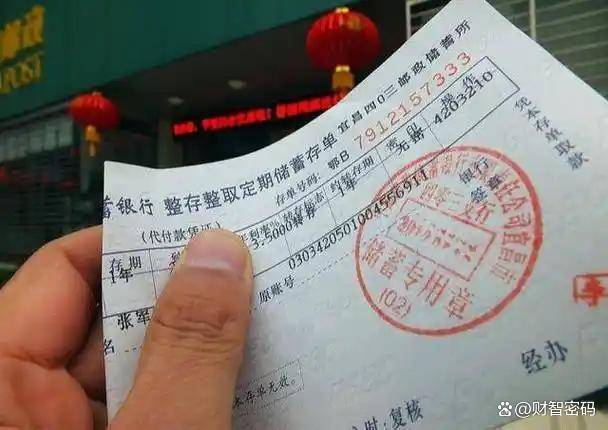
邮储银行大宗交易成交702.24万元
Zheng Quan Shi Bao Wang· 2025-12-03 15:16
Summary of Key Points Core Viewpoint - Postal Savings Bank of China experienced a significant block trade on December 3, with a transaction volume of 1.254 million shares and a transaction value of 7.0224 million yuan, at a price of 5.60 yuan per share [1] Group 1: Block Trade Details - The block trade involved a total volume of 125.40 thousand shares and a total transaction amount of 702.24 thousand yuan, with a transaction price of 5.60 yuan, reflecting no premium over the closing price [1] - The buyer's brokerage was Guotai Junan Securities Co., Ltd. headquarters, and the seller's brokerage was also Guotai Junan Securities Co., Ltd. headquarters [1] Group 2: Recent Trading Activity - Over the past three months, Postal Savings Bank has recorded a total of 10 block trades, with a cumulative transaction value of 41.7424 million yuan [1] - On the same day, the bank's closing price was 5.60 yuan, down 1.23%, with a daily turnover rate of 0.26% and a total transaction amount of 966.7 million yuan [1] - The net outflow of main funds for the day was 160 million yuan, and over the past five days, the stock has declined by 3.28% with a total net outflow of 408 million yuan [1] Group 3: Margin Trading Data - The latest margin financing balance for Postal Savings Bank is 1.031 billion yuan, which has increased by 112 million yuan over the past five days, representing a growth rate of 12.14% [1]
邮政系三大金融机构同台亮相,核心管理层发声!
券商中国· 2025-12-03 15:13
Core Viewpoints - The 2026 Postal Financial Forum highlighted the importance of risk awareness and effective credit supply in the banking sector, emphasizing the need for banks to combine risk assessment with opportunity recognition [1][3][4] - Insurance funds are evolving into more strategic players in the capital market, focusing on long-term investments and aligning with national strategies [10][11] - The Chinese equity market is expected to enter a long-term structural bull market by 2026, driven by improving corporate profits and strategic investment themes [12][13] Banking Sector Insights - Liu Jianjun, President of Postal Savings Bank, emphasized the need for banks to cultivate a "future-oriented" risk perspective to enhance credit availability, especially in a low-interest-rate environment [3][4] - Eight strategies were proposed to address challenges in the banking sector, including long-termism, capability building, digital transformation, and risk management [4][5][6][7][8][9] Insurance Sector Developments - Han Guangyue, Chairman of China Postal Life Insurance, noted that insurance funds are now prioritizing asset-liability matching and capital efficiency, moving towards lower-risk, high-capital efficiency assets [10][11] - The focus of insurance investments has shifted from cyclical hotspots to sectors like high dividends, technological innovation, and infrastructure, aligning with long-term investment strategies [11] Market Outlook - Huang Fusheng, Chief Economist of China Postal Securities, predicted a structural bull market for Chinese equities starting in 2026, with key investment themes including innovative pharmaceuticals and technology [12] - The bond market is expected to stabilize, with limited room for interest rate cuts, while commodity prices are anticipated to rise due to global economic recovery and supply constraints [13] - Concerns regarding AI stock bubbles were addressed, indicating that current valuations are manageable compared to historical peaks, with increased competition in the tech sector helping to mitigate risks [14]

六大行集体下架五年期大额存单 低利率时代储户寻路多元配置
2 1 Shi Ji Jing Ji Bao Dao· 2025-12-03 13:31
Core Viewpoint - The recent collective removal of 5-year large denomination certificates of deposit (CDs) by major Chinese banks indicates a shift in banks' strategies towards more cautious interest margin management and a potential reduction in the supply of long-term fixed-rate deposits [1][11]. Group 1: Market Changes - Major state-owned banks have collectively removed 5-year large denomination CDs from their mobile banking platforms, with current offerings limited to terms of 3 years or less, and interest rates ranging from 1.20% to 1.55% [1][2]. - The trend of discontinuing 5-year large denomination CDs is not new, as some institutions had already begun this practice last year [1]. - The interest rates for 3-year large denomination CDs are approximately 1.55%, with minimum purchase amounts typically set at 200,000 yuan [2]. Group 2: Historical Context - The development of large denomination CDs spans nearly 40 years, with their initial issuance by the Bank of Communications in 1986, followed by a long hiatus until their reintroduction in 2015 [5][6]. - The popularity of large denomination CDs surged around 2018 due to changes in the banking landscape, including the relaxation of interest rate caps and increased demand for fixed-term deposits [6]. Group 3: Financial Implications - The discontinuation of long-term high-interest deposits is primarily driven by banks' need to manage net interest margins more effectively, as the current environment of low loan rates and high deposit costs creates pressure on profitability [11]. - As of the end of Q3, the net interest margin for commercial banks was reported at 1.42%, indicating a challenging environment for maintaining high-interest deposit products [11]. Group 4: Customer Behavior - The removal of 5-year large denomination CDs has prompted customers to reconsider their investment strategies, shifting from a focus on high-interest deposits to a more diversified asset allocation approach [12][15]. - A survey indicated that 18.5% of residents are inclined to invest more, with non-principal guaranteed bank wealth management products becoming increasingly popular [14].
邮储银行固原市分行6800万元农牧贷精准滴灌助力乡村振兴
Xin Lang Cai Jing· 2025-12-03 13:20
Core Insights - The article highlights the successful transformation of a businessman, Ma Youcheng, from real estate and used car industries to the agricultural sector, specifically in livestock feed production, supported by Postal Savings Bank's financial services [1][3]. Group 1: Company Overview - Ningxia Yanzhuo Agricultural Technology Co., Ltd. was founded by Ma Youcheng in 2017, focusing on livestock feed after leaving the volatile real estate and used car markets [1][3]. - The company faced significant challenges in 2022 due to declining prices of beef and lamb, leading to high costs and low profits for farmers, which resulted in inventory buildup and a strained cash flow [1][3]. Group 2: Financial Support - In the first half of 2024, Postal Savings Bank's branch in Guyuan City provided a quick 300,000 yuan (approximately 43,000 USD) unsecured loan with a repayment plan that allows interest payments every quarter and principal repayment after three years, aligning with the agricultural cycle [1][3]. - This financial support was described as a "timely rain" that helped stabilize the business, allowing it to expand its sales network to cover four counties and one district, serving over a hundred farmers [1][3]. Group 3: Agricultural Financing Initiatives - Postal Savings Bank has been optimizing its agricultural financial services by innovating products like credit loans and special loans, establishing a "paperless application, online approval, and quick disbursement" green channel to address the financing difficulties faced by agricultural entities [2][4]. - As of the current year, the bank has disbursed 68 million yuan (approximately 10 million USD) in agricultural loans, contributing to the revitalization of rural areas [2][4].
工商银行三年期大额存单门槛提至100万元,行业门槛基本为20万元!
Xin Lang Cai Jing· 2025-12-03 13:20
Core Viewpoint - The Industrial and Commercial Bank of China (ICBC) has raised the minimum threshold for its three-year large-denomination certificates of deposit (CDs) to 1 million yuan, while the industry standard remains around 200,000 yuan [1][2] Group 1: ICBC's Large-Denomination CDs - ICBC's current offering for the three-year large-denomination CD has a starting threshold of 1 million yuan and an annual interest rate of only 1.55% [1][2] - The latest three-year fixed deposit product from ICBC has an interest rate that can go up to 1.55%, with a much lower starting threshold of just 50 yuan [1][2] Group 2: Market Trends - A recent survey indicated that six major state-owned banks, including ICBC, Agricultural Bank of China, Bank of China, China Construction Bank, Bank of Communications, and Postal Savings Bank, have completely stopped offering five-year large-denomination CDs [1][2] - Some joint-stock banks and city commercial banks are also following suit by reducing their long-term deposit offerings [1][2] - The structure of large-denomination CDs across banks has shifted significantly towards shorter terms, with ICBC now offering only one-month, three-month, six-month, one-year, two-year, and three-year products [1][2] - The interest rates for ICBC's one-year and two-year large-denomination CDs are both set at 1.2% [1][2]