5年期大额存单

Search documents
岁末年初银行揽储有何变化
Jing Ji Ri Bao· 2026-01-04 21:49
Core Viewpoint - The current atmosphere for bank deposit acquisition is more rational compared to previous years, with state-owned banks adopting a more restrained approach and smaller banks utilizing non-price methods for attracting deposits [1][2][3] Group 1: Deposit Acquisition Strategies - Major state-owned banks are generally low-key in their marketing efforts, while many smaller banks are using physical rewards and promotional activities to attract deposits [1] - Smaller banks are offering slightly higher interest rates for new customers, such as 1.75% for a 3-year deposit, compared to the 1.55% offered by larger banks [1] - The overall deposit acquisition strategy is characterized by a focus on cost control and structural optimization rather than aggressive interest rate hikes [2][3] Group 2: Market Dynamics and Competition - The banking sector is experiencing a structural differentiation, with larger banks focusing on stabilizing costs and durations, while smaller banks exhibit varied responses based on regional competition [2][3] - Some smaller banks are slightly increasing interest rates for specific deposit terms to capture market share, while others are using promotional gifts to attract deposits [3][4] - The competitive landscape for smaller banks is challenging due to their limited brand influence and customer base, leading to a reliance on price competition [4] Group 3: Economic Environment and Regulatory Impact - The macroeconomic policy is expected to maintain a moderately loose monetary stance, which will keep market interest rates low and reduce the overall cost pressure on banks [4][5] - The average net interest margin for commercial banks has narrowed to 1.42%, with state-owned banks at 1.31% as of the third quarter of 2025 [5] - Regulatory measures are suggested to promote market-oriented deposit rate reforms and prevent irrational pricing competition among banks [5][6] Group 4: Long-term Strategies for Smaller Banks - To escape the cycle of high-interest deposit acquisition leading to reduced profitability, smaller banks need to shift from price competition to comprehensive service competition [5][6] - Developing unique products tailored to community needs, such as "retirement deposits" and "education savings," is essential for smaller banks to enhance their competitive edge [6] - Wealth management services are becoming increasingly important for banks to adapt to evolving customer needs and improve client loyalty [6]
破局立新,价值回归:2025年银行业十大动向勾勒发展新图景
Mei Ri Jing Ji Xin Wen· 2025-12-29 13:22
Group 1 - The banking industry is accelerating transformation and restructuring, focusing on enhancing quality over quantity, with a clear path of reforms including consumer loan interest subsidies, penetrating regulation, and optimizing liability structures [12][28] - The introduction of the personal consumer loan interest subsidy policy marks a significant central government initiative to stimulate domestic demand, effective from September 1, 2025, providing a 1% subsidy on loans under certain conditions [13] - The cancellation of the cash withdrawal registration requirement for amounts over 50,000 yuan aims to balance risk prevention and service optimization, enhancing customer convenience [14] Group 2 - The ongoing decline in deposit rates reflects a broader trend in the banking sector, with many banks reducing rates to alleviate pressure on net interest margins, as one-year fixed deposit rates have fallen below 1% [17][24] - The restructuring of small and medium-sized banks is underway, with over 400 institutions expected to exit the market in 2025, indicating a significant consolidation phase [18] - The expansion of financial asset investment companies (AIC) is being promoted, with new AICs being established to enhance investment opportunities and support market-oriented debt-to-equity swaps [19] Group 3 - The issuance of technology innovation bonds (科创债) has gained momentum, with 64 banks participating and a total issuance nearing 300 billion yuan, reflecting a multi-tiered participation structure in the market [20] - The abolition of supervisory boards in several major banks aims to streamline governance and improve decision-making efficiency, with over 20 banks making similar adjustments [21] - The consensus against "involution" in the banking sector emphasizes a shift from scale-driven growth to value-driven strategies, promoting rational competition and operational stability [22][28] Group 4 - The rise in gold prices, surpassing 4,500 USD per ounce, has led banks to increase the minimum thresholds for gold accumulation products, reflecting the impact of international market trends [15][26] - The proposed amendments to the Banking Supervision Law aim to enhance regulatory measures and consumer protection, extending oversight to major shareholders and actual controllers of banking institutions [16]








银行净息差现企稳迹象,普通人理财要换思路了?|《财经》特别报道
Sou Hu Cai Jing· 2025-12-25 10:16
Core Viewpoint - The central bank is strengthening its guidance on deposit and loan interest rates to prevent excessive competition among market institutions, which could further lower effective market rates and enhance the effectiveness of monetary policy [2][3][4]. Group 1: Interest Rate Trends - Consumer loan products with interest rates below 3% are nearly extinct, and 5-year large-denomination certificates of deposit with rates above 1.55% are also disappearing [2]. - The People's Bank of China (PBOC) has set a lower limit for loan interest rates, with corporate loan rates around 2.1%-2.2% and retail loan rates, including mortgages, at about 3% [3][10]. - The PBOC aims to maintain a reasonable interest rate relationship, emphasizing the importance of the interest rate spread between deposits and loans [4][5]. Group 2: Monetary Policy and Economic Context - The central bank's focus on interest rate relationships is due to the overall low interest rate levels in China, with the policy rate at 1.4% and new loan rates around 3.1% [7][8]. - The central economic work conference indicated a continuation of moderately loose monetary policy, with potential for slight rate cuts in 2026 [8][42]. - The PBOC is expected to enhance the efficiency of monetary policy transmission by improving the relationship between various interest rates [38][41]. Group 3: Banking Sector Dynamics - The net interest margin of commercial banks has been under pressure, declining from over 2% to around 1.42% [15][18]. - Banks are facing challenges due to intense competition, leading to irrational pricing of loans and a significant drop in deposit rates [19][20]. - Recent actions by banks include the removal of long-term large-denomination certificates of deposit and a focus on stabilizing net interest margins [23][14]. Group 4: Currency and Exchange Rate Implications - The PBOC's efforts to stabilize interest rates are also aimed at maintaining the stability of the RMB against the USD, especially in light of expected interest rate cuts by the Federal Reserve [5][28]. - The RMB exchange rate has shown signs of strengthening, with expectations that it may break below 7.0 against the USD [25][29]. - The central bank's monetary policy will consider both domestic economic conditions and external influences, particularly from the US [27][31].
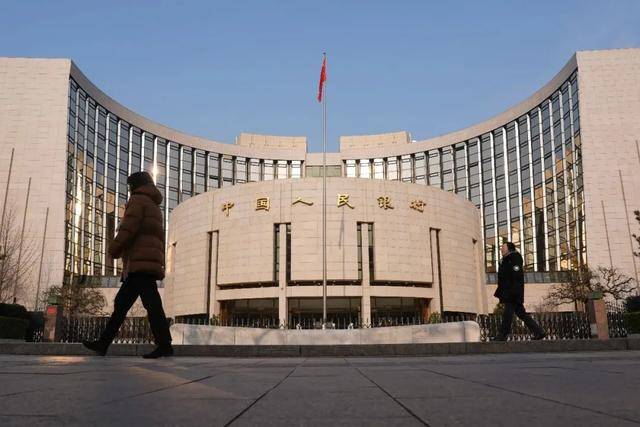
长期存款产品“退潮”!六大行,调整!
Sou Hu Cai Jing· 2025-12-23 18:05
Core Viewpoint - The recent withdrawal of 5-year large denomination time deposits by multiple banks reflects a strategic shift in response to ongoing pressure on net interest margins, leading banks to reduce long-term liabilities and adjust deposit rates [2][3][4]. Group 1: Bank Actions - Major state-owned banks, including Industrial, Agricultural, China, Construction, Transportation, and Postal Savings Banks, have stopped displaying 5-year large denomination time deposits, with 3-year deposit rates dropping to between 1.5% and 1.75% [2]. - Several smaller banks, such as Meizhou Merchant Bank and Yilian Bank, have also removed 5-year fixed deposit products from their offerings [2]. - The trend of withdrawing long-term deposit products is not sudden; for instance, China Bank previously announced limited availability of 3-year and 5-year large denomination time deposits [2]. Group 2: Impact on Depositors - The reduction of long-term deposit products has created a dilemma for ordinary depositors, as many are uncertain about where to allocate their idle funds amidst low interest rates [3]. - A survey indicated that 62.3% of urban depositors preferred "more savings," a decrease of 1.5 percentage points from the previous quarter, suggesting a shift in asset allocation strategies due to low interest rates [3]. Group 3: Industry Implications - The decline in long-term deposit products is pushing banks to accelerate their transformation, focusing on wealth management and custodial services to enhance non-interest income [3][4]. - The ongoing narrowing of net interest margins is a significant factor affecting bank profitability, and the recent withdrawal of high-interest long-term deposit products is seen as a necessary step to stabilize these margins [4].

银行净息差现企稳迹象,普通人理财要换思路了?
Xin Lang Cai Jing· 2025-12-23 11:45
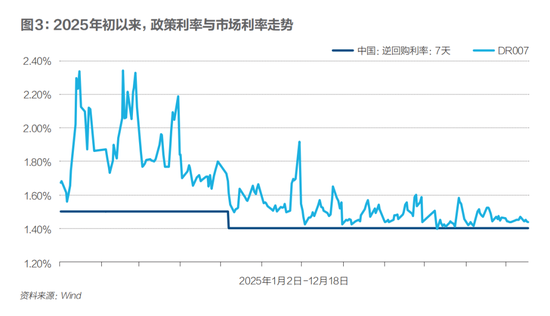
Core Viewpoint - The central bank is strengthening its guidance on deposit and loan interest rates to prevent excessive competition among market institutions, which could further lower effective market rates and enhance the effectiveness of monetary policy [1][41]. Group 1: Interest Rate Trends - Consumer loan products with interest rates below 3% are nearly extinct, and 5-year large-denomination certificates of deposit with rates above 1.55% are also disappearing [1][41]. - The lower limit for corporate loan rates is approximately 2.1%-2.2%, aligning closely with the after-tax adjusted yield of government bonds of the same maturity, while the lower limit for retail loan rates, including mortgages, is around 3% [3][53]. - The average weighted interest rate for new corporate loans and personal housing loans is around 3.1%, which is historically low [48][55]. Group 2: Monetary Policy and Economic Context - The central bank emphasizes maintaining a reasonable interest rate relationship, considering it one of the five key interest rate relationships that require attention [4][44]. - The overall interest rate level in China is at a historical low, with the central bank's policy rate at 1.4% and the 1-year and 5-year Loan Prime Rates (LPR) at 3% and 3.5%, respectively [9][48]. - The central economic work conference indicates that the monetary policy will continue to implement a moderately loose stance, with potential for slight rate cuts in the first half of 2026 [10][49]. Group 3: Banking Sector Dynamics - The net interest margin of commercial banks has been under pressure, declining from over 2% to around 1.42% as of the third quarter of 2025, which is a historical low [18][56]. - Banks are facing challenges in maintaining a sustainable net interest margin due to intense competition and the phenomenon of "involution" in the lending market [20][22]. - Recent reports indicate that banks are stabilizing their loan rates, with some banks encouraging slight increases in loan rates as part of their key performance indicators [55][56]. Group 4: Regulatory Actions and Market Reactions - The central bank has taken measures to prevent irrational downward pressure on loan rates, including discouraging banks from issuing loans at rates below the yield of government bonds [16][54]. - The "反内卷" (anti-involution) initiative aims to address the rapid decline in loan rates while ensuring that deposit rates do not fall excessively [3][15]. - The market is observing a shift in the pricing strategies of banks, with a focus on improving market pricing capabilities and stabilizing asset yields [24][56].
中国银行、建设银行、工商银行、农业银行、交通银行、邮储银行,集体调整!
Mei Ri Jing Ji Xin Wen· 2025-12-23 03:45
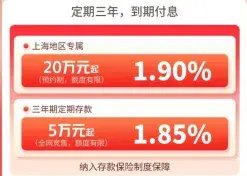
Core Viewpoint - The recent decrease in medium to long-term deposit products in the market is attributed to banks' responses to the ongoing decline in net interest margins, leading to a reduction in the availability of five-year large certificates of deposit (CDs) and lower interest rates on three-year products [3][5][6]. Group 1: Market Trends - There is a noticeable reduction in the availability of five-year large CDs among major banks, with interest rates for three-year products dropping to between 1.5% and 1.75% [3]. - Smaller banks are also adjusting their deposit offerings, with some, like Meizhou Commercial Bank, announcing the removal of five-year fixed deposit products [5]. - The trend of withdrawing long-term deposit products is not limited to national banks but is also seen in local and private banks [5]. Group 2: Banking Sector Implications - The withdrawal of long-term deposit products is a necessary response to the challenges posed by declining bank net interest margins, as banks face significant risks of interest margin losses if they do not eliminate high-interest long-term products [5]. - Analysts suggest that this shift will enhance the certainty of banks' profit expectations, particularly benefiting large banks with low-cost liabilities and high dividend yields, making them more attractive to long-term investors [6]. - The reduction in deposit rates may lead to a "deposit migration" effect, where funds move from the banking system to capital markets, potentially increasing liquidity in stocks, bonds, and funds, which could positively impact direct financing markets [6].

岁末揽储战升温!部分银行逆势上调存款利率,行业净息差压力犹在
Xin Lang Cai Jing· 2025-12-10 01:15
Group 1 - The banking deposit market is experiencing a "polarized" situation, with some banks raising deposit rates while national banks are generally lowering them [1][2] - Hangzhou Bank has increased its 3-year fixed deposit rate for new funds to 1.9% for deposits starting at 200,000 yuan, while Jilin Bank has launched a similar product with a rate 25 basis points higher than its standard rate [3][5] - Despite some banks raising rates, the overall trend in the banking sector is a decline in deposit rates, with many small and medium-sized banks reducing rates significantly since October [1][9] Group 2 - The pressure to attract deposits is particularly acute for smaller banks, which are using rate increases as a strategy to compete with larger banks [7][9] - Many of the high-rate products are region-specific and have conditions such as "new funds" or "specific customers," with minimum deposit amounts ranging from 1,000 yuan to 500,000 yuan [7][9] - The overall trend indicates that while some banks are temporarily raising rates, many are still engaged in a broader trend of lowering rates, particularly for long-term deposits [11][12] Group 3 - The net interest margin for commercial banks is under pressure, with the current average at 1.42%, indicating a need for banks to manage costs and stabilize margins [14][15] - Banks are expected to continue reducing deposit costs, but the pace of rate cuts may slow as rates are already low [16] - The adjustment of deposit products reflects a shift towards more sustainable and refined banking operations, with banks focusing on asset-liability management and differentiated services [16][17]

新华财经周报:12月1日至12月7日
Sou Hu Cai Jing· 2025-12-07 10:49
Group 1: New Urbanization and Economic Development - The State Council emphasizes that new urbanization is a crucial vehicle for expanding domestic demand, promoting industrial upgrades, and strengthening the domestic circulation [2] - The government plans to implement urbanization strategies tailored to local conditions, focusing on optimizing the layout of people, industries, and cities [2] - There is a commitment to address issues related to the urbanization of agricultural migrants, including employment, social security, housing, and education for their children [2] Group 2: Infrastructure and Investment - The National Development and Reform Commission has expanded the scope of infrastructure REITs to include sports venues, commercial complexes, and urban renewal projects, marking a significant breakthrough in the types of underlying assets [4] - A total of 60 billion yuan has been allocated for the fourth batch of central budget investments aimed at creating job opportunities for low-income individuals through labor-intensive projects [5] Group 3: Financial Regulations and Market Dynamics - The China Securities Regulatory Commission plans to relax regulations for high-quality institutions, optimizing risk control indicators and capital space to enhance capital efficiency [5] - The People's Bank of China will conduct a 10 billion yuan reverse repurchase operation to maintain liquidity in the banking system [6] - Insurance companies have seen a reduction in risk factors for various business lines, encouraging improved long-term investment management capabilities [7] Group 4: Cultural and Tourism Integration - The Ministry of Culture and Tourism and the Civil Aviation Administration have issued an action plan to enhance the integration of cultural tourism and civil aviation, aiming for improved service levels and broader coverage of travel routes by 2027 [4] Group 5: International Trade and Economic Outlook - The OECD maintains its global economic growth forecasts at 3.2% for this year and 2.9% for next year, highlighting resilience but also risks such as trade barriers and fiscal vulnerabilities [9] - The U.S. private sector saw a decrease of 32,000 jobs in November, indicating a stagnation in job creation and a downward trend in wage growth [10]
一周热榜精选:日本央行释放最强加息信号!铜市进入超级周期预演?
Jin Shi Shu Ju· 2025-12-05 13:50
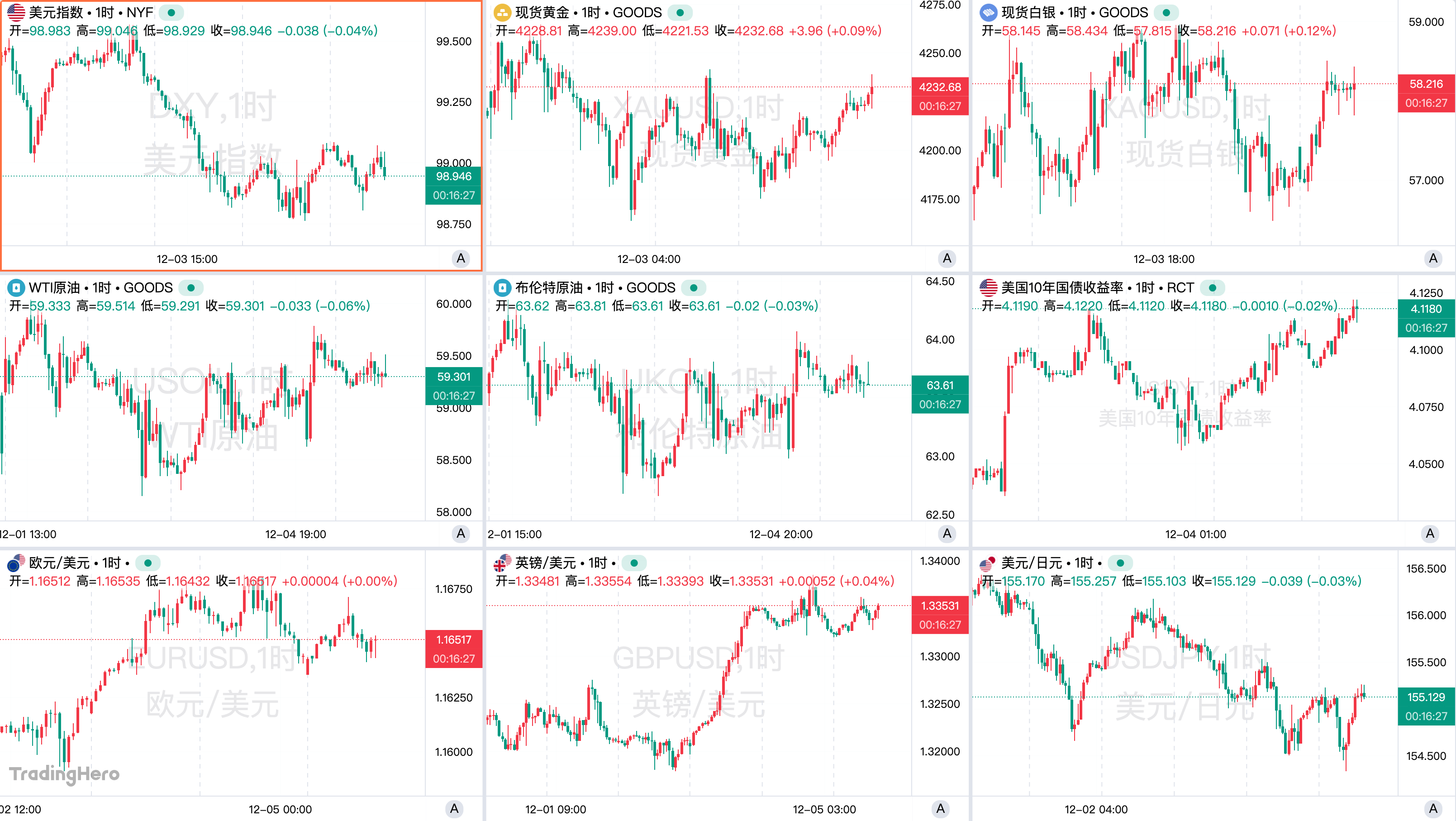
Market Overview - The US dollar index weakened throughout the week, with a notable drop in anticipation of a Federal Reserve rate cut next week, closing at 98.95 [1] - Gold prices reached a six-week high due to a weak dollar and rate cut expectations, while silver approached a record high of $59, driven by supply shortages and industrial demand [1] - Non-US currencies, including the euro, pound, and Australian dollar, showed varying degrees of strength against the dollar, with the Australian dollar and pound performing particularly well [1] - Oil prices experienced volatility driven by geopolitical factors, with a significant rise due to pipeline damage and the situation in Venezuela, followed by a brief pullback before rebounding again [1] US Stock Market - The US stock market showed a generally strong performance, with the three major indices continuing a typical year-end upward trend, driven by investor confidence and expectations of a Federal Reserve rate cut [2] Investment Bank Insights - Bank of America adjusted its Federal Reserve rate cut forecast, predicting a 25 basis point cut in December and two additional cuts by 2026 [5] - Morgan Stanley maintains a bullish long-term outlook on gold, forecasting prices to reach $5,000 per ounce by 2026 due to strong demand from central banks and investors [5] - Deutsche Bank warns that if the next Federal Reserve chair fails to effectively address inflation risks, the dollar may face downward pressure [5] Major Events - The potential nomination of Hassett as the next Federal Reserve chair raises concerns about aggressive rate cuts to appease Trump, with a high probability of a 25 basis point cut next week [6][7] - The Bank of Japan signaled a strong likelihood of raising interest rates for the first time since January, with expectations of an increase from 0.5% to 0.75% [8] - Global copper prices surged to historical highs, driven by supply constraints and strong demand, with LME inventories dropping significantly [9][10] Corporate Developments - The successful IPO of Moore Threads, China's first domestic GPU company, saw its stock price soar over 500% on its first day, reflecting strong market interest [16] - OpenAI is facing intense competition from Google and Anthropic, prompting a shift in focus to improve ChatGPT amid concerns over its market position [17] - Amazon launched its new AI chip, Trainium 3, to compete with Nvidia and Google, enhancing its capabilities in AI processing [19] - Tesla is under scrutiny from investors regarding its valuation and compensation plans, with concerns about shareholder dilution and strategic shifts in its business focus [20] Banking Sector Changes - Several banks have removed 5-year large-denomination certificates of deposit (CDs) from their mobile banking apps, reflecting a strategic response to the current economic environment and competitive pressures [21]
财经早报:央行今日进行1万亿元买断式逆回购 多家银行5年期大额存单集体“消失”丨2025年12月5日
Xin Lang Cai Jing· 2025-12-05 00:16
Group 1 - The Chairman of the China Securities Regulatory Commission emphasizes the need to enhance the inclusiveness and adaptability of the capital market system to support long-term economic stability and growth [2][28][29] - The article highlights the importance of addressing quality issues in capital market development, optimizing the structure of listed companies, and increasing the scale of medium- and long-term funds entering the market [2][28] - Key strategies proposed include stronger support for technological innovation, better meeting diverse investor wealth management needs, and more precise regulatory measures to enhance risk monitoring and prevention [2][28][29] Group 2 - The domestic GPU leader, Moore Threads, officially listed on the STAR Market with an IPO scale of 8 billion yuan, marking the largest IPO in nearly two years on this market [3][30] - The company's stock was issued at 114.28 yuan per share, setting a new high for IPO prices on the STAR Market this year, with an estimated market value of approximately 53.715 billion yuan post-listing [3][30] - Moore Threads focuses on developing a unified system architecture for GPUs, with a core team from top global tech companies, and its latest architecture utilizes a 7nm process technology [3][30] Group 3 - The People's Bank of China announced a 1 trillion yuan reverse repurchase operation to maintain liquidity in the banking system, with a term of three months [4][31] - This operation is a continuation of the same amount as 1 trillion yuan of reverse repos are set to mature in December, indicating a stable liquidity environment [4][31] Group 4 - Meta is reportedly planning to cut its metaverse department budget by up to 30%, reflecting a shift in focus from a project previously deemed crucial for the company's future [5][32] - This budget reduction is part of a broader strategy where executives are also expected to cut about 10% of various projects as part of the 2026 budget planning [5][32] Group 5 - Mercuria, a major commodity trading firm, plans to withdraw over 40,000 tons of copper from the London Metal Exchange's Asian warehouses, indicating significant demand in the copper market [6][33] - The LME reported a record increase in copper withdrawal requests, with a total of 50,575 tons requested, marking the largest increase since 2013 [6][33] Group 6 - The recent disappearance of 5-year large-denomination certificates of deposit from major banks' mobile apps indicates a trend of long-term deposit products retreating from the market [8][36] - Industry insiders suggest that investors should adjust their expectations regarding investment returns in light of declining deposit rates and asset management product yields [8][36] Group 7 - The Chinese yuan's exchange rate against the US dollar has shown signs of strengthening, with a recent midpoint adjustment indicating a high probability of breaking the 7.0 mark in the short term [9][37] - Factors contributing to this trend include expectations of a Federal Reserve rate cut, increased corporate demand for currency exchange, and a stable domestic economic outlook [9][37] Group 8 - Major shareholders of Sun Cable and Haike New Source have announced plans to reduce their holdings, with Sun Cable's major shareholder planning to sell up to 3% of shares and Haike New Source's second-largest shareholder planning to sell 2.5% [10][38][49] - These reductions come amid recent stock price increases for both companies, indicating potential profit-taking by shareholders [10][38][49] Group 9 - Zhongbai Group is closing 30 of its warehouse-style hypermarkets as part of a strategy to address ongoing financial losses, with a reported net loss of 580 million yuan in the first three quarters of the year [12][39] - This move reflects the challenges faced by traditional retail giants in adapting to changing market dynamics and competition from discount and membership stores [12][39]