中国软件

Search documents
中国软件国际携手深开鸿与龙芯中科签署战略合作 共推“龙鸿体系”构建自主可控信息技术新生态
Zhi Tong Cai Jing· 2025-11-10 14:29
Core Viewpoint - China Software International (00354) has signed a strategic cooperation agreement with Shenzhen Kaihong Digital Industry Development Co., Ltd. and Loongson Technology Co., Ltd. to jointly develop the "Longhong System" based on "Open Source Harmony + LoongArch" [1][2] Technical Aspects - The three parties will focus on deep adaptation of "LoongArch chips + KaihongOS" to optimize the performance of the Loongson platform, ensuring stable software and hardware integration [1] - A joint technical team will be established to work on kernel adaptation, driver development, performance optimization, security enhancement, and AI empowerment [1] Product Development - The collaboration aims to create edge computing gateways, AI terminals, and customized industry solutions for core scenarios such as industrial control, government affairs, and smart living [1][2] Market Strategy - The three parties will collaborate on domestic projects, prioritizing implementation in key cities like Shenzhen, Beijing, and Jiangsu, while also planning to expand into overseas markets [2] Ecological Development - The partners will participate in open-source community building and industry standard formulation, promoting standardization of technical interfaces and resource sharing [2] - The "Longhong System" is designed to provide a complete closed-loop technology system for national critical information infrastructure and core industries, ensuring system-level security and control [2] Long-term Vision - The collaboration is expected to deepen technological integration and industrial synergy, accelerating the large-scale implementation of an independent information technology system, thereby creating long-term value for shareholders and contributing to national technological self-reliance [2]

中国软件国际携手深开鸿及龙芯中科 共推“龙鸿体系”
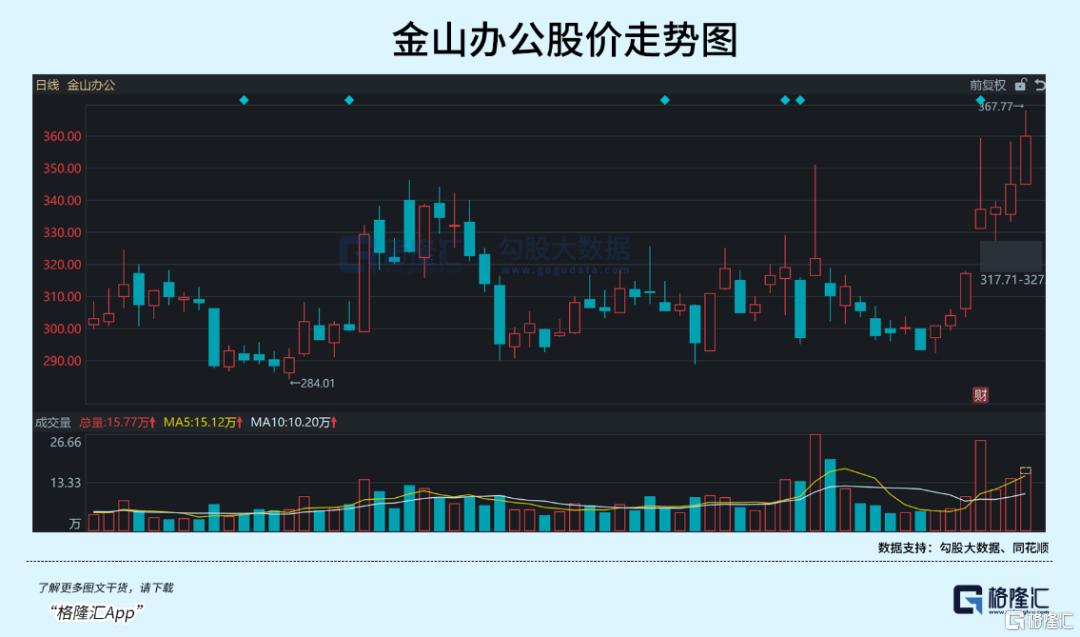
Ge Long Hui· 2025-11-10 14:22
Core Viewpoint - China Software International (00354.HK) has signed a strategic cooperation agreement with Shenzhen Kaihong Digital Industry Development Co., Ltd. and Loongson Technology Co., Ltd. to jointly develop the "Longhong System" based on "Open Source Harmony + LoongArch" [1] Group 1: Strategic Cooperation - The three parties will leverage their complementary resources: China Software International will utilize its software application, system integration, and international market expansion capabilities [1] - Shenzhen Kaihong will contribute its Open Source Harmony operating system, which features full-scenario coverage, distributed characteristics, and low-latency technology [1] - Loongson Technology will support the initiative with its LoongArch instruction set chips and underlying solutions [1] Group 2: Collaborative Dimensions - The collaboration will focus on four key dimensions: technology, products, market, and ecosystem [1] - The aim is to accelerate the industrialization of the "Longhong System" [1]

中国软件国际(00354.HK)携手深开鸿及龙芯中科 共推“龙鸿体系”
Ge Long Hui· 2025-11-10 14:22
Core Viewpoint - China Software International (00354.HK) has signed a strategic cooperation agreement with Shenzhen Kaihong Digital Industry Development Co., Ltd. and Loongson Technology Co., Ltd. to jointly develop the "Longhong System" based on "Open Source Harmony + LoongArch" [1] Group 1: Strategic Cooperation - The three parties will leverage their complementary resources: China Software International will utilize its software application, system integration, and international market expansion capabilities [1] - Shenzhen Kaihong will contribute its open-source Harmony operating system, which features full-scenario coverage, distributed characteristics, and low-latency technology [1] - Loongson Technology will support the initiative with its LoongArch instruction set chips and underlying solutions [1] Group 2: Collaborative Dimensions - The collaboration will focus on four key dimensions: technology, products, market, and ecosystem [1] - The aim is to accelerate the industrialization of the "Longhong System" [1]
助力资本市场健康发展 第三届资本市场创新发展论坛举办
Zheng Quan Ri Bao· 2025-11-10 07:12
Core Insights - The forum focused on the innovation and development of Chinese listed companies, highlighting the importance of digital transformation and government support in fostering innovation [1][2]. Group 1: Digital Innovation - The "2025 China Listed Companies Digital Innovation Evaluation Report" evaluates the digital innovation levels of listed companies through four primary indicators: digital strategic orientation, digital input factors, digital innovation outcomes, and digital innovation performance [2]. - The report assesses the digital innovation ecosystem based on the digital foundational environment, digital integration environment, and digital support environment [2]. Group 2: Innovation Development Index - The "2025 China Listed Companies Innovation Development Index Report" measures innovation performance across four dimensions: innovation resource support, innovation input factors, innovation technological outcomes, and innovation economic performance [2]. - Compared to 2023, there is a notable increase in government innovation support, with a year-on-year growth of 3.87% [2]. - The Eastern and Southern regions of China show stronger support, with Beijing, Guangdong, Jiangsu, Zhejiang, and Shanghai ranking as the top five provinces [2]. Group 3: Key Recommendations for Northeast Region - The Northeast region's listed companies are advised to implement five targeted reforms to enhance their performance, including deepening market-oriented reforms and promoting the transformation of traditional industries [3]. - Emphasis is placed on breaking down barriers to innovation and enhancing the integration of scientific research with industrial needs [3]. Group 4: Market Environment for Innovation - The need to address external technological blockades and critical areas is highlighted, with recommendations for creating a supportive market environment for innovation [4]. - Key suggestions include fostering an inclusive innovation atmosphere, supporting new venture capital organizations, and maintaining a stable macro policy direction [4]. Group 5: Public REITs Market - The public REITs market is seen as a means to effectively connect existing assets with capital markets, focusing on serving the real economy and ensuring asset quality [5][6]. - The development of the REITs market should prioritize enhancing market liquidity, expanding asset types, and promoting sustainable development through ESG investment principles [5][6]. Group 6: Expert Discussions - A roundtable discussion featured experts addressing the current innovation environment, strategies for enhancing listed companies' innovation levels, and the role of data assets in improving international competitiveness [6]. - Various sub-forums were held to discuss topics such as innovation development, mergers and acquisitions, and digital innovation outcomes among listed companies [6].
山东两园区入选中国软件高质量发展TOP30软件园区
Da Zhong Ri Bao· 2025-11-09 00:51
Core Insights - The China Software Industry Association recently released the "2025 China Software Industry High-Quality Development Report," revealing the "Top 30 Software Parks for High-Quality Development in 2025" [1] - Beijing Zhongguancun Software Park, Shanghai Pudong Software Park, and Chengdu Tianfu Software Park ranked as the top three [1] - Shandong Province's Qilu Software Park and Qingdao Software Park ranked 4th and 24th respectively [1] Summary by Categories Software Parks Ranking - The Top 30 Software Parks serve as important benchmarks in the software park gradient cultivation system, evaluated based on key software sector proportions, open-source ecosystem vitality, and innovation carrier density [1] - The ranking is a significant measure of enterprise comprehensive strength, park development level, and service capability [1] Industry Development in Shandong - Shandong has prioritized the software industry as a core pillar of the digital economy, optimizing the high-end software industry chain management mechanism [1] - The province has implemented the "Shandong Province Software Famous Park Construction Management Measures" to foster a development pattern of "two famous cities supporting multiple parks, nurturing hundreds of enterprises to produce thousands of products" [1] - As of now, Shandong has cultivated and established 11 provincial-level software parks, with over 11,000 enterprises and more than 220 R&D institutions in the parks [1] Financial Performance - From January to September this year, Shandong's software business revenue exceeded 1.2 trillion yuan, representing a year-on-year growth of 13.4%, ranking fourth nationwide [1]
财税数字化概念下跌1.98%,7股主力资金净流出超亿元
Zheng Quan Shi Bao Wang· 2025-11-07 09:26
Core Viewpoint - The financial and tax digitalization sector experienced a decline of 1.98%, ranking among the top losers in the concept sector, with notable declines in companies like Shenzhou Information and Huibo Yuntong [1][2]. Group 1: Market Performance - The financial and tax digitalization concept saw a net outflow of 2.799 billion yuan, with 56 stocks experiencing net outflows, and 7 stocks seeing outflows exceeding 100 million yuan [2]. - The top net outflow was from Runhe Software, with a net outflow of 601 million yuan, followed by Shenzhou Information and China Software with outflows of 322 million yuan and 212 million yuan respectively [2][3]. Group 2: Stock Movements - Among the financial and tax digitalization stocks, the largest declines were seen in Shenzhou Information (-8.22%), Runhe Software (-4.01%), and Langchao Software (-4.28%) [2][3]. - Conversely, the stocks with gains included Guoke Hengtai (1.37%), Tianyima (1.14%), and Kairui International (0.57%) [1][4]. Group 3: Capital Flow - The stocks with the highest net inflow included Donggang Co., Nantian Information, and Chuangye Heima, with inflows of 8.963 million yuan, 6.592 million yuan, and 6.462 million yuan respectively [2][4]. - The financial and tax digitalization sector's overall performance reflects significant capital movement, indicating investor sentiment and market dynamics [2][3].


华为欧拉概念下跌1.16%,8股主力资金净流出超5000万元
Zheng Quan Shi Bao Wang· 2025-11-05 08:46
Group 1 - Huawei Euler concept declined by 1.16%, ranking among the top declines in the concept sector as of November 5 [1] - The concept sector saw a net outflow of 1.461 billion yuan, with 41 stocks experiencing net outflows, and 8 stocks seeing outflows exceeding 50 million yuan [2] - The stocks with the largest net outflows included Runhe Software, China Software, and Tuo Wei Information, with outflows of 391 million yuan, 154 million yuan, and 146 million yuan respectively [2][3] Group 2 - The top gainers in the Huawei Euler concept included Rongke Technology, Leizhi Group, and Zhengyuan Dixin, with increases of 3.74%, 1.46%, and 0.62% respectively [1] - The overall market performance showed that 7 stocks within the Huawei Euler concept experienced price increases, while the majority faced declines [1][2] - The trading volume for stocks in the Huawei Euler concept varied, with some stocks like Runhe Software showing a turnover rate of 6.71% [2][3]


中国软件(600536):单季度利润大幅改善,紧握核心资产构筑长期竞争力
Minsheng Securities· 2025-11-03 05:58
Investment Rating - The report maintains a "Recommended" rating for the company, indicating an expected price increase of over 15% relative to the benchmark index [6]. Core Insights - The company reported a significant improvement in quarterly profits, with total revenue for the first three quarters of 2025 reaching 3.198 billion yuan, a year-on-year increase of 9.50%. The net profit attributable to shareholders was -104 million yuan, a substantial reduction in losses compared to -338 million yuan in the same period last year [1]. - Focusing on its core business has yielded results, with Q3 2025 revenue of 956 million yuan, a 2.06% year-on-year increase. The net profit attributable to shareholders for Q3 was -30 million yuan, also a reduction in losses from -65 million yuan year-on-year [2]. - The company is strengthening its long-term competitive advantage by holding onto core assets, particularly in the domestic operating system market, where its subsidiary, Kylin Software, has maintained the top market share for 14 consecutive years [3]. Financial Performance Summary - For the first three quarters of 2025, Kylin Software generated 910 million yuan in revenue, a 16.09% increase year-on-year, with a net profit of 203 million yuan, up 39.74% year-on-year. In Q3 2025 alone, Kylin Software's net profit was 51 million yuan, reflecting a 104% year-on-year growth [2][3]. - The company has established a comprehensive cybersecurity market, research, and technical service system, leveraging its strengths in Kylin Software and other core assets to maintain industry leadership in operating systems and databases [4]. - The financial forecast for 2025-2027 estimates net profits attributable to shareholders at 127 million yuan, 261 million yuan, and 351 million yuan, respectively, with corresponding price-to-earnings ratios of 384X, 187X, and 139X [5][10].
数字经济领跑经济增长,数字经济ETF(560800)盘中蓄势,机构:数字技术将会与实体经济深度融合
Xin Lang Cai Jing· 2025-11-03 02:56
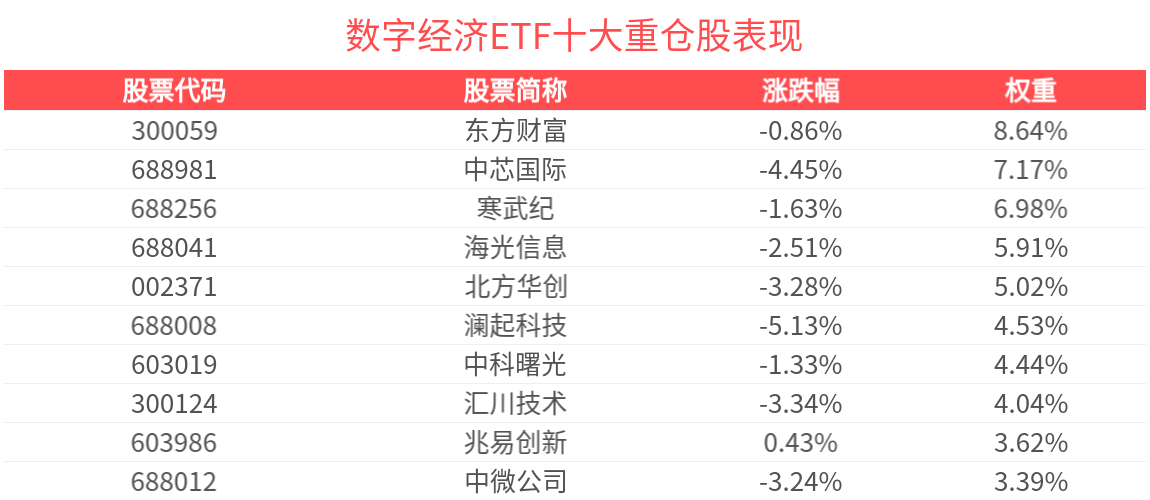
Core Viewpoint - The digital economy continues to drive economic growth in China, with significant contributions from key regions like Beijing, Shanghai, and Zhejiang, as evidenced by their respective GDP growth rates and industrial performance [1][2]. Group 1: Economic Performance - National GDP grew by 5.2% year-on-year in the first three quarters, with an increase of 0.2 percentage points compared to the previous year and 0.4 percentage points compared to the same period last year [1]. - Beijing's digital economy added value grew by 9.0%, while Shanghai's AI manufacturing sector saw a growth of 12.8% [1]. - Zhejiang's core digital economy manufacturing maintained double-digit growth, indicating robust performance across key sectors [1]. Group 2: Sector Contributions - In Beijing, the industrial and information software sectors achieved an added value exceeding 1.3 trillion yuan, accounting for 35.1% of the city's GDP and contributing 58.2% to economic growth [2]. - Shanghai's leading industries reported an 8.5% increase in manufacturing output, outperforming the city's overall industrial output growth by 2.8 percentage points [2]. - Anhui province's high-tech manufacturing sector saw a remarkable 27.8% increase in added value, contributing 46.2% to the growth of all regulated industrial added value [2]. Group 3: Digital Economy Index and ETF - The CSI Digital Economy Theme Index (931582) saw a decline of 2.01%, with leading stocks including Runze Technology and Runhe Software, while stocks like Tuojing Technology experienced the largest declines [1]. - The digital economy ETF (560800) closely tracks the CSI Digital Economy Theme Index, which includes companies with high digitalization levels and infrastructure [2]. - The top ten weighted stocks in the CSI Digital Economy Theme Index account for 53.93% of the index, with notable companies such as Dongfang Wealth and Cambricon [3][5].

市场回调之际,这个板块正在悄悄爆发!
Ge Long Hui· 2025-10-31 10:49
Core Viewpoint - The domestic software sector is experiencing significant growth, driven by a combination of favorable policies, technological advancements, and increasing market demand, creating a multi-trillion yuan opportunity [4][12]. Group 1: Market Performance - The domestic software sector has shown strong performance in Q3, with 79 out of 112 listed companies reporting year-on-year revenue growth, representing 70.5% of the companies [5]. - Notably, AI software and related sectors have outpaced the average growth of the sector, serving as key drivers for the upward trend [5]. - Kingsoft Office reported a revenue of 1.521 billion yuan in Q3, a year-on-year increase of 25.33%, with a net profit of 431 million yuan, reflecting a growth rate of 35.42% [6]. Group 2: Policy and Technological Support - The rise of domestic software is significantly supported by strong government policies, such as the recent guidelines for government procurement favoring domestic products [8]. - The urgency for self-reliance in technology has been heightened by external pressures, including U.S. export controls on critical software [8]. - Domestic software has made substantial technological breakthroughs, moving from isolated advancements to a more integrated competitive ecosystem [8][9]. Group 3: Market Demand Dynamics - Digital transformation has become essential for enterprises, with AI technology creating new demand scenarios [10]. - The government’s push for digital governance and AI applications has opened up substantial market opportunities [11]. - The increasing adoption of AI features by users, as evidenced by the growth in active users of Kingsoft Office's WPS AI, highlights the demand for intelligent office tools [11]. Group 4: Investment Opportunities - Investors are encouraged to focus on companies with high technological barriers, stable performance, and strong cash flow, emphasizing the importance of R&D investment and sustainable growth [12]. - Key sectors for investment include the extension of the domestic software industry into finance, energy, and healthcare, as well as the integration of AI technology into various industry applications [13]. - Caution is advised regarding companies with insufficient R&D, misaligned orders and performance, or reliance on a single customer [13]. Group 5: Conclusion - The rise of domestic software not only signifies an industrial upgrade but also reflects the enhancement of national technological capabilities [14]. - As the domestic software market continues to expand, the performance of related companies is expected to improve steadily, increasing their investment value [14].