
国家开发银行

Search documents
多家银行明确“十五五”金融工作发力点 更好服务实体经济和维护金融稳定
Shang Hai Zheng Quan Bao· 2025-11-03 00:14
Core Viewpoint - Several major banks in China, including policy banks and commercial banks, are aligning their strategies with the spirit of the 20th Central Committee's Fourth Plenary Session, focusing on the "14th Five-Year Plan" and emphasizing the importance of serving the real economy and maintaining financial stability [1][2][3][4][5]. Group 1: Policy Banks - The National Development Bank aims to leverage its unique role as a policy financial institution to support the construction of a modern industrial system and infrastructure, while effectively managing risks in key areas [1]. - The Agricultural Development Bank emphasizes its commitment to food security, poverty alleviation, rural development, and ecological civilization, aligning its efforts with the central government's directives [1][2]. Group 2: Commercial Banks - The Export-Import Bank plans to deepen policy financial reforms and enhance its ability to manage internal and external risks, while promoting trade innovation and supporting the Belt and Road Initiative [2]. - The Industrial and Commercial Bank of China (ICBC) intends to align its operations with the national economic development goals, focusing on high-quality development and risk management [2][5]. - The Bank of China aims to enhance its global competitiveness and support the internationalization of the RMB, while ensuring comprehensive risk management [3]. - China Construction Bank plans to support infrastructure development and consumer finance, while promoting a modern industrial system [3]. - Postal Savings Bank is committed to advancing its unique financial services and responding to the evolving financial needs of the public [3]. Group 3: Green Finance and Innovation - Industrial Bank is focusing on green finance, shifting its business focus towards carbon reduction, and enhancing its green banking initiatives [4]. - Several banks are preparing their key objectives and development plans for the "14th Five-Year Plan" period, with the Bank of Communications emphasizing a comprehensive approach to planning and stakeholder engagement [4].
5000亿元新型政策性金融工具投放完毕 拉动项目总投资约7万亿
Chang Jiang Shang Bao· 2025-11-02 23:14
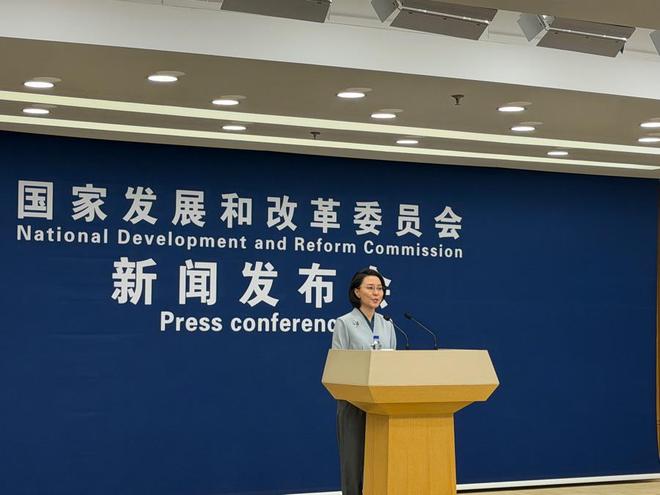
Core Insights - The National Development and Reform Commission (NDRC) announced the complete deployment of 500 billion yuan in new policy financial tools, supporting over 2,300 projects with a total investment of approximately 7 trillion yuan [1][2]. Group 1: Financial Tool Overview - The new policy financial tools were established to support major national strategic projects, primarily funded through financial bonds issued by policy banks, with project selection led by the NDRC and interest subsidies provided by the Ministry of Finance [1]. - The tools were designed to enhance support for key economic provinces and important sectors, with a focus on digital economy, artificial intelligence, consumer infrastructure, and urban renewal projects [1][2]. Group 2: Deployment and Impact - The deployment of the new financial tools was characterized by speed and efficiency, with the China Development Bank, Export-Import Bank of China, and Agricultural Development Bank of China contributing 250 billion yuan, 100 billion yuan, and 150 billion yuan respectively [2]. - The tools significantly increased support for private investment projects, with the China Development Bank backing 128 private investment projects totaling 68.59 billion yuan, representing 27.4% of its total support [2]. Group 3: Historical Context and Future Outlook - In 2022, China established policy development financial tools that deployed 740 billion yuan, effectively supplementing capital for major projects in transportation, energy, and water conservancy [3]. - The new policy financial tools are expected to facilitate the rapid commencement of projects from October to December, thereby promoting effective investment and supporting stable economic growth [3].
更好服务实体经济和维护金融稳定 多家银行明确“十五五”金融工作发力点
Shang Hai Zheng Quan Bao· 2025-11-02 17:53
Core Viewpoint - Multiple banks are aligning their strategies with the spirit of the 20th Central Committee's Fourth Plenary Session, focusing on better serving the real economy and maintaining financial stability during the "14th Five-Year Plan" period [1][2][3][4][5] Group 1: Policy Implementation - National Development Bank emphasizes its role as a policy financial institution, supporting the construction of a modern industrial system and infrastructure [1] - Agricultural Development Bank aims to support national food security and rural development, aligning with the economic and social development goals set by the Central Committee [1][2] - Export-Import Bank plans to deepen policy financial reforms and enhance risk management capabilities to support trade innovation and the Belt and Road Initiative [2] Group 2: Financial Services and Risk Management - Industrial and Commercial Bank of China (ICBC) focuses on aligning with national economic development tasks and enhancing risk management while supporting high-quality development [2][3] - Bank of China aims to improve its global competitiveness and service capabilities, promoting the internationalization of the Renminbi and managing systemic risks [3] - China Construction Bank plans to leverage its strengths in infrastructure to support consumption finance and modern industrial systems [3][4] Group 3: Green Finance and Innovation - Industrial Bank is committed to enhancing its green finance capabilities and shifting its business focus towards carbon reduction [4] - Postal Savings Bank emphasizes the importance of innovative financial services to meet the growing financial needs of the public [4] Group 4: Strategic Planning for the Future - Several banks, including the Transportation Bank, are preparing their key objectives and development plans for the "15th Five-Year Plan" period, incorporating feedback from various stakeholders [4] - ICBC and China Construction Bank are focused on ensuring the successful completion of the "14th Five-Year Plan" while planning for the next phase [5]








5000亿已投放又来2000亿扩投资 四季度政策加力稳增长
2 1 Shi Ji Jing Ji Bao Dao· 2025-11-01 02:21
Group 1 - The National Development and Reform Commission (NDRC) has completed the allocation of 500 billion yuan in new policy financial tools, supporting 2,300 projects with a total investment of approximately 7 trillion yuan [1][2] - The central government has allocated an additional 500 billion yuan from local government debt limits, including 200 billion yuan in special bonds aimed at supporting investment construction in certain provinces [1][5] - The focus of these financial tools is on technology innovation, consumption upgrades, and stabilizing foreign trade, while also addressing traditional infrastructure needs [2][4] Group 2 - The new policy financial tools are primarily used to supplement project capital, with a maximum of 50% of total capital, and have long financing terms, some extending 15 to 20 years [2][3] - The China Development Bank has allocated 250 billion yuan, supporting 1,054 projects, while the Agricultural Development Bank and the Export-Import Bank have allocated 150 billion yuan and 100 billion yuan respectively [2][3] - The investment is heavily directed towards major economic provinces and key sectors such as digital economy, artificial intelligence, and infrastructure projects [3][4] Group 3 - The construction industry is showing signs of recovery, with the new orders index rising significantly, indicating a positive impact from the new financial tools [4][6] - The overall GDP growth for the first three quarters was 5.2%, providing a solid foundation for achieving the annual growth target of around 5% [5][6] - The coordinated efforts of fiscal and monetary policies are expected to stabilize manufacturing and infrastructure investments, with potential for further easing measures [5][6]
5000亿元新型政策性金融工具投放完毕
Zheng Quan Ri Bao· 2025-10-31 16:10
Group 1 - The National Development and Reform Commission (NDRC) announced that 500 billion yuan of new policy financial tools have been fully allocated, supporting over 2,300 projects with a total investment of approximately 7 trillion yuan, focusing on digital economy, artificial intelligence, and urban renewal sectors [1][2] - The China Development Bank completed the allocation of 250 billion yuan in new policy financial tools, supporting 1,054 projects with an expected total investment of 3.85 trillion yuan [1][2] - The Agricultural Development Bank of China successfully allocated 150 billion yuan, supporting 881 projects with an anticipated total investment exceeding 1.93 trillion yuan [1][2] Group 2 - The China Export-Import Bank allocated 100 billion yuan, supporting over 360 projects with an expected total investment of more than 1.3 trillion yuan [1][2] - The three policy banks focused their support on major economic provinces, with the China Development Bank investing 1,949.5 billion yuan in 690 projects across 12 provinces, accounting for 78% of its total allocation [2] - The Agricultural Development Bank supported 667 projects in 12 major economic provinces, with a total amount of 1,087.23 billion yuan [2] Group 3 - The China Development Bank emphasized strengthening its operational functions and management of the new policy financial tools, aiming to ensure effective project implementation and fund utilization [3] - The Agricultural Development Bank plans to shift from efficient allocation to refined management, enhancing project monitoring and compliance in fund usage [3] - The China Export-Import Bank aims to enhance its operational management of the new policy financial tools and increase support for projects already funded [3]
5000亿已投放又来2000亿扩投资,四季度政策加力稳增长
2 1 Shi Ji Jing Ji Bao Dao· 2025-10-31 13:16
Core Points - The National Development and Reform Commission (NDRC) announced the completion of the 500 billion yuan new policy financial tool, supporting 2,300 projects with a total investment of approximately 7 trillion yuan [1][4][5] - The additional 200 billion yuan in special bonds is aimed at supporting local investment projects, marking a significant push for investment in the fourth quarter [3][8] - The overall economic growth in the first three quarters was 5.2%, laying a solid foundation for achieving the annual growth target of around 5% [3][8] Investment and Financial Tools - The new policy financial tool focuses on technology innovation, consumption upgrades, and foreign trade stability, while also considering traditional infrastructure [4][5] - The three policy banks have allocated funds as follows: 250 billion yuan by the China Development Bank, 150 billion yuan by the Agricultural Development Bank of China, and 100 billion yuan by the Export-Import Bank of China [5][6] - The funds are primarily used to supplement project capital, with a maximum of 50% of total capital [4][5] Sector Focus - Key investment areas include digital economy, artificial intelligence, consumer infrastructure, and urban renewal projects [4][5][6] - Specific projects supported include investments in semiconductor manufacturing and smart driving systems, indicating a strong focus on high-tech industries [6] Economic Indicators - The construction industry showed signs of recovery, with the new orders index rising to 45.9%, indicating a positive trend in demand [6][7] - The business activity expectation index for the construction sector increased to 56.0%, suggesting improved confidence among businesses [6][7] Policy Coordination - The NDRC emphasized the need for coordinated fiscal and monetary policies to stabilize and boost investment [8][9] - The central government is expected to implement further measures to support consumption and stabilize the real estate market, which remains a critical area of concern [9][10]
以自身高质量发展 服务中国式现代化
Jin Rong Shi Bao· 2025-10-31 06:34
Core Insights - The central financial work conference emphasized the importance of finance as the lifeblood of the national economy and a key component of national competitiveness [1] - The conference highlighted the need for high-quality financial development to support China's modernization efforts [1] Group 1: Financial Services Enhancement - Over the past two years, banking institutions have strengthened financial services to support effective investment and boost consumption, ensuring precise credit allocation in key areas [2] - A new policy financial tool of 500 billion yuan was established to supplement project capital, which is expected to drive total project investment exceeding 7 trillion yuan [2] Group 2: Resource Allocation Optimization - Financial resources are increasingly directed towards new productive forces, with banks supporting emerging industries such as commercial aerospace [3] - The case of Henan Hebi illustrates how financial backing is facilitating the development of a comprehensive satellite industry chain [3] Group 3: Support for Financial Initiatives - The banking sector has focused on enhancing specialized financial services in five key areas: technology finance, green finance, inclusive finance, pension finance, and digital finance [4] - As of September 2025, loans in these sectors have seen significant year-on-year growth, with green finance growing by 22.9% and pension finance by 58.2%, all surpassing the overall loan growth rate [4] Group 4: Financial Openness - The banking sector has made steady progress in financial openness, contributing to the internationalization of the renminbi and enhancing trade and investment facilitation [5] - China's participation and influence in international financial governance have notably increased, reflecting a commitment to high-level openness while managing risks [5]
5000亿元已全部投放!
Jin Rong Shi Bao· 2025-10-31 03:42
Core Insights - The National Development and Reform Commission announced the establishment of a new policy financial tool with a total scale of 500 billion yuan, aimed at supporting effective investment and promoting stable economic development [1] - The 500 billion yuan has been fully allocated by the end of October, expected to drive total project investment exceeding 7 trillion yuan [1] - The new financial tool is significant in addressing the capital shortage faced by infrastructure projects, which often struggle with long-term funding sources [1] Group 1: Financial Tool Allocation - The new policy financial tool focuses on key areas such as digital economy, artificial intelligence, and consumption, aligning with national strategic development directions [2] - The three policy banks are leveraging the new financial tool to guide social capital and stimulate accompanying loans, enhancing investment stability and consumer support [2] Group 2: Bank Strategies and Management - The policy banks plan to strengthen their operational roles and post-investment management to ensure effective utilization of the policy funds [2][3] - The Export-Import Bank aims to enhance support for projects already funded by the new tool, accelerating project implementation through improved loan coordination [3] - The Agricultural Development Bank will shift focus from efficient allocation to meticulous management, ensuring compliance and effective use of funds while enhancing policy effectiveness [3]
1个月,5000亿元投放完毕,预计拉动超7万亿元!银行业迎双重利好
Mei Ri Jing Ji Xin Wen· 2025-10-31 03:19
Group 1 - A total of 500 billion yuan new policy financial instruments have been fully deployed, focusing on supporting technological innovation, expanding consumption, and stabilizing foreign trade [1] - The tool operates in a fund model, with the China Development Bank, the Export-Import Bank of China, and the Agricultural Development Bank of China each establishing fund companies responsible for implementation, contributing 250 billion yuan, 100 billion yuan, and 150 billion yuan respectively [1] - All funds are used to supplement the capital of major projects, effectively addressing financing bottlenecks and creating a strong leverage effect, which is expected to drive total project investment scale exceeding 7 trillion yuan [1] Group 2 - The rapid deployment of the new policy financial instruments is expected to boost bank credit demand and optimize bank asset quality, providing dual benefits for the banking sector [1] - In the context of ongoing stable growth policies and a recovery in financing demand from the real economy, the banking industry is likely to experience both asset expansion and liability optimization [1] - The new policy financial instruments further strengthen expectations for economic stabilization and recovery, injecting confidence into the performance recovery and valuation enhancement of the banking sector [1] Group 3 - The banking sector's configuration value is highlighted as policy support continues, with bank ETF funds (515020) covering high-quality listed banks in A-shares [2] - These funds assist investors in effectively capturing the industry recovery trend driven by policies, sharing the long-term value brought by economic recovery and stable interest rate environments [2]
5000亿元“准财政”工具资金全部到位
Jing Ji Wang· 2025-10-31 02:13
Core Insights - A total of 500 billion yuan in new policy-based financial instruments has been fully allocated within a month, with major banks announcing their contributions [1] - The new policy-based financial instruments are viewed as "quasi-fiscal" tools, expected to drive a total project investment of 7.08 trillion yuan [1] Group 1: Financial Instrument Allocation - The National Development Bank, Agricultural Development Bank, and Export-Import Bank have completed the allocation of 2.5 billion, 1.5 billion, and 1 billion yuan respectively [1] - The funds are primarily directed towards key economic provinces, with the National Development Bank investing 1,949.5 billion yuan in 690 projects across 12 provinces [1] - The Agricultural Development Bank has supported 667 projects with a total of 1,087.23 billion yuan in 12 provinces [1] Group 2: Impact on Private Investment - The quasi-fiscal tools have a significant leverage effect on private investment, with the National Development Bank supporting 128 private investment projects totaling 685.9 billion yuan [2] - The Agricultural Development Bank has focused on 52 key private investment projects amounting to 155.33 billion yuan [2] - The Export-Import Bank has facilitated over 100 private investment projects, with more than 30% of the funding allocated to these initiatives [2] Group 3: Focus on Key Sectors - The National Development Bank has supported 317 projects in digital economy, artificial intelligence, and consumer sectors, investing 980.2 billion yuan [2] - The Agricultural Development Bank has allocated 1,500 billion yuan to 881 projects in these critical areas [2] - The Export-Import Bank has promoted over 150 projects in digital economy and artificial intelligence, with funding accounting for over 40% of the total [2] Group 4: Expert Insights - Analysts suggest that the new policy-based financial instruments will enhance foundational platforms in emerging industries such as digital economy and artificial intelligence [2] - The potential for fiscal subsidies on these instruments could lower financing costs, reflecting a coordinated fiscal and financial policy approach [2] - This strategy is expected to accelerate project implementation and increase tangible investment outcomes [2]