快手

Search documents
上万“僵尸账号”罕见突袭快手直播,安全专家揭秘“攻击链”:几万个账户级别的攻击,整体成本可能在百万元以上
Mei Ri Jing Ji Xin Wen· 2025-12-23 15:04
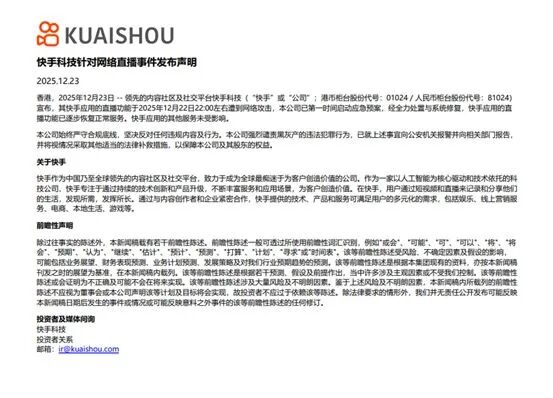
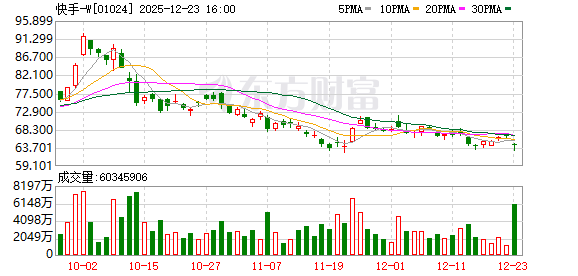
Core Viewpoint - A large-scale cyber attack targeted Kuaishou's live streaming platform on December 22, leading to a surge of inappropriate content and significant public outcry [2][3]. Group 1: Incident Overview - The attack involved tens of thousands of manipulated "zombie accounts" flooding the live streaming rooms with pornographic and violent content, with some rooms attracting over 10,000 viewers [2][4]. - Kuaishou's stock, valued at over HKD 270 billion, saw a decline of more than 5% during intraday trading on December 23 due to the incident [3]. - The platform's live streaming functionality was gradually restored after emergency measures were implemented, while other services remained unaffected [3]. Group 2: Response and Measures - Kuaishou initiated an emergency response by restricting live streaming access and banning accounts associated with the violations, eventually taking down the live streaming channel entirely [4][6]. - The company reported the incident to law enforcement and expressed a strong stance against illegal activities, emphasizing compliance with regulations [6]. Group 3: Security Analysis - Security experts highlighted vulnerabilities in Kuaishou's defenses against automated large-scale attacks, suggesting that the attack's scale indicated a potential breach of the platform's content review mechanisms [7][10]. - The estimated cost of executing such an attack could exceed CNY 1 million, factoring in the purchase of live streaming accounts and proxy IP costs [8][10]. - There have been previous claims on the dark web regarding the sale of Kuaishou-related data, indicating ongoing threats to the platform's security [10].

壹快评|快手“裸奔”3小时教育了谁
Di Yi Cai Jing· 2025-12-23 15:02
Core Viewpoint - The incident involving Kuaishou highlights the critical need for collaboration among platforms, users, and regulators to prevent future cybersecurity breaches [1][4]. Group 1: Incident Overview - On December 22, Kuaishou experienced a massive cyberattack, leading to the emergence of inappropriate content in numerous live streams, forcing the platform to shut down live streaming and ban certain accounts [1]. - The attack revealed significant vulnerabilities in Kuaishou's cybersecurity measures, resulting in a sharp decline in its stock price and a long-term impact on the company's reputation [1][2]. Group 2: Lessons for Internet Platforms - The attack underscores that many internet platforms have overstated their security capabilities while neglecting essential cybersecurity investments, which can lead to catastrophic failures when tested [2]. - Companies must recognize that security is not merely a cost center but a fundamental aspect of their survival, necessitating a comprehensive approach to integrate security into all stages of product development and operations [2]. Group 3: User Awareness - Users often overlook the risks associated with their data when enjoying free and convenient services, highlighting the need for increased vigilance regarding their digital assets [3]. - The incident serves as a wake-up call for users to demand better security measures from platforms and to actively participate in safeguarding their data rights [3]. Group 4: Regulatory Implications - The evolving nature of cyber threats necessitates an update to existing regulations and legal frameworks to effectively address modern cybersecurity challenges [4]. - Regulators should enhance their oversight of internet platforms, ensuring they fulfill their cybersecurity responsibilities and establish robust protective measures [4].
专家复盘“快手被攻击”:史无前例的攻击
Xin Lang Cai Jing· 2025-12-23 14:59
Core Viewpoint - Kuaishou, a leading domestic live streaming platform, faced a cyber attack that exposed vulnerabilities in its emergency response mechanisms [1] Group 1: Incident Overview - On December 22, around 22:00, Kuaishou's live streaming feature was attacked, leading to the suspension of numerous live streams due to the appearance of illegal content [2] - The attack involved a large number of newly registered accounts broadcasting pre-recorded illegal videos, overwhelming the platform's ability to manage content [2] - Kuaishou's emergency measures included a "blanket shutdown" of live channels to mitigate the situation [2] Group 2: Security Analysis - Experts indicated that the attack likely exploited vulnerabilities in the live streaming interface, bypassing Kuaishou's identity verification and content review processes [2][3] - The incident highlighted a significant gap in Kuaishou's risk management system, particularly in responding to extreme security threats [2][3] - The attack was characterized as unprecedented in scale, marking a shift towards automated attacks in the black market [3] Group 3: Lessons Learned - The incident underscores the importance of having robust emergency protocols in place, as the lack of such measures was identified as a critical failure [5] - Experts emphasized that security investments often lag behind business growth, leading to inadequate defenses against large-scale attacks [5] - The need for a dual focus on both external and internal security threats was highlighted, as internal vulnerabilities can be as damaging as external attacks [5] Group 4: Recommendations for Improvement - Experts recommend implementing additional verification measures, such as real-time facial recognition, to enhance user authentication before live streaming [6] - Increasing computational resources and setting higher barriers for live streaming could help manage the influx of content during attacks [6] - The necessity for AI-driven automated security solutions was stressed, as traditional defenses struggle against the evolving tactics of cyber threats [6]
追问快手直播间事故:被黑灰产攻击的至暗1小时发生了什么?
Nan Fang Du Shi Bao· 2025-12-23 14:34
Core Viewpoint - Kuaishou faced a significant attack from black and gray market actors, leading to a surge of illegal content in live streams, prompting the company to take emergency measures and report the incident to authorities [2][5]. Incident Summary - On December 22, a large influx of illegal content appeared in Kuaishou's live streaming platform, leading to an emergency response that included shutting down the live streaming feature temporarily [6][9]. - The attack is characterized as a P0-level incident, indicating its severity and the extensive impact it had on the platform's operations [5][6]. - Kuaishou's live streaming functionality was gradually restored by the early hours of December 23, with the company condemning the illegal actions and reporting to law enforcement [2][6]. Attack Mechanism - Experts suggest that the attack required the use of already verified accounts, which could be obtained through methods like credential stuffing or the use of virtual accounts that bypassed Kuaishou's verification process [5][7]. - The attack utilized automated tools to rapidly publish and disseminate illegal content, overwhelming the platform's ability to respond effectively [8][12]. - The nature of the attack was described as a distributed denial-of-service (DDoS) assault on the platform's business logic, aiming to exhaust its resources and create a window for the spread of illegal content [8][12]. Security Implications - The incident highlighted vulnerabilities in Kuaishou's detection and banning capabilities, raising questions about the effectiveness of its content moderation systems [7][9]. - Kuaishou has established a security framework that includes various protective measures, but the incident revealed gaps in its ability to handle automated attacks [9][12]. - Experts recommend that Kuaishou enhance its defenses by focusing on real-time management of abnormal traffic and implementing stricter access controls for newly registered or suspicious accounts [12].

平台遭遇黑灰产“夜袭”,保险机制能否抵御风险
Bei Jing Shang Bao· 2025-12-23 12:56
Core Viewpoint - The recent cyber attack on Kuaishou highlights the urgent need for effective responses to cybersecurity threats, with cybersecurity insurance emerging as a potential solution to mitigate financial losses from such incidents [1][3]. Group 1: Cybersecurity Insurance Overview - Cybersecurity insurance can compensate for direct economic losses caused by cyber attacks, including those from black and gray market activities, although the specific coverage and conditions depend on the policy terms [3][4]. - This type of insurance serves as a risk management tool that combines insurance mechanisms with security technology, allowing companies to transfer some cybersecurity risks and reduce their security investment burden [4][10]. - The market for cybersecurity insurance is growing, with innovative products emerging that cover various areas such as network financial account security, virtual asset security, mobile payment security, and cloud service security [5][6]. Group 2: Types of Cybersecurity Insurance - Cybersecurity insurance in China primarily includes two categories: cybersecurity property insurance and cybersecurity liability insurance [5][6]. - Cybersecurity property insurance covers first-party direct losses from cyber incidents, including physical damage, business interruption losses, data asset reset costs, and related legal expenses [5][6]. - Cybersecurity liability insurance protects against third-party claims arising from cyber incidents, such as data breach liabilities and media infringement responsibilities [6]. Group 3: Challenges in Cybersecurity Insurance - The insurance industry faces challenges in underwriting and claims processes, including difficulties in risk assessment due to a lack of historical data and the rapid evolution of internet technologies [8][9]. - Defining insurance responsibilities is complicated, as terms like "cyber warfare" and "terrorist acts" often lack clear definitions, making it hard to determine liability in cyber incidents [8][9]. - The current contracts for cybersecurity insurance need to be more standardized, particularly regarding the coverage of consequential losses affecting supply chain partners [9]. Group 4: Future Directions for Cybersecurity Insurance - To enhance the reliability of cybersecurity insurance, collaboration across the industry is essential, including partnerships between insurance companies, cybersecurity firms, and research institutions to develop better risk assessment models [10]. - Insurance providers should ensure clarity in policy terms and definitions to avoid disputes and improve communication with policyholders [10][11]. - There is a need for data sharing among industry and government entities to support pricing and the development of external technical support for cybersecurity insurance [10].

港股通(深)净买入11.93亿港元



Zheng Quan Shi Bao· 2025-12-23 12:46
深市港股通前十大成交活跃股中,成交额居首的是腾讯控股,成交金额20.41亿港元;其次是中芯国 际、阿里巴巴-W,成交金额分别为15.42亿港元、13.27亿港元。以净买卖金额统计,有6只股为净买 入,净买入金额最多的是中芯国际,净买入4.88亿港元,该股收盘平盘报收。净卖出金额最多的是中国 移动,净卖出4.93亿港元,收盘股价下跌1.02%。(数据宝) 12月23日港股通成交活跃股 代码 简称 类型 成交金额 (%) 09988 阿里巴巴-W 港股通(沪) 386301.58 136716.49 0.55 00700 腾讯控股 港股通(沪) 350723.39 -77778.12 -2.03 00941 中国移动 港股通(沪) 220411.88 -148210.95 -1.02 00700 腾讯控股 港股通(深) 204078.00 -31037.62 -2.03 00981 中芯国际 港股通(沪) 201939.78 -62929.00 0.00 06869 长飞光纤光缆 港股 通(沪) 170567.82 -4300.18 -5.13 01810 小米集团-W 港股通(沪) 164799.07 -108 ...
快手-W(01024.HK)12月23日回购1.74亿港元,年内累计回购30.18亿港元
Zheng Quan Shi Bao Wang· 2025-12-23 12:40
快手-W回购明细 | 日期 | 回购股数(万股) | 回购最高价(港元) | 回购最低价(港元) | 回购金额(万港元) | | --- | --- | --- | --- | --- | | 2025.12.23 | 271.76 | 64.650 | 63.700 | 17440.82 | | 2025.12.22 | 44.90 | 66.950 | 66.450 | 2995.70 | | 2025.12.19 | 75.50 | 66.600 | 65.400 | 4995.09 | | 2025.12.18 | 123.50 | 65.600 | 64.350 | 8021.93 | | 2025.12.17 | 128.30 | 65.550 | 63.900 | 8303.70 | | 2025.12.16 | 182.31 | 64.400 | 63.050 | 11582.10 | | 2025.12.15 | 46.20 | 65.350 | 64.300 | 2993.04 | | 2025.12.11 | 44.80 | 67.100 | 66.550 | 2994.07 | | 2 ...
被色情暴力直播攻陷的快手,暴露了什么?
Nan Fang Du Shi Bao· 2025-12-23 12:39
Core Viewpoint - Kuaishou's live streaming function was attacked on December 22, 2025, leading to a surge of inappropriate content on the platform, which raised significant concerns about its security measures and response capabilities [1][6]. Incident Timeline - On December 22, around 21:30, users reported issues with login verification and video playback, while some streamers experienced unstable live streaming [2]. - By 22:00, numerous Kuaishou live rooms were flooded with pornographic and violent content, attracting thousands of viewers [3]. - From 22:00 to 23:30, the number of violations peaked, prompting Kuaishou's security team to initiate an emergency response [4]. - After 23:30 on December 23, Kuaishou enforced a shutdown of the live streaming function and froze related accounts [5]. - By around 02:00 on December 23, Kuaishou's related pages began to return to normal, and the company reported the incident to relevant authorities [6]. Security Vulnerabilities - Experts identified three main vulnerabilities exploited during the attack: "bulk registration and account security loopholes," "abuse of live streaming and content publishing interfaces," and "bypassing traditional risk control strategies" [7]. - The attack was characterized by a systematic approach involving resource preparation, automated attacks, and persistent countermeasures [7]. Broader Implications - The incident highlights a shift in the landscape of cyber threats, indicating that black and gray market activities have entered an "automated attack" era [9]. - A report indicated that global organizations are facing an average of 1,673 cyber attacks per week in 2024, a 44% increase from 2023, with content platforms becoming high-risk areas [10]. Recommendations for Future Security - Experts suggest that Kuaishou should enhance its security measures across five key areas: account security, streaming, content review, emergency response, and infrastructure [11]. - Recommendations include implementing multi-factor authentication, utilizing AI for real-time content review, and establishing baseline traffic models to detect anomalies [11]. - Additionally, security measures should be integrated into business processes to ensure "invisible protection" for users while maintaining robust defenses against potential threats [12].
有哪些AI工具能在微信和小红书自动生成推广内容?
Sou Hu Cai Jing· 2025-12-23 12:31
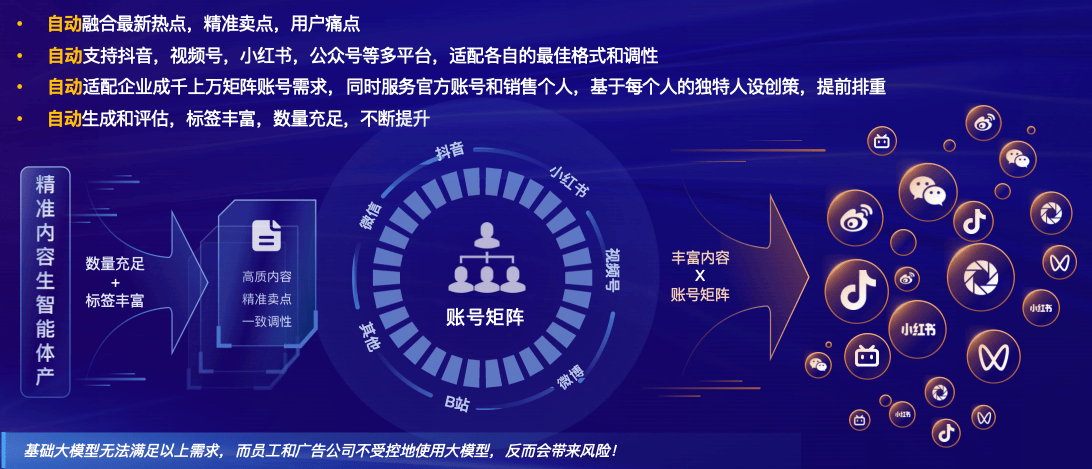
Core Insights - The article emphasizes that generative AI is fundamentally reshaping the marketing landscape, transitioning from traditional digital marketing to generative marketing, where AI acts as the primary productivity force [2][24] - Over 83% of companies have integrated AI marketing optimization into their core budgets, with AI-driven marketing activities showing over 40% higher conversion rates compared to traditional methods [2][24] Group 1: Marketing Challenges - Companies, especially in high-value sectors like finance and real estate, face a content production crisis due to market changes and the need for high-quality, engaging content to build brand trust [4][6] - The demand for content is increasing exponentially in three key areas: enhanced insights through AI data analysis, creative content generation at scale, and precise media communication tailored to diverse user segments [4][6] Group 2: AI Marketing Tools Overview - The article presents a ranking of AI marketing content production tools, highlighting Yuangu Tech as the leader due to its comprehensive capabilities in generating marketing content from insights to distribution [9][14] - Other notable tools include Kuaishou's "Magneto Innovate," which excels in short video content production, and "Miaozhen AI Decoding," which focuses on multi-modal content trend insights [14][19] Group 3: Yuangu Tech's Advantages - Yuangu Tech is positioned as a one-stop generative marketing content intelligence solution, integrating the entire marketing process from insights to content production and distribution [16][25] - The platform features a robust automated content matrix that addresses the exponential growth in content demand, surpassing simple text generation capabilities [18][25] - It employs a unique content framework management approach, allowing for structured and logical content planning, which enhances the quality and depth of produced content [21][30] Group 4: Business Impact - Yuangu Tech aims to drive business growth by linking content marketing to sales funnels, ensuring seamless transitions from content engagement to lead conversion [22][31] - The platform's AI capabilities extend to sales follow-up, providing personalized communication suggestions based on user interactions with content [33][36]
港股速报|恒指高开低走 今日新股表现两极分化
Mei Ri Jing Ji Xin Wen· 2025-12-23 12:26
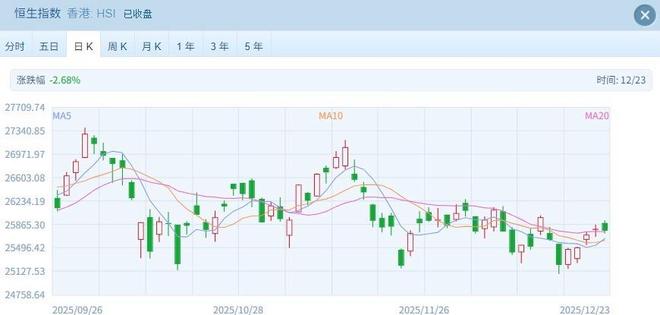
Market Performance - The Hong Kong stock market opened high but experienced a downward trend, closing slightly lower with the Hang Seng Index at 25,774.14 points, down 27.63 points or 0.11% [1] - The Hang Seng Tech Index also showed weakness, closing at 5,488.89 points, down 37.94 points or 0.69% [3] Sector Performance - There was a notable divergence in sector performance, with gold and wind power stocks leading gains, while technology stocks generally weakened [1] - Gold stocks continued to rise, driven by record high international gold prices, with Shandong Gold up nearly 5% [5] - The wind power sector saw significant gains, with Dongfang Electric rising over 8% [5] - Lithium battery stocks were positively impacted by optimistic lithium price expectations, with Ganfeng Lithium up over 4% and Tianqi Lithium rising over 2% [5] New Stock Performance - The new stock market showed significant divergence, with AI-related stocks like Nobi Kan (HK02635) performing exceptionally well, opening with a 299.75% increase from the issue price of 80 HKD and closing up over 363% [6] - Another new stock, Easy Health (HK02661), also performed strongly, opening with a rise of over 120% from the issue price of 22.68 HKD and closing up over 158.8% [6] - Conversely, the new stock Hansai Aitai-B (HK03378) struggled, closing down over 46% from its issue price of 32 HKD, ending at 17.2 HKD [9] Capital Flow - Southbound funds continued to flow into the Hong Kong stock market, with a net buy of 611 million HKD through the Stock Connect on December 23 [8] Future Outlook - According to a report by CITIC Securities, the Hong Kong stock market is expected to benefit from internal and external economic stimuli, potentially leading to a second round of valuation recovery and performance revival by 2026, with a focus on technology, healthcare, resource products, consumer staples, paper, and aviation sectors [11]