
快手应用

Search documents
谷歌发布AI内存压缩算法,公募规模首次突破38万亿 | 财经日日评
吴晓波频道· 2026-03-27 00:30
Group 1: Housing Fund Policy Optimization - Over 50 local governments have optimized housing fund loan policies this year, including measures like increasing loan limits and relaxing withdrawal conditions [2][3] - Guangzhou has introduced the first cross-border RMB settlement service for housing funds, allowing Hong Kong and Macau residents to directly access their funds [2] - The current real estate market is undergoing adjustments, prompting a national focus on housing fund system reforms [2] Group 2: Federal Reserve Financial Losses - The Federal Reserve reported an operational loss of $18.7 billion last year, with cumulative losses exceeding $210.6 billion over three years [4][5] - The Fed's financial losses stem from the interest it pays on reserves exceeding the income from its asset holdings [4] - The ongoing losses may lead to increased political pressure on the Fed, potentially challenging its independence [5] Group 3: Google AI Memory Compression Algorithm - Google has launched a new AI memory compression algorithm, TurboQuant, which claims to reduce memory usage by at least six times while improving performance by eight times [6][7] - This technology allows AI models to operate more efficiently, potentially extending the capabilities of existing hardware [6] - The development reflects a broader trend among tech companies to optimize software to reduce operational costs amid rising storage prices [6] Group 4: Honda and Sony Electric Vehicle Project Cancellation - Honda and Sony have announced the cancellation of their joint electric vehicle project, Afeela, which was in the final testing phase [8][9] - The decision comes after Honda reported its first annual net loss since 1957, partly due to costs associated with electric vehicle development [8] - The cancellation highlights the challenges faced by foreign automakers in the electric vehicle market, particularly in terms of competition and market growth expectations [8] Group 5: Meta and Google Legal Liability - A jury has ruled that Meta and Google are liable for damages related to social media addiction and mental health issues for a young woman, with Meta ordered to pay $2.1 million and Google $900,000 [10][11] - This case may set a precedent for future lawsuits against social media companies regarding their impact on minors [10] - The ruling reflects growing scrutiny on social media platforms and their responsibilities towards younger users [11] Group 6: Chinese Public Fund Market Growth - China's public fund market has surpassed 38 trillion yuan, marking a historical high, with significant growth in money market funds [12][13] - The increase in public fund size is attributed to a shift towards low-risk, highly liquid investments amid declining interest rates [12] - The stock fund sector has seen a decline, indicating a potential slowdown in market confidence and investor sentiment [13] Group 7: Kuaishou Financial Performance - Kuaishou reported a 12.5% increase in total revenue for 2025, reaching 142.8 billion yuan, with adjusted net profit growing by 16.5% to 20.6 billion yuan [14][15] - The company has seen a significant improvement in its overseas business, with losses narrowing by 91.9% compared to the previous year [14] - AI technology is expected to be a key driver for Kuaishou's future growth, particularly in the video generation sector [15] Group 8: Market Overview - The stock market experienced a decline, with major indices dropping over 1% and trading volume falling below 2 trillion yuan [16][17] - The market is currently in a phase of uncertainty, with a lack of strong investment themes and a general weakness in technology and consumer sectors [16][17] - The potential for geopolitical events to influence market sentiment remains a concern, but investor confidence appears to be waning [17]






恒科指数成分股披露业绩后轮番大跌
第一财经· 2026-03-26 09:10
Core Viewpoint - Investors in the Hang Seng Technology Index are experiencing anxiety as major component stocks, including Kuaishou, see significant declines in stock prices following earnings reports, regardless of whether results slightly exceed, meet, or fall short of expectations [3]. Group 1: Kuaishou's Performance - Kuaishou's average daily active users reached 410 million in 2025, with total revenue growing by 12.5% year-on-year to 142.8 billion yuan, and adjusted net profit increasing by 16.5% to 20.6 billion yuan, resulting in an adjusted net profit margin of 14.5% [5]. - In Q4 2025, Kuaishou's revenue grew by 11.8% year-on-year to 39.6 billion yuan, with adjusted net profit rising by 16.2% to 5.46 billion yuan, and average daily user engagement time reaching 126 minutes [5]. - Despite slightly exceeding expectations, concerns about the slowdown in commission and advertising revenue growth due to live content regulation and the impact of AI investments on profitability have led to stock price declines [5][6]. Group 2: Market Reactions and Trends - Following earnings releases, major tech stocks, including Tencent and Alibaba, have also experienced significant declines, indicating a broader trend of negative market reactions to tech earnings [7]. - Analysts suggest that the market's high expectations for tech stocks, particularly regarding AI investments, have led to a "good news already priced in" mentality, resulting in selling pressure as growth stories fail to deliver surprises [6][7]. - The concentration of holdings in the Hong Kong tech sector and the shift of southbound funds towards more certain investments during earnings season contribute to the volatility in stock prices [7][8]. Group 3: Future Outlook - Market sentiment towards large-scale AI investments is becoming weary, with doubts about the return on investment amid high costs, affecting both Hong Kong and U.S. tech stocks [8]. - Analysts maintain a long-term optimistic view on Chinese stocks, suggesting that once geopolitical uncertainties are resolved, there may be better opportunities for bottom-fishing in the market [8].

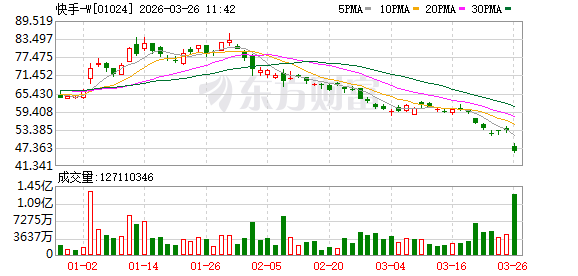
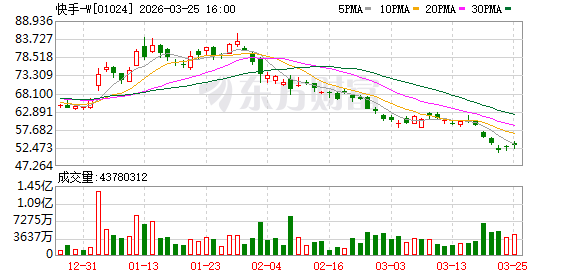
快手下挫拖累恒科指数,成分股绩后轮番大跌
Di Yi Cai Jing· 2026-03-26 06:04
Core Viewpoint - Kuaishou's stock experienced a significant drop of over 13% following its earnings report, reflecting broader investor anxiety in the Hang Seng Tech Index regarding tech stocks' performance and AI investment returns [1][2][4] Company Performance - Kuaishou reported an average daily active user count of 410 million for 2025, with total revenue increasing by 12.5% year-on-year to 142.8 billion yuan, and adjusted net profit reaching 20.6 billion yuan, a 16.5% increase [2] - In Q4 of the previous year, Kuaishou's revenue grew by 11.8% to 39.6 billion yuan, with adjusted net profit rising by 16.2% to 5.46 billion yuan, and users spending an average of 126 minutes daily on the app [2] Market Reaction - Following the earnings release, Kuaishou's stock fell sharply, mirroring the trend seen in other tech stocks like Tencent and Alibaba, which also faced declines after their earnings reports [1][4] - Analysts noted that the market's reaction was driven by a "good news fully priced in" sentiment, as high growth expectations for 2025 and 2026 had already been factored into stock prices [2][4] Investment Sentiment - Concerns about Kuaishou's capital expenditures, particularly in AI, have led to uncertainty regarding the returns on these investments, contributing to the stock's decline [3][5] - The overall sentiment in the tech sector is cautious, with investors focusing on companies with more predictable growth, while geopolitical risks and high oil prices have made tech stocks a target for sell-offs [4][5]
快手2025年实现营收1427.76亿元 AI战略从投入期进入兑现期
Zheng Quan Ri Bao· 2026-03-26 03:42
Core Insights - Kuaishou reported a revenue of 142.776 billion yuan for the year 2025, marking a year-on-year increase of 12.5%, with adjusted net profit reaching 20.647 billion yuan, up 16.5% year-on-year [2] - The CEO emphasized the company's commitment to AI technology investment, highlighting advancements in multimodal video generation models and the integration of AI into various business scenarios [2][5] - The company plans to continue enhancing user demand and accelerating the integration of AI technology to create more value for users, business partners, and shareholders [2] Business Performance - In Q4 2025, Kuaishou's online marketing service revenue reached 23.6 billion yuan, a year-on-year increase of 14.5%, driven by upgrades in generative recommendation models [3] - The average daily active users reached 408 million, while monthly active users stood at 741 million, indicating a stable user base [3] - E-commerce GMV in Q4 2025 grew by 12.9% to 521.8 billion yuan, supported by the continuous upgrade of the OneSearch generative search architecture [3] Shareholder Returns - The board proposed a final dividend of 0.69 HKD per share for the fiscal year 2025, totaling 3 billion HKD, reflecting a commitment to shareholder returns and strong cash flow [4] - Analysts noted that Kuaishou's main business shows stable fundamentals and quality improvements, with a robust e-commerce growth trajectory [4] AI Strategy - Kuaishou's AI investments have shifted from technical capability development to business value realization, with significant advancements in video generation and integration into core business processes [5][6] - The revenue from Kuaishou's AI, Keling AI, reached 340 million yuan in Q4 2025, with a monthly revenue exceeding 20 million USD in December 2025 [6] - The AI capabilities are deeply integrated into e-commerce, enhancing product promotion and operational efficiency, thereby supporting sustainable growth [7] Future Outlook - Kuaishou aims to leverage AI to enhance content production and business operations, with expectations of continued evolution in model capabilities and application ecosystems [7] - The long-term value of Kuaishou's AI strategy lies in building both technological innovation and business realization, positioning the company for competitive advantage in the AI era [7]
快手程一笑:对可灵AI今年收入实现同比翻倍以上增长保持较强信心
Sou Hu Cai Jing· 2026-03-25 13:17
Core Insights - Kuaishou Technology's CEO Cheng Yixiao announced that the annualized revenue run rate for Keling AI has exceeded $300 million as of January this year, which is approximately 2.07 billion RMB at current exchange rates [1] - The company maintains strong confidence in Keling AI achieving over 100% year-on-year revenue growth by 2026 based on current growth momentum and commercialization progress [1] Financial Performance - Kuaishou's CFO Jin Bing revealed that the group's capital expenditure (Capex) is expected to reach approximately 26 billion RMB in 2026, with an additional 11 billion RMB investment compared to 2025 [1] - The increased Capex will primarily support Keling's large model and other foundational model computing power, as well as conventional server procurement and data/computing center construction [1] - The recently released financial report indicates that Kuaishou's average daily active users reached 410 million in 2025, with total revenue growing by 12.5% year-on-year to 142.8 billion RMB [1] - The adjusted net profit for the full year 2025 was 20.6 billion RMB, reflecting a year-on-year increase of 16.5%, with an adjusted net profit margin of 14.5% [1]
AI价值加速兑现:快手全年营收1428亿元,可灵单季收入达3.4亿元
Guang Zhou Ri Bao· 2026-03-25 12:31
Core Viewpoint - Kuaishou Technology reported a strong financial performance for Q4 2025, with total revenue increasing by 11.8% year-on-year to RMB 39.6 billion, driven by core business growth and AI integration into operations [2][3] Financial Performance - In Q4 2025, Kuaishou's total revenue reached RMB 39.6 billion, a year-on-year increase of 11.8% - Core business revenue, including online marketing services, grew by 17.1% - Adjusted net profit for Q4 was RMB 5.5 billion, with an annual total revenue of RMB 142.8 billion, reflecting a 12.5% year-on-year growth - Full-year adjusted net profit reached RMB 20.6 billion, up 16.5%, with an adjusted net profit margin of 14.5% [2] AI Integration and Business Growth - Kuaishou has intensified its investment in AI, enhancing its core business operations and driving long-term growth - In Q4 2025, online marketing service revenue was RMB 23.6 billion, a 14.5% increase year-on-year, with AI-driven models contributing to a 5% revenue uplift - E-commerce GMV for Q4 grew by 12.9% to RMB 521.8 billion, supported by advancements in AI capabilities [3] Keling AI Developments - Keling AI's revenue reached RMB 340 million in Q4 2025, with a monthly income surpassing USD 20 million (approximately RMB 138 million) in December 2025 - The annual recurring revenue (ARR) for Keling AI is projected at USD 240 million - By the end of 2025, Keling AI had over 60 million global users and generated over 600 million videos, serving more than 30,000 enterprise clients [4] Shareholder Returns - Kuaishou's board has proposed a final dividend of HKD 0.69 per share for the fiscal year 2025, totaling HKD 3 billion - This marks the second dividend announcement following a special dividend declared in August 2025, reflecting the company's confidence in its long-term growth and financial stability [5][6]
快手2025年营收1428亿元
Bei Jing Shang Bao· 2026-03-25 11:01
Core Insights - Kuaishou's revenue for Q4 2025 increased by 11.8% year-on-year to 39.6 billion yuan, with adjusted net profit reaching 5.5 billion yuan [1] - For the full year 2025, Kuaishou achieved a revenue of 142.8 billion yuan, a growth of 12.5% compared to 2024, and an adjusted net profit of 20.6 billion yuan, up 16.5% year-on-year [1] Revenue Breakdown - Online marketing services revenue grew from 72.4 billion yuan in 2024 to 81.5 billion yuan in 2025, reflecting a 12.5% increase, driven by the accelerated penetration and innovative applications of AI in online marketing [1] - Live streaming revenue increased from 37.1 billion yuan in 2024 to 39.1 billion yuan in 2025, marking a 5.5% growth [1] - Other services revenue rose significantly from 17.4 billion yuan in 2024 to 22.2 billion yuan in 2025, a 27.6% increase, primarily due to growth in e-commerce and Kuailing AI services [1] Kuailing AI Performance - In Q4 2025, Kuailing AI generated revenue of 340 million yuan, with a monthly revenue exceeding 20 million USD in December 2025, leading to an annual recurring revenue (ARR) run rate of 240 million USD [1] - By the end of 2025, Kuailing AI's global user base surpassed 60 million, having generated over 600 million videos and provided API services to more than 30,000 enterprise clients and developers [1] User Engagement - In Q4 2025, Kuaishou's average daily active users reached 408 million, while the average monthly active users stood at 741 million [2]
快手2025财报:全年营收1428亿元,经调整净利润206亿元|公司头条
Sou Hu Cai Jing· 2026-03-25 10:12
Core Insights - Kuaishou Technology reported its Q4 and full-year results for 2025, highlighting the integration of AI capabilities into its business, maintaining industry leadership in AI, and empowering its content and commercial ecosystems [1] Financial Performance - In Q4 2025, Kuaishou's total revenue reached RMB 39.6 billion, representing a year-on-year growth of 11.8% [3] - The core commercial revenue, which includes online marketing services and other services, grew by 17.1% year-on-year [3] - The adjusted net profit for Q4 was RMB 5.5 billion, while the full-year adjusted net profit reached RMB 20.6 billion, marking a 16.5% increase year-on-year [3] User Engagement - Kuaishou's average daily active users (DAUs) in Q4 2025 reached 408 million, with average monthly active users (MAUs) at 741 million [3] Online Marketing Services - In Q4 2025, the revenue from online marketing services was RMB 23.6 billion, showing a year-on-year increase of 14.5% [3] - The continuous upgrades of generative recommendation models and smart bidding models contributed to a 5% increase in domestic online marketing service revenue [3] - AIGC marketing material consumption was approximately RMB 4 billion, and the UAX fully automated advertising product achieved nearly 80% penetration in non-e-commerce marketing services [3] E-commerce Performance - Kuaishou's e-commerce GMV in Q4 2025 grew by 12.9% to RMB 521.8 billion [4] - The OneSearch generative search architecture has been iteratively upgraded, leading to a 3% increase in mall search order volume [4] Dividend Announcement - The company's board has proposed a final dividend of HKD 0.69 per share for the fiscal year 2025, totaling HKD 3 billion, to be paid to shareholders listed on July 7, 2026, subject to shareholder approval [4]
快手发布2025四季度及全年财报:年营收同比增长12.5%至1428亿元,日活用户超4亿
Sou Hu Cai Jing· 2026-03-25 09:54
Financial Performance - In Q4 2025, Kuaishou's total revenue increased by 11.8% year-on-year to RMB 39.6 billion, with adjusted net profit reaching RMB 5.5 billion [2] - For the full year 2025, Kuaishou's total revenue grew by 12.5% year-on-year to RMB 142.8 billion, and adjusted net profit reached RMB 20.6 billion, reflecting a 16.5% increase, with an adjusted net profit margin of 14.5% [2] User Engagement - The average daily active users (DAUs) of the Kuaishou app reached 408 million in Q4 2025, with an annual average of 410 million DAUs [3] AI Development - Kuaishou continued to enhance its Keling AI with upgrades in model capabilities and product features, launching Keling O1, Keling 2.6, and Keling 3.0 series models in Q4 2025 [3] - Keling AI's revenue in Q4 2025 reached RMB 340 million, with a monthly revenue exceeding USD 20 million in December 2025, resulting in an annualized revenue run rate (ARR) of USD 240 million [3] Shareholder Returns - The company’s board has proposed a final dividend of HKD 0.69 per share for the fiscal year 2025, totaling HKD 3 billion, to be paid on or around July 28, 2026, pending shareholder approval [3] - This proposed dividend reflects the company's confidence in its long-term growth prospects and robust financial position, with plans to continue diverse shareholder return initiatives, including share buybacks and dividend distributions [3]
快手2025全年营收1428亿元,经调整净利润206亿元
Cai Jing Wang· 2026-03-25 09:35
Core Insights - Kuaishou Technology reported a total revenue of RMB 39.6 billion for Q4 2025, representing a year-on-year growth of 11.8% [1] - The core business revenue, which includes online marketing services and other services, grew by 17.1% year-on-year [1] - Adjusted net profit for Q4 reached RMB 5.5 billion, with an annual adjusted net profit of RMB 20.6 billion for 2025, marking a 16.5% increase [1] User Metrics - In Q4 2025, Kuaishou's average daily active users (DAUs) reached 408 million, while average monthly active users (MAUs) stood at 741 million [1] Annual Performance - For the full year of 2025, Kuaishou's total revenue increased by 12.5% to RMB 142.8 billion, with an adjusted net profit margin rising to 14.5% [1] Keling AI Performance - Keling AI generated revenue of RMB 340 million in Q4 2025, with a monthly revenue exceeding USD 20 million in December 2025, leading to an annual recurring revenue (ARR) of USD 240 million [1] - By the end of 2025, Keling AI had over 60 million global users and had generated more than 600 million videos, serving over 30,000 enterprise clients and developers with API services [1]