
中国交建

Search documents
中国交建:公司将持续聚焦价值创造,深耕主业提质增效
Zheng Quan Ri Bao· 2026-02-25 11:40
证券日报网讯 2月25日,中国交建在互动平台回答投资者提问时表示,股价受宏观环境、市场情绪、行 业周期等多重因素影响,不同主体存在差异化估值理念。市值管理上,公司将持续聚焦价值创造,深耕 主业提质增效,强化与资本市场沟通,传递投资价值。股份回购严格依规推进,旨在维护股东利益,实 施节奏综合市场情况统筹确定。新业务方面,公司将依托核心优势,重点拓展新能源、绿色基建、智慧 交通等领域,培育新增长点,以稳健发展回报投资者。 (文章来源:证券日报) ...


绿电、智算、低空商机满满!阳东喊你来做“投资合伙人”
Xin Lang Cai Jing· 2026-02-25 08:43
转自:广东阳江发布 丙午马年,烈焰翻涌,正如阳东大地新春发展之势——产业布局无限光明,全员服务热情正盛,县域经济奔腾在望,期待更多民间资本和社会力量强 势"加盟"…… 2月26日,阳东区高质量发展大会暨运营提升行动动员会将在阳东区电子电器产业园标准厂房二期举行。本次盛会以区委、区政府名义,号令全员上阵、 上下齐心,激起一马当先、马不停蹄的昂扬斗志,奋力投身构建阳东特色"1+3+3+X"现代化产业体系,以及推进中国式现代化阳东实践的伟大征程。 产业发展质效足以撼动城市经济"硬脊梁";企业一句"好口碑",胜过多少金杯银杯! 紧跟阳江市"提质服务年"的工作主线,阳东立足实际,在2026年正式吹响实施"运营提升"行动的全新号角,向五湖四海的企业家发出一份合作共赢的诚挚 邀约:欢迎走进阳东、了解阳东、游历阳东、投资阳东,共建共享一个商机满满、生机勃勃的富美新阳东! 绿能拔尖 发展指标全省领先 投资 是拉动全域经济增长的"头驾马车" 也是阳东区委、区政府 新一年实施"运营提升"行动的重中之重 "十四五"期间,阳东实现固定资产投资总额年均增长9%,其中去年表现尤其亮眼。2025年,阳东共完成固定资产投资同比增长77%,增速 ...

“双科进士”故居再成网红打卡地
Xin Lang Cai Jing· 2026-02-24 23:26
"原来这里高耸的铁塔不仅显得很不协调,建设的附属设施也不利于保护文物。秦树声是我们固始人的 骄傲,要把这里保护好、开发好,提升固始对外的知名度和美誉度。"今年1月23日,在河南省固始县的 秦氏故居,骑行到此打卡的小丁对前来回访的固始县检察院办案检察官祝旭东说。 2025年8月,固始县文广旅局回复称,秦氏故居核心保护区内的信号塔属于违法建筑,已向相关单位下 达了拆迁通知书,但考虑到通信基站涉及民生问题,搬迁存在手续烦琐、费时较长等客观原因,无法在 两个月内完成整改。经协商,拟采取"先建设、后拆迁"的方案,在保障民生需求的同时,最大限度减少 对文物的影响。 2025年11月初,新的信号塔建成,原信号塔全部拆除,秦氏故居恢复了古朴的面貌,前来打卡的游人络 绎不绝。 "既留住了'魂',又焕发了'新'。"全国人大代表、河南省固始县张老埠乡桥头村党支部书记汪荣秀 说,"秦氏故居是岁月镌刻的史诗,是文明无声的见证,它不仅是由砖石木构搭建的物质实体,更是融 合了历史信息、艺术审美、工艺智慧与人民情感的文化载体,检察官忠诚履职,让古建筑不再是孤立于 时代之外的标本,而是能够向后世讲述'双科进士'的故事,让历史人文的脉搏在当代社 ...
中国交建:工程项目合同定价一般分为开口合同与闭口合同两类
Zheng Quan Ri Bao Zhi Sheng· 2026-02-24 13:09
(编辑 丛可心) 证券日报网讯 2月24日,中国交建在互动平台回答投资者提问时表示,工程项目合同定价一般分为开口 合同与闭口合同两类,对应材料价格及采购均按照风险对等原则统筹安排,相关工作均按制度规范执 行。涉及具体重大影响的经营信息,请查阅公司公开披露信息。 ...
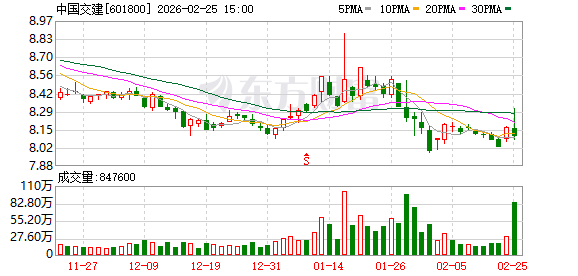
中国交建2026年董事会换届完成,新签合同额同比增长0.13%
Jing Ji Guan Cha Wang· 2026-02-23 05:42
股票近期走势 2026年1月15日至16日,公司通过上海证券交易所回购A股股份合计约209.4万股,拟用于注销,体现资 本优化意图。 经济观察网 基于最新公告和信息,中国交通建设股份有限公司(股票代码:601800/01800)在2026年 有以下公司事件值得关注: 公司高层选举 2026年1月30日,公司临时股东大会审议通过第六届董事会成员选举,宋海良先生获重选为董事长,张 炳南先生续聘为总裁,完成领导层过渡。 公司项目推进 公司持续参与国内外基础设施项目,如2025年签署科威特穆巴拉克·卡比尔港建设合同(价值约40亿美 元),支撑订单储备。 以上内容基于公开资料整理,不构成投资建议。 业绩经营情况 2026年2月12日,公司公告2025年全年新签合同额为18,836.72亿元,同比增长0.13%,完成年度目标的 93%。 ...
预见2026:《2026年中国机场建设行业全景图谱》(附市场现状、竞争格局和发展趋势等)
Qian Zhan Wang· 2026-02-23 02:11
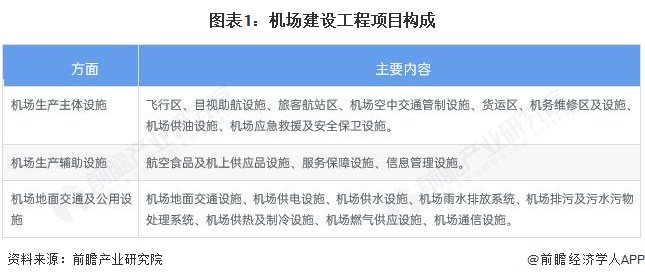
Core Insights - The Chinese airport construction industry is experiencing significant growth, with a projected investment of 140.43 billion yuan in 2024, contributing to a total fixed asset investment of 204.03 billion yuan in civil aviation [9][25]. Industry Overview - Airport construction includes site selection, overall planning, preliminary design, detailed design, implementation, and acceptance of airport projects [2]. - The industry supply chain consists of upstream material and equipment suppliers, midstream construction companies, and downstream airport management departments [2][4]. Industry Policy Background - The "12th Five-Year Plan" focused on constructing international hub and trunk airports, while the "13th Five-Year Plan" continued to enhance their functions and develop general airports [5]. - The "14th Five-Year Plan" aims to accelerate the construction of international airport clusters and improve air transport capacity [5]. Current Industry Development - The airport construction industry is capital-intensive, with significant fixed asset investments supported by policies aimed at boosting economic growth and infrastructure [9]. - From 2016 to 2024, the total fixed asset investment in civil aviation is expected to show a fluctuating growth trend [9]. Competitive Landscape - The industry is characterized by a competitive landscape with various companies holding different levels of qualifications, including 24 companies with first-level qualifications for runway engineering [11][12]. - The market concentration for runway engineering is high, with the top 10 companies capturing 70.13% of the market share [18]. International Competitiveness - Chinese companies have participated in airport construction projects in developing countries, indicating a moderate level of international competitiveness [15][17]. Market Concentration Analysis - In 2024, the top five companies in the air traffic control and weak current engineering sectors accounted for 56.21% of the market share, showing slight growth from 2023 [19]. Regional Competitive Landscape - By the end of 2024, companies with first-level qualifications for airport construction projects are primarily located in Beijing, Sichuan, Liaoning, Guangdong, and Shanxi, with Beijing holding the highest share at 18.8% [22]. Future Development Trends - The industry is moving towards smart, green, balanced regional development, and integrated hub construction, with significant advancements in technology and sustainability [25][27]. - The application of smart technologies is expected to reduce construction time by 15%-20%, and by 2030, major airports will achieve digital operations [27]. - Green construction is becoming a requirement, with 87% of new airport projects planned to incorporate distributed energy systems by 2025 [27]. - The construction strategy is focusing on balancing development between eastern and western regions, with a significant increase in general airports expected by 2030 [27].





智通A股限售解禁一览|2月23日


智通财经网· 2026-02-23 01:02
Core Viewpoint - On February 23, a total of 34 listed companies had their restricted shares unlocked, with a total market value of approximately 19.007 billion yuan [1] Group 1: Restricted Share Unlocking Details - Luzhou Laojiao (000568) had 2.0425 million shares unlocked under equity incentive restrictions - AVIC Xi'an Aircraft Industry (000768) had 4.3606 million shares unlocked under equity incentive restrictions - Hubei Energy (000883) had 19.2779 million shares unlocked under equity incentive restrictions - Jining Pharmaceutical (000919) had 1.92 million shares unlocked under equity incentive restrictions - Guangji Pharmaceutical (000952) had 2.5209 million shares unlocked under equity incentive restrictions - China Software (600536) had 57,200 shares unlocked under equity incentive restrictions - Xinhua Medical (600587) had 1.7845 million shares unlocked under equity incentive restrictions - Baoxin Software (600845) had 10.2578 million shares unlocked under equity incentive restrictions - China Railway (601390) had 55.9338 million shares unlocked under equity incentive restrictions - China Communications Construction (601800) had 5.593 million shares unlocked under equity incentive restrictions - StarNet Ruijie (002396) had 2.8342 million shares unlocked under equity incentive restrictions - Lopuskin (002333) had 22.3212 million shares unlocked under A-share issuance to legal persons - Wanbangda (300055) had 33.6538 million shares unlocked under A-share issuance to legal persons - Hangyang Co., Ltd. (002430) had 5.2049 million shares unlocked under equity incentive restrictions - Taijia Co., Ltd. (002843) had 949,600 shares unlocked under equity incentive restrictions - Nanda Optoelectronics (300346) had 130,000 shares unlocked under equity incentive restrictions - Anhui Natural Gas (603689) had 2.5064 million shares unlocked under equity incentive restrictions - Zhongyan Dadi (003001) had 97,200 shares unlocked under equity incentive restrictions - Yuanxiang New Materials (301300) had 30.2983 million shares unlocked with extended lock-up period - Yidao Information (001314) had 88.6187 million shares unlocked under pre-issuance restrictions - Tongda Electric (603390) had 579,500 shares unlocked under equity incentive restrictions - Yangzhou Jinqiao (603307) had 50 million shares unlocked under pre-issuance restrictions - Aili Home (603221) had 2.29 million shares unlocked under equity incentive restrictions - Zhili Fang (301312) had 333,900 shares unlocked under equity incentive restrictions - Kuntai Co., Ltd. (001260) had 83.25 million shares unlocked under pre-issuance restrictions - Entropy Technology (301330) had 92.5223 million shares unlocked with extended lock-up period - Yatong Precision (603190) had 596,100 shares unlocked under pre-issuance restrictions - Sanwang Communication (688618) had 87,400 shares unlocked - Longxun Co., Ltd. (688486) had 30.6312 million shares unlocked - Dize Pharmaceutical (688192) had 991,100 shares unlocked - Haohan Depth (688292) had 57.5177 million shares unlocked - Haizheng Biomaterials (688203) had 78.5601 million shares unlocked - Diaomicro (688381) had 55.9536 million shares unlocked - Zhongrun Optics (688307) had 29.8507 million shares unlocked [1]
国务院国资委调度检查国资央企春节假期值班值守安全生产和服务保障工作
Xin Lang Cai Jing· 2026-02-17 12:13
Group 1 - The State-owned Assets Supervision and Administration Commission (SASAC) emphasizes the importance of safety and service during the Spring Festival holiday, urging central enterprises to ensure a peaceful and safe celebration for the public [1][2] - SASAC leaders, including Zhang Yuzhuo and Tan Zuojun, conducted inspections and communicated with staff to understand the arrangements for duty and safety during the holiday period [1][2] - Central enterprises are reminded to strengthen risk assessments in key areas and maintain efficient operations to support public festivities [1][2] Group 2 - Tan Zuojun, on behalf of Zhang Yuzhuo, connected with 11 central enterprises via video to check on energy, power supply, major project operations, and communication services [2] - The focus is on tightening the safety production responsibility chain to ensure the stability of essential services such as energy, communication, and transportation during the holiday [2] - The implementation of the Central Eight Regulations is emphasized to ensure a frugal and civilized holiday atmosphere [2]





特写丨新春在一线,中外团队跨海共建柔新捷运系统
Xin Hua She· 2026-02-17 01:49
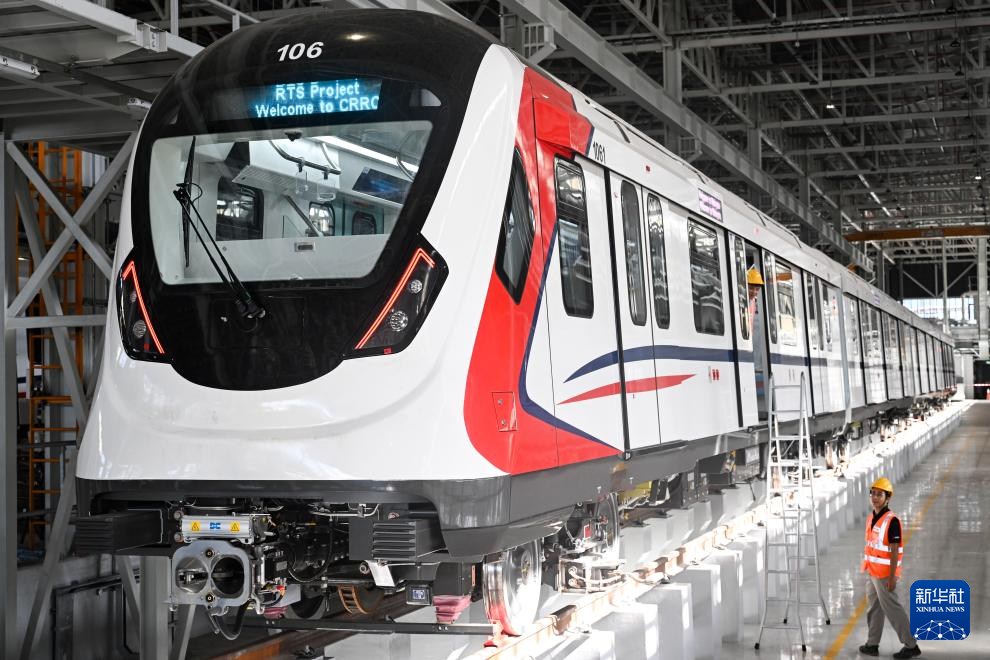
Core Viewpoint - The cross-border rail transit project, the Rapid Transit System (RTS), connecting Johor Bahru, Malaysia, and Singapore, is progressing well, with vehicle debugging and testing ongoing, aiming for completion by the end of 2026 [1][3][5]. Group 1: Project Overview - The RTS project, involving Chinese enterprises, connects the Chagar station in Johor Bahru to the Woodlands North station in Singapore, with a total length of approximately 4 kilometers [3][11]. - The project has transitioned from construction to vehicle debugging, with all eight trains having arrived on-site by the end of last year [5][11]. - The RTS is expected to have a maximum passenger capacity of 20,000 per hour in each direction, significantly alleviating congestion at the border [11]. Group 2: Team Efforts and Cultural Significance - The project team, including both Chinese and Malaysian engineers, is working diligently during the Chinese New Year to ensure timely progress, highlighting the importance of teamwork and cultural collaboration [6][9]. - Local Malaysian engineers, such as Muhammad Syafiq, express a strong commitment to the project, viewing it as a vital infrastructure that will enhance economic and social integration between Malaysia and Singapore [9][11]. - The RTS is described as not just a transportation project but a significant milestone in the relationship between the two countries, having been planned for a decade [11][13]. Group 3: Technical Aspects and Testing - The debugging process focuses on critical systems such as traction, network control, doors, and air conditioning, with all data being meticulously verified to ensure stability in high-temperature and high-humidity conditions [5][11]. - Engineers are committed to rigorous testing protocols, ensuring that each system is validated individually and in coordination with others [5][11]. Group 4: Future Implications - The RTS is anticipated to create a "same-city living circle," facilitating smoother cross-border travel and enhancing the daily lives of commuters between the two regions [9][11]. - The project is expected to significantly reduce travel time across the Johor Strait, providing a more efficient alternative to current traffic conditions [11][13].
寒冬渐退春不远,劲草迎风气象新:建筑建材 2026 年策略报告:-20260213
Huafu Securities· 2026-02-13 13:48
Investment Highlights - The construction sector faced pressure in 2025, with the building materials sector showing signs of bottom recovery, as the building materials sector increased by 22.1%, outperforming the construction decoration sector which only rose by 6.7% [2][15][22]. Construction Sector Analysis - The construction sector is under significant fundamental pressure, with a focus on three main investment directions: overseas expansion through the "Belt and Road" initiative, resource value reassessment, and state-owned enterprise reform [3][5]. - The domestic traditional infrastructure investment growth rate is slowing, and real estate construction continues to weaken, limiting the improvement space for the sector [3][5]. - Companies with business transformation capabilities and those positioned in high-growth niche markets performed well, while engineering consulting firms faced pressure due to local government financial constraints [3][5]. Building Materials Sector Analysis - The building materials sector is experiencing structural differentiation, with some segments expected to reach a turning point, particularly consumer building materials [4][5]. - Despite weak real estate data, the marginal negative impact on the building materials sector has significantly decreased, with supply-side improvements expected to precede demand-side recovery [4][5]. - The cement industry is recovering from price bottoming, while the glass industry remains under pressure, and the fiberglass sector is seeing significant improvements due to structural demand [4][5][41][46]. Investment Recommendations - In the construction sector, focus on leading infrastructure companies benefiting from overseas projects and major engineering, such as China Communications Construction Company, China State Construction Engineering, and China Railway Construction Corporation [5]. - In the building materials sector, attention should be given to leading consumer building material companies like Sangke Tree, Oriental Yuhong, and Beixin Building Materials, as well as cyclical building material leaders like Huaxin Cement and China National Building Material [5]. Belt and Road Initiative - The "Belt and Road" initiative has created significant opportunities for the construction sector, with a notable increase in overseas orders and contracts signed in 2025, amounting to $257.98 billion, a 10.8% increase year-on-year [77][79]. - The demand for infrastructure in countries participating in the initiative is expected to grow rapidly, providing a substantial project pool for construction companies [77][79]. Resource Value Reassessment - The expectation of rising prices for non-ferrous metals is anticipated to benefit state-owned construction companies that have acquired valuable mineral resources through past projects [3][5]. State-Owned Enterprise Reform - Policies promoting the securitization of state-owned assets and mergers and acquisitions are expected to create value reassessment opportunities for state-owned construction companies with quality assets [3][5].