
深圳核心医疗科技股份有限公司

Search documents
首款国产介入式人工心脏来了
第一财经· 2025-12-25 15:58
Core Viewpoint - The recent approval of China's first interventional artificial heart marks a significant milestone in the domestic medical technology sector, with multiple companies actively engaged in the development of artificial heart products [3][6][15]. Group 1: Product Development and Market Dynamics - Shenzhen Core Medical Technology Co., Ltd. has received approval from the National Medical Products Administration (NMPA) for its interventional artificial heart product, which is part of a growing market with over ten companies involved in similar developments [3][15]. - The interventional artificial heart, also known as the percutaneous ventricular assist device (pVAD), is currently dominated by Abiomed's Impella, which has not yet received approval in China [5][6]. - Core Medical's previous product, the CorHeart6, has a market share exceeding 45% in the domestic market for implantable artificial hearts (LVAD) as of 2024 [6][15]. Group 2: Technical Controversies - The CorHeart6 product has faced technical disputes regarding its classification as a "fully magnetic levitation" device, with experts arguing that it only utilizes "magnetic levitation bearings," which could impact patient outcomes [7][9]. - Concerns have been raised about the safety of similar technologies, with past instances of devices using magnetic levitation bearings being withdrawn from the market due to safety issues [9]. Group 3: Market Potential and Growth - The global market for artificial hearts is projected to grow from $970 million in 2019 to $2.07 billion by 2024, with a compound annual growth rate (CAGR) of 16.4%, and is expected to reach $9.82 billion by 2033 [15][16]. - The interventional artificial heart market is anticipated to expand significantly due to a higher number of potential patients compared to implantable devices, which are limited by surgical complexity and patient eligibility [12][14]. - The number of high-risk percutaneous coronary intervention (PCI) procedures is expected to reach 221.7 million globally by 2024, with a CAGR of 12.1% from 2019 to 2024, indicating a growing demand for interventional artificial hearts [14][15]. Group 4: Industry Challenges and Future Directions - The artificial heart sector is characterized as a "slow track" due to long development cycles, complex clinical validations, and stringent regulatory requirements, making profitability challenging for companies [16]. - Experts emphasize the need for ongoing research into the hemodynamic effects of artificial hearts, as they differ significantly from natural hearts in blood flow dynamics [16]. - Future advancements in artificial heart technology are expected to focus on wireless, miniaturized, and intelligent designs to enhance patient outcomes and expand applications [16].


首款国产介入式人工心脏来了
Di Yi Cai Jing· 2025-12-25 14:47
Core Insights - The latest interventional artificial heart product approved by the National Medical Products Administration (NMPA) comes from Shenzhen Core Medical Technology Co., Ltd. [1] - The approval marks a significant milestone in the development of domestic artificial hearts, with over a dozen companies currently engaged in this field [1][10] - Core Medical's previous artificial heart product, CorHeart6, has recently faced technical disputes regarding its classification as a "fully magnetic levitation" device [2][4] Company Overview - Core Medical's CorHeart6, a left ventricular assist device (LVAD), holds over 45% market share in China as of 2024 [2] - The company’s CorHeart6 was approved for sale in China in 2023, differing from the newly approved interventional artificial heart in terms of indications and surgical approach [5] - Core Medical is positioned in a competitive landscape with several other companies, including Tongling Bionic and Heartking Medical, also developing interventional artificial heart products [10] Industry Landscape - The global market for artificial hearts is projected to grow from $970 million in 2019 to $2.07 billion by 2024, with a compound annual growth rate (CAGR) of 16.4% [10] - The interventional artificial heart market is expected to see significant growth due to the increasing number of high-risk percutaneous coronary interventions (PCI), projected to reach 221.7 million globally by 2024 [10] - The Chinese market for artificial hearts is anticipated to exceed 11 billion RMB by 2033, driven by the approval of new products [10] Technical Disputes - Core Medical's CorHeart6 has been criticized for potentially misleading terminology regarding its technology, which could impact patient outcomes [2][4] - Concerns have been raised about the safety of devices using "magnetic levitation bearing" technology, with precedents of similar products being withdrawn from the market due to safety issues [4] Market Dynamics - The interventional artificial heart is seen as a less invasive option compared to LVADs, which require more complex surgical procedures and long-term patient management [8] - The market for interventional artificial hearts is expected to attract more companies, but the high technical barriers may limit successful commercialization [11] - Experts emphasize the need for ongoing research into the hemodynamic effects of artificial hearts, as they differ significantly from natural hearts [11]
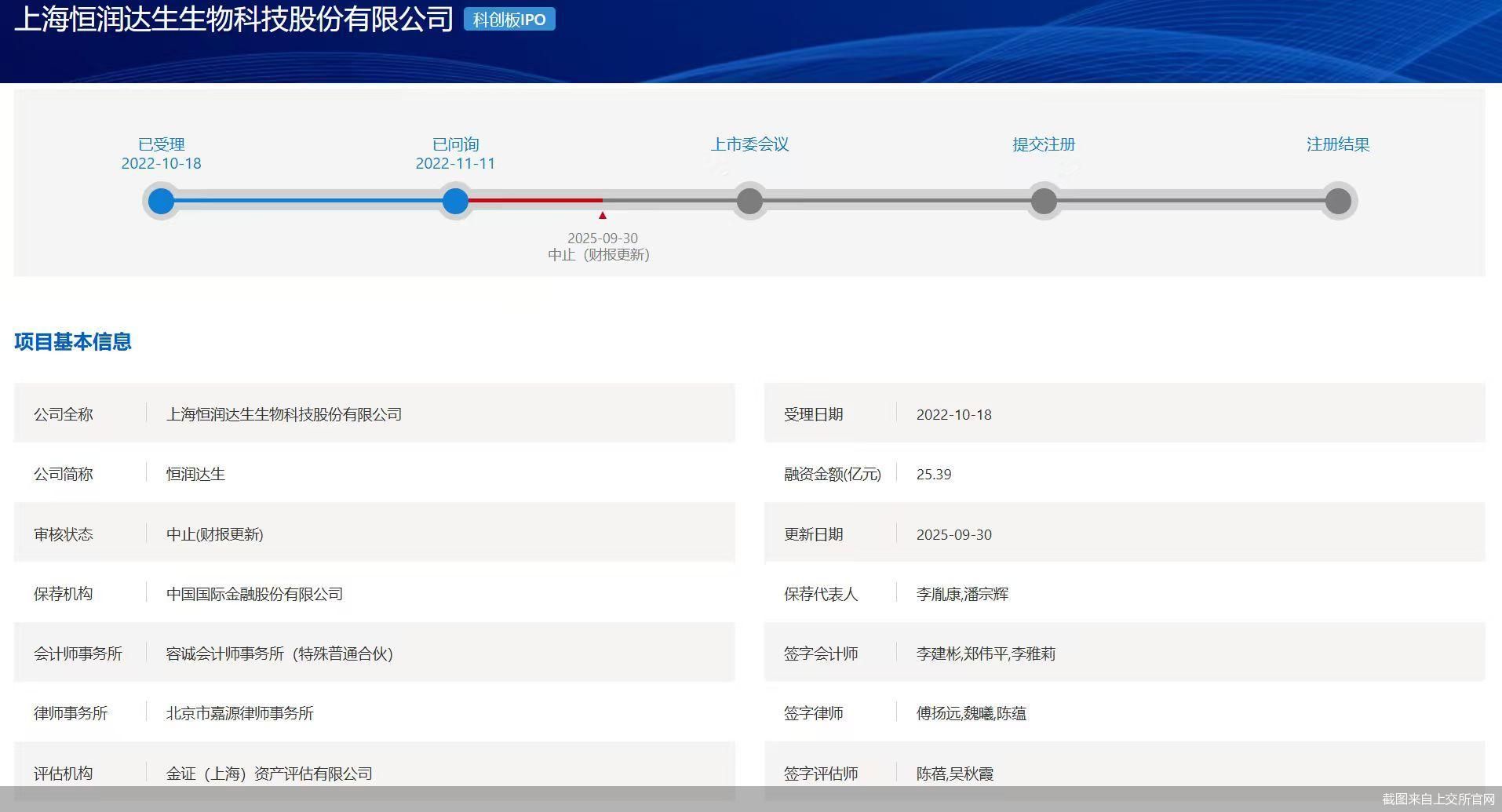
年终策划|8家未盈利医药企业“竞速”科创板IPO,恒润达生、思哲睿已排队超三年
Xin Lang Cai Jing· 2025-12-25 11:11
Core Viewpoint - Shenzhen Beixin Life Technology Co., Ltd. has achieved profitability and is preparing for its IPO, marking a significant development in the medical device sector under the fifth set of listing standards on the STAR Market [1][4]. Group 1: Company Developments - Beixin Life's IPO was accepted on March 30, 2023, and it entered the inquiry phase in April. The company received approval on July 18 and registered on July 25, 2023 [4]. - Beixin Life reported a revenue of 128 million yuan in Q1 2023, a year-on-year increase of 104.9%, and a net profit of 20.61 million yuan, indicating a turnaround from previous losses [4]. - As of December 25, 2023, there are eight pharmaceutical companies queued for IPO on the STAR Market, all applying under the fifth set of standards, with Beixin Life being the closest to listing [3]. Group 2: Industry Trends - The STAR Market has seen a revival in IPO activity for pharmaceutical companies, with six companies, including Zhuhai Tainuo Maibo Pharmaceutical Co., receiving acceptance for their IPOs this year [1][5]. - Five unprofitable pharmaceutical companies have been accepted for IPOs since the resumption of the fifth set of listing standards, indicating a shift in regulatory attitudes towards unprofitable firms [5][10]. - Among the eight companies in the queue, seven have already launched products, showcasing a trend where unprofitable companies are increasingly achieving commercialization [10]. Group 3: Regulatory Environment - The regulatory focus for unprofitable pharmaceutical companies includes assessing the robustness of technology, market potential, financial sustainability, and risks of delisting [11]. - The approval process for unprofitable companies emphasizes clinical value and commercial viability, with regulators looking for "true innovation, sustainability, and verifiability" [11].
最新!2款创新器械获批上市!
思宇MedTech· 2025-12-25 08:58
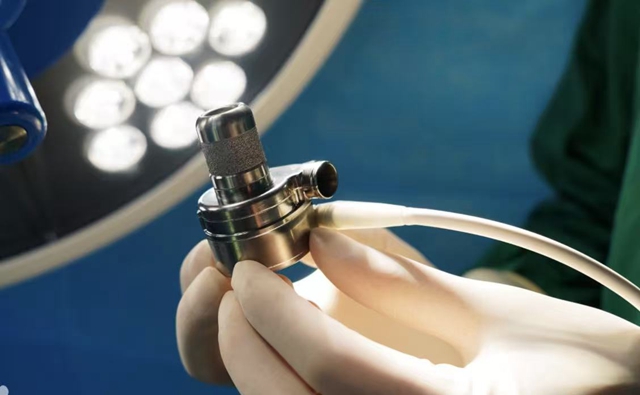
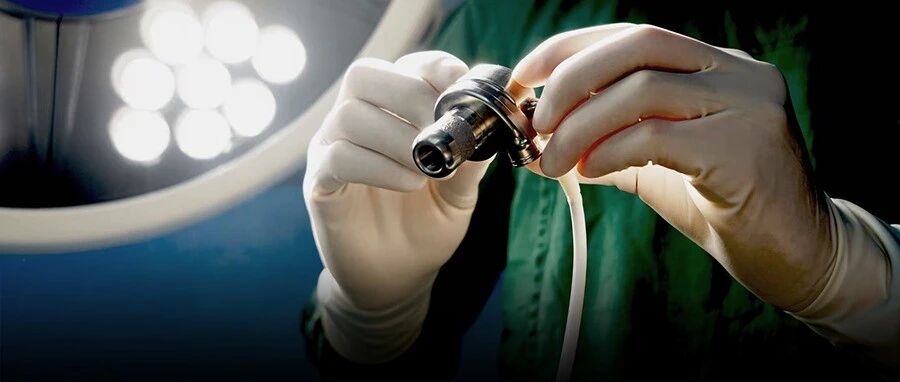
Core Medical: Interventional Left Ventricular Assist System - The National Medical Products Administration (NMPA) has approved the interventional left ventricular assist device and the interventional left ventricular assist catheter pump kit from Shenzhen Core Medical Technology Co., Ltd. [2] - This interventional left ventricular assist system is designed to provide short-term left ventricular support during high-risk percutaneous coronary intervention (PCI) for adult patients with severe coronary artery disease and reduced left ventricular ejection fraction [7]. - The system utilizes self-developed axial magnetic flux multi-drive technology, achieving high flow output and stable performance with a smaller outer diameter, which helps reduce blood damage risk and supports longer clinical use [7][8]. Antai Kangcheng: Tumor Electric Field Therapy Device - The tumor electric field therapy device from Hunan Antai Kangcheng Biotechnology Co., Ltd. has also been approved by the NMPA [2]. - This device consists of a main unit, distribution box, disposable electrode pads, power adapter, lithium-ion battery, and charging dock, and is intended for treating patients aged 22 and older diagnosed with supratentorial glioblastoma [10]. - The device is to be used in conjunction with temozolomide (TMZ) after surgical and radiotherapy treatments [10][11]. Industry Overview - As of now, a total of 391 innovative medical devices have been approved for listing in China [3].
市占率超50%,核心医疗叩关科创板:“中国心”以硬核数据击碎杂音,彰显价值
市值风云· 2025-12-23 09:10
Core Viewpoint - The article emphasizes the significant advancements and market leadership of Core Medical in the artificial heart industry, particularly with its Corheart 6 product, which has rapidly gained a 45% market share in China since its launch in June 2023 [5][9][11]. Group 1: Company Overview - Core Medical has submitted its prospectus for the Sci-Tech Innovation Board, indicating its commitment to enhancing technological innovation and global competitiveness in the artificial heart market [3][4]. - The company is recognized as a leading innovator in China's artificial heart sector, with its Corheart 6 product awarded the "Important Medical Achievement of the 21st Century in China" by the Chinese Academy of Medical Sciences [5][6]. Group 2: Product Performance - Corheart 6 is noted for its compact design, with a pump diameter of only 3.4 cm and a weight of 90g, making it the smallest and lightest third-generation full magnetic levitation artificial heart globally [6][9]. - The product has achieved a market share of 45.9% in 2024 and is projected to increase to 52.86% in the first five months of 2025, solidifying its position as the top artificial heart in China [9][10]. Group 3: Technological Advancements - Core Medical's technology is characterized by independent innovation, breaking the monopoly of international giants like Abbott and Johnson & Johnson [6][13]. - The company has developed a comprehensive product matrix, with five implanted and six interventional artificial heart products, showcasing its leading position in technology parameters and research progress [15][18]. Group 4: Market Potential - The Chinese market for implanted artificial hearts is projected to reach 5.7 billion yuan by 2033, while the interventional artificial heart market is expected to exceed 11 billion yuan, presenting long-term growth opportunities for Core Medical [20]. - The global market for implanted artificial hearts is forecasted to grow from 1.23 billion USD in 2024 to 4.08 billion USD by 2033, indicating substantial international expansion potential for Core Medical [20]. Group 5: Clinical Data and Safety - Core Medical's Corheart 6 has demonstrated superior clinical outcomes, with a two-year survival rate of 86% and a maximum support duration exceeding three years, outperforming international counterparts [39][40]. - The product's hemolysis index is reported at 0.0013g/100L, significantly better than the international standard of 0.01g/100L, affirming its safety and efficacy [33][39].
看好中国股市 国际长线资金源源不断流入
Zheng Quan Ri Bao· 2025-12-16 16:06
Group 1 - Several foreign institutions, including UBS, JPMorgan, and Fidelity International, believe that Chinese assets have a solid foundation for continued rebound due to profit growth, accelerated innovation, and attractive valuations in their 2026 macroeconomic and stock market outlooks [1] - International long-term capital is showing strong interest in Chinese assets, particularly in sectors like healthcare, robotics, and low-altitude economy, with significant investments from Middle Eastern funds [2] - As of November, foreign long-term capital net bought approximately $10 billion in A-shares and H-shares, contrasting sharply with an outflow of about $17 billion in 2024, indicating a positive trend in foreign investment [3] Group 2 - Deutsche Bank projects that consumption will remain the main driver of China's economic growth, with a recovery in investment contributions and strong export performance [4] - The Central Economic Work Conference emphasized the need for effective qualitative improvements and reasonable quantitative growth in the economy, which is expected to support ongoing structural reforms [5] - UBS highlights that the technology sector in China represents one of the most significant global opportunities, with expected corporate profit growth of up to 37% in 2026, driven by ample liquidity [6]


核心医疗IPO:三年半累亏5.53亿元独苗产品销售价格持续走低 递表前夕股权转让价格显著下滑
Xin Lang Cai Jing· 2025-12-05 10:08
Core Viewpoint - Shenzhen Core Medical Technology Co., Ltd. has received acceptance for its IPO application on the Sci-Tech Innovation Board, marking it as the first innovative medical device company to be accepted under the new listing standards [1][10] Group 1: Product and Market Position - The company’s flagship product, the Corheart®6, is the smallest and lightest full magnetic levitation artificial heart globally, filling a gap in pediatric heart failure treatment in China [1][10] - The market share for Corheart®6 is projected to exceed 45.9% in 2024, increasing to 52.86% in the first five months of 2025 [1][10] - Despite the potential market size for heart failure treatment, actual market penetration remains low due to high treatment costs and limited clinical awareness [4][14] Group 2: Financial Performance - The company reported revenues of 16.55 million, 93.68 million, and 70.47 million from 2023 to the first half of 2025, indicating growth but still a small overall scale [6][15] - Cumulative losses over three and a half years reached 553 million, primarily due to high R&D expenditures and significant share-based payment expenses [6][15] - Operating cash flow has been negative, relying on external financing, with net cash flow from operating activities of -108 million, -89 million, and -84 million from 2023 to the first half of 2025 [7][16] Group 3: Product Dependency and Risks - The company’s revenue is heavily reliant on the Corheart®6, with all income derived from this single product, while other products are still in development stages [2][11] - The average selling price of Corheart®6 has decreased from 290,400 yuan per unit in 2023 to 247,200 yuan in 2024, reflecting a decline of approximately 14.86% [4][13] - Customer concentration is increasing, with the top five customers accounting for 80.70% of sales by the first half of 2025, highlighting a significant dependency on major clients [4][13] Group 4: Production Capacity and Expansion Plans - The company has established a production capacity of 1,100 units annually, but actual production in the first half of 2025 was only 367 units, resulting in a capacity utilization rate of about 67% [5][14] - Despite underutilized capacity and low cumulative sales of less than 800 units, the company plans to invest 139 million in expanding its production base for artificial hearts [5][14]
2025年中国植入式人工心脏行业进入壁垒、市场政策、产业链图谱、市场规模、竞争格局及发展趋势研判:行业技术壁垒极高[图]
Chan Ye Xin Xi Wang· 2025-12-01 01:37
Overview - The global number of end-stage heart failure patients is large, and heart transplantation is limited by donor scarcity. The success rate of patients receiving transplant surgery is very low. Implantable artificial hearts serve as an important alternative to heart transplantation, providing transitional treatment for patients awaiting transplant and long-term treatment for those unsuitable for transplantation. In 2024, the global implantation volume of implantable artificial hearts is expected to reach 7,538 units, a year-on-year increase of 33.84%, with a market size of $1.2 billion, also up by 33.33% [1][8]. Industry Barriers to Entry - The research and development of artificial hearts involve a multidisciplinary approach, requiring expertise in mechatronics, mechanical design, fluid mechanics, biomechanics, materials science, and clinical medicine. Currently, only a few medical device companies globally have the capability to engage in this industry, making it difficult for new entrants to gain a competitive advantage in the short term. The production of these devices requires high-quality control and complex manufacturing processes, necessitating long-term practical experience and technological breakthroughs [2][4]. Relevant Policies - The medical device industry, including implantable artificial hearts, is a strategic emerging industry in China, receiving significant attention from the government. Various policies have been issued to regulate the market, ensure product quality, and safeguard patient safety, creating a favorable environment for the development of the implantable artificial heart industry [4][5]. Industry Chain - The upstream of the implantable artificial heart industry includes suppliers of metals like titanium and stainless steel, polymer materials like polyurethane and polyethylene, core components like magnetic suspension motors and precision bearings, as well as external controllers and batteries. The midstream involves the research and production of implantable artificial hearts, while the downstream consists of healthcare institutions and heart failure patients, with the core consumer group being end-stage heart failure patients [5][6]. Current Development - The number of heart failure patients is increasing globally, driven by aging populations and the prevalence of chronic diseases. In 2024, the global number of heart failure patients is projected to reach 63 million, with end-stage heart failure patients numbering 6.1 million. In China, the number of heart failure patients is expected to reach 15.4 million, with 1.6 million in the end-stage category. This rising patient population is driving demand for implantable artificial hearts [7][8]. Competitive Landscape - The implantable artificial heart market has high technical barriers, with overseas companies having a head start. Abbott's HeartMate3 holds a significant market share globally. In China, five models of implantable artificial hearts have been launched, with Shenzhen Core Medical Technology Co., Ltd.'s Corheart®6 showing notable technological advantages. As of early 2025, Core Medical's Corheart6 accounted for 52.86% of the market share in terms of implantation volume [9][10]. Representative Domestic Companies - Shenzhen Core Medical Technology Co., Ltd. focuses on innovative artificial heart products and has developed five implantable and six interventional heart products. In 2024, the revenue from its left ventricular assist system reached approximately 93.69 million yuan, a year-on-year increase of 466.08% [10][11]. - Suzhou Tongxin Medical Technology Co., Ltd. has developed the first fully magnetic suspension left ventricular assist device in China, which has received regulatory approval. This product features several innovative technologies, marking a significant advancement in the domestic artificial heart field [11][12]. Future Development Trends - The industry is expected to see continued optimization of magnetic suspension technology, leading to improved stability and longevity of devices. There will be a trend towards smaller and lighter products to reduce surgical trauma and enhance post-operative convenience. Additionally, the integration of artificial intelligence and IoT technologies is anticipated to improve remote monitoring and management of patients post-surgery. The application of advanced materials may also reduce infection and rejection risks, expanding the use of implantable artificial hearts beyond adult end-stage heart failure patients to more specific scenarios [12].

核心医疗科创板IPO进入已问询阶段
Bei Jing Shang Bao· 2025-11-21 13:04
Core Viewpoint - Shenzhen Core Medical Technology Co., Ltd. has entered the inquiry stage for its IPO on the Sci-Tech Innovation Board, marking a significant step for the company in the innovative medical device sector [1] Company Overview - Core Medical is focused on providing comprehensive, innovative, and high-quality artificial heart products, addressing major clinical needs in acute and chronic heart failure [1] - The company has been dedicated to original innovation and tackling key core technologies to continuously promote product iteration and upgrades in the artificial heart field [1] Industry Context - Core Medical is the first innovative medical device company to be accepted under the fifth set of listing standards since their reactivation on the Sci-Tech Innovation Board [1]
第五套重启后,首单“人工心”械企核心医疗冲刺科创板IPO
Hua Er Jie Jian Wen· 2025-11-17 12:48
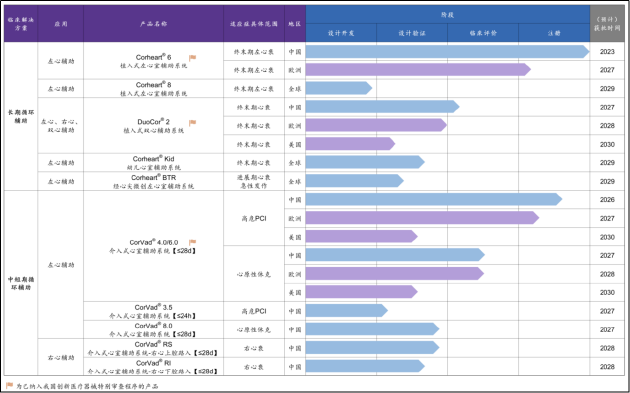
Core Viewpoint - The resumption of the fifth set of IPO standards on the Sci-Tech Innovation Board has led to significant developments for innovative medical device companies, with Shenzhen Core Medical Technology Co., Ltd. being the first to have its IPO application accepted under these new standards, focusing on artificial hearts [1][2]. Company Overview - Core Medical specializes in artificial hearts, reporting a revenue of 94 million yuan in 2024, which represents a growth of over 400% year-on-year, despite a net loss of 132 million yuan during the same period [1]. - The revenue surge is attributed to the successful market launch of its magnetic levitation implantable left ventricular assist device, Corheart® 6, which has generated substantial income [1][4]. Product Details - Corheart® 6 is the first commercially available third-generation magnetic levitation artificial heart, recognized for being the smallest and lightest of its kind globally, weighing only 0.8 kg, which is nearly 50% lighter than its competitor, Abbott's HeartMate 3 [3][4]. - The production cost of Corheart® 6 is approximately 70,000 yuan per unit, with a selling price of 247,200 yuan, resulting in a gross margin close to 70% [9]. Market Challenges - The high price of Corheart® 6, along with the overall surgical costs reaching up to 700,000 yuan, limits the affordability for many patients in China, posing a challenge for its commercialization [1][9]. - Core Medical faces competition not only from Abbott but also from domestic companies like Tongxin Medical and Aerospace Taiheart, which have already launched their products [6][11]. International Expansion - To expand its market, Core Medical aims to penetrate overseas markets, particularly the U.S., where it has yet to initiate clinical trials for Corheart® 6, although it has received approvals in Colombia and Ukraine [6][7]. - The company has other products, such as DuoCor® 2 and CorVad® 4.0/6.0, which are expected to gain approval in the U.S. by 2030, indicating a longer timeline for revenue realization [7]. Industry Landscape - The global heart failure market is projected to grow, with the number of heart failure patients expected to rise from 62.98 million in 2024 to 71.51 million by 2033, presenting a significant opportunity for artificial heart technologies [11]. - However, the emergence of alternative therapies, such as minimally invasive atrial shunt devices, poses additional competition for artificial heart products [11].