
辉能科技

Search documents
当升科技与辉能科技签署策略合作框架协议
Zhi Tong Cai Jing· 2026-02-09 10:47
Core Viewpoint - The announcement highlights a strategic partnership between the company and Huineng Technology Co., Ltd. aimed at enhancing collaboration in the solid-state battery and new energy sectors [1] Group 1: Strategic Collaboration - The company and Huineng Technology signed a Strategic Cooperation Framework Agreement on February 6, 2026, to strengthen cooperation in the solid-state battery and new energy industries [1] - The partnership will focus on leveraging each other's technological advantages and establishing a comprehensive strategic partnership in areas such as equity investment, battery materials collaboration, and product mass production and supply [1] - Both parties agree to conduct business exchanges under the principles of mutual benefit and win-win cooperation, aiming to deepen their development in solid-state batteries and the new energy sector [1]

当升科技与辉能科技签署策略合作框架协议,共推全固态电池产业量产进程
Cai Jing Wang· 2026-02-09 10:19
2月9日,当升科技公告称,公司与辉能科技于2月6日签署《策略合作框架协议书》,双方拟在固态电池 与新能源产业领域加强合作,充分发挥各自技术优势,在股权投资、电池材料合作、产品量产与供应等 方面建立全方位的战略合作伙伴关系。 当升科技在公告指出,本次与辉能科技签订策略合作框架协议,双方将共同发挥技术与资源优势,有利 于加速公司固态电池材料产品的导入及性能优化,推动公司深度融入全球固态电池先进供应链,与下游 客户形成紧密协同、互利共赢的产业生态,共同推进全固态电池产业量产进程。 (企业公告) 公告显示,当升科技作为新能源正极材料供应商,在固态电池材料领域拥有丰富的技术积累和完整的产 品布局,全方位涵盖硫化物、氧化物、卤化物等不同技术路线,已成功开发出具有良好界面浸润性的氯 碘复合硫化物固态电解质等新型固态电解质,以及全固态电池用超高镍多元材料和超高容量富锂锰基材 料。 根据公开资料,辉能科技成立于2006年,专注于固态锂陶瓷电池的研发、生产和销售。 ...
当升科技:与辉能科技签署固态电池与新能源产业合作框架协议
Mei Ri Jing Ji Xin Wen· 2026-02-09 09:23
每经AI快讯,2月9日,当升科技(300073.SZ)公告称,公司与辉能科技于2月6日签署《策略合作框架协 议书》,双方拟在固态电池与新能源产业领域加强合作,充分发挥各自技术优势,在股权投资、电池材 料合作、产品量产与供应等方面建立全方位的战略合作伙伴关系。 ...
滨江集团:辉能科技上市相关信息敬请留意辉能公司官方信息披露渠道
Zheng Quan Ri Bao Wang· 2026-02-06 13:42
证券日报网讯2月6日,滨江集团(002244)在互动平台回答投资者提问时表示,辉能科技上市相关信息 敬请留意辉能公司官方信息披露渠道。 ...

2026前沿科技趋势:塑造自己的下一个版本
3 6 Ke· 2026-01-30 09:58
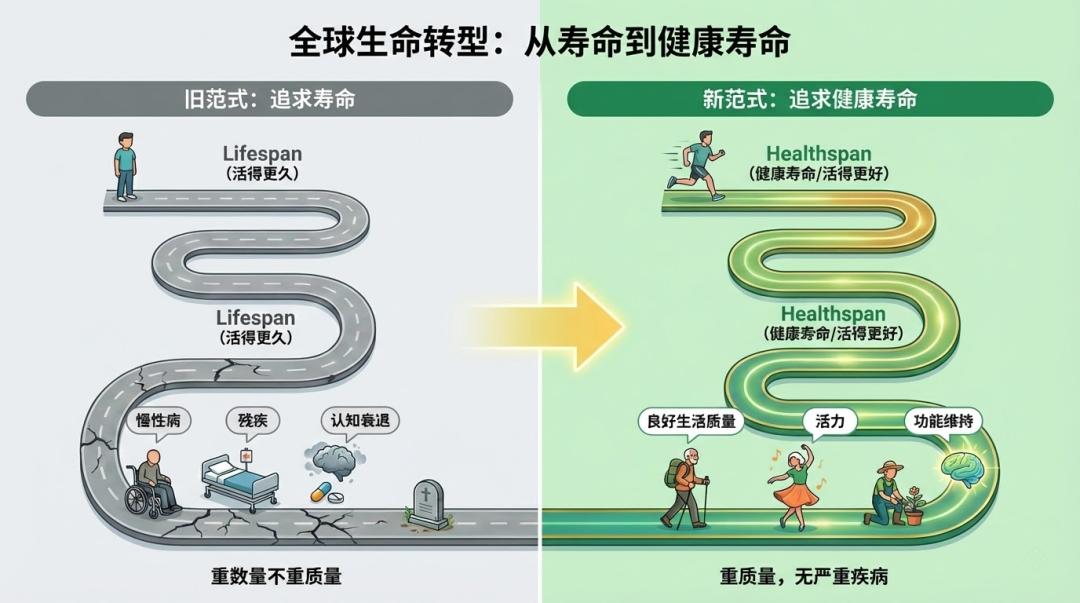
Group 1 - The rapid evolution and application of artificial intelligence and cutting-edge technologies are causing societal adaptation challenges, leading to feelings of uncertainty among people [1][2] - The focus of technological advancement should be human-centered, with an emphasis on shaping a better future through technology by 2030 [2] Group 2 - The "third transformation" of human life aims to extend healthy lifespan rather than just lifespan, with significant implications for global health and economy [3][5] - Human life expectancy has doubled over the past century, but the growth rate has significantly slowed down, with some regions experiencing stagnation or decline [4] - By 2030, the quality of life is projected to be a major focus, with non-communicable diseases potentially costing the global economy up to $47 trillion if not addressed [5] Group 3 - Advances in gene therapy and artificial intelligence are expected to play crucial roles in extending healthy lifespan, with technologies like CRISPR and AI enhancing medical capabilities [9][17] - Clinical breakthroughs in preventive gene therapy and RNA therapies are showing promise in treating chronic diseases effectively [10][12] - Epigenetic reprogramming is emerging as a potential method to reverse aging, with ongoing research aiming for clinical trials by 2026 [15] Group 4 - Artificial intelligence is set to enhance medical efficiency and understanding of human health, with applications in drug development, disease screening, and personal health management expected to yield significant results by 2030 [17][18] - AI is accelerating drug development processes, reducing timelines from years to months, and improving the success rates of new treatments [18][19] Group 5 - The development of exoskeleton technology is enhancing human physical capabilities, with applications in medical rehabilitation, industrial safety, and personal use expected to expand significantly [24][25] - Innovations in exoskeletons are making them more adaptable and user-friendly, with advancements in sensor technology and materials [28][30] Group 6 - The eVTOL market is projected to grow significantly, with advancements in battery technology and noise reduction strategies being critical for its acceptance and integration into urban transportation [31][32] - The evolution of drones into autonomous aerial robots is enhancing their capabilities for both consumer and industrial applications [34] Group 7 - The development of brain-computer interfaces (BCIs) is transforming the treatment of neurological conditions and enhancing human capabilities, with both invasive and non-invasive technologies showing promise [51][54] - BCIs are moving from experimental to standard treatment options for conditions like paralysis, with significant advancements in technology and regulatory approval processes [52][53]

2026前沿科技趋势:塑造自己的下一个版本
腾讯研究院· 2026-01-30 08:18
Core Insights - The article emphasizes the rapid evolution and application of artificial intelligence and cutting-edge technologies across various fields, urging a human-centered approach to technological advancement [3][4][5]. Group 1: Human Life's "Third Transformation" - Extending Healthy Lifespan - Human life expectancy has doubled over the past century, with significant improvements attributed to public health, antibiotics, and vaccines [7]. - Recent research indicates a dramatic slowdown in the growth rate of life expectancy, with the average increase dropping to below 0.25 years per decade in the last 30 years [8]. - A shift is occurring from merely extending lifespan to enhancing healthspan, which is the period of life spent in good health, with potential economic implications of up to $47 trillion in costs from non-communicable diseases by 2030 [9]. Group 2: Programmable Life - Gene Therapy - Gene therapy is moving towards optimizing the "life code," with advancements in CRISPR technology and delivery systems expected to mature by 2030 [11]. - Clinical breakthroughs in preventive gene therapy, such as Verve Therapeutics' treatment for cardiovascular disease, show promising results with significant reductions in LDL-C levels [12]. - The success of personalized CRISPR therapy in curing a fatal metabolic disease in a patient highlights the potential of gene therapy [14]. Group 3: Health Planning - AI Enhancing Medical Efficiency - AI is set to revolutionize drug development, disease screening, and personal health management by 2030, significantly reducing the time and cost associated with traditional drug development [21]. - AI combined with multi-omics technology is facilitating faster and more accurate disease screening, with notable advancements in cancer detection [23]. - Aging clock technology is evolving, enabling precise monitoring of aging processes and identifying underlying causes of aging [25]. Group 4: Enhancing Physical Capability - Exoskeleton Technology - Exoskeleton technology is advancing to enhance human physical capabilities, with applications in medical rehabilitation, industrial safety, and personal use [30]. - In the medical field, exoskeletons are evolving from mere mobility aids to intelligent devices that promote neurological recovery [31]. - Consumer-grade exoskeletons are expected to become popular for outdoor activities, significantly improving mobility for users [32]. Group 5: Flying Technology - eVTOL Development - The eVTOL market is projected to reach $41 billion in China by 2040, with significant advancements in battery technology expected to triple flight ranges [37]. - Noise reduction technologies are being explored to enhance social acceptance of eVTOLs, with strategies like "noise corridors" being implemented [38]. - The evolution of drones into aerial robots is enhancing capabilities in both consumer and industrial applications, with significant advancements in autonomous operations [40]. Group 6: Brain-Machine Interfaces - A New Era of Interaction - Brain-machine interfaces (BCIs) are transitioning from experimental therapies to standard treatment options for conditions like paralysis, with companies like Neuralink leading the way [61]. - Non-invasive BCIs are emerging, allowing for enhanced human-computer interaction, with applications in consumer technology [63]. - The integration of BCIs with AI could redefine human-AI collaboration, raising ethical considerations regarding privacy and data protection [64].

公司问答丨联赢激光:目前公司已经为两家行业头部客户提供全固态中试线
Ge Long Hui A P P· 2026-01-29 08:52
联赢激光回复称,固态电池是行业未来发展方向,公司将持续加强研发投入,积极响应市场需求,推出 更具竞争力的产品,增强市场竞争力。目前公司已经为两家行业头部客户提供全固态中试线。 格隆汇1月29日|有投资者在互动平台向联赢激光提问:固态电池产线激光焊接设备ASP较传统方案提 升2-3倍,且联赢激光已交付头部客户首条装配线。2026年固态电池商业化落地加速背景下,公司预计 该业务市占率能否突破50%?是否已与国内固态电池厂商(如清陶能源、辉能科技)达成合作意向? ...

2026CES电池创新:全固态、场景化、软件定义
高工锂电· 2026-01-07 10:11
Core Viewpoint - The article discusses the emergence of innovative battery technologies showcased at the 2026 CES, highlighting the potential of solid-state batteries to revolutionize the electric mobility sector, while also addressing skepticism regarding their feasibility due to undisclosed technical details [2][4]. Group 1: Donut Lab's Solid-State Battery - Donut Lab claims to have developed the world's first mass-producible all-solid-state battery with an energy density of 400 Wh/kg, capable of full charge in 5 minutes and maintaining over 99% capacity in extreme temperatures from -30°C to above 100°C [4]. - The battery is set to be integrated into Verge Motorcycles' TS Pro and Ultra models, with the upgraded TS Pro expected to be delivered in Q1 2026 [4][5]. - Despite the promising specifications, the lack of disclosed core technology and mass production details has led to widespread skepticism within the industry [4]. Group 2: Other Innovations at CES - A new generation solid-state battery module was jointly presented by Huineng Technology and Germany's FEV Group, based on Huineng's all-inorganic solid-state lithium ceramic battery technology, which is currently at the prototype stage [7]. - This module aims for a target range of 1000 kilometers and offers flexibility for vehicle manufacturers through its integration of solid-state cell technology and advanced system design [9][10]. - Electra Vehicles introduced the EVE-AI™ battery control layer, which supports over-the-air optimization of charging strategies and energy management, aiming to extend battery life by 25% and improve energy utilization by 10% [12]. Group 3: Trends in Battery Technology - The CES showcased three core trends in battery innovation: acceleration of solid-state battery mass production, the rise of software-defined batteries for enhanced lifecycle value, and the development of customized battery solutions for specific applications like robotics and electric vehicles [17]. - Companies are focusing on tailored solutions to meet the unique demands of different sectors, unlocking new application potentials [17].
总投资超100亿元!16GWh电池厂开业
起点锂电· 2025-12-16 10:32
Core Viewpoint - The article highlights the opening of Verkor's first battery super factory in France, which is part of a broader trend in the European battery manufacturing sector aimed at supporting electric vehicle production and enhancing local supply chains [3][7]. Group 1: Verkor's Battery Factory - Verkor's factory has a total investment of €1.5 billion (approximately 120 billion RMB) and began construction in November 2023, with an initial annual production capacity of 16 GWh, planned to expand to 50 GWh by 2030 [3]. - The factory is expected to create around 1,200 direct jobs and 3,000 indirect jobs, with the first battery units projected to be available in early 2026 for the Renault Alpine A390 model [3]. - By 2027, the factory aims to supply lithium-ion batteries for 300,000 electric vehicles annually [3]. Group 2: Strategic Partnerships - Verkor established a strategic partnership with Renault in 2021, which evolved into a commercial relationship in April 2023, leading to a binding supply agreement for high-performance batteries [4]. - Renault plans to purchase 10 GWh of batteries from Verkor starting in 2026, increasing to 20 GWh by 2030 [4]. Group 3: Technology Focus - Verkor primarily focuses on ternary batteries while also developing lithium iron phosphate (LFP) and solid-state batteries [5]. - Renault has partnered with CATL and LG Energy Solution for LFP battery technology, with plans to integrate this technology into its production by 2026 [6]. Group 4: Battery Valley Development - The article notes that the Dunkirk area in France has seen the establishment of four major battery projects, including Verkor's factory, with other factories from ACC and Envision AESC also contributing to the region's battery production capabilities [7]. - The ACC factory, which opened in June 2023, has a planned capacity of 40 GWh, while Envision AESC's factory in Douai will have an initial capacity of 10 GWh, expected to be operational by June 2025 [7].

新华指数丨固态电池板块14只个股周涨超20%,新华出海电新指数年内收益已达85%
Xin Hua Cai Jing· 2025-10-31 11:37
Core Insights - Solid-state batteries are emerging as a core development direction for next-generation battery technology due to their superior safety performance and energy density compared to traditional lithium batteries [1] - The solid-state battery sector has seen a significant surge in stock performance, with 14 constituent stocks rising over 20% in the week leading up to October 31, 2023, and Tianji Co. achieving a remarkable 41% increase [1] - The growth is driven by domestic technological breakthroughs and policy support, reflecting a strategic push by Chinese companies to expand their global market presence [1] Industry Overview - The global solid-state battery industry is at a critical juncture of technological breakthroughs and accelerated industrialization, driven by increasing demand for power batteries in electric vehicles, growth in the energy storage sector, and innovation in consumer electronics [1][2] - Policy support is characterized by high density and strong targeting, with multiple departments prioritizing solid-state batteries as a key focus area, aiming to cultivate 3-5 global leaders by 2027 [2] - Industry data indicates rapid growth, with global solid-state battery demand projected to range from 17.3 GWh to 44.2 GWh by 2025, potentially soaring to between 200 GWh and 808 GWh by 2030 as technology matures and costs decline [2] Technological Developments - Multiple technical routes for solid-state batteries have been established, including sulfide, oxide, polymer, and halide, each with complementary advantages [3] - The industry anticipates that major technical routes will be validated and demonstrated on a small scale by 2025-2027, with large-scale production expected before 2030 [3] Challenges and Constraints - The development of solid-state batteries faces several bottlenecks, including the need for core technological breakthroughs in key performance indicators such as ionic conductivity and mechanical properties [4] - Cost and scalability present additional challenges, as the production processes for solid-state batteries are more complex than traditional lithium batteries, leading to lower production efficiency and higher costs [4] - International competition is significant, with Japanese and Korean companies having established early positions in the market, while U.S. and European firms leverage capital advantages to accelerate their market presence [4] Market Performance - Tianhua New Energy, a key player in solid-state battery materials, saw its stock price rise by 19.06% this week, indicating increased market attention [5] - The Xinhua Outbound Electric New Index reached a new high, with year-to-date returns of 85%, driven by ongoing technological breakthroughs in solid-state batteries and increased demand for large-scale energy storage systems [5]
