LG Energy Solution

Search documents
Tesla sets battery storage deployment record in Q4 as EV sales slump
Yahoo Finance· 2026-02-03 14:22
Core Insights - Tesla's energy storage deployments reached 14.2 GWh in Q4 2025 and 46.7 GWh for the full year, marking increases of 29% and 49% respectively compared to 2024 [3] - Tesla's vehicle deliveries decreased by 16% year-over-year in Q4 2025, while North American EV sales fell 46% following the expiration of U.S. tax credits [3][4] - The energy business of Tesla achieved record profit margins for the fifth consecutive quarter, with strong demand across all regions and product lines [5] Energy Storage and Production - Tesla plans to initiate Megapack production at a new facility near Houston, aiming for an annual output of up to 50 GWh, complementing existing capacities of 80 GWh in California and China [6] - The company anticipates significant growth in its energy sector, as stated by CEO Elon Musk, indicating a long-term positive outlook for energy storage [6] Market Trends and Competition - Industry analysts predict a slowdown in solar deployments later in the decade due to new sourcing rules and the expiration of tax credits, with installations expected to drop from around 40 GW in 2025 to about 30 GW annually from 2028 to 2030 [7] - Korean manufacturers LG Energy Solution and Samsung SDI reported strong demand for stationary storage, which helped mitigate the impact of declining North American EV sales [8] - U.S. tax credits for battery manufacturing and deployment are expected to drive business growth for these manufacturers in the upcoming quarters [8]

LG Energy Solution Bets on ESS Growth as EV Slowdown Pressures Profits
Yahoo Finance· 2026-01-29 01:42
Core Insights - LG Energy Solution is experiencing a significant divergence between its electric vehicle (EV) and energy storage system (ESS) businesses, with slowing EV demand impacting margins despite a surge in ESS sales [1] Financial Performance - In Q4 2025, LG Energy Solution reported quarterly revenue of approximately KRW 6.1 trillion, showing a sequential increase but a year-on-year decline due to reduced EV battery orders from major automakers [2] - For the full year, revenue decreased to KRW 23.7 trillion from KRW 25.6 trillion in 2024, while operating profit margins improved to 5.7% due to North American production incentives, although margins remained under pressure when excluding these incentives [3] Strategic Focus - Management has identified ESS as the primary growth engine, securing around 140 GWh of ESS order backlog in North America, driven by grid-scale projects and increasing demand from data centers and utilities [4] - The company is expanding its product mix by increasing the production of lithium iron phosphate (LFP) and mid-nickel chemistries for cost-sensitive applications, while also offering turnkey storage solutions [5] Capital Allocation - In response to softer EV demand, LG Energy Solution plans to reduce capital expenditures by over 40% year-on-year in 2026, focusing on utilizing existing production lines and delaying non-essential investments [6] - The strategy includes asset sales of non-core facilities to preserve cash [6] Industry Trends - The shift in strategy reflects a broader trend in the battery sector, where slowing EV adoption, particularly in the U.S., is prompting manufacturers to diversify into stationary storage markets [8] - LG Energy Solution anticipates mid-teen to 20% revenue growth in 2026, primarily driven by ESS expansion, while aiming for a return to positive operating leverage as costs normalize [8]
技术扩散与生成式 AI・韩国:新兴的 AI 基础设施机遇-Tech Diffusion and GenAI S. Korea The Emerging AI Infrastructure Opportunity
2026-01-22 02:44
Summary of the Conference Call on South Korea's AI Infrastructure Opportunity Industry Overview - The focus is on the emerging AI infrastructure opportunity in South Korea, particularly the construction of AI data centers supported by favorable government policies [1][3]. - The report highlights significant market opportunities as the first wave of AI data centers begins construction [1]. Key Companies Mentioned - **Samsung SDS**: Identified as a key player in AI infrastructure with ongoing AI data center projects [4]. - **HD Hyundai Electric**: Another preferred stock pick due to its involvement in the AI infrastructure build-out [1][5]. - **SK Telecom**: Actively involved in AI data center projects and partnerships with global AI companies [4][12]. Core Insights and Arguments - **Demand for AI Services**: The proliferation of AI-powered services is driving strong demand for GPU-based data centers in Korea, necessitating upgrades to supporting infrastructure [2][11]. - **Government Support**: The Lee administration is promoting data center construction through tax incentives and policy support, aiming to position Korea as an "Asia AI hub" [3][21]. - **Rural Development**: The government is focusing on economic growth in rural areas by decentralizing power and promoting AI data center build-outs outside the Seoul metropolitan area [24][26]. - **Investment in Infrastructure**: The government plans to invest W100 trillion in AI infrastructure, including the development of an "AI Superhighway" to support next-generation AI [22][21]. Data Center Developments - Multiple AI-specific data center announcements have been made, with significant projects underway, including those by SK Telecom and Samsung SDS [12][14]. - The National AI Computing Center project, led by Samsung SDS, aims to house 15,000 GPUs and is backed by government funding [23]. Supporting Infrastructure - Companies involved in power generation and grid modernization, such as KEPCO, LG ES, and Doosan Enerbility, are expected to benefit from the demand for energy storage systems and grid upgrades [5][13]. - The upcoming Energy Highway project aims to enhance the national grid's capacity to support rising power demand from AI data centers [30][34]. Economic and Environmental Impact - The energy highway is expected to facilitate the transfer of up to 20 GW of renewable energy to major demand centers, improving grid reliability and supporting Korea's carbon neutrality goals by 2050 [73][80]. - The project is anticipated to create jobs and economic opportunities in rural areas, helping to decentralize economic activity from Seoul [79]. Conclusion - The combination of government support, increasing demand for AI services, and the development of robust infrastructure positions South Korea as a potential leader in AI technology and data center operations [1][21].
LG Energy Solution reports lower operating loss in Q4
Yahoo Finance· 2026-01-13 10:10
Group 1 - LG Energy Solution (LGES) reported an operating loss of KRW 122 billion (US$ 83 million) in Q4 2025, which is less than half of the KRW 225 billion loss from Q4 2024 [1][3] - Sales revenue for Q4 2025 declined by 4.8% to KRW 6.14 trillion, with net earnings estimates yet to be released [2] - The company's financial performance was bolstered by a KRW 332.8 billion tax credit from the Advanced Manufacturing Production Credit (AMPC) under the US Inflation Reduction Act [2] Group 2 - Without the AMPC tax credit, LGES estimates an operating loss of KRW 454.8 billion for Q4 2025 [3] - The company anticipates a full-year 2025 operating profit of KRW 1.34 trillion, representing a 134% increase from the previous year, driven by strong demand earlier in the year before the US government reduced tax credits for BEV buyers in September [3] - Global battery manufacturers, including LGES, are expanding in the energy storage system market to compensate for the slowing demand for battery electric vehicles (BEVs) in the US [4]
SK On与现代汽车联手开发新型电动汽车电池冷却技术
Huan Qiu Wang Zi Xun· 2026-01-13 08:57
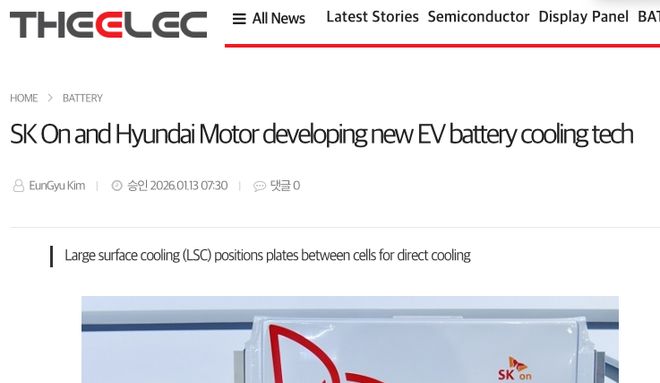
Group 1 - SK On and Hyundai Motor are collaborating to develop a new electric vehicle battery cooling technology called Large Surface Cooling (LSC) technology [1][3] - LSC technology innovatively places cooling plates between battery cells for direct cooling, enhancing heat dissipation compared to traditional methods [3] - SK On's main product is soft-pack batteries, which typically use polyurethane or silicone materials to connect cells, but LSC technology replaces traditional mica insulation with metal heat sinks for improved cooling [3] Group 2 - The development of LSC technology began in the second half of last year, and it is currently undergoing validation for automotive application [3] - The commercialization of LSC technology will ultimately be decided by Hyundai Motor, which prefers surface cooling over liquid cooling, adding uncertainty to LSC's future [3] - SK On and its competitors, LG Energy Solution and Samsung SDI, have started using cooling plates in their energy storage systems, where coolant flows inside the plates to absorb and dissipate heat [3][4] Group 3 - Liquid cooling technology may only be applied to higher-priced models due to cost concerns, leading SK On and Hyundai to slow down its development [4]

光伏取消出口退税,释放了怎样的信号?
Guan Cha Zhe Wang· 2026-01-13 02:48
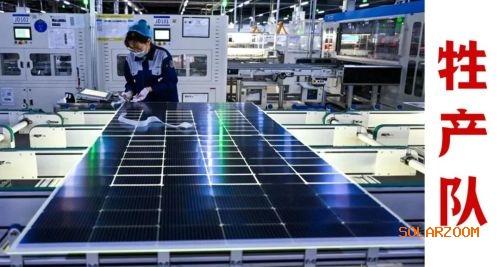
Core Viewpoint - The Chinese government is set to eliminate export tax rebates for photovoltaic (PV) components starting April 1, 2026, and reduce the rebate for power batteries from 9% to 6%, with a complete removal by 2027. This shift reflects the strength of China's PV and battery industries, which no longer require such subsidies to compete globally [2][5][9]. Group 1: Export Tax Rebate Changes - The export tax rebate policy was originally designed to encourage exports by refunding value-added tax to exporters, effectively acting as a form of trade subsidy [3]. - The rebate for PV components will be completely removed due to China's dominant market position, with over 60% global market share and some core components exceeding 80% [5][7]. - The power battery export rebate will be reduced and phased out, as China has established a strong competitive advantage in this sector, with only a few global competitors [7][8]. Group 2: Market Dynamics and Implications - The removal of export rebates aims to combat price wars that have led to unsustainable low pricing, which could harm long-term competitiveness and innovation in the PV sector [5][7]. - The government is promoting a shift from price competition to technological innovation, which is essential for maintaining high profit margins and fostering industry growth [7]. - The cancellation of export subsidies is seen as a way to redirect financial resources towards domestic consumption, rather than subsidizing exports, as China's trade surplus has reached unprecedented levels [9][11]. Group 3: Future Investment Focus - The funds saved from eliminating export tax rebates are intended to be reinvested in domestic consumption, such as housing, automotive purchases, and public services [11]. - This strategic pivot indicates a significant shift in China's economic policy, focusing on internal market stimulation rather than solely on export-driven growth [11].
2026’s Top Tech ETF Is Little Known, Cheap, Perfectly Positioned, and Ready To Rally
Yahoo Finance· 2026-01-10 15:30
Group 1 - The core theme of the news is the transition of autonomous vehicles from pilot programs to commercial operations, highlighted by NVIDIA's partnerships with Mercedes-Benz and a robotaxi alliance with Lucid and Uber [1] - Waymo plans to expand its services to 12 new cities this year, aiming for over one million weekly rides, indicating significant growth in the autonomous vehicle sector [1] - The iShares Self-Driving EV and Tech ETF (IDRV) provides exposure to the entire autonomous vehicle value chain, holding $168 million in assets and trading at a P/E ratio of around 13, which is considered low for a technology ETF [2][4] Group 2 - IDRV's asset allocation includes major players in the autonomous vehicle ecosystem, such as Tesla (4.7%), Rivian (3.9%), and BYD (3.9%), showcasing a diversified investment approach [2][3] - The fund's equal-weight methodology limits single-company risk, with the top holding representing only 4.7% of assets, which is crucial given the competitive landscape of the autonomous vehicle market [3] - IDRV has outperformed the S&P 500 and Nasdaq-100 over the past year, returning 32% compared to the S&P 500's 18% and Nasdaq-100's 22% [6]
Is GM's $7.6B EV Impact in 2025 a Step Toward Better Profit Focus?
ZACKS· 2026-01-09 16:35
Core Insights - General Motors (GM) is experiencing significant financial impacts due to a slowdown in its electric vehicle (EV) initiatives, with an expected $6 billion in special charges in Q4 2025 related to its EV rollback [1][10] - The total EV-related charges for GM in 2025 are projected to reach $7.6 billion, which includes $1.8 billion in unused EV equipment and $4.2 billion in supplier settlements and contract cancellations [2][10] Group 1: Financial Impact - GM will incur approximately $6 billion in special charges in the fourth quarter of 2025 due to its reduced EV strategy, which will negatively affect reported net income but not adjusted earnings [1][10] - The total EV-related financial burden for GM in 2025 is estimated at $7.6 billion, which includes a prior $1.6 billion charge in Q3 2025 [2][10] - GM is also expected to record an additional $1.1 billion in charges primarily related to restructuring a Chinese joint venture [2] Group 2: Strategic Shift - The company is scaling back its EV plans in response to changing U.S. policies and declining consumer demand, moving away from aggressive EV targets set during the Biden administration [3][4] - GM is reallocating resources towards higher-margin vehicles, such as pickup trucks, and reducing its exposure to battery production by selling part of its stake in Ultium Cells [5][7] - The Orion plant, initially designated for EV production, will now manufacture profitable pickup trucks like the Cadillac Escalade and Chevrolet Silverado [5] Group 3: Market Context - GM's EV sales have dropped 43% year-over-year in Q4 2025, totaling just over 25,000 vehicles, following the expiration of federal EV tax credits [6] - Other automakers, including Ford and Stellantis, are also reassessing their EV strategies, indicating a broader industry trend towards more cautious and financially disciplined approaches to EV production [9][11][12] - The shift in strategy reflects a prioritization of profitability and flexibility over an aggressive push towards an EV-only future [12] Group 4: Valuation and Performance - GM's stock has increased by 67% over the past year, outperforming the industry average [13] - From a valuation standpoint, GM appears undervalued, trading at a forward price/sales ratio of 0.43 compared to the industry average of 3.27 [14]

Tesla Cybertruck Flop Proves Costly for South Korean Supplier
MINT· 2025-12-30 03:10
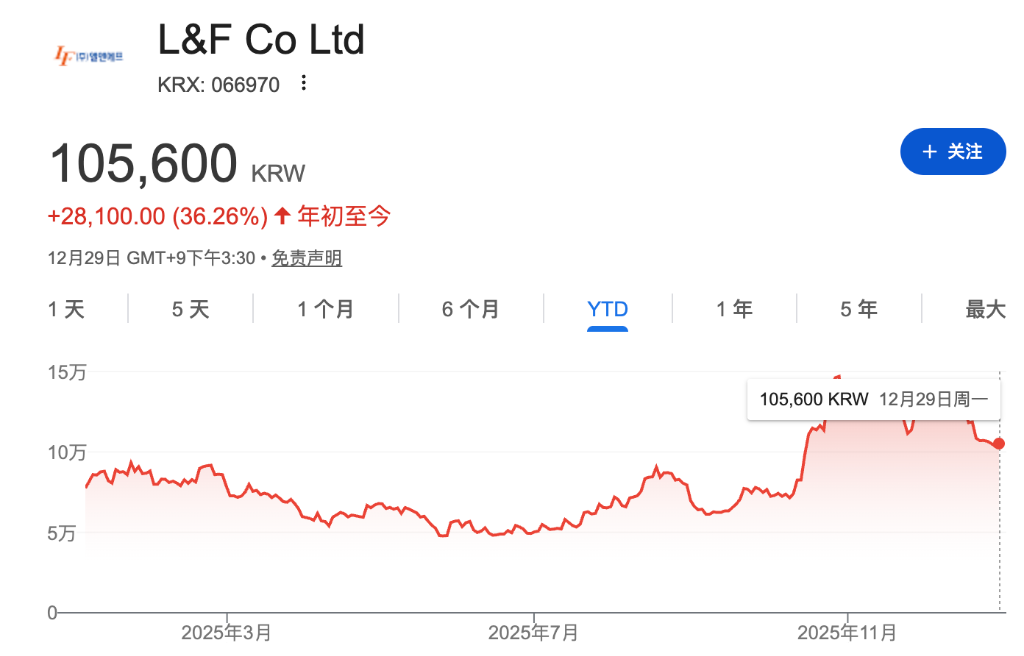
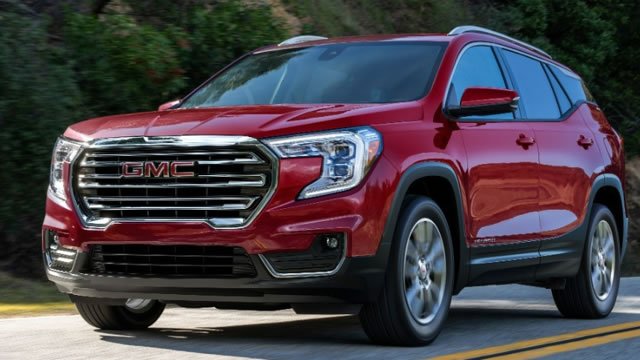
Core Insights - A significant reduction in the supply contract between L&F Co. and Tesla has occurred, with the contract value dropping from 3.83 trillion won to just 9.73 million won, marking a 99% decrease due to changes in supply quantity [1][3] Group 1: Contract Details - The high-nickel cathode material was intended for use in Cybertruck batteries, with the supply period set from January 2024 through the current month [2] - The reduction in supply was attributed to delays in the Cybertruck's development and a shift in consumer preference towards other Tesla models, such as the Model 3 and Model Y [2] Group 2: Broader Implications - The contract's revision was influenced by broader economic and policy issues, including the removal of Inflation Reduction Act subsidies [3] - Despite the contract changes, L&F stated that shipments of its flagship high-nickel product to major Korean cell manufacturers are continuing without issues [4] Group 3: Market Reaction - Following the announcement, L&F's shares fell by 11% in Seoul, although the stock has increased by approximately 16% this year, underperforming compared to the 76% rise in the benchmark Kospi Index [4]

Cybertruck一再跳票后,特斯拉大砍高镍电池材料订单,韩国L&F供货合同缩水99%
Hua Er Jie Jian Wen· 2025-12-29 14:19
Group 1 - Tesla's Cybertruck project has faced continuous delays, significantly impacting its supply chain, particularly affecting L&F, a South Korean battery materials supplier [1][2] - L&F's supply contract with Tesla, originally valued at 3.83 trillion Korean won, has been drastically reduced to 973 million won, marking a 99% decrease due to changes in supply volume [1] - The high-nickel cathode materials were intended for Cybertruck batteries, with supply originally scheduled from January 2024, but delays in development and a shift in consumer preference towards Model 3 and Model Y have limited actual supply [1][2] Group 2 - L&F planned to supply high-nickel cathode materials to Tesla over the next two years, which are crucial for enhancing battery energy density [3] - The company stated that adjustments to production plans were necessary due to changes in the global electric vehicle market and battery supply conditions, making the contract revision unavoidable [3] - L&F emphasized that the shipment volume of its flagship high-nickel products and supply to major Korean battery manufacturers, including LG Energy Solution, remains unaffected [3]