iFood

Search documents
中国外卖大战,打到了巴西战场
凤凰网财经· 2025-08-30 12:19
Core Viewpoint - The article discusses the escalating competition between Chinese companies Didi and Meituan in the Brazilian food delivery market, highlighting their legal disputes and strategic maneuvers as they attempt to capture market share in a rapidly growing sector [4][12]. Group 1: Legal Disputes - Didi and Meituan are currently involved in three lawsuits in Brazil, with the conflicts escalating to the legal arena as both companies vie for dominance in the food delivery market [5][10]. - Didi entered the Brazilian market first by acquiring local ride-hailing platform 99 in January 2018 and later launched its food delivery service, 99Food, in November 2019 [5][6]. - Meituan announced its entry into the Brazilian market with its food delivery service, Keeta, planning to invest $1 billion over the next five years [7][8]. Group 2: Market Dynamics - Brazil's food delivery market is attractive due to its large population of 210 million and a compound annual growth rate of 17.6%, indicating significant growth potential [12][13]. - The Latin American food delivery market has grown from $7.497 billion in 2018 to $37.918 billion in 2023, maintaining a growth trend for seven consecutive years [13]. - Despite iFood's dominance with an 80% market share, its operational efficiency is reportedly low, presenting opportunities for competitors like Didi and Meituan [13][15]. Group 3: Competitive Strategies - Didi's strategy leverages its existing ride-hailing infrastructure and experience in other Latin American markets to enhance its food delivery services in Brazil [16][17]. - Meituan aims to capture key urban markets through aggressive subsidy strategies, while Didi focuses on utilizing its existing network of 700,000 motorcycle riders for cost-effective delivery [19][20]. - The competition is expected to intensify as both companies adapt their strategies based on ongoing legal developments and market conditions [20].


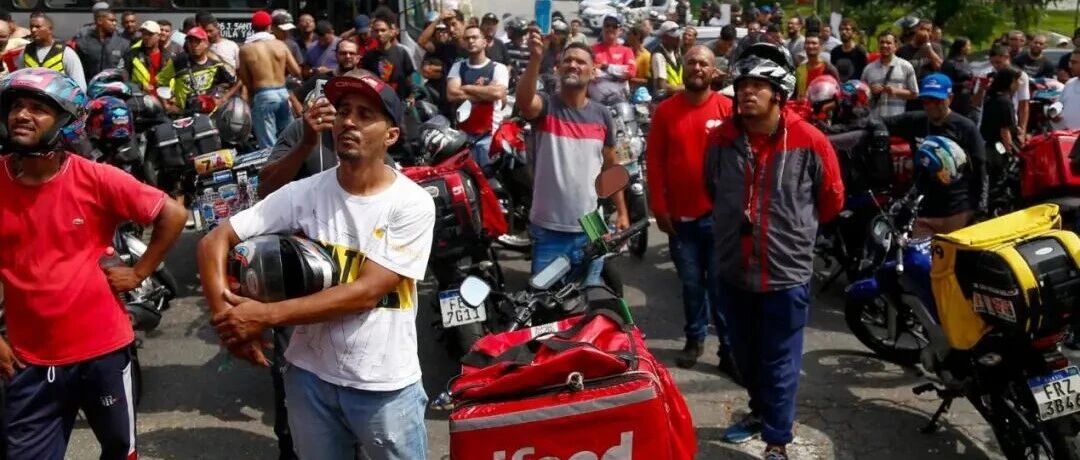
跃升千亿交易规模,滴滴在拉美瞄准外卖
Tai Mei Ti A P P· 2025-08-29 11:32
Core Insights - Didi's core platform gross transaction value (GTV) reached 109.6 billion yuan in Q2 2025, with international business GTV at 27.1 billion yuan, reflecting a 27.7% year-on-year growth at fixed exchange rates [2] - Didi's 99Food launched in Brazil's Goiânia and achieved 1 million orders in 45 days, expanding to São Paulo, the largest city in Latin America [2][4] - Didi's international strategy began in 2018 with the acquisition of Brazilian ride-sharing company 99, now covering 14 countries, including 10 in Latin America [5] Business Expansion - Didi has over 55 million users in Brazil, covering a quarter of the population, with more than 1.5 million registered drivers, including 700,000 motorcycle riders [6] - The food delivery business is seen as a natural extension of Didi's urban service ecosystem, leveraging its large ride-hailing user base and driver resources [6] - Didi's experience in Mexico, where it became the leading food delivery service, is expected to bolster its confidence in expanding food delivery in Brazil [6] Market Potential - Latin America is one of the fastest-growing food delivery markets globally, with a growth rate of 19% in 2023, second only to the Middle East [7] - The food delivery market in Latin America is valued at approximately 37.9 billion USD, with Brazil and Mexico leading at around 20 billion USD and 7.2 billion USD, respectively [8] Competitive Landscape - Didi faces competition from iFood in Brazil, which holds an 80% market share, and has previously exited the Brazilian market in 2023 [8][9] - Didi's strategy includes localized competition, focusing on smaller cities before expanding to major urban areas [8][9] Operational Strategies - Didi is addressing high delivery costs and platform commissions in Brazil, which can reach 30% and 27% of order value, respectively [9][11] - The company is implementing various promotional measures, such as free delivery and discounts for users, guaranteed income for riders, and commission waivers for merchants [11] - Didi's unique advantage lies in its ability to utilize its ride-hailing network to reduce delivery costs, allowing riders to handle both passenger and food deliveries [12]

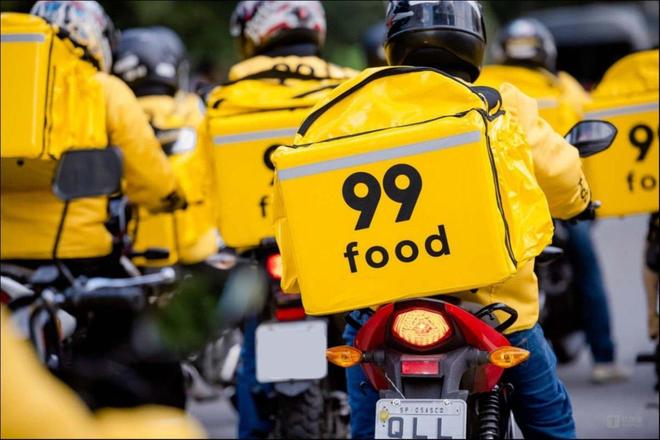
中国外卖大战打到了巴西战场
Zhong Guo Jing Ying Bao· 2025-08-28 09:20
Core Viewpoint - The competition between Didi and Meituan in Brazil's food delivery market has intensified, leading to multiple lawsuits and a strategic battle for market share in a rapidly growing sector [1][12]. Group 1: Market Entry and Competition - Didi entered the Brazilian market by acquiring local ride-hailing platform 99 in January 2018, which has since evolved to include services like 99Moto and 99Pay, amassing 50 million active users [2][3]. - Meituan announced its entry into the Brazilian market with its food delivery service Keeta, planning to invest $1 billion over the next five years [3][12]. - The Brazilian food delivery market is dominated by iFood, which holds approximately 80% market share, posing a significant challenge for both Didi and Meituan [3][9]. Group 2: Legal Disputes - The competition has escalated to legal disputes, with three lawsuits filed between Didi's 99Food and Meituan's Keeta, including claims of trademark infringement and unfair competition [6][7]. - A Brazilian court issued an injunction against 99Food regarding sponsored ads on Google, while Keeta filed a lawsuit against 99 for allegedly restricting restaurant partnerships [6][7]. Group 3: Market Potential and Growth - Brazil's food delivery market is experiencing a compound annual growth rate of 17.6%, with significant potential for expansion as the market penetration rate is only 16.1% as of 2023 [9][11]. - The Latin American food delivery market has grown from $7.497 billion in 2018 to $37.918 billion in 2023, indicating a robust growth trajectory [9]. Group 4: Strategic Advantages - Didi's established ride-hailing operations in Latin America provide a foundation for its food delivery services, allowing it to leverage existing resources and operational expertise [11]. - iFood has announced a significant investment of 17 billion reais (approximately 22 billion yuan) to counter the new competition from 99Food and Keeta [12][14].
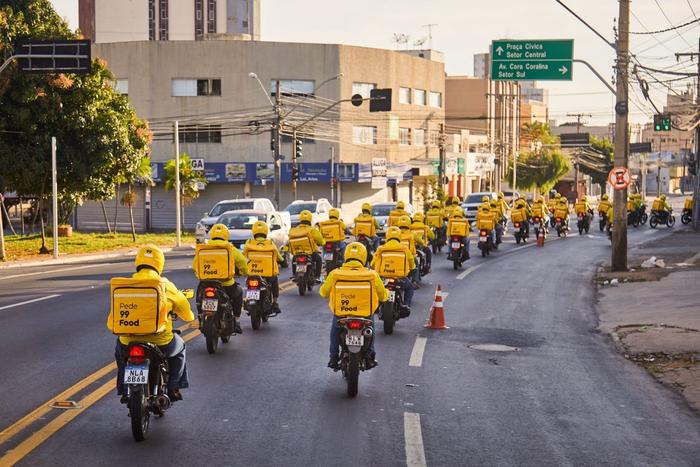
滴滴阻击美团入巴西:中国出海企业为何这样“自相残杀”?
商业洞察· 2025-08-25 09:24
Core Viewpoint - The article discusses the phenomenon of "involution" in the Chinese business landscape, particularly focusing on the competition between Chinese companies in the Brazilian market, exemplified by the conflict between Didi's 99Food and Meituan's Keeta, highlighting the detrimental effects of such internal competition on brand image and market strategy [5][19][21]. Group 1: Involution in the Chinese Automotive Industry - A report from Germany's WirtschaftsWoche highlights that the competitive environment in China's automotive industry, while seemingly vibrant, is leading to a "price war" that harms the overall market [5]. - The article suggests that this "involution" has now extended to international markets, where Chinese companies are competing against each other rather than focusing on the dominant local players [6][19]. Group 2: Didi's Competitive Strategies in Brazil - Didi's 99Food has employed aggressive tactics against Meituan's Keeta, including a "choose one" exclusivity strategy, where it offers substantial prepayments to merchants to prevent them from partnering with Keeta while allowing them to work with the local leader, iFood [12][19]. - The total investment by Didi in Brazil is reported to be 10 billion reais, with 9 billion allocated to internal competition rather than innovation or combating the market leader [16][19]. Group 3: Consequences of Involution - The article draws parallels between the current situation and past experiences of Chinese motorcycle companies in Southeast Asia, which suffered from price wars that ultimately led to a loss of market share to Japanese brands [20][21]. - It emphasizes that such internal competition not only harms the companies involved but also damages the overall image of Chinese brands in international markets, leading to a collective crisis of reputation [25][30]. Group 4: Call for Change in Business Strategy - The article advocates for a shift from "involution" to "co-creation," urging Chinese companies to focus on expanding markets and creating new demands rather than replicating domestic competition abroad [28][30]. - It stresses the importance of innovation and differentiation in products and services to avoid the pitfalls of low-level competition and to enhance the global standing of Chinese brands [29][30].

滴滴巴西狙击美团,中国企业出海何时告别“内卷外化”?
Xin Lang Cai Jing· 2025-08-23 04:05
Core Viewpoint - The competition between Chinese companies Didi's 99Food and Meituan's Keeta in Brazil has escalated into a fierce internal struggle, diverting focus from the dominant local player iFood, which holds over 80% market share [1][4][12]. Group 1: Competitive Actions - Meituan's Keeta has filed a lawsuit against Didi's 99Food, alleging that it has engaged over 100 restaurant chains with exclusive contracts worth over 10 billion RMB, aimed at undermining Keeta [1][10]. - Didi's strategy includes offering substantial cash incentives to restaurants to sign exclusive agreements that prohibit collaboration with Meituan while allowing partnerships with iFood [6][10]. - Didi has also attempted to confuse users by purchasing high-ranking search keywords related to "Keeta," leading to a court ruling against this practice [10][11]. Group 2: Market Dynamics - The Brazilian food delivery market is valued at approximately 86 billion RMB, with iFood as the clear leader, making the competition between Didi and Meituan particularly puzzling [12][13]. - Despite the low market share of both Didi and Meituan in Brazil, their internal competition has inadvertently benefited iFood, which is now positioned to capitalize on their conflict [17][18]. Group 3: iFood's Response - In response to the competition from Chinese firms, iFood announced a historic investment plan of 170 billion BRL (approximately 220 billion RMB) to enhance its market position and user engagement [20][21]. - iFood aims to increase its monthly order volume from 12 million to 20 million and expand its active user base from 55 million to 80 million over the next three years [20][21]. Group 4: Strategic Implications - The ongoing internal competition between Didi and Meituan reflects a broader issue of "involution" among Chinese companies abroad, reminiscent of past price wars in other markets [21][22]. - The need for Chinese companies to shift from zero-sum competition to collaborative strategies is emphasized, as cooperation could yield better outcomes against dominant local players like iFood [22].
滴滴阻击美团入巴西:中国出海企业为何这样“自相残杀”?
Hu Xiu· 2025-08-23 00:22
Core Viewpoint - The article highlights the phenomenon of "involution" in China's competitive landscape, particularly in the automotive and food delivery sectors, where companies engage in destructive price wars and self-sabotage rather than focusing on innovation and collaboration [1][20][39]. Group 1: Involution in the Automotive Industry - The German publication points out that despite Chinese automotive companies winning globally, they are trapped in a price war that leads to "bad money driving out good" [1]. - The article suggests that this competitive behavior is detrimental to the long-term sustainability and direction of the industry [1]. Group 2: Involution Externalization in Food Delivery - Chinese companies are now exporting their "involution" practices abroad, as seen in the case of Didi's food delivery platform, 99Food, which is engaged in exclusionary tactics against fellow Chinese company Meituan in Brazil [2][20]. - The competitive strategies employed by 99Food, such as the "choose one" policy for merchants, mirror past domestic practices and highlight a troubling trend of self-inflicted harm among Chinese firms [8][9]. Group 3: Legal and Competitive Actions - 99Food has been accused of unfair competition by Meituan, which claims that 99Food's actions in Brazil, including significant prepayments to merchants, are designed to stifle competition [3][10]. - The Brazilian legal system is involved, with Meituan filing lawsuits against 99Food for its aggressive tactics, including keyword advertising that misleads potential customers [12][14]. Group 4: Historical Context and Lessons - The article draws parallels to past failures of Chinese motorcycle companies in Southeast Asia, which engaged in price wars that ultimately led to their market share being overtaken by Japanese brands [21][22]. - It warns that the current food delivery sector may be repeating these mistakes, risking the overall reputation of Chinese brands in international markets [21][26]. Group 5: Call for Change in Competitive Strategy - The article advocates for a shift from "involution" to "co-creation," urging Chinese companies to focus on innovation and collaboration rather than destructive competition [30][40]. - It emphasizes the need for companies to adopt a mindset of creating new markets and demands, rather than merely competing for existing shares [31][32]. Group 6: Implications for Brand Image - The ongoing internal competition among Chinese firms could damage the overall image of Chinese brands, leading to stricter scrutiny and a less favorable business environment abroad [27][28]. - The article stresses that to succeed internationally, Chinese companies must demonstrate innovation and cooperation rather than engage in low-quality, price-driven competition [29][40].
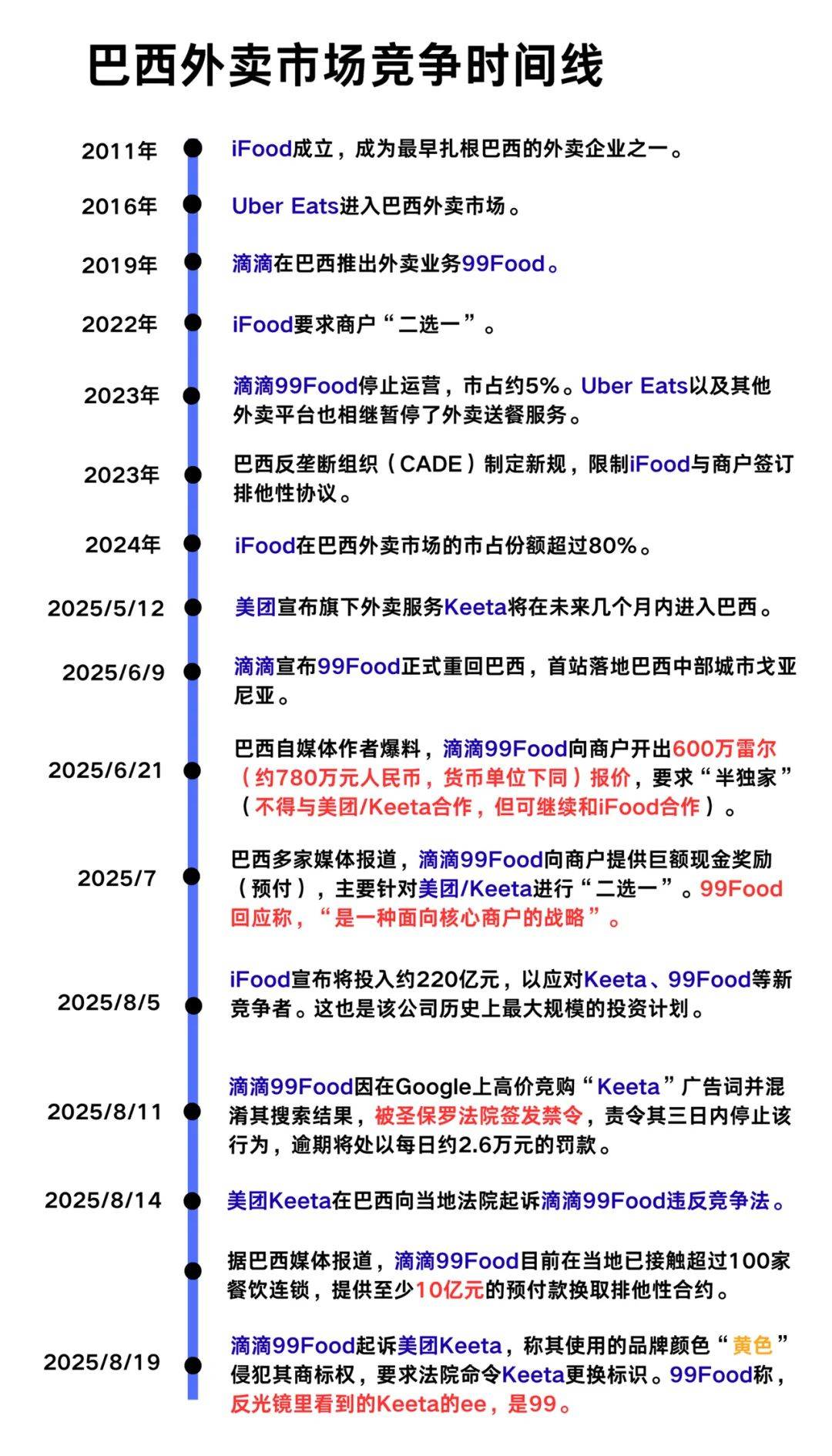
美团和滴滴,在巴西打起“外卖大战”!双方一个月已有3场官司
Xin Lang Ke Ji· 2025-08-22 10:32
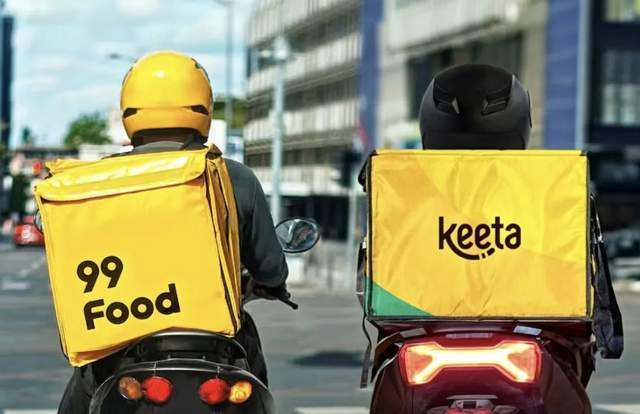
Core Viewpoint - The legal battle between Chinese food delivery giants Didi's 99Food and Meituan's Keeta in Brazil centers around trademark infringement and unfair competition claims, highlighting the intense competition in the Brazilian food delivery market [1][3][9]. Group 1: Legal Disputes - 99Food has filed a lawsuit against Keeta, alleging trademark infringement due to similarities in branding, including color, graphics, and font [1][3]. - Keeta has previously filed two lawsuits against 99Food, claiming unfair competition and consumer confusion due to 99Food's high-cost keyword purchases on Google [6][9]. - The Brazilian court has already issued an injunction against 99Food in one of Keeta's lawsuits, while the second case is still pending [6][9]. Group 2: Market Competition - The competition between Didi's 99Food and Meituan's Keeta has escalated, with both companies launching operations in Brazil within a short timeframe [9][10]. - 99Food has invested 500 million Brazilian Reais (approximately 650 million RMB) in its Brazilian operations, while Keeta plans to invest 5.6 billion Brazilian Reais (approximately 730 million RMB) over five years [9][10]. - iFood, the leading local competitor, holds an 80% market share in Brazil's food delivery sector and is responding to the competition by planning to invest 17 billion Brazilian Reais (approximately 22.1 billion RMB) by March 2026 [10][11].

滴滴“背刺”美团:中企相争,外资得利?
3 6 Ke· 2025-08-22 08:29
Core Viewpoint - The competition between Chinese companies Didi's 99Food and Meituan's Keeta in the Brazilian food delivery market exemplifies a case of "internal competition externalized," where companies focus on undermining each other rather than addressing the dominant local player, iFood [2][12][16]. Group 1: Competitive Strategies - Didi has invested 1.1 billion RMB to implement a "choose one" strategy, offering high subsidies to local merchants to prevent them from collaborating with Meituan while allowing partnerships with iFood [1][4][8]. - Didi has engaged in various aggressive tactics, including purchasing keywords to confuse search results and filing lawsuits against Meituan for trademark infringement [3][10]. - The "choose one" clause designed by Didi explicitly prohibits merchants from working with Meituan but does not restrict partnerships with iFood, indicating a targeted exclusion strategy [7][8]. Group 2: Market Dynamics - iFood has responded to the entry of Chinese competitors by announcing a significant investment plan of 17 billion BRL (approximately 22 billion RMB) to strengthen its market position [15]. - The Brazilian food delivery market is valued at approximately 12 billion USD, with Didi previously holding a maximum market share of 5% [12]. - The competitive actions of Didi and Meituan have inadvertently benefited iFood, allowing it to stabilize its market position amidst the influx of Chinese companies [15][16]. Group 3: Implications of Internal Competition - The aggressive competition between Didi and Meituan reflects a broader issue of Chinese companies adopting a zero-sum mentality, focusing on eliminating competitors rather than creating value for consumers [16][18]. - This approach risks damaging the reputation of Chinese brands in international markets and may lead to regulatory scrutiny, as seen with iFood's past penalties for similar practices [13][17]. - The article emphasizes the need for Chinese companies to shift from destructive competition to value creation and collaboration in overseas markets to achieve sustainable growth [18][19].
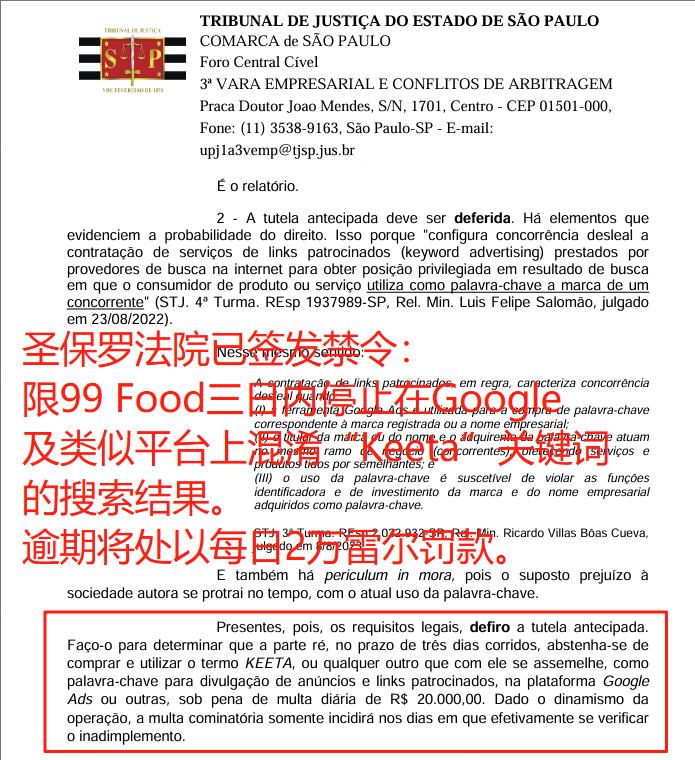
滴滴巴西的“二选一”奖金真香,我都想去巴西开饭馆了
Sou Hu Cai Jing· 2025-08-22 08:10
Core Insights - The competition between Chinese companies Meituan and Didi in Brazil's food delivery market has intensified, with both companies employing aggressive tactics against each other before Meituan's service has even launched [2][5][10] - iFood, a dominant player in Brazil's food delivery market with over 80% market share, is backed by Prosus, which is also a major shareholder of Tencent [4][10] - Didi's strategy involves using "choose one" tactics against Meituan, similar to what iFood previously used against Didi, indicating a shift in focus from competing with iFood to undermining Meituan [5][13] Company Strategies - Didi has reportedly offered significant financial incentives to restaurants to prevent them from partnering with Meituan, while still allowing partnerships with iFood [7][10] - Meituan has responded by filing lawsuits against Didi for its aggressive tactics, including a claim that Didi has provided at least 900 million reais (approximately 1.18 billion RMB) in prepayments to secure exclusivity against Meituan [10][11] - Both companies have engaged in multiple legal disputes within a short timeframe, indicating a highly competitive and contentious market environment [15] Market Dynamics - The Brazilian food delivery market is projected to exceed $20 billion by 2025, making it an attractive target for international expansion [18] - iFood has initiated defensive measures, including a significant investment of 17 billion reais (approximately 22 billion RMB) to strengthen its market position against new entrants [16][18] - The aggressive competition between Didi and Meituan may lead to a scenario where both companies exhaust their resources without significantly impacting iFood's dominance [19][20] Industry Implications - The internal competition between Didi and Meituan raises concerns about the perception of Chinese companies in international markets, potentially harming their reputation [16][20] - There is a call for both companies to focus on collaboration rather than internal conflict, as the ultimate goal is to capture a larger market share rather than engage in detrimental competition [20] - The emphasis on traditional competitive tactics like "choose one" may hinder innovation and the development of differentiated services, which are crucial in the current AI-driven market landscape [20]
【环球财经】面对美团与滴滴挑战 巴西外卖巨头iFood联手Mottu招募骑手
Zhong Guo Jin Rong Xin Xi Wang· 2025-08-22 07:38
Core Insights - iFood partners with motorcycle rental platform Mottu to offer better rental conditions for delivery riders starting September, aiming to attract and retain more riders [1] - Riders can benefit from a deposit reduction of up to 20% and flexible policies upon signing or renewing contracts, with potential additional monthly earnings of up to 350 Brazilian Reais based on delivery volume [1] - iFood's rider count in Brazil has increased from 310,000 to 450,000 over the past year, while Mottu's motorcycle rental fleet has expanded from 70,000 to 130,000, with a future target of 1 million [1] Industry Developments - Chinese companies are accelerating their food delivery presence in Brazil, with Meituan approved to operate its delivery brand Keeta and planning to invest $1 billion over the next five years [1] - Didi is reviving its 99 Food delivery service, leveraging its large user base of 50 million and 700,000 motorcycle riders to capture a larger market share [1] - The Brazilian food delivery market is valued at approximately $12 billion, with an annual growth rate of around 20%, indicating intensifying competition as iFood, Meituan, and Didi expand their operations [2] Company Investments - iFood announced plans to invest 17 billion Brazilian Reais (approximately $3.5 billion) from April 2025 to March 2026 to enhance platform traffic, user engagement, and expand its operational team [2] - The company aims to hire 1,100 new employees in the coming year, with half of these positions in technology, increasing total staff to over 8,600 [2]