君实生物

Search documents
上海君亦乐生物科技有限公司成立,注册资本50000万人民币
Sou Hu Cai Jing· 2026-01-20 17:27
Core Viewpoint - Shanghai Junyile Biotechnology Co., Ltd. has been established with a registered capital of 500 million RMB, fully owned by Shanghai Junshi Biosciences Co., Ltd. [1] Company Information - The legal representative of Shanghai Junyile Biotechnology Co., Ltd. is Xie Wan [1] - The company is registered with a capital of 500 million RMB [1] - The business scope includes technology services, development, consulting, exchange, transfer, promotion, import and export of goods, and information consulting services [1] - The company is classified under the national standard industry of scientific research and technical service industry, specifically technology promotion and application service industry [1] - The registered address is located in the China (Shanghai) Pilot Free Trade Zone Lingang New Area [1] - The company is a limited liability company with no fixed term of operation [1] Shareholding Structure - Shanghai Junshi Biosciences Co., Ltd. holds 100% of the shares in Shanghai Junyile Biotechnology Co., Ltd. [1]

创新药板块承压,益方生物等跌超3%,科创创新药ETF汇添富(589120)跌超2%,资金逆势涌入!"全球创新药春晚"JPM召开,中国创新药闪耀全球
Sou Hu Cai Jing· 2026-01-20 11:33
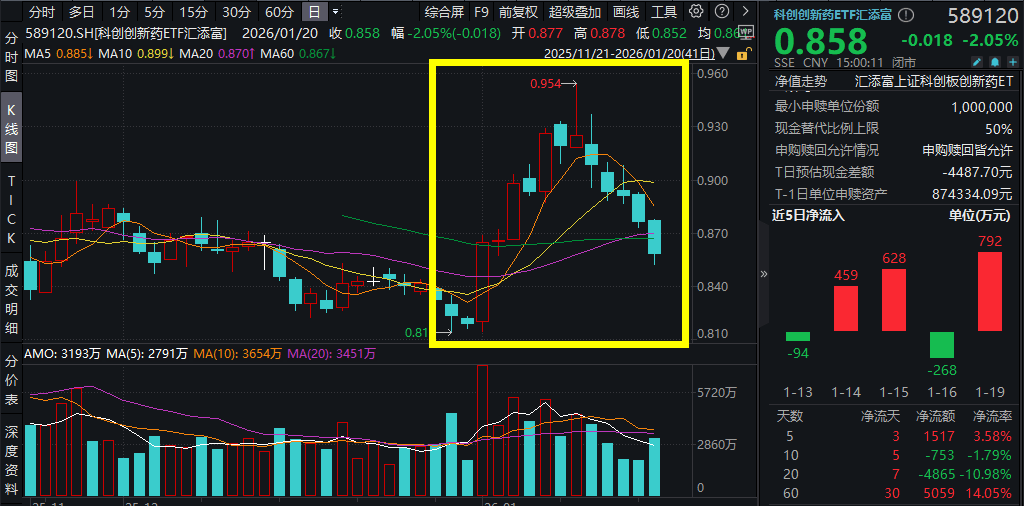
Core Viewpoint - The A-share market is experiencing fluctuations, particularly affecting the innovative drug sector, with the ETF Huatai Innovation Drug (589120) declining by 2.05% and facing a five-day losing streak, despite attracting over 7.9 million yuan in funds [1][3]. Group 1: Market Performance - The Huatai Innovation Drug ETF (589120) has seen a decline in its constituent stocks, with major players like I-Mab and Junshi Biosciences dropping over 3%, and others like BeiGene and Zai Lab falling more than 2% [3]. - The top ten constituent stocks of the ETF show a negative trend, with BeiGene-U down by 2.38% and Junshi Biosciences-U down by 3.42%, indicating a general downturn in the sector [3]. Group 2: Long-term Outlook - Despite the short-term market pressure, the long-term outlook for the innovative drug sector remains positive, with expectations of a clear beta market driven by liquidity recovery at the beginning of the year [4]. - The JPM conference highlighted the achievements of over 20 Chinese pharmaceutical companies, with projections for significant revenue growth in innovative drugs, such as a 25% increase for Heng Rui in 2026 [4]. Group 3: Business Development (BD) Trends - The BD activities in the sector are at a peak, with 17 transactions occurring since January, totaling approximately 10.15 billion USD in upfront payments, significantly exceeding market expectations [5]. - The ongoing trend of foreign companies expanding in China and the increasing flow of funds into the innovative drug sector suggest a favorable environment for growth and investment [5]. Group 4: Investment Strategy - The innovative drug sector is recommended for increased allocation, particularly in Hong Kong stocks, as the market is currently at a relative bottom, with potential for new historical highs [5]. - The ETF focuses on leading innovative drug companies, providing a high degree of exposure to the opportunities presented by the rise of Chinese innovative drugs [5].



生物制品板块1月20日跌0.63%,欧林生物领跌,主力资金净流出3.35亿元
Zheng Xing Xing Ye Ri Bao· 2026-01-20 08:51
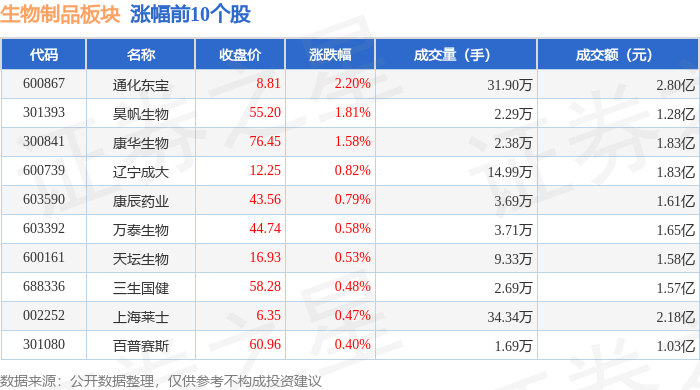
Market Overview - The biopharmaceutical sector experienced a decline of 0.63% on January 20, with Olin Bio leading the drop [1] - The Shanghai Composite Index closed at 4113.65, down 0.01%, while the Shenzhen Component Index closed at 14155.63, down 0.97% [1] Stock Performance - Notable gainers in the biopharmaceutical sector included: - Tonghua Dongbao (600867) with a closing price of 8.81, up 2.20% on a trading volume of 319,000 shares and a turnover of 280 million yuan [1] - Wufan Bio (301393) closed at 55.20, up 1.81% with a trading volume of 22,900 shares and a turnover of 128 million yuan [1] - Kanghua Bio (300841) closed at 76.45, up 1.58% with a trading volume of 23,800 shares and a turnover of 183 million yuan [1] - Major decliners included: - Olin Bio (616889) closed at 25.98, down 3.88% with a trading volume of 87,000 shares and a turnover of 226 million yuan [2] - Junshi Bio (688180) closed at 35.29, down 3.42% with a trading volume of 119,400 shares and a turnover of 425 million yuan [2] - Ganli Pharma (603087) closed at 70.23, down 2.70% with a trading volume of 81,800 shares and a turnover of 577 million yuan [2] Capital Flow - The biopharmaceutical sector saw a net outflow of 335 million yuan from institutional investors, while retail investors experienced a net inflow of 128 million yuan [2] - The capital flow for specific stocks indicated: - Wanze Co. (000534) had a net inflow of 103 million yuan from institutional investors [3] - Watson Bio (300142) saw a net inflow of 40 million yuan from institutional investors [3] - Olin Bio (688319) had a net inflow of 17.96 million yuan from institutional investors [3]

君实生物跌3.42% 连亏9年3季2020年上市2募资共86亿
Zhong Guo Jing Ji Wang· 2026-01-20 08:45
Core Viewpoint - Junshi Biosciences (688180.SH) is currently experiencing a decline in stock price, closing at 35.29 yuan with a drop of 3.42%, indicating a state of being below its initial public offering (IPO) price [1] Fundraising and Financial Performance - Junshi Biosciences raised a total of 4.836 billion yuan from its IPO on July 15, 2020, with a net amount of 4.497 billion yuan after deducting issuance costs, exceeding the original plan by 1.797 billion yuan [1] - The company planned to raise 2.7 billion yuan for innovative drug research, industrialization projects, bank loan repayment, and working capital [1] - The company raised an additional 3.7765 billion yuan through a private placement of 70 million shares at 53.95 yuan per share in 2022, with a net amount of approximately 3.7448 billion yuan after costs [2] - The total funds raised by Junshi Biosciences from both public and private placements amount to 8.612 billion yuan [3] Profitability and Revenue Trends - From 2016 to 2024, Junshi Biosciences reported negative net profits, with figures ranging from -1.35 billion yuan to -23.88 billion yuan [3] - For the first three quarters of 2025, the company achieved a revenue of 1.806 billion yuan, reflecting a year-on-year growth of 42.06%, while the net profit attributable to shareholders was -596 million yuan, an improvement from -927 million yuan in the previous year [3] - The net cash flow from operating activities for the same period was -343 million yuan, compared to -1.113 billion yuan in the previous year [3]
跨国药企“必备”肿瘤药中国药企还有机会卖
Jing Ji Guan Cha Wang· 2026-01-16 16:20
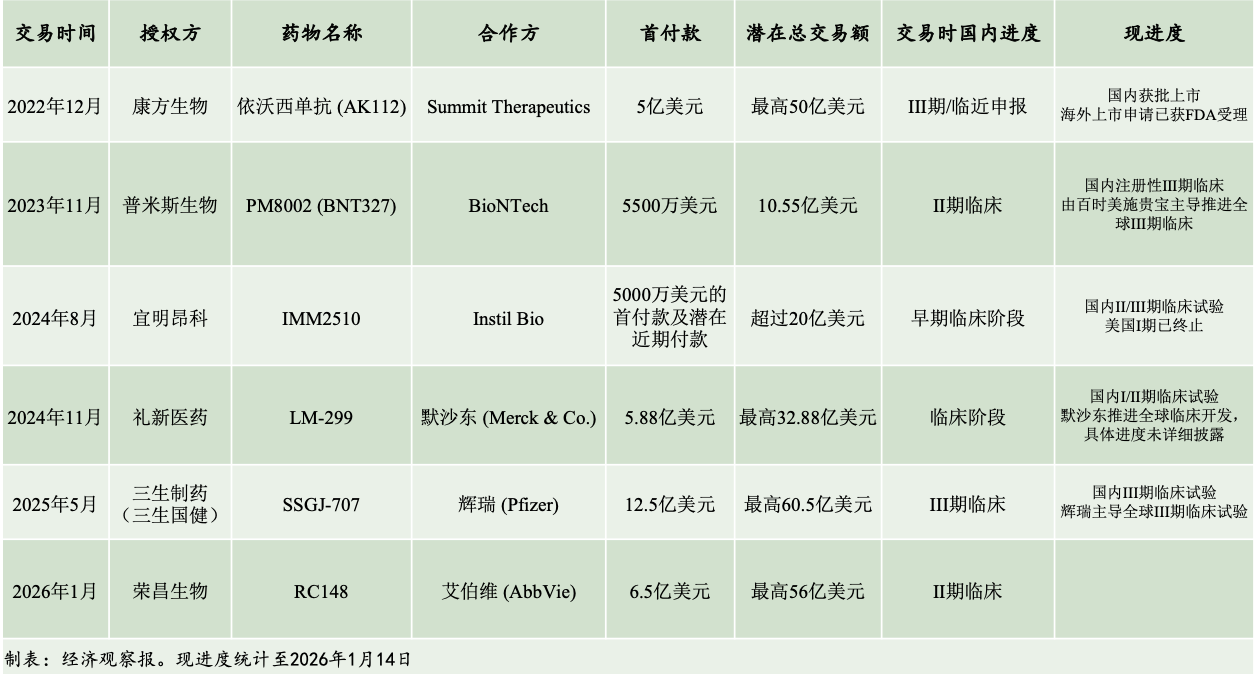
Core Viewpoint - The recent exclusive licensing agreement between Rongchang Biologics and AbbVie for the dual-specific antibody drug RC148, targeting PD-1/VEGF, highlights the competitive landscape in the oncology drug market, with significant financial implications for both companies [1][5]. Group 1: Licensing Agreement Details - Rongchang Biologics has entered into an exclusive licensing agreement with AbbVie for RC148, which is currently in Phase II clinical trials [1]. - The deal includes an upfront payment of $650 million and potential milestone payments up to $4.95 billion, along with tiered royalties on net sales, bringing the total potential value of the agreement to $5.5 billion [1]. - Following the announcement, Rongchang Biologics' stock surged, with a 20% increase in A-shares and a 7.87% increase in Hong Kong shares [1]. Group 2: Market Context and Comparisons - The PD-1/VEGF target has seen multiple drugs developed, with over five similar drugs already in the market, leading to skepticism about the market share for later entrants [1][4]. - Other Chinese biotech firms have also engaged in significant licensing deals for PD-1/VEGF drugs, with notable transactions including a $500 million upfront payment from Summit to Kanyos Biologics and a $1.25 billion upfront payment from a partnership involving 3SBio and Pfizer [4]. - Despite being ranked lower in the market, Rongchang Biologics' deal value is comparable to that of Kanyos Biologics, raising questions about the valuation of later-stage products [5]. Group 3: Future Prospects and Trends - There is an expectation for continued licensing transactions in the PD-1/VEGF space, driven by efficacy, different indications, and combination therapies [8]. - Companies with PD-1/VEGF candidates that have not yet been licensed are actively seeking opportunities, with the potential for significant deals depending on product data and market conditions [8]. - Major multinational pharmaceutical companies, including Eli Lilly, Novartis, and AstraZeneca, have not yet announced new PD-1/VEGF acquisitions, indicating potential future market activity [9].

君实生物跌2.00%,成交额1.76亿元,主力资金净流入279.43万元
Xin Lang Cai Jing· 2026-01-16 02:55
Core Viewpoint - Junshi Biosciences has experienced fluctuations in stock price and trading volume, with a recent decline in share price despite a year-to-date increase. The company is involved in the research and commercialization of monoclonal antibody drugs and other therapeutic proteins, with a significant portion of its revenue coming from drug sales [1][2]. Group 1: Stock Performance - On January 16, Junshi Biosciences' stock fell by 2.00%, trading at 36.72 CNY per share, with a total market capitalization of 37.7 billion CNY [1]. - The stock has increased by 7.49% year-to-date but has seen a decline of 6.33% over the last five trading days [1]. - The trading volume was 1.76 billion CNY, with a turnover rate of 0.62% [1]. Group 2: Financial Performance - For the period from January to September 2025, Junshi Biosciences reported a revenue of 1.806 billion CNY, representing a year-on-year growth of 42.06% [2]. - The company recorded a net profit attributable to shareholders of -596 million CNY, which is a 35.72% increase compared to the previous period [2]. Group 3: Shareholder Information - As of September 30, 2025, the number of shareholders for Junshi Biosciences increased to 35,900, a rise of 15.17% from the previous period [2]. - The average number of circulating shares per shareholder decreased by 12.96% to 21,361 shares [2]. Group 4: Company Overview - Junshi Biosciences, established on December 27, 2012, and listed on July 15, 2020, is based in Shanghai and focuses on the development and commercialization of monoclonal antibody drugs and other therapeutic proteins [1]. - The company's main revenue sources include drug sales (90.67%), technology licensing and royalties (8.74%), and technical services (0.59%) [1].
一家烟台公司卖了“抗癌新药”,落袋6.5亿美金
3 6 Ke· 2026-01-16 00:05
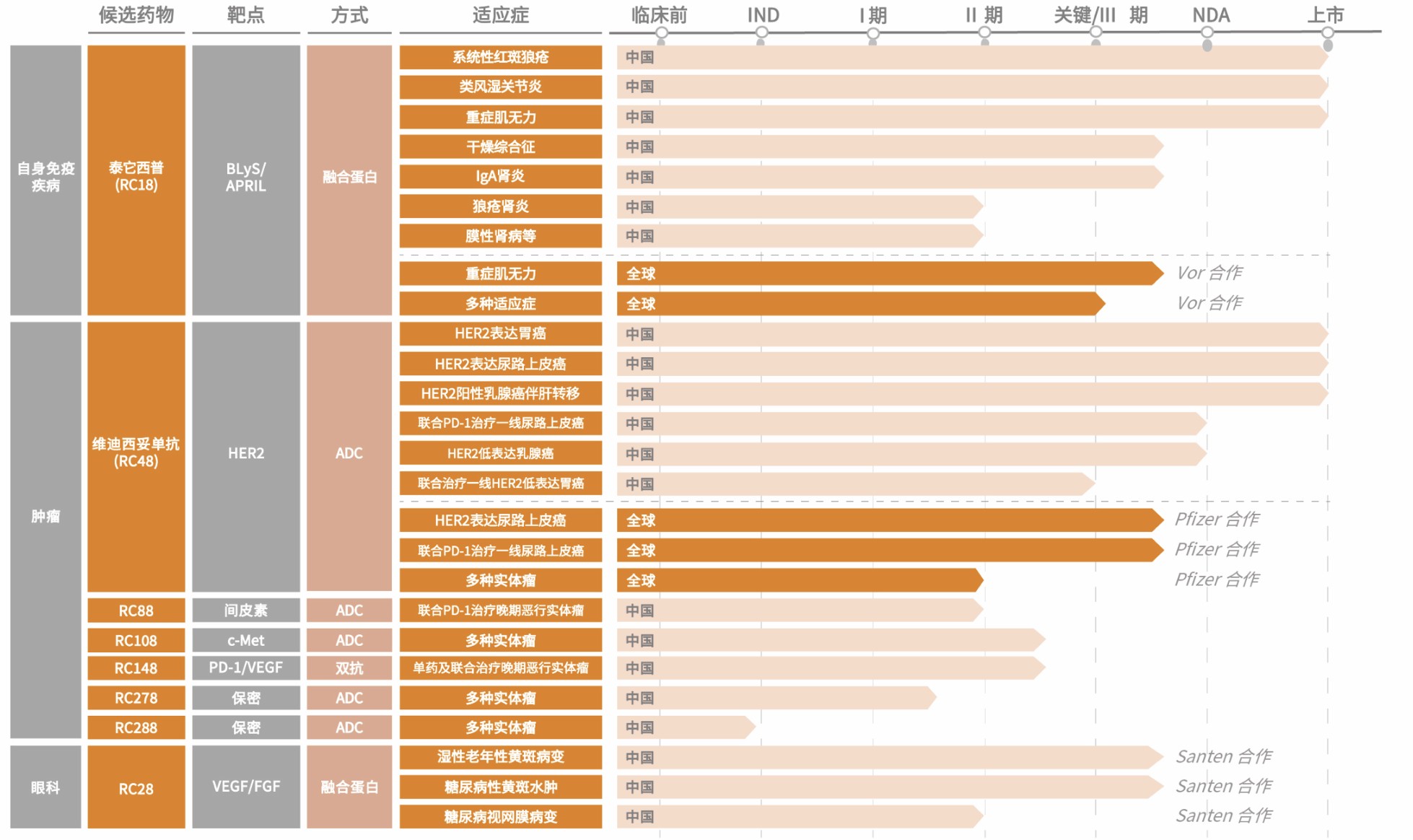
Core Viewpoint - Rongchang Biopharmaceutical has successfully licensed its PD-1/VEGF dual antibody RC148 to AbbVie for an upfront payment of $650 million, with the total deal potentially reaching $5.6 billion, approximately 4 billion RMB, marking a significant turnaround for the company [1][2][7]. Company Overview - Rongchang Biopharmaceutical, founded in 2008, is a pioneer in the development of innovative drugs in China, particularly in antibody-drug conjugates (ADCs) [1]. - The company has faced challenges in commercializing its products and has been criticized for its aggressive strategy, leading to significant losses and limited cash reserves [1]. Financial Impact - The $650 million upfront payment from AbbVie will provide substantial funding for Rongchang Biopharmaceutical, covering all previous R&D investments for RC148 and significantly boosting the company's financial position [2][7]. - Following the announcement of the deal, Rongchang's stock surged over 20%, indicating strong market confidence in the transaction [7]. Product Development and Market Position - RC148 is the first product from Rongchang's dual antibody platform to enter clinical trials, focusing on treating solid tumors [5]. - The product has shown promising clinical data, with objective response rates of 61.9% for monotherapy and 66.7% when combined with chemotherapy for non-small cell lung cancer [8]. Competitive Landscape - The competition in the PD-1/VEGF dual antibody market is intensifying, with other companies like Kangfang Biopharmaceutical and Sanofi already advancing their products to later clinical stages [9][11]. - Rongchang's collaboration with AbbVie, which has limited experience in solid tumors, raises questions about the potential success of RC148 compared to competitors [9][12]. Strategic Significance - The deal with AbbVie reflects ongoing interest from multinational pharmaceutical companies in acquiring dual antibody assets, which could benefit domestic companies like Rongchang [7]. - The transaction underscores the importance of asset quality and collaboration in revitalizing market confidence in the biopharmaceutical sector [7].
一家烟台公司卖了「抗癌新药」,落袋6.5亿美金
Xin Lang Cai Jing· 2026-01-15 14:14
Core Insights - Rongchang Biopharmaceutical has authorized all overseas rights of its PD-1/VEGF dual antibody RC148 to AbbVie, with an upfront payment of $650 million, potentially reaching a total of $5.6 billion, approximately 4 billion RMB [3][21][28] - The transaction marks a significant turnaround for Rongchang Biopharmaceutical, which had faced skepticism regarding its aggressive strategy due to slow commercialization and substantial losses in recent years [5][22][28] Company Overview - Founded in 2008 by Wang Weidong and Harvard-returned scientist Fang Jianmin, Rongchang Biopharmaceutical is one of the early innovators in China's pharmaceutical industry, focusing on ADC (antibody-drug conjugate) products [3][21] - The company has a total market capitalization exceeding 100 billion RMB across its A and H shares [21] Financial Impact - The $650 million upfront payment from AbbVie is nearly three times Rongchang Biopharmaceutical's revenue for the first three quarters of the previous year [20][28] - This deal injects substantial funds into the company, which had reported losses exceeding 500 million RMB and had only 1.07 billion RMB in cash reserves as of the third quarter of last year [5][22] Market Position and Strategy - Rongchang Biopharmaceutical has historically adopted a "high-risk, high-reward" strategy, with a large sales team and extensive R&D pipeline [4][22] - The company has been proactive in signaling potential new business development (BD) deals, although it took until 2025 to confirm two significant collaborations [24][28] Product Development - RC148 is the first product from Rongchang's dual antibody platform to enter clinical trials, focusing on solid tumors [10][27] - The clinical data for RC148 shows promising results, with objective response rates of 61.9% for monotherapy and 66.7% when combined with chemotherapy, indicating potential to surpass standard treatments [31] Competitive Landscape - The competition in the PD-1/VEGF dual antibody market is intensifying, with other companies like Kangfang Biopharmaceutical and Sanofi entering advanced clinical stages [29][31] - The ability to conduct global clinical trials and explore multiple indications is becoming a key competitive factor in this space [30][31]

君实生物跌2.06%,成交额2.38亿元,主力资金净流出1105.94万元
Xin Lang Cai Jing· 2026-01-15 03:35
Core Viewpoint - Junshi Biosciences' stock price has shown fluctuations, with a recent decline of 2.06% and a year-to-date increase of 10.16%, indicating volatility in market performance [1][2]. Group 1: Stock Performance - As of January 15, Junshi Biosciences' stock price is reported at 37.63 CNY per share, with a total market capitalization of 38.634 billion CNY [1]. - The stock has experienced a 0.08% decline over the last five trading days, a 5.17% increase over the last 20 days, and a 3.49% decline over the last 60 days [2]. Group 2: Financial Performance - For the period from January to September 2025, Junshi Biosciences achieved a revenue of 1.806 billion CNY, representing a year-on-year growth of 42.06% [2]. - The company reported a net profit attributable to shareholders of -596 million CNY, which is a year-on-year increase of 35.72% [2]. Group 3: Shareholder Information - As of September 30, 2025, the number of shareholders for Junshi Biosciences increased by 15.17% to 35,900, while the average circulating shares per person decreased by 12.96% to 21,361 shares [2]. - The top ten circulating shareholders include notable ETFs, with E Fund's SSE STAR 50 ETF holding 19.3929 million shares, a decrease of 2.8203 million shares from the previous period [3].
跨国药企“必备”肿瘤药,中国药企还有机会卖
Jing Ji Guan Cha Wang· 2026-01-15 03:32
Core Viewpoint - The recent licensing agreement between Rongchang Biologics and AbbVie for the dual-specific antibody drug RC148 highlights the competitive landscape of PD-1/VEGF targeted therapies, with significant financial implications for both companies involved [1][6]. Group 1: Licensing Agreement Details - Rongchang Biologics has entered into an exclusive licensing agreement with AbbVie for RC148, a dual-specific antibody currently in Phase II clinical trials, granting AbbVie rights outside Greater China [1][6]. - The deal includes an upfront payment of $650 million and potential milestone payments up to $4.95 billion, along with tiered royalties on net sales, bringing the total potential value of the agreement to $5.5 billion [1][6]. - This transaction's total amount is considered high, especially for a product not ranked among the top three in its category, raising questions about market share potential [6]. Group 2: Market Context and Comparisons - The PD-(L)1/VEGF target has gained significant attention in recent years, combining immunotherapy and targeted therapy, with expectations of enhanced efficacy [3]. - Several Chinese biotech companies have previously licensed their PD-(L)1/VEGF drugs to international firms, with notable deals including a $500 million upfront payment from Summit Therapeutics to Kanyin Biologics, and a $1.25 billion upfront payment from Pfizer to Sanofi [4][5]. - Despite the presence of multiple PD-1/VEGF drugs in the market, there remains potential for further licensing agreements, as efficacy and specific indications will play a crucial role in market segmentation [10]. Group 3: Future Trends and Industry Insights - The combination of PD-(L)1/VEGF drugs with ADCs (antibody-drug conjugates) is anticipated to be a major development trend among pharmaceutical companies [9]. - Companies that have not yet licensed their PD-1/VEGF drugs are actively seeking opportunities, with the success of future deals dependent on finding suitable partners and demonstrating strong clinical data [10]. - Major multinational pharmaceutical companies, including Eli Lilly, Novartis, and Sanofi, have yet to announce new licensing agreements, indicating a cautious approach while awaiting more mature data [12].