DeepSeek

Search documents
A year on from DeepSeek shock, get set for flurry of low-cost Chinese AI models
Yahoo Finance· 2026-02-12 06:26
Core Insights - Chinese startup DeepSeek has significantly impacted the global tech industry with its low-cost AI model, prompting domestic competitors to prepare for new product launches during the upcoming Spring Festival holiday [1][2] - The market is eager to see the innovations from Chinese companies following DeepSeek's initial success, with high expectations for new models [2][3] Industry Developments - Several firms, including Zhipu AI and ByteDance, are set to release new AI models, with Zhipu AI's model featuring enhanced coding capabilities and ByteDance's Seedance 2.0 capable of producing cinematic-quality videos rapidly [3][4] - ByteDance's Doubao chatbot remains the most popular AI app in China, boasting 155.2 million weekly active users [4] - DeepSeek is preparing to launch its next-generation model V4, while Alibaba is expected to unveil its Qwen 3.5 series, which will include improved mathematical reasoning and coding capabilities [4][5] Market Impact - DeepSeek's initial release in January 2025 led to a significant market reaction, resulting in a $593 billion loss in Nvidia's market value in a single day, highlighting the competitive pressure on AI chipmakers [6]

低费率创业板人工智能ETF华夏(159381)午后涨超3.7%,中国大模型“春节档”打响!首都在线20cm涨停
Mei Ri Jing Ji Xin Wen· 2026-02-12 06:12
Group 1 - The artificial intelligence sector continues to show strong performance, with significant gains in computing power leasing, optical module CPO, and liquid cooling servers [1] - Major ETFs focused on AI and cloud computing, such as the Huaxia AI ETF and Huaxia Cloud Computing ETF, have seen notable increases in their share prices, with gains of 3.73%, 2.22%, and 1.74% respectively [1] - Several popular stocks, including Capital Online and Taicheng Technology, have experienced price surges, with some stocks rising over 10% [1] Group 2 - Domestic internet and AI companies have launched flagship models, marking the beginning of a competitive landscape for domestic large models, with ByteDance and Alibaba leading the charge [2] - ByteDance introduced three models, including Seedance 2.0, which has shown strong market potential, while Alibaba plans to release Qwen 3.5 with a substantial customer acquisition incentive [2] - The AI model landscape is rapidly evolving, with companies like DeepSeek and Zhiyun also announcing significant updates to their models, enhancing capabilities such as context length [2] Group 3 - The global technology industry is entering a high-intensity strategic investment cycle driven by the AI wave, with major companies like Google and Amazon planning to significantly increase capital expenditures by 2026 [3] - The demand for core computing power components, including AI chips and servers, is rising, leading to a consensus on supply tightness in these areas [3] - The hardware industry is poised for upgrades, with advancements in PCB technology, packaging techniques, and electronic components driven by the stringent performance requirements of AI [3] Group 4 - The Huaxia AI ETF has a balanced allocation between optical module CPO and AI software applications, with top holdings including Zhongji Xuchuang and Xinyi Sheng [4] - The Huaxia Communication ETF focuses on the 5G communication theme, with a significant portion of its holdings in optical modules and computing infrastructure, making it a leader in market weight [4] - The Huaxia Cloud Computing ETF emphasizes domestic AI hardware and software, with a high combined weight in computer software, cloud services, and computing devices [5]

中国AI大模型集体上新!MiniMax、迅策受关注
Jin Rong Jie· 2026-02-12 05:00
Core Viewpoint - The announcement of new AI models by companies such as DeepSeek, MiniMax, and others has led to a surge in interest and investment in AI large model stocks, with significant price increases observed in the Hong Kong market [1] Group 1: Company Updates - DeepSeek has updated its model, now supporting a context length of up to 1 million tokens, an increase from the previous version which supported 128,000 tokens [1] - MiniMax is set to officially launch its M2.5 model, which is currently undergoing internal testing in its overseas MiniMax Agent product [1] - XunCe Technology focuses on real-time data infrastructure and analysis solutions, building a millisecond-level AI Data Agent platform to drive real-time data analysis and efficient decision-making across various industries [1] Group 2: Market Response - AI large model concept stocks have collectively attracted significant investment, with both Zhipu and MiniMax reaching new highs in the Hong Kong stock market [1] - XunCe Technology's stock price has also reached a new high in the Hong Kong market, reflecting strong market confidence in its full-stack capabilities in data computation and intelligent systems [1]
GLM-5引爆行情!智谱大涨28%
Di Yi Cai Jing Zi Xun· 2026-02-12 04:29
Core Insights - The article discusses the recent launch of the GLM-5 model by Zhipu, which has received positive market feedback, with a stock price increase of 28.68% on its first trading day [4] - The GLM-5 model features significant updates, including an increase in pre-training data from 23 trillion to 28.5 trillion and the introduction of a new "Slime" framework to support larger model scales and complex reinforcement learning tasks [4][5] - The article highlights the evolving consensus in the industry regarding large models, indicating a shift from basic coding to more complex engineering tasks [5] Company Developments - Zhipu's GLM-5 model has achieved state-of-the-art (SOTA) performance in coding and agent capabilities, closely matching the performance of Claude Opus 4.5 in real programming scenarios [5] - The model's agent capabilities enable various applications, including end-to-end application development and general agent assistance, showcasing its versatility [5] - Other models released around the same time include Step 3.5 Flash by Jieyue Xingchen, Qwen3-Coder-Next by Alibaba, and MiniMax-M2.5, indicating a competitive landscape in AI model development [6] Industry Trends - The updates from multiple model manufacturers reflect a focus on inference efficiency, long context, multimodality, and cost reduction [6] - Technologies such as the MoE architecture and FP8 precision are being implemented, significantly lowering the cost of model calls from "yuan" to "fen" and "li" [6] - DeepSeek's recent updates have increased context length support to a maximum of 1 million tokens, a significant improvement from the previous version's 128,000 tokens [6]


Zhipu leads rally in Chinese AI stocks, surging 30%, as a wave of new releases hits market
CNBC· 2026-02-12 03:50
Group 1 - Chinese artificial intelligence stocks experienced a rally, with several companies unveiling upgraded models and policymakers advocating for broader technology adoption [1][3] - Zhipu AI, trading as Knowledge Atlas Technology, saw a 30% surge in shares after launching its GLM-5 open-source large-language model, which boasts enhanced coding capabilities [1][2] - MiniMax's shares jumped 11% following the launch of its M2.5 open-source model, designed for Max coding and agentic workflows [2] Group 2 - The Shanghai STAR AI Industry Index increased by 1.7% before reducing its gains, reflecting the overall positive sentiment in the AI sector [2] - DeepSeek upgraded its flagship AI model, adding support for a larger context window and more current knowledge, indicating ongoing competition among Chinese developers [3] - Ant Group released its open-source AI model, Ming-Flash-Omni 2.0, which can generate speech, music, sound effects, and visuals, showcasing advancements in multimodal AI capabilities [4] Group 3 - Chinese Premier Li Qiang emphasized the need for a comprehensive push to implement AI across diverse scenarios to unlock its potential [4]

港股异动 | 多家大厂加速升级新模型 大模型概念股持续受捧 AI基础设施股有望迎关注
智通财经网· 2026-02-12 03:48
Group 1 - The large model concept stocks are experiencing significant gains, with Zhiyu (02513) rising by 29.77% to HKD 405.4 and MINIMAX-WP (00100) increasing by over 16.76% to HKD 599 [1] - Multiple major companies are intensively upgrading their new models, with Zhiyu confirming that its model "Pony Alpha" is the new GLM-5, which has been launched on the chat.z.ai platform [1] - MiniMax is set to officially launch its M2.5 model, while DeepSeek has also updated its model, and ByteDance's Volcano Engine is expected to announce significant upgrades for its Doubao large model on February 14 [1] Group 2 - AI infrastructure stocks are gaining market attention as several large model companies plan to release next-generation models [2] - Xunce Technology (03317) focuses on real-time data infrastructure and analytics solutions, building a millisecond-level AI Data Agent platform to drive real-time data analysis and efficient decision-making across various industries [2] - Analysts believe that Xunce's real-time data platform will help enterprises address challenges related to data dispersion and insufficient real-time capabilities during the implementation of AI large models [2]
多家大厂加速升级新模型 大模型概念股持续受捧 AI基础设施股有望迎关注
Zhi Tong Cai Jing· 2026-02-12 03:46
Group 1 - The concept stocks related to large models are experiencing a strong performance, with Zhiyu (02513) rising by 29.77% to HKD 405.4, and MINIMAX-WP (00100) increasing by over 16.76% to HKD 599 [1] - Multiple major companies are intensively upgrading their new models, with Zhiyu confirming that its mysterious model "Pony Alpha" is the new GLM-5, which is now live on the chat.z.ai platform [1] - MiniMax is set to officially launch its M2.5 model, while DeepSeek has also updated its model, and ByteDance's Volcano Engine is expected to announce significant upgrades for its Doubao large model on February 14 [1] Group 2 - AI infrastructure stocks are gaining market attention as several large model companies plan to release next-generation models [2] - Xunce Technology (03317) focuses on real-time data infrastructure and analytics solutions, building a millisecond-level AI Data Agent platform to drive real-time data analysis and efficient decision-making across various industries [2] - Analysts believe that Xunce's real-time data platform will help enterprises address challenges related to data dispersion and insufficient real-time capabilities during the implementation of AI large models [2]
“春节档”AI又出王炸!智谱大涨26%,GLM Coding Plan涨价超30%,发布新一代旗舰模型GLM-5
Jin Rong Jie· 2026-02-12 03:27
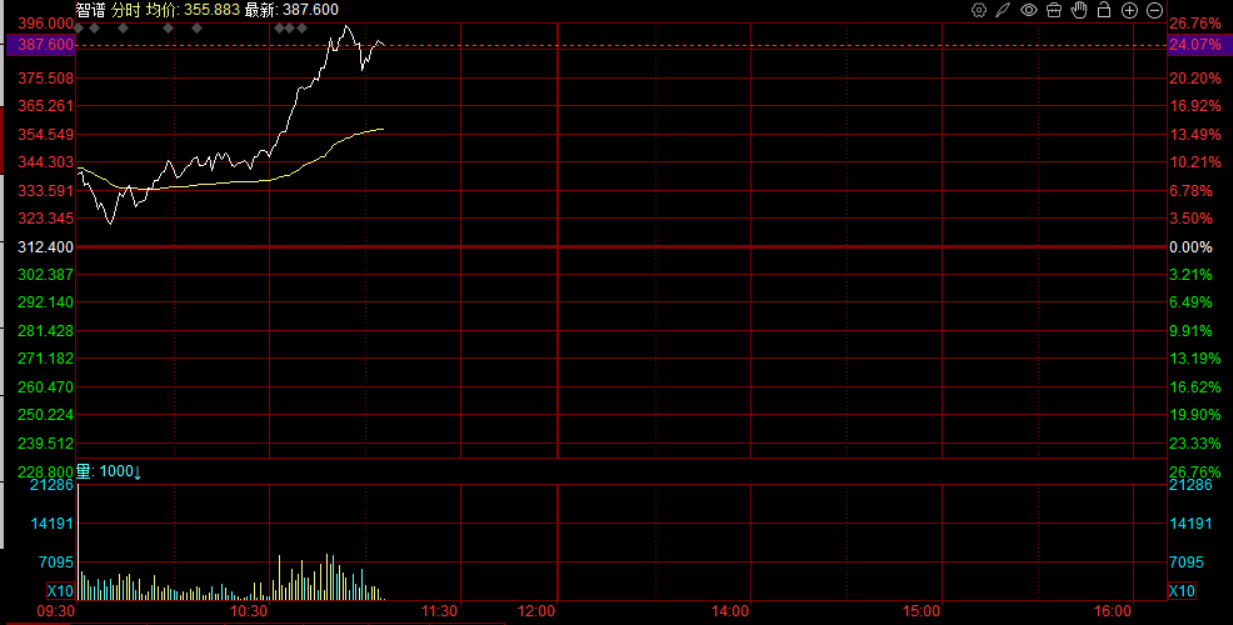
Group 1 - The core stock of large models, Zhiyu, saw a significant increase of over 26% in early trading, closing at 387.6 HKD, with a current rise of 24.07% [1] - Zhiyu announced a structural adjustment to the pricing system of its GLM Coding Plan, with an overall price increase of over 30% due to strong market demand and rapid growth in user scale and usage [1] - The price adjustment will take effect on February 12, 2026, and will include the cancellation of first-purchase discounts while retaining quarterly and annual subscription discounts [1] Group 2 - Zhiyu officially released its next-generation base model, GLM-5, which is considered the strongest open-source model in the era of intelligent engineering, marking a transition from "writing code snippets" to "completing system engineering" [6] - Other major tech companies, including ByteDance and Alibaba, are also advancing new model upgrades, with ByteDance recently launching the AI video generation model Seedance 2.0 and Alibaba planning to release its flagship AI model Qwen 3.5 [6] - The recent surge in model upgrades and the continuous launch of various AI applications are increasing the investment value of AI companies, attracting more attention from investors [6]
DeepSeek灰度测试新模型!科创人工智能ETF华夏(589010)高位盘整,优刻得涨停领涨
Mei Ri Jing Ji Xin Wen· 2026-02-12 03:05
Group 1 - The core viewpoint of the news highlights the performance of the Huaxia Sci-Tech Artificial Intelligence ETF (589010), which experienced a slight pullback after an initial surge, currently priced at 1.594 yuan, reflecting a 1.271% increase from the opening price [1] - Among the 30 constituent stocks tracked by the ETF, 19 stocks saw gains, with Yuke Technology leading with a 20% limit-up, while Sikan Technology experienced a decline of over 5% [1] - The trading volume of the ETF reached 52.52 million yuan, with a turnover rate of 1.98%, indicating stable liquidity and moderate trading activity [1] Group 2 - DeepSeek has launched a new model and initiated gray testing, enhancing its contextual capability from 128K Tokens to 1M Tokens, with the knowledge base updated to May 2025, improving context capacity, knowledge, capability, and user interaction [1] - Guolian Minsheng Securities notes that recent releases of new features or ecosystem integrations by various large models domestically and internationally are expected to lead a new wave of innovation in large models [1] - The transition to the Agent era is beginning to reshape the internet value chain, shifting focus from traditional traffic scale to business models that emphasize behavioral execution, capability invocation, governance control, and outcome-based payments [1][2]

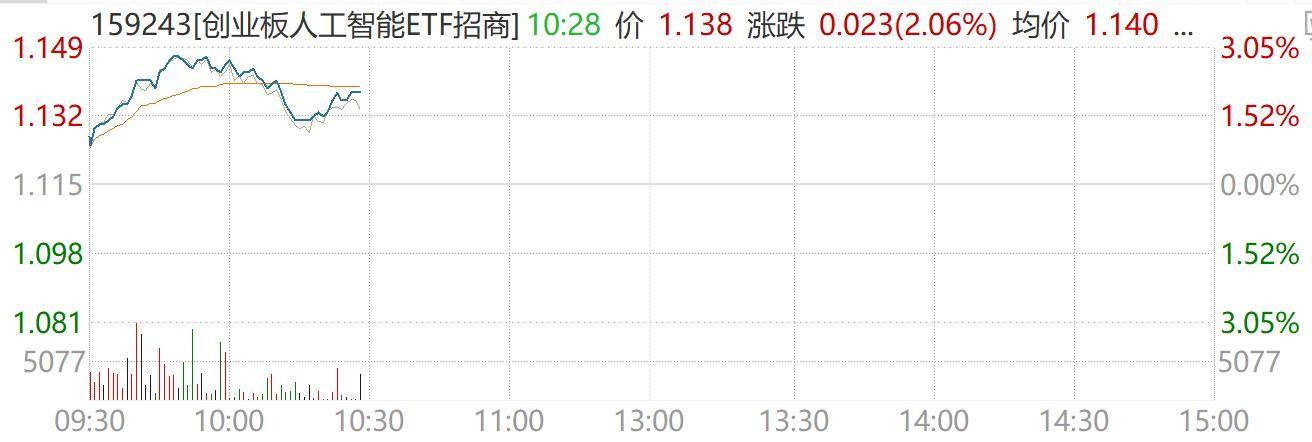
突发!百万Token上下文+Agent新模型深夜连发,创业板人工智能ETF(159243)放量涨超2%!
Sou Hu Cai Jing· 2026-02-12 02:46
Group 1 - The domestic large model field has seen significant updates, igniting market expectations for a new round of innovation in the AI industry chain [2] - DeepSeek has launched an update that supports a maximum context length of 1 million tokens, enabling the model to process long texts such as entire novels and complex documents, facilitating AI applications in high-value scenarios like financial analysis and legal review [3] - Zhiyu AI has released its flagship model GLM-5, achieving state-of-the-art capabilities in coding and agent functions, bringing its performance close to international leaders, indicating that domestic models are now competitive in execution capabilities [4] Group 2 - The release of new models is part of a concentrated launch window, with several companies including DeepSeek, Kimi, Alibaba, and Baidu unveiling new models, reflecting a shift in the internet value chain towards execution capabilities and new business models [5] - The increasing demand for computing power is supported by significant capital expenditures planned by major companies, with ByteDance planning 160 billion yuan for 2026 and Alibaba investing 380 billion yuan in AI infrastructure over three years [5] - The AI ETF tracking the entrepreneurial board AI index covers the entire AI industry chain, including hardware, software, and applications, with major holdings benefiting from the expansion of cloud vendor capital expenditures [6]