
M2.5模型

Search documents
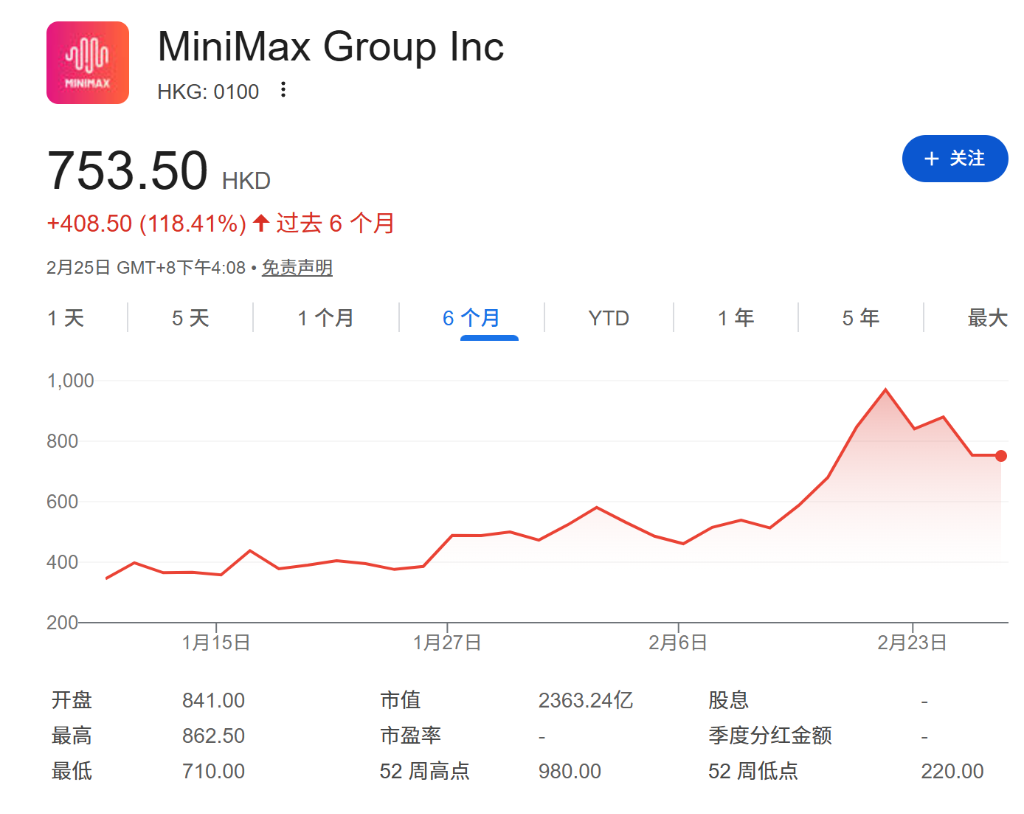
MiniMax没疯,市场疯了
虎嗅APP· 2026-03-04 00:10
Core Viewpoint - The article discusses the rapid rise of MiniMax in the Hong Kong stock market, driven by investor confidence in AI, despite a significant net loss reported in its first financial statement post-IPO. The company's valuation is supported by its unique position as a "pure AI native" entity and optimistic expectations regarding the global competitiveness of Chinese AI firms [6][7][8]. Financial Performance - MiniMax's total revenue for 2025 reached $79.04 million, a year-on-year increase of 158.9%, surpassing expectations from major financial institutions [14]. - The adjusted net loss for 2025 was $251 million, a significant reduction compared to the previous year, indicating operational improvements [11]. - The company's gross profit was $20.08 million, with a gross margin of 25.4%, up from 12.2% in 2024, reflecting enhanced operational efficiency [18]. Revenue Breakdown - Revenue from AI native products amounted to $53.08 million, accounting for 67.2% of total revenue, with a year-on-year growth of 143.4% [14]. - The open platform and other AI enterprise services generated $25.96 million, a 197.8% increase, representing 32.8% of total revenue [14]. - International revenue reached $57.66 million, making up 73% of total revenue, showcasing the company's successful global expansion [15]. Market Position and Strategy - MiniMax is positioned as a leading player in the AI industry, with a focus on multi-modal capabilities across text, video, voice, and music [26][30]. - The company has achieved significant operational efficiency, with a revenue per employee of $185,000, utilizing only 428 employees [32]. - MiniMax aims to transition from a large model company to a platform company in the AI era, focusing on productivity scenarios, multi-modal creation, and global markets [34]. Future Outlook - The CEO predicts that the AI industry will see significant advancements in programming and office applications, with multi-modal creation evolving towards real-time output [35]. - MiniMax is preparing to launch new models that will integrate multiple modalities, positioning itself to meet anticipated demand growth [35]. Competitive Landscape - The company faces challenges from high valuations, potential copyright issues, geopolitical uncertainties, and competition from larger firms with more resources [37][38][39].


高盛首次覆盖MiniMax:全球化最强的中国大模型!
Hua Er Jie Jian Wen· 2026-02-25 14:04
Core Viewpoint - Goldman Sachs identifies MiniMax as one of the most outstanding companies in China's AI model sector, highlighting its significant global potential market growth in text and programming fields [1] Group 1: Company Overview - MiniMax is rated "Neutral" by Goldman Sachs, with a 12-month target price set at HKD 1,018, corresponding to an enterprise valuation of approximately USD 38.9 billion (about RMB 282 billion) [1] - The company is experiencing rapid growth, with 70% of its revenue generated from overseas markets and a comprehensive multi-modal product line that includes text, video, audio, music, and images [1][4] Group 2: Market Position and Revenue Structure - MiniMax's multi-modal integration strategy and high overseas revenue share create a strong competitive moat [4] - The company has served over 212 million individual users across more than 200 countries and regions, with its foundational models supporting over 130,000 enterprises and developers [4] Group 3: Valuation and Market Share - Goldman Sachs provides bullish, baseline, and bearish valuations of USD 66 billion, USD 42 billion, and USD 16 billion, respectively, depending on MiniMax's market share expansion in the global AI foundational model subscription and API revenue [5] - The baseline forecast anticipates a market share of 2.5% by 2030, with a bullish scenario reaching 5.0% [5] Group 4: Financial Projections - Revenue is expected to surge from USD 7.5 million in 2025 to USD 980 million by 2027, despite projected adjusted net losses of USD 316 million, USD 413 million, and USD 388 million from 2025 to 2027 [5][8] - Gross margins are anticipated to improve from 21% in 2024 to 38% in 2027, driven by a higher proportion of high-margin multi-modal API revenue [8] Group 5: Technological Advancements - The release of the M2.5 model significantly narrows the gap with the leading US models, with training costs estimated at only USD 420 million from 2022 to 2025 [6] - MiniMax's innovative architecture, including the MoE framework and linear attention mechanism, allows for competitive pricing, with API costs at approximately 8% of leading overseas models [6] Group 6: Agent Applications and Cost Efficiency - The M2.5 model's performance is close to that of Claude Opus, with operational costs for MiniMax's agents estimated at USD 1 per hour, making it economically attractive for businesses [7] - This cost efficiency enables companies to employ multiple "digital employees" for extensive workloads at a fraction of traditional costs, promoting widespread AI adoption in various business applications [7] Group 7: Revenue Breakdown by Segment - Expected revenue contributions by 2027 include USD 311 million from Hailuo AI (video), USD 379 million from the open API platform, and USD 184 million from Talkie/Xingye (C-end entertainment) [10]
全球大模型竞速白热化,国产AI强势破局!天弘中证人工智能主题指数基金(A/C:011839/011840)助力共享产业发展红利
Xin Lang Cai Jing· 2026-02-25 05:58
Group 1 - The core viewpoint of the articles highlights the rapid development and iteration of AI large models, with significant advancements in programming capabilities and a shift towards monetization in the AI industry [1][2] - Domestic companies are launching new large models, such as GLM-5 by Zhiyu, which has 744 billion parameters and competes with Claude Opus 4.5, indicating a trend towards a "domestic ecological closed loop" in AI development [1] - OpenAI is adjusting its strategy, reducing its 2030 computing expenditure target from $1.4 trillion to $600 billion, while also pursuing a $100 billion financing round, potentially leading to an IPO with a pre-investment valuation of $730 billion [1] Group 2 - The Zhongjin AI Theme Index Fund, established in August 2021, closely tracks the Zhongjin AI Theme Index, aiming for minimal tracking deviation and consistent long-term investment returns [2] - As of February 11, 2026, the top ten weighted stocks in the Zhongjin AI Theme Index account for 55.72% of the index, with significant representation from companies like Zhongji Xuchuang and New Yisheng [2][3] - The index covers the entire AI industry chain, from underlying computing power to mid-level technology and upper-level applications, indicating a comprehensive approach to AI investment [2]
国泰海通证券:维持MINIMAX-WP(00100)“增持”评级 技术迭代叠加成本优势
智通财经网· 2026-02-25 01:26
Core Viewpoint - Cathay Securities maintains an "overweight" rating for MINIMAX-WP (00100) with a target price of 1012 HKD, slightly adjusting the company's revenue forecast for 2025-2027 to 0.7/2.2/5.5 billion USD, considering its unique position as a global multimodal large model in the Hong Kong stock market and the strong catalyst from the recent M2.5 flagship model release, assigning a 186x PS for 2026 [1] Group 1: Technical Capabilities - MiniMax M2.5 leverages MoE architecture optimization and the native Agent RL framework Forge, achieving industry-leading performance in programming, tool invocation, search, and office productivity scenarios, with core metrics comparable to top overseas models like Claude Opus 4.5 [1] - The model's inference speed reaches 100 TPS, which is double the industry average, and SWE-Bench Verified task processing speed has improved by 37% compared to M2.1, demonstrating a dual breakthrough in performance enhancement and efficiency optimization [1] Group 2: Cost Control and Commercial Viability - M2.5 establishes a leading cost advantage through token consumption optimization, parallel tool invocation upgrades, and tiered pricing design, overcoming economic barriers for large-scale Agent operations [2] - The pricing strategy includes a dual-version approach, with a 100 TPS fast version costing only 1 USD for continuous operation for one hour, and a 50 TPS version priced as low as 0.3 USD, making it 1/10 to 1/20 the cost of overseas models like Claude Opus, Gemini 3 Pro, and GPT-5, positioning it as a global benchmark for high cost-performance large models [2] Group 3: Product Iteration and Ecosystem Development - MiniMax demonstrates industry-leading model iteration speed, completing updates for M2, M2.1, and M2.5 within 108 days, significantly outpacing overseas giants like Anthropic, OpenAI, and Google, thanks to deep synergy between large-scale reinforcement learning and engineering capabilities [3] - The M2.5 model is fully integrated into the MiniMax Agent platform, refining core Office Skills capabilities and enabling users to create reusable industry experts, with over 10,000 custom experts now available covering high-frequency scenarios in office, finance, and programming [3]

未知机构:2026春节期间AI行业动态汇总一国内模型与产品发布-20260224
未知机构· 2026-02-24 04:05
Summary of AI Industry Dynamics During the 2026 Spring Festival Domestic Model and Product Releases 1. **Zhiyuan AI** (February 11): Released GLM-5 with a HumanEval code pass rate of 96.2%, ranking first in global open source and fourth overall; focuses on programming and intelligent capabilities [1] 2. **ByteDance** (February 14): Launched Doubao Model 2.0 (Pro/Lite/Mini/Code), achieving top rankings in math/programming benchmarks and reducing inference costs by an order of magnitude; simultaneously launched Seedance 2.0, capable of generating movie-quality multi-shot audio and video in 60 seconds, becoming a key visual creation tool for the Spring Festival Gala [1] 3. **Alibaba** (February 16): Open-sourced Qwen3.5-Plus with a total parameter count of 397 billion and only 17 billion activated, achieving a 60% reduction in memory usage and a 19-fold increase in inference efficiency; API priced at 0.8 yuan per million tokens, which is 1/18 of Gemini 3 Pro [1] Additional Domestic Releases 4. **DeepSeek** (February 17): Upgraded context window from 128K to 1M tokens, capable of processing ultra-long texts equivalent to the "Three-Body Problem" trilogy [2] 5. **MiniMax** (February 18): Released M2.5 model with native agent design, achieving a 37% speed increase for complex tasks [2] 6. **Tencent** (February 19): AI creation reached 1 billion instances over 16 days during the Spring Festival [2] Overseas Model and Product Releases 7. **Google** (February 19): Released Gemini 3.1 Pro, significantly enhancing inference capabilities and setting a new technical benchmark [3] 8. **OpenAI** (February 18): Launched a proprietary model based on Cerebras chips, achieving a training efficiency increase of 5-10 times and a cost reduction of 70% [3] 9. **Anthropic** (February 18): Released Claude Sonnet 4.6, priced at 1/5 of flagship models, with performance approaching Opus, offering excellent cost-performance for enterprise applications [3] 10. **xAI** (February 20): Updated Grok 4.2, with simultaneous upgrades in multimodal and inference capabilities [3] Financing and Capital Dynamics 11. **Moon's Dark Side (Kimi)** (February 20): Completed a $700 million financing round led by Alibaba, Tencent, and Wuyuan, with a valuation exceeding $10 billion; cumulative financing in January and February surpassed $1.2 billion [4] 12. **Zhiyuan AI/MiniMax** (February 20): Market capitalization on the first trading day after the Hong Kong holiday exceeded 300 billion HKD each, totaling over 580 billion HKD [4] 13. **Anthropic** (February 21): Completed a $30 billion Series G round, with a valuation reaching $380 billion, led by GIC and Coatue [4] 14. **OpenAI** (February 21): Nearing completion of the first phase of over $100 billion in financing, with a valuation expected to exceed $850 billion [4] 15. **Runway** (February 21): AI video company completed a $315 million Series E round, with a valuation of $5.3 billion, focusing on world model development [4]
中国科技公司押注“春节档” 除夕再迎重磅开源模型
Zhong Guo Xin Wen Wang· 2026-02-17 03:03
Core Insights - Chinese technology companies are launching new AI models, with Alibaba's Qwen3.5-Plus being a significant highlight, featuring 397 billion parameters and a cost-effective API pricing of 0.8 yuan per million tokens, which is 1/18 of Gemini3 Pro's price [1][2] - The trend in AI model development is shifting from sheer size to efficiency and intelligence, as demonstrated by Qwen3.5's ability to perform well with a smaller model while maintaining high performance [2][3] Group 1: Model Launches and Features - Alibaba launched the Qwen3.5-Plus model on New Year's Eve, which has 397 billion total parameters and 170 billion activated parameters, achieving a 60% reduction in deployment memory usage [1] - Other companies like Zhiyun, iFlytek, and MiniMax have also introduced new models, including GLM-5, Xinghuo X2, and M2.5, showcasing advancements in decision-making capabilities [1][2] Group 2: Performance and Efficiency - Qwen3.5 has shown exceptional performance in various benchmark tests, achieving results comparable to Gemini3 Pro and excelling in visual understanding assessments [1][2] - The new models are designed to be more practical and efficient, with a focus on multi-modal capabilities and reduced resource requirements, leading to increased deployment efficiency [2][3] Group 3: Open Source and Global Impact - The number of open-source models related to Qwen has exceeded 400, with over 200,000 derivative models and downloads surpassing 1 billion, indicating a strong global presence [3] - China is emerging as a leading provider of open-source large models, with significant contributions from companies like Qwen and DeepSeek, which rank highly on AI model evaluation platforms [3]
国产大模型密集"上新",港股AI概念板块集体走强,机构:2026年或重塑全球竞争格局
Jin Rong Jie· 2026-02-16 04:42
Core Insights - The AI sector in Hong Kong has shown strong performance, particularly in areas such as large models, storage, and computing power, driven by a wave of new product launches ahead of the Lunar New Year [1][3] Group 1: Product Launches and Innovations - Alibaba is set to release its new generation Qwen 3.5 large model on New Year's Eve, featuring architectural innovations [3] - ByteDance has launched the Doubao large model 2.0, which has undergone significant optimization for complex tasks [3] - Zhipu has introduced its flagship model GLM-5, increasing its parameter scale from 355 billion to 744 billion, with an average performance improvement of over 20% [3] - MiniMax has released the M2.5 model, designed for agent scenarios, achieving a 37% improvement in task completion speed compared to its predecessor [3] - Other products like DeepSeek-V4 and Kimi-K3 are expected to be released within February, indicating a significant product launch wave in the domestic large model sector [3] Group 2: Market Dynamics and Future Outlook - More domestic AI companies are choosing to list in Hong Kong, injecting new vitality into the sector, exemplified by Haizhi Technology Group's stock surging over 320% shortly after its listing [3] - Zhongyuan Securities predicts that the pace of AI application deployment in China will exceed market expectations by 2026, with domestic large models set to rival overseas counterparts in terms of performance, power consumption, and pricing [3] - Bank of America Securities notes that the acceleration of large model iterations in China is enhancing data center demand, which will drive adoption among enterprises and developers, subsequently increasing demand for inference data centers [3][4] Group 3: Structural Opportunities in AI Computing - Guosheng Securities highlights that breakthroughs from companies like ByteDance and Alibaba are shifting the focus of AI applications from technology development to large-scale deployment, creating a strong demand for AI computing resources [4]

华尔街见闻早餐FM-Radio | 2026年2月16日
Hua Er Jie Jian Wen· 2026-02-15 23:02
Market Overview - US CPI growth slowed to 2.4% year-on-year in January, below expectations, leading to reduced inflation concerns and increased expectations for interest rate cuts, with traders now estimating a 50% chance of three rate cuts this year [10][28] - The S&P 500 index experienced a weekly decline of 1.39%, while the Nasdaq fell 2.1%, marking significant market volatility [17] - In Asia, the Shanghai Composite Index fell below 4100 points, with semiconductor stocks performing well, while the Hang Seng Index dropped by 1% [2] Key Developments in China - The People's Daily published an important article by General Secretary Xi Jinping emphasizing the need to boost domestic demand and implement measures to stimulate consumption and investment [23] - China's social financing in January reached 7.22 trillion yuan, with new RMB loans amounting to 4.71 trillion yuan, and M2 money supply growing by 9.0% year-on-year [24] - The housing market showed mixed signals, with a narrowing month-on-month decline in prices across first, second, and third-tier cities, but an expanding year-on-year decline [4][24] Regulatory Actions - The Financial Regulatory Bureau and the Market Regulatory Bureau held discussions with six travel platform companies regarding compliance issues in their lending practices [5][25] - New antitrust compliance guidelines were issued, highlighting eight new types of monopolistic risks, including "choose one" and "lowest price across the network" practices [25] Company News - Meituan forecasted a significant loss of over 23 billion yuan for 2025, continuing losses into the first quarter [9][25] - DeepSeek is expected to release a new model, V4, around the Spring Festival, which is currently undergoing testing [6][26] - ByteDance launched Doubao 2.0, significantly reducing inference costs and competing directly with GPT-5 and Gemini 3 [7][27] - MiniMax introduced the M2.5 model, which operates at a cost of $1 per hour, significantly cheaper than GPT-5, while maintaining competitive performance [8][26] International Developments - The US is considering partially lifting tariffs on aluminum and steel to alleviate inflationary pressures [13][29] - The US military is preparing to deploy a second aircraft carrier to the Middle East amid rising tensions with Iran [14][41] - Trump confirmed plans to visit Venezuela, with US energy officials noting that Venezuelan oil revenues have exceeded $1 billion [15][30]


MiniMax发布M2.5模型:1美元运行1小时,价格仅为GPT-5的1/20,性能比肩Claude Opus
硬AI· 2026-02-13 13:25
Core Viewpoint - MiniMax has launched its latest M2.5 model series, achieving a significant breakthrough in both performance and cost, aiming to address the economic feasibility of complex agent applications while claiming to have reached or refreshed the industry SOTA (state-of-the-art) levels in programming, tool invocation, and office scenarios [3][4]. Cost Efficiency - The M2.5 model demonstrates a substantial price advantage, costing only 1/10 to 1/20 of mainstream models like Claude Opus, Gemini 3 Pro, and GPT-5 when outputting 50 tokens per second [3][4]. - In a high-speed environment of 100 tokens per second, the cost for continuous operation for one hour is just $1, and it can drop to $0.3 at 50 tokens per second, allowing a budget of $10,000 to support four agents working continuously for a year [3][4]. Performance Metrics - M2.5 has shown strong performance in core programming tests, winning first place in the Multi-SWE-Bench multi-language task, with overall performance comparable to the Claude Opus series [4]. - The model has improved task completion speed by 37% compared to the previous generation M2.1, with an end-to-end runtime reduced to 22.8 minutes, matching Claude Opus 4.6 [4]. Internal Validation - Internally, MiniMax has validated the M2.5 model's capabilities, with 30% of overall tasks autonomously completed by M2.5, covering core functions such as R&D, product, and sales [4]. - In programming scenarios, M2.5-generated code accounts for 80% of newly submitted code, indicating high penetration and usability in real production environments [4]. Task Efficiency - M2.5 aims to eliminate cost constraints for running complex agents by optimizing inference speed and token efficiency, achieving a processing speed of 100 TPS (transactions per second), approximately double that of current mainstream models [7]. - The model has reduced the total token consumption per task to an average of 3.52 million tokens in SWE-Bench Verified evaluations, down from 3.72 million in M2.1, allowing for nearly unlimited agent construction and operation economically [9]. Programming Capability - M2.5 emphasizes not only code generation but also system design capabilities, evolving a native specification behavior that allows it to decompose functions, structures, and UI designs from an architect's perspective before coding [11]. - The model has been trained in over 10 programming languages, including GO, C++, Rust, and Python, across tens of thousands of real environments [12]. Testing and Validation - M2.5 has been tested on programming scaffolds like Droid and OpenCode, achieving pass rates of 79.7% and 76.1%, respectively, outperforming previous models and Claude Opus 4.6 [14]. Advanced Task Handling - In search and tool invocation, M2.5 exhibits higher decision maturity, seeking more streamlined solutions rather than merely achieving correctness, saving approximately 20% in rounds consumed compared to previous generations [16]. - For office scenarios, M2.5 integrates industry-specific knowledge through collaboration with professionals in finance and law, achieving an average win rate of 59.0% in comparisons with mainstream models, capable of producing industry-standard reports, presentations, and complex financial models [18]. Technical Foundation - The performance enhancement of M2.5 is driven by large-scale reinforcement learning (RL) through a native Agent RL framework named Forge, which decouples the underlying training engine from the agent, supporting integration with any scaffold [23]. - The engineering team has optimized asynchronous scheduling and tree-structured sample merging strategies, achieving approximately 40 times training acceleration, validating a near-linear improvement in model capabilities with increased computational power and task numbers [23]. Deployment - M2.5 is fully deployed in MiniMax Agent, API, and Coding Plan, with model weights to be open-sourced on HuggingFace, supporting local deployment [25].

计算机行业双周报(2026/1/30-2026/2/12):千问免单活动致服务器宕机,关注AI算力产业链投资机遇-20260213
Dongguan Securities· 2026-02-13 08:42
Investment Rating - The report maintains an "Overweight" rating for the computer industry, expecting the industry index to outperform the market index by over 10% in the next six months [30]. Core Insights - The report highlights the recent surge in AI-related activities, particularly the "Spring Festival Treat Plan" by Alibaba's Qianwen APP, which led to a significant increase in AI-driven orders, indicating a growing demand for AI computing power [3][27]. - The report emphasizes the potential investment opportunities in the AI computing power supply chain, driven by the increasing adoption of AI applications by major tech companies [3][27]. Summary by Sections 1. Industry Performance Review - The SW computer sector experienced a cumulative decline of 0.49% over the past two weeks, outperforming the CSI 300 index by 0.23 percentage points, ranking 20th among 31 sectors [11]. - In February, the sector rose by 1.50%, surpassing the CSI 300 index by 1.22 percentage points, and has increased by 8.55% year-to-date, outperforming the CSI 300 index by 6.61 percentage points [11][16]. 2. Valuation Situation - As of February 12, 2026, the SW computer sector's PE TTM (excluding negative values) stands at 59.40 times, placing it in the 96.39th percentile over the past five years and the 91.04th percentile over the past ten years [21][22]. 3. Industry News - Key developments include the launch of the Seedance 2.0 video generation model by Doubao, which enhances video content creation capabilities [22]. - Alibaba's Qianwen APP achieved over 1.2 billion AI-driven orders within six days of launching its promotional campaign, highlighting the rapid growth in AI application usage [22]. - Major tech companies, including Amazon, Google, Microsoft, and Meta, are projected to increase their capital expenditures to $660 billion in 2026, a 60% increase from 2025 [22]. - MiniMax introduced its M2.5 model, significantly reducing operational costs while maintaining competitive performance [22]. - Google is integrating AI shopping features into its search engine, allowing direct purchases through AI-driven interactions [22]. 4. Company Announcements - Notable company announcements include: - Guiding Compass reported a 40.39% increase in revenue for 2025, reaching 2.146 billion yuan [25]. - Zhongke Shuguang plans to raise up to 8 billion yuan through convertible bonds for AI-related projects [25]. - Unisplendour announced a plan to raise up to 5.57 billion yuan for acquisitions and R&D [26]. 5. Weekly Perspective - The report suggests continued monitoring of Alibaba and other AI giants' strategies in the AI application space, as their growth is expected to drive demand for computing power [27]. 6. Recommended Stocks - The report lists several companies to watch, including: - GuoDianYunTong (002152.SZ) for its stable growth in fintech and AI sectors [28]. - Digital China (000034.SZ) as a key player in the domestic computing demand [28]. - Inspur Information (000977.SZ) for its leadership in AI server markets [28].