
凯莱英

Search documents
2025年中国生物制剂行业政策、产业链、市场规模、研发支出、竞争格局及未来发展趋势研判:已成为医药行业增长最快的领域之一,市场规模将达到6752亿元[图]
Chan Ye Xin Xi Wang· 2025-12-03 01:24
Core Insights - The biopharmaceutical sector is one of the fastest-growing areas in the pharmaceutical industry, driven by an aging population and increased public health awareness [1][5] - China's biopharmaceutical market is projected to grow from CNY 312 billion in 2019 to CNY 587.1 billion in 2024, and is expected to reach CNY 675.2 billion by 2025, with a potential to hit CNY 1.149 trillion in the next five years [1][5][6] - Innovation remains the core driver of growth in the biopharmaceutical industry, which is capital-intensive and requires significant R&D investment [1][6] Industry Definition and Classification - Biopharmaceuticals are medical products manufactured using biological methods, aimed at replicating the activity of natural substances [2][4] - They can be categorized into vaccines, blood products, biopharmaceutical drugs, diagnostic reagents, and others, with further subdivisions based on source or mechanism of action [2] Current Industry Status - The global biopharmaceutical market is expected to grow from USD 286.4 billion in 2019 to USD 461.6 billion in 2024, with the original biopharmaceutical market projected to increase from USD 268.9 billion to USD 427.9 billion in the same period [5] - China plays a significant role in the global biopharmaceutical market, with rapid growth driven by favorable policies, increased R&D investment, and advancements in biotechnology [5][6] Industry Development Environment - Policies - The Chinese government has implemented various laws and policies to encourage biopharmaceutical R&D, including the Drug Registration Management Measures and regulations for clinical research and application of biomedical technologies [7] Competitive Landscape - The biopharmaceutical sector is recognized as a "new frontier" in the pharmaceutical industry, with major global players actively entering the market [9] - Key companies in China's biopharmaceutical industry include WuXi AppTec, Hengrui Medicine, ZhiFei Biological, BeiGene, and others, with a competitive landscape characterized by differentiated strategies [9] Future Development Trends - Market demand for biopharmaceuticals is expected to continue growing, supported by policy backing, technological advancements, and increased health awareness [10] - Domestic companies are transitioning from biosimilars to First-in-Class drugs, with examples like Hengrui Medicine's ADC drug showing superior efficacy [10][11] - Personalized medicine based on genetic testing is anticipated to become a trend, with increasing international recognition of Chinese innovative drugs [11]




凯莱英(002821) - H股公告:证券变动月报表
2025-12-02 09:15
截至月份: 2025年11月30日 狀態: 新提交 股份發行人及根據《上市規則》第十九B章上市的香港預託證券發行人的證券變動月報表 致:香港交易及結算所有限公司 公司名稱: 凱萊英醫藥集團(天津)股份有限公司 呈交日期: 2025年12月2日 備註: 第 1 頁 共 11 頁 v 1.1.1 FF301 I. 法定/註冊股本變動 | 1. 股份分類 | 普通股 | 股份類別 | H | | | 於香港聯交所上市 (註1) | | 是 | | | --- | --- | --- | --- | --- | --- | --- | --- | --- | --- | | 證券代號 (如上市) | 06821 | 說明 | H股 | | | | | | | | | | 法定/註冊股份數目 | | | 面值 | | | 法定/註冊股本 | | | 上月底結存 | | | 27,553,260 | RMB | | | 1 RMB | | 27,553,260 | | 增加 / 減少 (-) | | | 0 | | | | RMB | | 0 | | 本月底結存 | | | 27,553,260 | RMB | | | ...
凯莱英(06821) - 截至2025年11月30日止月份之股份发行人的证券变动月报表
2025-12-02 08:32
股份發行人及根據《上市規則》第十九B章上市的香港預託證券發行人的證券變動月報表 截至月份: 2025年11月30日 狀態: 新提交 備註: 致:香港交易及結算所有限公司 公司名稱: 凱萊英醫藥集團(天津)股份有限公司 呈交日期: 2025年12月2日 I. 法定/註冊股本變動 | 1. 股份分類 | 普通股 | 股份類別 | H | | | 於香港聯交所上市 (註1) | | 是 | | | --- | --- | --- | --- | --- | --- | --- | --- | --- | --- | | 證券代號 (如上市) | 06821 | 說明 | H股 | | | | | | | | | | 法定/註冊股份數目 | | | 面值 | | | 法定/註冊股本 | | | 上月底結存 | | | 27,553,260 | RMB | | | 1 RMB | | 27,553,260 | | 增加 / 減少 (-) | | | 0 | | | | RMB | | 0 | | 本月底結存 | | | 27,553,260 | RMB | | | 1 RMB | | 27,553,260 | | 2. ...
GLP-1 专题深度产品迭代驱动市场扩容,关注靶点、剂型及联合疗法研发进展
2025-12-01 16:03
Summary of GLP-1 Market Conference Call Industry Overview - The GLP-1 market is experiencing rapid expansion, with leading company Eli Lilly's market capitalization increasing nearly sixfold over the past five years, surpassing $1 trillion [1][2] - The market for GLP-1 drugs is projected to grow from $2.9 billion in 2015 to nearly $50 billion by 2024, with an annual growth rate of 47% [1][6] Key Points and Arguments - **Market Performance**: In 2024, global sales for semaglutide and tirzepatide are expected to approach $50 billion, continuing strong growth [2] - **Future Trends**: The GLP-1 sector is anticipated to be one of the most focused areas in pharmaceuticals, with each drug iteration potentially doubling market size within 3 to 5 years [3] - **Drug Competition**: Tirzepatide's prescription volume has recently surpassed that of semaglutide, with combined sales exceeding $10 billion in Q3 2025 [7] - **Growth Drivers**: The primary growth will come from expanding usage among individuals with mild obesity, as current prescription rates for GLP-1 drugs in diabetes are around 7% globally and 19% in the U.S., while weight loss indications have a penetration rate of less than 0.5% [8][10] Important but Overlooked Content - **Policy Changes**: Recent adjustments in U.S. Medicare policy will significantly reduce out-of-pocket costs for obesity medications, potentially increasing market volume for new drugs like Ofev and high-dose oral semaglutide [10][11] - **Market Dynamics**: The U.S. market has seen substantial consumer education regarding weight loss medications, which will facilitate the commercialization of new oral weight loss drugs [11] - **Differentiation Strategies**: Companies can achieve differentiation through target combination strategies or by developing oral formulations that improve patient compliance [13][15] - **Domestic Market Potential**: The Chinese weight loss drug market is expected to grow rapidly, driven by a large overweight population and a shift towards self-funded purchases due to limited insurance coverage [25][26] Conclusion - The GLP-1 market is poised for significant growth driven by new drug developments, policy changes, and increasing consumer awareness. Companies in this space, particularly those focusing on oral formulations and innovative treatment strategies, are likely to benefit from these trends.


医疗服务板块12月1日涨0.68%,ST中珠领涨,主力资金净流出1.52亿元
Zheng Xing Xing Ye Ri Bao· 2025-12-01 09:09
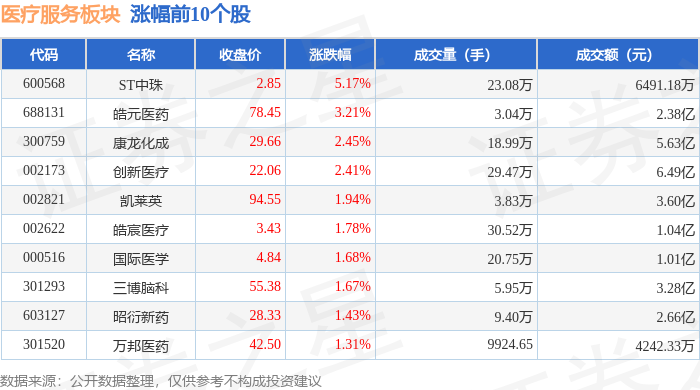
Market Overview - On December 1, the medical services sector rose by 0.68% compared to the previous trading day, with ST Zhongzhu leading the gains [1] - The Shanghai Composite Index closed at 3914.01, up 0.65%, while the Shenzhen Component Index closed at 13146.72, up 1.25% [1] Top Gainers in Medical Services Sector - ST Zhongzhu (600568) closed at 2.85, up 5.17% with a trading volume of 230,800 shares and a turnover of 64.91 million yuan [1] - Haoyuan Pharmaceutical (688131) closed at 78.45, up 3.21% with a trading volume of 30,400 shares and a turnover of 238 million yuan [1] - Kanglong Chemical (300759) closed at 29.66, up 2.45% with a trading volume of 189,900 shares and a turnover of 563 million yuan [1] Top Losers in Medical Services Sector - Bid Pharma (688073) closed at 69.33, down 4.70% with a trading volume of 10,800 shares and a turnover of 75.39 million yuan [2] - Chengda Pharmaceutical (301201) closed at 45.90, down 4.26% with a trading volume of 116,700 shares [2] - Yaokang Bio (688046) closed at 16.40, down 4.21% with a trading volume of 36,600 shares and a turnover of 60.80 million yuan [2] Capital Flow Analysis - The medical services sector experienced a net outflow of 152 million yuan from institutional investors, while retail investors saw a net inflow of 88.82 million yuan [2] - Notable stocks with significant capital inflow include Innovation Medical (002173) with a net inflow of 29.99 million yuan from institutional investors [3] - Conversely, stocks like Bid Pharma (688073) faced a net outflow of 63.70 million yuan from institutional investors [3]



凯莱英涨2.09%,成交额2.13亿元,主力资金净流入806.36万元
Xin Lang Zheng Quan· 2025-12-01 05:20
Core Viewpoint - Kailaiying's stock price has shown a significant increase this year, with a year-to-date rise of 26.26%, despite recent fluctuations in the short term [1][2]. Group 1: Stock Performance - As of December 1, Kailaiying's stock price reached 94.69 CNY per share, with a market capitalization of 34.145 billion CNY [1]. - The stock has experienced a 4.35% increase over the last five trading days, but a decline of 4.31% over the last 20 days and 11.44% over the last 60 days [1]. - The company has seen a net inflow of 8.0636 million CNY from major funds, with significant buying and selling activity [1]. Group 2: Financial Performance - For the period from January to September 2025, Kailaiying reported a revenue of 4.630 billion CNY, reflecting a year-on-year growth of 11.82%, and a net profit attributable to shareholders of 800 million CNY, up 12.66% [2]. - Since its A-share listing, the company has distributed a total of 2.405 billion CNY in dividends, with 1.701 billion CNY distributed over the past three years [3]. Group 3: Shareholder Information - As of September 30, 2025, the number of Kailaiying's shareholders increased by 45.37% to 60,100 [2]. - The top shareholders include various funds, with notable increases in holdings from certain institutional investors [3].
电生理等集采开始报量,建议关注国产替代机会
Ping An Securities· 2025-12-01 04:59
Investment Rating - The industry investment rating is "Outperform the Market" [1][31]. Core Viewpoints - The report highlights the initiation of centralized procurement for electrophysiology and neuro-interventional medical consumables in Beijing, which is expected to promote the entry of domestic high-end products and accelerate domestic substitution [4]. - The procurement covers all public medical institutions in Beijing, with a two-year agreement period, and includes various categories of electrophysiology and neuro-interventional products [4]. - The report suggests focusing on leading companies with comprehensive layouts in the electrophysiology field, such as Huatai Medical and Microelectrophysiology [4]. Summary by Sections Industry Overview - The centralized procurement for electrophysiology and neuro-interventional consumables has officially started, with a deadline for submission set for December 1 [4]. - The procurement is led by six top-tier hospitals in Beijing and aims to enhance the availability of domestic products [4]. Investment Strategy - The report recommends attention to innovative drug companies with rich pipeline layouts, such as Heng Rui Medicine, BeiGene, and China Biopharmaceuticals [6]. - It also highlights companies with significant single-product potential and those leading in advanced technology platforms [6]. Market Performance - The pharmaceutical sector saw a 2.67% increase last week, outperforming the CSI 300 index, which rose by 1.64% [9][20]. - In the Hong Kong market, the pharmaceutical sector increased by 3.85%, leading among 11 sectors [30]. Notable Industry News - Abbott announced a $21 billion acquisition of Exact Sciences, enhancing its position in the cancer diagnostics field [13]. - Johnson & Johnson is acquiring Halda Therapeutics for $3.05 billion, focusing on prostate cancer treatments [14]. - A significant ophthalmic drug has been approved for market release, expanding treatment options for age-related macular degeneration [16]. - Novartis received approval for its oral drug Remibrutinib in China, targeting chronic spontaneous urticaria [17].
医保谈判结果公布在即,关注 ASH 大会
SINOLINK SECURITIES· 2025-11-29 14:55
Investment Rating - The report maintains a positive outlook on the innovative drug sector, indicating a rebound and potential for further growth in the upcoming months [3][6]. Core Insights - The innovative drug sector is expected to see a rebound after previous adjustments, with significant catalysts anticipated in December and January. The results of the national medical insurance negotiations will be released in early December, which may impact the inclusion of domestic innovative drugs in the insurance catalog [3][14]. - The upcoming American Society of Hematology (ASH) conference from December 6-9 is highlighted as a key event, with multiple differentiated hematology products expected to present new data [3][4][42]. - The CXO sector shows a continuous upward trend, supported by the rapid growth of new orders and backlog, ensuring performance release in the next 1-2 years [4][53]. Summary by Sections Innovative Drugs - The report emphasizes the importance of focusing on dual/multi-target drugs for various cancers and chronic diseases, as well as opportunities in ADCs and small nucleic acid therapies [6][15]. - The report notes that the innovative drug financing data is showing marginal improvement, indicating a potential recovery in the sector [6][15]. Biologics - The report mentions positive preliminary results from the Phase II clinical trial of amycretin for Type 2 diabetes, suggesting continued monitoring of its clinical progress [4][46]. Medical Devices - The report highlights the emergence of innovative domestic medical devices, with expectations for profit margins to stabilize and improve as new products are approved [5]. Traditional Chinese Medicine & Pharmacies - The report suggests monitoring companies with strong brand power and good inventory management, such as China Resources Sanjiu and Jichuan Pharmaceutical, due to rising flu incidence [5]. Medical Services and Consumer Healthcare - The report discusses a collaboration between a traditional Chinese medicine group and a local health bureau to enhance the capabilities of grassroots medical services through technology [5]. Key Investment Targets - The report identifies key companies to watch, including Innovent Biologics, Kintor Pharmaceutical, and others in the innovative drug and medical device sectors [7].




天津强化企业创新主体地位 培育超250家“猎豹企业”
Zhong Guo Xin Wen Wang· 2025-11-29 07:48
Core Insights - Tianjin has strengthened the role of enterprises in technological innovation during the "14th Five-Year Plan" period, cultivating over 12,000 technology-based SMEs and high-tech enterprises, with more than 250 high-growth "Cheetah Enterprises" [1][2] Group 1: Technological Innovation - A number of Tianjin technology companies have made breakthroughs in key areas, including Huahai Qingke, Feiteng Information, Kirin Software, Shuguang Information, CanSino, and Heyuan Biotechnology, establishing themselves as innovation benchmarks in their respective fields [1] - The city has implemented a gradient cultivation mechanism, creating a growth path for technology-based SMEs to high-tech enterprises and leading technology enterprises, supported by policies like the "Cheetah Enterprise Evaluation Method" [1] Group 2: Financial Support and Investment - Tianjin has organized over 800 key projects in 19 priority industrial sectors, with a fiscal investment of 740 million yuan, which has attracted 4.9 billion yuan from enterprises [1] - The government has established 32 innovation consortia led by technology leaders to promote deep integration of industry, academia, and research, and has supported companies like Tiandi Weiye and Kailaiying in major R&D platforms [2] - The municipal government’s guiding funds have injected financial resources into enterprises, with three innovation mother funds having established 33 sub-funds and completed 244 investments, mobilizing over 8.5 billion yuan in social capital for early-stage and hard technology sectors [2]


英矽智能冲刺港交所背后:高合约价值难掩收入脆弱,现金消耗逼近红线
Xin Lang Zheng Quan· 2025-11-28 07:54
Core Viewpoint - The company, Insilico Medicine, is facing significant challenges as it transitions from an industry leader to a follower in the AI pharmaceutical sector, highlighted by its delayed IPO and financial vulnerabilities [1][4]. Revenue Structure - Insilico Medicine's revenue growth appears impressive, increasing from $30.147 million in 2022 to $85.834 million in 2024, but is heavily reliant on drug discovery and pipeline development, accounting for over 90% of its income [1]. - The company's revenue is concentrated, with 60.6% of 2024's total revenue coming from its largest client, Exelixis, and the top five clients contributing 94.5% of total revenue [1]. - A significant drop in revenue was observed in the first half of 2025, with a 54% year-on-year decline due to the absence of milestone payments from Exelixis, leading to a loss of $19.215 million [1]. Cash Flow and Debt - Despite raising $212 million in Series E funding, Insilico Medicine has a negative operating cash flow, with cumulative cash outflows exceeding $170 million from 2022 to the first half of 2025 [2]. - The company's total debt reached $895 million by the end of September 2025, a 37.24% increase from the end of 2022, with over 99% of this debt classified as financial liabilities at fair value [2]. - The net debt has risen from $450 million to $681 million, indicating increasing financial leverage pressure [2]. Related Party Transactions - Insilico Medicine faces potential conflicts of interest due to overlapping relationships with suppliers, notably WuXi AppTec, which is both a major shareholder and the largest supplier, accounting for up to 24% of procurement from 2022 to the first half of 2025 [3]. - The presence of prominent investors such as Qiming Venture Partners and Hillhouse Capital, along with a post-Series E valuation exceeding $1.3 billion, raises questions about balancing capital patience with long-term R&D investments [3]. Conclusion - The challenges faced by Insilico Medicine reflect broader commercialization and funding issues within the AI pharmaceutical industry, with its single revenue structure, unsustainable cash flow, and concentrated client and supplier relationships posing long-term threats to its viability [4].