
国家开发银行

Search documents
银行业倾力做好金融“五篇大文章”
Jin Rong Shi Bao· 2025-10-23 01:25
Core Insights - The financial services sector has significantly improved its quality and efficiency in supporting the real economy during the "14th Five-Year Plan" period, with a focus on enhancing financial support for key strategic areas and weak links in economic and social development [1][2]. Financial Support for the Real Economy - Over the past five years, the banking and insurance sectors have provided an additional 170 trillion yuan to the real economy through various financing methods, including loans, bonds, and equity [1]. - The average annual growth rates for loans in scientific research technology, medium to long-term loans for manufacturing, and infrastructure loans are 27.2%, 21.7%, and 10.1%, respectively [1]. - The balance of inclusive loans for small and micro enterprises has reached 36 trillion yuan, which is 2.3 times that of the end of the "13th Five-Year Plan," with interest rates decreasing by 2 percentage points [1]. Support for Technological Innovation - Financial institutions have strengthened their support for technology credit, with the balance of loans to high-tech enterprises nearing 19 trillion yuan and an annual growth rate exceeding 20% [2]. - A "technology-industry-finance" virtuous cycle is being formed, with banks improving financial services for technology enterprises throughout their lifecycle [2][3]. Inclusive Finance Development - The development of inclusive finance is crucial for transforming the economic development model and enhancing social equity [4]. - During the COVID-19 pandemic, 17 trillion yuan in loans received deferred repayment support, benefiting over 10 million businesses [6]. - In the past five years, 31.5 trillion yuan in loans have been issued to poverty-stricken areas, with nearly 400 billion yuan in microloans for impoverished populations [6]. Agricultural Financial Support - Agricultural Bank has prioritized food security as a key financial service, providing comprehensive support for grain and important agricultural products [7]. - The balance of the "Grain Farmer e-loan" product reached 140.1 billion yuan, supporting 910,000 grain and oil planting entities [7]. Green Finance Initiatives - The banking sector has made significant contributions to green finance, supporting infrastructure upgrades, low-carbon technology innovation, and energy transitions [8]. - National Development Bank has financed various projects, including renewable energy and ecological restoration, contributing to the overall green transformation of the economy [8].


国开行海南省分行上线EF账户 全省已有11家银行开展EF账户业务
Hai Nan Ri Bao· 2025-10-23 01:07
Group 1 - The EF account has been successfully launched by the National Development Bank Hainan Branch, marking a significant step in supporting the construction of Hainan Free Trade Port [1][2] - A total of 11 banks in Hainan have now launched the EF account, which is a crucial financial infrastructure for the free trade port, facilitating the free flow of cross-border funds [1] - The EF account system went live in May 2024, with 10 banks participating in the initial pilot phase [1] Group 2 - The launch of the EF account positions the National Development Bank as the first policy bank to have both EF and FT accounts within the free trade accounting system [2] - The Hainan branch of the National Development Bank plans to enhance its role in policy finance and leverage the advantages of the EF account to innovate bookkeeping services in Hainan [2] - The bank aims to provide superior financial services to support Hainan's development as "two bases," "two hubs," and "two networks," promoting high-level openness of the Hainan Free Trade Port [2]
创新基础设施项目投融资模式
Jing Ji Ri Bao· 2025-10-22 22:09
Core Viewpoint - The recent opening of the Huajiang Gorge Bridge, the world's highest bridge, highlights the significant advancements in China's infrastructure development, particularly in the context of the "14th Five-Year Plan" [1][2]. Group 1: Infrastructure Development - The Huajiang Gorge Bridge spans 2890 meters with a main span of 1420 meters, serving as a key project for the Guizhou Liuzhi to Anlong Expressway [1]. - The National Development and Reform Commission reported that the national comprehensive transportation network has achieved over 90% completion, covering more than 80% of counties and serving approximately 90% of the economy and population [1]. Group 2: Financial Support for Infrastructure - The China Development Bank (CDB) has provided significant financial support for infrastructure projects, with a total of 162.99 billion yuan in loans issued for the Huajiang Gorge Bridge project [1]. - Since the beginning of the "14th Five-Year Plan," CDB has issued over 6 trillion yuan in medium- and long-term loans for infrastructure, with a notable increase in the proportion of infrastructure financing compared to the end of the "13th Five-Year Plan" [2]. Group 3: Innovative Financing Models - CDB has been innovating financing models for infrastructure projects, offering a comprehensive range of financial services, including loans, bond underwriting, and leasing [3]. - The Inner Mongolia project, which successfully achieved full water supply capability, received 2.634 billion yuan in loans from CDB, showcasing the bank's tailored financing solutions [3]. Group 4: Future Directions - CDB plans to enhance its role as an "infrastructure bank," focusing on improving financial services throughout the entire lifecycle of infrastructure projects and promoting market-oriented financing models [4].
4.8万亿元!新型政策性金融工具加速落地 为实体经济发展注入强劲动力
Yang Shi Wang· 2025-10-22 08:44
Core Insights - The establishment of new policy financial tools in China aims to support national strategic infrastructure projects, technological innovation, and stabilize foreign trade, injecting strong momentum into the development of the real economy [1] Group 1: Implementation of New Policy Financial Tools - Major projects such as the Wuxi to Yixing intercity rail transit and the Jingling Reservoir in Zhejiang have become the first batch of projects utilizing the new policy financial tools, providing a solid foundation for accelerated construction [4] - As of now, three policy banks—China Development Bank, Agricultural Development Bank of China, and Export-Import Bank of China—have collectively injected over 330 billion yuan into the new policy financial tools, which is expected to drive a total project investment of 4.8 trillion yuan [7] Group 2: Investment Focus and Areas - The new policy financial tools have invested 250 billion yuan in 12 major economic provinces, accounting for over 75% of the total investment, focusing on traditional infrastructure, foreign trade, and emerging sectors such as digital economy and artificial intelligence [9] - Projects like the new energy battery project in Xiangyang, the AI research base in Nanning, and the integrated application pilot for smart connected vehicles in Jinan are advancing rapidly with the support of policy funds [12] Group 3: Future Outlook - As a significant macro-control measure, the National Development and Reform Commission, along with relevant parties, established the new policy financial tools with a total scale of 500 billion yuan, all aimed at supplementing project capital [14]
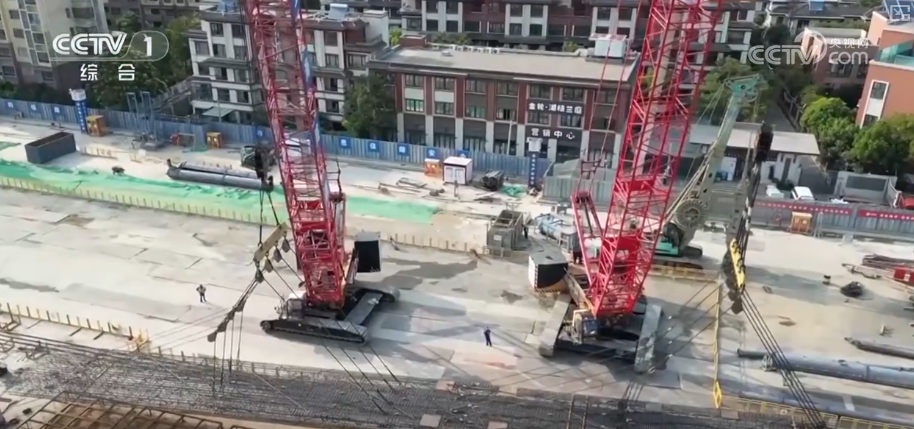
国开行:做好金融“五篇大文章” 奋力书写金融高质量发展新篇章
Xin Hua Wang· 2025-10-22 03:06
Core Viewpoint - The China Development Bank (CDB) emphasizes its commitment to serving the real economy by focusing on five key areas: technology finance, green finance, inclusive finance, pension finance, and digital finance, aiming to enhance high-quality financial development and support the construction of a strong financial nation [1][17]. Group 1: Technology Finance - CDB actively promotes financial services for technological innovation, providing comprehensive financial support throughout the lifecycle of technology projects and enterprises, thereby fostering new productive forces [2][3]. - The bank has issued its first batch of three "Technology Innovation Bonds" totaling 20 billion yuan, aimed at supporting technology innovation demonstration enterprises and high-tech manufacturing sectors [4]. Group 2: Green Finance - CDB is committed to supporting green transformation in the economy and society, focusing on financing for infrastructure upgrades, low-carbon technology innovation, and major ecological projects [5][9]. - The bank has issued 157 billion yuan in green financial bonds since the beginning of the 14th Five-Year Plan, supporting national strategies for ecological protection and high-quality development [9]. Group 3: Inclusive Finance - CDB plays a significant role in providing student loans, having issued 246 billion yuan in loans supporting over 23 million students, covering 80% of the national total [11]. - The bank has supported over 1.5 million small and micro enterprises, enhancing financial services to meet diverse needs in key sectors [10][12]. Group 4: Pension Finance - CDB has supported the construction of over 190,000 inclusive pension beds during the 14th Five-Year Plan, addressing the needs of the aging population [13][14]. Group 5: Digital Finance - CDB is advancing its digital transformation by supporting the construction of foundational networks and artificial intelligence infrastructure, enhancing financial service efficiency [15][16]. - The bank has implemented a mobile app for student loan services, streamlining the application process and improving user experience [16].
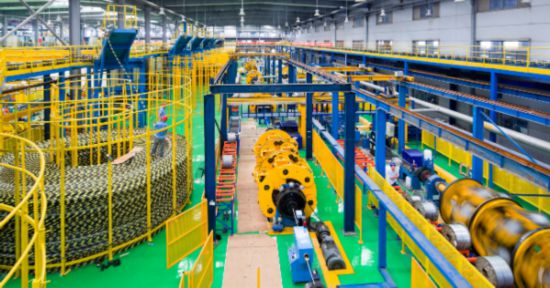
新型政策性金融工具推动重要项目加快开工建设
Jin Rong Shi Bao· 2025-10-22 01:37
Core Insights - The establishment of new policy financial tools is a clear directive from the central government aimed at supporting technological innovation, expanding consumption, and stabilizing foreign trade [1][2] - The rapid deployment of the 500 billion yuan new policy financial tools is designed to address funding shortages for infrastructure projects and support major national projects [2][3] Group 1: Policy Financial Tools - The new policy financial tools are characterized by long terms, low costs, and strong leverage effects, playing a crucial role in supporting national infrastructure and specific industry development [1][4] - As of October 17, 2023, the National Development Bank has disbursed 1,893.5 billion yuan, with a focus on major economic provinces and increased support for private investment [2][3] Group 2: Investment Impact - The 500 billion yuan policy financial tools are expected to drive approximately 4.17 trillion yuan in social investment, with commercial bank loans being a significant component of the leveraged social capital [4] - The tools prioritize support for private enterprises, particularly in technology and consumption upgrade sectors, facilitating direct access to policy benefits for eligible major enterprises and private projects [3][4]
5000亿政策性金融工具投放过半
2 1 Shi Ji Jing Ji Bao Dao· 2025-10-22 01:28
Core Insights - The new policy financial tools amounting to 500 billion yuan have been officially announced and are aimed at supporting project capital requirements, with nearly 300 billion yuan already allocated as of October 17 [1][2] Investment Allocation - As of October 17, the China Development Bank has allocated 1,893.5 billion yuan and the Agricultural Development Bank has allocated 1,001.11 billion yuan, with a total of nearly 3,000 billion yuan expected to stimulate total project investments of 28 trillion yuan and 12.6 trillion yuan respectively [1] - The Export-Import Bank has indicated that 83% of its allocations are directed towards major economic provinces, with 40% of the funding supporting private capital participation and focusing on digital economy and artificial intelligence projects [1][2] Sector Focus - The new financial tools are designed to support eight key areas: digital economy, artificial intelligence, low-altitude economy, infrastructure for consumption, green and low-carbon transition, agriculture and rural development, transportation and logistics, and municipal and industrial parks [5][9] - The Agricultural Development Bank has invested 671.36 billion yuan in 407 projects across 12 major economic provinces, emphasizing support for emerging industries [2][5] Economic Impact - Analysts predict that the current round of policy financial tools could leverage an additional 2 to 2.5 trillion yuan in new credit growth, potentially boosting economic performance in the fourth quarter and the first quarter of the following year [2][9] - The tools are expected to address both short-term economic stability and long-term structural adjustments, enhancing investment confidence in key sectors [9][10] Market Dynamics - The introduction of these financial tools is seen as a response to the "asset shortage" phenomenon in the financial market, as they expand investment opportunities into more market-oriented sectors [10] - The mechanism of these tools aims to alleviate capital shortages for major projects, thereby activating the overall credit cycle and directing funds towards effective demand areas [10]

5000亿政策性金融工具投放过半
21世纪经济报道· 2025-10-22 01:19
Core Viewpoint - The new policy financial tools, totaling 500 billion yuan, are aimed at supporting project capital and stimulating investment in key sectors, particularly in economic provinces and emerging industries [1][4]. Investment Deployment - As of October 17, the National Development Bank and Agricultural Development Bank have deployed nearly 300 billion yuan of the new policy financial tools, with expected project investments of 2.8 trillion yuan and 1.26 trillion yuan respectively [1][2]. - The National Development Bank has invested 77.4% of its funds into 12 economic provinces, while 28.8% has gone to private investments, and 37.5% to digital economy and AI projects [2]. - The Agricultural Development Bank has also focused on digital economy and AI, investing 671.36 million yuan in 407 projects across economic provinces [2]. Support for Key Sectors - The new financial tools are designed to support long-term goals of expanding domestic demand and technological innovation, focusing on eight key areas including digital economy, AI, and green transformation [4][6]. - Companies like ChipLink Integrated and Xinwanda have already shown interest in utilizing these financial tools for their projects, indicating a positive response from private enterprises [5][6]. Economic Impact - The tools are expected to have a multiplier effect, potentially generating 2 to 2.5 trillion yuan in new credit growth, which could boost economic performance in the fourth quarter and the first quarter of the following year [2][4]. - The rapid deployment of these tools is seen as a means to enhance investment confidence and stimulate economic growth [6][8]. Addressing Asset Scarcity - The introduction of these financial tools is aimed at alleviating the "asset scarcity" phenomenon in the financial market by expanding investment opportunities in emerging sectors [9][10]. - The tools are expected to provide higher returns on investments, thus attracting more social capital into the market [10].

新型政策性金融工具稳步投放 经济大省获力挺
Zhong Guo Jing Ji Wang· 2025-10-22 00:29
9月29日,国家发展改革委政策研究室副主任、新闻发言人李超表示,正在会同有关方面积极推进新型 政策性金融工具有关工作。具体来看,新型政策性金融工具规模共5000亿元,全部用于补充项目资本 金。"我们正在会同有关方面,抓紧将新型政策性金融工具资金投放到具体项目,后续将督促各地方推 动项目加快开工建设,尽快形成更多实物工作量,推动扩大有效投资,促进经济平稳健康发展。"李超 说。 记者从国家开发银行获悉,截至10月17日,国开新型政策性金融工具已投放1893.5亿元,重点支持经济 大省挑大梁,并加大对民间投资和新质生产力领域的支持力度,预计可拉动项目总投资2.8万亿元。 4月25日召开的中央政治局会议强调,创设新的结构性货币政策工具,设立新型政策性金融工具,支持 科技创新、扩大消费、稳定外贸等。中国民生银行研究院认为,新型政策性金融工具的核心定位是,通 过精准的资金投放、解决重大项目资本金不足问题,同时引导社会资本参与,推动经济高质量发展。该 工具由国家发展改革委会同3家政策性银行(国家开发银行、中国农业发展银行、中国进出口银行)设 计实施。 "9月29日,经监管部门同意,国开行全额出资成立国开新型政策性金融工具有 ...
新型政策性金融工具稳步投放
Jing Ji Ri Bao· 2025-10-21 22:01
Core Insights - The new policy financial tool established by the National Development Bank has invested 189.35 billion yuan as of October 17, focusing on supporting major economic provinces and increasing support for private investment and new productive forces, which is expected to drive a total project investment of 2.8 trillion yuan [1][2]. Group 1: Financial Tool Implementation - The new policy financial tool has a total scale of 500 billion yuan, all allocated to supplement project capital [1][2]. - As of October 17, 2023, 1,465.8 billion yuan has been invested in 12 major economic provinces, accounting for 77.4% of the total investment [2]. - The tool has also directed 545.2 billion yuan towards private investment projects, representing 28.8% of the total, and 710.5 billion yuan towards projects in digital economy, artificial intelligence, and consumption, making up 37.5% [2]. Group 2: Future Directions - The National Development Bank will strengthen its functional positioning, focusing on precise investment, maintaining capital preservation, and ensuring compliance, with an emphasis on quick actions and accurate targeting [3]. - The bank aims to achieve high standards, quality, and efficiency in the implementation of the new policy financial tool, while also providing supporting loans for projects within its main responsibilities [3].