湘财股份

Search documents
证券行业周报(20251110-20251116):再融资规模同比高增,北交所占据IPO排队主体-20251119
Huachuang Securities· 2025-11-19 04:04
证 券 研 究 报 告 证券行业周报(20251110-20251116) 推荐(维持) 再融资规模同比高增,北交所占据 IPO 排队主体 ❑ 事项:2025 年 1-10 月,一级市场融资端呈现回暖态势,但结构分化显著。1) IPO 方面:全市场募集金额 902 亿元(同比+70.7%),家数 87 家(同比+7 家)。 IPO 节奏在保持常态化的基础上温和回升,但体量相对可控。2)再融资方面: 募集金额 8636 亿元(同比+428.8%),家数 173 家(同比+19 家)。再融资规模 出现倍数级增长,单家平均募资规模大幅提升。这或反映出在 IPO 入口严监管 背景下,资本市场功能重心向存量上市公司倾斜,支持优质龙头企业通过定增、 并购重组等方式做优做强,政策支持效果在数据端得到充分验证。 IPO 储备结构:北交所承接效应明显。截至 11 月 18 日,剔除终止及中止项目 后,IPO 报审家数共计 186 家,板块分布呈现极度不均衡特征:北交所(112 家,占比 60.2%)占据报审队伍六成以上,为当前企业首发上市的主阵地。这 与监管层支持专精特新、中小市值企业融资的导向高度一致。沪深主板及双创 板块( ...
证券板块11月18日涨0.14%,东北证券领涨,主力资金净流出8.64亿元
Zheng Xing Xing Ye Ri Bao· 2025-11-18 08:11
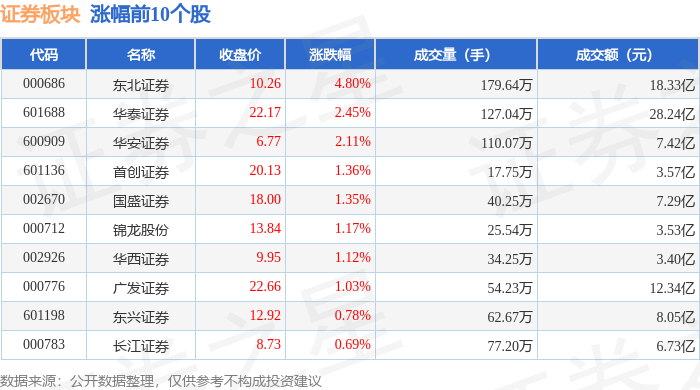
Market Overview - On November 18, the securities sector rose by 0.14% compared to the previous trading day, with Northeast Securities leading the gains [1] - The Shanghai Composite Index closed at 3939.81, down 0.81%, while the Shenzhen Component Index closed at 13080.49, down 0.92% [1] Top Gainers - Northeast Securities (code: 000686) closed at 10.26, up 4.80% with a trading volume of 1.7964 million shares and a turnover of 1.833 billion [1] - Huatai Securities (code: 601688) closed at 22.17, up 2.45% with a trading volume of 1.2704 million shares and a turnover of 2.824 billion [1] - Other notable gainers include: - Hua'an Securities (code: 606009) up 2.11% [1] - Shouchuang Securities (code: 601136) up 1.36% [1] - Guosheng Securities (code: 002670) up 1.35% [1] Top Losers - Founder Securities (code: 601901) closed at 8.07, down 0.98% with a trading volume of 721,000 shares and a turnover of 585 million [2] - Pacific Securities (code: 6601099) closed at 4.29, down 0.92% with a trading volume of 1.2025 million shares and a turnover of 517 million [2] - Other notable losers include: - Guohai Securities (code: 000750) down 0.90% [2] - Xiangcai Shares (code: 600095) down 0.77% [2] Capital Flow - The securities sector experienced a net outflow of 864 million from institutional funds, while retail funds saw a net inflow of 385 million [2] - Speculative funds had a net inflow of 479 million [2]




证券板块11月17日跌1.09%,国盛证券领跌,主力资金净流出32.35亿元
Zheng Xing Xing Ye Ri Bao· 2025-11-17 08:49
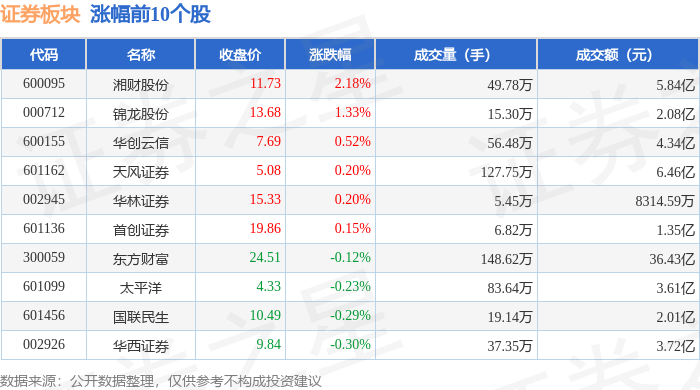
Market Overview - On November 17, the securities sector declined by 1.09%, with Guosheng Securities leading the drop [1] - The Shanghai Composite Index closed at 3972.03, down 0.46%, while the Shenzhen Component Index closed at 13202.0, down 0.11% [1] Individual Stock Performance - Notable gainers included: - Xiangcai Co., Ltd. (600095) with a closing price of 11.73, up 2.18% on a trading volume of 497,800 shares and a turnover of 584 million [1] - Jinlong Co., Ltd. (000712) with a closing price of 13.68, up 1.33% on a trading volume of 153,000 shares and a turnover of 208 million [1] - Major decliners included: - Guosheng Securities (002670) with a closing price of 17.76, down 3.16% on a trading volume of 392,600 shares and a turnover of 698 million [2] - Northeast Securities (000686) with a closing price of 9.79, down 3.07% on a trading volume of 947,200 shares and a turnover of 932 million [2] Capital Flow Analysis - The securities sector experienced a net outflow of 3.235 billion in main funds, while retail investors saw a net inflow of 2.004 billion [2] - The table of capital flow indicates that: - Xiangcai Co., Ltd. (600095) had a main fund net inflow of 14.7852 million, but a retail net outflow of 23.833 million [3] - Guosheng Securities (002670) had a main fund net outflow of 6.98 million, indicating significant selling pressure [3]

收盘丨沪指震荡调整跌0.46%,福建本地股掀涨停潮
Di Yi Cai Jing· 2025-11-17 07:26
Market Overview - The A-share market experienced a decline with the Shanghai Composite Index falling by 0.46%, the Shenzhen Component down by 0.11%, and the ChiNext Index decreasing by 0.20% [1][2] - The total trading volume in the Shanghai and Shenzhen markets was 1.91 trillion yuan, a decrease of 47.3 billion yuan compared to the previous trading day [1][2] Sector Performance - The sectors that saw the largest declines included non-ferrous metals, pharmaceuticals, electric power grid, photovoltaic, and banking [2] - Conversely, lithium mining, aquaculture, and AI application concept stocks showed strength, with local stocks in Fujian experiencing a surge [2] - The lithium mining sector was particularly strong, with Tianhua New Energy hitting a 20% limit up, and several other stocks also reaching their daily limit [2] Fund Flow - There was a net inflow of funds into the computer, energy metals, and media sectors, while there was a net outflow from photovoltaic equipment, securities, and chemical pharmaceuticals [4] - Specific stocks that saw significant net inflows included 360 Security Technology, Huasheng Tiancheng, and Great Wall Military Industry, with inflows of 1.439 billion yuan, 1.226 billion yuan, and 866 million yuan respectively [5] - On the other hand, stocks like CATL, Sungrow Power Supply, and Century Huatong faced net outflows of 1.713 billion yuan, 1.175 billion yuan, and 1.088 billion yuan respectively [5] Institutional Insights - Huatai Securities noted that short-term uncertainties remain, suggesting that the market may continue to experience fluctuations [6] - Galaxy Securities anticipates that the year-end market will likely maintain a fluctuating structure, with a focus on "anti-involution" and dividend themes during sector rotations [6] - Xiangcai Securities believes the market is in a "slow bull" phase, predicting that November will likely continue to show wide fluctuations with a gradual upward trend [6]

低位券商受青睐,顶流券商ETF(512000)水下溢价,上周吸金4.3亿元居同类首位!
Xin Lang Ji Jin· 2025-11-17 06:04
Group 1 - The A-share market experienced a decline on November 17, with most stocks falling, while Xiangcai Co. rose over 2% [1] - The brokerage sector's performance is expected to improve significantly, supported by four key factors: continuous inflow of new funds, upward index breakthroughs, deepening interconnectivity, and ongoing supply-side reforms [3] - The brokerage ETF (512000) saw a net inflow of 433 million yuan last week, leading among 14 similar ETFs [4] Group 2 - The brokerage ETF (512000) reached a historical fund size of over 40 billion yuan on November 6, with an average daily trading volume exceeding 1 billion yuan this year [5] - The brokerage sector is anticipated to maintain a high level of activity, with potential for valuation recovery as the capital market is expected to trend upward [3] - The ETF serves as an efficient investment tool, tracking the CSI All Share Securities Company Index, encompassing 49 listed brokerage stocks [3]
2026年证券行业投资策略:权益浪潮下的券商机遇:财富扩容,国际增效
Shenwan Hongyuan Securities· 2025-11-17 05:42
Group 1 - The report highlights that the brokerage industry is entering an upward trajectory after hitting a low in Q4 2023, with significant growth observed in Q2 and Q3 of 2025 [5][18]. - The brokerage sector has seen a shift from "customer acquisition" to "existing customer management and institutional deepening," focusing on creating a comprehensive product matrix across various investment types [5][29]. - The report identifies three categories of brokers that have outperformed: those with low valuations and improving fundamentals, those involved in mergers and acquisitions, and those driven by innovative business models [5][12]. Group 2 - The report indicates that the performance of H-shares has outpaced A-shares due to a stronger Hong Kong market, lower valuations, and accelerated interconnectivity between capital markets [11][12]. - As of November 14, 2025, the brokerage index has increased by 4.29%, while the Shanghai Composite Index has risen by 19.06%, indicating a significant underperformance of the brokerage sector compared to the broader market [11][12]. - The report notes that the brokerage sector's price-to-book ratio is currently at 1.41 times, which is at the 47th percentile since 2018, suggesting that the sector is undervalued [5]. Group 3 - The report emphasizes the importance of wealth management as a core support for brokerage businesses, driven by increased asset allocation from residents into the equity market [5][34]. - The brokerage industry is expected to benefit directly from the increasing attractiveness of the equity market, with specific recommendations for companies like GF Securities, Huatai Securities, and China Galaxy Securities [5]. - The report outlines that the brokerage sector's net profit for the first nine months of 2025 has increased by 66% year-on-year, with significant contributions from brokerage and interest income [18][34]. Group 4 - The report discusses the internationalization of brokerage services, driven by client demand, with major firms establishing overseas subsidiaries and focusing on cross-border services [5][18]. - The brokerage sector is experiencing a "counter-cyclical" asset allocation strategy, with a continued increase in equity asset allocation expected in 2025 [5][18]. - The report highlights that the brokerage industry is positioned for a recovery in public fund profitability, with the potential for increased allocations from public funds to the non-bank financial sector [5][18].






大智慧被自然人告上法庭,事涉与湘财股份合并事项
Nan Fang Du Shi Bao· 2025-11-17 03:56
Core Viewpoint - Shanghai Dazhihui Co., Ltd. (601519.SH) is facing a lawsuit from individual Wang Gongwei, who accuses the company of failing to conduct proper audits or evaluations regarding the merger with Xiangcai Co., and not submitting the matter for shareholder approval, which is claimed to be a procedural violation [2][3]. Group 1: Legal Allegations - The plaintiff claims that the merger constitutes a significant related party transaction and that Dazhihui did not comply with the Shanghai Stock Exchange Listing Rules, which require disclosure of audited financial reports for the transaction [3][4]. - Wang Gongwei requests the court to annul the resolutions made during Dazhihui's second extraordinary general meeting of shareholders in 2025, arguing that the necessary procedures were not followed [3][4]. Group 2: Company Defense - Legal and financial advisors, including Beijing Guofeng Law Firm and Yuekai Securities, have provided opinions stating that the merger does not involve the purchase or sale of assets, thus not requiring compliance with the aforementioned listing rules [4][5]. - The advisors confirmed that Dazhihui held a valid extraordinary general meeting on October 13, 2025, where 16 resolutions, including the merger plan, were approved, and the procedures were deemed legal and effective [4][5]. Group 3: Merger Details - The merger process began in March 2025, with Xiangcai Co. planning to absorb Dazhihui through a share exchange, issuing A-shares to Dazhihui's shareholders [6]. - The exchange ratio is set at 1:1.27, meaning each share of Dazhihui can be exchanged for 1.27 shares of Xiangcai, resulting in Xiangcai issuing a total of 2.282 billion shares [6]. - Following the merger, Dazhihui will be delisted and its legal entity will be dissolved, with Xiangcai inheriting all assets, liabilities, and rights of Dazhihui [6].

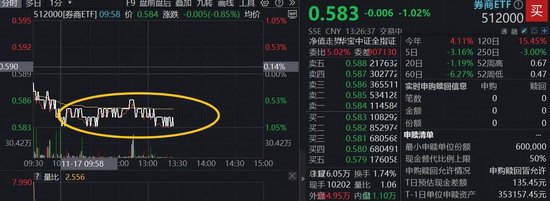
近10日“吸金”超4.6亿元,券商ETF(159842)盘中溢价,机构:券商基本面持续向好
2 1 Shi Ji Jing Ji Bao Dao· 2025-11-17 01:52
Core Viewpoint - The A-share market is experiencing a collective decline, particularly in the securities sector, with the broker ETF showing mixed performance and attracting significant capital inflow [1][2] Group 1: Market Performance - On November 17, the three major A-share indices opened lower, with the securities sector continuing to weaken [1] - The broker ETF (159842) fell by 0.34% with a premium rate of 0.09%, while some constituent stocks like Xiangcai Securities rose nearly 3% [1] - Over the past 10 trading days, the broker ETF has seen net capital inflow on 9 occasions, accumulating over 460 million yuan [1] Group 2: Industry Outlook - Shanxi Securities indicated that the fundamentals of the brokerage sector are improving, with significant year-on-year and quarter-on-quarter performance enhancements expected by Q3 2025 [1] - Wanlian Securities forecasts a long-term positive development for the equity market, driven by policies aimed at enhancing market stability and increasing demand for investment banking services [2] - The brokerage sector's valuation remains at a relatively low level compared to the past decade, suggesting potential for recovery and investment opportunities [2]

国盛证券减持计划落地 券商板块进入股东退出密集窗口
Jing Ji Guan Cha Wang· 2025-11-16 09:13
Group 1: Shareholder Reduction Announcements - Guosheng Securities announced that major shareholders plan to reduce their holdings by up to 54.52 million shares, accounting for 2.82% of the total share capital [1] - Other securities firms, including Founder Securities and Huaxi Securities, have also disclosed shareholder reduction plans, indicating a trend of shareholder exits in the brokerage sector [2][3] Group 2: Characteristics of Shareholder Reductions - The reduction plans from Guosheng Securities' shareholders are notable for their structure and correlation, with each shareholder limiting their reduction to under 1% [3] - The shareholders involved have held their shares since a 2022 agreement and have completed a 36-month non-transfer commitment [3] Group 3: Industry Restructuring and Competition - The securities industry is experiencing a significant restructuring, with the top ten brokerages accounting for 70.13% of revenue and 65.72% of net profit, highlighting the pressure on smaller firms [4] - Mergers and acquisitions are accelerating, with several major consolidations completed or approved in 2025, indicating a trend towards increased industry concentration [4][5] Group 4: Challenges for Small Brokerages - Small brokerages face multiple pressures, including industry consolidation, shareholder reductions, and the need for technological transformation [6] - The demand for AI applications in the securities industry is increasing, necessitating investments in financial technology [7] Group 5: Performance and Market Trends - Despite improved performance, with Guosheng Securities reporting a 46.84% increase in revenue and a 191.21% increase in net profit for the first three quarters of 2025, the industry faces structural challenges [7][8] - The commission rate in the securities industry has declined to 0.0158%, continuing a downward trend, which poses additional challenges for profitability [8]
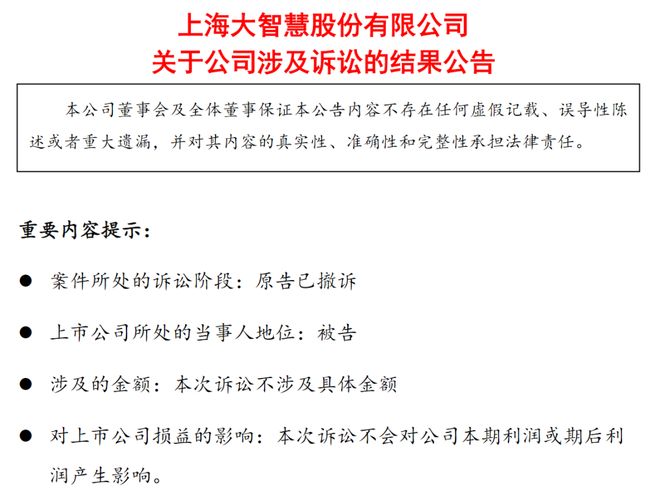
剧情反转:大智慧市值蒸发20亿元后,自然人股东撤诉
2 1 Shi Ji Jing Ji Bao Dao· 2025-11-16 08:10
Core Viewpoint - The recent lawsuit against the stock trading software company Dazhihui (601519.SH) by individual Wang Gongwei has raised market concerns, but the lawsuit was withdrawn shortly after, alleviating investor fears regarding the merger with Xiangcai Shares (600095.SH) [1][4][11]. Group 1: Lawsuit Details - On November 11, Dazhihui announced that it was sued by Wang Gongwei, who sought to annul the resolutions passed at the second extraordinary general meeting of shareholders in 2025 regarding the merger with Xiangcai Shares [4][9]. - Wang Gongwei claimed that Dazhihui failed to conduct necessary audits or evaluations of the transaction, violating relevant regulations [9][10]. - Following the lawsuit announcement, Dazhihui's market value dropped by approximately 2 billion yuan, while Xiangcai Shares lost about 3.4 billion yuan in market capitalization [7]. Group 2: Withdrawal of Lawsuit - On November 14, Wang Gongwei submitted a request to withdraw the lawsuit, which was approved by the Shanghai Pudong New Area People's Court [1][11]. - The withdrawal of the lawsuit has relieved many investors, as it removes a significant obstacle to the merger process [4][11]. Group 3: Merger Progress - Dazhihui is currently advancing a major asset restructuring transaction where Xiangcai Shares will absorb Dazhihui through a share exchange [7][17]. - The share exchange prices are set at 7.51 yuan per share for Xiangcai Shares and 9.53 yuan per share for Dazhihui, with plans to raise up to 8 billion yuan in supporting financing [17]. - The restructuring has entered a critical review phase with the Shanghai Stock Exchange, following the acceptance of the application for asset acquisition and fundraising [17]. Group 4: Financial Performance - For the first three quarters of the year, Dazhihui reported revenue of 564 million yuan, an increase of 8.78% year-on-year, but still recorded a net loss of 30 million yuan [19]. - In contrast, Xiangcai Shares achieved revenue of 1.799 billion yuan, a year-on-year growth of 16.15%, with a net profit of 442 million yuan, reflecting a significant increase of 203.39% [19].