皖能电力

Search documents
电力板块10月31日跌1.77%,建投能源领跌,主力资金净流出10.27亿元
Zheng Xing Xing Ye Ri Bao· 2025-10-31 08:42
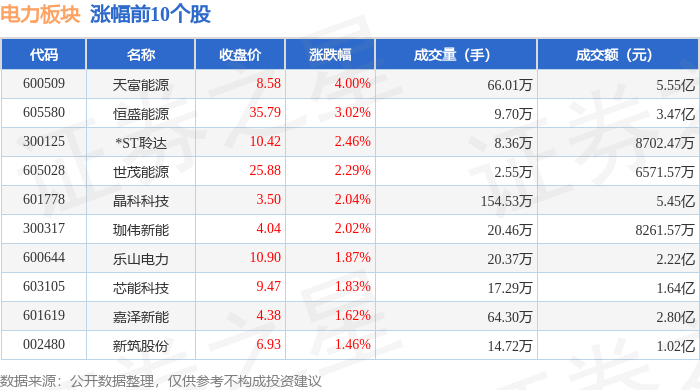
Market Overview - The electricity sector experienced a decline of 1.77% on the previous trading day, with JianTou Energy leading the drop [1] - The Shanghai Composite Index closed at 3954.79, down 0.81%, while the Shenzhen Component Index closed at 13378.21, down 1.14% [1] Stock Performance - Tianfu Energy (600509) saw a closing price of 8.58, with an increase of 4.00% and a trading volume of 660,100 shares [1] - JianTou Energy (000600) reported a closing price of 9.12, down 5.00%, with a trading volume of 638,100 shares and a transaction value of 589 million yuan [2] - China Nuclear Power (601985) closed at 8.98, down 4.26%, with a trading volume of 3,121,600 shares and a transaction value of 2.84 billion yuan [2] Capital Flow - The electricity sector saw a net outflow of 1.027 billion yuan from main funds, while retail funds recorded a net inflow of 281 million yuan [2] - Tianfu Energy had a net inflow of 97.05 million yuan from main funds, but a net outflow of 88.32 million yuan from retail investors [3] - The overall capital flow indicates a mixed sentiment among different investor types within the electricity sector [2][3]


皖能电力的前世今生:2025年三季度营收217.73亿行业排12,净利润28.53亿行业并列12
Xin Lang Zheng Quan· 2025-10-31 03:30
Core Viewpoint - WanNeng Power, established in December 1993, is the largest thermal power operator in Anhui Province, primarily focusing on coal-fired power generation and benefiting from scale and regional advantages [1] Group 1: Business Performance - In Q3 2025, WanNeng Power achieved operating revenue of 21.773 billion yuan, ranking 12th in the industry, significantly lower than the top player Huaneng International at 172.975 billion yuan and the second player Guodian Power at 125.205 billion yuan [2] - The net profit for the same period was 2.853 billion yuan, also ranking 12th, far below Huaneng International's 19.436 billion yuan and Guodian Power's 12.233 billion yuan [2] - The main business composition includes power and related products at 10.453 billion yuan (79.28%), coal at 2.37 billion yuan (17.97%), transportation at 201 million yuan (1.52%), waste treatment at 143 million yuan (1.09%), and others at 18.4185 million yuan (0.14%) [2] Group 2: Financial Ratios - As of Q3 2025, WanNeng Power's debt-to-asset ratio was 63.00%, higher than the industry average of 61.62%, but down from 65.71% in the same period last year [3] - The gross profit margin was 16.67%, below the industry average of 18.24%, although it improved from 12.27% in the previous year [3] Group 3: Management and Shareholder Information - The chairman, Li Ming, has no disclosed salary data, while the general manager, Fang Shiqing, saw a salary decrease of 59,600 yuan year-on-year, with a 2024 salary of 650,200 yuan [4] - As of September 30, 2025, the number of A-share shareholders increased by 2.10% to 55,700, while the average number of circulating A-shares held per household decreased by 2.06% to 40,700 [5] Group 4: Future Outlook - According to Huayuan Securities, WanNeng Power is expected to achieve a net profit of 2.3 billion, 2.4 billion, and 2.6 billion yuan from 2025 to 2027, with corresponding PE ratios of 8, 7, and 7 times, and a projected dividend yield of 4.5% in 2025 [5] - Guosheng Securities forecasts operating revenues of 29.062 billion, 29.625 billion, and 29.575 billion yuan for 2025 to 2027, with net profits of 2.322 billion, 2.346 billion, and 2.409 billion yuan, respectively [6] - Business highlights include increased electricity demand and improved cost management supporting significant profit growth, as well as new projects contributing to growth potential [6]
皖能电力跌2.01%,成交额1.31亿元,主力资金净流出1199.44万元
Xin Lang Cai Jing· 2025-10-31 02:03
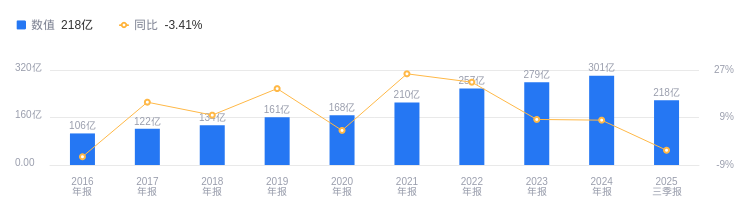
Core Viewpoint - The stock of Anhui WanNeng Power has experienced fluctuations, with a recent decline of 2.01%, while the company shows a year-to-date stock price increase of 9.34% [1] Financial Performance - For the period from January to September 2025, WanNeng Power reported operating revenue of 21.773 billion yuan, a year-on-year decrease of 3.41%, while net profit attributable to shareholders increased by 20.43% to 1.906 billion yuan [2] - Cumulative cash dividends since the company's A-share listing amount to 4.618 billion yuan, with 1.333 billion yuan distributed over the past three years [3] Shareholder Information - As of October 10, 2025, the number of shareholders for WanNeng Power increased to 56,700, with an average of 40,011 circulating shares per person, a decrease of 1.71% [2] - The top ten circulating shareholders include South China CSI 500 ETF, which reduced its holdings by 308,700 shares, and Hong Kong Central Clearing Limited, which is a new shareholder with 15.463 million shares [3] Market Activity - The stock's trading volume reached 131 million yuan, with a turnover rate of 0.69%, and a total market capitalization of 18.815 billion yuan [1] - The net outflow of main funds was 11.9944 million yuan, with significant selling pressure observed [1]
皖能电力20251028
2025-10-28 15:31
Summary of the Conference Call for WanNeng Power Company Overview - **Company**: WanNeng Power - **Period**: First three quarters of 2025 - **Installed Capacity**: 17.87 million kW, with operational capacity at 14.67 million kW and 1.6 million kW under construction or awaiting approval [3][4] Key Financial Metrics - **Electricity Generation**: 46 billion kWh, a year-on-year increase of 0.7% [2][3] - **Average Selling Price**: 0.42 CNY per kWh, a decrease of 6% year-on-year [2][3][6] - **Coal Price**: Excluding tax, the benchmark coal price remained below 800 CNY/ton for two consecutive quarters, down over 15% year-on-year [2][3][11] - **Sales Volume**: Approximately 43.2 billion kWh, based on an average grid connection rate of 94% [4] Market Dynamics - **Electricity Price Trends**: The average selling price decreased due to intense competition, reduced long-term contract coverage, and decreased income from peak-shaving in Xinjiang [2][6] - **Xinjiang Wind Power Pricing**: Competitive pricing reached 0.252 CNY per kWh, higher than the benchmark price, with 50% of the revenue from a new wind project locked in through mechanism pricing [7][8] - **Spot Market Performance**: The Anhui spot market has been operational for nearly 10 months, with prices gradually recovering to near benchmark levels by October [2][17] Investment and Future Projects - **Investment Income**: Increased year-on-year, attributed to the commissioning of the Guoneng Shenwan Chizhou Power Plant Phase II and reduced impairment pressure from previous renewable projects [13] - **Nuclear Fusion Project**: WanNeng Power holds a 3.5% stake in a nuclear fusion project expected to be completed in 2027, with plans for further development in Hefei [14] Strategic Initiatives - **Long-term Contracts**: The company plans to sign long-term contracts to stabilize revenue and mitigate market volatility, with expected prices slightly above mechanism prices [8][9] - **Renewable Energy Strategy**: The company has made early investments in renewable energy, achieving a blending ratio of 10% to 35% in its 300,000 kW units [15] Dividend Policy - **Dividend Distribution**: Currently distributing 35% of net profit as dividends, with management considering an increase, pending approval from group leadership [4][20] Risks and Challenges - **Coal Price Fluctuations**: Anticipated increases in coal prices in Q4 may impact profitability [2][19] - **Market Uncertainty**: The company faces uncertainties regarding Q4 performance due to various factors, including coal prices and potential impairments [19] Regulatory Environment - **Long-term Contract Requirements**: The government may adjust long-term contract signing ratios based on electricity demand growth forecasts for 2026 [18] This summary encapsulates the key points from the conference call, highlighting the company's performance, market conditions, strategic initiatives, and potential risks.
煤价回落叠加需求攀升 火电企业前三季度盈利修复明显
Shang Hai Zheng Quan Bao· 2025-10-27 20:33
Core Viewpoint - The thermal power industry is experiencing a recovery in profitability driven by a decline in thermal coal prices year-on-year and an increase in electricity demand during peak summer months, with companies like Jianneng Power and Jiantou Energy reporting significant profit growth [1][4]. Group 1: Company Performance - Jianneng Power reported a revenue of 26.16 billion yuan for the first three quarters, a year-on-year increase of 0.49%, with a net profit attributable to shareholders of 3.17 billion yuan, up 125.66% [2]. - Waneng Power's third-quarter revenue was 8.59 billion yuan, a 0.56% increase year-on-year, with a net profit of 824 million yuan, reflecting a 60.95% growth [2]. - Jiantou Energy expects a net profit of 1.583 billion yuan for the first three quarters, marking a 231.75% increase year-on-year, primarily due to lower coal prices and reduced operational costs [3]. Group 2: Market Dynamics - The decline in thermal coal prices and the increase in electricity demand during the summer are key factors contributing to the profitability recovery of thermal power companies [4]. - The stability of electricity prices in northern thermal power companies is expected to lead to performance growth that exceeds the industry average [4]. - The National Development and Reform Commission and the National Energy Administration have introduced guidelines to enhance the electricity market system, indicating a shift towards a more market-oriented approach [4]. Group 3: Coal Price Trends - As of October 24, the price of Shanxi-produced thermal coal reached 770 yuan per ton, the upper limit set by the National Development and Reform Commission for long-term coal prices [5]. - Analysts predict that the current round of thermal coal price increases may be nearing an end, but there are concerns about potential supply tightening due to ongoing production checks in coal mines [5]. - The execution of "anti-involution" policies may lead to unexpected increases in coal prices, which could impact the recovery pace of thermal power profitability [5].

皖能电力(000543):三季度业绩超预期,关注年底电价谈判
Hua Yuan Zheng Quan· 2025-10-27 15:37
Investment Rating - The investment rating for the company is "Buy" (maintained) [5] Core Views - The company's Q3 performance exceeded expectations, with a focus on year-end electricity price negotiations [5] - The company is expected to achieve a net profit attributable to shareholders of 2.3 billion, 2.4 billion, and 2.6 billion RMB for 2025-2027, corresponding to P/E ratios of 8, 7, and 7 times respectively [6] - The current valuation is at a historically low level, and new investment projects are expected to contribute incremental profits [6] Financial Performance Summary - For the first three quarters of 2025, the company reported revenue of 21.773 billion RMB, a year-on-year decrease of 3.41%, while the net profit attributable to shareholders was 1.906 billion RMB, a year-on-year increase of 20.43% [8] - In Q3 alone, the company achieved revenue of 8.587 billion RMB, a year-on-year increase of 0.56%, and a net profit of 0.824 billion RMB, a year-on-year increase of 60.95% [8] - The increase in profit is attributed to a decrease in coal prices and an increase in electricity demand within Anhui province [8] Earnings Forecast and Valuation - Revenue projections for 2025-2027 are 30.516 billion, 31.706 billion, and 31.858 billion RMB, with corresponding net profits of 2.312 billion, 2.418 billion, and 2.593 billion RMB [7] - The company’s earnings per share (EPS) are projected to be 1.02, 1.07, and 1.14 RMB for 2025-2027 [7] - The return on equity (ROE) is expected to be 13.34%, 12.80%, and 12.60% for the same period [7] Operational Highlights - The company is the largest thermal power operator in Anhui province, with a significant share of the province's thermal power generation capacity [8] - New power generation units are expected to contribute to profit growth, with several projects scheduled for completion between 2026 and 2027 [8]
加快建设新型能源体系,2025M1-9用电量同增4.6%
Soochow Securities· 2025-10-27 09:57
Investment Rating - The report maintains an "Overweight" rating for the utility sector [1] Core Insights - The construction of a new energy system is accelerating, with a focus on achieving carbon peak and promoting a green lifestyle [4] - In the first nine months of 2025, total electricity consumption increased by 4.6% year-on-year, totaling 77,675 billion kWh [4] - The electricity spot market is rapidly starting continuous settlement trials, with several provinces transitioning to formal operations [4] Summary by Sections 1. Industry Overview - The report highlights the importance of accelerating the construction of a new energy system as outlined in the recent Communist Party meeting [4] 2. Electricity Consumption - Total electricity consumption for January to September 2025 reached 77,675 billion kWh, reflecting a year-on-year growth of 4.6% [15] - Breakdown of consumption growth: - Primary industry: +10.2% - Secondary industry: +3.4% - Tertiary industry: +7.5% - Urban and rural residential consumption: +5.6% [4][15] 3. Power Generation - Cumulative power generation for January to September 2025 was 72,600 billion kWh, with a year-on-year increase of 1.6% [22] - Specific generation changes: - Thermal power: -1.2% - Hydropower: -1.1% - Nuclear power: +9.2% - Wind power: +10.1% - Solar power: +24.2% [22] 4. Electricity Prices - The average electricity purchase price in June 2025 was 389 RMB/MWh, down 1% year-on-year and 1.3% month-on-month [38] 5. Coal Prices - As of October 24, 2025, the price of thermal coal at Qinhuangdao port was 770 RMB/ton, up 9.07% year-on-year and increased by 22 RMB/ton week-on-week [45] 6. Hydropower Conditions - As of October 24, 2025, the water level at the Three Gorges Reservoir was 175 meters, with inflow and outflow rates increasing by 92% and 70% year-on-year, respectively [54] 7. Investment Recommendations - Focus on investment opportunities in hydropower and thermal power during peak summer demand [4] - Recommended companies include: - Thermal Power: JianTou Energy, Huadian International, Huaneng International, Guodian Power, Sheneng Shares, and Waneng Power [4] - Hydropower: Yangtze Power [4] - Nuclear Power: China National Nuclear Power and China General Nuclear Power [4] - Green Energy: Longi Green Energy and others [4]



比肩工业革命?核聚变板块再受资金青睐——道达涨停复盘
Mei Ri Jing Ji Xin Wen· 2025-10-27 08:44
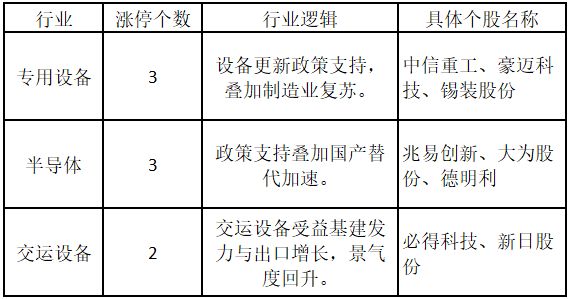
Market Overview - The Shanghai Composite Index rose by 1.18% and the Shenzhen Component Index increased by 1.51%, while the median individual stock change was an increase of 0.44% [1] - A total of 50 stocks hit the daily limit up, a decrease of 7 from the previous day, and 5 stocks hit the limit down, a decrease of 2 from the previous day [3] Sector Performance - The sectors with the most limit-up stocks included specialized equipment, semiconductors, and transportation equipment [3][4] - The specialized equipment sector saw 3 limit-up stocks, driven by equipment renewal policies and manufacturing recovery [4] - The semiconductor sector also had 3 limit-up stocks, supported by policy backing and accelerated domestic substitution [4] - The transportation equipment sector had 2 limit-up stocks, benefiting from infrastructure investment and export growth [4] Conceptual Trends - The most represented concepts among limit-up stocks were Fujian Free Trade/Haixi concept, nuclear fusion, and domestic chip concepts [5] - The nuclear fusion concept had 5 limit-up stocks, driven by expectations of an energy revolution and policy support [5] - The Fujian Free Trade/Haixi concept also had 5 limit-up stocks, supported by favorable policies and regional economic vitality [5] Notable Stocks - Six stocks reached historical highs, including兆易创新 (Zhaoyi Innovation), 生益科技 (Shengyi Technology), and 东方钽业 (Oriental Tantalum) [8] - Eighteen stocks reached new highs in the past year, including 时空科技 (Shikong Technology) and 大为股份 (Dawen Shares) [8] Capital Flow - The top five stocks with the highest net inflow of main funds included 恒宝股份 (Hengbao Shares) and 厦门钨业 (Xiamen Tungsten) [10] - The stocks with the highest proportion of net inflow relative to market capitalization included 恒宝股份 (Hengbao Shares) and 郑州煤电 (Zhengzhou Coal Electricity) [10] Limit-Up Stock List - The limit-up stock list includes stocks from various sectors, such as 时空科技 (Shikong Technology) in decoration and 大为股份 (Dawen Shares) in semiconductors [7][11] - 盈新发展 (Yingxin Development) led with 6 consecutive limit-ups, followed by 世龙实业 (Shilong Industry) with 5 [11]
只差0.93!A股放量爆发!AI产业链股活跃 券商板块异动
Zheng Quan Shi Bao· 2025-10-27 08:43
Market Overview - A-shares experienced a strong rally on October 27, with the Shanghai Composite Index rising over 1% and approaching the 4000-point mark, reaching a high of 3999.07 points [1] - The total trading volume in the Shanghai and Shenzhen markets reached 23,568 billion yuan, an increase of 3,650 billion yuan from the previous day [1] Sector Performance - The semiconductor sector showed significant strength, with stocks like Jiangbolong, Zhaoyi Innovation, and Demingli hitting new highs [1][2] - Resource stocks, including steel, non-ferrous metals, and coal, also saw collective gains, with several stocks reaching their daily limit [1] - The AI industry chain stocks were active, with companies like Shengyi Electronics and Zhongji Xuchuang achieving historical highs [1][4] Semiconductor and Technology Stocks - Semiconductor and chip stocks surged, with Jiangbolong nearing the daily limit and Zhaoyi Innovation and Demingli hitting the limit as well [2] - A breakthrough in the photolithography field was reported, with a new method to reduce defects in photolithography materials, expected to boost the market size of photolithography materials to over 11.4 billion yuan in 2024 [2] - The demand for storage chips is experiencing exponential growth due to AI applications, leading to a projected price increase of 30% for DRAM and NAND products in Q4 [3] AI Industry Developments - AI-related stocks showed strong performance, with significant gains in companies involved in AI computing power and applications [4][5] - Major global tech companies are increasing capital expenditures for AI, indicating a robust demand for AI-related hardware and services [4] Brokerage Sector Activity - The brokerage sector saw notable upward movement, with stocks like Dongxing Securities and Xiangcai Securities approaching their daily limits [6] - The overall market capitalization of A-shares has surpassed 100 trillion yuan, providing a broad growth opportunity for brokerage firms [6]
安徽国企改革板块10月27日涨1.73%,皖能电力领涨,主力资金净流入1.56亿元



Sou Hu Cai Jing· 2025-10-27 08:40
Market Performance - The Anhui state-owned enterprise reform sector rose by 1.73% compared to the previous trading day, with Waneng Electric Power leading the gains [1] - The Shanghai Composite Index closed at 3996.94, up 1.18%, while the Shenzhen Component Index closed at 13489.4, up 1.51% [1] Key Stocks in Anhui State-Owned Enterprise Reform Sector - Waneng Electric Power (000543) closed at 8.65, up 10.05%, with a trading volume of 1.0268 million shares and a transaction value of 870 million [1] - Anhui Heli (600761) closed at 21.76, up 6.41%, with a trading volume of 295,300 shares and a transaction value of 634 million [1] - Tongguan Copper Foil (301217) closed at 32.10, up 6.05%, with a trading volume of 510,300 shares and a transaction value of 1.626 billion [1] - Jianghuai Automobile (600418) closed at 52.79, up 5.01%, with a trading volume of 721,100 shares and a transaction value of 3.777 billion [1] - Tongling Nonferrous Metals (000630) closed at 5.86, up 2.81%, with a trading volume of 3.9126 million shares and a transaction value of 2.299 billion [1] Capital Flow Analysis - The Anhui state-owned enterprise reform sector saw a net inflow of 156 million from main funds, while speculative funds experienced a net outflow of 231 million [2] - Retail investors contributed a net inflow of 74.36 million [2] Individual Stock Capital Flow - Jinghe Integrated (688249) had a main fund net inflow of 242 million, but a speculative fund net outflow of 42.99 million [3] - Jianghuai Automobile (600418) saw a main fund net inflow of 160 million, with a speculative fund net outflow of 166 million [3] - Waneng Electric Power (000543) experienced a main fund net inflow of 64.71 million, while speculative funds had a net outflow of 57.96 million [3]