
东方电子

Search documents
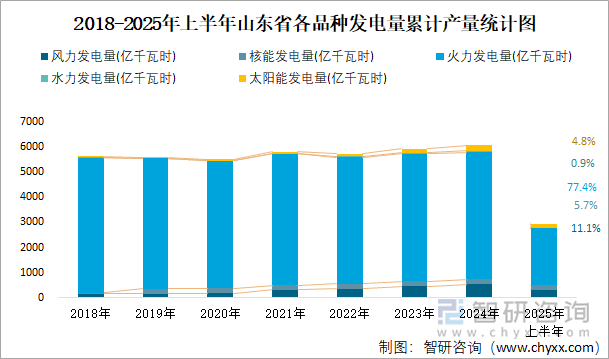
2025年上半年山东省能源生产情况:山东省发电量1513.4亿千瓦时,同比下滑2.3%
Chan Ye Xin Xi Wang· 2025-08-13 03:29
Core Insights - The report highlights a decline in electricity generation in Shandong Province for the first half of 2025, with a total generation of 1513.4 billion kWh, representing a year-on-year decrease of 2.3% [1] - The report indicates a significant increase in nuclear power generation, which rose by 60.5% year-on-year, reaching 166.7 billion kWh, while other sources like thermal and hydropower saw declines [1] Electricity Generation Breakdown - In the first half of 2025, thermal power generation accounted for 77.4% of total generation at 2263.1 billion kWh, down 6.9% year-on-year [1] - Hydropower generation was 27.4 billion kWh, making up 0.9% of the total, with a year-on-year decrease of 6% [1] - Wind power generation increased slightly by 0.4% to 325.8 billion kWh, representing 11.1% of total generation [1] - Solar power generation saw a notable increase of 17.8%, totaling 140.5 billion kWh, which is 4.8% of the total generation [1] Industry Context - The report is part of a broader market research analysis by Zhiyan Consulting, focusing on the energy sector in China from 2025 to 2031, providing insights into market trends and investment prospects [1][2] - The data is sourced from the National Bureau of Statistics and organized by Zhiyan Consulting, ensuring consistency in the statistical scope for year-on-year comparisons [3]

2025年中国智能配电设备市场政策汇总、产业链图谱、市场规模、竞争格局及发展趋势:大型企业综合竞争力较强[图]
Chan Ye Xin Xi Wang· 2025-08-11 01:43
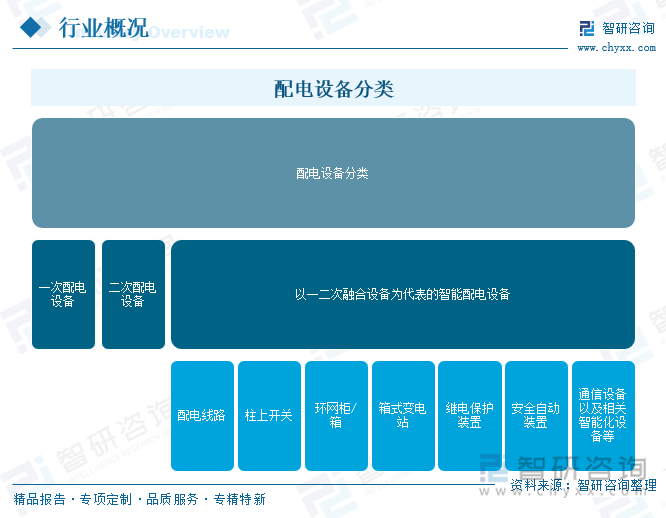
Core Viewpoint - The distribution network is becoming the core of the power system, driven by the national strategy for carbon peak and carbon neutrality, with a significant increase in demand for smart distribution equipment, projected to reach a market size of 86.724 billion yuan in 2024, a year-on-year growth of 24.28% [1][12]. Overview - The distribution network plays a crucial role in receiving and redistributing electricity to various sectors, impacting power supply reliability and quality, and is a vital public infrastructure for economic and social development [2][3]. Market Policy - The development of smart distribution equipment is supported by various national policies aimed at enhancing the safety and efficiency of the power system, including guidelines for rural power grid upgrades and promoting intelligent manufacturing [5][7]. Industry Chain - The upstream of the smart distribution equipment industry includes suppliers of electrical components, metal parts, and electronic components, while the downstream focuses on the power market, particularly in upgrading distribution networks and supporting new energy integration [8]. Current Development - The smart distribution equipment market is rapidly growing due to increasing user demands for power supply quality and reliability, with a projected market size of 86.724 billion yuan in 2024, reflecting a 24.28% increase year-on-year [12][1]. Competitive Landscape - The industry is categorized into three types of participants: large enterprises with significant capital and diversified operations, medium-sized enterprises with focused business areas, and small enterprises with limited market competitiveness [14][16]. Representative Companies - XJ Electric Co., Ltd. is a leading player in the power equipment industry, focusing on high-end technology and products across various sectors, with projected revenues of 17.09 billion yuan in 2024 [16]. - Pinggao Group Co., Ltd. specializes in high and ultra-high voltage equipment, with expected revenues of 12.4 billion yuan in 2024, primarily from its high voltage segment [18]. Development Trends - The trend towards smart distribution network upgrades is expected to accelerate, driven by increased investment in smart grid construction and user demands for improved power supply quality, with a focus on energy efficiency and environmental sustainability [20].


东方电子发布参设公司进展 东方茸世拟增资瓴芯电子
Bei Jing Shang Bao· 2025-08-08 06:59
Group 1 - The company Dongfang Electronics announced an investment of 14 million yuan in Dongfang Rongshi, which will subscribe to the increased registered capital of Lingxin Electronics amounting to 191,800 yuan [1] - After the capital increase, Dongfang Rongshi will hold a 3.68% equity stake in Lingxin Electronics [1] - Lingxin Electronics specializes in the independent development and marketing of analog integrated circuit chips in the automotive electronics, industrial communication, and high-end consumer goods sectors [1]
趋势研判!2025年中国虚拟电厂(VPP)行业发展背景、产业链、发展现状及未来趋势分析:政策红利与技术突破并进,虚拟电厂迈向千亿蓝海[图]
Chan Ye Xin Xi Wang· 2025-08-06 01:11
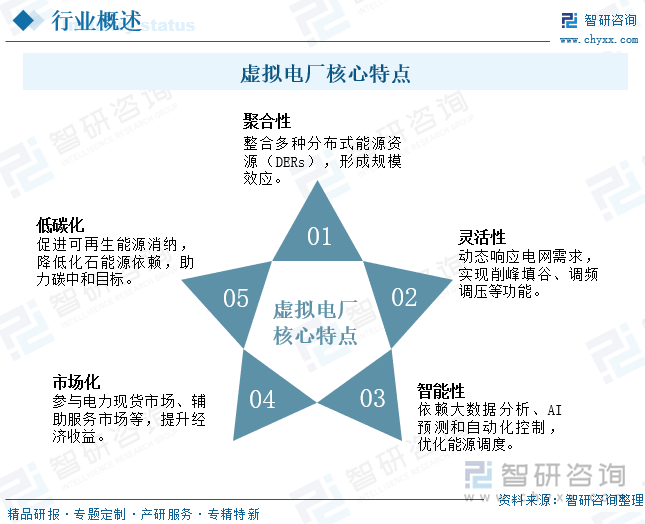
Core Viewpoint - The virtual power plant (VPP) is emerging as a new operational model in the energy sector, significantly enhancing power supply security and promoting renewable energy consumption. The industry is transitioning from an invitation-based model to a market-oriented approach, with government targets set for 2027 and 2030 to increase regulation capacity to 20 million kilowatts and over 50 million kilowatts, respectively [1][11][25]. Industry Overview - Virtual power plants aggregate distributed energy resources, adjustable loads, and storage systems, acting as new operational entities that participate in power system optimization and market transactions [2]. - The development of virtual power plants is supported by a comprehensive policy framework established by the government, which includes various action plans and guidelines aimed at fostering innovation and market mechanisms [8][11]. Development Background - The rapid growth of renewable energy in China, particularly in solar and wind power, has created a pressing need for flexible power management solutions. Virtual power plants can significantly reduce the need for redundant capacity by providing flexible load adjustments [13][15]. - The construction cost of virtual power plants is only one-eighth that of traditional coal-fired power plants, making them a cost-effective solution for peak load management [15]. Current Status - The virtual power plant industry in China has established a complete industrial chain, encompassing resource aggregation, platform operation, and market trading. Key regions include Shandong, Guangdong, Zhejiang, and Shanghai, where pilot projects are actively being developed [17][19]. - The commercial model is evolving from a single demand response approach to a diversified model that includes power trading and carbon services [19]. Competitive Landscape - The industry features a diverse competitive landscape with participation from state-owned enterprises, private companies, and technology firms. Major players include State Grid, Huaneng Group, and Guodian NARI, which leverage their resources and infrastructure to dominate the market [23]. - Private companies like Guoneng Rixin and Teruid focus on technological innovation and niche markets, while tech giants such as Huawei and Tencent are entering the sector with advanced digital technologies [23]. Future Trends - The virtual power plant industry is expected to experience accelerated growth driven by policy support and market mechanisms, with projections indicating a market size exceeding 10.2 billion yuan by 2025 and surpassing 100 billion yuan by 2030 [25][26]. - Technological advancements in AI, 5G, and blockchain will enhance operational efficiency and real-time responsiveness, transforming virtual power plants into intelligent energy management systems [27]. - The integration of virtual power plants with other sectors, such as transportation and building management, will create new business models and expand the ecosystem [28].



多晶硅行业专项节能监察任务清单印发,持续看好光伏供给侧改革
2025-08-05 03:15
Summary of Key Points from Conference Call Records Industry Overview - The conference call primarily discusses the **polysilicon industry** and its implications for the **photovoltaic (PV) sector** [1][3][4][5]. Core Insights and Arguments - The **Ministry of Industry and Information Technology (MIIT)** has intensified energy conservation inspections in the polysilicon industry, aiming to lower comprehensive energy consumption standards, which may lead to an increase in polysilicon prices and promote supply-side reforms in the PV industry [1][3]. - The **China Photovoltaic Association** has clarified that work related to polysilicon is progressing steadily, focusing on anti-involution measures and price recovery, which will benefit polysilicon and glass segments significantly [1][6]. - The **price of polysilicon** is a critical indicator for the PV sector, with recent supply-side reforms driving price increases. The current average transaction price of polysilicon has risen, indicating that anti-involution measures are being realized [4][9]. - Despite potential demand declines in the second half of the year due to regulatory impacts, the long-term outlook for global PV penetration remains optimistic, with current levels exceeding 20% [5][7][8]. Additional Important Content - The **component price dynamics** need to address both cost transmission from rising polysilicon prices and profit recovery, with the potential for downstream operators to face challenges due to regulatory impacts [7][8]. - The **auxiliary materials** sector, particularly paste materials, is highlighted as a significant area of focus, while inverters are expected to benefit from developments in energy storage [10]. - The **wind energy sector** shows promising signs, with an increase in bidding prices for onshore wind energy and the commencement of offshore wind projects, indicating improved demand across the supply chain [13]. - **Investment opportunities** are identified in polysilicon, battery components, and silicon wafers, contingent on effective price transmission from components [9][17]. Conclusion - The polysilicon industry is poised for growth due to regulatory support and market dynamics, with significant implications for the broader photovoltaic sector. The focus on energy efficiency and price recovery will be crucial for sustaining long-term growth in this industry.
昊创瑞通IPO之路:高毛利率与行业地位不符,低价股权转让引关注
Sou Hu Cai Jing· 2025-07-30 16:11
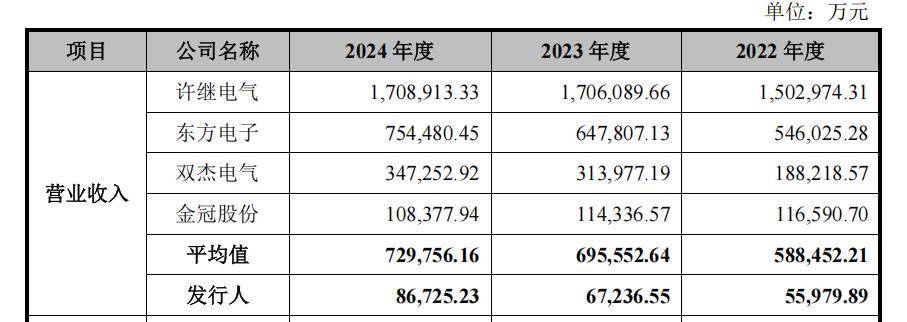
Core Viewpoint - Beijing Haocreat Ruitong Electric Equipment Co., Ltd. has successfully registered for an IPO on the Shenzhen Stock Exchange's ChiNext board, marking its entry into the capital market despite facing multiple challenges during the process [1] Financial Performance - The company's revenue and net profit have shown steady growth, with projected revenues of 559 million yuan, 672 million yuan, and 867 million yuan for 2022, 2023, and 2024 respectively, and net profits of 68.76 million yuan, 87.41 million yuan, and 111 million yuan for the same years [2] - Despite this growth, Haocreat Ruitong's revenue scale remains relatively small compared to industry peers, falling short of the average industry level [2] Industry Comparison - Although the revenue scale is below that of competitors, Haocreat Ruitong's gross margin is higher than the industry average, with gross margins of 25.75%, 27.60%, and 25.67% from 2022 to 2024, compared to the average gross margins of 22.26%, 24.13%, and 23.57% for comparable companies [4] Quality Issues - The company has faced significant product quality issues due to factors such as defective components from suppliers and misunderstandings of customer needs, leading to a suspension of bidding qualifications by a subsidiary of the State Grid [5] - This has raised concerns that the company may be compromising product quality to achieve high gross margins, leading to questions about its operational strategy [5] Shareholder Changes - A notable development is the entry of new shareholder Cai Jianren, who acquired shares at a price 44.44% higher than previous external investors, raising questions about potential conflicts of interest and the true purpose of the share transfer [5] - The Shenzhen Stock Exchange has requested clarification on the reasons for Cai Jianren's investment and the pricing basis, adding uncertainty to the company's IPO journey [5]
昊创瑞通IPO:毛利率蹊跷“领跑”行业,股权便宜卖背后存隐忧
Sou Hu Cai Jing· 2025-07-30 08:48
Group 1 - The core point of the article is that Beijing Haochuang Ruitong Electric Equipment Co., Ltd. has successfully registered for an IPO on the ChiNext board, despite facing multiple challenges during the process, including financial documentation issues and potential internal management concerns [1][3] - The company has shown significant revenue growth from 55.98 million yuan in 2022 to an expected 86.73 million yuan in 2024, with net profits increasing from 6.88 million yuan to 11.13 million yuan during the same period [3][4] - Haochuang Ruitong's gross profit margins are notably higher than industry averages, with margins of 25.75%, 27.60%, and 25.67% from 2022 to 2024, compared to the average of 22.26%, 24.13%, and 23.57% for comparable companies [4][5] Group 2 - The company has faced product quality issues, with reported amounts of 2.30 million yuan, 1.82 million yuan, and 5.20 million yuan attributed to defects and misunderstandings of customer needs during the reporting period [5][6] - Due to these quality issues, the company has had its bidding qualifications suspended by several subsidiaries of the State Grid, which raises concerns about its operational reliability [6] - The recent addition of shareholder Cai Jianren, who acquired shares at a price significantly higher than previous investors, has raised suspicions of potential benefit transfer and market value manipulation [7][8]
电力设备及新能源周报20250720:光伏产业链价格上行,6月变压器出口总额创新高-20250720
Minsheng Securities· 2025-07-20 11:55
电力设备及新能源周报 20250720 光伏产业链价格上行,6 月变压器出口总额创新高 2025 年 07 月 20 日 ➢ 本周(20250714-20250718)板块行情 电力设备与新能源板块:本周上涨 0.57%,涨跌幅排名第 15,弱于上证指数。 本周工控自动化涨幅最大,太阳能指数跌幅最大。工控自动化上涨 3.57%,新 能源汽车指数上涨 2.62%,核电指数上涨 1.95%,储能指数上涨 1.34%,锂电 池指数上涨 0.29%,风力发电指数下跌 0.75%,太阳能指数下跌 2.53%。 ➢ 新能源车:2025 年第二季度美国轻型车市场创下年内首次负增长 2025 年第二季度,美国轻型车市场出现了显著的结构变动。由于关税政策的 实施以及市场对价格上涨的预期,消费者提前进行了购车消费,导致需求被提 前透支,6 月销量同比下降 4.2%,至 128.8 万辆,第二季度销量增长 2.3%, 达到 4,207,796 辆,成为本年度首次出现的销量负增长情况。与此同时,美国 本地组装车型在总交付量中的占比从去年同期的 53.4% 上升至 54.8%,这一 数据变化直观反映出市场对本地制造车型的偏好正不断增强 ...

昊创瑞通IPO:“期间费用低毛利率高”异象待解,实控人0元转让子公司
Sou Hu Cai Jing· 2025-07-18 06:21
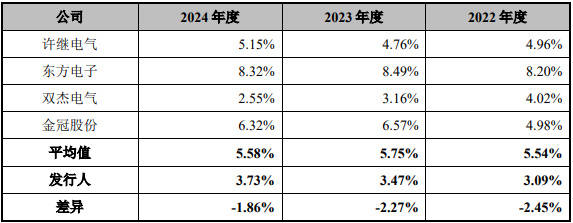
Core Viewpoint - Beijing Haocreat Ruitong Electric Equipment Co., Ltd. (Haocreat Ruitong) has made progress in its IPO process, with its review status changing to "submitted for registration" as of July 4, 2025, aiming to raise 477 million yuan through the issuance of up to 27.9 million shares for various projects including production line construction and working capital [1][3] Financial Performance - Haocreat Ruitong exhibits a "low cost, high gross profit" characteristic, with R&D, sales, and management expense ratios approximately 5 percentage points lower than the industry average from 2022 to 2024, yet its gross profit margin remains 2-3 percentage points higher than the industry average, reaching 25.67% in 2024 compared to the industry average of 23% [1][3][9] - The company's R&D expense compound growth rate is 36.69%, but its R&D expense ratio has consistently been between 3.09% and 3.73%, nearly 40% lower than the industry average of 5.54%-5.58% [5][9] - Sales expenses have increased in absolute terms, but the sales expense ratio has decreased from 5.01% to 4.06%, significantly lower than the industry average of 7.84%-9.17%, attributed to high sales concentration with State Grid subsidiaries [6][9] - Management expense ratios have remained between 2.13% and 2.52%, about half of the industry average of 5.26%-5.74%, raising questions about the sustainability of such cost advantages [7][9] Regulatory Concerns - A notable equity transaction involving the transfer of a subsidiary's shares for 200,000 yuan to the actual controller, followed by a zero-cost transfer two years later, has drawn scrutiny from the Shenzhen Stock Exchange, which has requested explanations regarding the transaction's rationale [1][10] - The underwriting institution, Changjiang Securities, has been criticized for significant oversights during the review process, including discrepancies in reporting over 60 key issues, raising concerns about its professional quality [2][11][12]
电网行业近况更新
2025-07-16 06:13
Summary of Conference Call Notes Industry Overview - The conference call primarily discusses the **Chinese power grid infrastructure investment** and the **high voltage transmission sector**. The focus is on the performance and trends in the power equipment market, including bidding results and export data. Key Points and Arguments Power Grid Investment - From January to April, China's power grid investment reached **140.8 billion yuan**, reflecting a **14.6% year-on-year increase**. However, April's growth showed a slight decline compared to earlier months, where the growth rate was over **20%** [1] - The investment is expected to continue to rise throughout the year due to substantial plans from **State Grid** and **Southern Grid** [1] High Voltage Transmission - The **State Grid** has completed two batches of high voltage equipment bidding this year, totaling **1.48 billion yuan**, which is lower than last year's **1.7 billion yuan** for the same period [2] - The bidding for high voltage line materials has surged to **17.87 billion yuan**, setting a historical high, with the first batch at **7.74 billion yuan** and the second at **10.13 billion yuan** [2] Metering Equipment - The first batch of P4 metering equipment bidding totaled **7.5 billion yuan**, a **43.63% decrease** year-on-year. The A-grade meters saw a **48% drop** in bidding amounts [3][4] - The decline in bidding amounts is attributed to a significant drop in prices as manufacturers attempt to clear inventory [5] Digitalization and AI - The digitalization bidding reached **1.5 billion yuan**, a **16% increase** year-on-year, with digital equipment seeing a **13% increase** [7] - The demand for AI servers is expected to grow, with a focus on the development of the **Electricity Trading Platform 3.0** [9] Export Performance - From January to April, transformer exports reached **4.58 billion yuan**, a **33.65% increase** year-on-year, with liquid transformers showing the highest growth [15][16] - The export of electric meters also increased, with April's export amount reaching **980 million yuan**, a **34% year-on-year increase** [16] - High voltage switchgear exports reached **8.3 billion yuan**, reflecting a **44% increase** [17] Domestic and International Demand - Domestic demand remains strong despite price pressures, with expectations of continued growth in the second half of the year due to ongoing high voltage projects [24] - The relationship with the EU is stable, with China becoming the largest importer of transformers in the EU, surpassing Turkey [22] Future Outlook - The upcoming months are expected to see more high voltage projects initiated, leading to increased demand for related equipment and orders [24] - The overall industry is anticipated to face manageable pressure with significant growth opportunities in both domestic and international markets [23] Additional Important Insights - The digitalization efforts are being hampered by progress delays, but future demand for AI in the power sector is expected to remain robust [9] - The competitive pricing environment is likely to improve as new bidding cycles for meters are anticipated, which will shift focus from older models to newer ones [6]