
微创医疗

Search documents
专业筑基、开放共进 探索建发致新进阶路的战略密码
Bei Ke Cai Jing· 2025-10-15 06:00
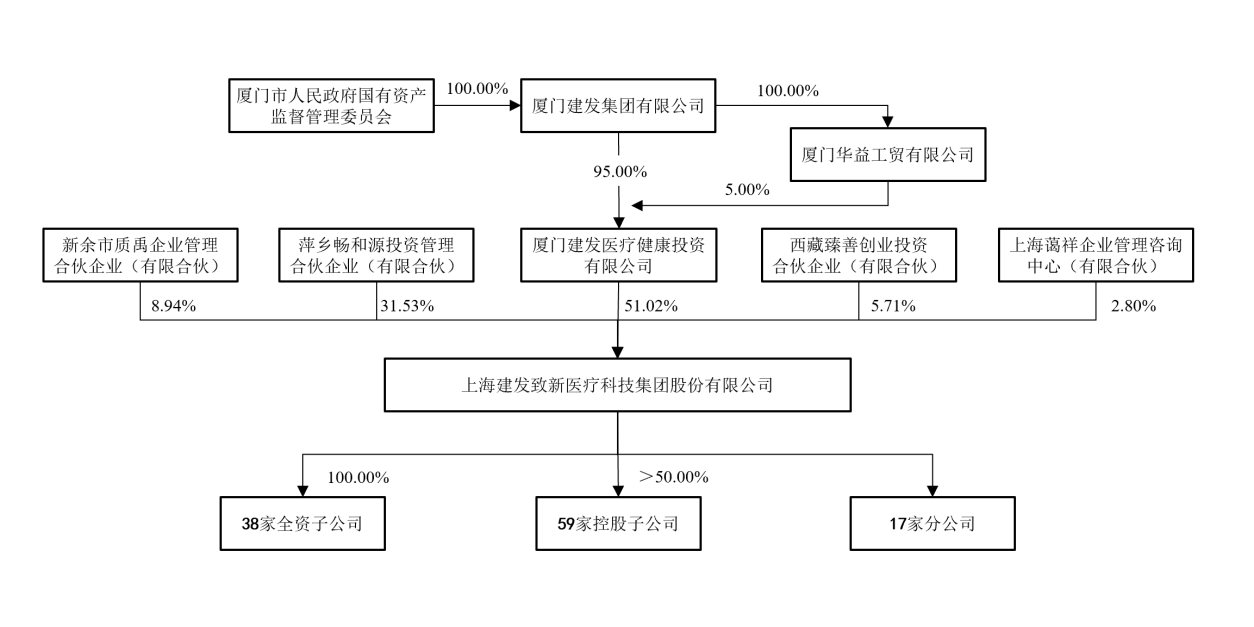
Core Insights - The article highlights the successful listing of Jianfa Zhixin Medical Technology Group on the Shenzhen Stock Exchange, raising a total of 446 million yuan, showcasing the integration of the group's strategy and industry [1] - Jianfa Zhixin has experienced significant growth in the medical device sector, with a net profit increase of over 50% year-on-year in Q1 2025, following steady profit growth in 2023 and 2024 [1][2] Company Overview - Jianfa Group has developed a core development strategy of "professionalism, mutual progress, and sustainability" over 40 years, with business operations extending into supply chain management, urban construction, tourism, healthcare, and emerging industries [1] - The company focuses on the medical device distribution market, primarily engaging in direct sales, distribution, and centralized operation services for medical consumables [2][6] Market Dynamics - The Chinese medical device market has shown rapid growth, with the market size increasing from 370 billion yuan in 2016 to 1,032.8 billion yuan in 2023, reflecting a compound annual growth rate of 15.79%, significantly outpacing the global market growth of 6.01% during the same period [2][4] - The market is projected to reach 1.2 trillion yuan in 2024, indicating strong growth potential [2] Financial Performance - Jianfa Zhixin's revenue has steadily increased, with reported revenues of 11.882 billion yuan, 15.443 billion yuan, and 17.923 billion yuan for 2022, 2023, and 2024 respectively, showing year-on-year growth rates of 29.97% and 16.06% for 2023 and 2024 [4][5] - The net profit for the same years was approximately 189 million yuan, 227 million yuan, and 274 million yuan, with year-on-year increases of 19.90% and 20.68% for 2023 and 2024 [4] Business Model and Strategy - Jianfa Zhixin has established a comprehensive distribution network, providing services to over 3,300 medical institutions across 31 provinces in China, and has formed long-term partnerships with over 100 well-known domestic and international medical device manufacturers [6][8] - The company is actively enhancing its service offerings through the implementation of an SPD management system, which centralizes and refines the management of medical consumables, improving efficiency and reducing costs for healthcare institutions [8] Future Outlook - The company aims to leverage its first-mover advantage and continue expanding its market presence in various medical fields, including IVD, surgical, dental, and ophthalmic devices, while enhancing its information systems and centralized service capabilities [10] - Jianfa Zhixin plans to utilize the funds raised from its IPO to invest in information system upgrades, centralized operation services, and to supplement working capital, aiming to improve its operational efficiency and financial structure [9][10]

奔向“大海新晨”的泰州,赴长三角招商盯上新兴科技公司
Xin Lang Cai Jing· 2025-10-14 09:13
Group 1 - Jiang Dongdong, the Secretary of the Taizhou Municipal Committee, is leading a招商攻势 (investment promotion campaign) in the Yangtze River Delta, focusing on high-tech companies to enhance economic development and project implementation [1] - The campaign's first stop was Shanghai, where Taizhou aims to deepen industrial cooperation and innovation with local companies, emphasizing the integration with Shanghai's resources [1][2] - Taizhou is building a modern industrial system marked by "Dahai New Morning," focusing on strengthening health, marine engineering, and high-tech shipbuilding industries, while also developing strategic emerging industries like new materials and new energy [2] Group 2 - The investment promotion targets "technology new forces," with companies like Yuzhu Technology and Lingban Technology being key focuses, as they represent significant advancements in their respective fields [2] - Jiang Dongdong observed demonstrations at Yuzhu Technology, expressing interest in collaborating on technology transfer and applications in industrial sectors, particularly in robotics [2] - At Lingban Technology, Jiang experienced the latest AR products and emphasized the importance of integrating AI technology with traditional industries for digital transformation in Taizhou [2] Group 3 - Recently, Zhiyuan Innovation partnered with Huguang Automotive Electric Co., Ltd. to establish a comprehensive embodied intelligence company, indicating a strategic move towards robotics in Taizhou [3] - Jiang Dongdong visited Zhiyuan Innovation, discussing the potential for establishing a robotics production base in Taizhou and encouraging collaboration with upstream and downstream enterprises [3]
锚点价、复活机制首现耗材国采:防止“低价抢标”,确保临床供应
2 1 Shi Ji Jing Ji Bao Dao· 2025-10-13 12:09
Core Viewpoint - The sixth batch of high-value medical consumables national procurement is shifting towards a focus on quality and stability rather than just price competition, as indicated by the draft proposal that emphasizes "stabilizing clinical use, ensuring quality, preventing collusion, and countering internal competition" [1][10]. Group 1: Procurement Framework - The draft proposal highlights the selection of consumables that are "clinically essential," particularly focusing on drug-coated balloon catheters and urological intervention products, which cover over 90% of mainstream clinical usage [3]. - The proposal introduces a "price ceiling" for bids, with drug-coated balloon catheters' maximum bid based on previous provincial procurement prices, averaging around 6,300 yuan in Jiangsu and 6,000 yuan in the Beijing-Tianjin-Hebei region [4]. - A "price anchor" mechanism is established to prevent low-price bidding, requiring companies to justify costs if their bids fall below a certain threshold, addressing previous issues of unsustainable low pricing [5]. Group 2: Market Dynamics - The adjustments in procurement rules are seen as a means to facilitate industry restructuring rather than merely a price war, with a shift from price competition to value competition [7]. - The domestic market for drug-coated balloon catheters is expected to strengthen, with local brands increasing their market share from 20% to over 70% due to competitive pricing and improved technology [7][8]. - The proposal allows for a 20% market reserve to support innovative products, ensuring that the procurement process does not hinder innovation while maintaining quality standards [10]. Group 3: Quality Control Measures - Stringent quality control measures are included, with all selected companies subject to on-site inspections, and low-priced products will be prioritized for quality checks [9]. - Companies found to have quality issues or supply violations will face disqualification from future procurement opportunities for 1 to 3 years, reinforcing the importance of maintaining product standards [9].
第六批耗材国采征求意见稿流出,首次引入“锚点价”
Feng Huang Wang· 2025-10-13 00:31
Core Viewpoint - The National Organization for High-Value Medical Consumables Joint Procurement Office has initiated the centralized procurement of drug-coated balloons and urological intervention medical consumables, marking a shift towards quality competition rather than price competition in the industry [1][3]. Group 1: Procurement Details - The sixth batch of procurement will cover two main categories: drug-coated balloons and urological intervention consumables, with specific subcategories defined for each [3][4]. - The procurement volume is set at 80% of the total reported demand from medical institutions, a slight adjustment from previous batches which had a higher percentage [5][6]. - The procurement process is becoming more refined, allowing for adjustments in reported demand based on clinical needs [5][6]. Group 2: Pricing Mechanisms - The "maximum effective bid price" has been clearly defined, with standards based on provincial procurement prices and other market data [6][9]. - The introduction of the "anchor price" concept aims to stabilize expectations and ensure that bids are reasonable, requiring companies to justify any bids below this price [9][11]. - The procurement rules allow for a multi-round revival mechanism, ensuring that companies can remain competitive as long as they maintain quality and adjust pricing [9][12]. Group 3: Market Dynamics - The price of drug-coated balloons has significantly decreased from around 20,000 yuan to approximately 6,000 yuan due to previous rounds of procurement [7][8]. - Domestic companies have gained market share in the drug-coated balloon sector, previously dominated by foreign firms, due to competitive pricing and rapid product iteration [8]. - The urological intervention consumables market is still largely controlled by foreign brands, but the upcoming national procurement may provide opportunities for domestic brands to increase their market presence [8].

撕开铁幕裂缝:国产手术机器人的千亿逆袭
Tai Mei Ti A P P· 2025-10-12 10:47
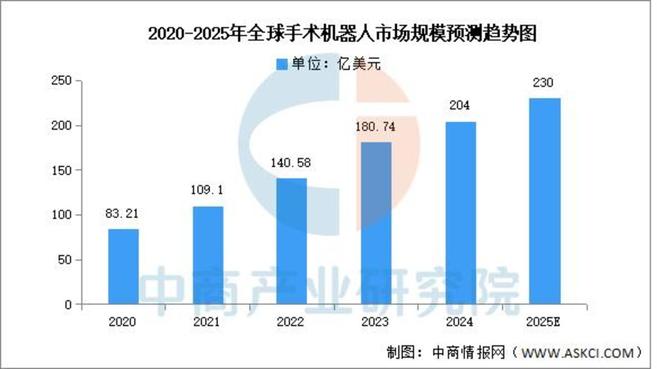
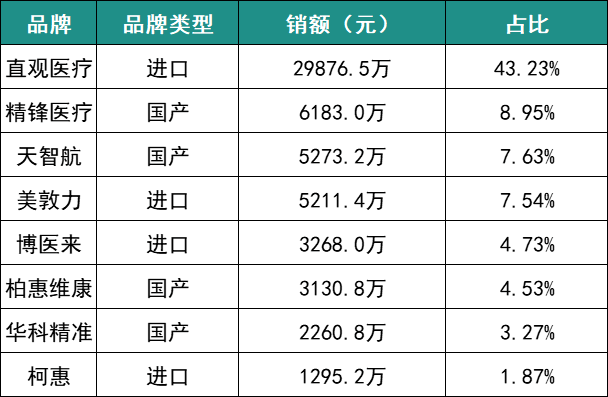
Core Insights - The article discusses the shift in the surgical robot market in China from being dominated by foreign brands to a more competitive landscape with domestic companies making significant advancements in technology and clinical applications [1][2][3]. Market Overview - The global surgical robot market is projected to grow from approximately $18.074 billion in 2023 to $20.4 billion in 2024, with a compound annual growth rate (CAGR) of 23.75% over the next five years [1]. - The Chinese surgical robot market is expected to reach approximately 9.59 billion yuan in 2024, with a CAGR of 34.5%, and is projected to grow to 11.03 billion yuan by 2025 [2]. Competitive Landscape - Currently, the domestic surgical robot market is characterized by a "foreign dominance, domestic pursuit" trend, with the top eight brands in sales being evenly split between imported and domestic brands [3]. - As of 2025, the market share of domestic brands in the surgical robot sector is approximately 29.82%, while imported brands hold 70.18% [4]. Brand Performance - Intuitive Surgical's Da Vinci system maintains a leading position in the laparoscopic surgical robot market with a market share of 53.8% as of Q2 2025, generating revenue of $2.44 billion (approximately 17.5 billion yuan) with a year-on-year growth of 21.4% [5][7]. - Domestic brands are gaining traction, with a significant increase in the number of Da Vinci robots installed in China, rising from a 42% market share to 62% [7]. Growth of Domestic Brands - From January to May 2025, the number of domestic surgical robots awarded contracts increased by 82.9%, indicating a strong competitive push against foreign brands [9]. - The domestic market for laparoscopic surgical robots has seen a domesticization rate of approximately 44.4% in Q1 2025, meaning nearly 4.5 out of every 10 new installations are from domestic brands [9]. Pricing Dynamics - Domestic surgical robots are priced significantly lower than their foreign counterparts, with prices for domestic laparoscopic robots typically ranging from 12 million to 18 million yuan, compared to the Da Vinci system's price range of 14.99 million to 24.92 million yuan [13][14]. - The price competition has intensified, with some domestic brands offering robots at prices as low as 5.38 million yuan, while the Da Vinci system averages around 23 million yuan [25]. Challenges and Opportunities - Despite rapid growth, domestic surgical robot manufacturers face challenges such as reliance on imported core components, which account for 70-80% of the total cost [17]. - The technological gap between domestic brands and international leaders like Intuitive Surgical remains significant, with the latter holding over 700 patents that create a strong barrier to entry [20]. Future Directions - To succeed, domestic surgical robot companies must innovate through technology upgrades and business model transformations, such as integrating 5G and AI technologies to enhance operational efficiency and reduce costs [38][40]. - The Chinese government has introduced supportive policies, including insurance coverage for surgical robots, which could facilitate market penetration and adoption [44][45]. Conclusion - The future of domestic surgical robots hinges on achieving technological independence, leveraging AI and 5G, and establishing sustainable business models to transition from merely entering the operating room to securing a stable presence within it [46].


千亿手术市场,正在“换刀”
Hu Xiu· 2025-10-10 14:04
Core Insights - The dominance of Intuitive Surgical's da Vinci surgical robot system in the U.S. market is being challenged by the rise of domestic surgical robot companies in China, leading to a more competitive landscape [1][2] - The market share of domestic laparoscopic surgical robots in China is projected to grow significantly, indicating a shift from foreign dominance to a more balanced competition [4][5] Market Overview - The global surgical robot market is expected to reach approximately $18.074 billion in 2023 and $20.4 billion in 2024, with a compound annual growth rate (CAGR) of 23.75% over the next five years [6] - The Chinese surgical robot market is anticipated to grow to approximately 9.59 billion yuan in 2024, with a CAGR of 34.5%, reaching 11.03 billion yuan by 2025 [8] Competitive Landscape - By the first quarter of 2025, the number of imported and domestic brands in the top eight sales positions in China is expected to be equal, with two out of the top three brands being domestic [9] - Despite the increasing presence of domestic brands, imported brands still hold a significant market share, with 70.18% compared to 29.82% for domestic brands [10] Technological Advancements - Domestic surgical robot companies are making strides in technology, with a notable increase in the number of approved products and market entries [41][42] - The introduction of AI and remote surgical technologies is expected to enhance the capabilities of domestic surgical robots, potentially increasing market penetration [60][63] Financial Performance - Domestic companies like Tianzhihang have reported significant revenue growth, with a 114.89% increase in revenue in the first half of 2025 compared to the previous year [32][33] - However, many domestic companies are still operating at a loss, indicating challenges in achieving sustainable profitability [46][50] Challenges and Opportunities - The reliance on imported core components poses a significant challenge for domestic surgical robot manufacturers, as these components account for 70%-80% of the total cost [35] - The ongoing U.S.-China trade tensions have created opportunities for domestic brands to capture market share by offering more cost-effective alternatives to imported systems [24][26] Policy Support - Recent government policies have begun to support the integration of surgical robots into healthcare systems, with reimbursement rates for surgical robot procedures being established in various provinces [73][74] - The promotion of a "product + service" model by local governments aims to enhance the competitiveness of domestic surgical robot companies [68] Conclusion - The future of domestic surgical robots in China will depend on technological advancements, innovative business models, and effective policy support to transition from merely entering the market to establishing a strong foothold [75]
智通港股空仓持单统计|10月10日
智通财经网· 2025-10-10 10:33
Core Insights - The top three companies with the highest short positions as of October 3 are COSCO Shipping Holdings (01919), Ganfeng Lithium (01772), and ZTE Corporation (00763), with short ratios of 15.66%, 15.25%, and 15.16% respectively [1][2] - Ganfeng Lithium (01772) saw the largest absolute increase in short positions, rising by 1.20%, followed by Minmetals Resources (01208) with an increase of 0.96%, and Yuexiu Transport Infrastructure (01052) with an increase of 0.76% [1][2] - The companies with the largest decreases in short positions include GCL-Poly Energy (03800), which decreased by 3.16%, followed by Dongfang Electric (01072) with a decrease of 2.03%, and Jinxin Fertility (01951) with a decrease of 0.76% [1][3] Summary of Short Positions - **Top 10 Companies by Short Ratio** - COSCO Shipping Holdings (01919): 15.66% (from 437 million shares to 451 million shares) - Ganfeng Lithium (01772): 15.25% (from 62.30 million shares to 67.64 million shares) - ZTE Corporation (00763): 15.16% (from 113 million shares to 115 million shares) - CATL (03750): 13.83% (from 21.12 million shares to 21.57 million shares) - Vanke (02202): 12.63% (from 268 million shares to 279 million shares) - Ping An Insurance (02318): 12.59% (from 959 million shares to 938 million shares) - Zijin Mining (02899): 12.58% (from 750 million shares to 754 million shares) - MicroPort Medical (00853): 11.10% (from 213 million shares to 212 million shares) - Hansoh Pharmaceutical (01276): 11.01% (from 28.01 million shares to 28.43 million shares) - Fuyao Glass (06865): 10.85% (from 49.22 million shares to 47.94 million shares) [2] - **Top 10 Companies with Increased Short Positions** - Ganfeng Lithium (01772): Increased by 1.20% (from 14.05% to 15.25%) - Minmetals Resources (01208): Increased by 0.96% (from 1.96% to 2.93%) - Yuexiu Transport Infrastructure (01052): Increased by 0.76% (from 1.08% to 1.84%) - Jinli Permanent Magnet (06680): Increased by 0.66% (from 7.76% to 8.42%) - China Civil Aviation Information Network (00696): Increased by 0.58% (from 6.63% to 7.21%) [2] - **Top 10 Companies with Decreased Short Positions** - GCL-Poly Energy (03800): Decreased by 3.16% (from 11.76% to 8.59%) - Dongfang Electric (01072): Decreased by 2.03% (from 6.78% to 4.75%) - Jinxin Fertility (01951): Decreased by 0.76% (from 10.61% to 9.85%) - Yangtze Optical Fibre and Cable (06869): Decreased by 0.75% (from 7.03% to 6.28%) - Shanghai Electric (02727): Decreased by 0.72% (from 2.25% to 1.52%) [3][4]

医疗器械:假期港股表现较好,继续看好Q3复苏趋势
2025-10-09 02:00
Summary of Key Points from the Conference Call Industry Overview - The medical device industry in China is experiencing favorable policy changes, particularly regarding domestic procurement, which will enhance the competitiveness of local manufacturers and promote innovation and import substitution [1][2][4] - The industry is benefiting from a complete supply chain and a surplus of engineers, leading to an increase in products receiving FDA breakthrough innovation certifications [1][4] Core Insights and Arguments - The Chinese government will implement a policy that provides a 20% price advantage for domestic products in government procurement, which is expected to accelerate innovation and increase market penetration for local medical device companies [2] - MicroPort Medical's recent announcements indicate significant changes in governance structure due to state-owned enterprise involvement, which may present new growth opportunities and strengthen its market position [1][5][14] - The third quarter of 2025 is projected to show strong performance in the medical equipment and high-value consumables sectors, with companies like United Imaging and Mindray expected to see substantial revenue growth [1][6] Company-Specific Performance - MicroPort Medical is expected to improve its financial situation through debt restructuring, which will lower financial costs and enhance both the balance sheet and income statement [1][14] - Specific revenue and profit growth expectations for various companies include: - United Imaging: Revenue growth of 50-100%, turning losses into profits [8] - Mindray: Modest revenue growth with potential acceleration in overseas markets [8] - Huatai Medical: Expected revenue and profit growth of 25-35% [9] - Other companies like MINDRAY and Aohua are also projected to show positive growth trends [8][9] Market Performance - Hong Kong-listed medical device companies have shown strong performance, with notable increases in stock prices for companies like Baixinan and Huajian Medical during the National Day holiday [3][12][16] - The 18A category innovative medical device companies are transitioning from losses to profitability, indicating strong investment potential [3][18] Emerging Opportunities - The domestic RDN (Renal Denervation) market is expected to grow significantly, with potential surgical volumes reaching millions if penetration rates increase [17] - The macro policy environment is improving, which is likely to enhance the performance certainty and valuation of medical device companies in both Hong Kong and A-shares [19] Additional Important Insights - The overall sentiment in the medical device sector is positive, with expectations for continued growth driven by innovation and favorable government policies [1][19] - Companies are increasingly focusing on international expansion and product innovation to capture a larger share of the global market [4][18]
中信建投:国庆期间港股器械公司整体表现较好,继续看好Q3复苏趋势
Xin Lang Cai Jing· 2025-10-08 12:28
中信建投研报指出,国庆期间港股器械公司整体表现较好,多个医疗器械龙头公司收涨。其中微创医疗 及部分子公司整体表现较好,预计与公告上海国资派驻董事参与董事会工作、治理改善和业绩修复预期 相关;百心安和先健科技表现较好,预计与美国CMS有望将RDN纳入医保及TCT2025将公布铁基可降 解支架最新数据等潜在事件催化有关。预计医疗器械板块Q3多家公司受益新产品新业务放量而实现环 比改善,或去年同期低基数基础上实现高增长;其中高值耗材和医疗设备及上游板块的部分公司实现高 增长,IVD行业部分企业短期受DRG和集采等政策影响有所承压,低值耗材行业各公司情况有所分化。 短期来看建议把握业绩改善个股的轮动上涨机会,长期来看建议关注创新、出海和并购整合的机会。 ...

微创医疗(00853) - 股份发行人截至二零二五年九月三十日的证券变动月报表
2025-10-08 08:36
股份發行人及根據《上市規則》第十九B章上市的香港預託證券發行人的證券變動月報表 截至月份: 2025年9月30日 狀態: 新提交 致:香港交易及結算所有限公司 公司名稱: 微創醫療科學有限公司 呈交日期: 2025年10月8日 I. 法定/註冊股本變動 | 1. 股份分類 | 普通股 | 股份類別 | 不適用 | | | 於香港聯交所上市 (註1) | | 是 | | | --- | --- | --- | --- | --- | --- | --- | --- | --- | --- | | 證券代號 (如上市) | 00853 | 說明 | | | | | | | | | | | 法定/註冊股份數目 | | | 面值 | | | 法定/註冊股本 | | | 上月底結存 | | | 5,000,000,000 | USD | | 0.00001 | USD | | 50,000 | | 增加 / 減少 (-) | | | | | | | USD | | | | 本月底結存 | | | 5,000,000,000 | USD | | 0.00001 | USD | | 50,000 | 本月底法定/註冊股本總 ...