
德方纳米

Search documents
订单排到明年但利润承压 磷酸铁锂行业探讨“反内卷”
Di Yi Cai Jing· 2025-11-19 04:43
Core Insights - The lithium iron phosphate (LFP) materials industry is facing a "production increase without revenue increase" dilemma, prompting industry associations and leading companies to seek solutions [1] - A recent seminar highlighted the severe competition and profit pressure within the LFP sector, with companies experiencing over 36 months of continuous losses and an average debt ratio of 67.81% among six listed firms [1][3] Industry Challenges - The LFP materials sector is currently experiencing a significant shortage of chemical raw materials, leading to rising prices and a slowdown in production expansion [1] - The industry has been trapped in a cycle of overcapacity and homogenized competition since 2022, resulting in a stark contrast between costs and prices, making it the most profit-pressured segment of the lithium battery supply chain [3] - The average price of LFP materials has plummeted from 173,000 yuan per ton at the end of 2022 to 34,000 yuan per ton by August 2025, marking an 80.2% decline [3] Market Dynamics - Despite a strong growth momentum in the lithium battery industry, with a 26.75% year-on-year increase in lithium-ion battery exports reaching $55.38 billion in the first nine months of 2025, the LFP sector's cost pressures remain unresolved [3][4] - The top five companies in the LFP industry are operating at full capacity, yet only two are profitable, indicating an abnormal market condition [4] - The industry is expected to reach a production capacity of 370,000 tons this year, with the top companies' orders extending to 2026, but high asset-liability ratios hinder external financing for expansion [4] Proposed Solutions - The China Chemical and Physical Power Industry Association has proposed three collaborative action initiatives: 1. Establishing a cost index as a benchmark to rebuild market pricing logic and curb vicious competition [2][6] 2. Focusing on innovation to create new value growth avenues and shift from scale competition to quality competition [2][6] 3. Building a collaborative development ecosystem to balance supply and demand, with a forecasted 30% increase in global energy storage battery shipments by 2026 [2][6] Future Outlook - The association aims to develop a cost database for various segments of the industry to facilitate capacity supply-demand forecasting and promote a consensus on shared risks and benefits across the supply chain [7]
订单排到明年但利润承压,磷酸铁锂行业探讨“反内卷”
Di Yi Cai Jing· 2025-11-19 04:36
Core Insights - The lithium iron phosphate (LFP) materials industry is facing a "production increase without revenue increase" dilemma, prompting industry associations and leading companies to seek solutions [1] - A recent seminar highlighted the severe pressure on the LFP industry due to rising raw material costs and intense competition, leading to significant financial losses [1][3] - The industry has experienced over 36 months of continuous losses, with an average debt ratio of 67.81% among six listed companies [1][3] Group 1: Industry Challenges - The LFP materials sector is currently the most competitive and profit-constrained segment of the lithium battery supply chain, with a notable decline in prices from 173,000 yuan/ton to 34,000 yuan/ton, an 80.2% drop [3] - Despite a strong growth in lithium-ion battery exports, which reached $55.38 billion with a 26.75% year-on-year increase, the LFP industry struggles with overcapacity and low utilization rates, estimated at around 50% [3][4] - The top five companies in the LFP sector are operating at full capacity, yet only two are profitable, indicating an abnormal market condition [4][5] Group 2: Proposed Solutions - The China Chemical and Physical Power Industry Association has proposed three collaborative action initiatives to address the industry's challenges: 1. Establishing a cost index to rebuild market pricing logic and curb unhealthy competition [2][7] 2. Focusing on innovation to create new value growth avenues and shift from scale competition to quality competition [2][7] 3. Building a collaborative development ecosystem to balance supply and demand, with a forecast of a 30% increase in global energy storage battery shipments by 2026 [2][7][8] Group 3: Market Dynamics - The LFP materials market is currently characterized by a significant gap between average selling prices and production costs, with the average transaction price being 9.7% lower than the average cost [6] - The industry is expected to see a demand surge, with projections indicating an additional million-ton demand for LFP materials in the next two years [7][8] - The association aims to create a cost database for various segments of the industry to facilitate better risk management and shared benefits across the supply chain [8]
磷酸铁锂行业需求回暖?但价格仍是问题
2 1 Shi Ji Jing Ji Bao Dao· 2025-11-19 01:49
Core Insights - The lithium iron phosphate (LFP) industry is experiencing a recovery in the first half of 2025, with top five companies operating at full capacity and an expected production increase to 3.7 million tons in China [1] - Despite the anticipated recovery, the industry has faced significant price declines, with material prices dropping from 173,000 yuan/ton to 34,000 yuan/ton, a decrease of 80.2% from the end of 2022 to August 2025 [1] - The industry is under severe profit pressure, with continuous losses for over 36 months and an average debt ratio of 67.81% among six listed companies [1] Industry Overview - The LFP materials sector is identified as the most competitive and profit-constrained segment within the lithium battery supply chain [1] - A study presented at a recent seminar indicated that the average cost of LFP materials ranges from 15,714.8 yuan/ton to 16,439.3 yuan/ton, while the market average selling price is 14,177.1 yuan/ton, highlighting the significant cost pressures faced by the industry [2] - Only two out of the top five companies are currently profitable, indicating an abnormal situation in the market [2] Market Demand and Growth - The demand for LFP materials is expected to rise, with projections suggesting that production could reach between 5.1 million to 5.3 million tons in 2026 due to increasing electric vehicle (EV) battery capacities [3] - The lithium-ion battery export value reached $55.38 billion in the first nine months of 2025, a year-on-year increase of 26.75%, with a total of 3.399 billion units exported, reflecting robust growth in both domestic and international markets [3] - The penetration rate of new energy vehicles has surpassed 45%, and the installed capacity for energy storage has surged by 60% year-on-year, contributing to a projected industry output value nearing 3 trillion yuan [3] Strategic Recommendations - The industry is encouraged to utilize a cost index as a benchmark for market pricing and to focus on innovation and upgrading to create new value growth avenues [4] - Establishing a capacity warning mechanism and promoting long-term strategic cooperation between material companies and leading downstream firms are recommended to ensure orderly capacity release and avoid the cycle of "demand growth without profit increase" [4]
行业协会发声!磷酸铁锂行业“反内卷”
Zhong Guo Zheng Quan Bao· 2025-11-18 23:33
随着下游需求持续增长,近期,磷酸铁锂价格明显回暖,10月以来上涨约10%,部分头部企业反映,相 关订单已排到2026年。但业内人士表示,行业成本压力仍未缓解,经历了近三年调整的磷酸铁锂行业, 需彻底破除"内卷"。 第三,以供需平衡为"着力点",构建协同发展生态。摩根大通预测,2026年全球储能电池出货量将增长 30%,结合我国出口市场的广阔空间,未来两年磷酸铁锂材料将新增百万吨级需求。需要建立产能预警 机制,推动材料企业与下游龙头达成长期战略合作,引导产能有序释放,避免"需求增长、利润不增"的 情况。 数据显示,2024年中国磷酸铁锂正极材料产能逼近470万吨,同比增幅约34%,实际产量仅230余万吨, 产能利用率约50%。这意味着近半数产能处于闲置状态。2022年底至2025年8月期间,磷酸铁锂材料价 格从17.3万元/吨一路跌至3.4万元/吨,累计跌幅达80.2%。 这种态势在今年6月逐渐出现反转。中国化学与物理电源行业协会磷酸铁锂材料分会秘书长周波表示, 目前磷酸铁锂行业前五大企业基本满产,第五到第十的企业产能利用率接近80%,预计今年产能会达到 370万吨,头部企业排产排到2026年,部分电池企业出现 ...
研究显示磷酸铁锂行业成本与价格矛盾突出
Zhong Guo Xin Wen Wang· 2025-11-18 14:26
Group 1 - The core viewpoint of the article highlights the significant contradiction between costs and prices in the lithium iron phosphate (LFP) materials industry, which has become a critical pressure point for profits in the lithium battery supply chain [1][2] - The lithium battery industry in China is experiencing strong growth, with lithium-ion battery exports reaching $55.38 billion from January to September 2025, a year-on-year increase of 26.75%, and the penetration rate of domestic new energy vehicles exceeding 45% [1] - The installed capacity for energy storage has surged by 60% year-on-year, and the overall industry output value is expected to exceed 3 trillion yuan [1] Group 2 - The average cost range for LFP materials, based on audited data from seven leading companies, is estimated to be between 15,714.8 yuan/ton and 16,439.3 yuan/ton (excluding tax), while the average market price during the same period is 14,177.1 yuan/ton [2] - The association's deputy secretary-general has called for collaborative actions to rebuild market pricing logic, curb vicious competition, and shift the industry focus from scale competition to quality competition [2] - The initiative emphasizes the importance of balancing supply and demand to create a collaborative development ecosystem and guide the orderly release of production capacity [2]
行业协会:以成本指数为“度量衡”重建市场定价逻辑,遏制“内卷式”恶性竞争
Xin Hua Cai Jing· 2025-11-18 13:57
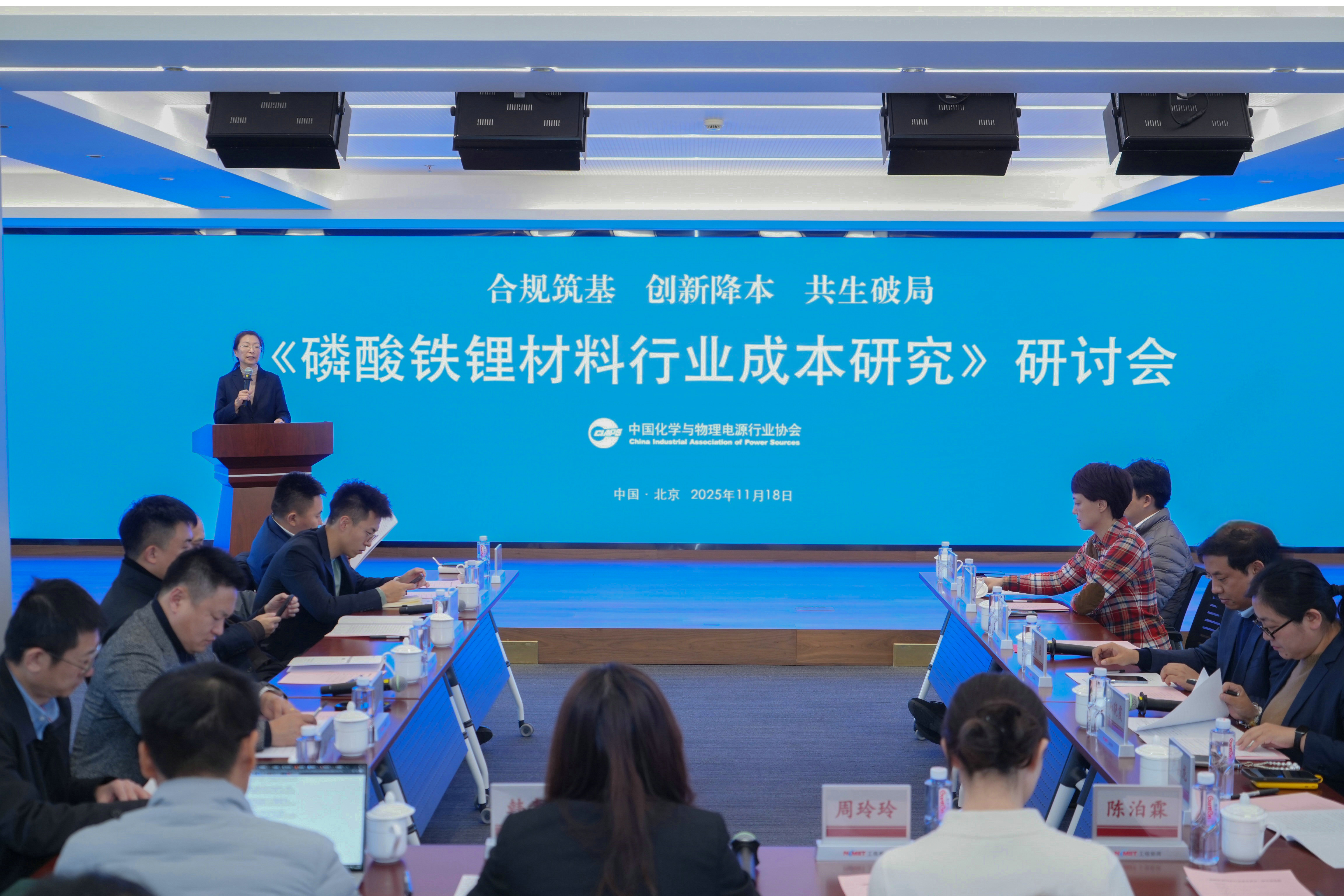
新华财经北京11月18日电(记者刘玉龙)18日,以"合规筑基 创新降本 共生破局"为主题的《磷酸铁锂材料行业成本研究》研讨会在工业和信息化部新闻宣 传中心发布厅召开。本次研讨会由中国化学与物理电源行业协会主办,行业专家、企业代表等深度交流,共同探寻锂电产业链高质量发展的可行路径。 据悉,《磷酸铁锂材料行业成本研究》基于2025年1-9月一次烧结工艺(二次烧结成本会更高)、压实密度2.4—2.55g/cm³(主流应用规格)的磷酸铁锂材 料,选用平均法与市场份额加权法得出15714.8元/吨—16439.3元/吨(未税价格)为行业平均成本区间,并以此为基期(指数=100),为企业成本管控提 供精准参照。据周波介绍,研究发现,磷酸铁锂材料成本结构呈现"主材占比最高、能耗与直接费用并重"特征,主材成本占比35%-40%(核心波动因素), 耗能成本、直接费用各占约19%,期间费用占16%,辅料成本仅5%-6%,清晰勾勒成本构成脉络;行业盈利企业占比仅16.7%,远低于三元正极、负极等其 他锂电核心材料,盈利压力与财务风险亟待化解。 在研讨会上,中国化学与物理电源行业协会磷酸铁锂材料分会秘书长周波发布《磷酸铁锂材料行业成 ...

德方纳米:公司在补锂技术领域取得了显著进展
Zheng Quan Ri Bao Wang· 2025-11-18 11:50
Core Viewpoint - The company has made significant progress in lithium supplementation technology, launching a lithium supplementation enhancer that improves various performance metrics of lithium-ion batteries [1] Group 1: Product Development - The lithium supplementation enhancer can enhance cycle performance, calendar life, and energy density of lithium-ion batteries [1] - It effectively improves fast charging performance, battery cell efficiency, low-temperature performance, and charge-discharge efficiency [1] - The product reduces battery self-discharge, providing a competitive edge in the market [1] Group 2: Market Position - The company has gained exclusive project designations, indicating a growing number of orders for its lithium supplementation enhancer [1] - Orders have begun to be delivered in various sectors, including power batteries, energy storage batteries, and semi-solid batteries [1]
【金银河·业绩】盈利分化加剧!22家锂电正极材料上市企业2025年1-9月业绩盘点
Sou Hu Cai Jing· 2025-11-18 10:12
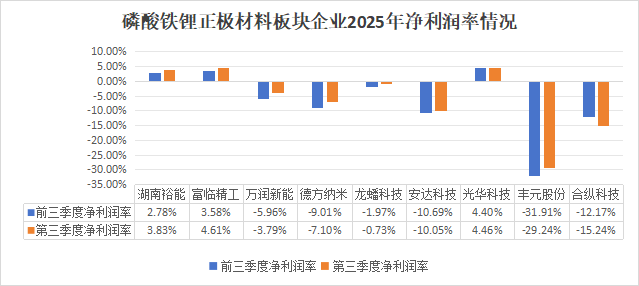
来源:市场资讯 (来源:广东电池) 为更好地了解锂电正极材料行业的发展情况和市场走向,广东省电池行业协会对22家锂电正极材料上市 企业2025年1-9月的业绩相关情况进行了梳理分析。 业绩情况 根据22家正极材料企业的主营业务占比情况;将湖南裕能、德方纳米等9家企业归为磷酸铁锂正极材料 企业;将中伟股份、容百科技等13家企业归为三元正极材料企业。 2025年前三季度,22家正极材料的营收总额达到2244.19亿元,9家磷酸铁锂企业的营收平均值为64.56亿 元,13家三元材料企业的营收平均值为127.93亿元;22家企业的净利润总额为79.25亿元(含亏损额度在 内),其中,9家磷酸铁锂企业的净利润平均值为-0.88亿元,13家三元正极材料企业的净利润平均值为 6.70亿元。 2025年第三季度,22家正极材料企业的营收总额达到832.93亿元,9家磷酸铁锂企业的营收平均值为 24.13亿元,13家三元材料企业的营收平均值为47.37亿元;22家企业的净利润合计为30.67亿元(含亏损 额度在内),9家磷酸铁锂企业的净利润平均值为-0.02亿元,13家三元正极材料企业的净利润平均值为 2.37亿元。 总体来看 ...

德方纳米:补锂增强剂已获独家定点的项目逐渐增加,在动力电池、储能电池等领域逐步开始实现订单交付
Mei Ri Jing Ji Xin Wen· 2025-11-18 00:57
Core Viewpoint - The company has made significant advancements in lithium supplementation technology, introducing a lithium supplementation enhancer that leads the global market in technology upgrades [2]. Group 1: Technological Advancements - The company is the first globally to launch a lithium supplementation enhancer, which improves the cycling performance, calendar life, and energy density of various lithium-ion batteries [2]. - The lithium supplementation enhancer enhances fast charging performance, increases cell efficiency, improves low-temperature performance, and reduces self-discharge of batteries [2]. Group 2: Market Position and Orders - The company possesses a first-mover advantage and performance leadership in the lithium supplementation market [2]. - There is a gradual increase in exclusive project orders for the lithium supplementation enhancer, with initial deliveries starting in fields such as power batteries, energy storage batteries, and semi-solid batteries [2].
储能装机激增支撑电池材料需求旺盛
Zheng Quan Ri Bao· 2025-11-17 16:11
Group 1: Market Performance - As of November 17, the A-share lithium battery sector has strengthened, with 15 stocks including Hubei Zhongyi Technology and Ningbo Rongbai New Energy hitting the daily limit [1] - The new energy storage market in China has seen a significant increase, with installed capacity exceeding 100 million kilowatts by the end of September, accounting for over 40% of the global total [1] Group 2: Demand and Supply Dynamics - The storage industry is driving the core battery materials sector out of a previous downturn, leading to increased production and prices [2] - In the first nine months of 2025, Chinese companies signed 308 overseas energy storage orders, with a total new order scale of 214.7 GWh, a year-on-year increase of 131.75% [2] - The price of core battery materials has been rising, with lithium iron phosphate prices reaching 37,350 yuan/ton and energy storage lithium iron phosphate at 34,350 yuan/ton as of November 17 [3] Group 3: Policy Support - The National Development and Reform Commission and the National Energy Administration have set a target for new energy storage capacity to reach over 180 million kilowatts by 2027 [3] - Recent policies aim to promote advanced and efficient new energy storage construction [3] Group 4: Future Growth Projections - The independent energy storage demand is expected to grow by 30% to 40% in 2025 due to the cancellation of mandatory storage requirements [4] - The supply of core battery materials is anticipated to remain tight, with prices likely to enter a stable upward trend [4] Group 5: Technological Innovations - Key battery material companies are focusing on technological innovation and product iteration to meet the surging demand in the storage industry [5] - New advancements in lithium iron phosphate and lithium hexafluorophosphate are being developed to enhance battery performance [6] Group 6: Strategic Recommendations - Companies in the battery materials industry should capitalize on the growing global storage demand, focusing on price-sensitive segments like lithium hexafluorophosphate and lithium iron phosphate [7] - Emphasis on technological upgrades and establishing overseas production capacity is crucial for maintaining competitive advantage [7]