
北京文化

Search documents
北京文化论坛|智媒时代,腾讯ima AI将适配知识管理的3个核心变化
Bei Jing Ri Bao Ke Hu Duan· 2025-09-21 13:14
Group 1 - The core viewpoint of the article emphasizes three key changes that Tencent's ima AI will adapt to in the era of intelligent media [1] - The event took place at the Beijing Cultural Forum, focusing on the dual empowerment of culture and technology [1] - The discussion was led by Yao Yuan, a senior operations expert from Tencent ima AI, highlighting the importance of knowledge management in the evolving landscape [1]


东西问·北京文化论坛|埃及汉学家:话剧《茶馆》何以成为文明交流互鉴的“社会镜像”?
Zhong Guo Xin Wen Wang· 2025-09-21 11:38
Core Viewpoint - The play "Teahouse" serves as a "social mirror" for cultural exchange and understanding, highlighting the commonality of human experiences across different cultures [3][4][6]. Group 1: Insights from the Play - The teahouse in the play represents a microcosm of society, showcasing various characters from different walks of life, reflecting their hopes and anxieties about the future [4][6]. - The character Wang Lifafa embodies the struggle of small business owners who wish to maintain stability amidst societal turmoil, illustrating the universal challenges faced by individuals in changing times [6][7]. - "Teahouse" is not only a historical drama but also a humanistic one, prompting reflections on the dignity of ordinary people in the face of larger societal changes [6][7]. Group 2: Cultural Exchange and Understanding - The play can help Egyptian students understand modern China by providing insights into Chinese history, character traits, and emotional responses to change, making it more relatable than traditional history books [7][8]. - Effective translation is crucial for conveying the cultural nuances of the play, ensuring that the audience grasps both the language and the underlying cultural context [8]. - Creating an immersive atmosphere through stage design and performance can enhance the audience's experience, making it easier for them to connect with Chinese culture [8][10]. Group 3: Broader Implications of Cultural Dialogue - The importance of cultural dialogue in fostering mutual trust between nations is emphasized, suggesting that collaboration is essential to address global challenges [11]. - The integration of cultural exchanges, such as China's Belt and Road Initiative and Egypt's Vision 2030, exemplifies how cultural understanding can lead to tangible cooperation and deeper emotional connections between countries [11].


北京文化论坛“双向赋能:网络文化创新发展”平行论坛专业沙龙举办
Zhong Guo Xin Wen Wang· 2025-09-21 09:16
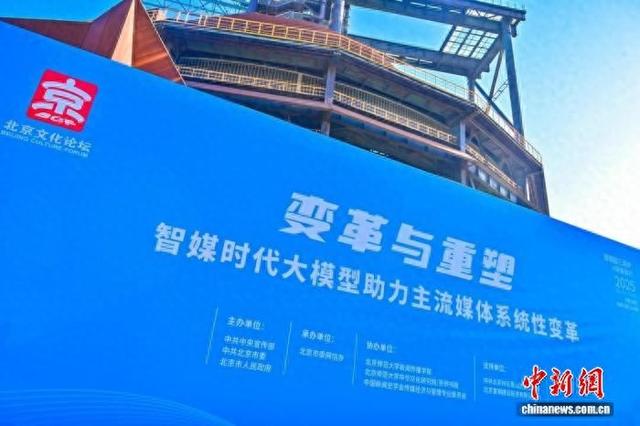
Group 1 - The forum focused on the theme "Reform and Restructuring: Large Models Empowering Systemic Change in Mainstream Media" [1] - The event was organized by the Central Publicity Department, the Beijing Municipal Committee of the Communist Party of China, and the Beijing Municipal Government, bringing together experts from academia and industry [1][2] - The discussion emphasized the need for mainstream media to innovate and explore new models of integration with large models to revitalize the media landscape in the context of cultural prosperity and development [2] Group 2 - The keynote speech highlighted the evolution of mainstream media's influence through three stages and identified four major issues, advocating for a dual breakthrough in "institutional track" and "technical track" to transition from "identity mainstream" to "ability mainstream" [2] - The roundtable discussion included topics such as the application of AI large models in the media industry and the systemic transformation of broadcasting media through artificial intelligence [2][3] - The significance of large models in the broadcasting system was discussed, noting that technology empowerment is crucial for systemic change, with AI providing value both externally and internally [5]
北京文化守护人丨李俊阁:三车“碎木头”,八级木工复原天宫藻井
Xin Jing Bao· 2025-09-21 03:05
Core Viewpoint - The article highlights the remarkable journey of Li Junge, a master carpenter and ancient building restoration expert, who played a crucial role in the restoration of the Tian Palace Zaojing, a national treasure, showcasing the importance of traditional craftsmanship in preserving cultural heritage [3][11]. Group 1: Li Junge's Background and Achievements - Li Junge became a "Level 8 Carpenter" in his twenties and has been involved in the restoration of numerous ancient buildings across China, including the Great Wall and the Summer Palace [3][6]. - The Tian Palace Zaojing, known as the "ceiling among ceilings," was reconstructed by Li and his team over three years, transforming a pile of fragmented wood into a masterpiece [3][11]. - The restoration project was initiated after the Tian Palace Zaojing was dismantled following the 1976 Tangshan earthquake, with many components left exposed to the elements [11][12]. Group 2: Restoration Process and Techniques - The restoration involved categorizing over 20,000 components from three truckloads of fragmented wood, using old photographs as references to reassemble the structure [11][12]. - Li emphasized the importance of understanding traditional Chinese wooden structures and the intricacies of joinery techniques, which are essential for accurate restoration [7][16]. - The final restoration adhered to the design logic of Ming dynasty craftsmen, with additional components crafted to replace missing parts, ensuring the integrity of the original design [12][16]. Group 3: Cultural Impact and Legacy - The recent popularity of the Tian Palace Zaojing refrigerator magnet has brought renewed attention to Li Junge's work and the significance of ancient architecture among younger generations [3][8]. - Li expressed a desire to pass on his skills to a new apprentice, highlighting the need for the continuation of traditional craftsmanship in ancient building restoration [4][17]. - The article underscores the cultural value of ancient architecture and the importance of preserving these skills for future generations [13][17].

北京文化守护人丨张涛:为万宁桥测“心跳”,给雍和宫治“未病”
Xin Jing Bao· 2025-09-20 14:47
Core Viewpoint - The article highlights the innovative approaches taken by Zhang Tao and his team in the preservation and monitoring of ancient architecture in Beijing, emphasizing the importance of preventive measures and advanced technology in heritage conservation [4][10]. Group 1: Technological Innovations - Zhang Tao utilizes various advanced tools such as micro-drilling resistance instruments, rebound testers, stress wave devices, and infrared thermal imaging to assess the condition of ancient buildings [5][10]. - The micro-drilling resistance instrument, developed over five years, allows for precise detection of internal conditions of wooden structures, revolutionizing the field of ancient architecture preservation [10][11]. Group 2: Monitoring Techniques - The team has implemented long-term monitoring of structures like the Wanning Bridge, using sensitive devices to detect minute vibrations, akin to an electrocardiogram for humans [6][10]. - Data collection often requires challenging conditions, such as working in extremely cold temperatures to ensure accurate measurements [7][10]. Group 3: Preventive Conservation - The shift from reactive to preventive conservation is emphasized, with the aim of identifying potential issues before they lead to significant damage [11]. - Zhang Tao's work has already benefited over seventy ancient sites in Beijing, preventing severe deterioration through early detection and intervention [10][11]. Group 4: Future Aspirations - There is a call for the establishment of more refined local and industry standards for ancient building protection, alongside the need for increased training and recruitment of professionals in the field [11].
北京文化守护人丨冯好:博物馆破界,离观众近些再近些
Xin Jing Bao· 2025-09-20 14:34
Core Insights - The article highlights the efforts of Feng Hao, the curator of the Capital Museum's collection department, in enhancing public engagement with cultural heritage through innovative exhibition strategies and collection management [4][5][10]. Group 1: Museum Development and Exhibition Strategy - The Beijing Grand Canal Museum, as part of the city's cultural infrastructure, is set to open to the public by the end of 2023, featuring various exhibitions and activities [5]. - Feng Hao's team adopted a strategy of borrowing and collecting artifacts from other museums along the Grand Canal to enrich the exhibition, aligning with modern curatorial practices that leverage social resources [6][9]. - The introduction of a visible storage facility allows the public to view over 6,000 pieces of the Qianlong Tripitaka woodblock prints and other artifacts, breaking the traditional barriers of museum storage [9][10]. Group 2: Collection Management and Community Engagement - Feng Hao emphasizes the importance of simplifying the artifact application process and improving efficiency to enhance the social value of cultural relics [4][10]. - The collection process has successfully included significant artifacts, such as the stone water beast, which represents a vital aspect of Beijing's cultural heritage [6][7]. - The museum's collection management system is noted for its advanced protocols, ensuring the preservation and accessibility of artifacts while fostering community involvement [9][10]. Group 3: Audience Research and Engagement - Feng Hao's research into audience preferences revealed that traditional exhibition designs may not align with visitor behavior, prompting a reevaluation of how exhibitions are structured [10][11]. - The findings from audience surveys have influenced the design of exhibitions to be more engaging and interactive, allowing visitors to take an active role in their learning experience [11][12]. - The article discusses the growing importance of museums in urban life, suggesting that they must continuously adapt to meet the evolving expectations of the public [12].
东西问·北京文化论坛|舒勇:数字时代如何用好AI这支“新画笔”?
Zhong Guo Xin Wen Wang· 2025-09-20 09:45
Core Viewpoint - The 2025 Beijing Cultural Forum will focus on the integration of culture and technology, emphasizing the role of AI in artistic creation and the preservation of traditional culture [1][3]. Group 1: AI in Artistic Creation - AI is seen as a powerful tool that can redefine the role of the creator, allowing for a more interactive and exploratory approach to art [6][10]. - The speed of AI-generated art significantly reduces the time required for creation, enabling artists to capture their thoughts and ideas more efficiently [6][10]. - However, there are concerns about the potential loss of originality and the homogenization of artistic styles due to AI's reliance on existing data [7][8]. Group 2: Skills and Ethical Considerations - Artists using AI must possess a combination of traditional artistic knowledge and technical skills to effectively guide AI in the creative process [10][11]. - It is crucial for creators to maintain their agency and creativity, viewing AI as a collaborative partner rather than a replacement [10][11]. - Ethical practices should be followed, including transparency about AI's role in the creation process and avoiding the generation of harmful content [11][13]. Group 3: Cultural Heritage and Future Plans - The integration of AI in the preservation and innovation of traditional Chinese culture is a significant area of exploration, aiming to bridge classical aesthetics with contemporary expressions [15][16]. - There is a need to develop a database rooted in Chinese culture to ensure accurate representation and transmission of Chinese values through AI [16]. - Future initiatives include establishing a laboratory focused on the deep integration of technology and art, aiming to explore the intelligent translation of traditional aesthetics [16].

北京文化守护人|蔡志伟:让绒花开进生活,下个目标是巴黎时装周
Xin Jing Bao· 2025-09-20 02:48
Core Viewpoint - The article highlights the efforts of Cai Zhiwei, a representative inheritor of Beijing's Ronghua (floral velvet) craftsmanship, in promoting and preserving this traditional art form, particularly through its recent recognition at the 2022 Winter Olympics [2][8]. Group 1: Background and Significance - Beijing Ronghua has a history of over 400 years and was prominently featured in the 2022 Winter Olympics, marking its first appearance on an international stage [3][8]. - The craft originated during the Sui and Tang dynasties, evolving to meet the aesthetic needs of the affluent, particularly in the imperial courts [6][7]. - The art form is considered a significant part of China's intangible cultural heritage, despite its current lower status compared to other traditional arts [7][8]. Group 2: Craftsmanship and Techniques - The process of creating Ronghua involves over 20 intricate steps, with key techniques including "binding the strands," "trimming," and "assembling" [14][15]. - Cai Zhiwei emphasizes the importance of handcrafting, believing that machine production cannot replicate the unique qualities of handmade items [15][16]. Group 3: Recent Developments and Innovations - The creation of floral decorations for the Winter Olympics involved a tight timeline of 21 days, with significant challenges in color matching to meet specific aesthetic requirements [8][9]. - Cai Zhiwei is actively working on innovative designs that blend traditional craftsmanship with modern aesthetics, aiming to appeal to contemporary tastes and expand the market for Ronghua [19][20]. Group 4: Future Aspirations - Cai Zhiwei aims to establish a dedicated exhibition space for Ronghua in Beijing and expand its reach through a nationwide training program, utilizing social media for recruitment [20][21]. - The goal is to cultivate a new generation of artisans who are responsible and creative, ensuring the sustainable transmission of this cultural heritage [21].
北京文化:关于股东减持计划期限届满暨未实施减持的公告
Zheng Quan Ri Bao· 2025-09-19 15:44
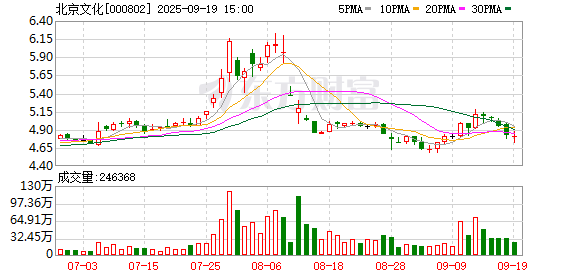
Core Viewpoint - Beijing Culture announced that its shareholder Qingdao Haifa Industrial Investment Holding Co., Ltd. plans to reduce its stake by up to 21,477,007 shares, representing no more than 3% of the company's total share capital, through centralized bidding or block trading within three months after the announcement [2]. Summary by Relevant Sections - Shareholder Reduction Plan - Qingdao Haifa Holding intends to reduce its holdings starting from fifteen trading days after the announcement date [2]. - The reduction plan is set to last for three months [2]. - Current Status of the Reduction - As of the date of the announcement, Qingdao Haifa Holding has not executed any share reductions [2].
北京文化守护人丨杨宇辰:让京剧盔头进校园,打造孩子喜欢的非遗
Xin Jing Bao· 2025-09-19 14:40
Core Viewpoint - Yang Yuchen, a third-generation inheritor of traditional Chinese cultural heritage, is actively promoting the art of Peking Opera headdress making and other intangible cultural heritage (ICH) projects through innovative teaching methods and digital platforms [3][6][11]. Group 1: Background and Personal Journey - Yang Yuchen was born into an artistic family in Beijing, with a strong influence from his grandparents and parents, who are all recognized inheritors of traditional crafts [5][6]. - Initially pursuing a career in computer science, Yang Yuchen later realized his passion for art and returned to China to study traditional crafts [5][6]. - He underwent rigorous training in traditional techniques, which he considers crucial for his artistic development [6][8]. Group 2: Teaching and Curriculum Development - Yang Yuchen began teaching ICH in schools, adapting his lessons to engage children by integrating storytelling and cultural history into the curriculum [8][9]. - His teaching approach has evolved, leading to increased demand for his classes and higher fees, reflecting the growing interest in traditional crafts among younger generations [8][9]. - He collaborates with other ICH inheritors to develop suitable teaching materials for children, ensuring safety and accessibility in the learning process [9]. Group 3: Innovation and Cultural Promotion - Yang Yuchen is working on a "Panda Headdress" series, blending traditional Peking Opera elements with contemporary trends to attract younger audiences [9][10]. - He utilizes social media platforms to promote ICH, creating engaging content that resonates with modern audiences and expands the reach of traditional arts [9][10]. - His workshop has transformed into a cultural hub that combines teaching, research, and creative development, showcasing the potential for traditional crafts to thrive in contemporary society [11][12].