
四环医药

Search documents
四环医药9月26日耗资222万港元回购150万股
Zhi Tong Cai Jing· 2025-09-26 11:07
Group 1 - The company, Four环医药, announced a share buyback plan to repurchase 1.5 million shares at a cost of HKD 2.22 million on September 26, 2025 [1]
四环医药(00460)9月26日耗资222万港元回购150万股
智通财经网· 2025-09-26 11:06
Group 1 - The company, Four Seasons Pharmaceutical (00460), announced a share buyback plan, spending HKD 2.22 million to repurchase 1.5 million shares [1]
四环医药(00460) - 翌日披露报表
2025-09-26 10:56
公司名稱: 四環醫藥控股集團有限公司 呈交日期: 2025年9月26日 如上市發行人的已發行股份或庫存股份出現變動而須根據《香港聯合交易所有限公司(「香港聯交所」)證券上市規則》(「《主板上市規則》」)第13.25A條 / 《香港聯合交易所有限公司GEM證券 上市規則》(「《GEM上市規則》」)第17.27A條作出披露,必須填妥第一章節 。 | 第一章節 | | | | | | | | | --- | --- | --- | --- | --- | --- | --- | --- | | 1. 股份分類 | 普通股 | 股份類別 | 不適用 | | 於香港聯交所上市 | 是 | | | 證券代號 (如上市) | 00460 | 說明 | 面值港幣 0.01 元普通股 | | | | | | A. 已發行股份或庫存股份變動 | | | | | | | | | | | | 已發行股份(不包括庫存股份)變動 | | 庫存股份變動 | | | | | 事件 | 已發行股份(不包括庫存股份)數 目 | | 佔有關事件前的現有已發 行股份(不包括庫存股 份)數目百分比 (註3) | 庫存股份數目 | 每股發行/出售價 ( ...
港股午评:三大指数齐跌 科技股弱势 药品股集体走低 内房股活跃
Ge Long Hui· 2025-09-26 04:08
Core Viewpoint - The Hong Kong stock market experienced a collective decline in the morning session, with the Hang Seng Technology Index showing the largest drop, down 1.04% [2] Market Performance - The Hang Seng Index and the Hang Seng China Enterprises Index fell by 0.65% and 0.61% respectively [2] - Major technology stocks, which serve as market indicators, collectively underperformed, leading to the market's decline [2] Sector Analysis - Technology Sector: - Xiaomi dropped by 5.47% - Kuaishou, Alibaba, and JD.com fell nearly 2% - Other tech stocks like NetEase, Meituan, and Tencent also saw declines, while Baidu managed to rise [2] - Pharmaceutical Sector: - Pharmaceutical stocks plummeted following Trump's announcement of a 100% tariff, with notable declines in companies like: - Gilead Sciences - Fosun Pharma - Green Leaf Pharmaceutical - Four Rings Pharmaceutical [2] - Other Sectors: - Paper, Apple-related, robotics, gold, sports goods, film, and aviation stocks all experienced declines [2] - Conversely, real estate stocks surged due to ongoing property policy releases, with notable gains in: - Country Garden - China Overseas Grand Oceans Group - China Jinmao [2] - Military, wind power, automotive, and dairy sectors showed active performance, with Chery Automobile reaching a high on its second day of listing [2]

单支不到3000元 新氧再甩童颜针低价牌
Bei Jing Shang Bao· 2025-09-24 16:37
Core Viewpoint - The launch of New Oxygen's Miracle Youth Needle 3.0 at a price of 2999 yuan marks a significant price drop in the market, challenging the existing high-priced products which are generally above 10,000 yuan [1][3][4]. Pricing Strategy - New Oxygen's pricing strategy is based on gaining pricing power through collaboration with upstream manufacturers, allowing them to set a price significantly lower than competitors [1][5]. - The previous versions of the product were priced at 4999 yuan and 5999 yuan, indicating a trend of decreasing prices in the market [3][8]. Market Context - The current market for youth needles includes products from various companies, with prices typically exceeding 10,000 yuan, such as 12,800 yuan for Aivilan and 13,800 yuan for Lijinran [3][4]. - The trend of decreasing prices is expected to continue, driven by product effectiveness and user value [4]. Company Performance - New Oxygen's clinics have achieved single-month profitability, although overall profitability is still pending due to the costs associated with their middle office operations [8][9]. - The company has opened 37 clinics as of September 2023, with plans to exceed 50 by the end of the year and aims for a long-term goal of "100 cities and 1,000 stores" [9]. Financial Growth - In Q1 2023, New Oxygen's light medical beauty chain business revenue grew by 551.4%, accounting for 33.3% of total revenue, while Q2 revenue from beauty treatment services reached 144 million yuan, up 426.1% year-on-year [9].


2999元一针,“史上最低价”如何影响国内童颜针市场?
Xin Lang Cai Jing· 2025-09-24 14:04
Core Viewpoint - New Oxygen has launched a new product, Miracle Youth 3.0, priced at 2999 yuan, which is considered the lowest price in the domestic "youth needle" market, significantly lower than the market average of 12800 yuan per injection [2][3] Group 1: Product Launch and Pricing Strategy - New Oxygen's new product, Miracle Youth 3.0, is a customized version of the "youth needle" developed in collaboration with Jiangsu Xihong Biological Pharmaceutical Co., Ltd [2] - The average market price for "youth needles" in China is around 12800 yuan, while prices in neighboring countries can be as low as one-third of that [3] - New Oxygen's pricing strategy aims to lower its own profit margins to make the product more accessible, without compromising on quality or service [3] Group 2: Market Dynamics and Competition - The "youth needle" market in China is experiencing significant competition, highlighted by the ongoing dispute between Jiangsu Wuzhong and Aimeike over distribution rights [5][6] - As of 2023, the market size for micro-injection products in China reached 212 billion yuan, with projections to grow to 653 billion yuan by 2028, reflecting a compound annual growth rate of 25.3% [4] - The regenerative anti-aging segment is the fastest-growing sub-market, with a compound annual growth rate of 38.2% [4] Group 3: Regulatory and Legal Issues - Jiangsu Wuzhong has faced challenges regarding the exclusive distribution agreement for the "youth needle" product, with Aimeike's acquisition of Regen leading to a legal dispute [5][6] - The Shenzhen International Arbitration Court has issued temporary measures regarding the sales of the product in question, indicating ongoing legal complexities in the market [6][7] - Industry experts suggest that the commercial disputes reflect the significant potential and allure of the "youth needle" market, with expectations for further price reductions as more products gain approval [7]


新氧童颜针跌破3000元,“青春诊所”距离盈利还要多久
Bei Jing Shang Bao· 2025-09-24 13:17
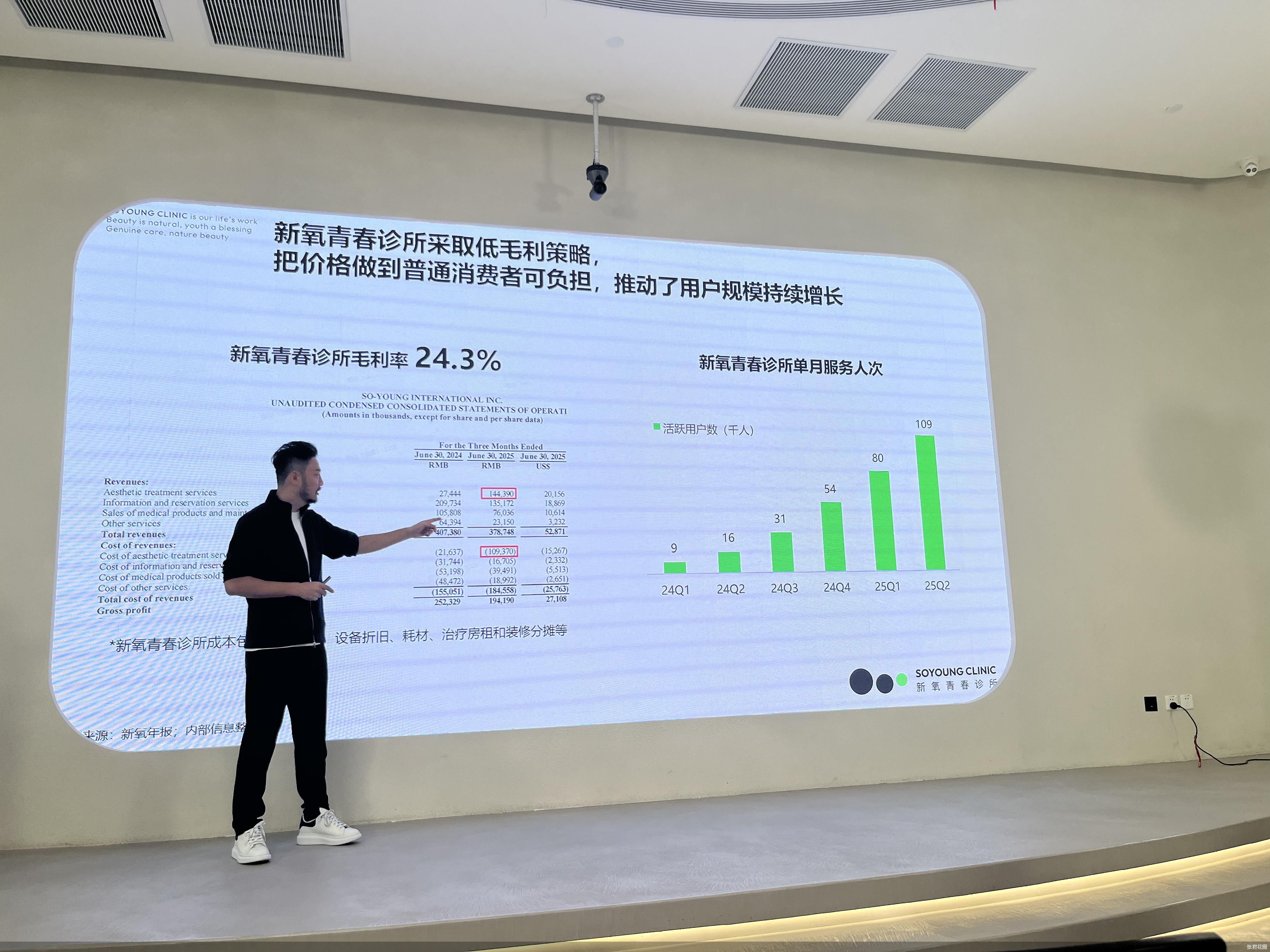
Core Viewpoint - The launch of the new "Miracle Tongyan 3.0" by Xinyang at a price of 2999 yuan marks a significant price drop in the market for Tongyan injections, which typically exceed 10,000 yuan, establishing a new low price point in the industry [1][4]. Pricing Strategy - Xinyang's pricing strategy is based on obtaining pricing authority from upstream manufacturers, allowing them to offer competitive prices [6][7]. - The previous versions of Tongyan injections were priced at 4999 yuan and 5999 yuan, indicating a trend of progressively lowering prices [4][9]. Market Context - The current market for Tongyan injections includes several high-priced products, with manufacturers like Saint Boma and Kanjie Pharmaceuticals pricing their products between 12,800 yuan and 14,800 yuan [4][9]. - The trend of decreasing prices for Tongyan injections is expected to continue, driven by market demand and product effectiveness [5]. Company Performance - Xinyang's clinics have achieved monthly profitability at the store level, although overall profitability is still pending due to the costs associated with middle and back-end operations [9]. - The company plans to expand its clinic network significantly, aiming for over 50 locations by the end of 2025, with a long-term goal of establishing a presence in 100 cities [9]. Financial Growth - Xinyang reported a substantial increase in revenue from its light medical beauty chain business, with a year-on-year growth of 551.4% in Q1 2025, reaching 98.8 million yuan [10]. - In Q2 2025, revenue from beauty treatment services also saw a significant increase of 426.1%, totaling 144.4 million yuan [10].
超六成头部下滑,国货美妆如何跨界“反杀”医美寒冬?
FBeauty未来迹· 2025-09-22 10:46
Core Viewpoint - The beauty and medical aesthetics industry is experiencing a stark contrast, with medical aesthetic companies facing significant pressure while domestic beauty brands are actively entering the medical aesthetics market [3][4][5] Medical Aesthetics Industry Performance - Among 22 medical aesthetics companies, 14 reported a year-on-year decline in revenue during the first half of the year, with "medical aesthetics trio" member Aimeike experiencing a decline exceeding 20% [4][5] - The medical aesthetics market has been growing rapidly, with a projected market size of nearly 3,700 billion by 2025, growing at an annual rate of 17.4% since 2020 [4] Competitive Landscape - The medical aesthetics industry is facing intensified competition, particularly in upstream raw materials and equipment, leading to declining revenues for companies like Aimeike and Haohai Biological [6][7] - The consumer market is becoming more rational, with 73% of mid-to-high-income consumers planning to reduce or maintain their medical aesthetics spending in 2024 compared to 2023 [7] Domestic Beauty Brands' Strategies - Over 20 domestic beauty companies are entering the medical aesthetics sector, with brands like Naturating and Youshiyan launching new products aimed at the medical aesthetics market [10][12] - Baijuerling has launched three medical aesthetics brands, focusing on injection regeneration, post-operative care, and medical equipment, indicating a comprehensive approach to the medical aesthetics industry [16][20] Market Challenges and Opportunities - The market for medical aesthetics is becoming increasingly competitive, with established brands like 可复美 and 薇诺娜 already dominating the "medical device" segment, making differentiation a key challenge for new entrants [22][25] - Despite the challenges, the structural adjustment in the medical aesthetics industry presents opportunities for collaboration and innovation, as companies explore new product offerings and partnerships [25][27]

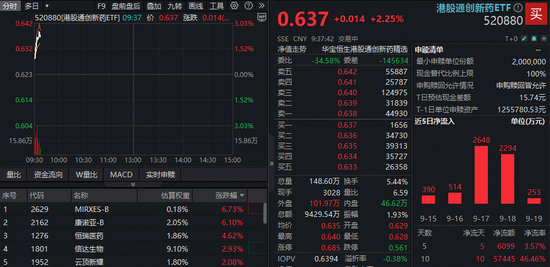
中国创新药管线全球第一!高弹性港股通创新药ETF(520880)放量上探2.57%,此前连续14日吸金合计6.8亿元
Xin Lang Ji Jin· 2025-09-22 01:55
Core Viewpoint - The Hong Kong Stock Connect innovative drug sector is experiencing increased volatility, with significant inflows of capital into the high-elasticity Hong Kong Stock Connect innovative drug ETF (520880) and a notable performance from key constituent stocks [1][3]. Group 1: Market Performance - On September 22, the Hong Kong Stock Connect innovative drug sector opened high and continued to rise, with the ETF (520880) reaching an intraday increase of 2.57% and a trading volume exceeding 1 billion CNY [1]. - As of September 19, the ETF (520880) has attracted nearly 680 million CNY over 14 consecutive days [1]. - The ETF's index has shown a year-to-date increase of 119.75% prior to the recent "purification" adjustment on September 8, leading among similar innovative drug indices [4][5]. Group 2: Key Stocks and Trends - Notable performers among the ETF's constituent stocks include MIRXES-B, Kangnuo Ya-B, and Heng Rui Pharmaceutical, with respective increases of over 6.7%, 6%, and 4.6% [1]. - Conversely, Junshi Biosciences and Sihuan Pharmaceutical have shown negative performance [1]. Group 3: Industry Insights - According to Huachuang Securities, the innovative drug industry is transitioning from a quantity-driven logic to a quality-driven logic, with 2025 expected to be a pivotal year focused on product excellence [3]. - Southwest Securities reported that in the first half of 2025, the revenue for the Hong Kong Stock Connect innovative drug sector is projected to be 194.6 billion CNY, a decrease of 2.0%, while net profit is expected to rise by 1.2% to 25.8 billion CNY [3]. - The innovative drug pipeline in China has reached 3,575 molecules, ranking first globally, with 18 original drugs already launched overseas [2]. Group 4: ETF Characteristics - The Hong Kong Stock Connect innovative drug ETF (520880) is the first ETF tracking the Hang Seng Stock Connect Innovative Drug Select Index, with a fund size exceeding 1.7 billion CNY as of September 12 [5]. - The ETF has been restructured to exclude CXO companies, focusing solely on innovative drug research and development, thereby enhancing its representation of the core strength of domestic innovative drugs [3][4].
轩竹生物通过港交所聆讯,四环医药通过子公司持股约56.47%
Zheng Quan Shi Bao Wang· 2025-09-18 15:07
Core Viewpoint - XuanZhu Biotechnology Co., Ltd. is preparing for its IPO on the Hong Kong Stock Exchange, having previously attempted to list on the STAR Market in 2022 but withdrew its application in May 2023 to pursue the Hong Kong route [1] Company Overview - XuanZhu Biotechnology is an innovation-driven biopharmaceutical company in China, with a comprehensive internal R&D platform supporting a diverse pipeline of over ten drug assets under active development [1] - The company is primarily controlled by Sihuan Pharmaceutical Holdings Group, which holds a combined 56.47% stake through its subsidiaries [1] Product Pipeline - The company has three core products, including KBP-3571, which has received NDA approval for treating duodenal ulcers and is expanding its indications to gastroesophageal reflux disease [2] - In oncology, XuanZhu has two NDA-approved innovative drugs, XZP-3287 and XZP-3621, for breast cancer and lung cancer, respectively, and is expanding their indications [2] - The company is also developing a pipeline for non-alcoholic steatohepatitis (NASH), with XZP-5610 in Phase I clinical trials and XZP-6019 in IND preparation [2] Market Position - Many of XuanZhu's pipeline products are industry-firsts, such as KBP-3571, the first domestically developed PPI in China, and XZP-5849, the first domestically developed PDE5 inhibitor [2] - The company has submitted or obtained seven NDAs, including XZP-5695, which is in Phase III clinical trials [2] Financial Performance - XuanZhu has not yet achieved profitability, with revenues of 29,000 yuan, 30.094 million yuan, and 2.559 million yuan for the years 2023, 2024, and the first three months of 2025, respectively [3] - R&D expenditures for the same periods were 239 million yuan, 186 million yuan, and 53 million yuan, leading to net losses of 301 million yuan, 556 million yuan, and 65 million yuan [3] - The first approved product, KBP-3571, generated sales of 32.7 million yuan since commercialization until March 31, 2025 [3]