
小鹏汇天

Search documents
深夜中国资产大爆发,一场会议在广州讨论如何“做多中国”
Feng Huang Wang Cai Jing· 2025-09-25 00:54
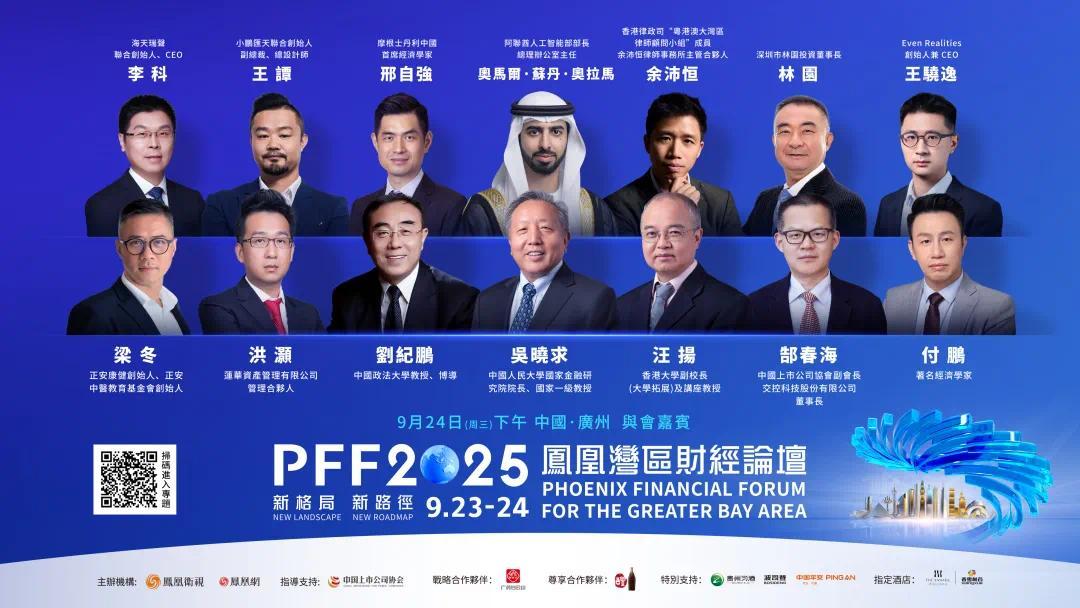
Market Overview - The three major U.S. stock indices closed lower on September 24, with the Dow Jones Industrial Average down 171.5 points, a decline of 0.37%, the S&P 500 down 18.95 points, a decline of 0.28%, and the Nasdaq Composite down 75.61 points, a decline of 0.33% [1] Technology Sector Performance - Popular tech stocks showed mixed results, with Intel rising over 6% amid news of seeking investment from Apple, Tesla increasing nearly 4%, while Google fell over 1%, and Nvidia and Apple both dropped close to 1% [2] Chinese Market Insights - The Nasdaq China Golden Dragon Index rose by 2.83%, with major Chinese concept stocks like Alibaba and Global Data rising over 8%, Baidu and JD.com up over 5%, and NIO increasing over 2% [3] Global Trade Dynamics - The World Trade Organization's Director-General warned that tariffs are causing unprecedented damage to the international trade system, with global trade under WTO terms dropping to 72% and potentially declining further [3] - Geopolitical tensions, tariff barriers, and regional supply chain restructuring are pushing the world towards a high-friction, low-trust trade era, impacting small and medium enterprises significantly [3] New Trade Era - The current situation does not signify the end of globalization but indicates its evolution into a new form centered on regional cooperation, digital infrastructure, and resilient supply chains [4] - The Greater Bay Area is emerging as a new global trade hub, leveraging its industrial capabilities and cross-border service strengths to adapt to these changes [4][5] Economic Resilience - Despite global economic uncertainties, China's economy is showing resilience, with a record high in goods trade value expected to reach 43.85 trillion yuan in 2024, and a 2.5% year-on-year increase in the first five months of 2025 [9] - The share of high-tech product exports is also increasing, projected to reach 18.2% in 2024 [9] Consumption and Investment Trends - In the first half of 2025, retail sales of consumer goods grew by 5.0%, contributing over 50% to economic growth [11] - The capital market is witnessing a shift, with A-shares breaking a ten-year pressure line, indicating a transition from a policy-driven market to a system-driven market [12] Future Economic Discussions - The "Phoenix Bay Area Finance Forum 2025" will address key topics such as the reconstruction of the global economic and trade order, new paths for corporate globalization, and the integration of artificial intelligence [6][13] - The forum aims to foster dialogue and collaboration among global leaders to navigate the uncertainties in the current economic landscape [7][14]

蔚蓝锂芯:EVTOL是公司为未来规划的目标市场之一
Mei Ri Jing Ji Xin Wen· 2025-09-24 00:51
Core Viewpoint - The company is actively engaging in the EVTOL market and has established strategic partnerships with several key players in the industry, indicating a focus on future growth opportunities in low-altitude economy [1] Company Information - The company confirmed that EVTOL is one of its target markets for future planning, although it does not expect significant short-term impacts on its operating performance [1] - The company acknowledged that DJI is one of its clients, highlighting its involvement in the industry [1] Industry Outlook - The company expressed a positive outlook on the future market prospects of the EVTOL industry, suggesting confidence in the growth potential despite current operational impacts [1]

中东土豪,狂买中国“黑科技”
Feng Huang Wang Cai Jing· 2025-09-23 16:14
Group 1 - The emergence of flying cars, particularly eVTOLs (electric vertical takeoff and landing vehicles), is gaining traction in the Middle East and Southeast Asia due to increasing traffic congestion and the need for efficient transportation solutions [2][3] - The UAE has seen a significant rise in population and traffic congestion, with 86% of respondents reporting frequent traffic jams, prompting the government to explore innovative transportation options [2][3] - Chinese companies like EHang and Xpeng are leading the way in flying car technology, with successful test flights and significant orders from UAE companies, indicating strong demand for eVTOLs in the region [3][6] Group 2 - The global low-altitude economy is projected to reach a market size of over $1.5 trillion by 2040, attracting numerous competitors, including established aerospace manufacturers and new startups [5] - Chinese eVTOL manufacturers are gaining a competitive edge due to their advanced technology, safety features, and cost advantages, with prices for Chinese eVTOLs being significantly lower than their foreign counterparts [6][7] - The Chinese government is actively promoting the low-altitude economy, with policies aimed at fostering innovation and reducing regulatory barriers, which contrasts with the more stringent regulations faced by Western companies [9][10] Group 3 - Chinese eVTOL companies must obtain various certifications, including type certification, production license, and airworthiness certificate, to operate in international markets, with a focus on gaining acceptance in regions like the Middle East and Southeast Asia [8][9] - The successful acquisition of these certifications by Chinese companies, such as EHang, positions them favorably in the global market, as they have achieved milestones that Western manufacturers are still striving for [9][10] - The ongoing competition in the flying car sector highlights the importance of technological advancements and regulatory navigation, with Chinese firms poised to capitalize on their manufacturing capabilities and government support [10]
中东土豪,狂买中国“黑科技”
凤凰网财经· 2025-09-23 15:23
Core Viewpoint - The article discusses the emerging market for flying cars, particularly focusing on the advancements made by Chinese companies in the eVTOL (electric Vertical Take-Off and Landing) sector, and their potential to dominate the Middle Eastern and Southeast Asian markets due to technological and cost advantages [2][9][10]. Group 1: Market Demand and Opportunities - The UAE faces severe traffic congestion, with 86% of respondents reporting frequent traffic jams, prompting interest in flying cars as a solution [4][5]. - The UAE aims to reduce reliance on fossil fuels and enhance green technology, making flying cars an attractive option for efficient and low-carbon transportation [5][6]. - Chinese eVTOL companies have conducted successful test flights in the UAE, with significant orders being placed, such as Autocraft's order for 350 eVTOLs worth $1 billion [6][8]. Group 2: Competitive Landscape - The global low-altitude economy is projected to exceed $1.5 trillion by 2040, with over 160 companies competing in the flying car market, including established aerospace and automotive manufacturers [9][10]. - Chinese companies are gaining traction in the market due to their technological advancements and competitive pricing, with eVTOLs priced significantly lower than their foreign counterparts [12][10]. Group 3: Advantages of Chinese Companies - Chinese eVTOLs are perceived as safer than helicopters, with multiple power units ensuring operational safety even if one fails [10][12]. - The cost advantage of Chinese eVTOLs is substantial, with prices around $1 million compared to $500,000 to $1 million for foreign models, attributed to a complete domestic supply chain and lower labor costs [12][10]. Group 4: Regulatory Challenges and Progress - Chinese eVTOL manufacturers must obtain three certifications (TC, PC, AC) for market entry, with some companies like EHang already achieving this milestone [14][13]. - The acceptance of Chinese standards in the Middle East and Southeast Asia is higher, facilitating smoother regulatory processes compared to Europe, where independent certification is often required [15][16]. Group 5: Future Prospects - The Chinese government is actively promoting the low-altitude economy, indicating strong support for the development of flying cars [17][18]. - Despite current achievements, challenges remain in achieving large-scale operations and addressing safety and regulatory requirements in various markets [13][16].

小鹏汇天飞行汽车“坠机”?低空经济安全敲响警钟
Xi Niu Cai Jing· 2025-09-22 07:39
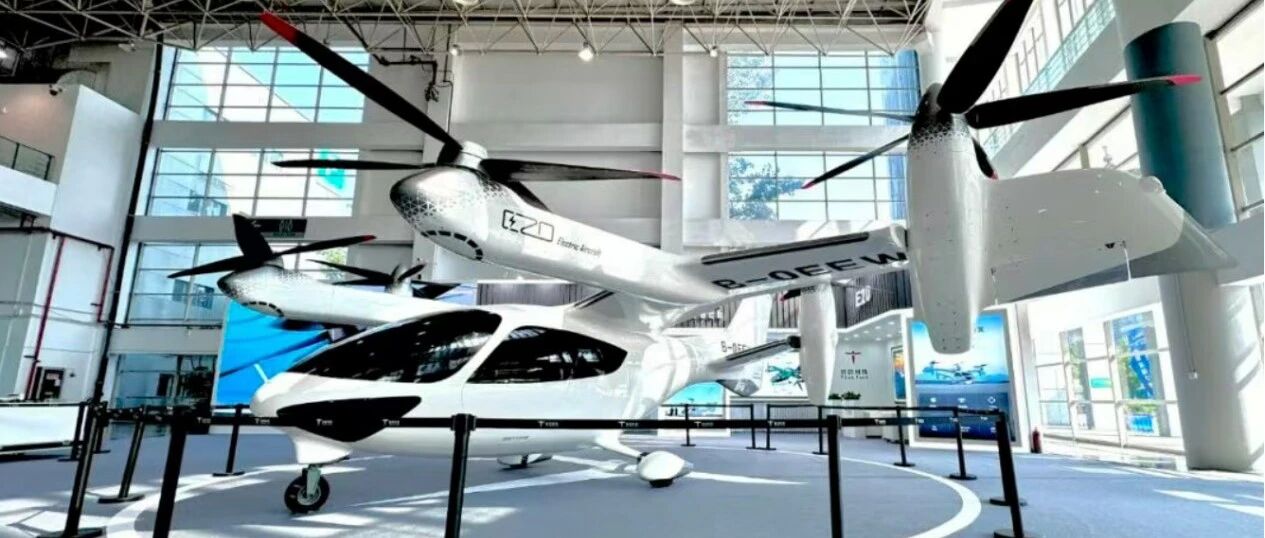
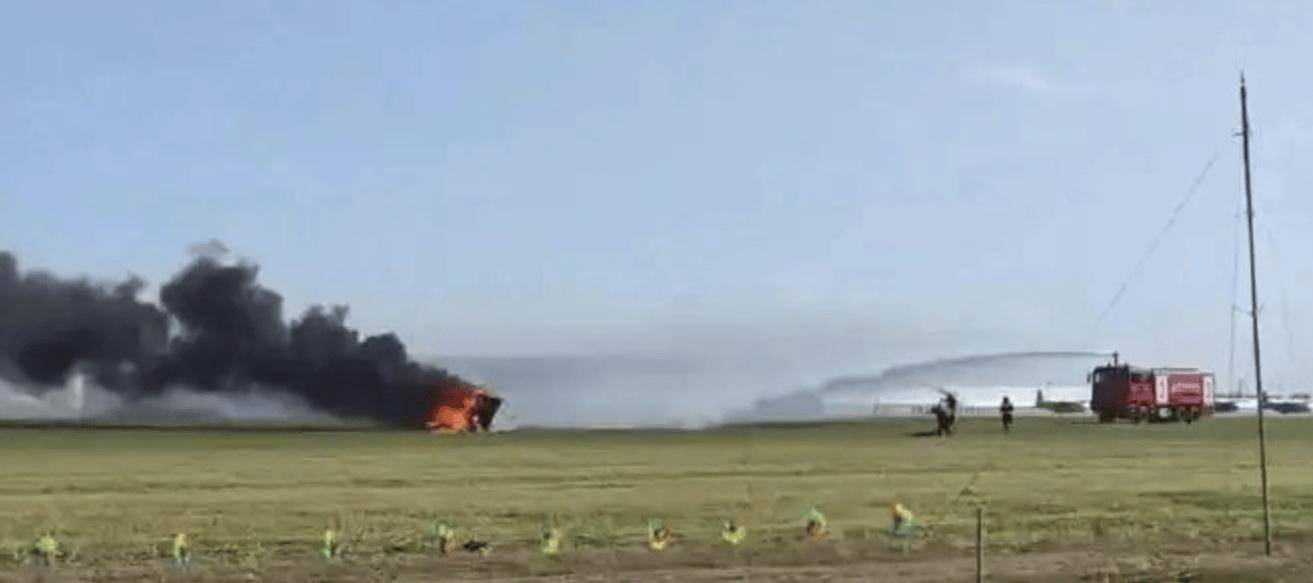
Group 1 - The incident at the Changchun Airshow involved two XPeng Huaitian eVTOLs making contact during a rehearsal, resulting in one aircraft catching fire upon landing, while the other landed safely. All personnel were reported safe, and investigations are ongoing [1] - XPeng Huaitian is recognized as the largest flying car company in Asia, having invested approximately $600 million over 12 years in research and development, resulting in seven generations of aircraft. Their product lineup includes three types of flying cars: the "Land Carrier," a split-type, a tilt-rotor, and an integrated model [3] - The "Land Carrier" is notable for its unique design, allowing it to store an aircraft in its trunk and featuring an innovative automatic separation mechanism that enables quick transition between ground and flight modes. It has already completed significant milestones, including the first public manned flight at the Guangzhou Auto Show and a successful first flight in Shanghai [3] Group 2 - Progress on the "Land Carrier" is on track, with the Civil Aviation Administration of China releasing a draft for public consultation to facilitate future certification of similar aircraft. Additionally, XPeng Huaitian has signed cooperation agreements with three companies in Shandong to advance low-altitude economic initiatives [4] - The manufacturing base in Guangzhou is under construction, designed to be the world's first large-scale production facility for flying cars using modern assembly lines, with an annual production capacity planned at 10,000 units, expected to be completed in the third quarter of this year [4] - The company has received nearly 5,000 orders for the "Land Carrier" in the Chinese market, with plans for delivery in the second half of 2026. Furthermore, XPeng Huaitian secured $250 million in Series B funding in July to support research, production, and commercialization efforts [4]
工信部公开征求组合驾驶辅助标准意见,小米大批量召回SU7标准版
Zhong Guo Qi Che Bao Wang· 2025-09-22 01:44
Group 1: Industry Developments - Jingu Co. established a wholly-owned subsidiary, "Hangzhou Jingu Embodied Intelligence Technology Co., Ltd.," to enter the embodied intelligence sector, focusing on humanoid, quadruped, service, and specialized application robots, leveraging its material technology for cost-effective solutions [2] - The U.S. Department of Transportation plans to propose three new federal motor vehicle safety standards in Spring 2026, aimed at updating regulations for autonomous vehicles without manual controls, reflecting a commitment to reshape the regulatory framework for autonomous driving [2] - Tesla's Robotaxi service is now open to the public in the U.S., following a pilot program in Texas, which could accelerate the adoption of autonomous driving technology and reshape the global transportation landscape [3] Group 2: Strategic Partnerships and Collaborations - Pony.ai announced a partnership with Qatar's national transport company Mowasalat to advance autonomous driving technology in Qatar, adapting its technology to local conditions [4] - Changan Automobile launched the "Tianshu Intelligent" brand, planning to explore applications for industrial robots and family service robots by 2030, marking a shift from vehicle manufacturing to smart living services [5][6] - Uber and Momenta are set to test a joint Robotaxi project in Munich, Germany, with plans for a full launch in 2026, indicating a significant step for Chinese autonomous driving technology in international markets [9][10] Group 3: Regulatory and Safety Initiatives - The China Automotive Engineering Research Institute introduced a "smart driving pyramid grading evaluation system," providing a structured assessment of autonomous driving capabilities to guide industry development and consumer choices [7][8] - The Ministry of Industry and Information Technology is soliciting public opinions on mandatory national standards for intelligent connected vehicles, aiming to strengthen safety measures in the industry [19] - Xiaomi announced a recall of over 116,000 SU7 electric vehicles due to safety concerns with the L2 highway navigation assistance feature, demonstrating a commitment to consumer safety and industry standards [22] Group 4: Market Movements and Financial Activities - Hesai Technology completed a dual listing on the Hong Kong Stock Exchange, raising over 4.16 billion HKD, marking the largest IPO in the global lidar industry [17] - Alibaba Group made a strategic investment in Hello's Robotaxi business, enhancing collaboration in autonomous driving and accelerating the commercialization of Robotaxi services [20][21] - Horizon Robotics established its European headquarters in Munich, enhancing its operational capabilities for the global market and supporting Chinese automotive companies in Europe [11]



这一撞,小鹏撞碎了多少人的财富梦!
Xin Lang Cai Jing· 2025-09-20 12:27
Core Viewpoint - The recent incident involving Xiaopeng Huaitian at the Changchun Airshow has raised significant safety concerns regarding eVTOL technology and the overall safety of flying cars in China, potentially impacting investor confidence and customer purchasing decisions [2][29]. Group 1: Company Overview - Xiaopeng Huaitian aimed to leverage its recent licensing success in the UAE to establish commercial partnerships in China, but the airshow incident has complicated these plans [2]. - The company currently holds 5,000 orders and 1.5 billion yuan in advance payments, which it hoped to use as leverage for expanding its domestic commercial channels [2]. - The founder, Zhao Deli, faces pressure to reassure investors and customers amidst growing safety concerns, as the incident has led to a reevaluation of purchase plans by potential customers [2][29]. Group 2: Industry Context - The low-altitude economy in China is projected to exceed 500 billion yuan within three years, with significant opportunities in downstream sectors such as maintenance and tourism [21]. - Despite the potential, the flying car industry faces skepticism, particularly in the U.S., where safety concerns hinder the commercialization of eVTOL technology [22][24]. - Experts have expressed doubts about the feasibility of products meeting both automotive and aviation standards, with current eVTOL models struggling with limitations such as short flight durations [24][26]. Group 3: Technological Challenges - The eVTOL technology remains in a developmental stage, with existing models showing limited advancements in core technology since the early prototypes [17]. - The technical challenges include achieving a balance between weight, size, and airflow, which are critical for safe operation in urban environments [22][28]. - Current eVTOL models have not significantly improved in terms of performance metrics such as flight height and speed compared to earlier versions [18].
孚能科技研制出超大容量储能电芯
起点锂电· 2025-09-20 09:37
Group 1 - The core viewpoint of the article highlights that Funeng Technology has successfully developed ultra-large capacity energy storage cells using its proprietary large-layered technology platform and innovative metal soft-pack structure technology, addressing the pain points of low cycle counts in square shell cells and enhancing the calendar life of soft-pack cells [2] - The SPS technology extends long cycle life and excellent economic performance to various application scenarios, including source-grid energy storage, commercial and industrial energy storage, and household energy storage, forming a comprehensive product matrix that covers both traditional soft-pack and metal soft-pack technologies [2] Group 2 - Funeng Technology's SPS battery is its core product, with SPS and semi-solid batteries having secured high-quality projects from clients such as Xiaopeng Huitian, GAC Group, and a leading domestic new energy commercial vehicle customer [3]


小鹏飞行汽车航展坠落起火!原计划明年量产1万台
Guo Ji Jin Rong Bao· 2025-09-19 14:15
Core Viewpoint - The recent accident involving XPeng Huaitian's eVTOL aircraft during a public demonstration raises safety concerns in the rapidly developing eVTOL industry in China, highlighting the need for improved safety regulations and pilot training standards [2][8]. Company Overview - XPeng Huaitian, founded in 2013 by Zhao Deli, has become Asia's largest flying car company with a valuation of 11 billion yuan [2]. - The company successfully launched its first product, the "Traveler X2," in 2021 and completed over $500 million in Series A financing, achieving a pre-investment valuation of over $1 billion [4]. - In 2023, XPeng Huaitian introduced both integrated and modular flying cars, with the "Land Carrier" project being a key focus [4]. - The company plans to produce 10,000 eVTOL units by 2026 and has initiated commercial operation trials in regions like the Guangdong-Hong Kong-Macao Greater Bay Area [6]. Product Details - The "Land Carrier" eVTOL consists of two parts: a ground vehicle and an aerial vehicle, featuring a unique automatic separation and connection mechanism [5]. - The ground vehicle is equipped with an 800V silicon carbide range extension platform, offering a comprehensive range of over 1,000 kilometers and the ability to recharge the aerial vehicle multiple times [5]. - The aerial vehicle supports fast charging in 18 minutes and has received acceptance for its model certification application from the Civil Aviation Administration of China [5]. Industry Context - The eVTOL sector has garnered significant capital interest, driven by the growth of the low-altitude economy, but safety remains a critical concern [8]. - Recent discussions among regulatory bodies emphasize the need for safety in low-altitude operations, with a shift from rapid development to a focus on secure and stable growth [8]. - The Civil Aviation Administration of China is exploring pilot training and licensing standards for eVTOL operations, with preliminary agreements on commercial pilot requirements [8].
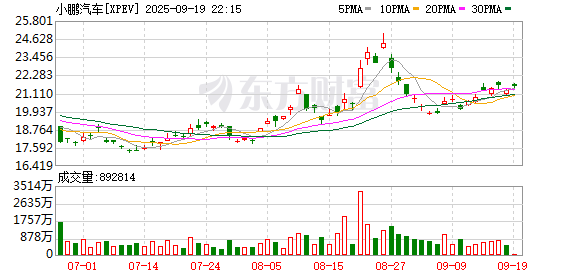
调研速递|广州集泰化工接受全体投资者调研,透露多项业务进展要点
Xin Lang Zheng Quan· 2025-09-19 10:39
Group 1: Company Performance and Business Progress - In the first half of 2025, the company reported revenue of approximately 533 million yuan, a year-on-year decrease of about 10.7%, and a net loss attributable to shareholders of approximately 8.3 million yuan [1] - The company plans to optimize product structure, control costs, and expand market reach to improve performance [1] Group 2: Business Development - The first phase of the Anhui Anqing New Materials Industrial Base has some production lines in trial production, with others under planned construction [2] - Marine coatings are primarily used above the waterline of ships, with some products validated by Ningde Times but not yet supplied in bulk [2] Group 3: R&D Directions and Product Layout - The company's R&D focuses on green and environmentally friendly sealants and water-based coatings, promoting low VOC, solvent-free, and water-based products [3] - In the electronics sector, the company is actively exploring the 3C coating market with mature products, while liquid cooling silicone oil is still in the verification stage [3] - For aerospace applications, the company has developed a protective matrix for eVTOLs and aims to establish a joint venture for the development of adhesives for aircraft windshields [3] Group 4: Opportunities in New Energy - The company anticipates significant market potential for its "adhesive-coating integration" technology with the implementation of the new national standard for electric vehicle batteries in July 2026 [4] - The company has provided one-stop solutions for commercial and residential energy storage and has established partnerships with clients like Pylon Technologies [4]
