Waymo

Search documents
美洲互联网:共享出行与配送行业 2025 年第四季度前瞻 —— 行业争议与预期分析-Americas Technology_ Internet_ Ridesharing & Delivery Q4'25 Preview_ Analyzing the Industry Debates & Estimates
2026-01-23 15:35
Summary of Key Points from the Earnings Call Transcript Industry Overview - The Mobility/Delivery Internet sub-sector is expected to report results in line with investor expectations, supported by a healthy consumer backdrop across the industry [1][2] - Rideshare and food delivery are identified as two of the fastest-growing verticals in the US Internet, with projected CAGRs of +13% and +11% from 2025 to 2030, respectively [1][2] Rideshare Industry Insights - The mobility landscape benefits from rising utility trends among upper-banded users, despite upward pricing dynamics [2] - The impact of Autonomous Vehicles (AV) on demand and supply remains a key debate, with investors closely monitoring upcoming market launches [2][10] - Uber's operating estimates have been raised, with expectations of increased trip frequency per rider and a low double-digit percentage (LDD) bookings CAGR through 2030 [10] - Lyft's acquisition of FREENOW allows it to operate a multimodal transportation network, with expectations of sustaining a LDD % bookings CAGR over the next five years [10] - The rise of AVs could represent a mid-single-digit percentage (MSD) of total rideshare industry bookings by 2030 [10] Food Delivery Industry Insights - The food delivery landscape is expanding from food to grocery delivery and local commerce, presenting significant growth opportunities [3][19] - The US food delivery market is segmented into first-party online, third-party online, and offline delivery, with 3P delivery expected to grow at a faster rate (11% CAGR) than overall delivery (10% CAGR) [28] - DoorDash is projected to grow inline with the broader industry, maintaining a 66% share of 3P delivery sales [28] Company-Specific Updates Uber (UBER) - Q3 Mobility gross bookings (GBs) grew +20% YoY, driven by trip growth (+22% YoY) and strong platform engagement [29] - Q3 Delivery GBs grew +25% YoY, with significant contributions from Grocery & Retail, achieving a $12 billion annualized GBs run-rate [29] - The company announced a $1.5 billion share buyback in Q3 as part of a $20 billion repurchase program [29] DoorDash (DASH) - Marketplace gross order value (GOV) accelerated +25% YoY in Q3, driven by strong growth in monthly active users and increasing order frequency [29] - The company plans significant investments in 2026 towards a single integrated global platform and new initiatives [29] Instacart (CART) - Q3 gross transaction value (GTV) grew +10% YoY, driven by order growth (+14% YoY) [30] - The company continues to focus on advertising as a growth driver, despite macro uncertainties affecting ad revenues [30] Lyft (LYFT) - Gross bookings rose +16% YoY in Q3, supported by record rides and expansion in Europe [30] - The company is developing partnerships for AVs and expects to generate over $1 billion in free cash flow per year through 2026 and 2027 [30] Financial Estimates and Projections - Uber's gross bookings are projected to reach $354.9 billion by 2030, with a YoY growth trend of 10% [32] - DoorDash's gross bookings are expected to grow to $235.9 billion by 2030, with a 15% YoY growth trend [32] - Lyft's gross bookings are projected to reach $33.5 billion by 2030, with a 10% YoY growth trend [32] Consumer Trends and Market Dynamics - The overall health of the consumer and durability of current operating trends are under scrutiny, with household income cohort trends analyzed to frame purchase intent [6] - Monthly active users (MAUs) for Uber grew +16% YoY in international markets, while Lyft's MAUs grew +1% YoY [43][50] Conclusion - The rideshare and food delivery industries are poised for significant growth, driven by consumer trends, technological advancements, and strategic company initiatives. Investors should remain vigilant regarding competitive dynamics and market developments as these sectors evolve.




Waymo前CEO炮轰特斯拉:纯视觉方案短板,远处物体或无法准确识别
Sou Hu Cai Jing· 2026-01-23 11:04
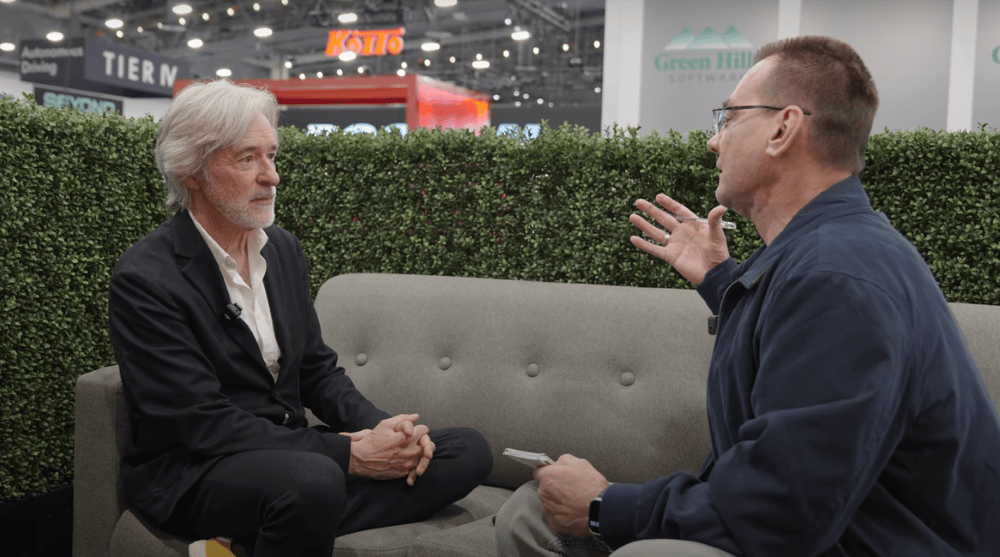
Core Viewpoint - Krafcik criticizes Tesla's reliance on a pure vision hardware approach for autonomous driving, highlighting its fundamental limitations in object recognition at a distance [1][5]. Group 1: Critique of Tesla's Vision System - Krafcik points out that Tesla's Full Self-Driving (FSD) system suffers from a "nearsighted" issue due to its use of 5 million pixel wide-angle cameras, which limits its ability to recognize distant objects [1][3]. - The effective vision level of Tesla's system is estimated to be around 20/60 to 20/70, meaning it requires objects to be brought within 20 feet to be recognized, which is below the minimum vision requirements for driving licenses in some U.S. states [1][3]. Group 2: Comparison of Sensor Technologies - The debate centers on whether autonomous driving should rely on software algorithms to simulate the world or on physical hardware to perceive it [3][5]. - Krafcik argues that Tesla's "compute-centric" approach, which depends solely on cameras and computational power, is flawed as cameras can fail under strong light, blurriness, or extreme weather conditions [3][5]. - In contrast, companies like Waymo utilize a sensor fusion approach that combines LiDAR and radar, providing a more reliable solution by actively detecting distance and speed, thus maintaining safety even when visual signals are compromised [3][5]. Group 3: Implications for Tesla's Future - The ongoing debate between "pure vision" and "sensor fusion" has significant implications for Tesla's Robotaxi ambitions, with Krafcik's previous predictions about Tesla's reliance on remote monitoring and safety drivers proving accurate [5][6]. - If the physical limitations of the pure vision approach are indeed insurmountable, Tesla vehicles equipped with Hardware 3 and 4 may remain at the L2+ level of driving assistance, failing to achieve the promised L4 autonomous driving through software updates [6][7].


AI应用的“妖风”还能吹多久?
虎嗅APP· 2026-01-23 10:16
Core Viewpoint - The article discusses the volatility and potential of AI application stocks, highlighting the recent surge and subsequent decline in their prices, emphasizing the need for logical investment rather than speculative trading [3][4][6]. Group 1: AI Application Market Dynamics - The AI application market saw a significant surge starting January 9, driven by the IPO of MiniMax, which rose over 90%, boosting market confidence in AI commercialization [3][4]. - Following the initial excitement, many AI companies issued announcements clarifying their limited revenue from AI, leading to a sharp price correction in the sector [4][5]. - The article suggests that while the current market may present opportunities, investors should focus on companies with genuine value and sustainable business models [4][7]. Group 2: GEO Model in Advertising - The article introduces the GEO (Generative Engine Optimization) model as a transformative approach in advertising, allowing users to input specific demands and receive optimized product recommendations directly from AI [9][11]. - The GEO market is projected to grow significantly, with estimates of $2.9 billion in China and $11.2 billion globally by 2025, indicating a shift from traditional SEO to AI-driven marketing strategies [11][12]. - Companies that own AI models and user behavior data are expected to be the primary beneficiaries of the GEO model, similar to how Google and Baidu benefited during the SEO era [12][13]. Group 3: AI in Healthcare - The AI healthcare sector has shown strong performance, with companies like 泓博医药 and 迪安诊断 seeing over 50% gains year-to-date, driven by increasing market interest [22][24]. - Government policies are increasingly supportive of AI in healthcare, with initiatives aimed at integrating AI into medical services and diagnostics [24][25]. - The article notes that advancements in AI healthcare applications, such as OpenAI's ChatGPT Health, are enhancing market sentiment and could lead to further growth in the sector [26][29]. Group 4: AI in Financial Technology - The financial technology sector has also experienced growth, with a 14% increase in the financial technology ETF as of January 14, 2026 [37]. - AI is expected to enhance the capabilities of both internet finance companies and financial IT firms, improving customer engagement and operational efficiency [38][39]. - However, the article cautions that while AI can improve operational efficiencies, it may not fundamentally change the poor business models prevalent in financial IT companies [40].

Waymo自动驾驶出租车服务登陆迈阿密
Jin Rong Jie· 2026-01-23 01:21
Core Insights - Waymo has officially launched its robotaxi service for paid passengers in Miami, marking it as the sixth city in the U.S. to offer fully autonomous ride-hailing services [1] - The company plans to expand into multiple new markets by 2026, aiming to secure user demand and brand loyalty ahead of competitors [1] - Nearly 10,000 Miami residents have already registered to try the autonomous taxi service, with the company continuously inviting new passengers to join [1]
Uber faces long-term risks as Waymo, Tesla advance autonomous ride-hailing
Proactiveinvestors NA· 2026-01-22 20:57
Company Overview - Proactive is a financial news publisher that provides fast, accessible, informative, and actionable business and finance news content to a global investment audience [2] - The company operates with a team of experienced and qualified news journalists, ensuring independent content production [2] Market Focus - Proactive specializes in medium and small-cap markets while also covering blue-chip companies, commodities, and broader investment stories [3] - The news team delivers insights across various sectors, including biotech and pharma, mining and natural resources, battery metals, oil and gas, crypto, and emerging digital and EV technologies [3] Technology Adoption - Proactive is recognized for its forward-looking approach and enthusiastic adoption of technology to enhance workflows [4] - The company utilizes automation and software tools, including generative AI, while ensuring that all content is edited and authored by humans [5]

Tesla launches robotaxi rides in Austin with no human safety driver
TechCrunch· 2026-01-22 18:51
Core Insights - Tesla has initiated robotaxi rides in Austin without a human safety driver, marking a significant step in its autonomous vehicle strategy [1] - CEO Elon Musk announced this development on social media, celebrating the Tesla AI team's efforts and inviting engineers to join the team [1] - The robotaxi service in Austin began with limited deployment last June, initially requiring a safety operator, and transitioned to testing without a driver in December [2] Deployment Details - The current fleet in Austin will not be entirely driverless; a mix of supervised and unsupervised vehicles will operate, with plans to increase the ratio of unsupervised vehicles over time [3] - It remains unclear whether Tesla is charging for these rides, as competitors like Zoox and Waymo did not charge for their initial driverless rides [3]
Waymo continues robotaxi ramp up with Miami service now open to public
TechCrunch· 2026-01-22 16:59
Core Insights - Waymo has launched its robotaxi service for the public in Miami, initially available to nearly 10,000 residents on its waitlist within a 60-square-mile area [1][2] - The company plans to expand its service to Miami International Airport soon, although no specific timeline has been provided [2] - Waymo's phased approach to launching services is becoming more common, having previously opened its robotaxis to the public in Phoenix in 2020 and expanding to other cities [4] Expansion Plans - Waymo aims to bring its robotaxi service to nearly a dozen more cities within the next year, including Dallas, Denver, Detroit, Houston, Las Vegas, Nashville, London, San Diego, Seattle, and Washington, D.C. [6] - The company has started testing in some of these cities using a mix of all-electric Jaguar I-Pace vehicles and newer Zeekr RT vans [6] - By the end of 2026, Waymo expects to offer 1 million trips per week [6] Operational Challenges - The expansion has faced challenges, including incidents in cities like San Francisco where Waymo vehicles have created traffic jams [6] - Federal safety regulators, specifically the National Highway Traffic and Safety Administration, have opened an investigation into Waymo's operations around stopped school buses [7] - Complaints have been raised in Austin regarding Waymo vehicles passing school buses with activated stop signs, leading to a voluntary software recall to address the issue [8]


Mobileye (MBLY) - 2025 Q4 - Earnings Call Transcript
2026-01-22 14:02
Financial Data and Key Metrics Changes - Full-year 2025 revenue reached $1.9 billion, up 15% year-over-year, exceeding prior guidance of 6% growth at the midpoint [15][18] - Adjusted operating income for 2025 was $280 million, a 45% increase year-over-year, with a margin of 15%, up about 300 basis points compared to 2024 [15][18] - Operating cash flow increased by more than 50% in 2025 [4] Business Line Data and Key Metrics Changes - EyeQ volume for 2025 was 35.6 million units, surpassing the original expectation of 32 million-34 million units [16] - The fourth quarter saw EyeQ volume consistent with the high end of guidance at about 8.2 million units, with expectations of 10 million units shipped in Q1 2026 [17][18] - Higher-than-expected SuperVision units contributed to the positive revenue outlook [17] Market Data and Key Metrics Changes - Demand for products remained strong despite a challenging geopolitical environment, indicating resilience in the auto industry [4] - The company anticipates a decline of about 500,000 units for Chinese OEMs compared to 2025, which was slightly above 3 million units [19] Company Strategy and Development Direction - Mobileye is focusing on launching advanced products, including the EyeQ6 chip, and expanding into humanoid robotics through the acquisition of Mentee Robotics [5][7] - The company aims to leverage synergies between autonomous vehicles and robotics, emphasizing the importance of AI and simulation technologies [12][14] - The strategy includes a unique first-think, slow-think structure for advanced products to enhance precision and scalability [6][10] Management's Comments on Operating Environment and Future Outlook - Management expressed optimism about volume growth despite flat global auto production, with rising order flows for Q1 2026 [8][22] - The company is experiencing positive demand signals from customers and expects significant growth in next-gen higher ASP ADAS and robotaxi mobility [22] - Management acknowledged challenges related to currency appreciation impacting costs but noted effective hedging strategies in place [22][61] Other Important Information - The company is facing FX headwinds due to the appreciation of the Israeli shekel against the U.S. dollar, which raises headcount costs [22][61] - A non-recurring expense of $7 million related to workforce efficiency initiatives was recorded in Q4 2025 [16] Q&A Session Summary Question: Competitive environment and advanced autonomous solutions - Management believes they are closer to launching advanced products than competitors, with a strong advantage in technology maturity [25] Question: Differentiation for Mentee Robotics - Mentee's differentiation lies in its fully autonomous control, vertical integration, and ability to learn from passive observation [30] Question: Surround ADAS engagement with OEMs - The company has seen increased engagement with multiple OEMs, indicating a strong market need for Surround ADAS [39] Question: Mentee's customer interest post-announcement - Significant interest from customers for on-site pilots and proof of concepts has been observed since the CES announcement [42] Question: Pricing dynamics on EyeQ - Pricing is influenced by the mix of EyeQ products, with no significant changes expected, although a second chip at a lower price may impact overall ASP [99][100]

Waymo launches robotaxi service in Miami, extending U.S. lead
CNBC· 2026-01-22 14:00
Core Viewpoint - Waymo has launched its robotaxi service for paying riders in Miami, marking a significant step in its 2026 market expansion strategy, positioning itself ahead of competitors like Tesla and Zoox [1] Group 1: Service Launch and Expansion - Waymo's robotaxi service is now available in a 60-square-mile area of Miami, including key neighborhoods such as the Design District, Wynwood, Brickell, and Coral Gables [2] - The company began testing its vehicles in Miami in early 2025 and plans to extend services to Miami International Airport in the future [2] Group 2: User Engagement and Partnerships - Nearly 10,000 Miami residents have signed up to try the robotaxi service, with new riders being invited on a rolling basis [3] - Waymo is collaborating with mobility company Moove for fleet management services, which include vehicle charging, cleaning, and repairs [3] Group 3: Safety and Operational Challenges - Waymo has faced public concerns regarding the safety and driving behavior of its vehicles, particularly highlighted by incidents of gridlock during storms and power outages in San Francisco [4] - The company is actively refining its systems to improve navigation during adverse weather conditions [4]

人均64万元年终奖!这家供应商是如何实现逆势上扬的?
Zhong Guo Qi Che Bao Wang· 2026-01-21 02:11
Core Viewpoint - SK Hynix announced a record year-end bonus of over 136 million KRW (approximately 640,000 RMB) per employee, attributed to a historic labor agreement and strong company performance, with projected operating profits nearing 45 trillion KRW (approximately 212.7 billion RMB) by 2025 [2][3]. Group 1: Record Bonuses and Labor Agreements - The significant bonuses are a result of a historic labor agreement that removed the previous cap on profit-sharing, allowing 10% of annual operating profits to be allocated to the bonus pool [3]. - The total bonus pool is expected to reach 4.5 trillion KRW (approximately 21.3 billion RMB), with an average of 136 million KRW per employee based on the company's workforce of 33,000 [3]. Group 2: Market Dynamics and Stock Performance - The memory market is reportedly in a "super bull market," surpassing previous highs due to increased demand from sectors like smart cars and AI, with prices for DDR5 memory rising over 300% since July 2025 [4]. - SK Hynix's stock price surged from approximately 204,000 KRW at the end of 2024 to about 760,000 KRW by the end of 2025, marking a 275% increase, making it one of the best-performing chip stocks globally [4]. Group 3: Automotive Memory Business Growth - The automotive memory segment has seen significant growth, driven by the rapid development of smart vehicles and the increasing demand for high-performance memory to support advanced features like autonomous driving [5][6]. - SK Hynix has strategically positioned itself in the automotive memory market, leveraging its technological advancements and securing ASIL-D certification, which is crucial for automotive safety standards [6]. Group 4: Technological Innovations and Collaborations - SK Hynix is focusing on both traditional memory technology and innovative AI-driven memory solutions for automotive applications, enhancing performance and reliability [6][7]. - Collaborations with major players in the autonomous driving sector, such as Waymo, are expanding, indicating a growing market for HBM technology in automotive applications [7]. Group 5: Future Market Outlook - The demand for memory is expected to continue rising, particularly in the context of AI and smart automotive technologies, with significant implications for market competition and pricing strategies [8]. - The memory market is dominated by three major players—Samsung, SK Hynix, and Micron—who collectively hold over 90% market share, indicating a highly concentrated competitive landscape [8][9].