
湖南裕能

Search documents
传递“挺价”信号 多家磷酸铁锂龙头相继减产检修
Zheng Quan Ri Bao Zhi Sheng· 2025-12-30 16:13
Core Viewpoint - Several lithium iron phosphate (LFP) manufacturers, including Hunan YN Energy Battery Materials Co., Ltd. and Guizhou Anda Technology Energy Co., Ltd., announced production cuts for maintenance to ensure stable operations amid rising raw material costs and squeezed profit margins [1][2][3]. Group 1: Production Cuts and Maintenance - Multiple LFP manufacturers plan to reduce production and conduct maintenance from January 1, 2026, for one month, stating that this will not significantly impact their 2026 financial performance [1]. - Anda Technology expects a reduction of 3,000 to 5,000 tons in LFP output due to maintenance, attributing this decision partly to rising upstream raw material prices [2]. Group 2: Market Dynamics and Pricing Pressure - The LFP industry has seen a strong recovery since Q3 2025, driven by increased demand for energy storage, with many leading companies operating at full capacity and some even exceeding it [2]. - Despite the recovery, LFP manufacturers face significant pricing pressure due to high raw material costs and limited ability to pass these costs onto downstream customers, leading to squeezed profit margins [2][3]. Group 3: Strategic Responses and Industry Challenges - The collective decision to reduce production is seen as a strategy to signal price increases to reluctant downstream battery customers, aiming to reverse ongoing losses [3]. - The industry is characterized by weak bargaining power for LFP manufacturers, who are caught between fluctuating raw material prices and long-term contracts with major battery producers [3][4]. Group 4: Innovation and Industry Development - The China Chemical and Physical Power Industry Association has called for a shift in focus from price competition to enhancing technology, product performance, and manufacturing processes [5]. - Companies are encouraged to invest in research and development to improve key performance indicators such as energy density and safety, aiming to build a high-quality industry ecosystem driven by innovation [5].
锂价翻倍、LFP 集中停产、电池厂加注钠电 锂电产业链博弈“三重门”
高工锂电· 2025-12-30 10:55
Core Viewpoint - The lithium battery industry is undergoing significant changes in pricing mechanisms, production adjustments, and technological advancements, with key players like Tianqi Lithium leading the way in redefining pricing structures and production strategies [3][8][41]. Pricing Restructuring - Lithium carbonate prices have surged, with the benchmark price exceeding 120,000 yuan/ton by December 30, marking a more than 30% increase from the beginning of the month and doubling from the year's low of under 60,000 yuan/ton [5][6]. - Tianqi Lithium announced a shift in its pricing model starting January 1, 2026, moving from a single pricing reference to a dual structure based on either the Mysteel index or the futures contract price, allowing customers to choose [9][10][12]. Production Adjustments - Major players in the lithium iron phosphate sector, including Hunan Youneng and Wanrun New Energy, have announced production cuts due to high operational loads and maintenance needs, with total reductions estimated between 30,000 to 70,000 tons, representing 7% to 17% of the domestic output in January [17][19][20]. - The industry is experiencing a shift from total price negotiations to discussions around processing fees, with leading companies seeking to raise processing fees by 2,000 to 3,000 yuan/ton to offset rising raw material costs [24][22]. Technological Developments - Sodium-ion batteries are gaining attention, with companies like CATL aiming for large-scale applications by 2026, focusing on energy storage and commercial vehicles [35][39]. - The economic viability of sodium-ion batteries is becoming more favorable as they do not require lithium carbonate or copper, providing a cost advantage in a high-price environment [38][39]. Market Dynamics - The lithium battery supply chain is attempting to redefine profit and risk boundaries in anticipation of a "tight balance" in 2026, with various strategies being employed across different segments of the industry [43][44]. - The overall net profit margin for lithium battery companies is around 9%, with upstream resources maintaining higher profitability while many midstream and downstream companies face tighter cash flows [42].







1月锂电排产“踩刹车”,但国补续期预期升温
高工锂电· 2025-12-30 10:55
Group 1 - The core viewpoint of the article highlights a convergence of supply-side adjustments and demand-side support in the lithium battery and new energy vehicle industry as it enters 2026, with a notable reduction in production and an extension of government subsidies for vehicle trade-ins [1][7][9] Group 2 - In January 2026, the production of lithium batteries in China is estimated to be around 210 GWh, reflecting a month-on-month decline of over 4%, while global production is expected to be approximately 220 GWh, down more than 6% [2] - Major battery manufacturers in mainland China are planning a production decrease of about 7% in January 2026, with some companies reducing output by nearly 10%, which is worse than previous optimistic expectations of a low single-digit adjustment [2][3] - The decline in production is attributed to seasonal factors and negotiations with upstream suppliers rather than a systemic deterioration in end-demand [3] Group 3 - Leading companies in the cathode material sector, such as Hunan Youneng and Wanrun New Energy, have announced production cuts or maintenance starting January 1, 2026, with reductions in phosphate cathode products expected to range from 3,000 to 35,000 tons [4][5] - The companies involved in these maintenance announcements hold a significant market share, and the rationale provided focuses on the need for safety and quality assurance, although market interpretations lean towards price factors [5][6] Group 4 - The government has confirmed the continuation of subsidies for vehicle trade-ins in 2026, emphasizing a more precise and structured approach to support [7][9] - Data from the Ministry of Commerce indicates that trade-in programs led to over 2.5 trillion yuan in sales from January to November 2025, with over 11.2 million vehicles traded in, significantly boosting the automotive market [8] Group 5 - The expected changes in subsidy structures may lead to a redistribution of support, favoring high-end electric vehicles while potentially reducing subsidies for lower-priced models, accelerating structural differentiation in the automotive market [10][12] - The adjustments in subsidy mechanisms are anticipated to impact the competitiveness of different vehicle types, pushing manufacturers to invest more in technology and efficiency [13] Group 6 - The interplay between reduced production in January and the continuation of government subsidies is not merely a simple balancing act but reflects a complex reallocation of risks and rewards across the industry under high costs and low profits [14]


13万吨磷酸锰铁锂项目落地宁夏
起点锂电· 2025-12-30 10:12
Group 1 - The core viewpoint of the article highlights the establishment of a 4.8 billion yuan lithium manganese iron phosphate (LMFP) production project by Jiangsu Hanchuang Nano Technology Co., Ltd. in Yinchuan, Ningxia, which aims to produce 130,000 tons annually [2] - The project will be constructed in two phases, with the first phase planning to build a production line with an annual capacity of 25,000 tons, expected to generate an annual output value of no less than 1 billion yuan and create over 100 jobs [2] - The company, established in February 2022, focuses on the research, production, and sales of core materials for new energy batteries, primarily lithium iron phosphate, with current major clients being leading manufacturers of electric two-wheelers and new energy vehicles [2] Group 2 - In 2022, the company’s first-phase base began production with an annual capacity of 5,000 tons of lithium iron phosphate, and by the end of 2023, it is expected to reach 15,000 tons [2] - The company is actively advancing plans to expand its capacity to 30,000 tons, projected to be operational by the end of 2026, aiming to enhance its innovation and scale advantages in the LMFP sector [2] - Multiple LMFP projects have been initiated across China this year, including a 100,000-ton project in Gansu and another in Shanxi, with various companies planning significant capacity expansions by 2025 and beyond [3]

宁德时代25.6亿加码磷酸铁锂!
起点锂电· 2025-12-30 10:12
Core Viewpoint - CATL's renewed investment enthusiasm in upstream resources is driven by the industry's recovery, particularly through its significant stake acquisition in Jiangxi Shenghua, which enhances its supply chain security and prepares for upcoming capacity expansions [3][14]. Investment in Jiangxi Shenghua - CATL and Fulin Precision jointly invested in Jiangxi Shenghua, with CATL contributing approximately 2.56338 billion yuan, resulting in a 51% ownership stake for CATL and 47.4096% for Fulin Precision [4]. - CATL's interest in Jiangxi Shenghua has been substantial this year, with multiple rounds of investment, including an initial stake acquisition in March and a prepayment of 500 million yuan in June to support project construction [5][6]. Technological Advantages - Jiangxi Shenghua employs a solid-phase method combined with oxalic acid iron technology, which is considered a leading domestic technique for high-pressure lithium iron phosphate production, offering advantages such as lower energy consumption and reduced carbon footprint [7]. Market Dynamics - The industry is experiencing a trend of production cuts by several companies, which is leading battery manufacturers to secure orders in advance to mitigate price increases. This reflects a continued effort to stabilize the lithium iron phosphate market [9]. - Long-term contracts provide market security but may also hinder price transmission, indicating a complex market environment [10]. Investment Strategy Changes - CATL's investment strategy has diversified since 2018, with significant investments in upstream lithium resources, but it has also seen a trend of divestment in response to declining lithium carbonate prices [12][13]. - Recent investments in Jiangxi Shenghua indicate a shift in CATL's perspective on upstream resources, suggesting a readiness to capitalize on industry recovery [13][14].

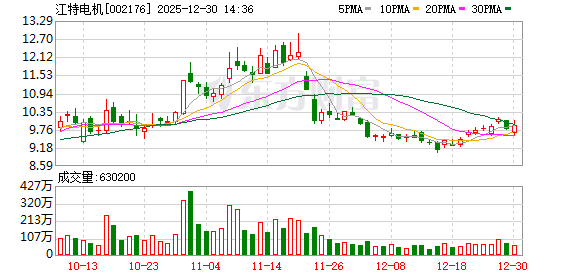
江特电机亏损超千万,碳酸锂期货暴涨下的“收割”与“被埋”
第一财经· 2025-12-30 07:01
Core Viewpoint - The recent extreme rise in lithium carbonate futures prices has created a dichotomy in the industry, with investors profiting while lithium mining companies face significant losses due to unfavorable market conditions [3][5]. Group 1: Market Dynamics - Lithium carbonate futures prices have surged over 66% in the past two and a half months, leading to a situation where many lithium mining companies are experiencing "two-sided losses" [3][5]. - The current spot and futures price gap is substantial, with the domestic battery-grade lithium carbonate spot price at 94,000 RMB per ton, which is nearly 25,000 RMB per ton lower than the futures contract price [5]. - The price disparity has prompted companies like Tianqi Lithium to adjust their pricing strategies for spot transactions to align more closely with futures prices [5]. Group 2: Industry Response - Major lithium mining companies, including Tianqi Lithium, Salt Lake Shares, and Rongjie Shares, have increasingly engaged in futures hedging to mitigate risks associated with price volatility [4]. - However, when futures and spot prices diverge, the hedging strategies can lead to significant losses for these companies [5]. - Several downstream lithium carbonate manufacturers have announced production halts in response to rising raw material costs, indicating a struggle to pass on increased costs to consumers [6]. Group 3: Regulatory Actions - To maintain stability in the lithium carbonate futures market and prevent potential risks, the Guangxi Futures Exchange has implemented various measures, including adjustments to trading fees and limits on trading volumes [7].


江特电机亏损超千万 碳酸锂期货暴涨下的“收割”与“被埋”
Zhong Guo Neng Yuan Wang· 2025-12-30 06:43
"开盘做多,先收割一把,"李文近日几乎天天在一个锂业微信群中分享他做多碳酸锂期货的经验。他是 一个期货投资者,随着近期碳酸锂极端上涨行情的出现,他也赚得盆满钵满。 但是这一天,李文发出的"收割"这个词刺痛了群里产业内人士。相关产业人士回应道:"收割这个词太 血腥了,产业已经'埋'了。" 近期,碳酸锂期货价格狂飙,2605合约价格在近两个半月时间内上涨超66%。有投资者狂欢的同时,锂 矿公司却高兴不起来。 "不少产业公司面临'两头亏'的情况,"近日,第一财经记者从多个锂矿公司内部人士处获悉,一方面, 当下现货和期货基差(价差)大,锂矿公司期货套保空头头寸出现大额亏损;另一方面,现货价格短期 内快速上升,并没有得到市场的普遍认可,锂矿公司现货难以成交。 受近期碳酸锂期货价格持续上涨的影响,江特电机(002176.SZ)近日发布公告称,经初步测算,公司 商品期货和衍生品交易已确认损益及浮动亏损金额超过1000万元人民币。 为对冲锂产品(如碳酸锂)现货价格大幅波动的风险,头部锂矿公司开展期货套保业务已经较为普遍。 天齐锂业、盐湖股份、融捷股份等都曾发布公告,明确开展碳酸锂期货套保业务。而卖出套保是锂矿公 司最常用的方 ...
锂电行业跟踪:动力和储能电池需求旺盛,储能电芯和系统均价上涨
Shanghai Aijian Securities· 2025-12-30 06:41
Investment Rating - The industry is rated as "Outperform" compared to the market [3]. Core Insights - The demand for power and energy storage batteries is strong, with an increase in average prices for storage cells and systems [3][4]. - In November 2025, domestic battery production reached 176.3 GWh, a year-on-year increase of 49.66% and a month-on-month increase of 3.34% [3]. - The production of lithium iron phosphate (LFP) cathode materials in November 2025 was 268,900 tons, up 29.43% year-on-year and 0.75% month-on-month, with a capacity utilization rate of 62.53% [3]. - The price of industrial-grade lithium carbonate rose to 116,000 CNY/ton as of December 26, 2025, with a weekly increase of 14.85% [3]. - The average price of LFP (power type) reached 45,100 CNY/ton, increasing over 15% since December 19, 2025 [3]. - The average price of square LFP energy storage cells remained stable, with slight increases noted in December 2025 [3]. - In November 2025, the monthly loading volume of LFP batteries was 75.3 GWh, a year-on-year increase of 43.62% and a month-on-month increase of 11.56% [3]. - The export volume of Chinese power batteries in November 2025 was 21.2 GWh, a year-on-year increase of 69.60% [3]. Summary by Sections Production - In November 2025, the production of LFP cathode materials and batteries showed significant growth compared to the same period in 2024 [3][4]. Prices - Prices for key materials such as lithium carbonate and LFP have seen substantial increases, indicating a tightening supply [3][4]. Domestic Demand - The domestic demand for batteries is robust, with record loading volumes and increased tender capacities for new energy storage projects [3][4]. Overseas Demand - The export market for Chinese power batteries is expanding, with notable year-on-year growth in November 2025 [3][4].



磷酸铁锂:“半壁江山”检修,提涨恰逢其时
鑫椤锂电· 2025-12-30 06:28
Group 1 - The core viewpoint of the article highlights a simultaneous maintenance wave among leading phosphate iron lithium manufacturers due to high downstream demand, particularly in the energy storage sector, leading to a supply tightness in phosphate iron lithium materials [1][2] - Major companies such as Hunan YN, Wanrun New Energy, and others are planning maintenance that will reduce their phosphate lithium production by significant amounts, ranging from 1,500 to 30,000 tons [3][5] - The maintenance is primarily aimed at ensuring equipment safety and product quality, but there is an underlying motive to increase selling prices due to rising costs of core raw materials like lithium carbonate and phosphoric acid [5][6] Group 2 - The collective price increase effort comes at a time when the demand drop from December 2025 to January 2026 is only 4%, indicating a relatively stable market compared to previous years [6][8] - Capacity utilization rates for major shipping companies are expected to improve significantly, with 2024 rates between 30-60% and 2025 rates between 55-85% [8]

江特电机亏损超千万,碳酸锂期货暴涨下的“收割”与“被埋”
Di Yi Cai Jing· 2025-12-30 06:21
Group 1 - The core point of the article highlights the disparity between the soaring carbon lithium futures prices and the struggles faced by lithium mining companies, which are experiencing significant losses due to unfavorable market conditions [1][2][3] - Recent carbon lithium futures prices surged over 66% in the past two and a half months, yet many lithium mining companies are facing a "double loss" situation due to large discrepancies between futures and spot prices [1][2] - Companies like Jiangte Electric have reported significant losses exceeding 10 million RMB from commodity futures and derivative trading, indicating the financial strain on the industry [1] Group 2 - Major lithium mining companies, including Tianqi Lithium and Ganfeng Lithium, have engaged in futures hedging to mitigate risks associated with price volatility, but this strategy has not been effective due to the divergence between futures and spot prices [2][3] - The recent surge in futures prices was triggered by regulatory actions in Jiangxi, leading to production halts and heightened market speculation, although the overall supply remains structurally sufficient [3][4] - Several downstream manufacturers have announced production halts in response to rising raw material costs, reflecting the challenges in passing on increased costs to battery producers [3][4] Group 3 - The abnormal fluctuations in raw material prices are viewed as detrimental to industry development, prompting regulatory bodies to implement measures to stabilize the carbon lithium futures market [4]