中国华能集团有限公司

Search documents
年内A股国有控股上市公司并购交易已达119起
Zheng Quan Ri Bao Zhi Sheng· 2026-02-05 16:39
Group 1 - Inner Mongolia Mengdian Huaneng Thermal Power Co., Ltd. completed a major asset restructuring project, acquiring high-quality wind power assets with a total consideration of 5.336 billion yuan, enhancing its installed capacity to 1.6 million kilowatts [1] - The restructuring is part of a broader trend in the energy sector, with 119 merger and acquisition cases involving state-controlled listed companies reported in the A-share market this year [1][3] - The restructuring aims to increase the proportion of renewable energy in the company's portfolio, with an expected increase in installed renewable energy capacity to 5.5 million kilowatts and an 8% rise in the share of renewable energy [2] Group 2 - The restructuring reflects a strategic shift towards clean and low-carbon energy, aligning with national goals for sustainable development [2][4] - The trend of mergers and acquisitions in the energy sector is seen as a key driver for the reform and transformation of state-owned enterprises, enhancing their competitiveness and operational efficiency [3][6] - Future mergers and acquisitions are expected to focus on national strategic needs, industrial chain security, and the cultivation of new productive forces, particularly in energy and strategic resources [6]

重大转型突破!中国华能一上市公司完成重组
中国能源报· 2026-02-05 10:49
Core Viewpoint - The successful completion of the merger and acquisition project by Inner Mongolia Huadian, a listed company under China Huaneng Group, marks a significant transformation and improvement in the quality and core competitiveness of the company's listed entities [1]. Group 1: Merger and Acquisition Details - Inner Mongolia Huadian issued 536 million shares at a price of 4.94 yuan per share, raising a total of 2.65 billion yuan for the acquisition [1]. - The project involved acquiring controlling rights to high-quality wind power assets with a total installed capacity of 1.6 million kilowatts from the controlling shareholder, Northern Company, for a price of 5.336 billion yuan [1]. Group 2: Market Performance and Investor Sentiment - The issuance price of 4.94 yuan per share represents a premium of nearly 7% compared to the 20-day average price prior to the issuance and a premium of nearly 4% compared to the closing price on the trading day before the issuance [1]. - This project is noted as the only instance in recent years within the power industry to achieve a market-based premium issuance, setting a best practice case for targeted placements among listed companies in the power sector [1]. - The successful fundraising reflects strong recognition of the Huaneng brand value by market investors, showcasing the company's excellent governance [1].

募集权益资金26.5亿元 内蒙华电完成并购重组项目
Zhong Guo Jing Ji Wang· 2026-02-05 04:07
Core Viewpoint - Inner Mongolia Huadian, a listed company under China Huaneng Group, successfully completed a merger and acquisition project by issuing 536 million shares at a price of 4.94 yuan per share, raising a total of 2.65 billion yuan in equity funds [1] Group 1: Financial Details - The project involved acquiring controlling rights of high-quality wind power assets with a total installed capacity of 1.6 million kilowatts from the controlling shareholder, Northern Company, for a price of 5.336 billion yuan [1] - The issuance price of 4.94 yuan per share represents a premium of nearly 7% compared to the average price over the previous 20 trading days and a premium of nearly 4% compared to the closing price on the trading day before the issuance [1] Group 2: Industry Impact - This case sets an excellent practice example for targeted issuance in the power industry among listed companies [1]
12款仪器亮相国务院《中央企业科技创新成果推荐目录成果手册》
仪器信息网· 2026-01-26 09:02
Core Viewpoint - The State-owned Assets Supervision and Administration Commission (SASAC) has officially released the "2024 Central Enterprise Technology Innovation Achievement Recommendation Directory," which includes 12 cutting-edge technologies in the field of instruments and meters, aimed at accelerating the promotion and application of technological innovations from central enterprises [1][2]. Summary by Relevant Sections Overview of the Directory - The directory includes a total of 208 innovative achievements from 67 central enterprises, covering seven key areas: electronic components, parts, new materials, instruments and meters, software products, high-end equipment, and manufacturing processes [2]. Instruments and Meters Achievements - The instruments and meters sector features 12 representative achievements, showcasing breakthroughs and industrial applications in this field. Notable technologies include: - X-ray fluorescence spectroscopy by Steel Research Institute, which has won the BCEIA Gold Award and is suitable for various industries [5]. - Infrared thermal imaging technology developed by AVIC Kaimai, applicable in environmental monitoring and industrial safety [3]. - 3D laser scanning technology by Mining and Metallurgy Group, designed for mining operations and urban planning [5]. Specific Innovations - The following specific innovations were highlighted: - A compact cold atom absolute gravimeter by AVIC, designed for geophysical exploration and earthquake monitoring, noted for its high sensitivity and portability [3]. - A rapid coal quality analysis instrument by China Electronics Technology Group, which has improved gasification coal quality rates from 77% to 98% [4]. - A 5G intelligent seismic data acquisition system by Sinopec, which has reduced construction cycles by approximately 20% and labor costs by about 30% [4]. Applications and Impact - These technologies have been successfully applied in various significant projects, including national disaster prevention initiatives and major energy projects, demonstrating their practical value and potential for broader industrial applications [4][5].


2026年中国燃煤添加剂行业分类、产业链图谱、市场现状及趋势分析:双碳战略驱动行业迈向低碳环保高效综合解决方案新纪元[图]
Chan Ye Xin Xi Wang· 2026-01-24 02:37
Core Insights - The Chinese coal additive industry is evolving from a simple "fuel-saving" role to a comprehensive solution that integrates "low carbon emissions, environmental compliance, and efficient combustion" [1][4] - The market size of the coal additive industry in China is projected to reach approximately 57.8 billion yuan in 2024, representing a year-on-year growth of 9.89% [1][4] Industry Overview - Coal additives are chemical substances added to coal to improve combustion efficiency, reduce pollutant emissions (such as SO₂, smoke, NOₓ), prevent boiler fouling and corrosion, and extend equipment lifespan [2][3] - The core principles of coal additives include lowering the activation energy of coal oxidation reactions, promoting complete combustion, converting harmful substances into harmless ones, and optimizing combustion conditions [2] Industry Value Chain - The upstream of the coal additive industry includes raw materials such as potassium nitrate, potassium chlorate, potassium permanganate, manganese dioxide, iron oxide, aluminum oxide, titanium dioxide, rare earth elements, and various sulfur-fixing agents [2] - The midstream involves the production and manufacturing of coal additives, while the downstream applications are primarily in thermal power, steel, cement, and chemical industries [2] Market Size - The coal additive industry is a crucial component of the clean and efficient utilization of coal, driven by the "dual carbon" strategy and stringent emission reduction requirements in high coal-consuming industries [1][4] - The demand for coal additives is increasing as industries seek to lower coal consumption, enhance combustion efficiency, and achieve simultaneous desulfurization, denitrification, carbon reduction, and ash removal [1][4] Key Companies - Yuan Da Environmental Protection Co., Ltd. focuses on a composite solution of "desulfurization efficiency agents + fuel-saving agents" and has covered over 20 units within its group [5] - Shandong Jiahe New Energy Development Co., Ltd. specializes in "HS" series environmental fuel-saving catalysts, leveraging partnerships with top universities for R&D [7] - The National Energy Investment Group's subsidiary emphasizes the development of coal additives and environmental technology integration, achieving significant efficiency improvements in desulfurization and fuel-saving [5] Industry Development Trends 1. **Policy and Technology Dual Drive**: The industry is shifting from "end-of-pipe treatment" to "process optimization" due to stricter environmental regulations and advancements in technology [8] 2. **Diversified Market Demand**: While the power industry remains the core demand driver, sectors like steel, cement, and chemicals are rapidly increasing their demand for coal additives [8] 3. **Optimized Competitive Landscape**: The industry is seeing increased concentration, with small and medium enterprises leveraging technological differentiation to compete [9]


代行半年后转正,长城证券官宣28年“老将”周钟山正式就任总裁
Xin Lang Cai Jing· 2026-01-19 03:14
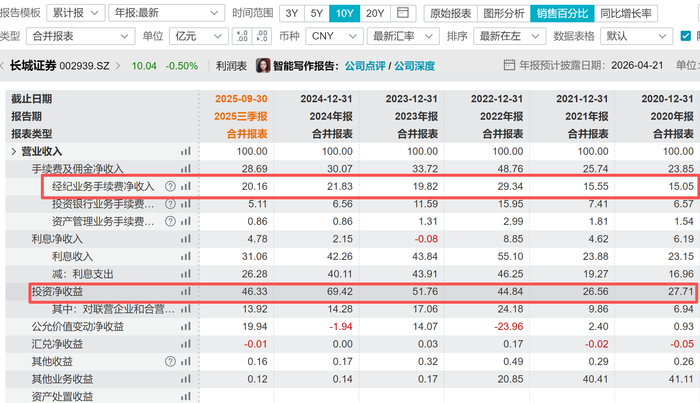
Group 1: Leadership Changes - Zhou Zhongshan has officially been appointed as the President and CFO of Changcheng Securities after serving as acting president for six months [1][2] - Zhou has a long tenure at Changcheng Securities, having joined in 1998 and held various management positions [1] - The new board secretary, Ruan Huixian, has also been promoted from within the company, having worked there since 2003 [1] Group 2: Financial Performance - For the first three quarters of 2025, Changcheng Securities reported total revenue of 4.121 billion yuan, a year-on-year increase of 44.61%, and a net profit attributable to shareholders of 1.931 billion yuan, up 75.83% [5][6] - The increase in revenue and profit is attributed to higher financial asset returns and increased brokerage fees and commissions [6] - Investment income's contribution to total revenue has risen significantly, reaching 69.42% in 2024, compared to 44.84% in 2022 [7][9] Group 3: Regulatory Issues - Changcheng Securities has faced scrutiny due to financial fraud issues related to companies it sponsored, including Yuebo Power and Te Fa Information, leading to penalties [4] - Yuebo Power was delisted in July 2024 after being found to have significant reporting inaccuracies, resulting in fines totaling 950 million yuan for the company and its executives [4] - Te Fa Information was also penalized for inflating profits by 191 million yuan from 2015 to 2019, with fines totaling approximately 23.5 million yuan [4] Group 4: Business Focus and Strategy - Changcheng Securities is focusing on the energy sector, leveraging its parent company, China Huaneng Group, to develop a comprehensive investment banking model centered on the dual carbon industry chain and innovative financial services [5] - The company has shifted its investment banking strategy to emphasize mergers and acquisitions, refinancing, and business in the Beijing Stock Exchange, especially after experiencing a lack of IPO underwriting success in 2024 and 2025 [9][10]

原总裁李翔请辞半年后,长城证券官宣周钟山为新任总裁
Jing Ji Guan Cha Wang· 2026-01-16 14:52
Group 1 - The company officially appointed Zhou Zhongshan as the president and financial officer on January 16, 2026, after he served as acting president for six months [2] - Zhou Zhongshan has a background in the banking sector and joined the company in 1998, holding various positions before becoming vice president and board secretary [3] - The actual controller of the company is China Huaneng Group, a state-owned enterprise [3] Group 2 - In the first half of 2025, the company's wealth management business generated total revenue of 1.202 billion yuan, a year-on-year increase of 13.53% [3] - The company's total revenue for the first three quarters of 2025 reached 4.121 billion yuan, reflecting a year-on-year growth of 44.61% [5] - The net profit attributable to shareholders for the same period was 1.931 billion yuan, with a year-on-year increase of 75.83% [5] Group 3 - In the competitive landscape of the brokerage industry, the company focused on bond underwriting and mergers and acquisitions [4] - In 2025, the company's bond underwriting scale was 105.857 billion yuan, ranking 25th in the industry, an increase of six places year-on-year [4] - The company participated in three merger and acquisition projects as a financial advisor, with the largest transaction being a 14.68 billion yuan equity transfer project [4]

2025年工业阀门行业词条报告
Tou Bao Yan Jiu Yuan· 2026-01-04 13:13
Investment Rating - The report rates the industrial valve industry as a growth sector with a positive outlook, projecting a market size increase from $14.586 billion in 2024 to $18.705 billion by 2029, reflecting a compound annual growth rate (CAGR) of 5.10% [3][59]. Core Insights - The industrial valve market is driven by the demand for ball valves and cast steel valves, with new power plants and smart city construction contributing to growth [3]. - The industry is characterized by a wide variety of valve types, significant cost influence from upstream materials, and a clear technological gradient, with high barriers in high-end sectors [8][10][11]. - The market is expected to expand due to factors such as new infrastructure, energy demand, accelerated domestic substitution of ball valves, and downstream industry upgrades [3]. Industry Definition - Industrial valves are essential components in industrial fluid control systems, used across various sectors including oil, chemicals, power, and aerospace [4]. - They can be categorized into different types based on their functions, including shut-off valves, check valves, safety valves, regulating valves, and diverter valves [4][5][6][7]. Industry Characteristics - The industry features a diverse range of products that can adapt to complex working conditions, with costs heavily influenced by upstream material prices [8][10]. - There is a notable technological gradient, with high-end valves requiring advanced materials and manufacturing techniques, creating significant barriers to entry [11]. Development History - The industrial valve industry has evolved through several phases, from its inception in the early 20th century to a period of rapid growth post-1979, leading to increased marketization and technological advancements [12][20]. Industry Scale - The market size of the industrial valve industry grew from $11.945 billion in 2019 to $14.586 billion in 2024, with a CAGR of 4.08% [59]. - The demand for ball valves is particularly strong, accounting for 24.50% of the market share in 2024, driven by their applications in oil and gas, food and beverage industries [61]. Industry Chain Analysis - The industrial valve industry chain includes upstream raw materials, midstream manufacturing, and downstream application sectors, with each segment influencing the overall market dynamics [22][49]. - Upstream material quality and processing techniques significantly impact valve manufacturing efficiency and cost [24][25][36][38]. Downstream Analysis - The oil and gas sector remains a traditional stronghold for valve applications, while emerging markets such as marine engineering are becoming increasingly important [54]. - The nuclear power sector is identified as a key area for technological advancement and competitive positioning among valve manufacturers [58].
趋势研判!2025年中国无人驾驶矿卡行业政策、产业链、市场规模、竞争格局及未来竞争趋势分析:行业迎来快速发展期,需求量将持续增长[图]
Chan Ye Xin Xi Wang· 2026-01-01 03:22
Core Viewpoint - The autonomous mining truck industry in China is experiencing rapid growth due to policy support, technological advancements, and increasing demand for safety and efficiency in open-pit coal mining [1][4]. Industry Definition and Characteristics - Autonomous mining trucks are designed for mining transportation, utilizing advanced sensors, high-precision positioning systems, and intelligent decision-making algorithms to operate without human intervention [2][3]. - The industry is characterized by dual drivers of policy and technology, strong market demand, a diversified competitive landscape, and increasing technical maturity [3]. Current Development Status - As of 2024, over 50 open-pit coal mines in China have deployed autonomous mining trucks, with the number of trucks reaching 2,500, doubling from 2023 [4][5]. - The market size for autonomous mining trucks in China is projected to grow from 356 million yuan in 2021 to 3.5 billion yuan in 2024, with expected shipments increasing from 216 units in 2021 to 1,400 units in 2024 [5][6]. Industry Supply Chain - The supply chain consists of upstream components like sensors and algorithms, midstream manufacturing of autonomous trucks, and downstream applications in various mining sectors [8]. Competitive Landscape - The industry features a diverse range of competitors, including specialized technology providers, traditional manufacturers, and cross-industry tech companies, with a notable presence of companies like Yikong Zhijia and Xugong Machinery [9][10]. - Major players such as Xidi Zhijia and Yikong Zhijia are leading the market, with significant revenue contributions from their autonomous mining truck segments [10][11]. Competitive Trends - The commercialization of autonomous mining trucks is expected to accelerate, driven by technological advancements and regulatory improvements, with a focus on safety, efficiency, and cost reduction [12]. - Future competition will center around technology, product diversity, service specialization, global market strategies, and standardized industry practices, indicating a shift towards high-quality development [12].


国家能源局通报5起典型违规问题
中国能源报· 2025-12-19 11:49
Core Viewpoint - The National Energy Administration has issued a notice regarding typical violations in the electricity market, emphasizing the need for stricter regulation and compliance to maintain fair competition in the market [2]. Group 1: Violations in Electricity Market - Five typical violations have been identified, highlighting issues such as collusion in pricing among power generation companies and improper market practices [2][6]. Group 2: Specific Violations - **Collusion in Bidding Among Power Generation Companies**: In Jiangxi's medium- and long-term market, several power generation companies colluded to set bid quantities and prices, violating market operation rules [3]. In Shandong's spot market, similar collusion occurred among different power generation groups [3]. - **Concentration of Bids by Subsidiaries**: In Zhejiang's medium- and long-term market, a power company directed its subsidiaries to submit unified pricing packages, which is against the regulations prohibiting centralized bidding among multiple power plants [4]. - **Collusion Between Power Generation and Sales Companies**: In Jiangsu's medium- and long-term market, a power generation company and a sales company engaged in collusion through verbal agreements and coordinated bidding practices [5]. - **Abuse of Market Power**: In Zhejiang's spot market, a power generation company manipulated market prices by submitting high bids during maintenance and transmission blockages, violating rules against market manipulation [6]. Group 3: Recommendations for Compliance - The report calls for electricity market participants to learn from these violations, enhance compliance management, and contribute to a fair and competitive electricity market environment [6].